The winter solstice is the precise moment when the sun is situated exactly over the Tropic of Capricorn, seemingly at a standstill. The word solstice is derived from the Latin word sol, meaning sun, and sisterre, meaning standstill. We know that time does not really stand still, but time is a marker, an occasion of turning from and turning towards. This moment cannot be contained, sustained, or paused. Time is motion; it marches on.
There are moments in our lives when our great darkness feels interminable, infinite, beyond, and outside of time. “In the interior wintertime, we can easily lose heart, stop believing in our goodness, forget about our resilience, and discount the presence of those who love us. There is often sadness, loneliness, and a depletion of joy. This is the season of grief and depression, of searching and struggle.” (The Circle of Life: The Hearts Journey Through the Seasons, Joyce Rupp & Macrina Wiederkehr) It can be reassuring that just as the astronomical start to winter begins, the solstice gives way to longer days and the darkness will yield to a promised light. So we hope with us.
We long for the acceptance of home, a place of peace where we can be truly ourselves–seen and heard, loved and believed, held and yet free. Our longing is the existential homesickness that THIS isn’t all there is and that when we get a taste of unconditional acceptance and love, we want more. Our longings are good and holy—it is our Divine inheritance to experience all that it means to feel at home.
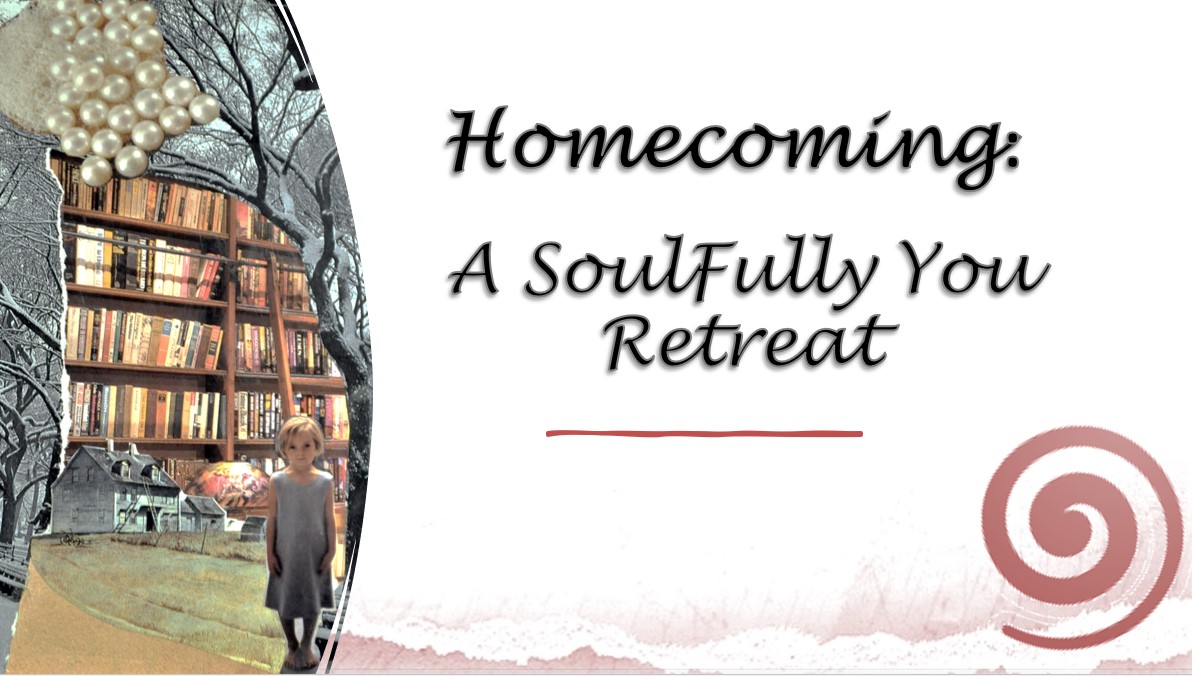
Inspired by the lyrics of Homesick, a song by friend Jana West, my annual Advent retreat was titled Homecoming: A SoulFully You Retreat. We explored how the Divine accompanies us, making a home within, and what it means to feel homesick or “at home” with ourselves and others. I offer some of our reflections so you, too, can take part:
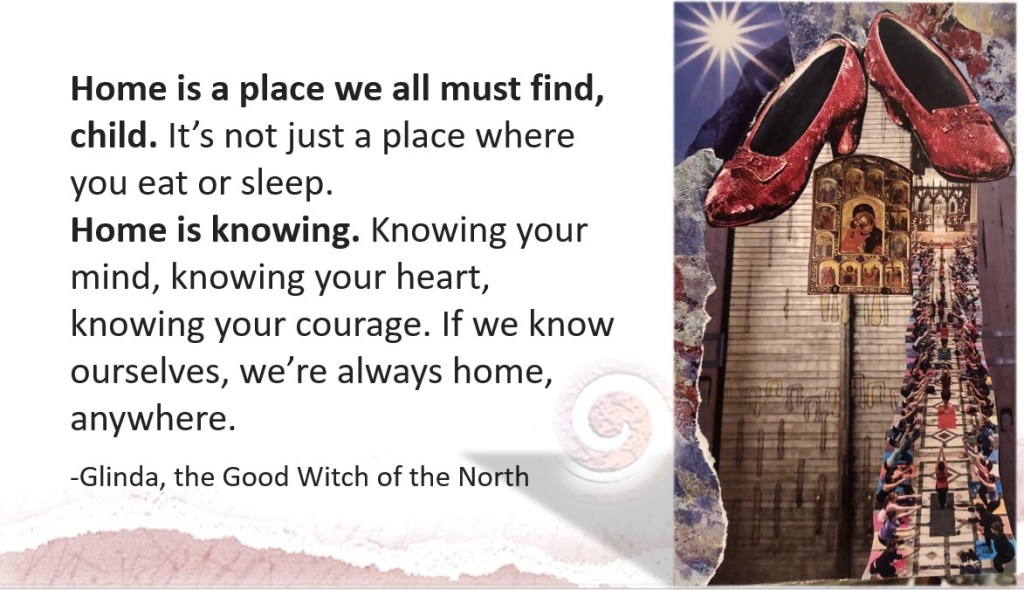
“Love is home. Home is both an external dwelling and an internal abode. Home is the place where we belong, our place of acceptance and welcome. There, in this shame and judgment-free embryonic cocoon of love, we practice unconditional acceptance; we learn to relate to ourselves and the world around us.
And home is a soft place for the body to land, a safe place for the soul to fully disrobe. Home is the place where our failures don’t kill, our sins can’t crush, and even when we are at our worst, we’re safe. Home is a place where we are free to take our deepest, fullest, least encumbered breath.
What words or phrases resonate with you? Indeed, our personal experiences of home canbring a spectrum of feelings, from warm and fuzzy to sadness or terror, when we consider what being “at home” means. The ideal is what we seek and long for, both within ourselves and with others.
Lectio Divina—Rule of St. Benedict, Chapter 72, The Good Zeal of Monks
In the 1500-year-old Rule of St. Benedict, monks who live in a monastic community are presented with a choice to guide their relationships—to embrace good zeal which monks should foster with fervent love rather than the zeal of bitterness. This choice is a call to holiness and contributes to an atmosphere of separation or togetherness in the community.
Benedict is clear—if monks choose to respond to their brothers with bitterness, they cultivate an environment of separateness. They become distant from God and the community. But if monks choose to foster enthusiasm for loving their brother, Benedict writes that it will “bring us all together to everlasting life.”
Love is the antidote to separation and bitterness. Benedict encourages enthusiasm and eagerness when expressing our fervent love to God, one’s abbot (or leader), and one’s brothers. He also provides an action plan to demonstrate love.
Chapter 72 begins and ends in love—what is hoped for (” a good zeal which separates from evil and leads to God and everlasting life) and what is the promised outcome ( to “bring us all together in everlasting life.”) The specific instructions to demonstrate “fervent love” are to show respect to others; be patient with other’s weaknesses; practice active listening; and to consider the best interest of others, not just our own.
God’s work and desire is to “bring us all together” through our acts of love. We must consciously choose between holding onto bitterness, which separates us from God and from others. We must be committed to this goal to keep a community, family, organization, or friendship from growing apart through conflict, misunderstandings, and the bitterness that might result. This can be hard, there is no denying it.
We demonstrate our preference for “nothing whatever but Christ” when we see and treat others as Christ. Christ dwells within us, defining who we are. Christ, then, is active in creating togetherness in the community.
In a community, each one matters. We cannot become holy without the other; we are responsible for co-creating and honoring connections with others. We live in context with everyone as a member of the body of Christ. God works in us as we work together. The whole thing falls apart when we do not consider the bigger picture.
The Rule is relevant today for Benedictine oblates, lay associates of a monastery, and those who find wisdom in the spiritual insights of St. Benedict to learn how to live in connectedness with family, friends, coworkers, team members, and in all our relationships. We have much to learn.



 Being Benedictine