It was a joy to spend the day with kindred spirits at The Joslyn, an art museum in Omaha, Nebraska, discussing art, creativity, life, aging, grief, family, and more.
“All art is a terrific bridge…Music, paintings, words, they really do speak to the soul, to the heart, to the spirit…” -Julia Cameron
Conversation with loved ones requires little effort, but time with Nancy and Marilyn was enhanced by the insights from the art pieces that drew us in. We easily transitioned from discussing art techniques to our own creative projects, from religious and contemporary art to our own spirituality and religious traditions, and from what the artist might have felt or intended to convey to our own feelings and responses to life’s challenges. Skipping from one topic to the next, which might not have made much sense to onlookers, made perfect sense to us.
When I started leading SoulFully You retreats at St. Benedict Center, Nancy and Marilyn, my dad’s first cousins, were some of my first participants. I am so grateful that we reconnected and get together a few times a year. My memories of them were mainly as a child, and now we are good friends.
“Viewing art activates the dopamine network in the brain…people’s minds open to wonder: they demonstrate greater creativity, inspiration, problem-solving abilities, and openness to others’ perspectives. Art empowers our saintly tendencies.“ –Dacher Keltner, Awe: The New Science of Everyday Wonder and How It Can Transform Your Life
Sharing some of the art and insights that filled our day with wonder, I hope to inspire an in-person or online visit to an art museum or your own creative project, such as SoulCollage.
“In a delightful letter on the contemplative life called The Ladder of Monks, Guigo II (a 12th-century Carthusian monk) divides the experience of Lectio into four phases or degrees: reading, meditation, prayer, contemplation. Reading, he says, puts food whole into the mouth. Meditation chews it, digs for treasure. Prayer extracts the flavor and helps us to get to know the treasure. Contemplation embraces and welcomes the thirsty soul.” (A Tree Full of Angels: Seeing the Holy in the Ordinary, Macrina Weiderkehr)
Lectio Divina: Matthew 9:1-13; 35-36
He entered a boat, made the crossing, and came into his own town. And there people brought to him a paralytic lying on a stretcher. When Jesus saw their faith, he said to the paralytic, “Courage, child, your sins are forgiven.” At that, some of the scribes said to themselves, “This man is blaspheming.” Jesus knew what they were thinking, and said, “Why do you harbor evil thoughts? Which is easier, to say, ‘Your sins are forgiven,’ or to say, ‘Rise and walk’? But that you may know that the Son of Man has authority on earth to forgive sins”—he then said to the paralytic, “Rise, pick up your stretcher, and go home.” He rose and went home. When the crowds saw this they were struck with awe and glorified God who had given such authority to human beings.
As Jesus passed on from there, he saw a man named Matthew sitting at the customs post. He said to him, “Follow me.” And he got up and followed him. While he was at table in his house, many tax collectors and sinners came and sat with Jesus and his disciples. The Pharisees saw this and said to his disciples, “Why does your teacher eat with tax collectors and sinners?”
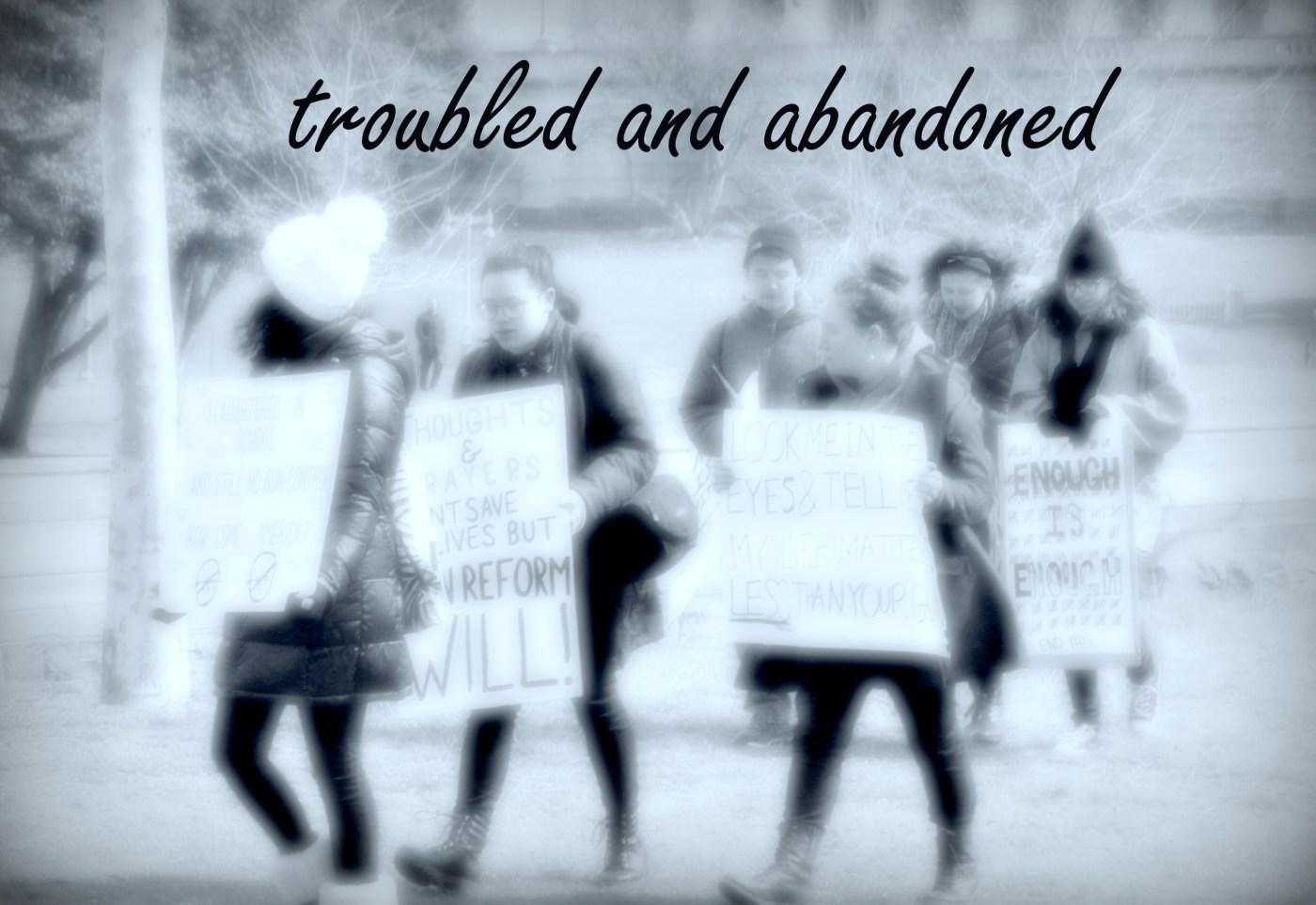
He heard this and said, “Those who are well do not need a physician, but the sick do. Go and learn the meaning of the words, ‘I desire mercy, not sacrifice.’ I did not come to call the righteous but sinners.” Jesus went around to all the towns and villages, teaching in their synagogues, proclaiming the gospel of the kingdom, and curing every disease and illness. At the sight of the crowds, his heart was moved with pity for them because they were troubled and abandoned, like sheep without a shepherd.
In our oblate group, we read, reflect, respond, and rest in sacred scripture. There is a synergy that results from sharing a word or phrase that resonates within, as well as the wisdom or insight each has received. I leave with a greater understanding of other perspectives and of how I am called to follow Christ.
Some reflections from our reading:
Courage, child, your sins are forgiven…Rise, pick up your stretcher, and go home. Jesus’ first instruction is to have courage and to know that sins are forgiven. Many aspects in our life require our courage—difficult conversations, facing our own limitations, expressing love, making or adapting to changes, dealing with physical or emotional suffering, feeling despair, and understanding our next steps in each season of life, to name a few. Life requires courage. Some questions we might consider in taking Jesus’ advice: What is our stretcher or our crutch? Where might we be trapped or paralyzed? We are not to harbor evil thoughts about others or ourselves, knowing that nothing can separate anyone from the love of God. Jesus asks us to rise—right where we are, no matter who we are, and go home. Our home is much more than a brick-and-mortar dwelling. Home is a place of peace, where we can be seen and heard, loved and believed, held and yet free. Home accepts all the parts of our self, our truest self.
Home is where you belong. It is your shelter and place of rest, the place where you can be yourself. –John O’ Donohue, Eternal Echoes: Celtic Reflections on Our Yearning to Belong
They were struck with awe and glorified God whohad given such authority to human beings. We are to become like Christ. We can rise up, go home, follow, listen, have our hearts moved, give mercy, have courage, doubt, choose, forgive and be forgiven, be filled with awe, mix and mingle with the “tax collectors and sinners” of our day (the poor, oppressed, and marginalized), and be compassionate. In a very short story, Jesus asks much and gives much. He is an example of who we can be to others. The crowds were struck with awe by what Jesus did. We, too, can stand in awe of the kindness of others, a spectacular sunrise, or a day of feeling healthy. In each day, there are countless ways to choose awe and gratitude, glorifying God in all.
I did not come to call the righteous but sinners. Accepting both the righteous and the sinner within ourselves is a sort of homecoming. Accepting with humility that we are not one or the other—saint or sinner—is the way to integration and accepting others. Jesus tells the crowd that he desires mercy. We can be merciful, too, slow to judge ourselves and others.
His heart was moved. This line resonated with me the most. Jesus, in his humanity, felt pity for the “troubled and abandoned.” Beyond our bodies, Jesus sees our inner wounds, our fears and anxieties, our feelings. He sees beyond the physical to our spiritual and emotional needs. This, too, we must ask—who might the troubled and abandoned be today? We can only know who they are by deep listening, extending hospitality, and having compassion as Jesus did. And then we must ask, how are we responding to them? With judgment or with a moved heart?
I realized this most profoundly when I was the one who felt unheard. Perhaps you, too, have had a moment like this when you felt no one was listening—a meaningful, traumatic, challenging, or gratifying experience that needed to be shared fell on deaf ears.
I have written about the Benedictine promises of obedience and the importance of listening to God and others as part of one’s spiritual growth. “Listening requires us to pause, to have silence, and to be open to seeing in a new way. Listening can lead to a shift in perspective, a flash of insight, a new understanding. When you listen closely to another, it is an expression of love,” I shared in a recent reflection.
It is just as crucial to examine the impact it has on others when we are forgetful about listening—understandably, we get busy, or miss clues that others need our ear. Indeed, there are times when others may not realize how important it is (these slights may be easily forgiven), but there may be other times when you or another is summarily dismissed. The message is loud and clear—either you or what you have to say is not valued. It feels hurtful, as if you don’t matter, as if you are insignificant. Being intentionally rejected for your thoughts, ideas, feelings, and experiences leaves a wound, a hole in one’s heart, a sense of being rejected or abandoned.
For me, the experience of not being heard came during a traumatic time for women who had been sexually harassed, abused, or assaulted. I felt my trauma, but also the suffering of so many beyond me. It was a profound compassion, sharing the wound. It came to me then, weeping, that this is what it might feel like for those who have spent their entire lives not feeling listened to, of all those who have been unheard throughout our history, from the enslaved, defeated, oppressed, and marginalized—those who have no one to listen to or validate their pain. They had a story in their heart that needed to be heard, then and now.
“Compassion asks us to go where it hurts, to enter places of pain, to share in brokenness, fear, confusion, and anguish. Compassion challenges us to cry out with those in misery, to mourn with those who are lonely, to weep with those in tears… Compassion means full immersion in the condition of being human.” –Donald McNeill, Douglas Morrison, and Henri Nouwen (quoted in Boundless Compassion by Joyce Rupp)
My heart felt broken—not just for me, but for the lack of compassion I may have shown others. Simultaneously wounded and regretful, a part of me died while something else was taking root—a desire to listen to those who feel unheard, to offer acceptance where there might not be, to advocate for those marginalized. I felt pierced entirely with compassion. Tears flow often now for the suffering that, perhaps, I had not noticed before, the pain that I may have caused others, and the pain that continues to go unnoticed or even flatly denied.
I created a SoulCollage® card shortly after this eye-opening, traumatic experience. Consider the image and the following questions.
“The eyes of the Lord are toward the righteous and his ears toward their cry”. -Psalm 34:15
Questions for reflection:
Do you have a story you would like to share with someone? Have you been able to share it with another or write about it? If so, how did it make you feel to be heard? Does it inspire you to listen to the pain and suffering of the world?
Can there be some healing for your wound by expressing it to God if there is no one to share it with? Are you available for others to share their story with you? What is the consequence for a loved one if their story isn’t shared? Is there a person or marginalized group of people that you may listen to more closely than you have?
May our prayers be heard for all those suffering, and for those who have shared their stories but not been heard. May we listen with “the ear of our hearts,” as Benedict instructs. May we be moved to tears. Amen.




 Being Benedictine