February 2021 Lectio Divina and Oblate Reflections
Sources: Colossians 3:12-17; Always We Begin Again: The Benedictine Way of Living by John McQuiston II (pages 17-22)
For our Lectio Divina practice, we read more deeply Colossians 3:12-17
We share aloud, some of the words and phrases that resonate with us:
God’s chosen ones, holy and beloved. Put on…heartfelt compassion, kindness, humility, gentleness, and patience.
Bearing with one another. Forgiving one another. Put on love….that is the bond of perfection.
Let the peace of Christ control your hearts. Be thankful.
Let the word of Christ dwell in your richly. Gratitude in your hearts.
Compassion: We think of compassion as feeling sorry for someone, but it is to feel with someone, to enter into the sufferings and joys of another person. Jesus had compassion for us, entering fully into our lives. He is one with us. We are called to emulate this kind of compassion with others. Sometimes there may not be much we can say to another, but we can give our presence, a physical touch. Wordless gestures are just as compassionate, perhaps even more so.
“Lord our God, hear my prayer, the prayer of my heart. Bless the largeness inside me, no matter how I fear it. Bless my reed pens and my inks. Bless the words I write. May they be beautiful in your sight. May they be visible to eyes not yet born. When I am dust, sing these words over my bones: she was a voice.”
Ana, The Book of Longings
In The Book of Longings by Sue Monk Kidd, Ana writes this prayer of longing on the incantation bowl her aunt Yaltha has gifted her. “Do you know what an incantation bowl is?” Yaltha asked. “In Alexandria we women pray with them. We write our most secret prayer inside them…Every day we sign the prayer. As we do, we turn the bowl in slow circles and the words wriggle to life and spin off toward heaven.”
“Friendship is the linking of spirits. It is a spiritual act, not a social one. It is the finding of the remainder of the self. It is knowing a person before you even meet them.”
Joan Chittister
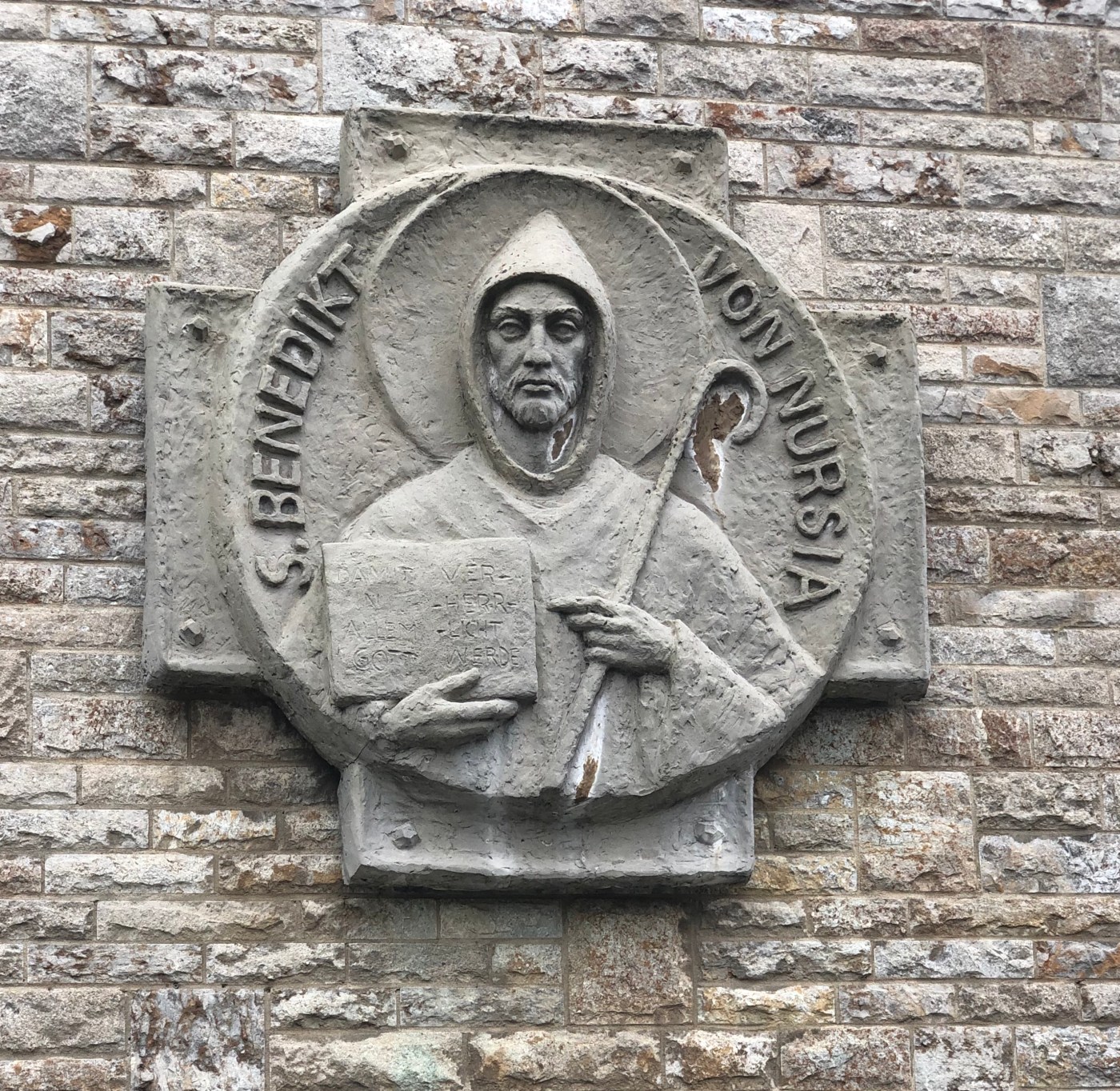
St. Scholastica, whose feast we celebrate on February 10, is the twin sister of my patron saint, St. Benedict. Legend holds that Scholastica and Benedict had a close relationship and were both deeply committed to God, despite not being able to spend much time together.
The story of St. Scholastica, from the books of Dialogues by Saint Gregory the Great, shows the commitment they shared to God and each other:
“Scholastica, the sister of Saint Benedict, had been consecrated to God from her earliest years. She was accustomed to visiting her brother once a year. He would come down to meet her at a place on the monastery property, not far outside the gate.
One day she came as usual and her saintly brother went with some of his disciples; they spent the whole day praising God and talking of sacred things. As night fell they had supper together.
Their spiritual conversation went on and the hour grew late. The holy nun said to her brother: “Please do not leave me tonight; let us go on until morning talking about the delights of the spiritual life.” “Sister,” he replied, “what are you saying? I simply cannot stay outside my cell.”
When she heard her brother refuse her request, the holy woman joined her hands on the table, laid her head on them and began to pray. As she raised her head from the table, there were such brilliant flashes of lightning, such great peals of thunder and such a heavy downpour of rain that neither Benedict nor his brethren could stir across the threshold of the place where they had been seated. Sadly he began to complain: “May God forgive you, sister. What have you done?” “Well,” she answered, “I asked you and you would not listen; so I asked my God and he did listen. So now go off, if you can, leave me and return to your monastery.”
Reluctant as he was to stay of his own will, he remained against his will. So it came about that they stayed awake the whole night, engrossed in their conversation about the spiritual life.
It is not surprising that she was more effective than he, since as John says, God is love, it was absolutely right that she could do more, as she loved more.
Three days later, Benedict was in his cell. Looking up to the sky, he saw his sister’s soul leave her body in the form of a dove, and fly up to the secret places of heaven. Rejoicing in her great glory, he thanked almighty God with hymns and words of praise. He then sent his brethren to bring her body to the monastery and lay it in the tomb he had prepared for himself.
Their minds had always been united in God; their bodies were to share a common grave.”
On the Feast of St. Scholastica, I remember my dear friend, Colleen, whose birthday was on this day. It is such a special connection to know that Colleen and I were spiritual twins (since my birthday is July 11, the feast day of St. Benedict.) In 2002, Colleen and I met at St. Benedict Center, both of us seeking a contemplative prayer practice. We quickly became “anam caras,” soul companions–we read spiritual books and prayed together and could talk for hours about our spiritual journeys. I was blessed by my friendship with Colleen, Joyce and so many other soul friends in the years since then.
The lessons I have learned from my spiritual friendships, and the lives of St. Benedict and St. Scholastica are many:
Spiritual friendships never end. ♥ Neither death nor distance can separate us from the love of another. ♥ There is no such thing as loving too much. ♥ Spiritual friendships are a gift from God. ♥ We support each other in living out God’s purpose in our life. ♥ Spiritual connections with friends enrich one’s prayer life and guide the other back to God when one is temporarily lost. ♥ Spending time together is important, but friendship resides in the heart. ♥ We pray for and with each other. ♥ We cry with each other. ♥ We laugh together. ♥ We listen to, plan with, comfort and challenge each other. ♥ We are grateful for each other and we say it. ♥ “Our minds are united in God.”
The Red Shoes
Colleen, loved red shoes. But I didn’t know this about her until her Aunt Bea shared a story at her funeral. What a silly thing to say at a funeral! But for “some reason” I told Aunt Bea that I loved the beautiful red shoes she had on. Sometimes words fly out of my mouth without thinking how they might sound—and today was no exception. But, of course, there was a reason.
SoulCollage® card remembering Colleen.
Without missing a beat, Aunt Bea shared that just a few months earlier, Colleen had borrowed those red shoes on an evening when she and her sisters were going out dancing, something they loved to do together. Aunt Bea commented how much Colleen loved to dance; telling us that Colleen believed when you dance you have to wear high-heeled shoes. It was a lovely story to imagine a time when Colleen was joyful and doing what she loved most—dancing. There is comfort in storytelling and remembering.
Sources: Mark 1:7-11; Always We Begin Again: The Benedictine Way of Living by John McQuiston II (Preface-p. 14)
For our Lectio Divina practice, we read more deeply Mark 1:7-11, the baptism of Jesus.
Words and phrases that resonate with us, shared in our discussion:
It is with great humility that John proclaims there is one more powerful than I. In an area of rabid individualism, it is hard to turn things over, to admit that I am not the fount of all wisdom. Even if we feel called to speak truth to power, to share our faith or ideas that may differ from another, we must humble ourselves as John did. John admits he is not to untie the sandals of Jesus, and even stoops down to show his humility. Indeed, there is one more powerful than I.
Both John and Jesus show humility. By going down into the water, Jesus foreshadows going down into the tomb. It is a descent, a submission to the obedience of the will of God, and then a rising. Jesus chose to be baptized; he did not have to be, but he chose to be weak, to become humble. This is the beginning of his service. He has been chosen to be Messiah. Jesus did not shy away from this service.
As part of Jesus’ baptism—the heavens were torn apart. Jesus’ identity was affirmed by the father; this is how we get our identity too. The heavens are torn apart for us as well. We live our lives in the balance of humility and knowing that we are made in the image of God.
Always We Begin Again—A new year, a new book.
We begin 2021 by reading the introduction and first section of Always We Begin Again: The Benedictine Way of Living by John McQuiston II (Preface through page 14.) The Rule of St. Benedict provided guidelines for monastic living by giving order to the monk’s day with a balance of prayer and work. Although it may be impossible to follow the Rule strictly while maintaining a life in the world, it is the longing of the Benedictine oblate to have a “creatively balanced framework for life.”
December 2020 Lectio Divina and Oblate Reflections
Sources: Luke 1:67-79; The Rule of St. Benedict, Chapter 72 Study Guide for The Rule of St. Benedict, Maria-Thomas Beil, OSB, page 180-185
For our Lectio Divina practice, we read more deeply the well-known Benedictus that is prayed every morning in the Divine Office, Luke 1:67-79.
Words and phrases that resonate with us, shared in our discussion:
Save us from our enemies….to show mercy….to set us free… without fear…. knowledge of salvation….forgiveness of our sins….the way of peace…promise….prepare his way…you, my child…tender compassion.
The Benedictus proclaims what God is doing and will do for us—not what we do. Many of us have grown up with the image of an angry God, but that is not the God we are shown in Scripture. We are promised a God of tender compassion, not a bookkeeper of judgments. Mercy is God’s loving response to suffering. God is not watching from afar; God is suffering with us.
The dawn from on high breaks upon us—God is breaking in with the incarnation and gives us hope. Benedict was not harsh, but practical, just as God is tender. God enters our history to experience our suffering with us, but we must expose our wounds for the tender compassion of our God to work. To prepare our heart, we must invite God in. Advent was a time to prepare our hearts for God to enter—although this task is never fully completed. We must live in perpetual Advent, inviting God in and humbling ourselves without fear, to receive the tender compassion of our loving God.
“Music is a higher revelation than all wisdom and philosophy. Music is the electrical soil in which the spirit lives, thinks and invents.”
― LUDWIG VAN BEETHOVEN
Listening to the sweet and soulful songs of Alana Levandoski is prayer itself. I discovered Alana through the Center for Action and Contemplation and have used her contemplative songs and chants in retreats I have led and in my own prayer practice. Whether setting music to her own words, or lyrics drawn from poetry or scripture, her singing is elevated prayer.
Ring Out, Wild Bells, a poem sung by Alana, is a heartfelt, prayerful intention to ring out the old of 2020, a year of great challenges, and to ring in the new of 2021. The poem, In Memoriam, (Ring out, wild bells) was written during a time of grief, nearly 150 years ago by Alfred Lord Tennyson (1809-1892). The lyrics ring true for both letting go and welcoming in—letting go of the false, feuding, dying, grief, pride, partisan divide, and civic slander WHILE welcoming in the new, true, noble, sweet, pure, love, truth, light, and peace.
(Image above taken at St. Jacob’s Church bell tower in Telc, Czechia)
Enjoy Alana’s new video of Ring Out, Wild Bells! And at the bottom of this post, learn more about Alana, how to find her music and some additional prayerful songs to start your new year.
What do Christmas crèches, Wisconsin cheese, Benedictine Oblates, and Pilgrimages have in common?
For those who know and love him, the answer is obvious. Fr. Volker Futter.
Each is an expression of his hospitality. A true gentleman with a heart for one who needs compassion and comfort and the most energetic man I have ever met celebrates his 80th birthday today, December 29, 2020. Fr. Volker has touched many lives through his work as a Missionary Benedictine—as Oblate Director, Sub-Prior, and Mission Procurator—known especially for his hospitality. He is the living example of the instructions of St. Benedict, “Let all guests who arrive be received as Christ, because He will say: “I was a stranger and you took Me in” (Mt 25:35).”
Cleaning out some old papers, I stumbled upon a script from which I read a farewell greeting to my spiritual director and monk friend, Fr. Mauritius Wilde when he moved from Schuyler, Nebraska to Rome four years ago.
My message was one of gratitude for our shared experiences, but also sadness that we would not see each other regularly…since Rome is a bit more than a car drive away. I knew that we would continue to be in touch, and as luck would have it I was able to visit Rome one year later for the Benedictine World Congress and he has also visited Nebraska a few times to lead retreats. So, it was not a good-bye, but a see-ya-later.
Farewell party for Fr. Mauritius. October, 2016
As I read through what I had written four years ago, I realized this feeling of being separated, yet remaining deeply connected speaks to our current situation of pandemic. I feel this same nostalgic see-ya-later-sort-of-way as we hunker down, cancel trips, stay at home and physically distance to keep ourselves and our loved ones safe. It is bittersweet—but it is what we must do. We will survive this liminal space where we are together in spirit, but not in person.
I experience this distance, and yet connectedness, with my daughter, who also moved from home—first to Washington DC four years ago (yikes, that 2016 was a doozy of a year) and then to Madison, Wisconsin. She is my child, so of course, we see each other as often as possible, but without the spontaneity of a quick lunch date or evening walk. I am grateful that we talk or text each other nearly every day and have been able to exchange visits nearly every other month.
But still, it is challenging to have your loved ones far away. As much as I love reading about the pioneer days, I was not cut out to be one. I cannot imagine what it would have been like to send your grown child off with her family in a covered wagon, perhaps never to be seen again.
Stories are as important for those who hear them as the one doing the telling. Being listened to validates our experiences; we matter when we are heard. The first word in the Rule of St. Benedict is “Listen.”
When we were kids, my brother and I would beg for stories about our dad’s growing up shenanigans, a window into his life before we were in it. His stories helped us see what life was like for him and helped connect us to the generations before us. But these stories are lost if not written down.
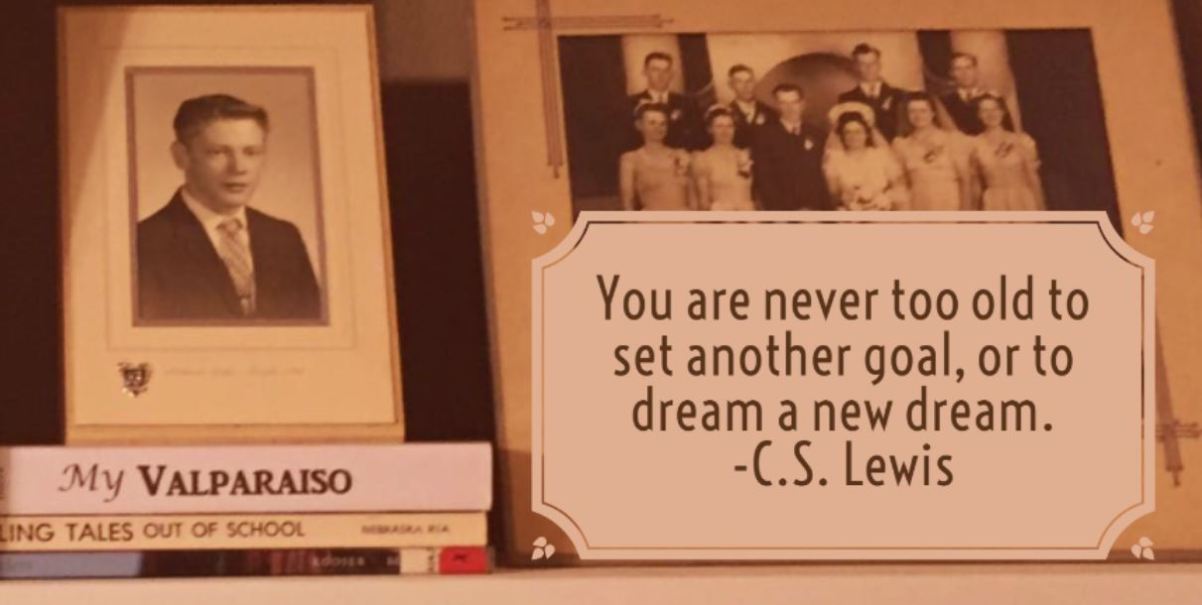
My dad, Tom Blazek, had a dream to write a book about his hometown, Valparaiso, Nebraska—to create a timeline of its history and to share stories of growing up in a small town. Writing this book was part fact-finding and part storytelling, both his own and others. Passionate about history, he would devour a book on a topic he loved—about World War II, the Civil War, the history of Lincoln or Nebraska. He could find bits and pieces about Valparaiso from different sources, but he had a dream of gathering it all into one book, from the birth of the small village up to the present. His love of reading about history turned into a passion for sharing with others.
For some, his ambition to write a book came as quite a surprise. My dad wasn’t a particularly motivated student, he is the first to admit. One classmate said he was the least likely of their class to ever write a book. As a teenager, any reason was a legitimate one for skipping school. One afternoon, hanging out at the town gas station with his friends, my grandma (God-rest-her-soul-for-raising-five-boys) discovered his truancy, went to the gas station, and strongly encouraged him to get back to school. Mrs. Jean Ang, my dad’s 7th and 8th-grade teacher, commented, “the Blazek boys, they had a lot of life.” God love his teachers and parents for tolerating his alternative form of education. As a teacher, it’s important for me to remember that everyone learns differently. Regardless of what he did or didn’t learn in school, he always worked hard.
Grandma and Grandpa Blazek with the five boys that “had a lot of life”
Pray and Work
The Benedictine motto Ora et Labora, Pray and Work, is a way of life for my dad.
I’ve observed a work ethic in my dad that is unmatched. From delivering newspapers, farming and working at a gas station as a teenager; being a manager at Safeway grocery stores, working in dispatch, sales and management in the transportation industry; and, finally, in production and office management, my dad has ALWAYS worked hard, whether he liked his job or not. And for many years he supplemented his full-time job with hauling jobs—cleaning out attics and basements, taking trash to the landfill, and helping people move their belongings. Continue reading “You are never too old to set another goal, or to dream a new dream.”→









 Being Benedictine