Search

Being Benedictine

Living SoulFully as an Oblate of St. Benedict

Category

St. Benedict Center ~ Christ the King Priory

10 Reasons Benedictines Love Silence

I carefully consider everything that I write and share here, especially the more personal or contentious reflections. I rarely write and post on the same day. Not so with my speech. I find myself saying often enough, “Did I just say that out loud?” Words fly out of my mouth much faster than they flow from my pen or keyboard.

 Perhaps this is why I enjoy journaling and writing so much. It slows my mind down. In silence, I can be more deliberate, careful, and organized in what I share. A healthy respect for silence could save me some angst in times when my mouth works faster than my mind.

At our annual oblate retreat, with the theme “Building Community Through Our Oblate Promises,” the importance of silence was the topic of the opening session led by Fr. Thomas Leitner, the administrator of St. Benedict Center and a monk who lives at the monastery across the road. Throughout the weekend, we would learn about and practice silence.

Why is silence so fundamental to Benedictine spirituality?

Silence is the way to self-knowledge. A discipline of silence confronts us with ourselves. “Silence is a way for us to put up with ourselves the way we are. Not everything that comes to mind at times of silence is pleasant. Repressed needs and wishes may come up, repressed anger, and perhaps missed opportunities,” Fr. Thomas shared. Silence gives our wounds space to surface, allowing us time to wrestle with and soothe our pain in healthy ways. Silence allows us to see ourselves unfiltered without the influence of others.

In The Interior Castle, St. Teresa of Avila uses imagery of a castle for our soul, emphasizing “how necessary this room (of self-knowledge) is…we shall never completely know ourselves if we don’t strive to know God.” She writes that God dwells within us, and to know God, we must first know ourselves. Hard, but necessary, work to “know thyself,” as the ancient Greek maxim suggests.

Silence connects us to the Divine. Seventh-century bishop and theologian, St. Isaac of Syria, writes:

We enter this “treasure house,” our very soul, through the practice of prayer. Some of us may be conditioned to think of prayer as a transactional bubble-gum-machine approach to asking God for what we want. We put in a coin; God supplies the big gumball. Our prayers are “answered.” Yet this is not the kind of prayer that leads to self-knowledge or to a connection with God. Consider a poem by the 19th-century Danish theologian Søren Kierkegaard that points to a different kind of prayer.

Silence builds confidence and leads to self-respect.

“As my prayer became more and more devout and interior,” I come to know myself with greater depth. This knowing builds my confidence: I have been created just as I am, in the image of God. I forgive myself for weaknesses and celebrate my gifts. I seek less approval from others. I have “less and less” to say to justify, convince, or plead my case of worthiness to myself or others.

Teacher, writer, and friend, Parker Palmer, writes,One of our most debilitating illusions (is) that the answer to our problems is always ‘out there’ somewhere, never ‘in here.’ It’s an illusion that’s constantly reinforced by educational and religious institutions that make us dependent on “experts” and “authorities.” We need not look for knowledge in others; we can trust our own interiority, the Divine Expert Within. I can grow in self-respect, knowing God is within me, intimately speaking to me when I am silent long enough.

Continue reading “10 Reasons Benedictines Love Silence”

Benedictine Spirituality of Work

November 2024 Oblate Reflections

Sources

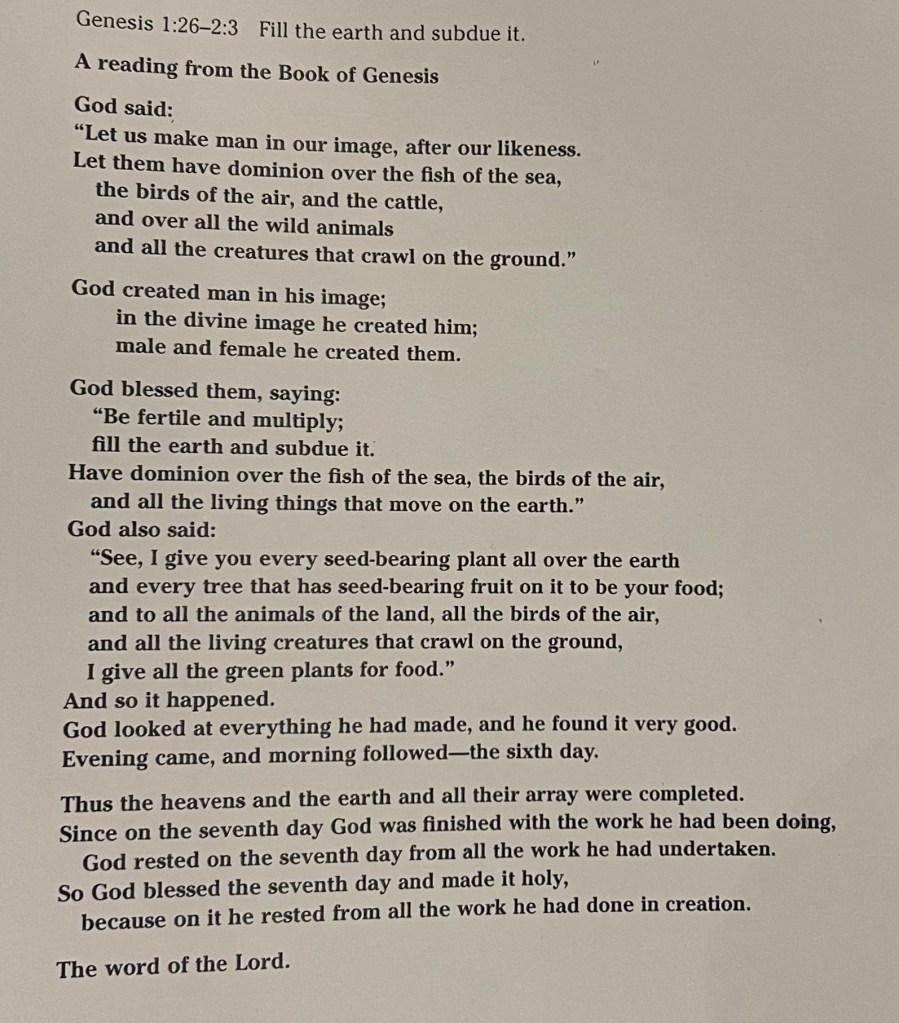
Lectio Divina—Genesis 1:26-2:3, Fill the earth and subdue it. 

Book DiscussionThe Oblate Life: Spirituality at Work, Dermot Tredget. Edited by Gervase Holdaway, OSB, 2008

Topics: Prayer, work, rest and study together provide a foundation for a Christian spirituality of work. St. Benedict recognized that work has a transformative power and for the monk is the principal means to seeking God. Our discussion flowed from words or phrases that resonated from sources listed above.

God created man in his image, in the divine image he created them.

We are created in the image of our Creator; we are creators, too, and it is our responsibility to contribute to the act of creation. Creation is not a once and done effort. Creation requires constant movement, growing, expanding, and even resting. We must ask ourselves if our work is valuable. Does my work add value to God’s creation? “We cannot speak about a spirituality of work without talking about an ethics of work.” (Dermot Tredget)

I give you every seed-bearing plant

In the image of our Creator, our work is to plant the seeds we are given which becomes our food. This isn’t quick and easy work; we need to rest, recover and have patience. We are in relationship with the Divine as co-creators. The Divine is not out of the picture. There is an unseen aspect of work–God is working even while we rest. Even further, what we see as useless toil may show value later. All is sacred.

Continue reading “Benedictine Spirituality of Work”

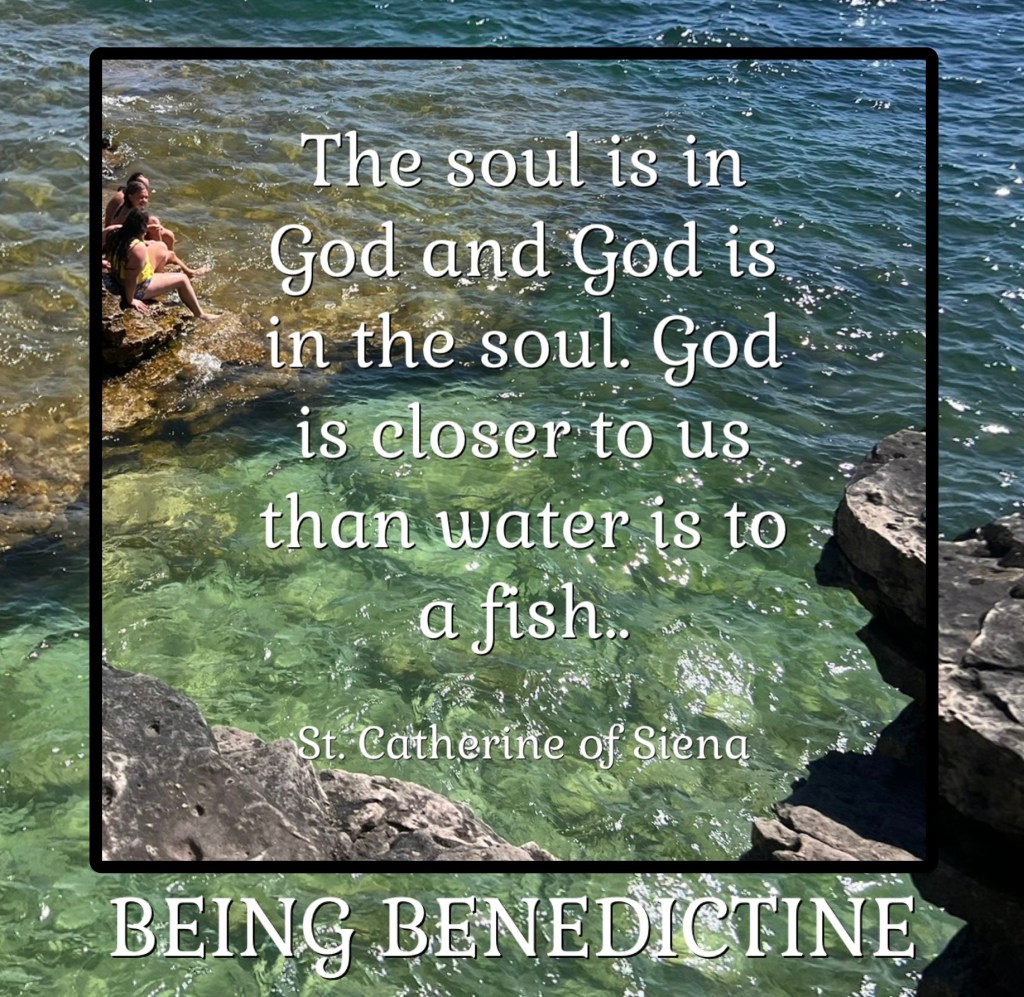
The Divine Presence is Everywhere

September 2023 Lectio Divina and Oblate Reflections

Lectio Divina—Chapters 19 and 20, Rule of St. Benedict

Book DiscussionThe Oblate Life, edited by Gervase Holdaway, OSB, 2008

Being Benedictine is to believe that the Divine Presence is everywhere, as the opening of Chapter 19 in the Rule of St. Benedict states.

“We believe that the divine presence is everywhere and “that in every place the eyes of the Lord are watching the good and the wicked” (Proverbs 15:3). But beyond the least doubt we should believe this to be especially true when we celebrate the divine office.”

Chapter 19, The Rule of St. Benedict

What is the Divine Office?

The Divine Office, also known as the Liturgy of the Hours or Opus Dei, the “Work of God”, is a daily prayer of psalms, readings, hymns, and prayers. Traditionally during a week, with prayers seven times a day, all 150 Psalms are recited by monks. The Psalms are prayers that Jesus and his disciples recited as part of the Jewish liturgy expressing the depth of human experience and emotion from joy, anger, thanks, praise, suffering, sorrow, contrition, petition, and more.

Continue reading “The Divine Presence is Everywhere”

The way and the truth and the life

July 2023 Lectio Divina and Oblate Reflections

Sources

Lectio Divina—I am the way and the truth and the life, John 14:1-12

Book DiscussionThe Oblate Life, edited by Gervase Holdaway, OSB, 2008

Disclaimer:

I cannot claim to have captured all of the wisdom shared in our monthly oblate discussions or that I represent all oblates in attendance. The group discussion is a starting point for this reflection, but it is my interpretation of what I heard and what resonated with me. There could easily be as many different blog posts or reflections as oblates. Each of us comes to Lectio from our personal experience of God at that moment and we receive what we need in that moment as well. The beauty of Lectio Divina is that the reading, insights, and discussion may fall differently on each of our hearts. How blessed we are that there are “many dwelling places” (John 14:2)” and we are all invited to “listen with the ear of the heart.” (RB Prologue)

“Just as the word ‘oblate’ comes from a root word denoting the offering of a gift, each oblate’s life is an offering to God and a gift to the Benedictine community, which is enriched by the oblate’s presence and prayer…. A Benedictine way is not to be harsh or burdensome but is offered to those who seek God and the sweetness of God’s voice.”

The Oblate Life

Do not let your hearts be troubled

The opening verse of John 14:1-12 implies that we can let or NOT let our hearts be troubled. We have agency–we can choose or not to follow the way Jesus shares with his disciples. This way, having faith in God, will relieve us of our troubles. 

In my Father’s house, there are many dwelling places. If there were not, would I have told you that I am going to prepare a place for you?” Jesus asks. As a personal offer, he tells them “I will come back again and take you to myself, so that where I am you also may be.” 

Continue reading “The way and the truth and the life”

Lectio and Visio Divina during Lent

I am always amazed at new understanding and insight that come through meditative reading and discussion. St. Benedict Center is hosting a five-week Zoom retreat called Lent: Lectio and Visio Divina led by Steven Blum, PhD. to provide an opportunity to gain new understanding of often-heard Scripture.

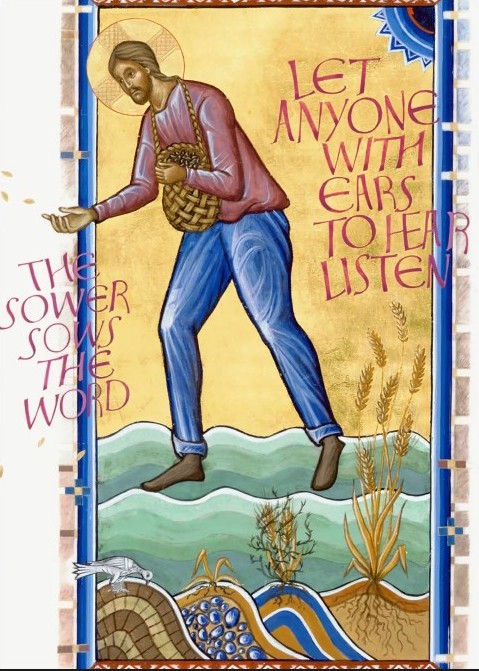
During the first week’s session, we connect with over 140 participants to learn about the ancient practices of Lectio Divina (sacred reading) and Visio Divina (sacred seeing) using the Gospel reading, Mark 4: 13–20 and the Sower illumination from The Saint John’s Bible.

There are four phases of Lectio Divina. The movement through the steps of these practices engages the heart, mind, and spirit, as we sit together in periods of silence, reading, gazing, reflecting, prayer, and contemplation. We seek to have the Lord awaken “the ears and eyes of our hearts.”

In practicing Lectio Divina, after reading the Scripture out loud, we contemplate, consider and reflect on what we have heard. The Scripture is read again, and perhaps again for a third time. After some time of silence, we are welcomed to share or journal a word or phrase that speaks to us.

Continue reading “Lectio and Visio Divina during Lent”

A Quarter-Century of Hospitality and the Saint John’s Bible

A quarter-century of hospitality offered in the cornfields of Nebraska now includes a permanent, interactive exhibit of the Saint John’s Bible (SJB) Heritage Edition, one of the most impressive and accessible displays in the country.

In the spirit of Benedictine hospitality, Saint Benedict Center was established in 1997 on behalf of Christ the King Priory of Schuyler, Nebraska to welcome all guests as Christ, offering a place of peace for people of many faiths who seek God.

On Sunday, July 17, 2022, the 25th anniversary of Saint Benedict Center was celebrated with the Grand Opening of the Saint John’s Bible Heritage Edition Display, set #150 out of a limited edition of #299, gifted during the year Nebraska observed its 150th Anniversary of Statehood.

The Saint John’s Bible is the first handwritten bible commissioned by a Benedictine monastery in more than 500 years. The Heritage Edition is a special leather-bound version, inspired by the original, printed on 100 percent cotton paper. In this state-of-the-art display, visitors can learn how The Saint John’s Bible was made using traditional materials like vellum (calfskin), ancient inks, and quills. They can see each of the Heritage Edition’s volumes in a separate display case and browse through the pages using an interactive kiosk. There is ample space for prayer and meditation using the texts and images.

Continue reading “A Quarter-Century of Hospitality and the Saint John’s Bible”

Being Benedictine: Beginning the Journey

Some things change your life forever—getting married, having a baby, getting a new job, or a promotion. Finding St. Benedict Center in June 2002, twenty years ago, makes my “forever” list. It was the beginning of a connection that has changed my life in countless ways. It started my journey of Being Benedictine.

As a busy mom, wife, and teacher, I had a desire for silence and prayer. I learned about a four-day silent contemplative prayer retreat at St. Benedict Center in Schuyler, Nebraska from an advertisement in our local newspaper. I loved the silence; although the twenty-minute meditation sittings throughout the day were a little more challenging, I knew I would come back to this oasis of peace.

St. Benedict Center sponsors many retreats each year—these opportunities have nurtured my spiritual longing and love of learning. I wasn’t sure if I would come back for a silent retreat, but I knew I would return to this sacred getaway soon. It started out that I came two or three times a year….and it gradually increased over time to be once or twice a month. There was one summer that I came every week, and it was suggested that I build a little cabin out back. I’ve particularly enjoyed attending retreats given by the monks of Christ the King Priory, visiting monks, and by authors like Macrina Weiderkehr (who became a dear friend), Joyce Rupp, Anselm Gruen, Helen Prejean, and Michael Casey. I have even come back for more silent retreats too, and I eagerly look forward to them now.

Continue reading “Being Benedictine: Beginning the Journey”

Sober and Merciful: St. Benedict’s Journey of Mindfulness

The Tesla Roadster is said to go from zero to 60 miles per hour in 1.9 seconds. Whoa!

roadster_front_3_4_canyon_i610x344

Who really needs to go that fast?! I understand better than most what it is like to be running late, hurrying to my destination and feeling like I need to drive a little faster—I’ve been known to have a lead foot in these cases a few too many times.

But is it smart, safe or the best thing for us and others? We know it is a wiser choice to slooooow down.

move slowly

Likewise, I know all too well about reacting emotionally in challenging situations. My temper can go from zero to 60 in about 2 seconds. It is a benefit to slow down my thoughts, emotions, and reactions a bit to gain a better perspective.

The local, national or global news can cause one’s heart to race, from zero to 60, in the time it takes to read or hear just one reported sentence. It is all too easy to get caught up in the “swirl and chaos of fear, violence, and anger assaulting our world today. Practicing soberness means being detached from emotions, both overly negative or positive feelings. It is not good to be “drunk” on either extreme.” (Discerning Hearts)

Alternatively, we can meet all challenges with an attitude of soberness.

Fr. Mauritius Wilde, Prior of Sant’ Anselmo in Rome and former prior of Christ the King Priory in Schuyler, Nebraska, has a podcast series on the Benedictine understanding of sobriety. He will also return to Nebraska to lead a retreat at St. Benedict Center, July 29-31, 2022 called Sober and Merciful: Saint Benedict’s Journey of Mindfulness. Continue reading “Sober and Merciful: St. Benedict’s Journey of Mindfulness”

A Divine Encounter: Trusting the Journey

My cup was running empty. Six surreal months of the pandemic, political turmoil, and feelings of anxiety facing an uncertain and challenging school year has taken its toll on my mind, body, and spirit. Finally, the timing was right this weekend, and it felt safe to return to my spiritual home, St. Benedict Center. It takes just moments for a deep peace to settle in as I take my overnight bag to my room and head outside to enjoy a beautiful afternoon.

116916277_10222963136257240_3749772427087622852_n117062897_10222963135217214_8130899880834325615_n

Wandering the path around the lake, I see Ellen, a fellow pilgrim from last summer—which feels like a warm bath of blessings. I had been looking forward all week to reconnecting, knowing she would be there.

Suddenly I hear a shout, “Surprise!”  Sara, a special friend, Oblate and SoulCollage® companion, is running towards me with open arms despite all COVID caution.  I exclaim, “I didn’t know you were going to be here!” Sara repeats “I didn’t know you were going to be here!” There may have been more exclamations of “I can’t believe this!”, “Oh, my God!” and finally, “Did you bring some of your SoulCollage® cards?” We decide to meet later to share some of our cards and seek them for guidance—what we call “a reading.” Continue reading “A Divine Encounter: Trusting the Journey”

Blog at WordPress.com.

Up ↑