Search

Being Benedictine

Living SoulFully as an Oblate of St. Benedict

Category

Teaching

Curiosity is good for the soul, and for democracy too!

Cultivating curiosity is Being Benedictine.

As an educator and lover of learning, I appreciate the reference to schools in the Rule of St. Benedict. In the Prologue of The Rule, Benedict writes that the monastery is “a school for God’s service.” Whether in the monastery, home, or work—we are learning to live and love in community. Our life is a school of becoming—a continual learning.

Learning does not happen in solitude.

“A school is a community of learners: a group that comes together to learn with and from each other…education should expand our consciousness, capabilities, sensitivities, and cultural understanding. It should enlarge our worldview.”  –What Is Education For? by Sir Ken Robinson and Kate Robinson, Edutopia, March 2, 2022.

As a teacher, whether it was my high school students or those who attend retreats I lead, I appreciate a curious learner—someone who is open to new ideas, willing to listen, to question, to consider diverse perspectives, and, with humility, understand that there is always something new to learn.

Curiosity is a good first step toward living SoulFully and being Benedictine.

Being Benedictine, in my experience, is a genuine attempt to meet others in love and compassion, listening with the intent to understand, encouraging inclusiveness, and respecting diversity.  It is a blessing to share our feelings, faith, or perspectives and to have someone truly listen, especially those who might believe differently. Listening is the doorway to learning from others and growing in compassion; curiosity is the key.

“The spiritual life takes discipline,” Joan Chittister writes in The Rule of St. Benedict, A Spirituality for the 21st Century. “It is something learned, to be internalized. It’s not a set of daily exercises; it’s a way of life, an attitude of mind, an orientation of soul. And it is gotten by being schooled until no rules are necessary.”

Curiosity is good for the soul.

In Women Who Runs with the Wolves, Clarissa Pinkola Estes, defines the wild woman archetype as one who listens deeply, is intuitive, creative, playful, courageous, curious, loyal, and passionate. There is some wildness of divinity in us all, calling us to live fully, to reach beyond ourselves and, to discover something new. “When you limit your life to the one frame of thinking, you close out the mystery,” writes John O’ Donohue in Eternal Echoes: Celtic Reflections on Our Yearning to Belong.

Curiosity is good for community. Wonder is good for the world.

Wonder, my 2023 word of the year, is an attitude of curiosity, a willingness to withhold judgment, and to be open to what happens. Dacher Keltner in Awe: The New Science of Everyday Wonder and How It Can Transform Your Life writes, “People who find more everyday awe show evidence of living with wonder. They are more open to new ideas. To what is unknown. To what language can’t describe…to the strengths and virtues of other people.”  

Is it possible to behold our neighbor with wonder, in the spirit of hospitality? Could we hold a curious heart even when we passionately disagree with one another? Rather than defaulting to the shoulds and should-nots of orthodoxy, or a deeply held conviction, could we practice curiosity instead? Rather than seeking to change another’s opinion or defend our own, could we simply stand in awe of this great universe that holds such diversity of thought? Is it possible to let a disagreement stand to the side, while the desire to learn about the other steps forward?

Curiosity leads to wonder. Wonder leaves room for the unexpected, for learning something new.

This is how Lectio Divina, the Benedictine practice of sacred reading, can work in community. We hear different perspectives, drawing on the experiences and insights of those in our community. We can release the need for the one right way to interpret what we read and be curious about what others bring to the table. I share reflections from the richness of our oblate community discussions on this website but with a disclaimer,

“I cannot claim to have captured all the wisdom shared in our monthly oblate discussions or that I represent all oblates in attendance. The group discussion is a starting point for this reflection, but it is my interpretation of what I heard and what resonated with me. There could easily be as many different blog posts or reflections as oblates. Each of us comes to Lectio from our personal experience of God at that moment and we receive what we need in that moment as well. The beauty of Lectio Divina is that the reading, insights, and discussion may fall differently on each of our hearts. How blessed we are that there are “many dwelling places” (John 14:2)” and we are all invited to “listen with the ear of the heart.” (RB Prologue)”

Curiosity is good for democracy.

In Healing the Heart of Democracy: The Courage to Create a Politics Worthy of the Human Spirit, Parker Palmer encourages us to consider “What do I have in common with people who, for example, regard their religious or political convictions as so authoritative that they feel no need to listen to anyone who sees things differently—especially that small subgroup of extremists who would use violence to advance their views?”

This can be difficult. I get it. I know too well how disagreements can escalate, and how estrangements result. I have appreciated discussions where curiosity is a motivation to more deeply understand, but I also know the heartbreak of rejection when another is not interested in my story, feelings, or perspective. The door is slammed shut for exploring possibilities, another proclaims they know what they know and there is no need to share ideas or learn something new. But I believe for many situations curiosity, wonder, listening, and a little respect could be the remedy. It may not change minds or beliefs, but it can change hearts. I believe, as Palmer does, that I can find even “the smallest patch of common ground” with others whose views are different than mine. I can disagree with another while also being Benedictine.

Continue reading “Curiosity is good for the soul, and for democracy too!”

St. Brigid of Kildare: Standing on the Threshold

What do a threshold, a cow, fire, and water have in common? 

St. Brigid of Kildare! 

Recently I was introduced to St. Brigid while preparing for a Celtic Christianity pilgrimage and she could not have arrived at a more apt time for me. Admittedly, I’ve fallen down the rabbit hole (or holy well?) of the legends and stories of St. Brigid, a 5th-century abbess and founder of monasteries. St. Brigid is known by many names —Bhride, Bride, Brighid, Brigid, Bridget—and many titles including Muire na nGael (Mary of the Irish) Brigid of the Mantle, Brigid of the Fire, and Mary of the Gael. Brigid is recognized as the patron of midwives including new beginnings, birth, thresholds, and transformation. She has also been linked to fire, blacksmiths, wells, healing waters, springs, and poets. This year, 2024, is the 1500th anniversary of the death of St. Brigid with many celebrations and for the first year has been declared a national holiday in Ireland.

The Threshold

Legend holds that Brigid was born in the doorway of a barn at dawn, at the threshold between light and dark, inside and outside, winter and spring. She is celebrated on February 1, the anniversary of her death, and the same day as the Celtic Feast of Imbolc. Imbolc, a celebration of the Celtic sun goddess Brigid is the halfway point between the Winter Solstice and Spring Equinox in the Northern Hemisphere. Imbolc, which literally means “in the belly”, celebrates the change of seasons, a threshold time of welcoming more sunlight in the day. What is hidden in the earth’s dark belly is beginning to stir—darkness gives way to light and spring is coming!  

Continue reading “St. Brigid of Kildare: Standing on the Threshold”

The Wonder of Work: A Labor Day Reflection

This Labor Day, a day of rest after starting my 27th year of teaching, is an opportunity to reflect on the first four weeks of the 2023-2024 school year. Our first week back to school, sans students, is solely intended for teacher professional development, meetings, reconnecting with coworkers, and planning for new classes. 

At our LSE Staff Back to School Day, teachers were asked to consider what Knight Pride means, and what makes Lincoln Southeast High School uniquely LSE. My response, in a word, is tradition. Celebrating and learning from our history helps shape who we are. Carrying a strong tradition into each new year, adapting to new challenges, and balancing empathy with high expectations capture our essence. We have cultivated close relationships in each of our departments creating a smaller community, a school family, within the larger community of Lincoln. This is #knightpride!

*The Knight is our mascot. Pride is an acronym we use to encourage positive behaviors and values in the classroom. PRIDE stands for Personal Responsibility, Respect, Integrity, Determination, and Excellence. 

Why are we here? 

Remembering our purpose can be helpful when teaching day-to-day gets challenging. The purpose of my work, believing that learning is the greatest gift of being human, is what makes me come alive. Fostering curiosity, wonder, and the love of learning with co-teachers and students is my motivator. 

How do we show our passion and purpose?  

In The Monastic Way, September 2023 issue, Joan Chittister writes, “Good work is work that develops us as we develop it.” Modeling curiosity and wonder by committing to my own learning shows students that learning is a purposeful, lifelong endeavor. Each year, I commit to creating lessons that inspire curiosity while also communicating the connections between what we are learning and the value to my students’ lives. Students must understand their why.

What outcomes do we desire? 

Relationships with former students are the greatest reward from my years of teaching. Seeing these young adults share their Knight Pride as LSE alumni at school events and as contributing members of their community is a great joy. I wish for all my students—that their life is better because of what they learn; that they have aha moments now and, in their future; that they build career and life skills; and that they become lifelong learners. Joan Chittister shares, “Work is the gift we give to the world. That’s why it’s so important that what we do for a living has value, not simply for ourselves but for the world at-large.”

Continue reading “The Wonder of Work: A Labor Day Reflection”

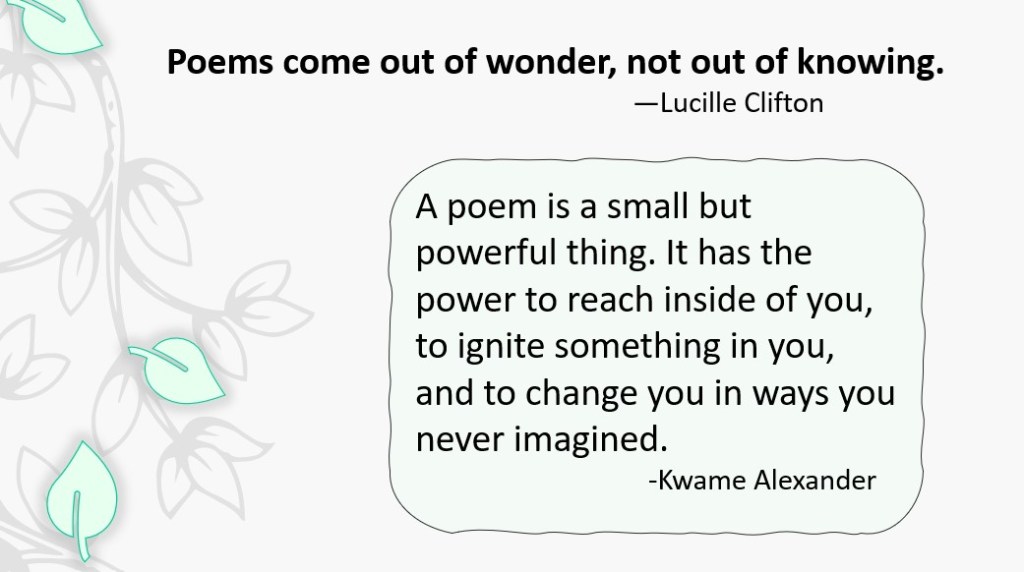
Poems Come Out of Wonder

After canceling everything on my calendar this weekend (between a teacher work week and our first week with students….yes, eye twitching and back-to-school dreams are real), I revisited a poem and a SoulCollage® card I created on The Grandeur of God: Living Life with Wonder and Awe retreat. I gave myself permission to hunker down, pull back from social activities, and center myself in silence and solitude for my 27th year of teaching.

I love this poem from a book called Out of Wonder: Poems Celebrating Poets.

“Majestic” (Celebrating Maya Angelou)

I am one who” reflection:

It is only after taking time to pause, that I am able to celebrate “the wonder of daybreak.”

I will be phenomenal after a weekend of rest.

© Jodi Blazek Gehr, Being Benedictine Blogger

The Gift of Curiosity: There is no such thing as wasted learning!


Curiosity is the dawn of potential–a desire to learn something new, grow in awareness, and become more than we could be on our own. Curiosity, the birthplace of our becoming, is embodied in WONDER, my 2023 Word of the Year.

I think, at a child’s birth, if a mother could ask a fairy godmother to endow it with the most useful gift, that gift would be curiosity.

Eleanor Roosevelt

Surely my dad was blessed by a fairy godmother, endowed with the gift of curiosity, and he passed that down to me. Many Saturday mornings in my childhood, my dad would take my brother and me to local historical attractions and museums, and tell us stories about the “old days.” In retirement, my dad is passionate about learning history, particularly about his hometown of Valparaiso, compiling several books with the research he has done. His hobby and passion started with curiosity.

There are many similarities between my dad and me, even though how we have arrived at our curiosity and love of learning is different. I enjoyed the traditional school setting, spent many hours “playing school,” and was naturally drawn to becoming a teacher. He had an aversion to school and could not wait to get out. But, we both share a passion for gathering information, learning, and, then, sharing what we learn with others. It is an attitude of wonder and the love of storytelling that motivates us.

Wonder, the mental state of openness, questioning, curiosity, and embracing mystery, arises out of experiences of awe.

Dacher Keltner, Awe: The New Science of Everyday Wonder and How It Can Transform Your Life

WONDER opens our eyes to synchronicity.

WONDER leaves room for the unexpected, for learning something new.

Curiosity led to an unexpected experience of “teachable moments” on a recent trip to Breckenridge, Colorado. My husband and a few family members took to the ski slopes, while my brother-in-law, Mark, and I did some sightseeing and enjoyed the mountain vistas. 

A day for wandering, we visited the Breckenridge International Snow Sculpture Championships and enjoyed a scenic gondola ride to the base of Peak 8. We sauntered by dozens of buildings listed on the National Register of Historic Places and stumbled upon a local church where a couple invited us in, sharing the building history and pointing out the original fixtures that shined the first electric lights in Breckenridge. We ambled into souvenir shops with coffee mugs, hats, and shirts–anything that a mountain logo could be printed on–and we walked past the Barney Ford House Museum. I had done plenty of research before this trip (of course), but I hadn’t planned to visit this museum. 

But now I wondered who Barney was and why he had a museum in his honor. With one more day to wander, I sought more information. With an internet search for the Barney Ford House Museum, I learned Barney is a pretty big deal in Breckenridge, that a PBS documentary had been recently filmed about him, and that the following day, February 1, was the first day of Black History Month AND Barney Ford Day in Colorado. Astonished by the synchronicity of learning about Ford just a day before this important date, I spent an hour watching the documentary. I was stunned by what I learned–the story of an enslaved man who, against all odds, becomes a successful entrepreneur. I teach an Entrepreneurship class, so I was already making plans to share Barney’s story with my students.

Continue reading “The Gift of Curiosity: There is no such thing as wasted learning!”

A Flag Day Reflection

Each school day during my 5th-period class, I stand with my students, hand over heart, pledging allegiance to the Flag of the United States of America and to the Republic for which it stands, one Nation under God, indivisible, with liberty and justice for all. 

This simple moment of national patriotism is a requirement in Nebraska, a rule passed by the Nebraska Board of Education in 2012 stating that all public schools must provide time each day to recite the Pledge of Allegiance in order to receive accreditation or state funding. Already common practice in elementary schools and many districts, it was new for most high school students.

When the rule passed ten years ago, I remember teachers taking inventory of classrooms that needed flags—many were old and torn, more had been discarded over the years, and with tight budgets, new ones hadn’t been purchased. The first several weeks, hand over heart, we stood facing an 8½ x 11 colored photocopy of the flag until generous alumni donated enough American flags for every classroom.

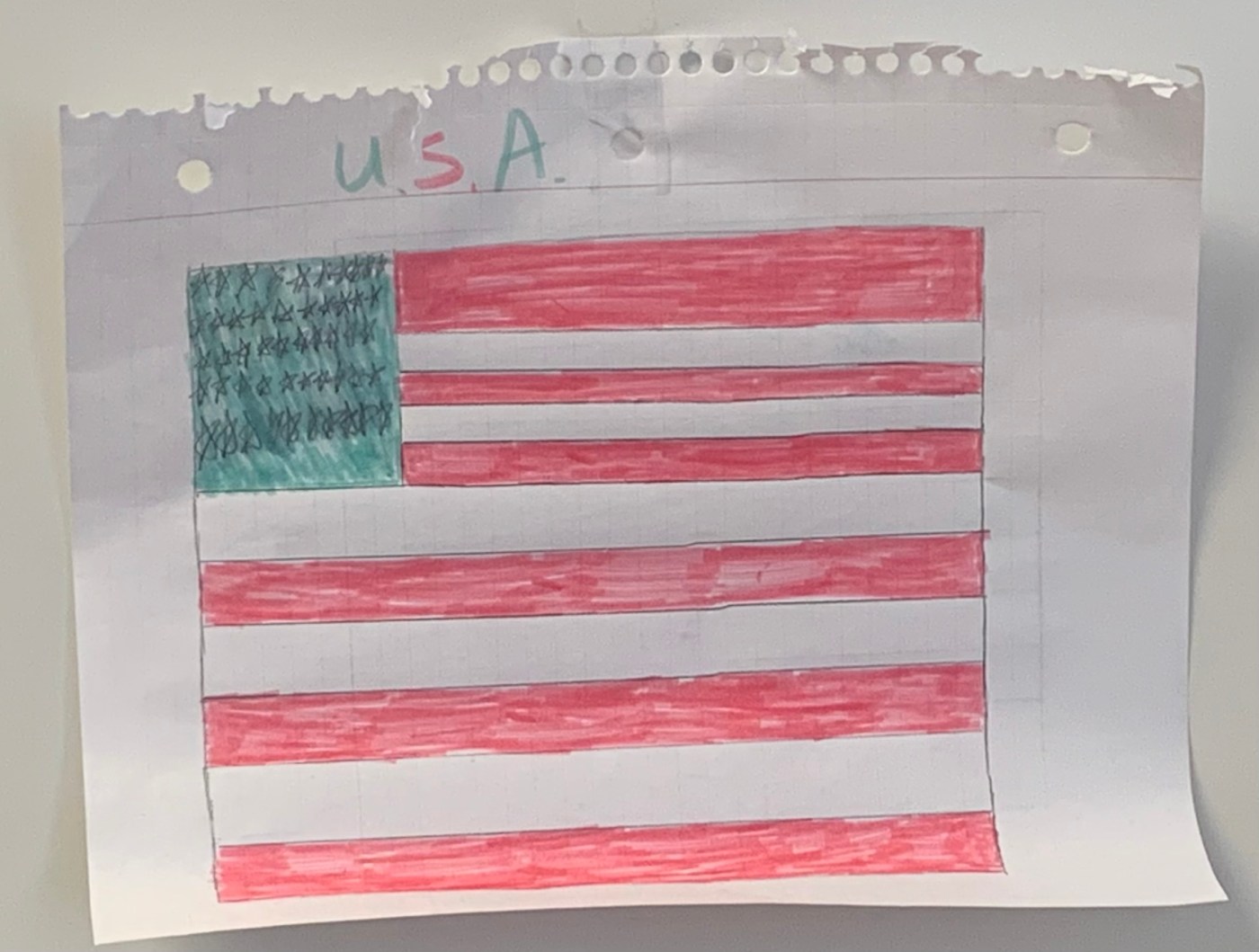
This school year, likely in response to a Tik-Tok challenge to steal things from schools, my American flag went missing. As my students stood to recite the pledge one morning, we shared shocked expressions, realizing there was NO flag where there had been the day before. We continued reciting the pledge and then a creative student quickly drew an image of the flag to post where the flag should have been. The kind gesture soothed my anger at having the flag stolen (along with every electric pencil sharpener in the room.) It still hangs beside a replacement flag.

Continue reading “A Flag Day Reflection”

Our (Piano Teacher) Family Tree Includes Beethoven!

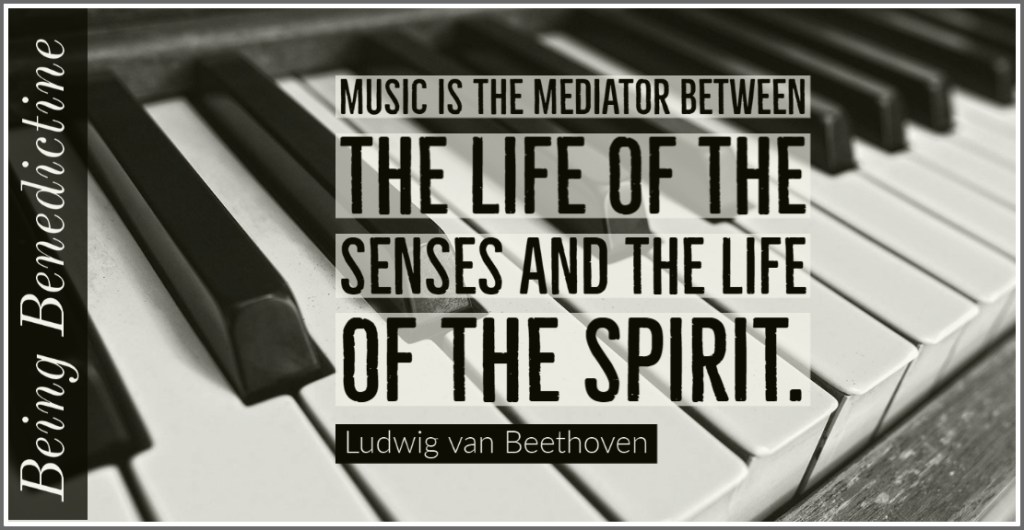
Ludwig van Beethoven was born in Bonn, Germany in December 1770—250 years ago. A long-awaited celebration for music aficionados, over 300 concerts and other projects had been planned in Germany, and many others around the world, to celebrate one of the most performed of all classical music composers. Unfortunately, the pandemic resulted in events being postponed or adapted for a virtual audience.

This significant date, 250th birthday of Beethoven, was the nudge I needed to write the story of the family tree that includes my daughter, Jessica, as a direct descendent of Beethoven—as a piano player.

Jessica played piano from her Kindergarten year until she entered high school under the tutelage of Ceil Brown, 1953- 2010. Ceil learned to play piano from Marie Ducey, who she spoke of so highly. Marie Ducey took piano lessons from James Madison Tracy, 1837-1928.  Tracy and his wife established the Liszt School of Music in Denver in 1910, named in honor of his piano teacher, Franz Liszt.

Franz Liszt, 1811-1886, one of the greatest pianists of all time, a Franciscan lay associate, was known to have never charged his students for piano lessons. Liszt learned from Carl Czerny, 1791-1857, an Austrian composer, teacher, and pianist of Czech origin whose vast musical production amounted to over a thousand works. His study books are still widely used in piano teaching. And….drumroll, please….Czerny was trained by Ludwig van Beethoven.

Our family is proud to be in this distinguished family tree of musicians and lovers of music.

Jessica describes Ceil, her piano teacher, as patient, gracious and calm. Ceil was an extraordinary teacher who appreciated individual student strengths and abilities. I delighted in hearing the conversations between her and Jessica. Ceil treated her as person, not like a kid as so many adults can do. When Jessica did not like a piece of music Ceil had selected for her to learn, Jessica was not afraid to say it. Ceil would go to her bookcase and look for another piece. I remember one occasion when Ceil looked three or four times for music that would suit Jessica’s style and interest (in a 45-minute lesson!)

Continue reading “Our (Piano Teacher) Family Tree Includes Beethoven!”

Work is the Friend of the Soul: #TeacherStrong and Grateful

I have just completed four weeks of teaching students in the middle of a pandemic. Not a boatload of people throughout history can make that claim. It is not normal. While it is much harder than I could have imagined, it also feels safer than I had feared. It feels good to be back to school…and it feels so good that it feels good, especially after so much anxiety about going back. It feels like a perfect fitting glove to be back in my role as teacher. It is where I belong. I feel #TeacherStrong and am filled with gratitude.

“We experience that work is not only a necessity and hard labor…but our work brings us likewise joy and fulfillment, a sense of accomplishment. We grow and develop ourselves in our work. It becomes part of who we are. However, we are more than our work. Any serious effort that enhances and enriches our own and other people’s life can fill us with joy and gratitude.”

Maria-Thomas Beil, OSB, Study Guide for the Rule of St. Benedict

Twenty percent of our students have chosen to participate in remote learning—they Zoom in from home to their classes every day. I have seen their faces (for some of the time) but have not gotten to know them very well yet. Eighty percent of our students, who I have come to recognize from their eyes up only, are doing a hybrid version of in school and remote learning—attending classes 2-3 days a week in person and the other days Zooming with the fully remote students. The fancy word for this is “synchronous learning.” It means I am teaching students at home and online simultaneously while students are adapting to new ways of learning.

It is taking a lot of resilience, creativity, and hard work for all of us to adapt to this new way of teaching and learning. I have gathered so much strength and peace from the Benedictine motto—ora et labora, pray and work. Before school started, I spent time with soulful friends and in solitude creatively praying with SoulCollage®. I felt a seismic shift within that allowed me to detach from my fears, to separate myself from the circumstances of going back to school and to focus on the needs of my students. It truly has been a “Seek Peace and Pursue It” experience. The peace has remained for four weeks—I am grateful.

Continue reading “Work is the Friend of the Soul: #TeacherStrong and Grateful”

Why I Teach

In honor of Laura Ingalls Wilder’s birthday February 7,  1867, a personal essay on why I teach. 

Childhood Dreams

As early as kindergarten, I identified teacher as a potential
occupation
in my “School Years” book, a collection of elementary school Kindergarten teachermemories. My kindergarten-self chose nurse, teacher, model, and mother as possible career and life choices, although the options were limited to traditional girl-jobs only. (I’ve wondered why I didn’t dare to select baseball player or astronaut. Was it because those jobs did not interest me or did I not consider the boy-jobs? Or why were airline hostess and secretary NOT of interest to me?) Female stereotypes aside, by fourth grade, I had wisely eliminated model and nurse (yuk and yuk!!), leaving teacher and mother.fourth grade

I was interested in learning and teaching as soon as I was old enough to work my way through phonics, spelling and math workbooks, just for fun. And then creating worksheets and math problems, grading spelling quizzes and making lesson plans became my childhood joys. My brother was my first student and I worked him pretty hard. I remember taking the graded assignments I’d assigned to him to my fourth-grade teacher, proudly showing her what I was helping him accomplish outside of school hours. Rather than receiving the anticipated (and sought-after) praise, she promptly told me I should back off and not force him to be my student anymore or he might hate school—my first humbling opportunity at professional self-reflection.

BooksLaura Ingalls Wilder was my childhood heroine. Pioneer girl turned teacher; wide-open prairie sky and her own classroom, from Little House on the Prairie to These Happy Golden Years —I wanted to BE Laura. I admired her sense of self-confidence and independence, how she encouraged students to overcome learning challenges, many not much younger than her. (I am such a huge fan of Laura Ingalls Wilder that when my daughter could barely read I bought the entire book series,  picture books and television movies for her and also road-tripped to Mansfield, Missouri to see the house where Laura penned all of the Little House books. Quite a thrill!)

All the evidence indicates that, if I wasn’t born with the desire to teach, the passion was stirring when I was very young.  Continue reading “Why I Teach”

Blog at WordPress.com.

Up ↑