“What a gift Jana has created. Curlers, Church & Whales is funny, wise, and deeply human. The blend of humor, depth, and grounded science is just perfect. I especially loved the gentle reminders to slow down and drop in, and the way the story comes full circle at the end — it’s stunning. I am honored to know Jana and have been a witness of her journey. She has turned her own challenges into something so beautiful and life-giving. What a blessing for everyone who gets to read it.” — Kathleen Amyot, MD
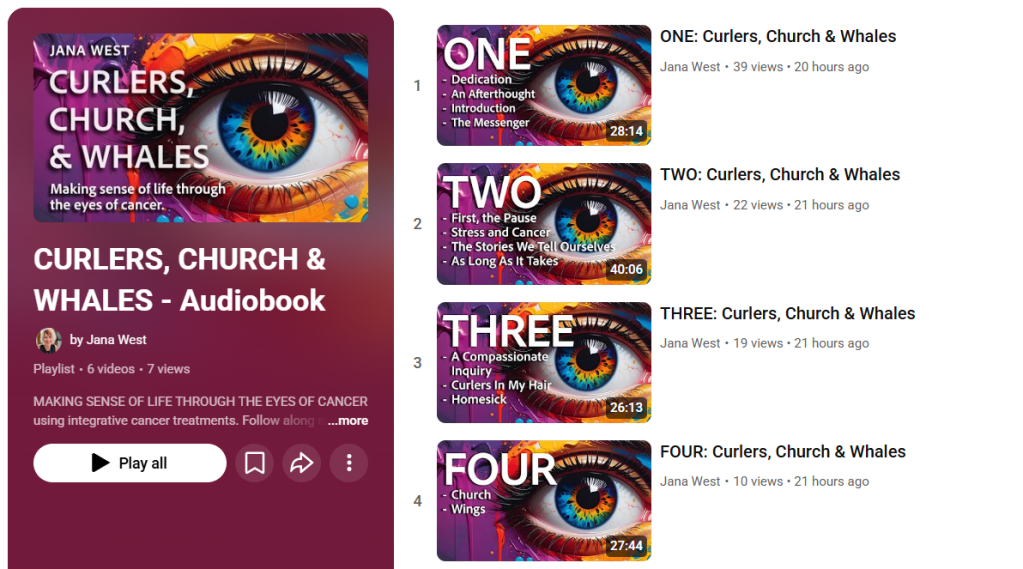
“Wow, wow, wow” was my reaction after Jana West sent me a preview copy of her memoir in early 2025, and now she is making it available as an audiobook, free on YouTube in six 30-minute segments.
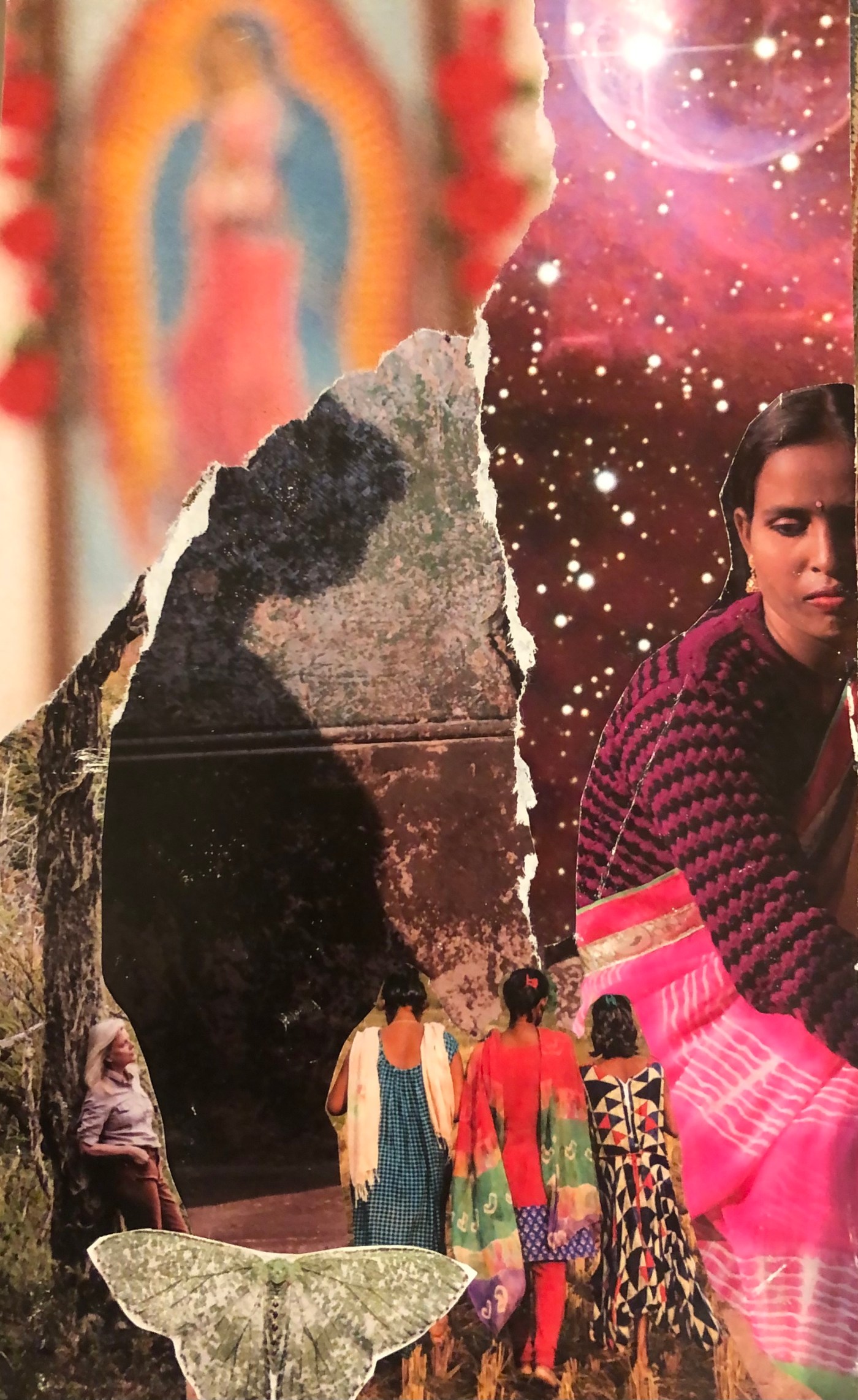
I met Jana through a mutual SoulCollage® friend, and ever since, she has been a kindred spirit at many of the retreats I have guided. After receiving a breast cancer diagnosis, Jana found guidance and comfort from a SoulCollage® card she had created. To find healing, restore wellness, and prevent a recurrence of cancer, she began a search to learn about traditional and alternative forms of cancer treatment.
The search also turned inward. Jana writes about becoming attentive to and listening to her body, learning from her inner dialogue of shame-filled messages, navigating stressful situations, and making peace with past trauma, including religious and career choices that did not serve her well.
Jana remembers a handwritten note that her mother kept in her baby book, which gave her some clues to her childhood— “Jana, age 5, I am allergic to curlers in my hair, church, and whales.” As Jana considered what she had been allergic to (or found stressful), it helped her to practice self-compassion.
Jana shared, “A central theme (of the memoir) is the guidance I received from a SoulCollage® card…It’s been so incredibly powerful.” SoulCollage, a creative and intuitive act of cutting and pasting images into a collage, is more than a craft project; it is a form of self-reflection and prayer. Images can guide you to a new level of awareness and reveal a deeper understanding of thought and feeling.
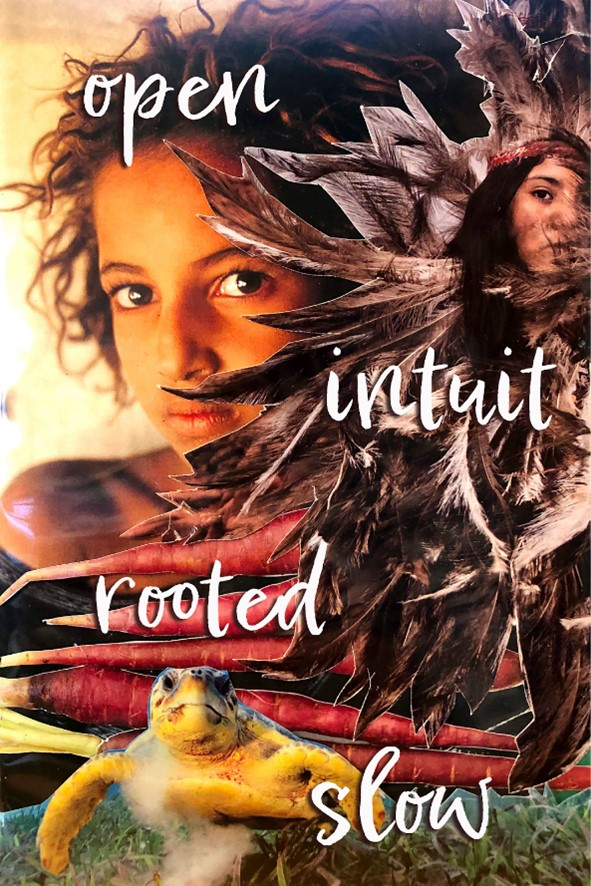
Remain open like a child. Your inner Sage knows. Return to your roots for support in times of stress. Slow down and go easy so you don’t miss the most important things. OPEN, INTUIT, ROOTED, SLOW. More at Homecoming: A Window to the Soul
I carefully consider everything that I write and share here, especially the more personal or contentious reflections. I rarely write and post on the same day. Not so with my speech. I find myself saying often enough, “Did I just say that out loud?” Words fly out of my mouth much faster than they flow from my pen or keyboard.
Perhaps this is why I enjoy journaling and writing so much. It slows my mind down. In silence, I can be more deliberate, careful, and organized in what I share. A healthy respect for silence could save me some angst in times when my mouth works faster than my mind.
At our annual oblate retreat, with the theme “Building Community Through Our Oblate Promises,” the importance of silence was the topic of the opening session led by Fr. Thomas Leitner, the administrator of St. Benedict Center and a monk who lives at the monastery across the road. Throughout the weekend, we would learn about and practice silence.
Why is silence so fundamental to Benedictine spirituality?
Silence is the way to self-knowledge. A discipline of silence confronts us with ourselves. “Silence is a way for us to put up with ourselves the way we are. Not everything that comes to mind at times of silence is pleasant. Repressed needs and wishes may come up, repressed anger, and perhaps missed opportunities,” Fr. Thomas shared. Silence gives our wounds space to surface, allowing us time to wrestle with and soothe our pain in healthy ways. Silence allows us to see ourselves unfiltered without the influence of others.
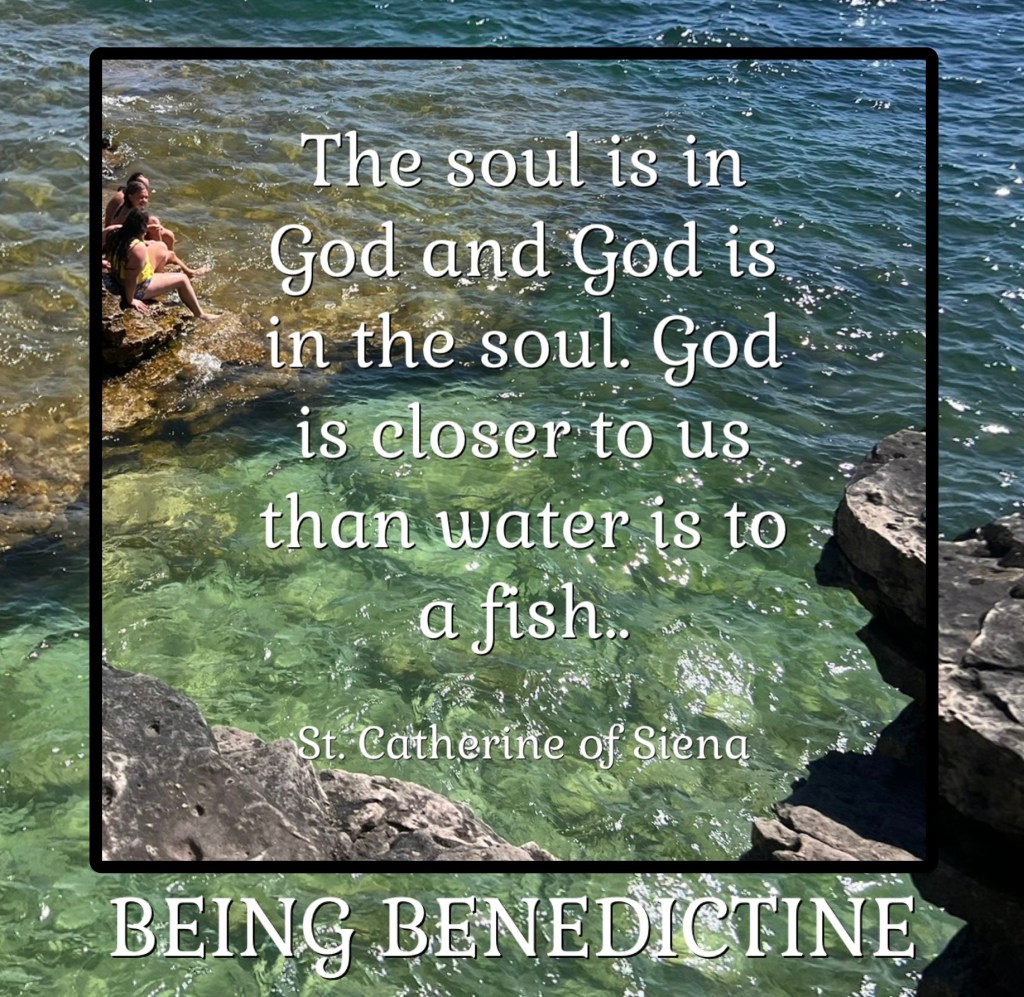
In The Interior Castle, St. Teresa of Avila uses imagery of a castle for our soul, emphasizing “how necessary this room (of self-knowledge) is…we shall never completely know ourselves if we don’t strive to know God.” She writes that God dwells within us, and to know God, we must first know ourselves. Hard, but necessary, work to “know thyself,” as the ancient Greek maxim suggests.
Silence connects us to the Divine. Seventh-century bishop and theologian, St. Isaac of Syria, writes:
Try to enter into your treasure house and you will see the treasure of heaven. For both the one and the other are the same, and the one and the same entrance reveals them both. The ladder leading to the kingdom is within you, that is, in your soul.
We enter this “treasure house,” our very soul, through the practice of prayer. Some of us may be conditioned to think of prayer as a transactional bubble-gum-machine approach to asking God for what we want. We put in a coin; God supplies the big gumball. Our prayers are “answered.” Yet this is not the kind of prayer that leads to self-knowledge or to a connection with God. Consider a poem by the 19th-century Danish theologian Søren Kierkegaard that points to a different kind of prayer.
As my prayer became more and more devout and interior, there was less and less I had to say. Finally I became completely still.
I became— this is perhaps an even greater contrast to talking— I became a listener.
First I thought praying is talking. I learned, however, that praying is not only silence, but listening.
That’s the way it is: Praying does not mean hearing oneself speak, praying means becoming still and being still and waiting until I hear God.
-Søren Kierkegaard
Silence builds confidence and leads to self-respect.
“As my prayer became more and more devout and interior,” I come to know myself with greater depth. This knowing builds my confidence: I have been created just as I am, in the image of God. I forgive myself for weaknesses and celebrate my gifts. I seek less approval from others. I have “less and less” to say to justify, convince, or plead my case of worthiness to myself or others.
Teacher, writer, and friend, Parker Palmer, writes, “One of our most debilitating illusions (is) that the answer to our problems is always ‘out there’ somewhere, never ‘in here.’ It’s an illusion that’s constantly reinforced by educational and religious institutions that make us dependent on “experts” and “authorities.” We need not look for knowledge in others; we can trust our own interiority, the Divine Expert Within. I can grow in self-respect, knowing God is within me, intimately speaking to me when I am silent long enough.
Growing up in Nebraska, I was always a little jealous of the families who vacationed every summer at Lake Okoboji. It seemed like something people of means and importance did—going to the same place each year because it was so fantastic and familiar, renewing connections made the year before.
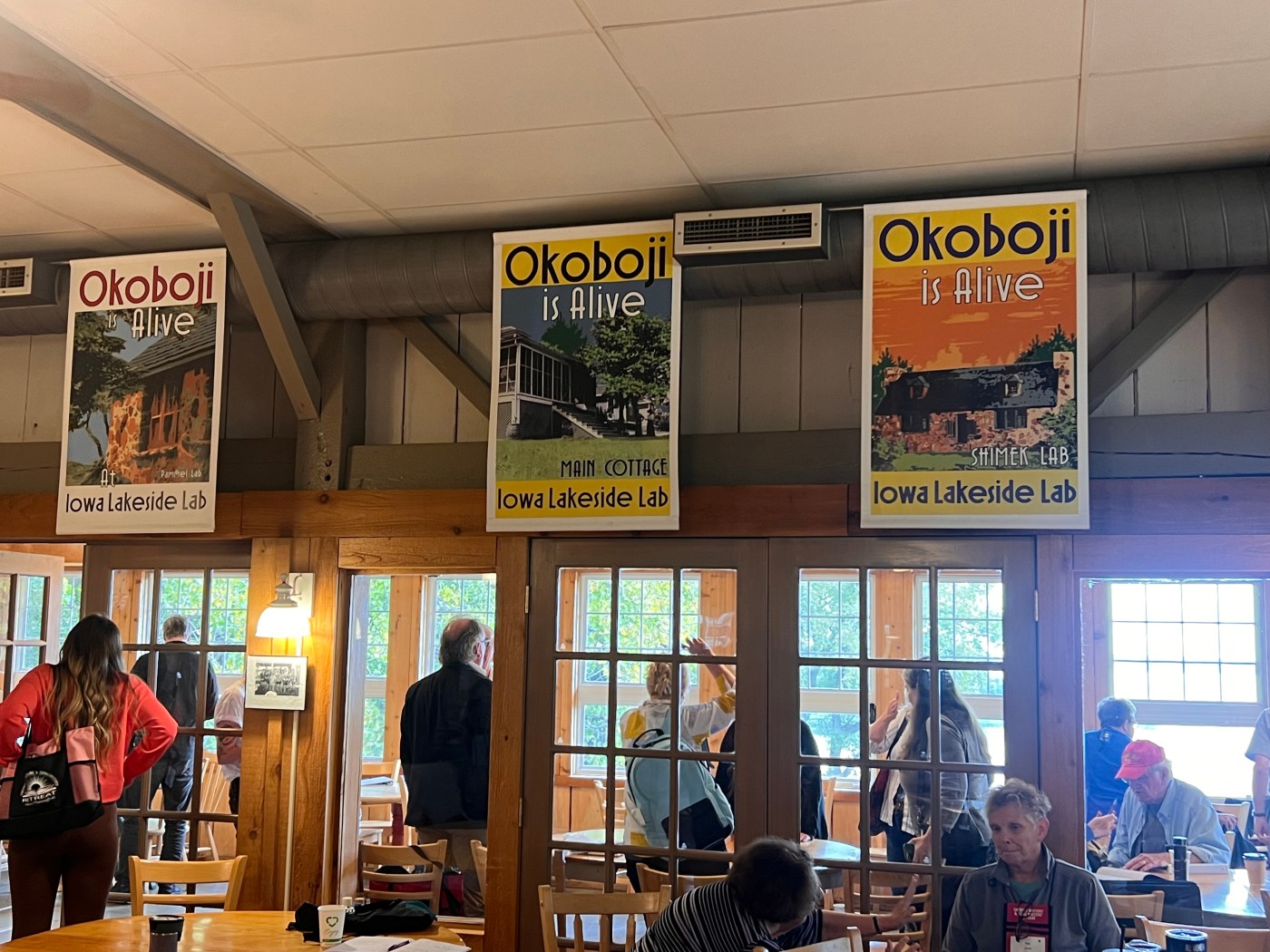
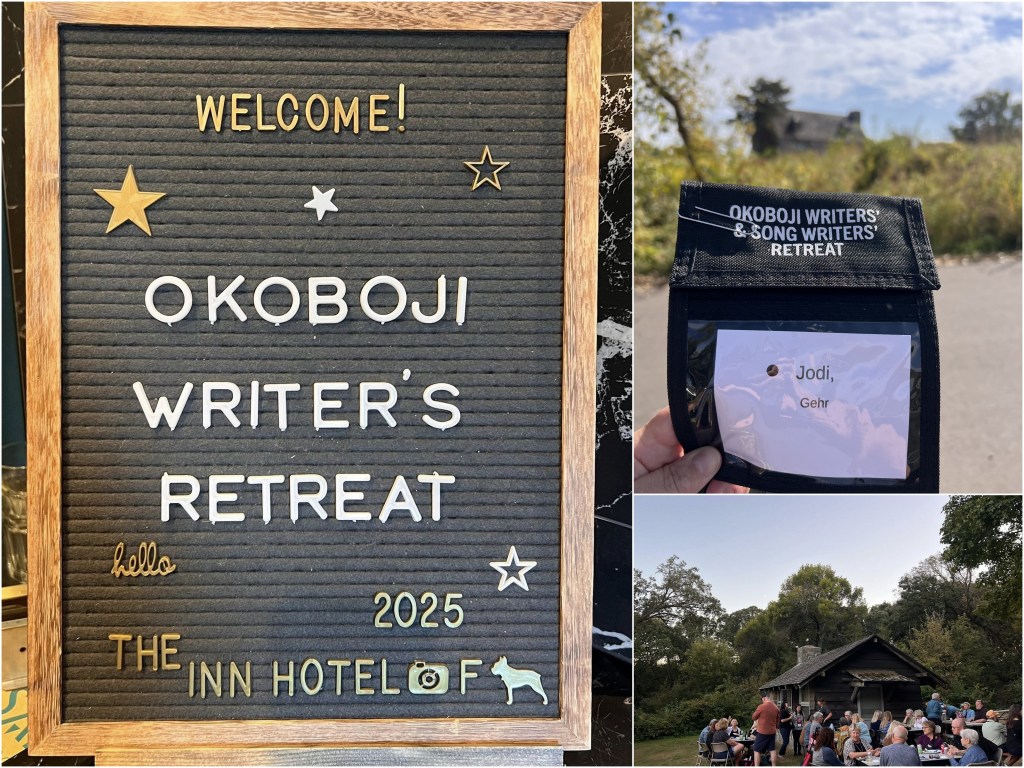
I was certainly impressed by the stories I heard. And it was storytelling that took me to Lake Okoboji for the first time in my 59-year-old life for the Okoboji Writers’ and Songwriters’ Retreat.
With countless ideas for creative writing projects, I took my grown-up self, with memories of keeping childhood diaries, attending high school journalism camp, and writing for the Daily Nebraskan in college, to explore the dream of writing a book. In my adult years, I have filled hundreds of journal pages, written nineteen chapters for a potential book, and shared 269 blog post reflections at Being Benedictine. I am SO excited about what I learned at the Okoboji Writer’s Retreat, which will help guide me in my next steps. I will be long impacted by the creativity, gratitude, humor, music, enthusiasm, political discussions, inspiration, spontaneous mentoring, and connections formed at OWR.
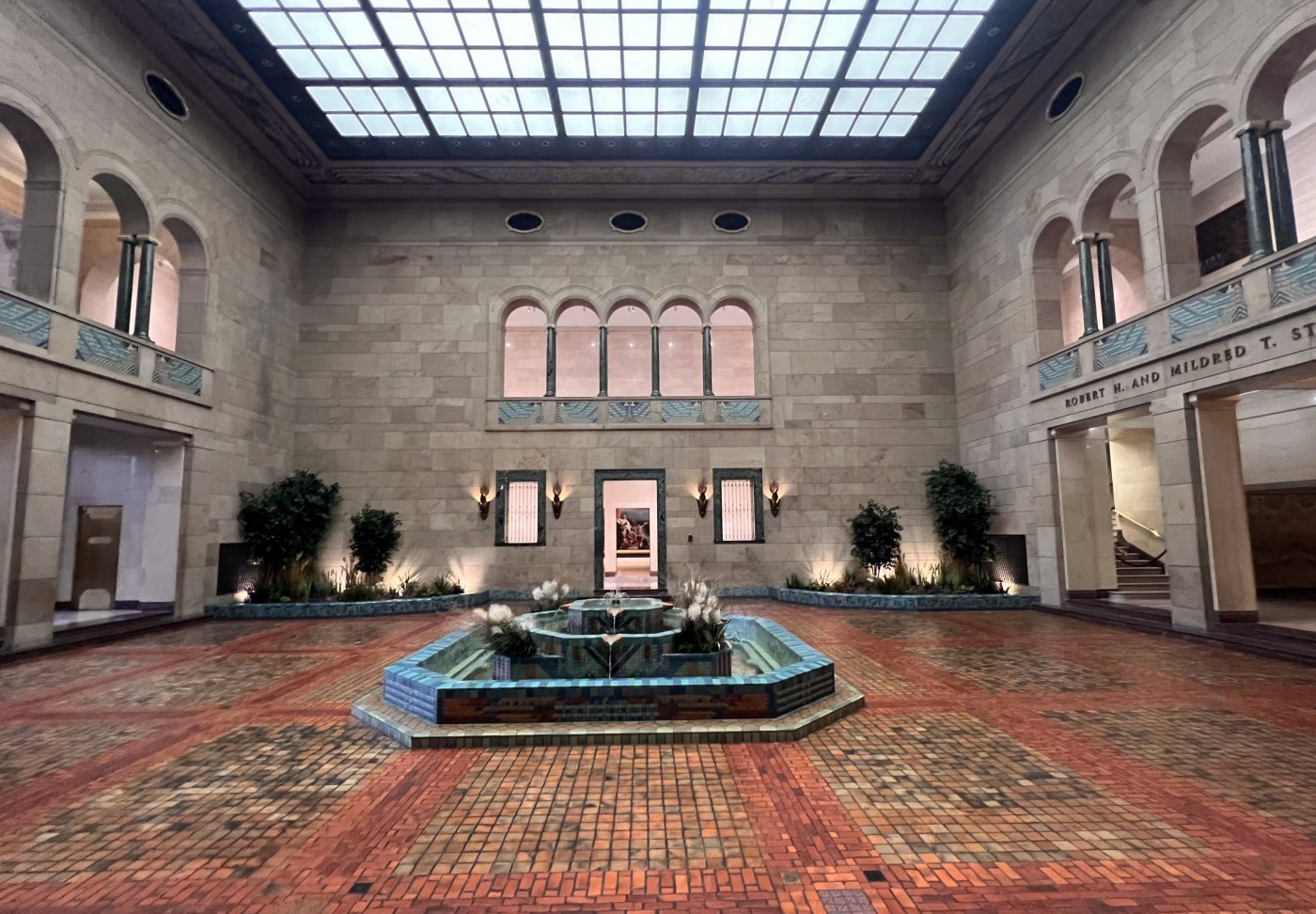
It was a joy to spend the day with kindred spirits at The Joslyn, an art museum in Omaha, Nebraska, discussing art, creativity, life, aging, grief, family, and more.
“All art is a terrific bridge…Music, paintings, words, they really do speak to the soul, to the heart, to the spirit…” -Julia Cameron
Conversation with loved ones requires little effort, but time with Nancy and Marilyn was enhanced by the insights from the art pieces that drew us in. We easily transitioned from discussing art techniques to our own creative projects, from religious and contemporary art to our own spirituality and religious traditions, and from what the artist might have felt or intended to convey to our own feelings and responses to life’s challenges. Skipping from one topic to the next, which might not have made much sense to onlookers, made perfect sense to us.
When I started leading SoulFully You retreats at St. Benedict Center, Nancy and Marilyn, my dad’s first cousins, were some of my first participants. I am so grateful that we reconnected and get together a few times a year. My memories of them were mainly as a child, and now we are good friends.
“Viewing art activates the dopamine network in the brain…people’s minds open to wonder: they demonstrate greater creativity, inspiration, problem-solving abilities, and openness to others’ perspectives. Art empowers our saintly tendencies.“ –Dacher Keltner, Awe: The New Science of Everyday Wonder and How It Can Transform Your Life
Sharing some of the art and insights that filled our day with wonder, I hope to inspire an in-person or online visit to an art museum or your own creative project, such as SoulCollage.
“In a delightful letter on the contemplative life called The Ladder of Monks, Guigo II (a 12th-century Carthusian monk) divides the experience of Lectio into four phases or degrees: reading, meditation, prayer, contemplation. Reading, he says, puts food whole into the mouth. Meditation chews it, digs for treasure. Prayer extracts the flavor and helps us to get to know the treasure. Contemplation embraces and welcomes the thirsty soul.” (A Tree Full of Angels: Seeing the Holy in the Ordinary, Macrina Weiderkehr)
Lectio Divina: Matthew 9:1-13; 35-36
He entered a boat, made the crossing, and came into his own town. And there people brought to him a paralytic lying on a stretcher. When Jesus saw their faith, he said to the paralytic, “Courage, child, your sins are forgiven.” At that, some of the scribes said to themselves, “This man is blaspheming.” Jesus knew what they were thinking, and said, “Why do you harbor evil thoughts? Which is easier, to say, ‘Your sins are forgiven,’ or to say, ‘Rise and walk’? But that you may know that the Son of Man has authority on earth to forgive sins”—he then said to the paralytic, “Rise, pick up your stretcher, and go home.” He rose and went home. When the crowds saw this they were struck with awe and glorified God who had given such authority to human beings.
As Jesus passed on from there, he saw a man named Matthew sitting at the customs post. He said to him, “Follow me.” And he got up and followed him. While he was at table in his house, many tax collectors and sinners came and sat with Jesus and his disciples. The Pharisees saw this and said to his disciples, “Why does your teacher eat with tax collectors and sinners?”
He heard this and said, “Those who are well do not need a physician, but the sick do. Go and learn the meaning of the words, ‘I desire mercy, not sacrifice.’ I did not come to call the righteous but sinners.” Jesus went around to all the towns and villages, teaching in their synagogues, proclaiming the gospel of the kingdom, and curing every disease and illness. At the sight of the crowds, his heart was moved with pity for them because they were troubled and abandoned, like sheep without a shepherd.
In our oblate group, we read, reflect, respond, and rest in sacred scripture. There is a synergy that results from sharing a word or phrase that resonates within, as well as the wisdom or insight each has received. I leave with a greater understanding of other perspectives and of how I am called to follow Christ.
Some reflections from our reading:
Courage, child, your sins are forgiven…Rise, pick up your stretcher, and go home. Jesus’ first instruction is to have courage and to know that sins are forgiven. Many aspects in our life require our courage—difficult conversations, facing our own limitations, expressing love, making or adapting to changes, dealing with physical or emotional suffering, feeling despair, and understanding our next steps in each season of life, to name a few. Life requires courage. Some questions we might consider in taking Jesus’ advice: What is our stretcher or our crutch? Where might we be trapped or paralyzed? We are not to harbor evil thoughts about others or ourselves, knowing that nothing can separate anyone from the love of God. Jesus asks us to rise—right where we are, no matter who we are, and go home. Our home is much more than a brick-and-mortar dwelling. Home is a place of peace, where we can be seen and heard, loved and believed, held and yet free. Home accepts all the parts of our self, our truest self.
Home is where you belong. It is your shelter and place of rest, the place where you can be yourself. –John O’ Donohue, Eternal Echoes: Celtic Reflections on Our Yearning to Belong
They were struck with awe and glorified God whohad given such authority to human beings. We are to become like Christ. We can rise up, go home, follow, listen, have our hearts moved, give mercy, have courage, doubt, choose, forgive and be forgiven, be filled with awe, mix and mingle with the “tax collectors and sinners” of our day (the poor, oppressed, and marginalized), and be compassionate. In a very short story, Jesus asks much and gives much. He is an example of who we can be to others. The crowds were struck with awe by what Jesus did. We, too, can stand in awe of the kindness of others, a spectacular sunrise, or a day of feeling healthy. In each day, there are countless ways to choose awe and gratitude, glorifying God in all.
I did not come to call the righteous but sinners. Accepting both the righteous and the sinner within ourselves is a sort of homecoming. Accepting with humility that we are not one or the other—saint or sinner—is the way to integration and accepting others. Jesus tells the crowd that he desires mercy. We can be merciful, too, slow to judge ourselves and others.
His heart was moved. This line resonated with me the most. Jesus, in his humanity, felt pity for the “troubled and abandoned.” Beyond our bodies, Jesus sees our inner wounds, our fears and anxieties, our feelings. He sees beyond the physical to our spiritual and emotional needs. This, too, we must ask—who might the troubled and abandoned be today? We can only know who they are by deep listening, extending hospitality, and having compassion as Jesus did. And then we must ask, how are we responding to them? With judgment or with a moved heart?
I realized this most profoundly when I was the one who felt unheard. Perhaps you, too, have had a moment like this when you felt no one was listening—a meaningful, traumatic, challenging, or gratifying experience that needed to be shared fell on deaf ears.
I have written about the Benedictine promises of obedience and the importance of listening to God and others as part of one’s spiritual growth. “Listening requires us to pause, to have silence, and to be open to seeing in a new way. Listening can lead to a shift in perspective, a flash of insight, a new understanding. When you listen closely to another, it is an expression of love,” I shared in a recent reflection.
It is just as crucial to examine the impact it has on others when we are forgetful about listening—understandably, we get busy, or miss clues that others need our ear. Indeed, there are times when others may not realize how important it is (these slights may be easily forgiven), but there may be other times when you or another is summarily dismissed. The message is loud and clear—either you or what you have to say is not valued. It feels hurtful, as if you don’t matter, as if you are insignificant. Being intentionally rejected for your thoughts, ideas, feelings, and experiences leaves a wound, a hole in one’s heart, a sense of being rejected or abandoned.
For me, the experience of not being heard came during a traumatic time for women who had been sexually harassed, abused, or assaulted. I felt my trauma, but also the suffering of so many beyond me. It was a profound compassion, sharing the wound. It came to me then, weeping, that this is what it might feel like for those who have spent their entire lives not feeling listened to, of all those who have been unheard throughout our history, from the enslaved, defeated, oppressed, and marginalized—those who have no one to listen to or validate their pain. They had a story in their heart that needed to be heard, then and now.
“Compassion asks us to go where it hurts, to enter places of pain, to share in brokenness, fear, confusion, and anguish. Compassion challenges us to cry out with those in misery, to mourn with those who are lonely, to weep with those in tears… Compassion means full immersion in the condition of being human.” –Donald McNeill, Douglas Morrison, and Henri Nouwen (quoted in Boundless Compassion by Joyce Rupp)
My heart felt broken—not just for me, but for the lack of compassion I may have shown others. Simultaneously wounded and regretful, a part of me died while something else was taking root—a desire to listen to those who feel unheard, to offer acceptance where there might not be, to advocate for those marginalized. I felt pierced entirely with compassion. Tears flow often now for the suffering that, perhaps, I had not noticed before, the pain that I may have caused others, and the pain that continues to go unnoticed or even flatly denied.
I created a SoulCollage® card shortly after this eye-opening, traumatic experience. Consider the image and the following questions.
“The eyes of the Lord are toward the righteous and his ears toward their cry”. -Psalm 34:15
Questions for reflection:
Do you have a story you would like to share with someone? Have you been able to share it with another or write about it? If so, how did it make you feel to be heard? Does it inspire you to listen to the pain and suffering of the world?
Can there be some healing for your wound by expressing it to God if there is no one to share it with? Are you available for others to share their story with you? What is the consequence for a loved one if their story isn’t shared? Is there a person or marginalized group of people that you may listen to more closely than you have?
May our prayers be heard for all those suffering, and for those who have shared their stories but not been heard. May we listen with “the ear of our hearts,” as Benedict instructs. May we be moved to tears. Amen.
But now faith, hope, and love remain, these three; but the greatest of these is love. –1 Corinthians 13:13
This scripture verse is one of the most frequently read at wedding ceremonies, but it is meant for more than those getting married. We are created to love and be loved—all of us, no matter who we are or our chosen paths in life, whether monk or married.
Our deepest longing is to be loved. Love is the thread that runs through all the world’s religions. In Christianity, the Great Commandment is to “love the Lord your God with all your heart, and with all your soul, and with all your mind” and to “love your neighbor as yourself.”
Several years ago, during spiritual direction with Benedictine monk, Fr. Mauritius Wilde, we discussed, despite our different vocations, how much we have in common. We each have a holy longing—to love God, to have a healthy love for ourselves, and to give and receive love. Practically speaking, we are the same age, we are both teachers and retreat leaders, have one brother, have the same middle name (Marie—seriously, what are the odds on that?), we share similar Enneagram personality traits, and each of us professed our marriage or monastic vows 40 years ago, a day apart. I was married on August 17, 1985, and Fr. Mauritius entered the monastery as a novice on August 18, 1985.
After one of many conversations where one of us would say, “That is exactly how it is for me!” or “Me, too!”, I half-seriously, half-jokingly suggested that we write a book about how, setting the whole monk vs. being married thing aside, we experience our love of God and others in many of the same ways. Nearly forgotten, this idea resurfaced a year or so ago, and we decided that leading a retreat together would be a good beginning. Our theme would be love, specifically how the Rule of St. Benedict can help us grow in love and to discover our “inner monk.”
“The monk, a universal archetype of the search for the divine, represents everything in you that leans toward the sacred, all that reaches for what is eternal. The monk represents everything within you that is drawn to seek with unwavering love; to wait for the Holy One with reverential awe; to praise, bow, and adore.” -Christine Valters Paintner
The Rule of St. Benedict shows us the path of love, of nurturing the monk within while living in community. During our retreat, held in July 2025, we shared how the monk’s promises—stability, obedience, and conversion of life—are the foundation for learning and growing in the “school for God’s service.” (RB Prologue 45) For the monk, this place of learning is the monastery. For me, it begins in my family as wife and mother. But each of us is more than our role as a monk or a married person. Each can be transformed by practicing love in our friendships, workplaces, community, and environment.
“I promise to be true to you in good times and in bad, in sickness and in health. I will love you and honor you all the days of my life.”
Forty year ago, my husband, Joe, and I made our marriage vows on August 17, 1985. As a 19-year-old bride, I had little understanding of what those words meant or would require. I imagine it is the same for many. We have hopes and expectations, albeit idealistic or romanticized. We may also have a good idea of what we hope our marriage will NOT be like. Surely, it’s a good place to start, but it is then that the real work of love begins.
Stability, a Benedictine value, is what is promised in marriage when we vow, “all the days of my life.” We promise to stay, to not run away from challenges or difficulties; instead, we remain present to the relationship, to see what we discover about each other. After writing seventy-two chapters in The Rule, Benedict titles his last chapter, “This rule only a beginning of perfection.” In other words, marriage, or any commitment we make, requires practice—making mistakes, forgiveness, and always beginning again.
To love is a decision. A marriage is not made, once and for all, when the I-dos are exchanged. A marriage is constantly being recreated; it is always in the process of becoming.A marriage is made of moments. Moments we would like to forget, moments we must forgive, and moments that help us become more fully who we are. There are moments of joy, adventure, contentment, and the making of beautiful memories. When you string them all together, you get a picture of a life built together.
I love that the ruby, a precious gem, second only to the diamond in toughness and durability, is the traditional symbol for a 40th wedding anniversary. Throughout history, many cultures and religions have associated the ruby with mystical or spiritual qualities, representing love, passion, protection, vitality, and wealth. (Ruby Symbolism and Legends)
The word “ruby” comes from the Latin word “ruber,” meaning red. The red heart of Valentine’s Day reminds us of a desire for passion and romantic love. One also thinks of the redness of blood, which carries oxygen to all parts of the body, giving life.
Joe and I have experienced this “ruby” nature, not all in one day, month, or year, but over time and as a way of life. The ruby’s “inner glow” led to beliefs that it contained an inner fire or “an inextinguishable flame”. This inner glow, with a playful spirit and sense of humor, has fueled our commitment to protect our marriage, to be resilient, to learn, grow and change. We are wealthy in countless ways—a beautiful daughter and son-in-law, great friends and family connections, opportunities for travel, hobbies, personal interests, and, now, more time for together.
Our new season of retirement. After lengthy careers in law enforcement and education, both Joe and I have retired—letting go of our careers, but not what was at the heart of our vocation. We continue to work in other ways: I lead SoulFully You retreats and workshops on creativity and the spiritual life, write essays for Being Benedictine, and belong to a variety of book/study groups, including oblates. Joe drives senior citizens to recreational activities and appointments, enjoys travel with his siblings, meeting with friends, and cultivating his bourbon collection. We have time to slow down, take a nap when we want, read, and binge-watch TV shows, travel more, and enjoy spontaneous trips to be with our daughter Jessica and her husband, John.
“To be human is to live by sunlight and moonlight, with anxiety and delight, admitting limits and transcending them, falling down and rising up. To want a life with only half of these things in it is to want half a life, shutting the other half away where it will not interfere with one’s bright fantasies of the way things ought to be.” -Barbara Brown Taylor, Learning to Walk in the Dark
Light and dark are the colors of life. No life is ever all of one or all of the other.
This is evident for many of us this 4th of July, the day we celebrate the independence of the United States of America. As daylight fades and darkness falls upon us, we gather in city parks and neighborhood driveways to witness crackling explosions, brilliant bursts of light, and glittering sparks as they cascade through the skies.
Fireworks can evoke a variety of feelings—from excitement, pride, and awe to anxiety, fear, and disbelief. I enjoy the displays but abhor the loud sounds. I think of shuddering dogs hiding under beds and the trauma that veterans may experience. I consider how much money is spent on fireworks that could be used in so many ways to help others. Still, with conflicted feelings, I watch and wonder.
To live in this country, to live in my body, is to face the realities of light and darkness. I have ideas of what democracy looks like, what the ideal is (see The Pledge of Allegiance of My Heart here). But I acknowledge that America is a work in progress, just as I am. Holding the tension between what is reality and what is our hope is a challenge. How do we stay present to the suffering in our souls and the world without losing the light inside?
This, my dear, is the greatest challenge to being alive: to witness the injustice of this world, and not allow it to consume our light.’ – Thich Nhat Hanh