Search

Being Benedictine

Living SoulFully as an Oblate of St. Benedict

Tag

Benedictine oblate

10 Reasons Benedictines Love Silence

I carefully consider everything that I write and share here, especially the more personal or contentious reflections. I rarely write and post on the same day. Not so with my speech. I find myself saying often enough, “Did I just say that out loud?” Words fly out of my mouth much faster than they flow from my pen or keyboard.

 Perhaps this is why I enjoy journaling and writing so much. It slows my mind down. In silence, I can be more deliberate, careful, and organized in what I share. A healthy respect for silence could save me some angst in times when my mouth works faster than my mind.

At our annual oblate retreat, with the theme “Building Community Through Our Oblate Promises,” the importance of silence was the topic of the opening session led by Fr. Thomas Leitner, the administrator of St. Benedict Center and a monk who lives at the monastery across the road. Throughout the weekend, we would learn about and practice silence.

Why is silence so fundamental to Benedictine spirituality?

Silence is the way to self-knowledge. A discipline of silence confronts us with ourselves. “Silence is a way for us to put up with ourselves the way we are. Not everything that comes to mind at times of silence is pleasant. Repressed needs and wishes may come up, repressed anger, and perhaps missed opportunities,” Fr. Thomas shared. Silence gives our wounds space to surface, allowing us time to wrestle with and soothe our pain in healthy ways. Silence allows us to see ourselves unfiltered without the influence of others.

In The Interior Castle, St. Teresa of Avila uses imagery of a castle for our soul, emphasizing “how necessary this room (of self-knowledge) is…we shall never completely know ourselves if we don’t strive to know God.” She writes that God dwells within us, and to know God, we must first know ourselves. Hard, but necessary, work to “know thyself,” as the ancient Greek maxim suggests.

Silence connects us to the Divine. Seventh-century bishop and theologian, St. Isaac of Syria, writes:

We enter this “treasure house,” our very soul, through the practice of prayer. Some of us may be conditioned to think of prayer as a transactional bubble-gum-machine approach to asking God for what we want. We put in a coin; God supplies the big gumball. Our prayers are “answered.” Yet this is not the kind of prayer that leads to self-knowledge or to a connection with God. Consider a poem by the 19th-century Danish theologian Søren Kierkegaard that points to a different kind of prayer.

Silence builds confidence and leads to self-respect.

“As my prayer became more and more devout and interior,” I come to know myself with greater depth. This knowing builds my confidence: I have been created just as I am, in the image of God. I forgive myself for weaknesses and celebrate my gifts. I seek less approval from others. I have “less and less” to say to justify, convince, or plead my case of worthiness to myself or others.

Teacher, writer, and friend, Parker Palmer, writes,One of our most debilitating illusions (is) that the answer to our problems is always ‘out there’ somewhere, never ‘in here.’ It’s an illusion that’s constantly reinforced by educational and religious institutions that make us dependent on “experts” and “authorities.” We need not look for knowledge in others; we can trust our own interiority, the Divine Expert Within. I can grow in self-respect, knowing God is within me, intimately speaking to me when I am silent long enough.

Continue reading “10 Reasons Benedictines Love Silence”

Top 20 Benedictine Blogs

In 2014, I started this blog/website to share my writing and reflections on Benedictine spirituality. I recently learned that Being Benedictine has been identified as one of the Top 20 Benedictine Blogs by Feedspot. THANK YOU for following, sharing, commenting and supporting Being Benedictine for these years!

You can follow new posts and see over 100 entries in the archives HERE.

Find Being Benedictine on Facebook HERE.

You can follow Christ the King Priory, where I am an oblate, HERE.

And for more blogs on Benedictine spirituality, click HERE.

St. Benedict Center, Schuyler, NE. My first visit was in 2002. In 2013, I became a Benedictine Oblate.

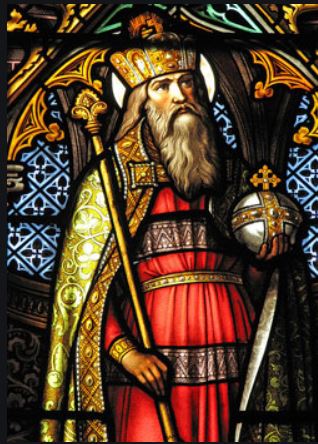
Feast of St. Henry: Patron Saint of Oblates

Happy Feast of St. Henry, patron saint of Benedictine Oblates!

Falling within the Octave of Saint Benedict, only two days after the Solemnity of St. Benedict, we are reminded that a commitment to following the Rule of St. Benedict was and is not restricted to monks and sisters, but also open to Benedictine Oblates.

Capture

Saint Henry II was born in 973 in the village of Regensburg, Bavaria, German. As a child he went to school in Hildesheim. (Note: Hildesheim is the same hometown as Fr. Mauritius Wilde, Prior of Sant’ Anselmo formerly of Christ the King Priory. They also attended the same school!) Henry served as the Duke of Bavaria (995) and as the Holy Roman Emperor (972-1024), crowned by Pope Benedict VIII. As emperor, Henry, who had considered the priesthood, was devoutly religious. He shared his faith by rebuilding the many churches that had been destroyed,  building monasteries, and supporting them with both money and land. In 1006, he founded the See of Bamberg and built its great Cathedral that was consecrated by Pope Benedict VIII in 1020.

St. Henry lived a married life with his wife, Cunigunde, founding and visiting monasteries and praying the Liturgy of the Hours. Henry was canonized in 1146 by Pope Eugene III and Pope St Pius X declared him the patron saint of the Benedictine Oblates.
Continue reading “Feast of St. Henry: Patron Saint of Oblates”

The Future Is The Spirit’s Work

Benedictine Oblates have a commitment to a specific monastery to live out their spirituality in the world according to the Rule of St. Benedict. But what is the future of Benedictine monasticism?  As monastic vocations decrease, monasteries have been forced to consider their future, either merging with other monasteries or closing altogether. How might Oblates respond to this uncertain future?

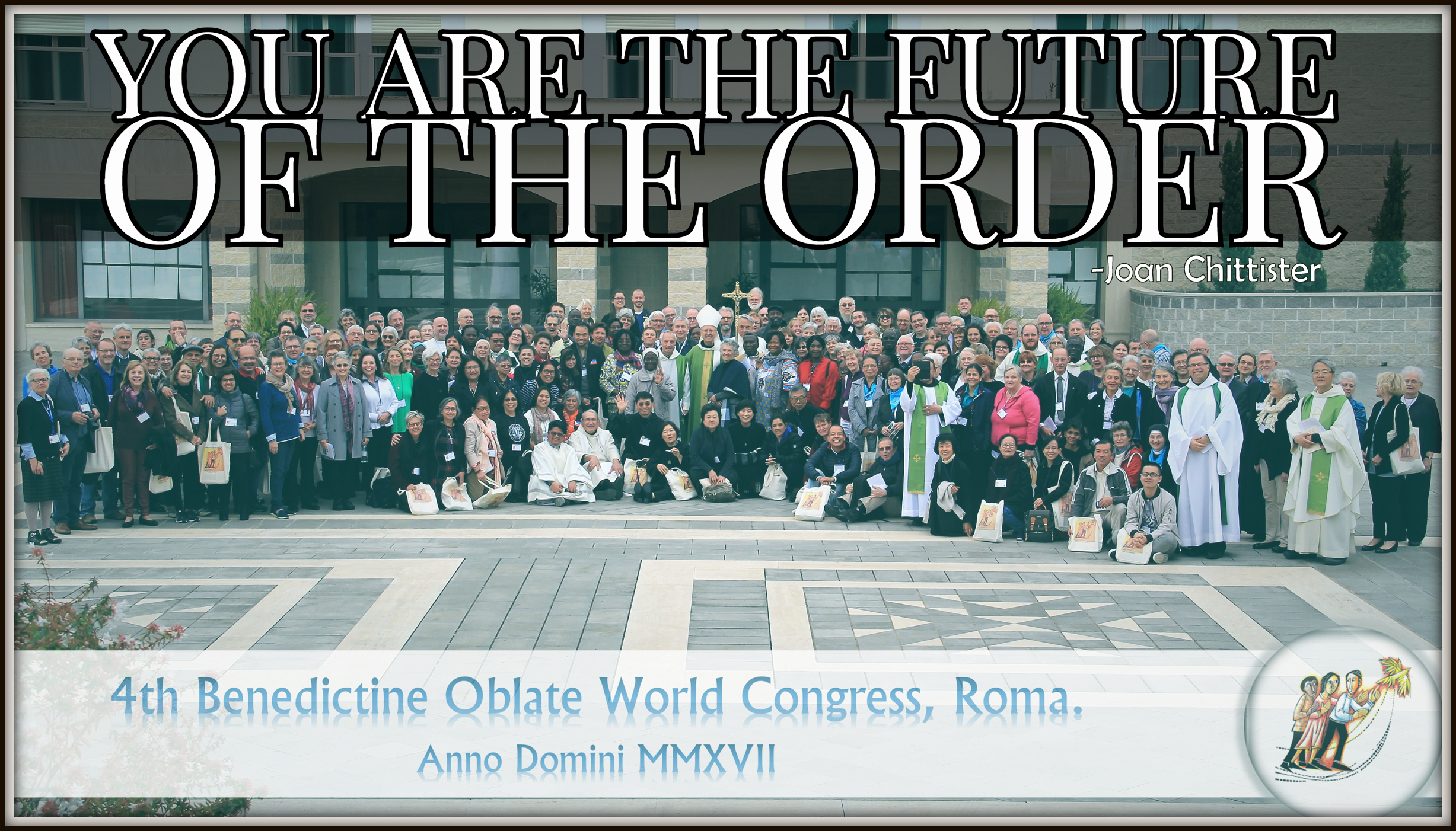
future of the order.jpg

Sister Joan Chittister addressed this theme at the World Congress of Benedictine Oblates in Rome in November 2017. She asks, “The question of the day is a simple one but potentially life-changing one: the question is why would anyone even bother to get attached to a Benedictine monastery?”

Fr. Joel Macul, Prior of Christ the King Priory, also addressed the future of Benedictine Oblates at the Benedictine Oblates Regional Conference at St. Benedict Center held in September 2018.

He begins: “We can ask ourselves why we are raising this question or topic in the first place. What prompts us to raise it? It is certainly not because the Oblate community is diminishing! Is it because the some of the communities to which Oblates belong are diminishing and Oblates might be left high and dry? Or perhaps it is a concern about Oblate communities in lands where Benedictine life is new, communities are young and the Oblate experience has no precedence? Or is there something about our culture, our American culture that makes the question of the future so important?

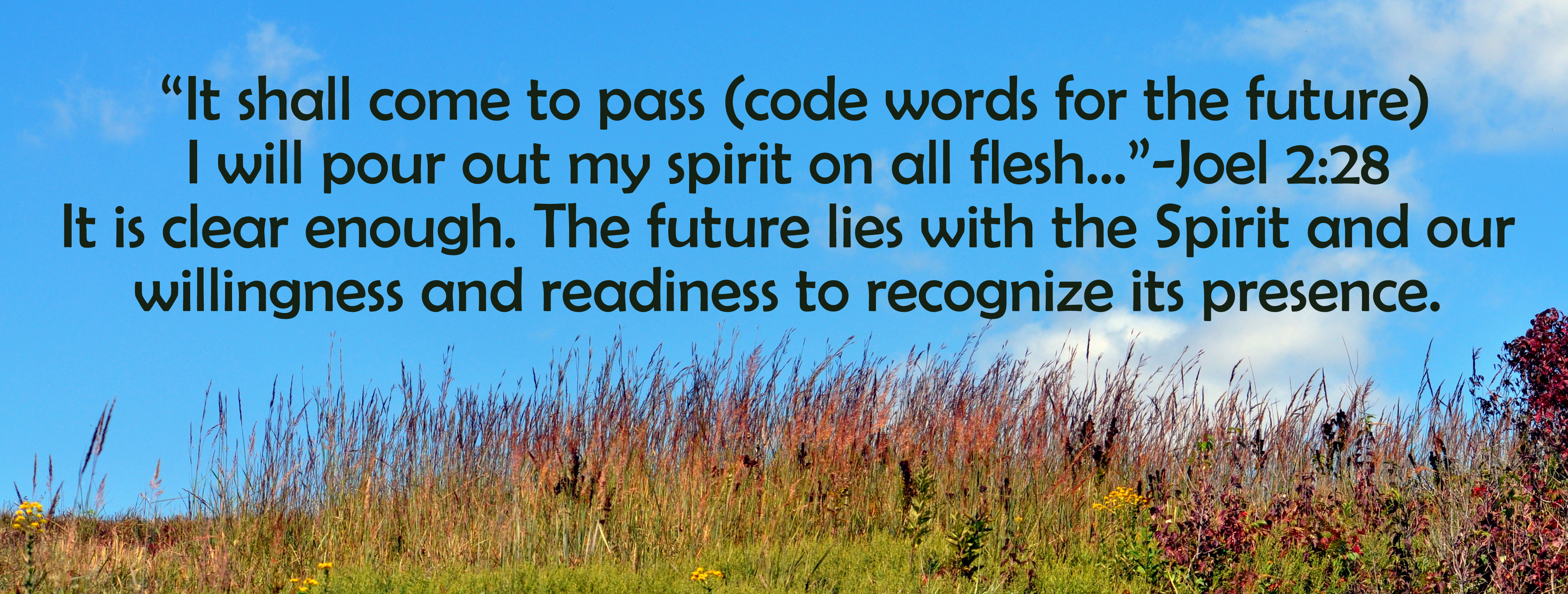
Joels message spirit.JPG

While I do not consider myself a prophet in the sense of predicting a future for Benedictine life let alone Oblate life, I can fall back on the Prophet Joel.  The best future I can invite you to consider is to listen to the word of God through the prophet Joel who simply says: “It shall come to pass (code words for the future) I will pour out my spirit on all flesh…” It is clear enough. The future lies with the Spirit and our willingness and readiness to recognize its presence. According to the prophet, old and young, sons and daughters, male and female, servants and slaves will receive this gift of the spirit. The Spirit is God’s future or plan. When we can trust that Spirit, we are standing in God. And being in God is the future for ourselves, as well as humanity and our created world. If we co-opt God’s Spirit or start writing God’s plan, then theologically, we have no future. Any threads of the future will have to have the deep and inexhaustible richness of color of the Spirit. The future of anything Christian, including the Benedictine monastic way, lies with the Spirit. It is assumed that the Benedictine way is itself a gift of the Spirit and so holds within it the Spirit’s creative power. Continue reading “The Future Is The Spirit’s Work”

Rome ~ Layers Like Lasagna

There are layers of history in Rome—“layers like lasagna”—one tour guide suggested. Literally, layers were built on top of layers, buildings that had been destroyed by war and natural disaster were covered with dirt and new buildings were erected over ruins. Symbolically, many Christian churches were built over ancient pagan sites.

The architecture, art, and religious history communicate something spiritual, a deeper story with layers of meaning, like lasagna. I’ll share some of my favorite places, and the journey, from my trip to Rome to attend the World Congress of Benedictine Oblates:

St. Peter’s Basilica and the Scavi tour Continue reading “Rome ~ Layers Like Lasagna”

4th World Congress of Benedictine Oblates, part 2

The 4th World Congress of Benedictine Oblates continued with Mass celebrated by Emeritus Abbot Primate Notker Wolf, OSB.  Originally from the Benedictine Archabbey of St. Ottilien, Wolf served as the ninth Abbot Primate from 2000-2016 and was the initiator of the World Oblate Congresses. He has written many books, speaks a number of languages and is a well-known musician, playing everything from classical to jazz. He graced us with a beautiful thank you gift by playing his flute at a special luncheon in his honor.

I was blessed to meet Abbot Notker at Christ the King Priory in Schuyler just a few months ago. Upon his retirement, he was gifted with a trip around the world to visit monasteries that had supported his ministries through the years. I was struck by how friendly and joy-filled he is. When we met again at the Congress, his hands were full so he said, “I cannot hug you, but I give you a kiss instead.” And he kissed my cheek. A very kind man, indeed, with a heart for oblates. Continue reading “4th World Congress of Benedictine Oblates, part 2”

Rome: Confessions, Truths and Carpe Diem!

Confession: I feel a little guilty for taking nine days off during the school year.

Truth: But not enough that I wouldn’t seize this once-in-a-lifetime opportunity to travel to Rome.

It’s unheard of for a teacher to take off two weeks during the school year. First, we only get eleven days off for sick or vacations days per school year. Second and more importantly, it’s a lot of work to be gone, planning what students will do, securing a trusted substitute teacher to deliver curriculum, and “letting go” of controlling my classroom. (Perhaps this has something to do with being a bit of a perfectionist, control-freak, as I’m learning about Enneagram, Type One.)  Usually, teachers take time off for a wedding or funeral, a child starting college, an important doctor’s appointment, but a two-week long trip? Nope. Continue reading “Rome: Confessions, Truths and Carpe Diem!”

Blog at WordPress.com.

Up ↑