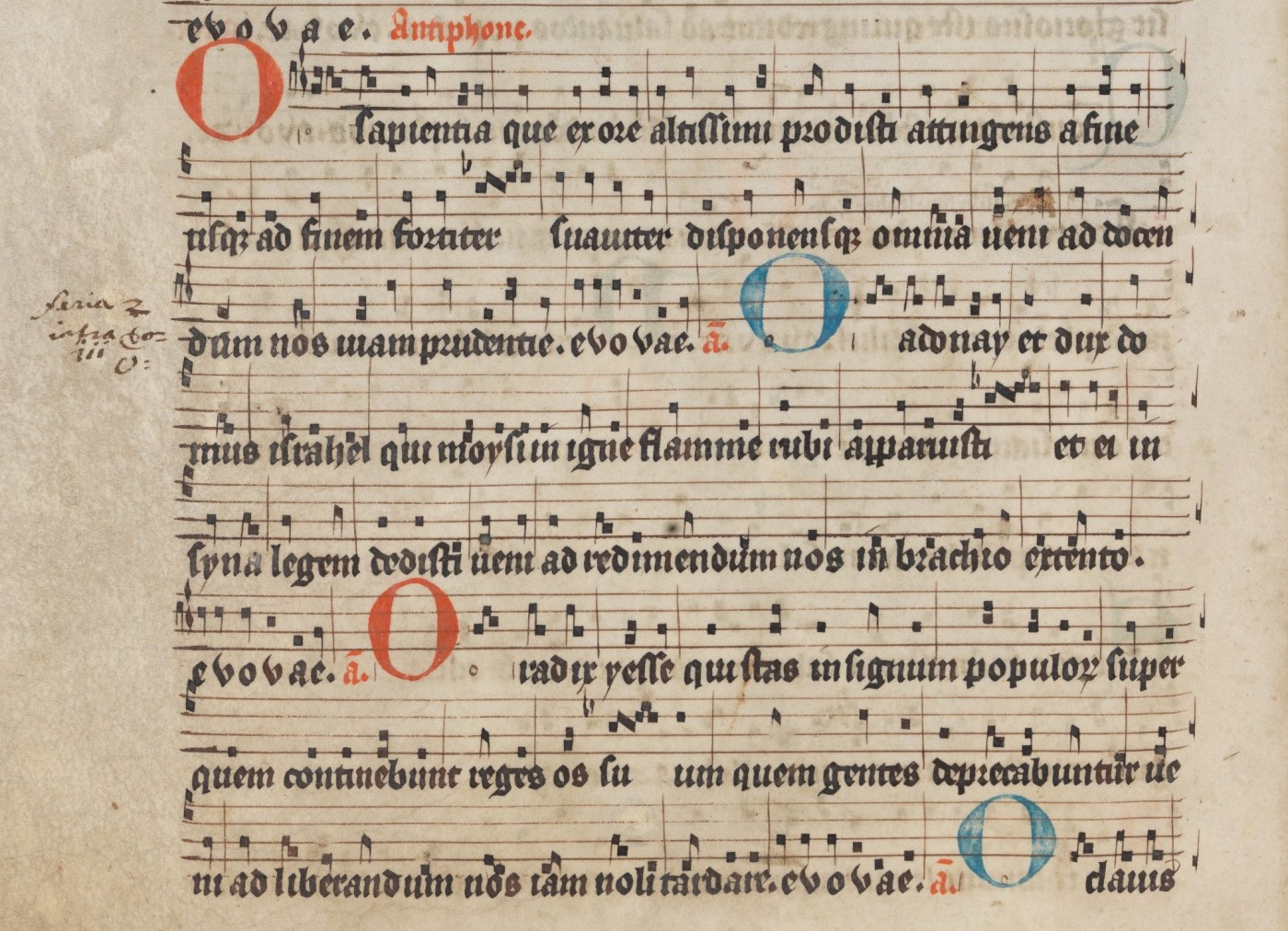
The traditional Advent hymn “O Come, O Come, Emmanuel,” which many are familiar with, is a paraphrase of the lesser-known O Antiphons written by Benedictine monks in the Middle Ages. One of the oldest liturgical rituals in the Church, the O Antiphons have been sung since at least the 8th century. These short prayers, starting with O followed by a title given to the Messiah from Old Testament prophecies, are sung before the Magnificat during Evening Prayer from December 17–23, the last seven days before Christmas. Each antiphon describes God in terms of Old Testament traits and images.
Images and symbols that appear in dreams, art, literature, or scripture carry both personal and universal meaning. Serving as a bridge between the unconscious and the conscious, images can nourish our spirit. “Images open windows through which we can see realities formerly hidden from us. Images want to infuse themselves into us and to change us from the inside out, ” writes Anselm Grün.
Images are an essential part of rituals, prayer, self-reflection, and creativity. When practicing SoulCollage®, one of my favorite spiritual practices, images can guide us to a new level of awareness and reveal a deeper understanding of thought and feeling. Perhaps this is what attracts me to the tradition of praying the O Antiphons.
“Reflecting on the words and images prepares us to let Christ himself enter into us…We are all an image, an icon, of God. It is our task to become ever more like this unique image of God.”Anselm Grün, A Time of Fulfillment: Spiritual Reflections for Advent and Christmas
The O Antiphons use images to help us envision the Christ we long for, and to draw us into a more profound connection to the God of history. “In the O-Antiphons the art of interpreting Old Testament text as images for the coming of Jesus Christ into the world becomes apparent.” (Anselm Grün) The repeated word “Come!” expresses our deepest longing for Christ. When we accept that we are not God, we yearn for fulfillment, for all that a Messiah can bring, not just in the hereafter but in the here and now. We long for wisdom, freedom, hope, peace, belonging, light, healing, salvation, dignity, protection, love, and accompaniment. Each of these longings is addressed in the O Antiphons.
For an extensive examination of our longings and the use of images in praying the O Antiphons, I highly recommend A Time of Fulfillment by Anselm Grün, a Benedictine monk from Münsterschwarzach Abbey, the motherhouse of the monastery of which I am an oblate.
Feel free to download and share any of the images in this reflection, or follow Being Benedictine on Facebook to share daily posts. Join the monks of St. John’s Abbey for each of the O Antiphons as Benedictine monks have done for 1300 years.
St. John’s Abbey sings O Antiphons: Holy Wisdom—
December 17th – O Sapientia (O Wisdom)



 Being Benedictine