
Cultivating curiosity is Being Benedictine.
As an educator and lover of learning, I appreciate the reference to schools in the Rule of St. Benedict. In the Prologue of The Rule, Benedict writes that the monastery is “a school for God’s service.” Whether in the monastery, home, or work—we are learning to live and love in community. Our life is a school of becoming—a continual learning.
Learning does not happen in solitude.
“A school is a community of learners: a group that comes together to learn with and from each other…education should expand our consciousness, capabilities, sensitivities, and cultural understanding. It should enlarge our worldview.” –What Is Education For? by Sir Ken Robinson and Kate Robinson, Edutopia, March 2, 2022.
As a teacher, whether it was my high school students or those who attend retreats I lead, I appreciate a curious learner—someone who is open to new ideas, willing to listen, to question, to consider diverse perspectives, and, with humility, understand that there is always something new to learn.
Curiosity is a good first step toward living SoulFully and being Benedictine.
Being Benedictine, in my experience, is a genuine attempt to meet others in love and compassion, listening with the intent to understand, encouraging inclusiveness, and respecting diversity. It is a blessing to share our feelings, faith, or perspectives and to have someone truly listen, especially those who might believe differently. Listening is the doorway to learning from others and growing in compassion; curiosity is the key.
“The spiritual life takes discipline,” Joan Chittister writes in The Rule of St. Benedict, A Spirituality for the 21st Century. “It is something learned, to be internalized. It’s not a set of daily exercises; it’s a way of life, an attitude of mind, an orientation of soul. And it is gotten by being schooled until no rules are necessary.”
Curiosity is good for the soul.
In Women Who Runs with the Wolves, Clarissa Pinkola Estes, defines the wild woman archetype as one who listens deeply, is intuitive, creative, playful, courageous, curious, loyal, and passionate. There is some wildness of divinity in us all, calling us to live fully, to reach beyond ourselves and, to discover something new. “When you limit your life to the one frame of thinking, you close out the mystery,” writes John O’ Donohue in Eternal Echoes: Celtic Reflections on Our Yearning to Belong.
Curiosity is good for community. Wonder is good for the world.
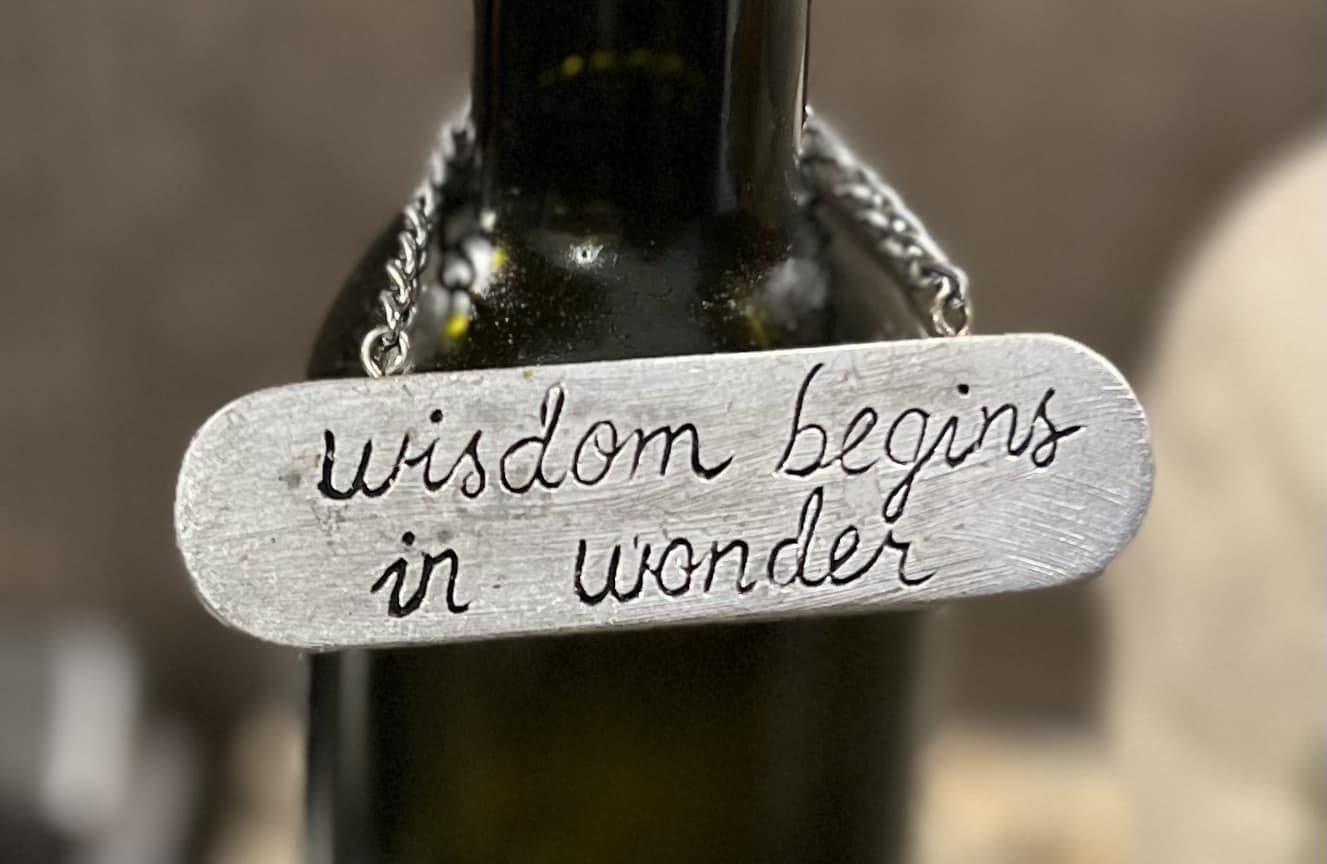
Wonder, my 2023 word of the year, is an attitude of curiosity, a willingness to withhold judgment, and to be open to what happens. Dacher Keltner in Awe: The New Science of Everyday Wonder and How It Can Transform Your Life writes, “People who find more everyday awe show evidence of living with wonder. They are more open to new ideas. To what is unknown. To what language can’t describe…to the strengths and virtues of other people.”
Is it possible to behold our neighbor with wonder, in the spirit of hospitality? Could we hold a curious heart even when we passionately disagree with one another? Rather than defaulting to the shoulds and should-nots of orthodoxy, or a deeply held conviction, could we practice curiosity instead? Rather than seeking to change another’s opinion or defend our own, could we simply stand in awe of this great universe that holds such diversity of thought? Is it possible to let a disagreement stand to the side, while the desire to learn about the other steps forward?
Curiosity leads to wonder. Wonder leaves room for the unexpected, for learning something new.
This is how Lectio Divina, the Benedictine practice of sacred reading, can work in community. We hear different perspectives, drawing on the experiences and insights of those in our community. We can release the need for the one right way to interpret what we read and be curious about what others bring to the table. I share reflections from the richness of our oblate community discussions on this website but with a disclaimer,
“I cannot claim to have captured all the wisdom shared in our monthly oblate discussions or that I represent all oblates in attendance. The group discussion is a starting point for this reflection, but it is my interpretation of what I heard and what resonated with me. There could easily be as many different blog posts or reflections as oblates. Each of us comes to Lectio from our personal experience of God at that moment and we receive what we need in that moment as well. The beauty of Lectio Divina is that the reading, insights, and discussion may fall differently on each of our hearts. How blessed we are that there are “many dwelling places” (John 14:2)” and we are all invited to “listen with the ear of the heart.” (RB Prologue)”
Curiosity is good for democracy.
In Healing the Heart of Democracy: The Courage to Create a Politics Worthy of the Human Spirit, Parker Palmer encourages us to consider “What do I have in common with people who, for example, regard their religious or political convictions as so authoritative that they feel no need to listen to anyone who sees things differently—especially that small subgroup of extremists who would use violence to advance their views?”
This can be difficult. I get it. I know too well how disagreements can escalate, and how estrangements result. I have appreciated discussions where curiosity is a motivation to more deeply understand, but I also know the heartbreak of rejection when another is not interested in my story, feelings, or perspective. The door is slammed shut for exploring possibilities, another proclaims they know what they know and there is no need to share ideas or learn something new. But I believe for many situations curiosity, wonder, listening, and a little respect could be the remedy. It may not change minds or beliefs, but it can change hearts. I believe, as Palmer does, that I can find even “the smallest patch of common ground” with others whose views are different than mine. I can disagree with another while also being Benedictine.
Continue reading “Curiosity is good for the soul, and for democracy too!”



 Being Benedictine