Search

Being Benedictine

Living SoulFully as an Oblate of St. Benedict

Tag

images

When The Moon is Full

“When we ‘name’ we connect… Naming allows for relationship. When we name anyone or anything, there’s the possibility of coming closer.” –Fragments of Your Ancient Name, Joyce Rupp

For millennia, people have looked to the moon to mark time, to guide their planting, harvesting, hunting, and gathering. Naming the full moon was both practical and sacred. The moon names were a way to notice, remember, and honor the patterns of the living world, drawing from the seasons and ordinary life events. It was also a way to remember that time itself is sacred, fleeting, passing with each full moon. For Native Americans, time was expressed by how many moons had passed.

“Many Native American peoples, and later the colonists who lived beside these winter lands, noticed how the wolves’ voices grew strongest when the year was at its emptiest. Food was scarce, snow lay deep, and the nights stretched wide and unbroken. And so this moon—January’s full moon—came to be known as the Wolf Moon, a name born from the simple truth of those winter evenings: wolves calling out to one another through the dark.” –Friends of the Forest

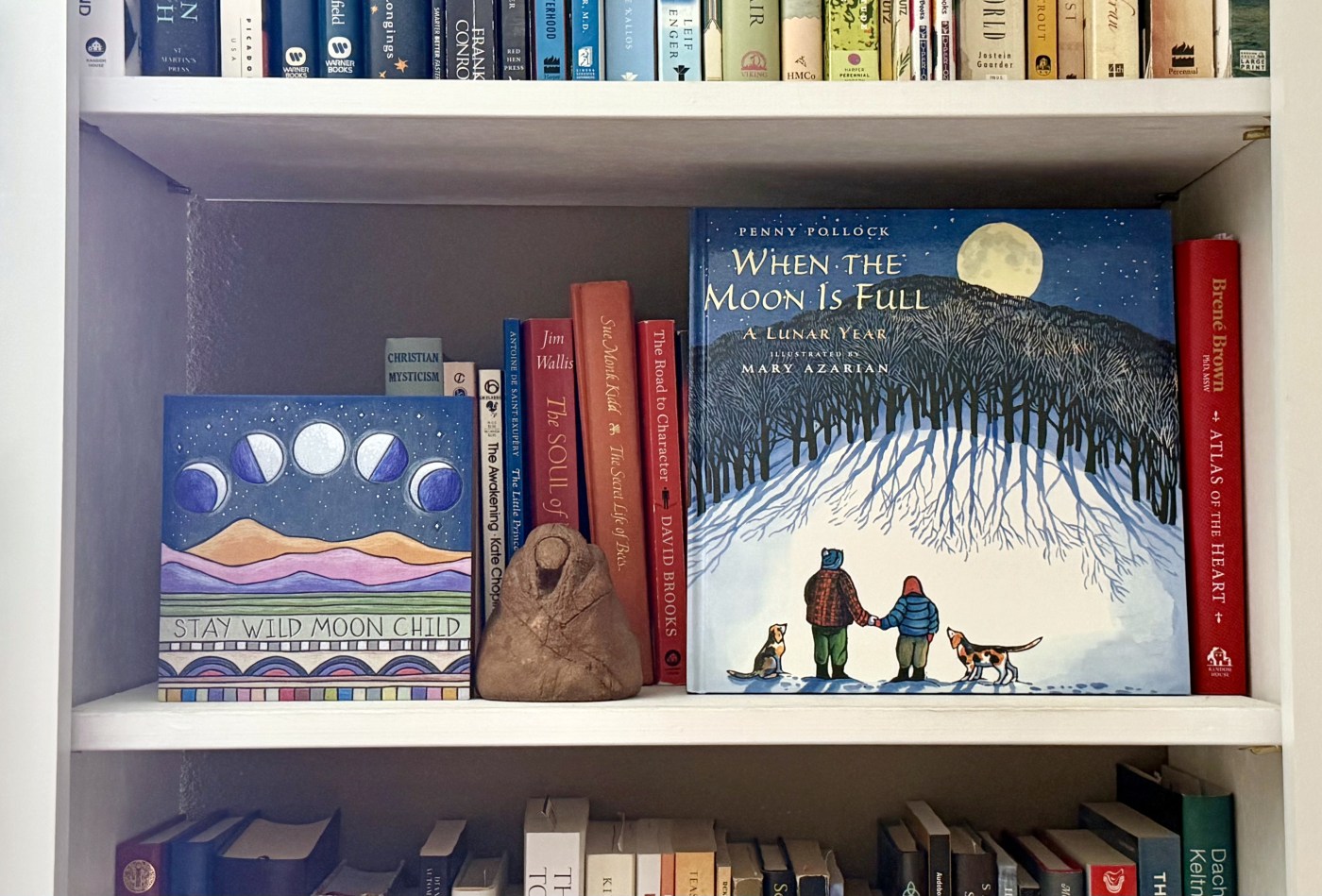
Recently, I led a Full Moon Soulfully You retreat with kindred spirits. We celebrated the diversity of names for the moon and read the endearing children’s book “When the Moon Is Full” by Penny Pollack.
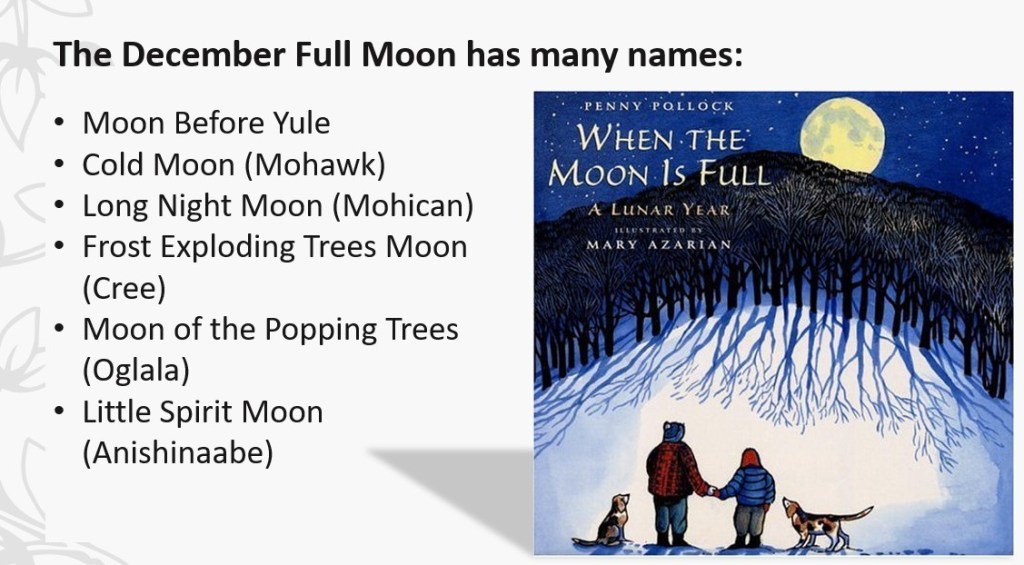
Each month holds a rhythm of expansion and contraction—of growth, fullness, release, and renewal. Our spiritual journey and the seasons of our life align with the deep rhythms of the universe. Naming our longings and fears, the parts of ourselves that we might see as fragile or vulnerable, is holy work and prayer. Every aspect of our life has meaning, especially the challenging ones, the aspects of ourselves we hide out of fear that we’ll be misunderstood or judged. To live fully, wholly, holy, whole is to gather the fragments, the bones of who we are, and bless them. On retreat, we use the prayerful, creative SoulCollage practice to name these parts.
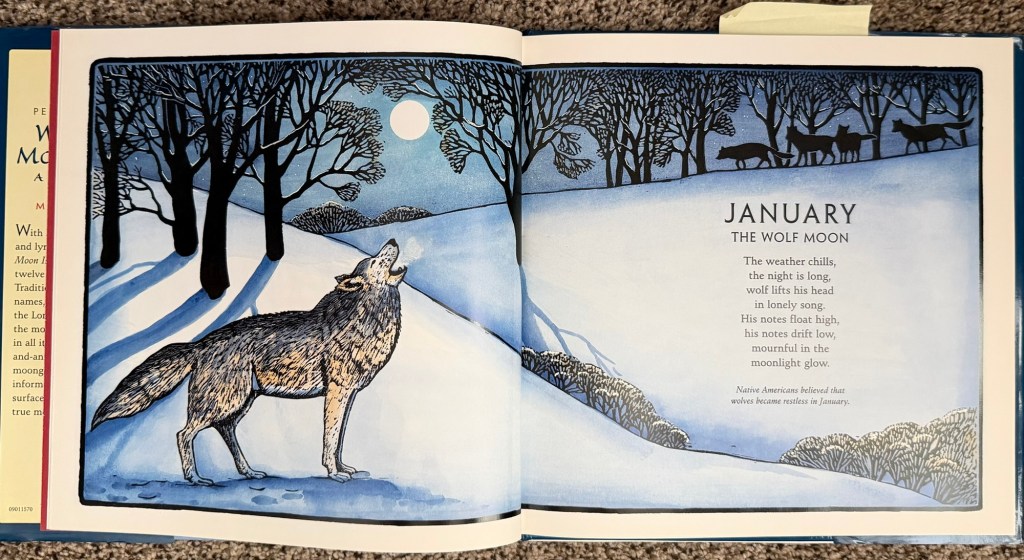
“Full moons come, full moons go, softening nights with their silver glow. They pass in silence, all untamed, but as they travel, they are named.” -When the Moon is Full, Penny Pollock

As you gaze at the full moon tonight (or any month), consider the following journaling or card-making prompts. Listen to the Full Moon chant, or like a wolf, howl at the moon!

  • What is your longing? What do you fear?
  • How can you hold your longings and fears together?
  • What part of yourself would you like to name?
  • Is there a name or archetype you want to embrace?
  • What name for the Divine resonates with you?
  • Are you in a season of darkness? Does it need to be named?

May the Full Moon remind you of your blessings, tonight and for many moons to come!

There are never enough names and images for what we love. -Dorothee Soelle

© Jodi Blazek Gehr, Being Benedictine Blogger

Pictures are worth a thousand words

Images are powerful. They conjure up feelings, memories, and ideas. They tell stories. They stand for something.

A brandmark or logo conveys the identity of a business that is easily recognized without the need for words. Businesses spend a ton of money developing their brand identity, but we don’t need the business world’s affirmation of the power of images. We already know it. We know it in our soul.

soul-picture

Continue reading “Pictures are worth a thousand words”

Thin Places ~ Sprigs of Rosemary Online Advent Retreat (Session 2)

In Session 1, we contemplated the lyrics of Sanctuary, written by Carrie Newcomer, and explored the power of images to tap into our intuition through collage. Expressing one’s creativity allows time and space for new ideas to bubble up, for questions to surface, and for meaning to take hold.

Advent Theme Sanctuary Sprigs of Rosemary1.jpg

“Images attract the attention of the right side of our brains, and when there are only images, this intuitive side stays in charge and will go deeper into the uncharted territory of the psyche. It is this side of our brain that can see the whole picture at once and surprise us with wise answers that seem to come from some deeper place.” Seena Frost, SoulCollage Evolving

Sanctuary card.jpg
My Sanctuary Card

Contemplative Session 2: Sanctuary in Thin Places

The Caim
Symbols, as with images, can represent something beyond a surface level of understanding, pointing to the abstract. Symbols can become an important part of rituals, helping cement an idea or intention and give energy to creativity and prayer.

While researching sanctuary as a theme for this retreat, I discovered two symbols that illuminated the notion of creating sanctuary. The first is the Celtic Christian symbol, caim.  A caim can be practiced as a ritual of circling oneself with prayerful protection in dark times. There is a power in a symbol that embraces its meaning and yet goes beyond—it can be a reminder of being loved and safe during times when one feels uncertainty.

Caim.png

“The “caim” involves simply drawing a circle around yourself or another person physically or in your imagination. This encircling prayer is grounded in our awareness of the constant companionship and protection of the divine. It reminds us that God is in this place. Often, as they embarked on journeys or felt at risk, Celtic pilgrims would inscribe a circle around themselves as a reminder of God’s ever-present companionship and protection.

Practicing the encircling prayer is simple. Pause and then take a moment to draw a holy circle around yourself or, imaginatively, around a loved one. Use your index finger as a way of inscribing the circle around you. As you draw the protective circle, you may use a traditional or contemporary prayer of encircling. You may also choose to write and read your own personal prayer for yourself or another. But, in any case, the power of a spiritual tradition often finds its most lively expression when we embody it from our deepest spirit and in the language of our own hearts.” Continue reading “Thin Places ~ Sprigs of Rosemary Online Advent Retreat (Session 2)”

Images of Faith: My Grandma and the Sacred Heart of Jesus

Images are so powerful. They tap into the pool of memories, both personal and universal, that are deep within us. One image can be understood in so many ways—for different people, faiths, and cultures or for the same person over time.

Recently when the Sacred Heart of Jesus popped out in my Facebook newsfeed, memories of my grandma came flooding back. 

sacred heart of jesus 1

She had a framed image of the Sacred Heart between her living room and her kitchen. As a young child, I remember wondering why the heart had fire and blood on it…and, quite honestly, I was a little afraid of the image. I never asked about it and she never said anything either. Same with the rosary on her nightstand (pictured below). Or the prayer cards on her dresser. But I remember them. Those images communicated a deep faith in Catholicism and belief in and devotion to Jesus that I intuitively knew she had.

rosary

We didn’t talk about faith much, but she always encouraged her sons, their wives, and grandchildren to go to Church and she was so proud when I received my First Communion and Holy Confirmation. Her faith in God was important to her but she didn’t have to use many words to communicate that.Communion Confirmation Continue reading “Images of Faith: My Grandma and the Sacred Heart of Jesus”

Blog at WordPress.com.

Up ↑