Search

Being Benedictine

Living SoulFully as an Oblate of St. Benedict

Tag

Lent

Kindness Matters

“We have God and we have each other. We have our island community, fragile, and yet a fortress.”

–Parable of the Sower, Octavia Butler

The past few months have presented some hard times in my circle of friends and family. Each week presents a new situation—diagnosis, dying, death—all of it; not to mention the growing instability in our country and world. It seems impossible not to feel sadness, loss, fear, even despair.

Over a recent campfire conversation with friends, my husband shared a sympathy card he received after his brother, Steve, passed away. Overcome with tears, he could not get through the words, so I finished reading it for him. I, too, was in tears by the time I reached the end. And that’s when it hit me–this is how we must walk through any darkness we face: KINDNESS.

My husband’s former co-worker was so thoughtful! His words are an example of how we can extend kindness to others. We are grateful for all the acts of kindness from so many during the last few weeks and throughout our lives. Kindness matters.

Continue reading “Kindness Matters”

Spring Equinox and Easter

Just for a moment, at 10:06 pm tonight, March 19, 2024, darkness and light will be held in perfect balance. Equinox, meaning “equal night” in Latin, is when the sun is directly over the Earth’s equator, causing day and night to be equal moments. In the northern hemisphere, where I live, we will begin to have longer days with more sunshine and hours of light.  As the earth continues moving around the sun, the position of the sunrise and sunset will change quickly, and the balance between night and day will not last long. 

Indeed, an apt metaphor for the balance we seek in our daily lives. It is good to remember that even in the cosmos there is either more dark or more light. This is life. 

During pre-Christian Europe, the pagan goddess, Ostara, was celebrated during the spring equinox. She was honored for renewal, rebirth, fertility, balance, and the coming of spring. In Western Christian churches, Easter is celebrated on the first Sunday after the first full moon following the spring equinox. The cosmic connection between spring equinox and Easter, the crucifixion, death, and resurrection of Jesus, cannot be missed–they follow the rhythm of nature and point to more light, either literally or through Christ.

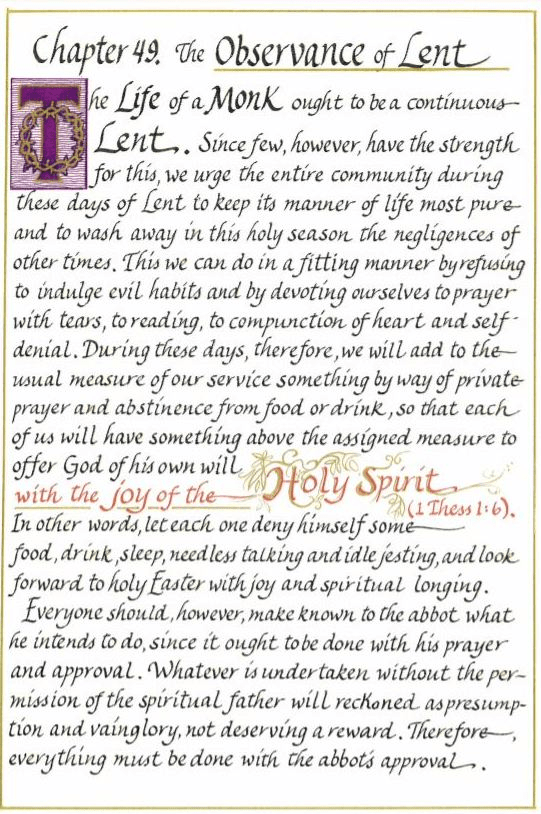
I have been feeling some guilt this Lent season. St. Benedict devotes an entire chapter to observing Lent with advice for monks. He writes, “Let each one deny himself some food, drink, sleep, needless talking and idle jesting, and look forward to holy Easter with joy and spiritual longing (RB 49: 7).” I have not made any grand gestures of sacrifice, quite the opposite. During my spring break from school, which occurs during Lent, we tend to travel out of state to see our daughter and son-in-law, we wine and dine, gather with friends and family, and generally celebrate time on vacation. Return from spring break marks the beginning of the last quarter, or nine weeks, of school when teachers begin to see the light at the end of the tunnel.

My Lent intention is to “hold it all”– to live as prayerfully, joyfully, playfully, gratefully, mindfully, and soulfully as possible while balancing my school and home life. Striking a perfect balance in one’s life is more of an ideal than a reality. The celebrations of the liturgical and astronomical calendar are reminders that our spiritual longings can be met by following the rhythms of nature. Each season we have another opportunity to set new intentions and to honor them in sacred ritual. The Benedictine idea of balance comes from the monk’s life, moving between prayer and work, ora et labora. So, too, do those who live as “monks in the world” seek this balance–sometimes there is more work, less prayer–but both are seen as necessary, sacred, and part of the whole. 

“Blessed are you, spring, season of resurrection, sacrament of promise. Like Jesus you rise up out of the darkness, leaving around you a wake of new life.
Blessed are you, spring, season of hope and renewal. Wordless poem about all within us that can die. Each year you amaze us with the miracle of returning life.”

-Excerpt from A Spring Blessing in The Circle of Life: The Heart’s Journey Through the Seasons by Joyce Rupp & Macrina Wiederkehr

More on Balance and Being Benedictine:

Mindfulness and a Blue Heron
Enough: I Can Never Know It All

Our Life is a Balance

© Jodi Blazek Gehr, Being Benedictine Blogger

Lectio and Visio Divina during Lent

I am always amazed at new understanding and insight that come through meditative reading and discussion. St. Benedict Center is hosting a five-week Zoom retreat called Lent: Lectio and Visio Divina led by Steven Blum, PhD. to provide an opportunity to gain new understanding of often-heard Scripture.

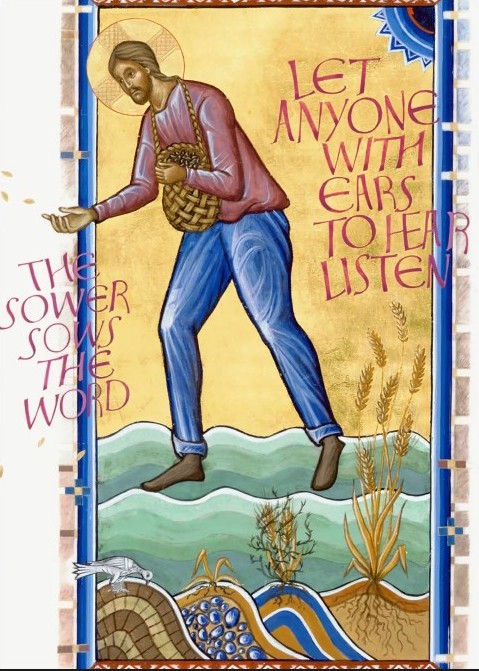
During the first week’s session, we connect with over 140 participants to learn about the ancient practices of Lectio Divina (sacred reading) and Visio Divina (sacred seeing) using the Gospel reading, Mark 4: 13–20 and the Sower illumination from The Saint John’s Bible.

There are four phases of Lectio Divina. The movement through the steps of these practices engages the heart, mind, and spirit, as we sit together in periods of silence, reading, gazing, reflecting, prayer, and contemplation. We seek to have the Lord awaken “the ears and eyes of our hearts.”

In practicing Lectio Divina, after reading the Scripture out loud, we contemplate, consider and reflect on what we have heard. The Scripture is read again, and perhaps again for a third time. After some time of silence, we are welcomed to share or journal a word or phrase that speaks to us.

Continue reading “Lectio and Visio Divina during Lent”

Gather Into One: A Sacred Journey

April 2020 Oblate Lectio Divina and Discussion
Topic: Lent   Sources: Rule of St. Benedict, Chapter 49; John 11:45-56

“We dwell in grief and despair to be surprised into life again with resurrection—each year we are invited to make this sacred journey together.” –Engaging Benedict, Laura Swan

journey together

As Oblates of Christ the King Priory we “make this sacred journey together” meeting once a month for connection, prayer, and study. We gather in Schuyler, Nebraska on the second Saturday of the month for our Oblate meeting including morning prayers, Lectio Divina, Mass, lunch, and discussions both in full and small groups.

img_5334
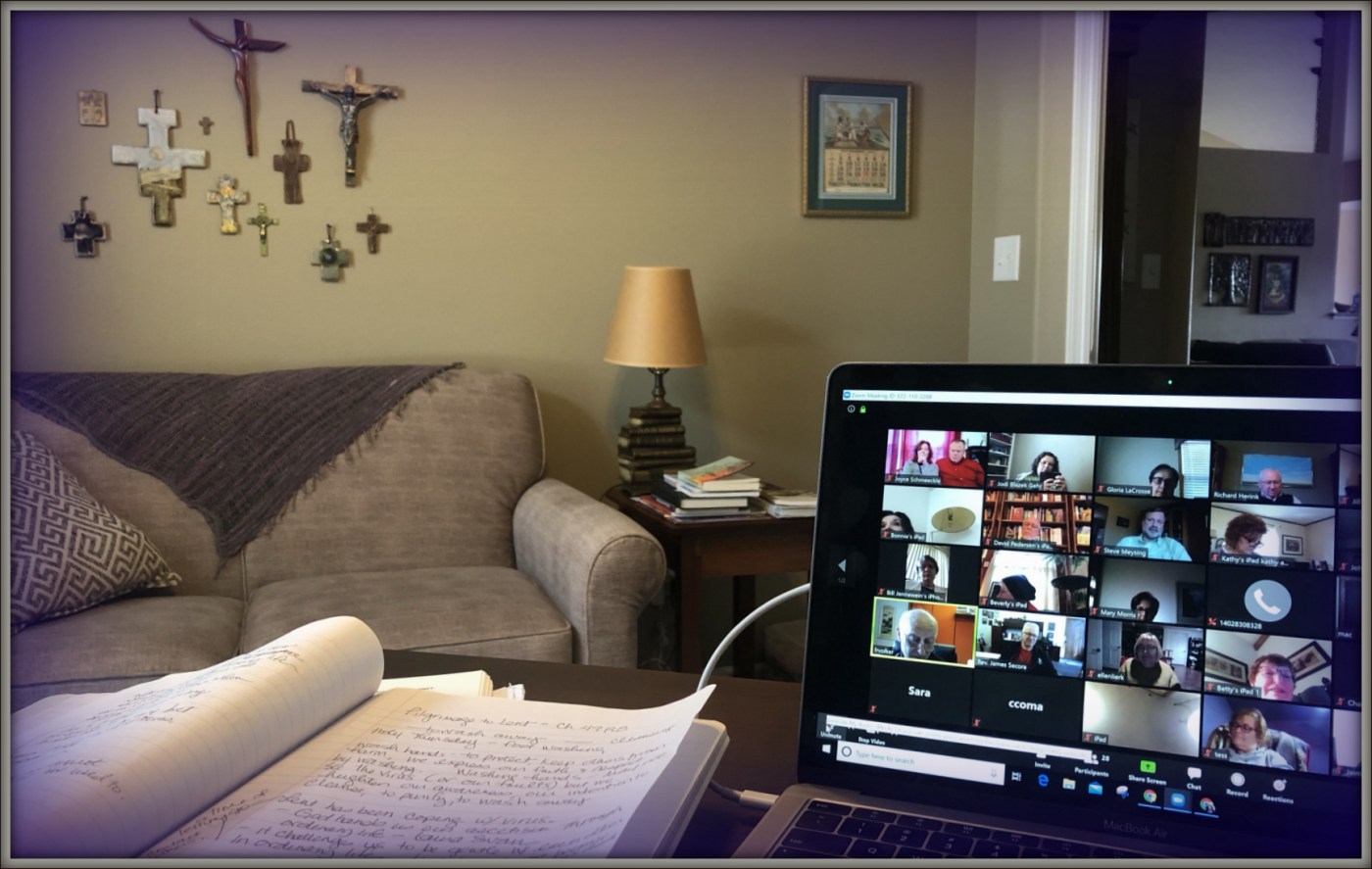
Our inaugural Zoom Oblate Meeting was a huge success!!

Yet, in this time of uncertainty when we cannot meet in person, we still crave the connectedness and the spiritual grounding of our Oblate promises. Being creative problem-solvers, several of our oblates organized a Zoom event for our April meeting. Fr. Volker reflects, “It worked out beyond any expectation and was a wonderful event. Our social media technology and the present challenging Coronavirus Pandemic turn out to be a hidden blessing.” We had 28 Oblates participate, many who typically cannot make the day trip for our monthly meeting. We started as we usually do with a few announcements, prayers and Lectio Divina, each in our own home, and yet we were together.

Our Lectio Divina reading: 

There were many words and phrases that resonated with us:

You know nothing. Gather into one. What are we going to do? If we leave him alone. Began to believe in him. All will believe in him. Jesus would die for the nation. They looked for Jesus. The whole nation may not perish. What do you think? Jesus no longer walked about in public among the Jews.

The layers of meaning in this Gospel reading are inexhaustible, especially as we consider the impact of the pandemic during Lent— Continue reading “Gather Into One: A Sacred Journey”

The Desert Experience

April 2019 Oblate Lectio Divina and Discussion
Topic: The Desert, Life In Solitude
Luke 4:1-13 Jesus was led by the Spirit into the desert and was tempted.

To be led by the Spirit requires listening and obedience to God, one of the three promises of a Benedictine monk, sister or oblate.  Jesus was a listener. After his baptism in the Jordan, which prepared him for his journey ahead, Jesus was called into desert time.

Desert time is often associated with time for solitude.  “Seeking solitude means searching for a time to be alone.” (Beil) Time alone can be renewing and recharging, a dedicated opportunity for reflection and prayer, a time for us to see more clearly and to put our struggles into proper perspective. It is important to go to the desert to come closer to God. “The desert journey was a time of learning to know and to trust God, but also an increase in self-knowledge.” (Beil) The desert time gives us a deepening awareness of our thoughts. We can never fully escape our struggles and temptations—time alone reminds us often it is our own thoughts and behaviors that are our biggest obstacles. Continue reading “The Desert Experience”

O God, Who Are Moved By Acts of Humility

February 2017 Oblate Lectio Divina and Discussion

Topic: Lent and Humility

humility

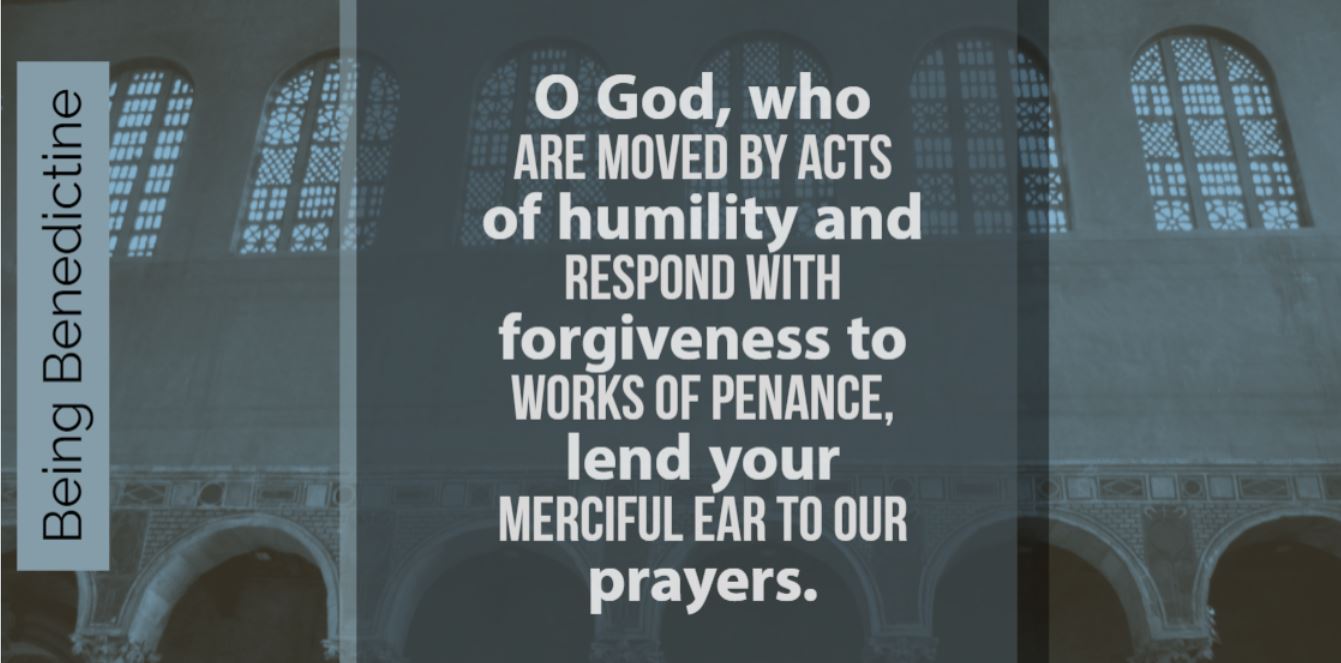
“O God, who are moved by acts of humility and respond with forgiveness to works of penance, lend your merciful ear to our prayers.” These lines in the Catholic Prayer for Blessing and Distribution of Ashes resonated with me during Ash Wednesday Mass, especially after a recent oblate discussion.

This prayer suggests our Creator is moved by what we do, by our acts of humility. The Latin word for “are moved” is flectaris, meaning to bend down. God bends down to us, moves to us, is moved by us. In our humility, we become vulnerable and open ourselves for a deeper connection with God. Continue reading “O God, Who Are Moved By Acts of Humility”

Prayer during Lent (and other times too)

March 2017 Oblate Reflections and Lectio Divina

Topics: Lent for Benedictines; Ways to Pray

Source for discussion: Study Guide for the Rule of St. Benedict with Reflections for Oblates and All Who Seek God, Maria-Thomas Beil, OSB
Readings in the Rule of Saint Benedict: RB 48:14-15 THE DAILY MANUAL LABOR, RB 49:1-10   THE OBSERVANCE OF LENT

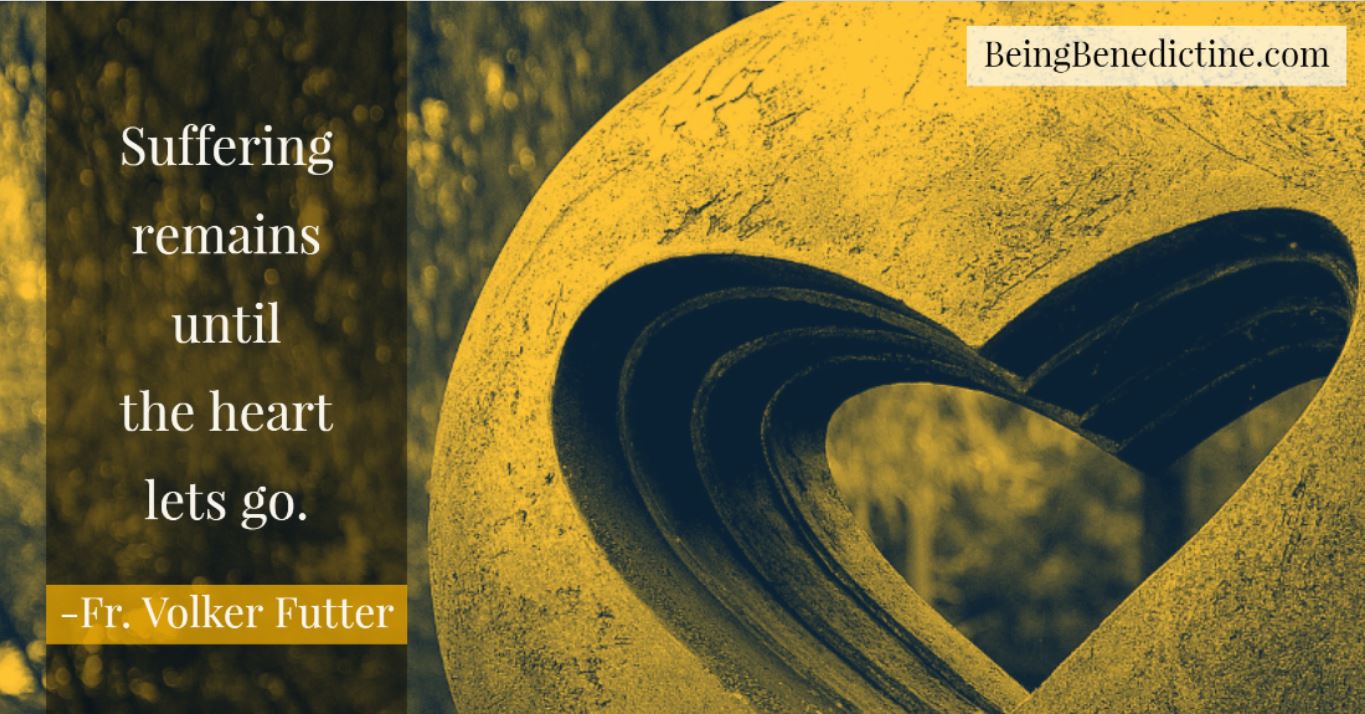
St. Benedict states that the life of a monk ought to be a continuous Lent  (RB:49). St. Benedict in his wisdom knew few would have the strength for this, so he has other suggestions. Fr. Volker Futter, Oblate Director, shared two important ideas:

  1. Lent is self-offering, not denial, it comes from the heart.
  2. We need to acknowledge  the presence of God then we can do sacrifice.  Sacrifice can be giving up something specific like food, TV or internet, or we can give a positive sacrifice.

Oblates shared that “giving of your time is priceless—you can’t get it back”.  So a short visit to the nursing home, or a visit to a neighbor or sending someone a long overdue card—that is your gift of time. “This may sound simple, but one of the hardest things for me to do is find that priceless gift of time for others.  It really is a sacrifice.”

A definition of compunction of heart was requested.  Compunction of heart is when we have an uneasiness or anxiety of the conscience because of something we may have done that may have caused worry, fear, etc. in someone’s heart.  When we give this up we receive more in return. Continue reading “Prayer during Lent (and other times too)”

Blog at WordPress.com.

Up ↑