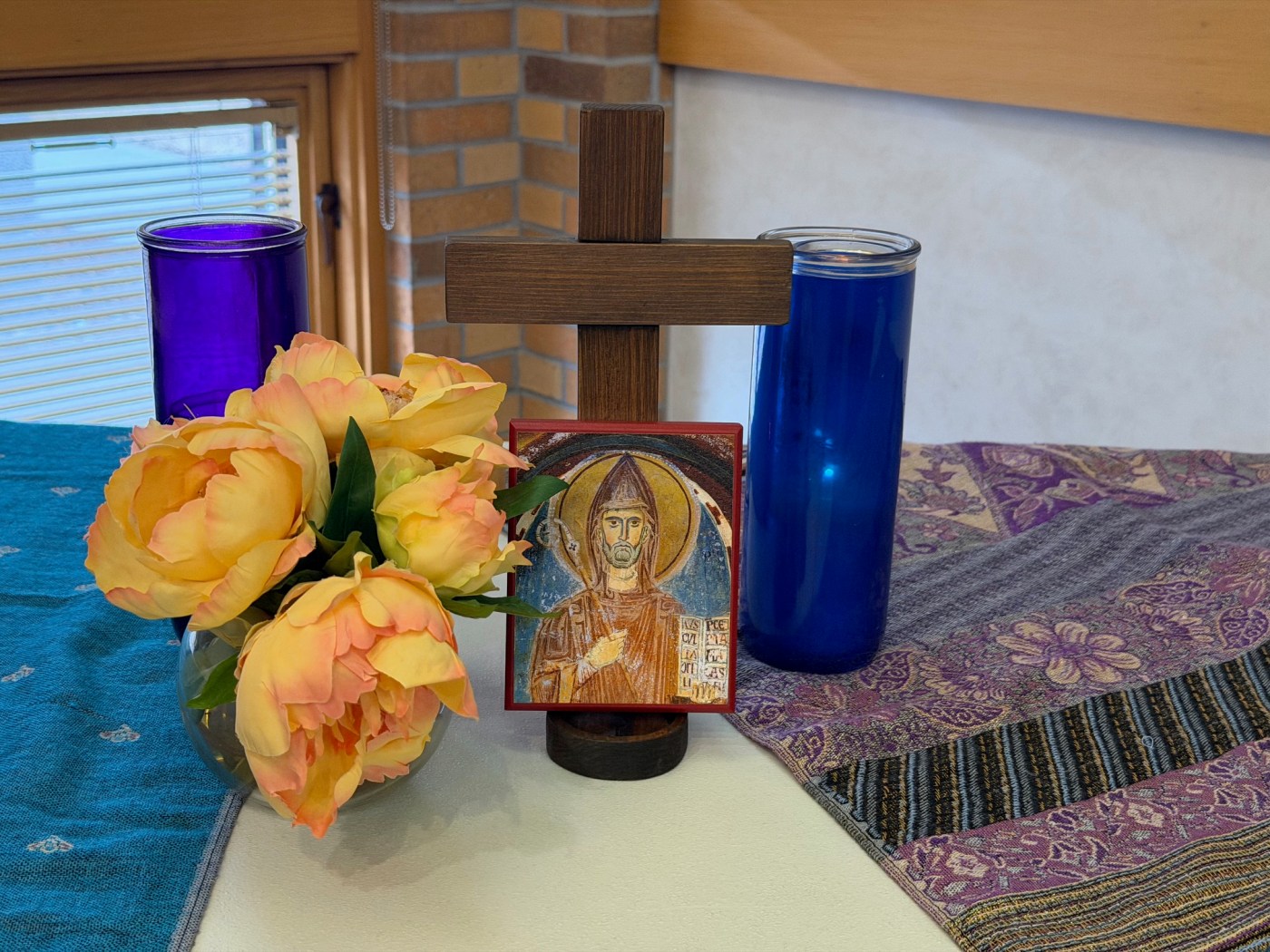
February 2026 Oblate Reflections, Christ the King Priory, Schuyler, Nebraska
Theme: Love and Lent; Lectio Divina: Rule of St. Benedict: Chapter 49: Pictured above: The oldest copy of the Rule of Saint Benedict, from the eighth century.
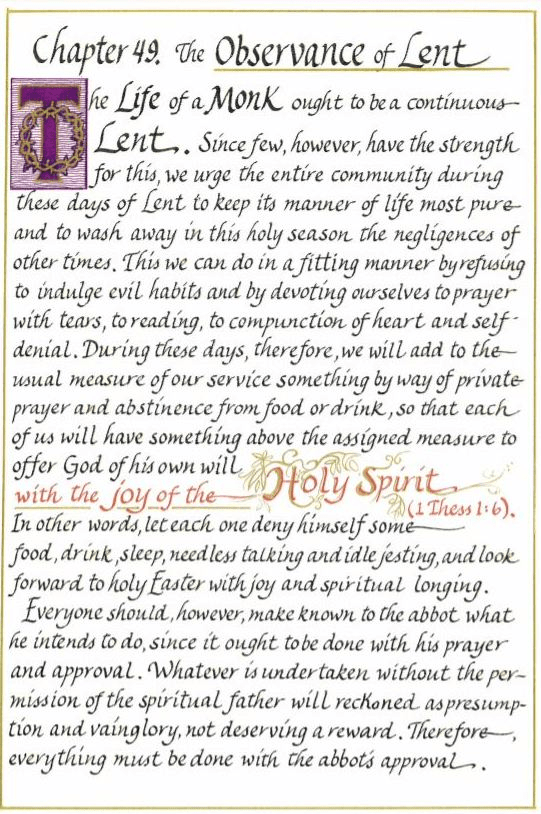
What is your first thought when you consider the season of Lent? Many of us think of giving up sweets, donating to good causes, reading spiritual books or devotions, or going to Mass daily or more often. St. Benedict devotes an entire chapter of The Rule to how monks should practice Lent. He instructs that “the life of a monk should be a continuous Lent.” As an oblate, or lay member of a Benedictine monastery, seeking to live the life of a monk in the world, this can sound like a tall order. Fortunately, Benedict knows that we are only human, that everything must be done in moderation. He writes, “few…have the strength for this.”
We consider what he might mean by the ideal of a “continuous Lent” as well as other words or phrases that resonate with our oblate community during our Lectio Divina discussion.

A continuous Lent. The holy season of Lent, Benedict writes, is a time “to keep its manner of life most pure and to wash away…the negligences of other times.” He offers specific ideas: avoiding evil habits, praying with tears, reading, compunction of heart, and self-denial. Unlike a New Year’s resolution, which we often resolve to add or subtract from our lives (and often lose track of what we resolved to do), a continuous Lent encourages us to keep checking in with our spiritual journey.
Our intentions are not one-and-done. We fall; we get up—again and again. Our spiritual lives can be likened to a spiral—a continuous journey in which we return to learn anew. Lent is a continuous preparation for Easter—a time of resurrection, new life, and beginning again. Even when our hearts are pierced by our own suffering and by the suffering of the world, there is a promise of something new being born, something resurrected. Joy will come again.
Continue reading “A Time to Wash Away: A Continuous Lent”




 Being Benedictine