Search

Being Benedictine

Living SoulFully as an Oblate of St. Benedict

Tag

obedience

To Love and Be Loved: The Monk and The Marriage

But now faith, hope, and love remain, these three; but the greatest of these is love. –1 Corinthians 13:13

This scripture verse is one of the most frequently read at wedding ceremonies, but it is meant for more than those getting married. We are created to love and be loved—all of us, no matter who we are or our chosen paths in life, whether monk or married.

Our deepest longing is to be loved. Love is the thread that runs through all the world’s religions. In Christianity, the Great Commandment is to “love the Lord your God with all your heart, and with all your soul, and with all your mind” and to “love your neighbor as yourself.” 

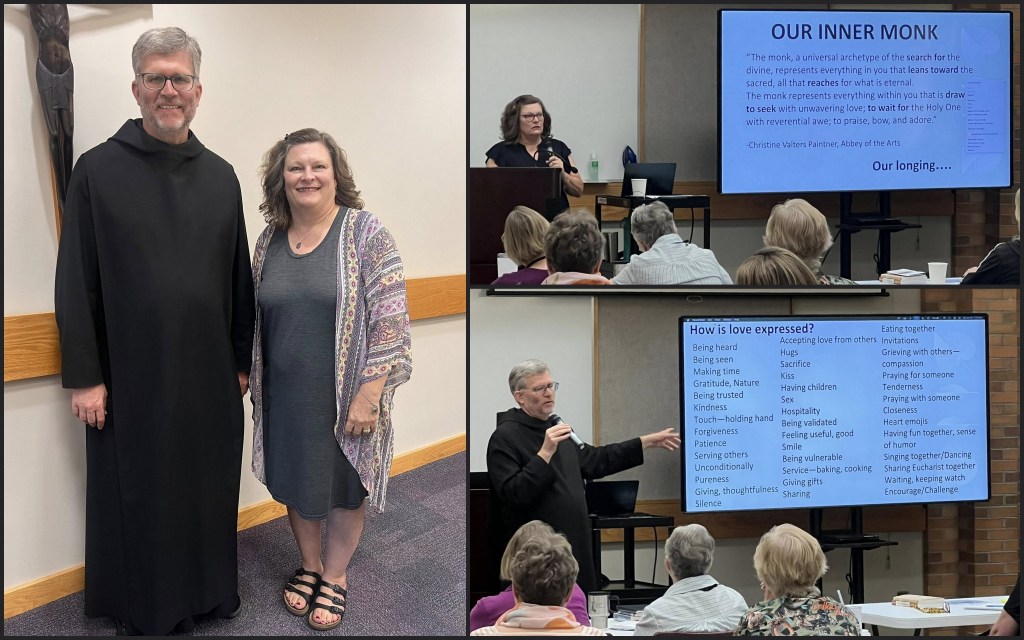
Several years ago, during spiritual direction with Benedictine monk, Fr. Mauritius Wilde, we discussed, despite our different vocations, how much we have in common. We each have a holy longing—to love God, to have a healthy love for ourselves, and to give and receive love. Practically speaking, we are the same age, we are both teachers and retreat leaders, have one brother, have the same middle name (Marie—seriously, what are the odds on that?), we share similar Enneagram personality traits, and each of us professed our marriage or monastic vows 40 years ago, a day apart. I was married on August 17, 1985, and Fr. Mauritius entered the monastery as a novice on August 18, 1985.

After one of many conversations where one of us would say, “That is exactly how it is for me!” or “Me, too!”, I half-seriously, half-jokingly suggested that we write a book about how, setting the whole monk vs. being married thing aside, we experience our love of God and others in many of the same ways. Nearly forgotten, this idea resurfaced a year or so ago, and we decided that leading a retreat together would be a good beginning. Our theme would be love, specifically how the Rule of St. Benedict can help us grow in love and to discover our “inner monk.”

“The monk, a universal archetype of the search for the divine, represents everything in you that leans toward the sacred, all that reaches for what is eternal. The monk represents everything within you that is drawn to seek with unwavering love; to wait for the Holy One with reverential awe; to praise, bow, and adore.” -Christine Valters Paintner

The Rule of St. Benedict shows us the path of love, of nurturing the monk within while living in community. During our retreat, held in July 2025, we shared how the monk’s promises—stability, obedience, and conversion of life—are the foundation for learning and growing in the “school for God’s service.” (RB Prologue 45) For the monk, this place of learning is the monastery. For me, it begins in my family as wife and mother. But each of us is more than our role as a monk or a married person. Each can be transformed by practicing love in our friendships, workplaces, community, and environment.

Continue reading “To Love and Be Loved: The Monk and The Marriage”

July 11: A Big Day for Being Benedictine

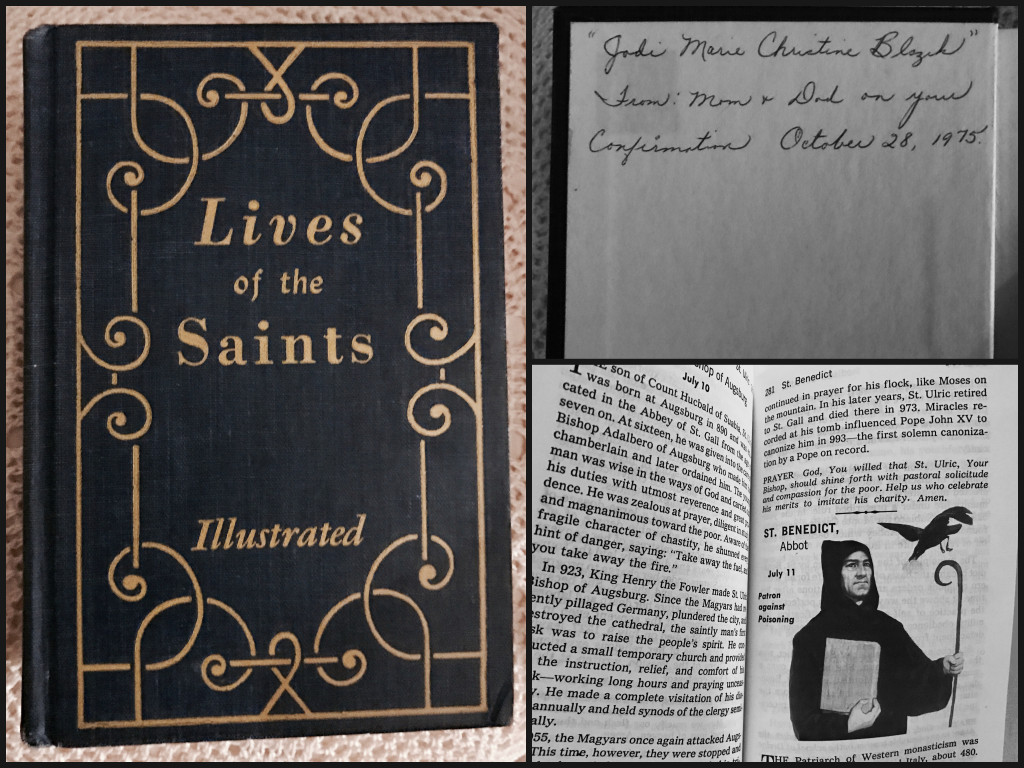
St. Benedict is special to me for a few reasons. First, we share a birthday. I admit I was disappointed when I first discovered this. My parents had given me an illustrated book of the “Lives of the Saints” to commemorate my Confirmation. As any nine-year-old would do, I immediately looked to see who the saint was for July 11, my birthday. Perhaps Elizabeth, Mary, or Theresa would be my special saint.

Instead, I see an illustration of a man with a dark hood, a scary-looking bird, a crooked cane, and an unusual name I had only associated with Benedict Arnold. July 11, St. Benedict, Abbot, it said. I had never heard of him and surely did not know what an Abbot was. Through the years, I returned to this image of St. Benedict, thinking that I should have some connection with my patron saint.

Fast forward 26 years. With a full and busy life—married with a young daughter, a career as a high school teacher and club sponsor—I felt a deep longing for times of silence. I answered the call of my heart and responded to an advertisement for a silent contemplative prayer retreat. I discovered an oasis of peace just a few hours from home in the cornfields of Nebraska…called St. Benedict Center.

Continue reading “July 11: A Big Day for Being Benedictine”

Tender Compassion of Our God

December 2020 Lectio Divina and Oblate Reflections

Sources: Luke 1:67-79; The Rule of St. Benedict, Chapter 72 Study Guide for The Rule of St. Benedict, Maria-Thomas Beil, OSB, page 180-185

For our Lectio Divina practice, we read more deeply the well-known Benedictus that is prayed every morning in the Divine Office, Luke 1:67-79.

This image has an empty alt attribute; its file name is img_3941.jpg

Words and phrases that resonate with us, shared in our discussion:

Save us from our enemies….to show mercy….to set us free… without fear…. knowledge of salvation….forgiveness of our sins….the way of peace…promise….prepare his way…you, my child…tender compassion.

This image has an empty alt attribute; its file name is img_3922.jpg

The Benedictus proclaims what God is doing and will do for us—not what we do. Many of us have grown up with the image of an angry God, but that is not the God we are shown in Scripture. We are promised a God of tender compassion, not a bookkeeper of judgments. Mercy is God’s loving response to suffering. God is not watching from afar; God is suffering with us.

The dawn from on high breaks upon us—God is breaking in with the incarnation and gives us hope. Benedict was not harsh, but practical, just as God is tender. God enters our history to experience our suffering with us, but we must expose our wounds for the tender compassion of our God to work. To prepare our heart, we must invite God in. Advent was a time to prepare our hearts for God to enter—although this task is never fully completed. We must live in perpetual Advent, inviting God in and humbling ourselves without fear, to receive the tender compassion of our loving God.

Continue reading “Tender Compassion of Our God”

Happy Birthday to me…and St. Benedict!

St. Benedict is pretty special to me for a few reasons.

First, we share a birthday. I have to admit that I was pretty disappointed when I first discovered this. My parents had given me an illustrated book of the “Lives of the Saints” to commemorate my Confirmation. As any nine-year-old would do, I immediately looked to see who the saint was for July 11, my birthday. Perhaps Elizabeth or Mary, Theresa or Christine (my confirmation name) would be my special saint. A lovely woman saint with a beautiful name—I had hoped.

confirmation

Instead, I beheld an illustration of a man with a dark hood, a scary-looking bird, some sort of walking cane, and an unusual name that I had only associated with Benedict Arnold, a famous American traitor.

July 11, St. Benedict, Abbot, it said. Continue reading “Happy Birthday to me…and St. Benedict!”

Happy Feast Day of St. Benedict!

Happy Feast Day of St. Benedict!

DSC_0911a
Montecassino Abbey

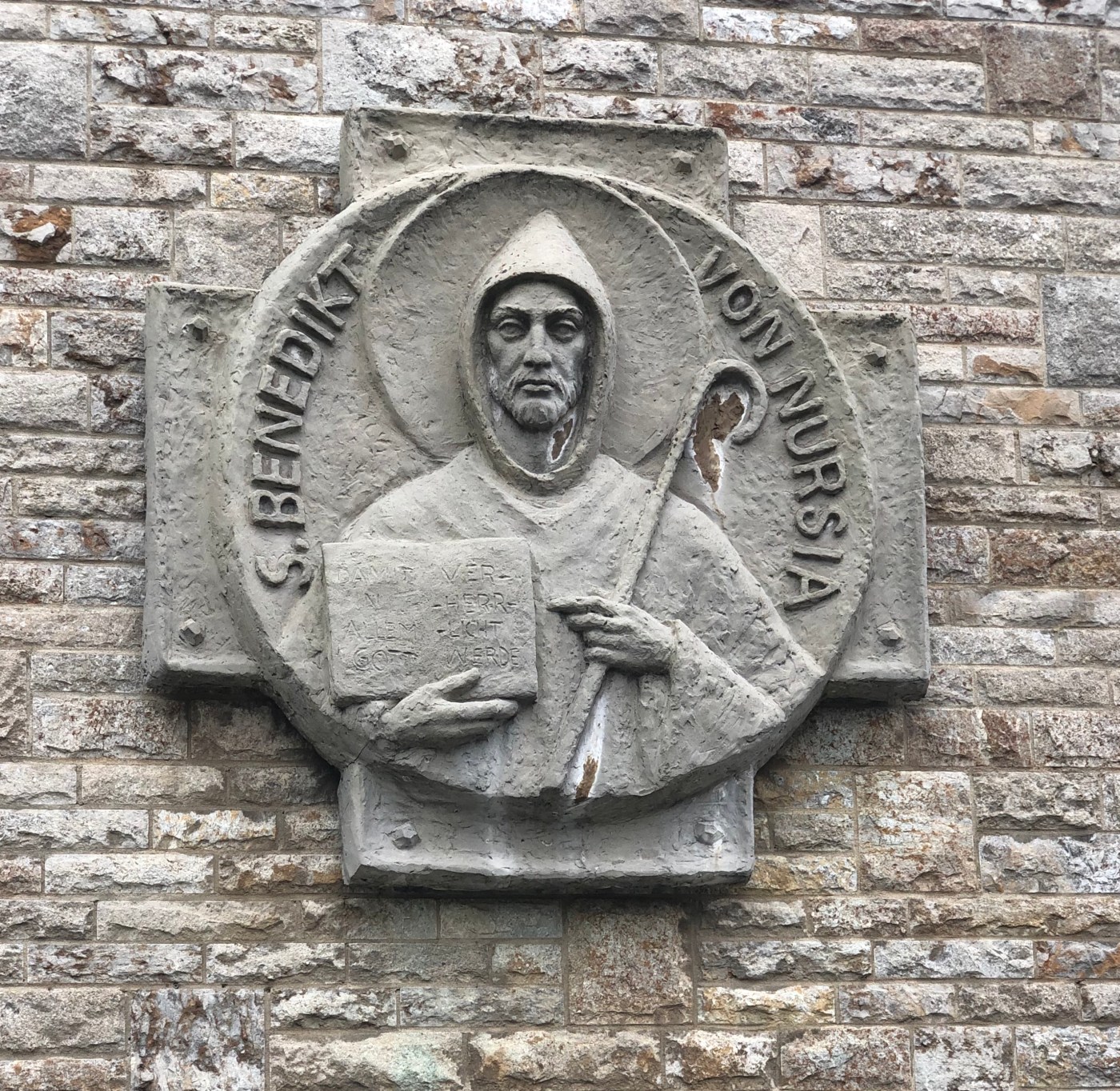
On March 21, Benedictines around the world celebrate the “transitus of St. Benedict, the day Benedict entered eternity. “Transitus” in Latin means passing from one state to the next—death is not the end of life, but the transition into eternity with God.  It is one of two days that St. Benedict is recognized on the Benedictine calendar.

Since this feast day is always during Lent, another commemoration date was set when Pope Paul VI declared St. Benedict the Patron of Europe at the rededication of the Church at Monte Cassino on July 11, 1964. July 11 is the Feast of St. Benedict for the Universal Church. Only Mary, the mother of Jesus and John the Baptist are remembered with both their birthdays and their day of entry into heaven. Continue reading “Happy Feast Day of St. Benedict!”

Blog at WordPress.com.

Up ↑