Search

Being Benedictine

Living SoulFully as an Oblate of St. Benedict

Tag

Prayer

Many Ways to Pray: Walking a Labyrinth

“There are hundreds of ways to kneel and kiss the ground.” –Rumi

There are many ways to pray—in song, spoken or written words, silence, creativity, nature and movement, just to mention a few. Paul recommends to “pray without ceasing” (1 Thessalonians 5:17), which is only possible if we are able to connect with our Creator in a variety of ways. We are meant to engage our senses, our whole bodies, in prayer.

I’ve come to appreciate this about the Catholic Mass, even if visitors might think there is a lot of up and down. We genuflect, sit, stand, kneel and bow. These gestures, postures or movement help to bring our whole being into prayerful expression—raising our hands when saying the “Our Father”, making the sign of the cross or receiving the Eucharist allows us to use our bodies in prayer.

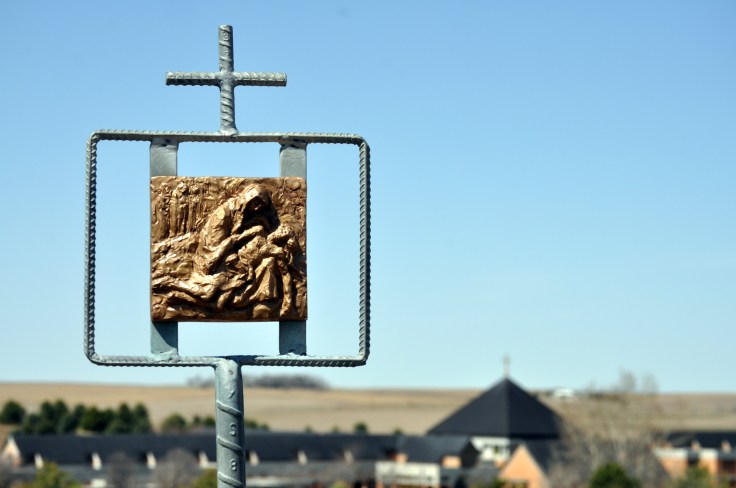
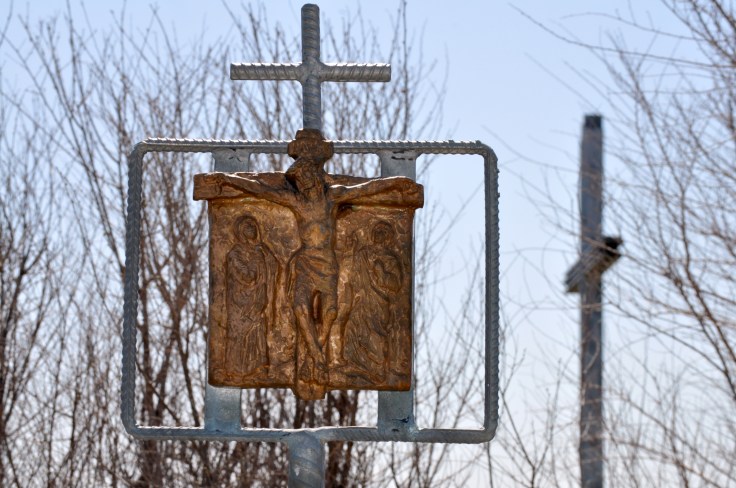
lab signIn addition, walking the stations of the cross or a labyrinth, taking a nature hike, or practicing yoga or tai chi are prayerful forms of movement that engage our bodies while quieting our mind. Going away on retreat is an opportunity to explore and practice various forms of prayer.
St. Benedict Center is building a labyrinth modeled after the famous labyrinth in the Cathedral of Chartres, France.  “When the Holy Land was closed to pilgrims in the Middle Ages, labyrinths abounded in the churches of Europe.  They were used to symbolically represent the pilgrimage to the Holy Land.  Our life is a pilgrimage, a journey to our eternal home with God in heaven.” –Father Thomas Leitner The labyrinth will be completed in late summer or fall. 

DSC_0925a

This summer I had the opportunity to pray in many ways while attending an eight-day Ignatian retreat at the Creighton University Retreat Center. Each day, for about an hour, I met with a spiritual director to receive guidance and to share my faith journey; the remainder of the day was spent reflecting on these discussions and praying. One of the ways that I prayed was by walking a labyrinth.

“A labyrinth is not a maze. A maze is a symbol of life without meaning, it is an agent of confusion, deception with dead ends that lead you nowhere. But a labyrinth is a symbol of a life of deeper meaning, an on-going sacred journey leading us inward, outward and to greater wholeness.” –Carrie Newcomer Continue reading “Many Ways to Pray: Walking a Labyrinth”

Prayer during Lent (and other times too)

March 2017 Oblate Reflections and Lectio Divina

Topics: Lent for Benedictines; Ways to Pray

Source for discussion: Study Guide for the Rule of St. Benedict with Reflections for Oblates and All Who Seek God, Maria-Thomas Beil, OSB
Readings in the Rule of Saint Benedict: RB 48:14-15 THE DAILY MANUAL LABOR, RB 49:1-10   THE OBSERVANCE OF LENT

St. Benedict states that the life of a monk ought to be a continuous Lent  (RB:49). St. Benedict in his wisdom knew few would have the strength for this, so he has other suggestions. Fr. Volker Futter, Oblate Director, shared two important ideas:

  1. Lent is self-offering, not denial, it comes from the heart.
  2. We need to acknowledge  the presence of God then we can do sacrifice.  Sacrifice can be giving up something specific like food, TV or internet, or we can give a positive sacrifice.

Oblates shared that “giving of your time is priceless—you can’t get it back”.  So a short visit to the nursing home, or a visit to a neighbor or sending someone a long overdue card—that is your gift of time. “This may sound simple, but one of the hardest things for me to do is find that priceless gift of time for others.  It really is a sacrifice.”

A definition of compunction of heart was requested.  Compunction of heart is when we have an uneasiness or anxiety of the conscience because of something we may have done that may have caused worry, fear, etc. in someone’s heart.  When we give this up we receive more in return. Continue reading “Prayer during Lent (and other times too)”

Begin Everything in Prayer

February 2017 Oblate Reflections and Lectio Divina

Topic—Prayer; Rule of St. Benedict, Chapters 8-20, 52.

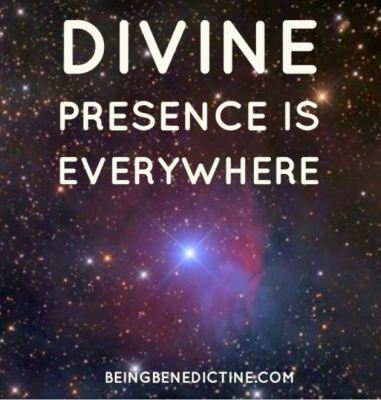
The Divine Presence is Everywhere, RB 19:1 We believe that the divine presence is divine-presence
everywhere
and that in every place the eyes of the Lord are watching the good and the wicked. (Prov 15:3). 2. But beyond the least doubt we should believe this to be especially true when we celebrate the divine office.

“It is also held that even work can be prayer. Any occupation undertaken through obedience, offered to God and accompanied with short invocations frequently renewed would in itself be prayer. Thus, only by sanctifying one’s daily actions can one pray without ceasing.” – Maria-Thomas Beil

Lectio and Discussion

Scripture for Lectio Divina: Matthew 6:1-6, 16-18

After reading the Scripture out loud, we contemplate, consider and reflect on what we have heard. The Scripture is read again. After some time of silence, we are welcomed to share a word or phrase that speaks to us. What I love most about practicing lectio divina with a group is what resonates with each of us is so different. We bring to the table a variety of ways to understand what we’ve read; we learn from each other.

Inner room.      Deliver.     Do not babble.    So that others may see them.    Received they reward.      Sees in secret.          Thy will.         Us.          Forgive.           Your Father knows what you need. 

 What resonates with you from this reading?  This is what resonated with us:

prayer-fr-volker

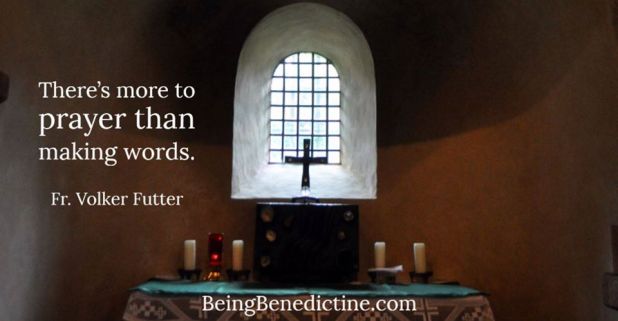
There’s more to prayer than making words. Continue reading “Begin Everything in Prayer”

Blog at WordPress.com.

Up ↑