Search

Being Benedictine

Living SoulFully as an Oblate of St. Benedict

Tag

spirituality

Our Lady of Guadalupe, Our Sacred Mother

Mary, the quintessential mother, emerges in many of my collage creations. On the Feast of Our Lady of Guadalupe, December 12, I am reminded how Mother Mary appears in many forms across religions and cultures. She brings visions and messages uniquely tailored to those who receive them, like Juan Diego.

On the site of an ancient shrine to the Aztec mother goddess, on Tepeyac Hill near Mexico City, a young Nahuatl Indian named Juan Diego had a vision of a young Indian woman. Speaking in his native tongue, she directed him to take roses to the bishop and tell him to build a church on the hill. The bishop dismissed the story, but the young maiden appeared to Diego once more, identifying herself as the Mother of God. She instructed him to gather roses that grew at her feet, during the winter no less, and take them to the bishop. When Diego opened his coat, roses tumbled out and a colorful impression of Our Lady, with dark skin, was imprinted on the fabric.

“My dearest son, I am the eternal Virgin Mary, Mother of the true God, Author of Life, Creator of all and Lord of the Heavens and of the Earth.”

Our Lady of Guadalupe to St. Juan Diego on Mount Tepayac, 1531

This story has been told for five hundred years, standing as an “image of divine compassion for a demoralized people. Speaking to Juan Diego in his own language, (Mary) presented herself in terms of compassion and solidarity, not power and domination.” (Blessed Among Us, December 12, 2020) The image of Our Lady attracts millions of pilgrims each year at the basilica in Mexico City, one of the world’s most visited sacred sites.

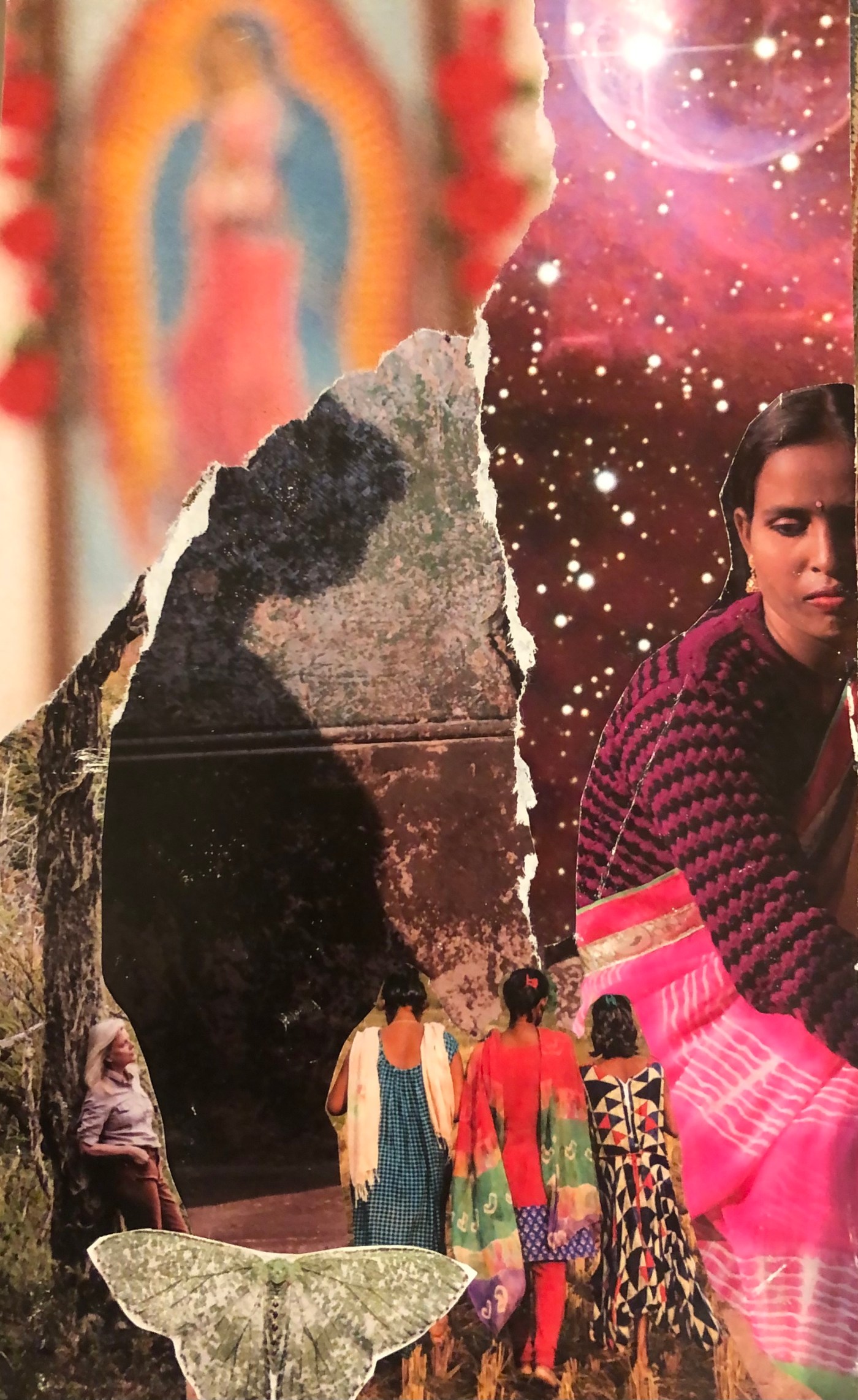
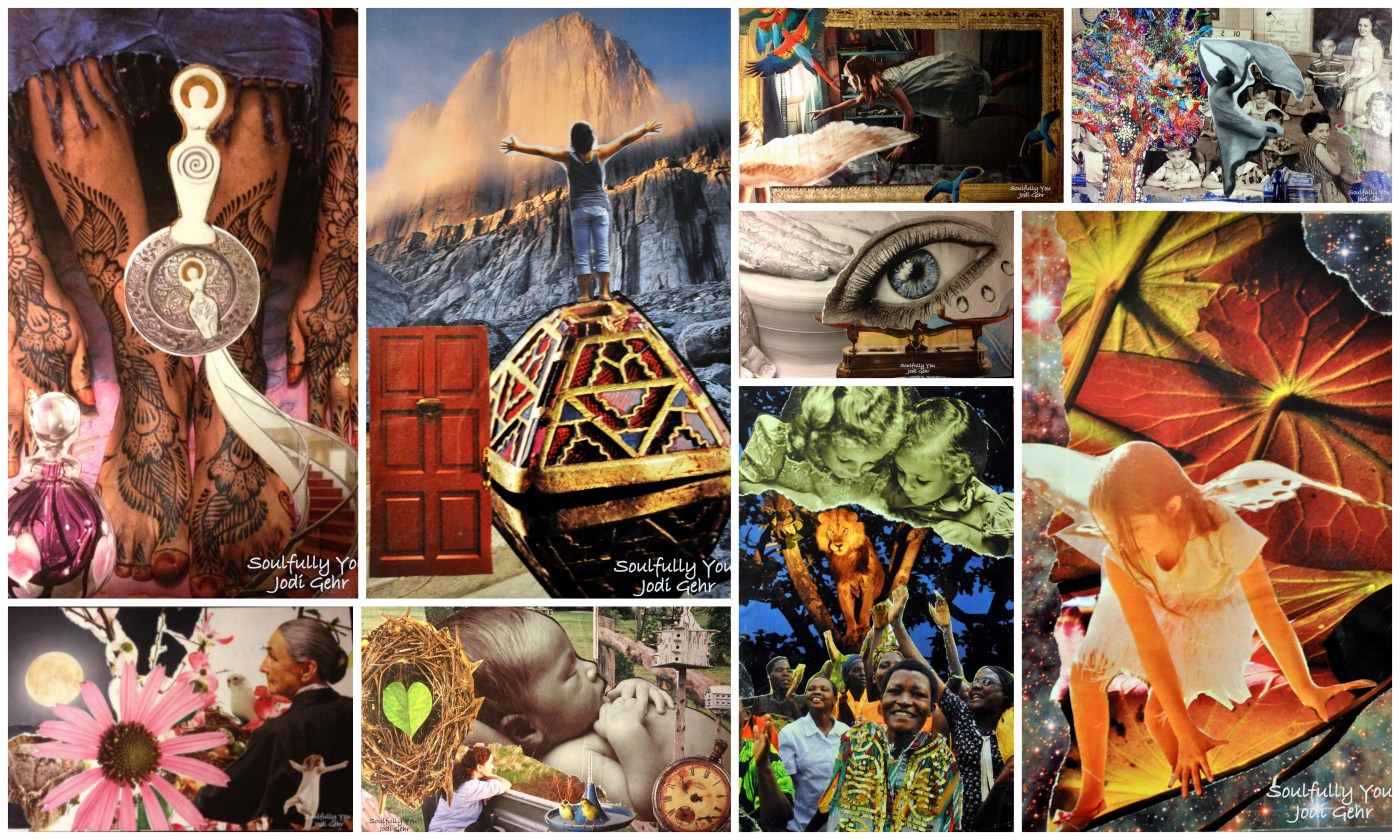
One of the Mary cards I created during a Full Moon retreat with anam caras, women friends on the spiritual journey, features Our Lady of Guadalupe and her role in the life of all women, particularly those who are marginalized and suffering. In the upper left corner is an image of Our Lady of Guadalupe, framed by roses that bloomed out of season.  Our Lady watches over us—Mother of the Universe, outside time and space. Whether you call her Tonantzin, “Sacred Mother” in Nahuatl, the language of Juan Diego, or Holy Mother, Mother Mary, the Mother of God, or the Virgin Mary, she offers a divine motherly love and protection available to all. Mary empowers women to give that same love and compassion to others.

Continue reading “Our Lady of Guadalupe, Our Sacred Mother”

Ireland: I Had to Go Back

Vacation planning is a lot like lesson planning in the classroom and preparing for SoulFully You retreats and workshops I lead. I always over-plan. When my friend Sara invited me to go on a Celtic Christianity pilgrimage, I dove headfirst into researching all the possible places we could spend four days before the pilgrimage began. I found enough possibilities for a four-week vacation!

Visiting the monastic ruins of Glendalough, the holy wells of St. Brigid, and the High Crosses of Monasterboice, to name a few sacred sites on the pilgrimage, was all I had hoped for. But I hadn’t expected to be so enamored by the diversity and beauty of Ireland’s landscape, its rich culture and history, and the hospitality of locals and tourists.

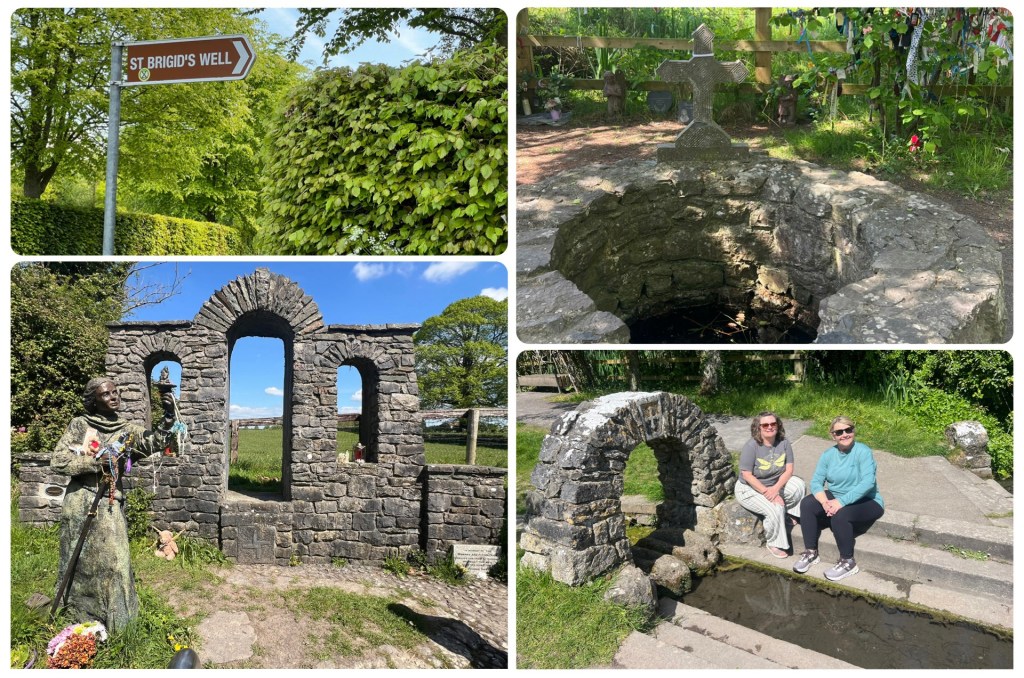
St. Brigid’s Holy Well in Kildare. I visited in Fall 2024 and again with Joe, Dave, and Kris (pictured with me.)

So often, I found myself saying, “Joe would love this.”  I knew I needed to come back with my husband, that he would enjoy the Irish pubs, beautiful scenery, and visiting with locals. And, of course, I was thinking about all the places I had learned about that I still wanted to see.

And so it happened, I asked my husband whether he would like to go in May or September the following year. (See how I did that?) We decided on May, the best time to see wildflowers blooming in the Burren. I pulled up my research spreadsheet and got to work planning a two-week vacation. Again, over planning is my gift, so we decided on a few days shy of three weeks. Our friends, Dave and Kristine, who we met when our daughters were five years old (that’s 26 years ago!) would join us for most of the trip, and to my delight they let me plan the itinerary!

When deciding where to go, I knew I had to return to Solas Bhride in Kildare, the “thin place” where one of our pilgrims, Mike, had a medical emergency and passed away. The Sisters of Solas Bhride Centre & Hermitages had been so compassionate and hospitable, offering a gathering place for prayer and reflection, serving tea and cookies, and welcoming us to experience the presence of Brigid throughout the center, in its garden, labyrinth, and sacred art.

I enjoyed visiting with Sr. Rita Minehan and when I purchased her book Rekindling the Flame: A Pilgrimage in the Footsteps of Brigid of Kildare, she eagerly signed it. I learned even more about the sacred sites of St. Brigid nearby, including the Cathedral, the parish church, a holy well, and the village itself.

With the help of Sr. Rita’s book, we planned a pilgrimage day to Kildare, returning to Solas Bhride, where Mike crossed life’s greatest threshold, from the here to the hereafter. Sr. Rita welcomed my husband and me, sharing local art and memorabilia from “St. Brigid: A Woman, A Life, A Legacy,” a celebration of the 1500th anniversary of the death of St. Brigid, and the first year that the Feast of St. Brigid was declared a national holiday in Ireland. More about St. Brigid here.

Continue reading “Ireland: I Had to Go Back”

Celebrate Trees: An Arbor Day Message

For the last 153 years, Arbor Day has been celebrated on the last Friday of April. The founder of Arbor Day, J. Sterling Morton, understood the importance of trees to agriculture, for windbreaks to keep soil in place, for fuel and building materials, and for shade from the hot sun. He believed in getting everyone, particularly students, involved in planting trees. An estimated one million trees were planted in Nebraska on April 10, 1872, encouraged by contests between counties and schools.

Trees nourish each other beyond what our eyes can see or our minds can understand. Deep within, at a root level, they are connected. The same is true for humans; we are deeply connected and nourished by each other. By gathering in community, we support each other. We keep each other standing tall and strong.

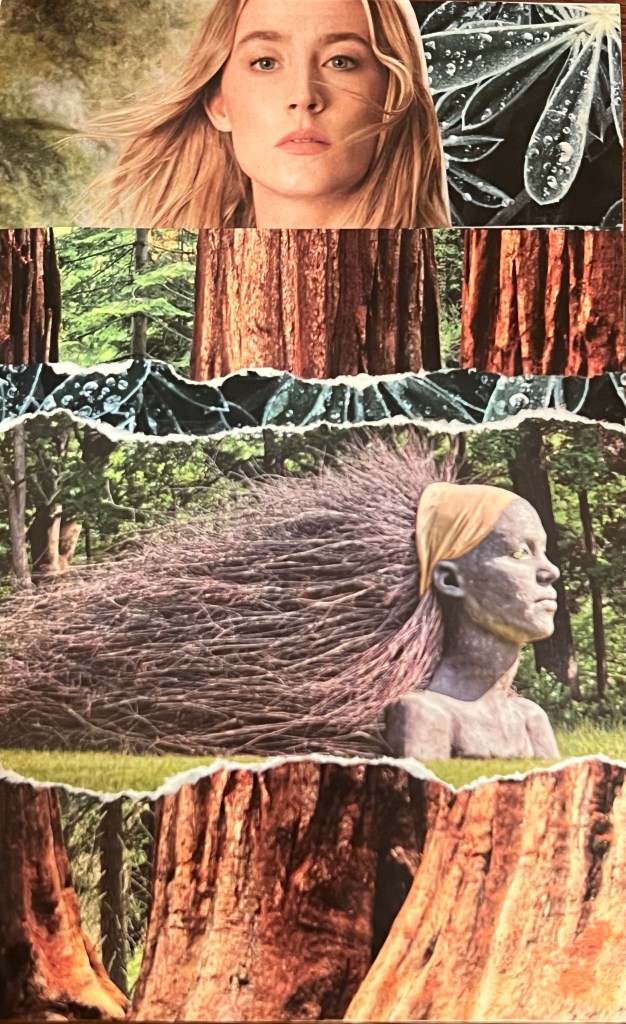
Inspired by the symbolism of trees, I created a SoulCollage card I named “Tree of Life.”

I am one and the many, tree and part of the forest.
Rooted deeply, standing tall, leaning towards the light.
Roots mingling with, connected to, nourished by others.
Growth is in my nature, and nature is in me.
I am the tree of life.

© Jodi Blazek Gehr

Read more about the synchronicity of creating this card and finding the perfect poem in Tree of Life.

“Benediction of the Trees”, a song written and performed by Derek Dibbern, is a prayerful song. It is recognition that Nature blesses us with trees for our healing, enjoyment, leisure, and protection–our very breath depends on the existence of trees. See images of trees through the seasons and a video of the song at Benediction of the Trees.

What is being asked of us is nothing other than a certain responsibility for the legacy we will leave behind, once we pass from this world.” –Pope Francis, Laudate Deum, 18

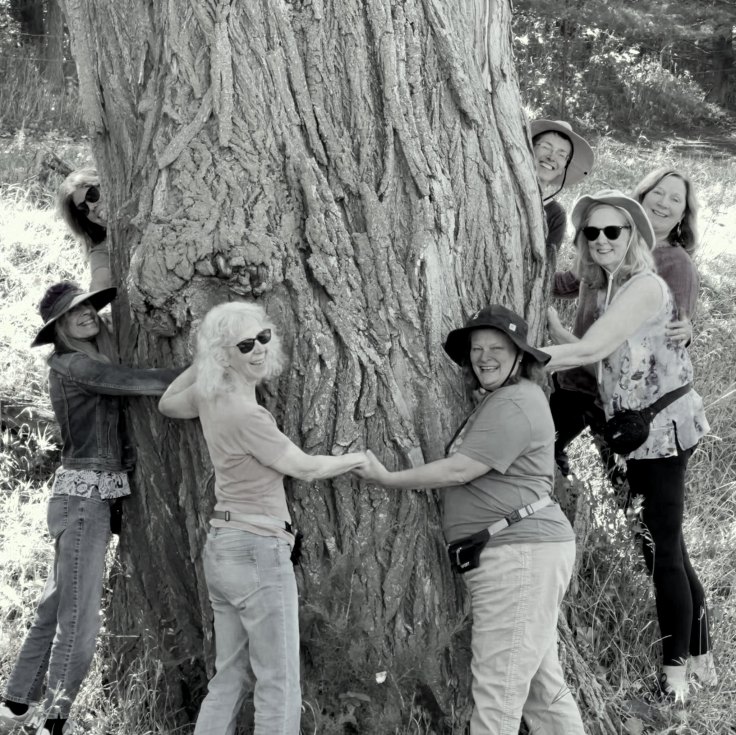
The existence of trees has been threatened in the name of progress, to pad the pockets of the greedy, or, sadly, out of sheer ignorance. The original tree huggers, known as the Chipko movement, continues to influence environmentalist efforts, forcing reforms and moratoriums in the forestry industry that saved thousands of trees. Read more about a tree-hugging moment for a group of friends as we celebrate reading Braiding Sweetgrass by Robin Wall Kimmerer at Tree Huggers: The Circle of Care.

The Arbor Day Foundation works to “help others understand and use trees as a solution to many of the global issues we face today, including air quality, water quality, a changing climate, deforestation, poverty, and hunger” through conservation and education programs. Read more about Arbor Day at Planting Trees is a Big Deal: 150 Years of Arbor Day!

© Jodi Blazek Gehr, Being Benedictine Blogger

Feast of St. Brigid and Holy Wells

A Celtic saint and pre-Christian goddess, Brigid was a 5th-century abbess and founder of monasteries. One of Ireland’s three patron saints along with St. Patrick and St. Columba, St. Brigid is known by many names —Bhride, Bride, Brighid, Brigid, Bridget—and many titles including Muire na nGael (Mary of the Irish) Brigid of the Mantle, Brigid of the Fire, and Mary of the Gael.

February 1, St. Brigid’s death anniversary, is the same day as the Celtic Feast of Imbolc. Imbolc, a celebration of the Celtic sun goddess Brigid is the halfway point between the Winter Solstice and Spring Equinox in the Northern Hemisphere. Imbolc, which means “in the belly”, celebrates the change of seasons, a threshold time of welcoming more sunlight in the day.

It is not by chance that these two celebrations are on the same day. St. Brigid has been described as a bridge between the pre-Christian and Christian traditions. The stories we hold of St. Brigid blend archetype, legend, and history, an amalgamation of the threshold time when Celtic traditions were being adapted and/or replaced by Christianity.

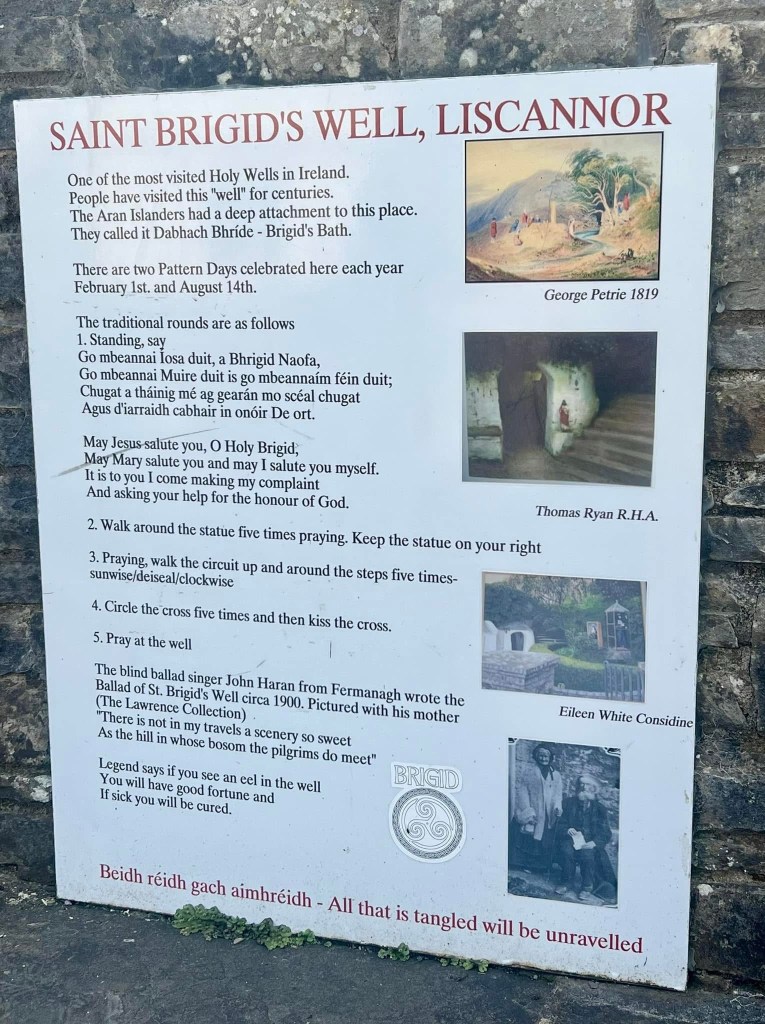
Thousands of holy wells, many dedicated to St. Brigid, are a pilgrimage destination in Ireland. On St. Brigid’s Day, it was a tradition to visit the nearest holy well to ask for healing and fertility in the family, with livestock and crops. Those suffering from illness would offer rosaries, icons, letters, and more with prayers for their healing. Celts believed that the festival of Imbolc and sites like holy wells were a “thin place” where God’s presence could be deeply felt.

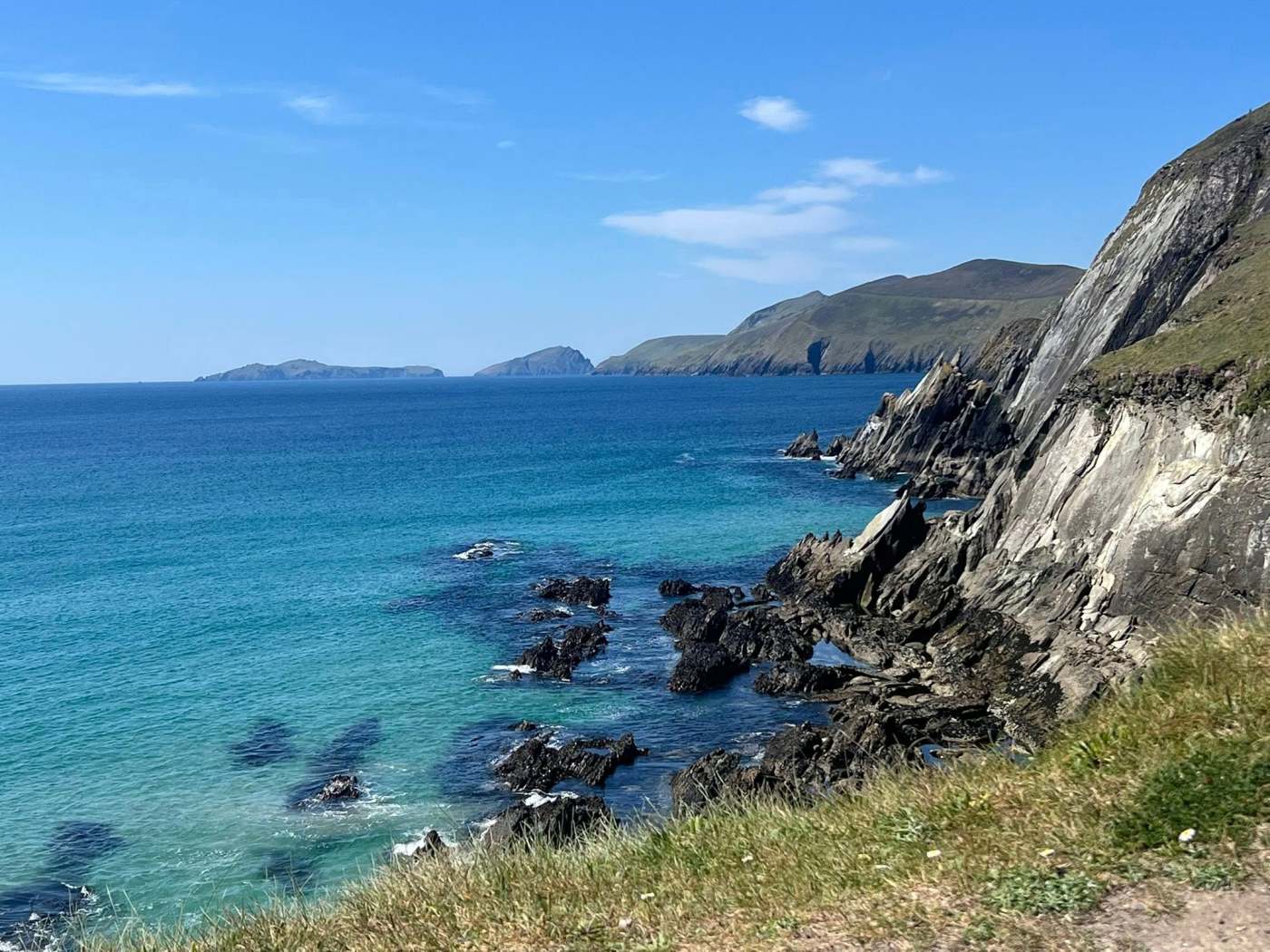
A highlight of a 2024 pilgrimage to Ireland included visiting two holy wells dedicated to St. Brigid. Near the Cliffs of Moher, in Liscannor, we visited one of the oldest of the 3000 holy wells in Ireland, one of the few still flowing with water, known for its healing powers. Hiking near the Cliffs with the Atlantic Ocean to the west, and cows and sheep grazing to the east, would have been what Brigid and the many pilgrims have experienced over the past 1500 years.

Continue reading “Feast of St. Brigid and Holy Wells”

Atoms of Delight: A Pilgrimage to Iona

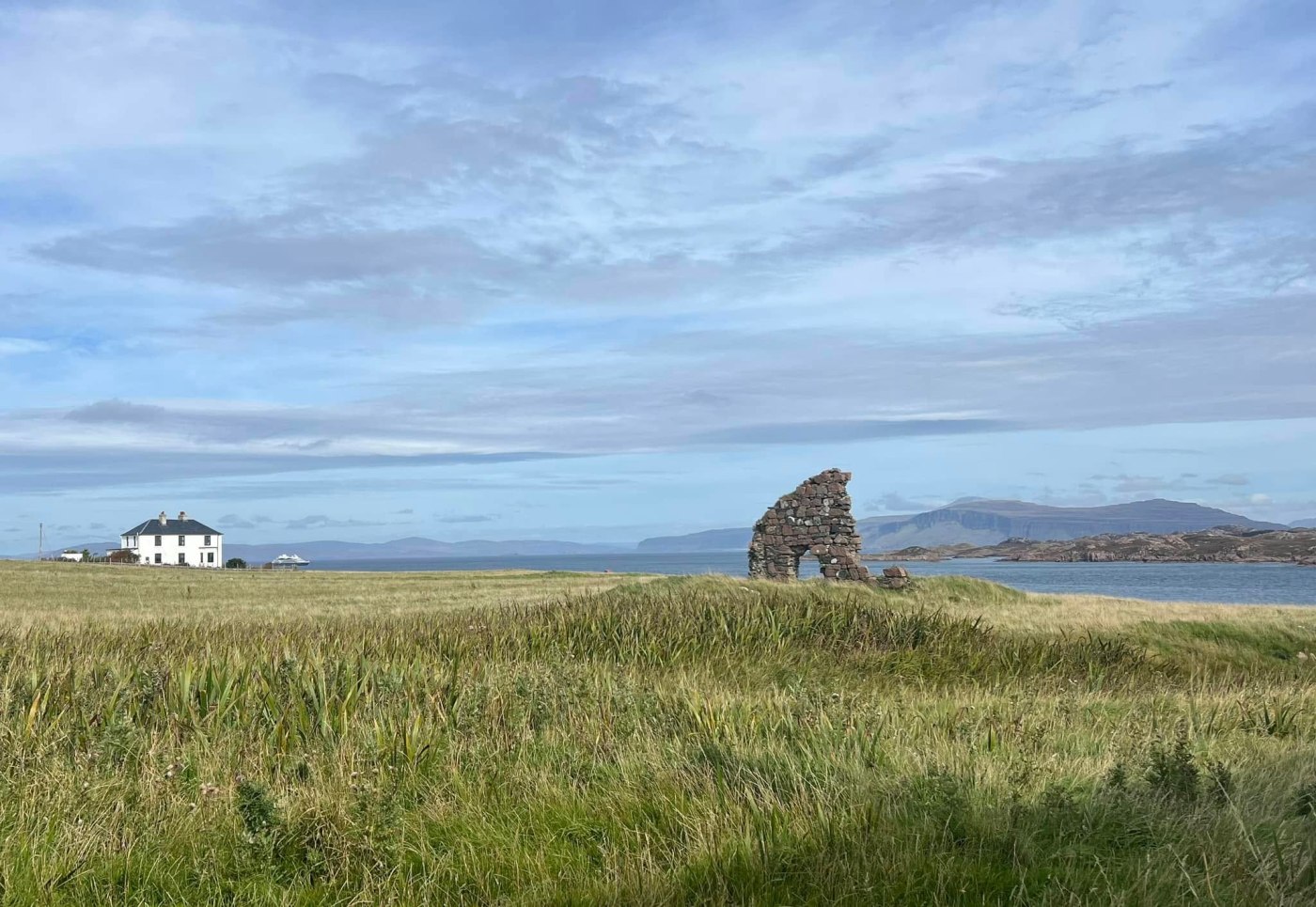
It was truly a dream to visit the sacred sites of Iona on a Celtic spirituality pilgrimage to Ireland and Scotland. Getting to Iona is a pilgrimage in itself, yet the journey has been made countless times since the 7th century. Most tourists visit for only a day, like we did, traveling from the coastal town of Oban, Scotland to Craignure on the Isle of Mull, then taking an hour-long bus ride on winding, narrow roads to the other side of the island arriving at the village of Fionnphort. From there, a foot ferry delivers you to the island of Iona. The day’s last ferry departs around 4:30 in the afternoon for the two-and-a-half-hour trip back to Oban. If the ferry is missed at the end of the day, staying overnight on the island is your only option.

Both the ferry and bus ride provided tremendous views. Our bus needed to occasionally pull over to the side of the narrow roads when meeting other vehicles.

Iona is the birthplace of Christianity in Scotland where St. Columba established an Abbey in 563. It might seem like a lot to get to this holy isle, only three miles long and one and a half miles wide, but walking the ground where St. Columba did 1500 years ago, where Benedictines established a monastery in 1204, the place where artists, sculptors, and writers have been inspired for centuries, is a holy, singular experience.

While I longed for more time to wander the beaches and secret coves, the time allowed for visits only to the most well-known sites closest to the ferry landing. Still, our pilgrimage group was able to participate in a meaningful community prayer for peace and reconciliation at the Abbey and visit the Nunnery ruins, St. Oran’s chapel, museums, gardens, and quaint shops including a bookstore, a “must-see” destination on my mini-pilgrimage to Iona.

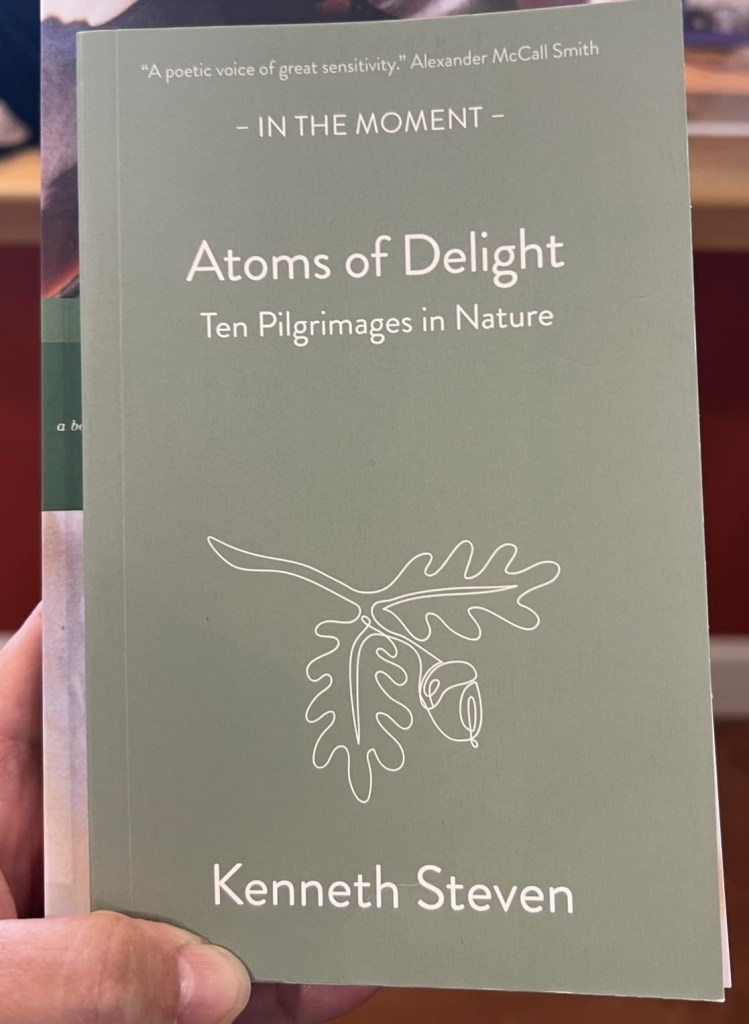
Months earlier, when I was planning the sites to visit in Ireland, a Benedictine Oblate friend, poet and photographer, Pat Leyko Connelly, reached out about some of her favorite experiences from her trips to Ireland. Pat and I connected through our shared love of Benedictine and Celtic spirituality, and she was generous in sharing tips about places to see in Ireland. When she learned I would also visit Oban and Iona in Scotland, she exclaimed that I must meet with her poet friend Kenneth Steven. Pat could not say enough wonderful things about his poetry. She also hoped I could bring back his newest book “Atoms of Delight” from the bookstore on Iona for her. Kenneth and I exchanged several messages and hoped to connect when I was there (unfortunately, our schedules didn’t allow it, but hopefully there is a next time!)

Visiting a bookstore is one of my favorite things to do, and I was just as excited about browsing book titles on this holy ground as praying in the abbey. The little bookstore was at the end of the walking trail, Sràid nam Marbh (‘Street of the Dead’,) where pilgrims have been walking for centuries. I quickly found THE book, took a photo of it to send to Pat, found another book by John Philip Newell for my friend Ellen, packed both of them away for my journey back to Oban, and later loaded them with all the souvenirs and other books I had purchased for the journey back home.

Continue reading “Atoms of Delight: A Pilgrimage to Iona”

All Saints of the Order of Saint Benedict, Feast Day: November 13

Happy Feast of All Saints of the Order of St. Benedict!

The number of Benedictine saints, including Sts. Benedict, Scholastica, Hildegard, and Henry, is large: “At the beginning of the fourteenth century the order is estimated to have comprised the enormous number of 37,000 monasteries giving the Church no less than 24 popes, 200 cardinals, 7,000 archbishops, 15,000 bishops, and over 1,500 canonized saints.” (Catholic Encyclopedia) Seven more centuries have only added to this sanctified group. You can find them listed here, from Abbo to Zosimus, all gathered under one faith and one Rule.

Benedict Gaughan (Being Part of the Benedictine Family, The Oblate Life) gathered feedback from their Oblate family about what it means to be a part of their community. Christine Michael shared, “Being part of the Benedictine family means that I can benefit from the tried and tested wisdom of Benedictines over the countless generations. The Benedictine ethos transcends all boundaries of tradition; a Benedictine is a Benedictine whether Anglican or Catholic, and from whatever part of the world.”

This sentiment resonates with words from our new Abbot Primate of the Benedictine Confederation, Jeremias Schröder OSB, of St. Ottilien Archabbey, who wrote, “Uniformity is not the goal of the Benedictine way. In a world that often seeks to simplify and streamline differences, the Benedictine tradition reminds us that true community is not about making everyone the same, but rather about embracing each person’s unique journey in faith.” He continues,

Benedictine life celebrates the beauty of individuality within the context of unity in Christ. Just as St. Benedict envisioned, our calling is to live together in love and respect, cherishing the distinct gifts God has given each of us. May we all strive to build communities rooted not in conformity, but in a shared commitment to love, faith, and mutual support.”

This is what I love about Being Benedictine. I don’t have to fit my faith in a box, I am part of the Benedictine circle where all are invited to learn, grow, and love.

We are all called to be saints, to grow in holiness, and to become closer to God by loving our neighbor.and self. Pope Francis in his 2013 Angelus wrote, “The Saints are not supermen, nor were they born perfect. They are like us, like each one of us. They are people who, before reaching the glory of heaven, lived normal lives with joys and sorrows, struggles and hopes. What changed their lives? When they recognized God’s love, they followed it with all their heart without reserve or hypocrisy. They spent their lives serving others, they endured suffering and adversity without hatred and responded to evil with good, spreading joy and peace. This is the life of a Saint.”

A tree gives glory to God by being a tree.

-Thomas Merton

Being SoulFully You is discovering and becoming all that God has created you to be. Thomas Merton writes, “For me to be a saint means to be myself.” The call to be holy is the call to be more fully myself, just as a tree gives glory to God by being a tree. It is sacred work to ponder what the saints have offered as role models on our journey to becoming more holy.

Photo: The doorway to St. Hildegard of Bingen Abbey church in Rudesheim, Germany. More here.

© Jodi Blazek Gehr, Being Benedictine Blogger

Homecoming: A Window to the Soul

Last fall, at the beginning of the 2023-24 school year, teachers were asked to consider the question: Why are we here?  I shared my “WHY” for teaching in The Wonder of Work: A Labor Day Reflection. My motivation during my last year of full-time teaching and, now, as a retreat leader and blog writer is the same—to foster curiosity, wonder, and the love of learning. It is what makes me come alive!

Learning IS the greatest gift of being human. I am encouraged when others are enriched by a retreat experience as we learn about spiritual practices and living soulfully with joy, creativity, curiosity, and wonder. Recently I was affirmed that my WHY makes a difference. Jana, a kindred spirit who I met through Deb, another SoulCollage® facilitator, sent this message to both Deb and me:

“It has been my experience that sometimes a passion or interest I have invested in sharing with others becomes work and can become tiresome. I wonder, is all this effort worth my time? Are people benefiting as I hoped they would? Please save this message for future use — just in case you ever bump into such a pondering with your SoulCollage efforts.

When Deb first introduced this process to me, I was a bit intimidated, but very quickly saw its power and potential to unearth my subconscious and offer my body a voice. This past summer I attended an in-person gathering Deb hosted and created this card. I had an initial reading that day, but it wasn’t until this past December when Jodi encouraged her retreat group to spend time listening to existing cards that I realized this one had much more to offer me. It has been so powerful that I adopted the card as my guiding mantra for 2024.

Remain open like a child.
Your inner Sage knows.
Return to your roots for support in times of stress.
Slow down and go easy so you don’t miss the most important things.
OPEN, INTUIT, ROOTED, SLOW.

The day after Christmas, I received a breast cancer diagnosis. I cannot emphasize enough how this card has repeatedly guided and comforted me through the days that followed. 

Continue reading “Homecoming: A Window to the Soul”

The Final Threshold: Take This Body Home

Day by day remind yourself that you are going to die.
Hour by hour keep careful watch over all you do,
aware that God’s gaze is upon you, wherever you may be.

Rule of St. Benedict 4:47-49

One of the gifts of a pilgrimage is those you connect with on the journey—greeting each other in the morning, offering small kindnesses, enjoying meals together, appreciating the sacredness of the sights, and sharing insights. On a recent Celtic Christianity pilgrimage to Ireland and Scotland, I knew only one person, my friend, SoulCollage® companion, and travel roommate, Sara, who I met several years ago at St. Benedict Center as a Benedictine Oblate.

Sara and I had decided to begin our pilgrimage four days earlier at the Cliffs of Moher, in the west of Ireland, and then travel by train to Dublin to catch up with the group once they arrived. Many pilgrims knew each other beforehand, so introductions in Zoom meetings and social media proved to be a helpful head-start to our shared time. Just a few days into our pilgrimage, I shared breakfast with one of the pilgrims, Mike, at a two-person table.

We ordered porridge and discussed the lengthy lines for fancy coffee from the European espresso machines, hoping for just a quick pot of black coffee. I was clearly more irritable about getting my first cup when Mike commented that he recently started taking a spiritual approach, a detachment from coffee, he said. If he gets coffee in the morning, all the better, but not getting coffee would not be a deal-breaker for his day. He would not allow the absence of coffee to interfere with his interior peace.

As I calmed down about the lack of morning caffeine, our conversation continued to a depth not often reached in such a short time. We shared that through the years our spirituality had changed, impacting how we experience life, especially how we respond viscerally as we witness racism, homophobia, injustice, and hateful behavior in our country. We shared our deepest grief about the estrangements in our family and the uncertainty of how healing might come.

Navigating long lines and crowds in the breakfast area, we finally achieved the goal of a cup of coffee.  Mike commented that people were not even looking at each other while getting food and drink. He was right. Mike’s comments remained in my heart throughout the day and I am grateful to have had such a meaningful conversation with him.

The gift of a pilgrimage “lies in the gaps of the agenda, in the conversations and relationships with others, and in the details of the day that cannot be planned or controlled. This is where the grace of God enters—sometimes it is in the form of discomfort and challenges and other times in opportunities that new insights and “aha moments” of new understanding bring.” (A Busload of Hospitality: A Benedictine Pilgrimage, Part 4, Jodi Blazek Gehr)

Continue reading “The Final Threshold: Take This Body Home”

The Wonder of a Broken Arm

WONDER sees the everyday as sacred.

Living with a sense of wonder, my word for 2023, is my intention. Being open to surprises, having a sense of curiosity, and having the desire to learn is important to my spiritual practice of “being Benedictine.” Wonder sees the sacred in the ordinary and is a doorway to gratitude, but seeing with eyes of wonder is a much easier proposition when our daily life is comfortable. My sense of comfort was recently challenged.

On a cold, windy February morning, my little dog Bailey did not want to do her business outside. Fourteen degrees in Nebraska, who can blame her? Worried about potentially icy roads and getting myself to school in time, I hurriedly picked up my little dog and headed out to accompany her on a potty trip. After stepping down onto our (apparently icy) landing, my feet slipped out from underneath me. It happened so fast yet every second my body met the icy ground, pain pierced through me–first on my bottom, then as I slid to my left side hitting my elbow sharply. I felt several crunches on my arm as I continued sliding on the pavement finally stopping several feet away. 

I knew immediately I had broken my arm, and later it was confirmed–a fractured ulna and a chipped elbow. The entire event was captured on our doorbell video. I watched it only one time to see if it was as I had remembered. Seeing myself fall has ruined me forever from watching America’s Funniest Home Videos again. Falls that used to crack me up (no pun intended) seem not so funny anymore. 

Wonder is the doorway to gratitude.

Making meaning out of life’s experiences and practicing gratitude is foundational to my spirituality, but much of my broken arm experience (7 weeks to date) has been spent feeling like I am not being very Benedictine. I am grateful for much, but I have also been so tired, irritable, and moody. It has been more traumatic for my body, mind, and spirit than I could have imagined. 

Despite my general crabbiness, I know my injury could have been worse–for that I am grateful. Thank God I hadn’t hit my head and been knocked unconscious. I am grateful that it was my left arm that was broken, and not my dominant right. After a week of wearing a splint, I was grateful to learn that the fractured pieces of my ulna had, amazingly, stayed in alignment. I would not need surgery and instead of needing a cast, I would wear a brace that I could easily remove to shower. A welcome reprieve from the confinement of a splint, there would be enough space to wiggle a pencil through to scratch my arm. (More things to be grateful for at the end of this post.)

Gratitude is an emotion that reflects our deep appreciation for what we value, what brings meaning to our lives, and what makes us feel connected to ourselves and others.

Atlas of the Heart, Brene Brown

I thought my attitude of gratitude would carry me through the weeks of convalescence in front of me, but I underestimated the many conflicting emotions I would have–frustration, overwhelm, disappointment, empathy, compassion, and wonder, just to mention a few. Out of 87 identified emotions (and experiences or thoughts that can lead to emotions) in Atlas of the Heart by Brene Brown, I have felt no less than 40 of them since I fell. 

Early on I had decided I would be a resilient, strong, and compliant patient. I would remain calm in the face of discomfort or pain, knowing “this too shall pass.” Spoiler alert: I have grown weary, increasingly frustrated, and borderline hysterical from the discomfort and/or pain. Betty the brace–named after my strong, steady, prayerful oblate friend, Betty–has been called many other names besides Betty (Betty, the friend, took no offense.) 

Continue reading “The Wonder of a Broken Arm”

Blog at WordPress.com.

Up ↑