
A Celtic saint and pre-Christian goddess, Brigid was a 5th-century abbess and founder of monasteries. One of Ireland’s three patron saints along with St. Patrick and St. Columba, St. Brigid is known by many names —Bhride, Bride, Brighid, Brigid, Bridget—and many titles including Muire na nGael (Mary of the Irish) Brigid of the Mantle, Brigid of the Fire, and Mary of the Gael.
February 1, St. Brigid’s death anniversary, is the same day as the Celtic Feast of Imbolc. Imbolc, a celebration of the Celtic sun goddess Brigid is the halfway point between the Winter Solstice and Spring Equinox in the Northern Hemisphere. Imbolc, which means “in the belly”, celebrates the change of seasons, a threshold time of welcoming more sunlight in the day.
It is not by chance that these two celebrations are on the same day. St. Brigid has been described as a bridge between the pre-Christian and Christian traditions. The stories we hold of St. Brigid blend archetype, legend, and history, an amalgamation of the threshold time when Celtic traditions were being adapted and/or replaced by Christianity.
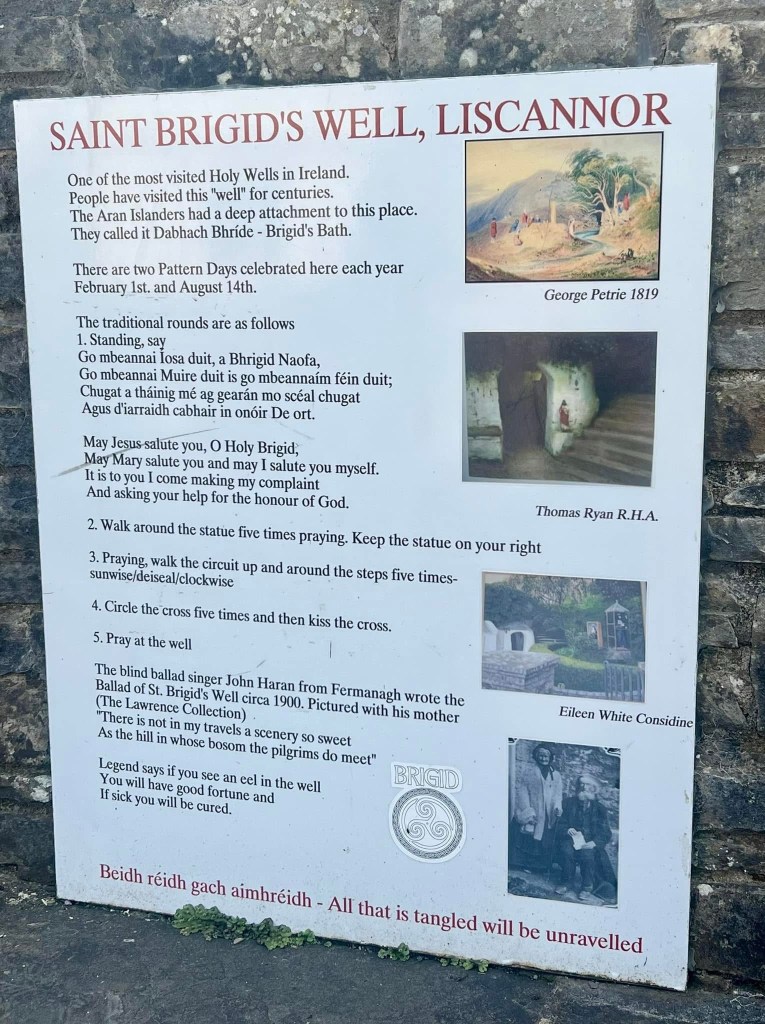
Thousands of holy wells, many dedicated to St. Brigid, are a pilgrimage destination in Ireland. On St. Brigid’s Day, it was a tradition to visit the nearest holy well to ask for healing and fertility in the family, with livestock and crops. Those suffering from illness would offer rosaries, icons, letters, and more with prayers for their healing. Celts believed that the festival of Imbolc and sites like holy wells were a “thin place” where God’s presence could be deeply felt.
A highlight of a 2024 pilgrimage to Ireland included visiting two holy wells dedicated to St. Brigid. Near the Cliffs of Moher, in Liscannor, we visited one of the oldest of the 3000 holy wells in Ireland, one of the few still flowing with water, known for its healing powers. Hiking near the Cliffs with the Atlantic Ocean to the west, and cows and sheep grazing to the east, would have been what Brigid and the many pilgrims have experienced over the past 1500 years.


 Being Benedictine