Search

Being Benedictine

Living SoulFully as an Oblate of St. Benedict

Author

Jodi Blazek Gehr

SoulCollage® Facilitator, Benedictine Oblate of Christ the King Priory, Retreat Leader at St. Benedict Center, Blogger at Being Benedictine and SoulFully You, Teacher, Mother, Wife, Friend, Lover of learning, reading, creativity and spirituality.

Both Life and Choice

March for Life, 1978

Earlier than I would get up for school and before the snowy roads were cleared, an eager catechism teacher drove me and a friend through a snowstorm to walk in the March for Life, an annual event opposing both the practice and legality of abortion, culminating with a rally at our State Capitol. In my sixth-grade CCD class (circa 1978), I had recently learned about abortion and was taught that unequivocally, it was wrong.

I learned that morning that not everyone sees abortion, or pro-life issues, the same way. I was stunned as we entered the Capitol that there were women already positioned on the balconies, holding signs and shouting at marchers about having rights to their own bodies. It left me very confused—a woman’s body is different than an unborn baby, I thought, and yet there was such passion, so much anger. (Photo credit: Lincoln Journal Star, NE State Capitol, 2019)

As an outspoken pro-life teenager, I was so sure of what I understood about abortion that in 1984 I wrote a letter to the editor of the Daily Nebraskan, my college newspaper. I pulled that old newspaper out of storage a few days after Roe vs. Wade was overturned. Nearly four decades later, I am uneasy with what I wrote. What I used to be so sure of, I am now less certain of and often, in complete disagreement with my younger self.

What I have learned since then about life and choice.

Two things can be true at the same time. I believe BOTH that human life is sacred from the time of conception AND that we are created to have free will. We have agency over our own bodies, choosing whether our life continues and/or whether we will bring life forth. Embracing a culture of life is respecting not just the unborn child, but also the pregnant woman while advocating for issues including prenatal care, childcare, gender equality, trafficking, healthcare reform, gun safety, racism, climate change, LGBT rights, capital punishment, and so much more.

We are BOTH created in the image of God AND given a life of choice, of free will, from the beginning. As the story goes, Adam and Eve were gifted with a beautiful garden and the choice to eat from the tree of knowledge of good and evil, or not. They were given agency over their bodies, and from the beginning were able to choose their actions. Humans make both good and bad choices—and we suffer the consequences. Further, Christian tradition holds that the angel Gabriel announces to Mary that she will conceive and bear a child who will be named Jesus, the Incarnation (Luke 1:26–38.) In her “fiat,” Mary consented; she said yes.

Continue reading “Both Life and Choice”

Being Benedictine: Beginning the Journey

Some things change your life forever—getting married, having a baby, getting a new job, or a promotion. Finding St. Benedict Center in June 2002, twenty years ago, makes my “forever” list. It was the beginning of a connection that has changed my life in countless ways. It started my journey of Being Benedictine.

As a busy mom, wife, and teacher, I had a desire for silence and prayer. I learned about a four-day silent contemplative prayer retreat at St. Benedict Center in Schuyler, Nebraska from an advertisement in our local newspaper. I loved the silence; although the twenty-minute meditation sittings throughout the day were a little more challenging, I knew I would come back to this oasis of peace.

St. Benedict Center sponsors many retreats each year—these opportunities have nurtured my spiritual longing and love of learning. I wasn’t sure if I would come back for a silent retreat, but I knew I would return to this sacred getaway soon. It started out that I came two or three times a year….and it gradually increased over time to be once or twice a month. There was one summer that I came every week, and it was suggested that I build a little cabin out back. I’ve particularly enjoyed attending retreats given by the monks of Christ the King Priory, visiting monks, and by authors like Macrina Weiderkehr (who became a dear friend), Joyce Rupp, Anselm Gruen, Helen Prejean, and Michael Casey. I have even come back for more silent retreats too, and I eagerly look forward to them now.

Continue reading “Being Benedictine: Beginning the Journey”

Sober and Merciful: St. Benedict’s Journey of Mindfulness

The Tesla Roadster is said to go from zero to 60 miles per hour in 1.9 seconds. Whoa!

roadster_front_3_4_canyon_i610x344

Who really needs to go that fast?! I understand better than most what it is like to be running late, hurrying to my destination and feeling like I need to drive a little faster—I’ve been known to have a lead foot in these cases a few too many times.

But is it smart, safe or the best thing for us and others? We know it is a wiser choice to slooooow down.

move slowly

Likewise, I know all too well about reacting emotionally in challenging situations. My temper can go from zero to 60 in about 2 seconds. It is a benefit to slow down my thoughts, emotions, and reactions a bit to gain a better perspective.

The local, national or global news can cause one’s heart to race, from zero to 60, in the time it takes to read or hear just one reported sentence. It is all too easy to get caught up in the “swirl and chaos of fear, violence, and anger assaulting our world today. Practicing soberness means being detached from emotions, both overly negative or positive feelings. It is not good to be “drunk” on either extreme.” (Discerning Hearts)

Alternatively, we can meet all challenges with an attitude of soberness.

Fr. Mauritius Wilde, Prior of Sant’ Anselmo in Rome and former prior of Christ the King Priory in Schuyler, Nebraska, has a podcast series on the Benedictine understanding of sobriety. He will also return to Nebraska to lead a retreat at St. Benedict Center, July 29-31, 2022 called Sober and Merciful: Saint Benedict’s Journey of Mindfulness. Continue reading “Sober and Merciful: St. Benedict’s Journey of Mindfulness”

A Flag Day Reflection

Each school day during my 5th-period class, I stand with my students, hand over heart, pledging allegiance to the Flag of the United States of America and to the Republic for which it stands, one Nation under God, indivisible, with liberty and justice for all. 

This simple moment of national patriotism is a requirement in Nebraska, a rule passed by the Nebraska Board of Education in 2012 stating that all public schools must provide time each day to recite the Pledge of Allegiance in order to receive accreditation or state funding. Already common practice in elementary schools and many districts, it was new for most high school students.

When the rule passed ten years ago, I remember teachers taking inventory of classrooms that needed flags—many were old and torn, more had been discarded over the years, and with tight budgets, new ones hadn’t been purchased. The first several weeks, hand over heart, we stood facing an 8½ x 11 colored photocopy of the flag until generous alumni donated enough American flags for every classroom.

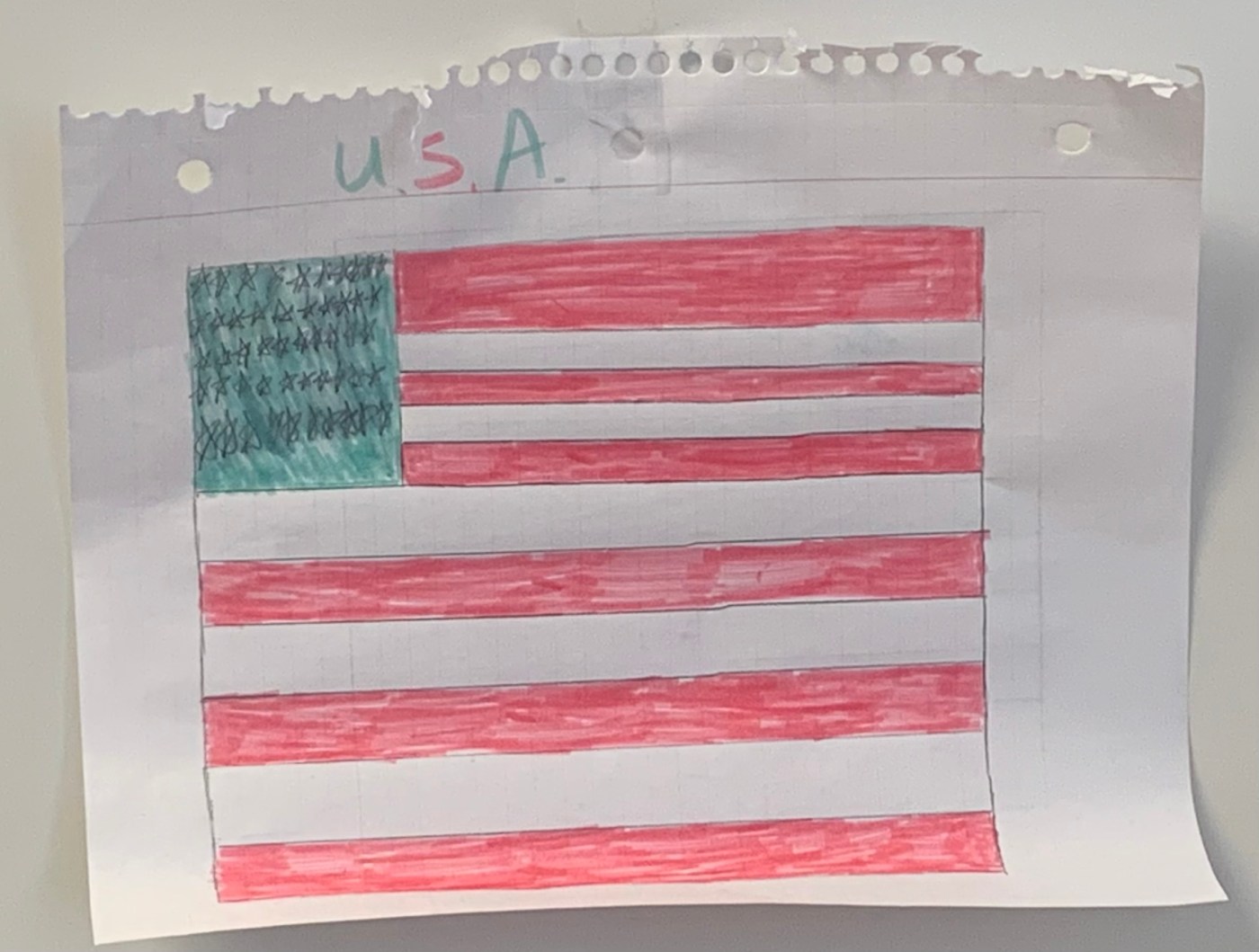
This school year, likely in response to a Tik-Tok challenge to steal things from schools, my American flag went missing. As my students stood to recite the pledge one morning, we shared shocked expressions, realizing there was NO flag where there had been the day before. We continued reciting the pledge and then a creative student quickly drew an image of the flag to post where the flag should have been. The kind gesture soothed my anger at having the flag stolen (along with every electric pencil sharpener in the room.) It still hangs beside a replacement flag.

Continue reading “A Flag Day Reflection”

The Colors of the Rainbow

“The artist speaks to that part of you which yearns for beauty and creativity.  The inner artist invites you to participate in the great work of healing the world by lifting out of your senses creative images, words, and actions that inspire others to live lives of wonder and surprise.”

–Macrina Wiederkehr (The Artist’s Rule: Nurturing your Creative Soul with Monastic Wisdom by Christine Valters Paintner)

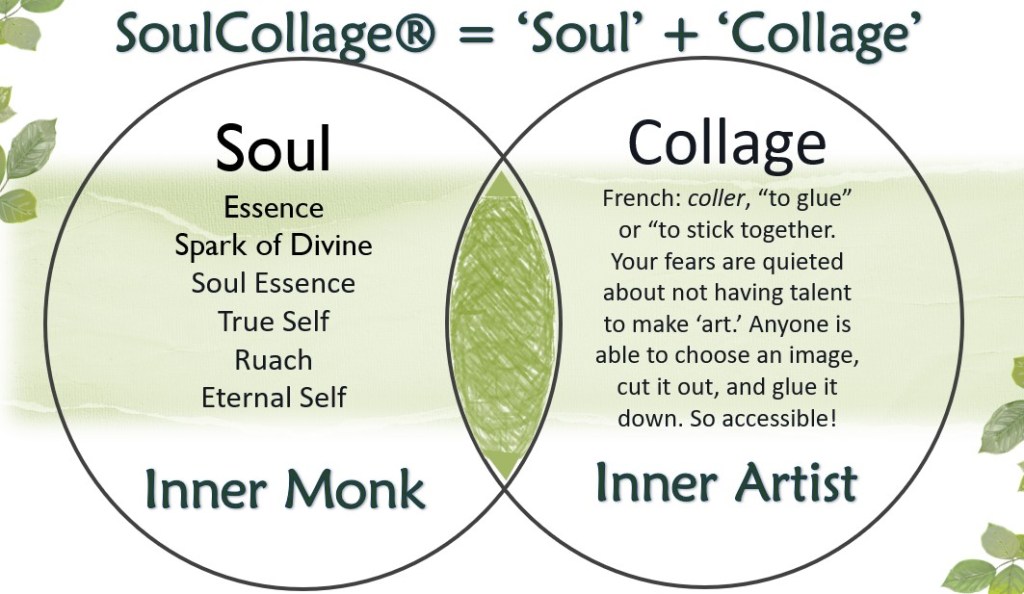
Recently I led a retreat titled Becoming Ourselves: Exploring the Archetypes of Inner Monk & Artist. Our inner artist engages with the world through its senses, while our inner monk has a longing for connection with the Divine, seeing the sacred in the ordinary. We can be intentional about nurturing these energies within us, paying attention to the beauty around us, and bringing a sense of wonder and curiosity to our work. We can be intentional about nurturing these energies within us by seeing nature, people, and life circumstances in new ways, while creatively and prayerfully expressing ourselves through poetry, art, music, gardening, relationships, and more.

Practicing SoulCollage® is the perfect expression of the inner artist and monk archetypes. We creatively and prayerfully cut and paste images onto cards that eventually become a visual journal. It is a spiritual practice of seeking the Divine while learning about parts of yourself. With others, while “image bathing” and creating cards, there is a unique opportunity to share parts of our spiritual journey—why I love leading and participating in retreats!

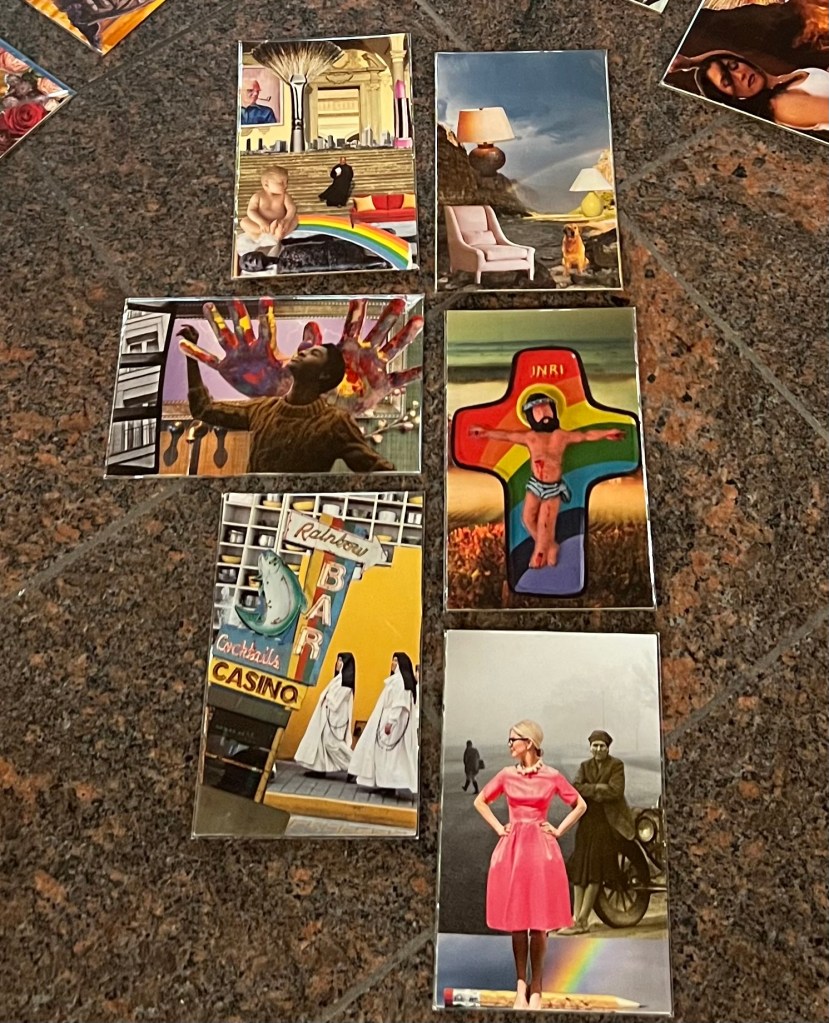
On retreat, spiritual playmate*, Jana West, was particularly drawn to images of rainbows—they kept popping up in the images she was collecting and intuitively finding their way onto her collage cards.

*Don’t you just love the idea of a spiritual playmate?! Jana coined the term, and it has quickly become part of my post-retreat reflection vernacular.

Rainbows in EVERY card! Can’t wait to hear more from Jana about what they have revealed to her since the retreat.

So now I am seeing rainbows and the spectrum of colors in all kinds of ways. I saw, and accepted, this fun challenge on Facebook: to find the colors of the rainbow in nature.

Continue reading “The Colors of the Rainbow”

The Sower Sows

May 2022 Lectio Divina and Oblate Reflections

Sources

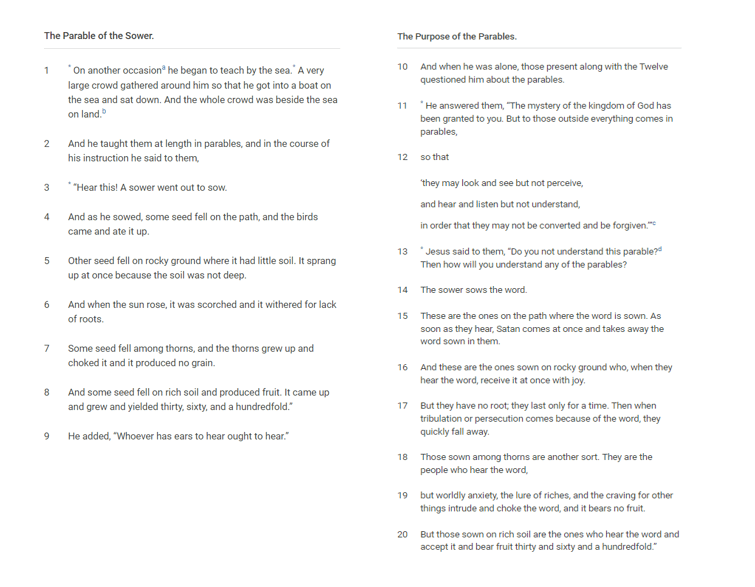
Lectio Divina—Parable of the Sower, Mark 4: 1-20

Book Discussion—Stability: How an ancient monastic practice can restore our relationships, churches, and communities by Nathan Oates. (Introduction)

Lectio Divina

Mark 4:1-20 A sower went out to sow

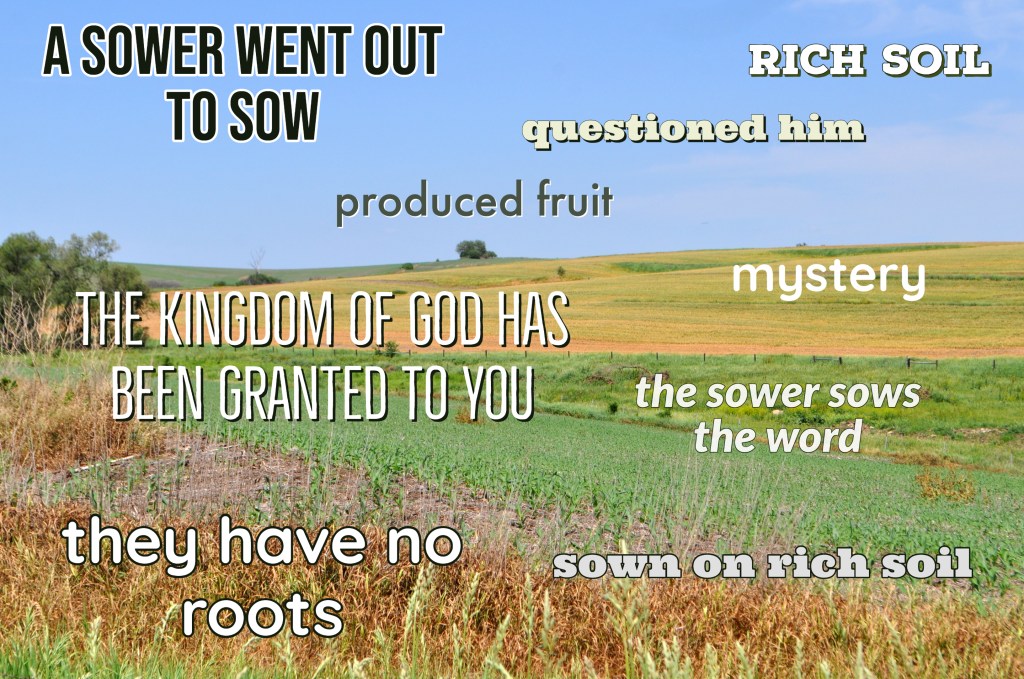
We consider the question: How does the Parable of the Sower apply to the Benedictine value of stability? Words and phrases that resonate give us a rich perspective of the sower, the seed, the soil, and the fruit.

The sower sows regardless of thorns, rocky ground, little soil, or rich soil. The sower sows—a committed action to continue to sow.

Continue reading “The Sower Sows”

Planting Trees is a Big Deal: 150 Years of Arbor Day!

“If one tree fruits, they all fruit–there are no soloists. Not one tree in a grove, but the whole grove; not one grove in the forest, but every grove; all across the county and all across the state. The trees act not as individuals, but somehow as a collective….what we see is the power of unity.”

Robin Wall Kimmerer, Braiding Sweetgrass

Planting trees is a big deal in Nebraska…so important that the planting and preservation of trees are celebrated with an actual holiday. Arbor Day, which started in my home state of Nebraska, has been celebrated for 150 years and is now observed in all fifty states and in several countries.

morton

Each generation takes the earth as trustees.

—J. Sterling Morton

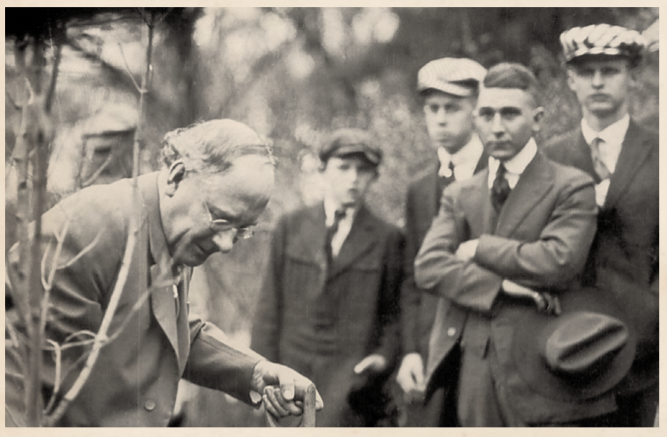
The founder of Arbor Day, J. Sterling Morton, was a transplant to the Nebraska Territory from Detroit in the mid-1850s. He was a journalist and newspaper editor, who later served as President Grover Cleveland’s Secretary of Agriculture. Morton understood the importance of trees to agriculture, for windbreaks to keep soil in place, for fuel and building materials, and for shade from the hot sun.

He believed in getting everyone, particularly students, involved in planting trees. An estimated one million trees were planted in Nebraska on April 10, 1872, encouraged by contests between counties and promotion in schools. “Students of different grades met at their respective school rooms in the morning for the purpose of planting at least one tree. Each tree that was planted was labeled with the grade, the time planted, and was to be specially cared for by that grade.” (The History of Arbor Day)

Read more: Planting Trees is a Big Deal: 150 Years of Arbor Day!
Capture

On the final Friday of April every year thereafter, Arbor Day has been celebrated, and this year for the 150th time! Throughout the year the Arbor Day Foundation works to “help others understand and use trees as a solution to many of the global issues we face today, including air quality, water quality, a changing climate, deforestation, poverty, and hunger” through conservation and education programs.

Desktop5
Arbor Day Lodge is open for tours–we were just there a few months ago! Many activities and, of course, lots of trees in Nebraska City, Nebraska.

Celebrating Arbor Day is a reminder of our interconnectedness with all living things. In Laudato Si, Pope Francis encourages taking responsibility for the health of our planet by cooperating “as instruments of God for the care of creation, each according to his or her own culture, experience, involvements and talents” (Laudato Si, 14)

St. Benedict encourages us to “listen with the ear of the heart,” to see all of life as sacred, and to experience the connectedness we have with all of creation. Consider spending time listening to the trees. Perhaps we can be reminded that what happens to one, happens to all.

“There is now compelling evidence that our elders were right–the trees are talking to one another. They communicate via pheromones, hormonelike compounds that are wafted on the breeze, laden with meaning…The trees in a forest are often interconnected by subterranan networks of mycorrhizae, fungal strands that inhabit tree roots…They weave a web of reciprocity, of giving and taking…Through unity, surivial. All flourishing is mutual.”

Robin Wall Kimmerer, Braiding Sweetgrass

5

Trees fall with spectacular crashes. But planting is silent and growth is invisible.

-Richard Powers, The Overstory

The Overstory, the Pulitzer Prize-winning novel by Richard Powers, is a reminder of how destructive humans have been and how significant non-human elements are to the survival of our planet. The novel weaves together the stories of nine characters, their relationship to trees, and their awareness of and desire to stop the destruction of forests. The characters, each with a short story of their own, are the backdrop of a narrative that is less about them and more about trees.

“There would be neither an economic crisis in the world today, nor an ecological threat, were it not for the evil done by greed. Monastic poverty means being content with the simple things that sustain human existence in its inherent goodness. This poverty allows man to live in harmony with field and forest, without feeling the need to brutally strip the earth of her resources in order to realize an immediate gain.”

(Brother Philip Anderson, Prior Our Lady of Clear Creek Abbey )
Capture

In honor of Arbor Day, I share “Benediction of the Trees”, written and performed by Derek Dibben. This prayerful song is a recognition that Nature blesses us with trees for our healing, enjoyment, leisure, and protection. Our very breath is dependent on the Benediction of the Trees.

Benediction of the Trees

From the Heart to the Heavens
Rooted in the Earth
Branching out above us
Healing what was hurt

Reaching down to lift us
Swing us in the breeze
the air we breathe She gives us
Benediction of the Trees

Home before our houses
Cornered us inside
Gentle arms around us
Above the rising tide

Can you hear them calling?
Like music in a dream
The leaves are always falling
A Benediction from the Trees

A shout becomes a whisper
A Sermon into Song
It’s useless to resist her
She’s where we all belong

In our Sanctuary Forest
Beneath the Pleiades
Cicadas in the chorus
Benediction to the Trees

As the moon reflects the sunlight
From a million miles away
I’ll try to get the words right
So you can hear her say

In a melody familiar
That brings us to our knees
In Liturgy peculiar
Benediction to the Trees

© Jodi Blazek Gehr

Celebrate Creation: Earth Day 2022

Seeing the beauty in nature is the first step in taking action to protect it. Our planet needs all the love, prayer, and protection it can get. Celebrate creation this Earth Day by sending positive energy and intention into the universe through some creative and prayerful practices including contemplative photography, nature meditation, Visio Divina, Soul Collage® and Lectio Divina. There are many ways to pray!

DSC_0699

Let me seek, then, the gift of silence, and poverty, and solitude, where everything I touch is turned into prayer: where the sky is my prayer, the birds are my prayer, the wind in the trees is my prayer, for God is in all.

— Thomas Merton, Thoughts In Solitude
Practice contemplative photography

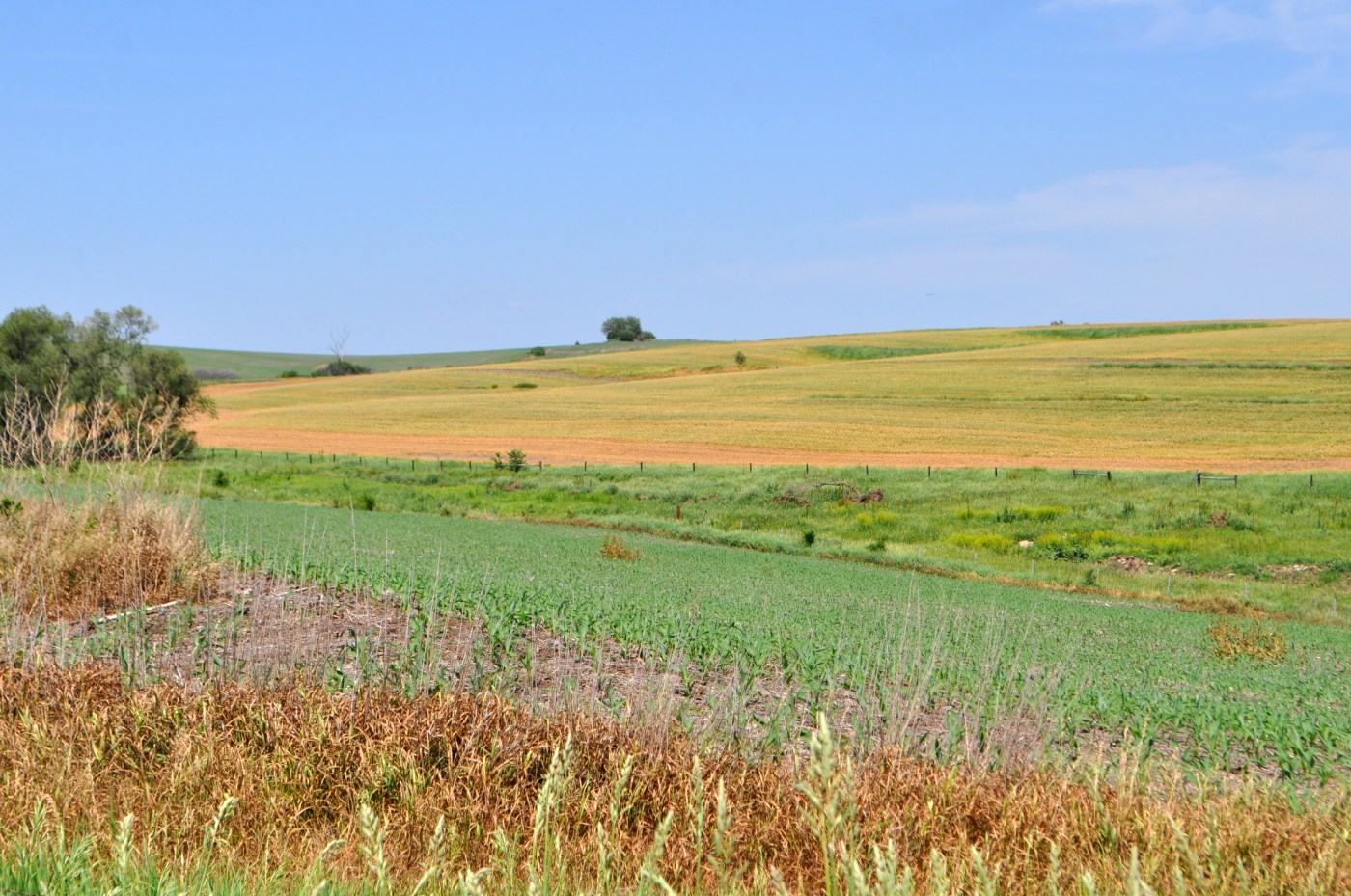
Contemplative photography is a prayerful practice of seeing with new eyes. With camera in hand, I have learned to slow down, be more aware of details, and enjoy the beauty of simple things. Driving down a new country road is an adventure that brings deep joy in capturing a scene that will never quite be that same way again. It is less about arriving at a destination and more about enjoying the journey. It is when silence, solitude, creativity, and nature collide into a oneness that can only be received, not pursued.

On the Road collage

The great Catholic writer Ernesto Cardenal in Abide in Love observes: “Everything in nature has a trademark, God’s trademark: the stripes on a shell and the stripes on a zebra; the grain of the wood and the veins of the dry leaf; the markings on the dragonfly’s wings and the pattern of stars on a photographic plate; the panther’s coat and the epidermal cells of the lily petal; the structure of atoms and galaxies. All bear God’s fingerprints.”

DSC_0032a

Go for a walk and look for God’s trademarks. Better still, use a camera to document evidence of God’s fingerprints in nature. Source: Earth Day: 12 Spiritual Practices to Honor the Earth

Praying with Art—Visio Divina and SoulCollage®

Visio Divina is like Lectio Divina, but instead of using the words from a page of Scripture to pray with, you use an icon, a sacred image, or a work of art (even your own!)

Create a card that represents the environment and/or how you feel about how humans interact with the environment. You may take the prompt in whatever direction you choose. Or use the card Earth Gratitude to write your own poem or “I am one who” statement.

earth day creation1 good border

I am one who believes in the Divine birthing of our planet and the life-force that is poured out for us by our mere existence in this dynamic, evolving, growing, breathing earth home.

I am one who exists as part of this environment, receiving the mysterious flow of energy and outpouring of nourishment with open hands. I bow my head at the splendor of shades and shapes, the rebirth of nature through the sacred spirals of the seasons, the purpose and patterns that are sometimes evident and always sought after. The waters of life flow through us—cleansing, renewing, blessing us with existence. Nature gives to us without hesitation.

I am one who receives with awe.  

After you create a card, feel free to share in the comments section or email a photo to jodigehr@gmail.com with a few sentences that explain what your card means to you.

More on SoulCollage® and Earth Day:
Protectors of Creation on Being Benedictine. 
In God’s World, Every Day is Earth Day

Continue reading “Celebrate Creation: Earth Day 2022”

Stay With Me

April 2022 Lectio Divina and Oblate Reflections

Sources

Lectio Divina, Matthew 26: 20-50, The Cross of Christ

Book Discussion, Stability: How an ancient monastic practice can restore our relationships, churches, and communities by Nathan Oates

Of Gods and Men, 2010 French film directed by Xavier Beauvois

Additional Resources: Paraclete Press Lenten Series on Stability with reflections from Nathan Oates, Kathleen Norris & Michael Patrick O’Brien, Jonathon Wilson Hartgrove, and Ronald Rohlheiser. Links below.

Lectio Divina

Matthew 26: 20-50, The Cross of Christ

Discussion

Stability “is the commitment to a purpose, a place, and a people…At its root, stability is the blend of two biblical concepts: patient endurance and standing firm.” (Stability, Nathan Oates) After reflecting on Matthew 26: 20-50, we consider:

How is the virtue of stability present in the gospel story? Are there similarities between what happened to Jesus in Gethsemane and what is happening in Ukraine?

Many people of Ukraine will not flee their country. “This is my home,” they say. Despite the many risks, they stay. They are rooted in their homeplace, their land. Jesus also stayed; despite knowing he was to be betrayed, despite the possibilities the next day would bring. Everything that can go wrong, does go wrong for Jesus. Everyone betrays him, even the best of friends. It would have been much easier to give up when left alone.

“My soul is very sorrowful even to death.” We all struggle with the virtue of stability, but Jesus stayed IN HIS sorrow; he could have fled. Despite our difficulties, we need to die before we die as Jesus did. Jesus’ steadfastness, his stability, was rooted in doing the will of God. “Your will be done” is an exclamation of surrender that gave Jesus the courage to stay. He died before his own death; he surrendered his will. He was able to face his suffering because he had consented to let God work out what would happen next. As St. Benedict said, “keep death daily before our eyes.”

Continue reading “Stay With Me”

Blog at WordPress.com.

Up ↑