Search

Being Benedictine

Living SoulFully as an Oblate of St. Benedict

Author

Jodi Blazek Gehr

SoulCollage® Facilitator, Benedictine Oblate of Christ the King Priory, Retreat Leader at St. Benedict Center, Blogger at Being Benedictine and SoulFully You, Teacher, Mother, Wife, Friend, Lover of learning, reading, creativity and spirituality.

Easter: Embracing Light and Darkness

“We love to think of Easter as the feast of dazzling light. We get up on Easter Sunday morning knowing that the sorrow of Good Friday is finally ended… that Jesus is vindicated, that the faith of the disciples is confirmed for all to see, and that everyone lived happily ever after. We love fairy tales. Unfortunately, Easter is not one of them.” (Joan Chittister)

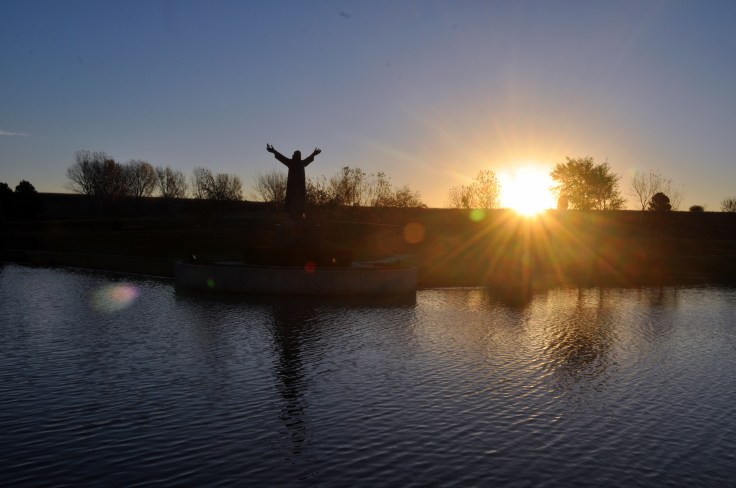
DSC_0593

During the Holy Triduum, we remember the events leading up to Easter. Each Holy Day is significant to the fullness of Jesus’ story—his life, death, and resurrection. Jesus’ life was full of joy—learning, teaching, helping others, growing in his authentic identity, and embracing his essence—but, also, as the Gospel of John poignantly states, “Jesus wept.” Even Jesus could not escape his own suffering—the death of a friend, concern for political and religious corruption, the betrayal of his disciples, his own physical persecution, and, finally, his fear of abandonment, that he had been forgotten by God and everyone. No doubt about it, Jesus experienced both joy and suffering.

Jesus’ life is an archetype for our own spiritual journey. There is nothing that happens in our lives that Jesus didn’t also experience. When we live out our own Good Fridays, mini-deaths that bring us face to face with darkness, we know we are not alone. We may feel betrayed by loved ones, blamed for problems we didn’t create, forsaken by those we trust. We grieve the loss of loved ones and lament our own mistakes. We are depressed or sad.

Our Holy Saturday is a time of waiting, enduring or resting, perhaps a respite from problems, a time when we can separate from our pain for moments, even days at a time. In the tomb, we wait for healing. Perhaps, we allow others to mourn with us and wait with us in hope. Our waiting is a gray space of in-between.

DSC_0420a

This darkness is not what we want—and anytime we experience something unwanted, or conversely don’t get what we do want, we live in some shade of darkness. Truth be told, we simply want peace and joy. We don’t want to be patient, to feel bad, to hurt. There are times when we cling to the darkness and choose to stay in a place of suffering, but we can both honor the darkness while looking towards a glimmer of light, to Easter. Continue reading “Easter: Embracing Light and Darkness”

Praying with the Stations of the Cross

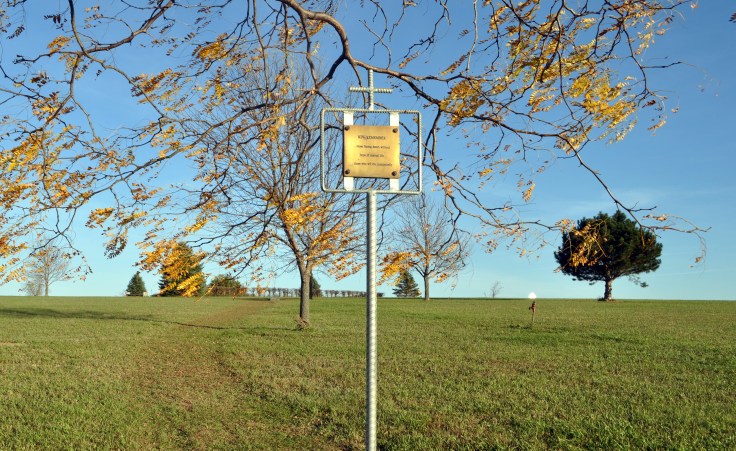
Amidst 160 acres of farmland in Nebraska at St. Benedict Center, there is a contemplative prayer journey that focuses on the events of Jesus’ last day. The Stations of the Cross is a mini-pilgrimage to contemplate the Passion of Christ. At each pause or station on the journey, a prayer is offered to remember the sufferings and struggles of all.
DSC_0203a

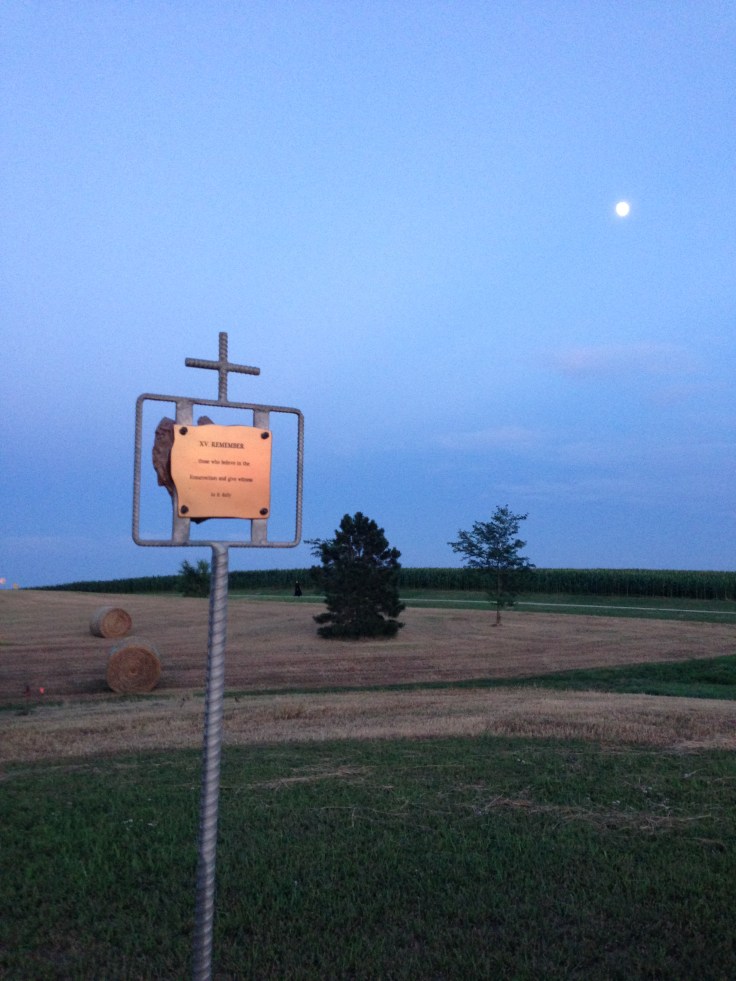
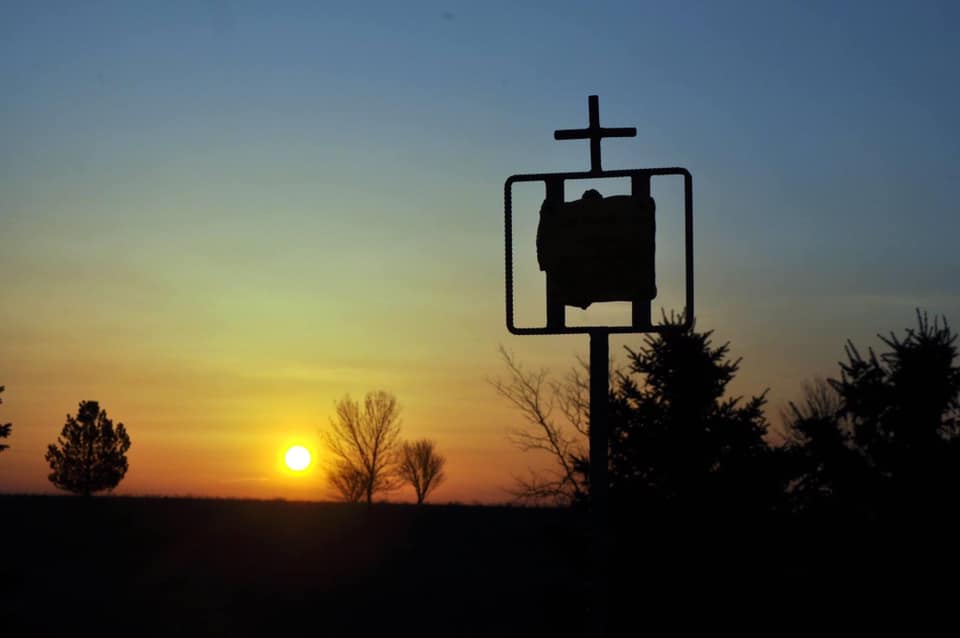
Traditionally there are 14 images and events that are commemorated, but at St. Benedict Center there is one additional station. Ascending a small hill, a fifteenth station appears marking the resurrection of Christ and the joy of Easter. The artist of each of the station markers is Lore Friedrich of Münsterschwarzach, Germany.

May you be blessed by praying with the arts and taking the Way of the Cross.

“The Stations of the Cross are not given to us only to remind us of the historical Passion of Christ, but to show us what is happening now, and happening to each one of us.  Christ did not become man only to lead his own short life on Earth – unimaginable mercy though that would have been – but to live each of our lives.  He did not choose his Passion only to suffer it in his own human nature – tremendous though that would have been – but in order to suffer it in the suffering of each one of his members through all ages, until the end of time.” –Caryll Houselander

1 (2)

Station 1: Jesus is Condemned to Death
Pilate: “I am innocent of this man’s blood. It is your concern.” -Mt 27:24
Remember
…those condemned unjustly
…those sentenced by members of governments and society because of their faith.
2 Easter

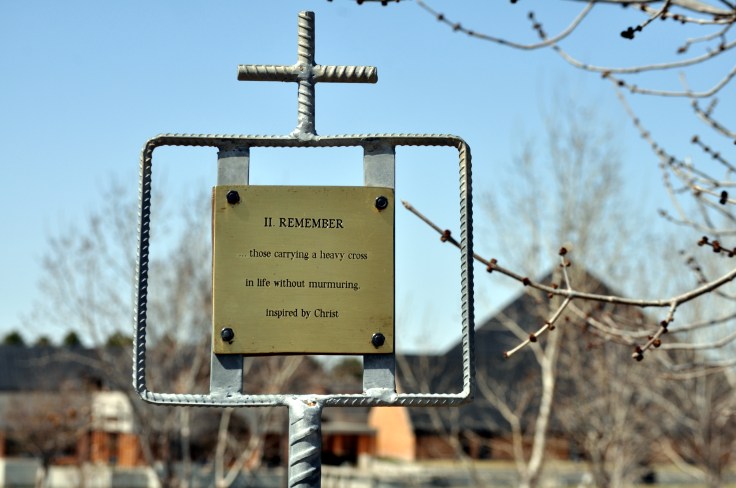
Station 2: Jesus Bears His Cross
Jesus: “Shoulder my yoke and learn from me…and you will find rest for your souls.” Mt 11:28
Remember those carrying a heavy cross in life without murmuring, inspired by Christ.

Station 3: Jesus Falls the First Time
Psalmist: “I was pressed, pressed, about to fall, but Yahweh came to my help.” -Ps 118:13
Remember those breaking down under the weight of their failures, and fall.
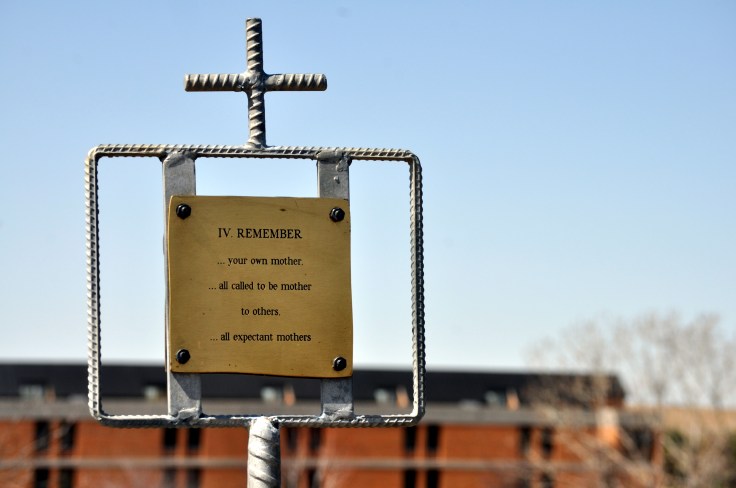
4 EasterStation 4: Jesus Meets His Mother
Jesus: “Anyone who does the will of my Father in heaven, is my brother and sister and mother.” -Mt 12:50
Remember
…your own mother
…all called to be mother to others
…all expectant mothers

“One of the oldest devotions in Christianity, the Stations of the Cross, attests to the ongoing human effort to understand the place of suffering in the human’s search for resurrection from death to life that is part and parcel of what it means to be alive and grow and become our best selves as we go.”—The Way of the Cross, Joan Chittister

Station 5: Jesus Is Helped by Simon
Matthew: “A man from Cyrene, Simon by name, was forced to carry his cross.” -Mt 27:32
Remember
…those who assist others in life without being recognized
…those who give of themselves that other’s burdens are lightened.

A collage

Station 6: Jesus and Veronica
Jesus: “What you did for the least of my brothers, you did it for me.” -Mt 25:40
Remember
…those reaching out to the marginalized of society.
…those helping AIDS victims, prisoners, minorities.

7 easter

Station 7: Jesus Falls a Second Time
Jesus: “If anyone wants to be my follower…let him take up his cross and follow me.” -Mt 16:24
Remember those who lack the courage and strength to overcome addictions, personal shortcomings, sinfulness, and find themselves back in their old habits and behavior.
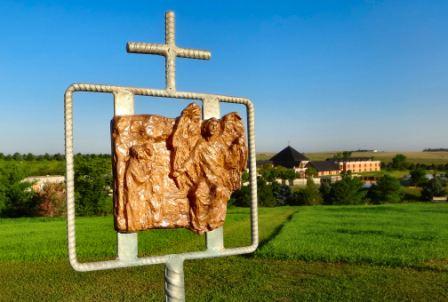
7stations

Station 8: Jesus Speaks to the Women
Jesus: “Daughter of Jerusalem, do not weep for me; weep for yourselves and for your children.” -Lk 23:28
Remember
…families who are struggling with any kind of difficulties and problems
…women oppressed by society, Church, work force, spouses…

9a

Station 9: Jesus Falls the Third Time
Paul: “The Lord says: My grace is enough for you; my power is at its best in weakness.” -2 Cor 12:9
Remember those who have given up and see no purpose and meaning in life.

DSC_0421

Station 10: He is Stripped of His Garments
Psalmist: “They shared out my clothing among them, they cast lots for my clothes.” -Ps 22: 18
Remember those sisters and brothers stripped of their dignity.

11 easter

Station 11: Jesus is Nailed to the Cross
Jesus: “Father, forgive them: they do not know what they are doing.” -Lk 23:34
Remember those who find themselves trapped in difficult situations and see no way out.

DSC_0680

12 easterStation 12: Jesus Dies on the Cross
Jesus: “It is accomplished” and bowing his head he gave up his spirit. -Jn 19:30
Remember
…the lonely
…the dying
…those who have no one to be within their final hours of life’s journey.
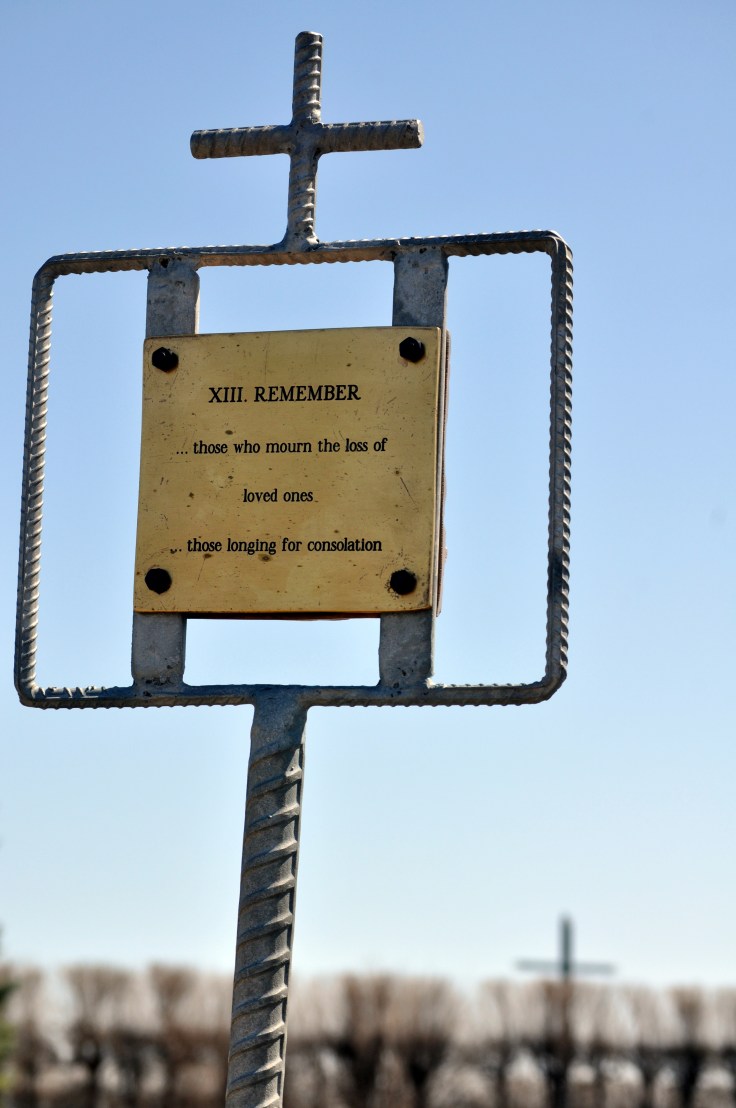
13 easter

Station 13: Jesus is Taken Down from the Cross
Jesus: “The one who stands firm to the end will be saved.” -Mt 10:22
Remember
…those who mourn the loss of loved ones
…those longing for consolation


Station 14: Jesus is Laid in the Tomb
Jesus: “I tell you, most solemnly, unless a wheat grain falls on the ground and dies, it remains only a single grain; but if it dies, it yields a rich harvest.” Jn 12:24
Remember
…those facing death without hope of eternal life
…those who will die unexpectedly
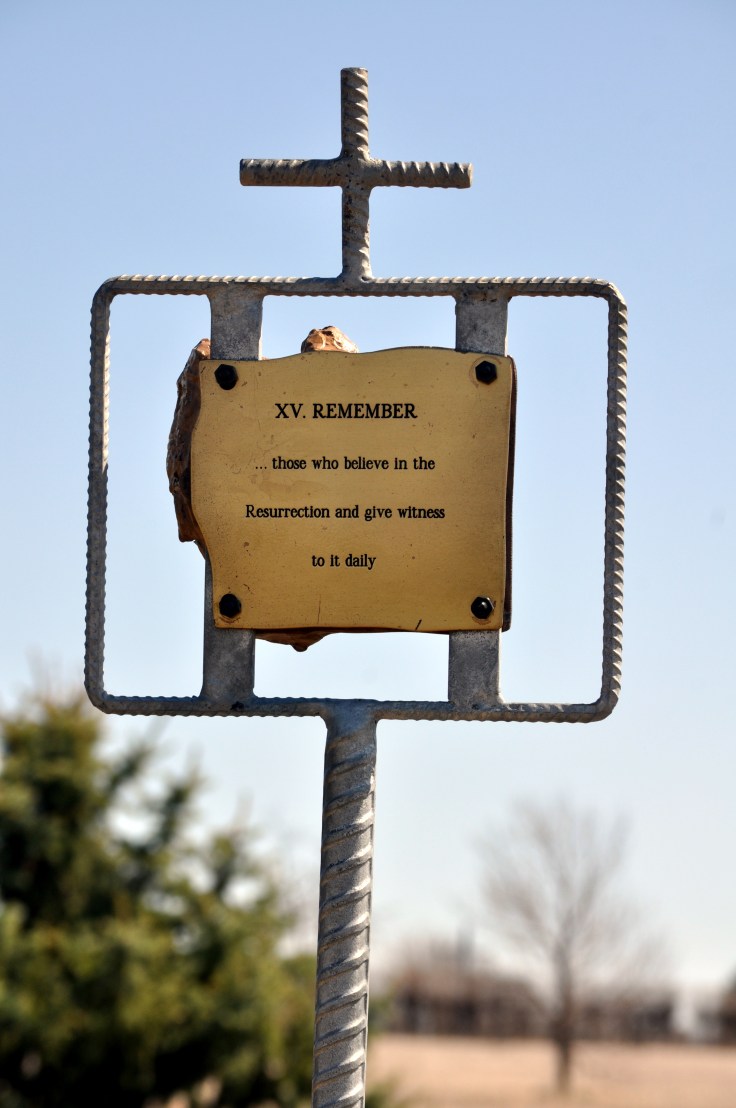
15

Station 15: Jesus is Raised from the Dead
Angel: “He is not here: he is risen. Remember what he told you when he was still in Galilee.” Lk 24:6
Remember those who believe in the Resurrection and give witness to it daily.
15 distance

Gather Into One: A Sacred Journey

April 2020 Oblate Lectio Divina and Discussion
Topic: Lent   Sources: Rule of St. Benedict, Chapter 49; John 11:45-56

“We dwell in grief and despair to be surprised into life again with resurrection—each year we are invited to make this sacred journey together.” –Engaging Benedict, Laura Swan

journey together

As Oblates of Christ the King Priory we “make this sacred journey together” meeting once a month for connection, prayer, and study. We gather in Schuyler, Nebraska on the second Saturday of the month for our Oblate meeting including morning prayers, Lectio Divina, Mass, lunch, and discussions both in full and small groups.

img_5334
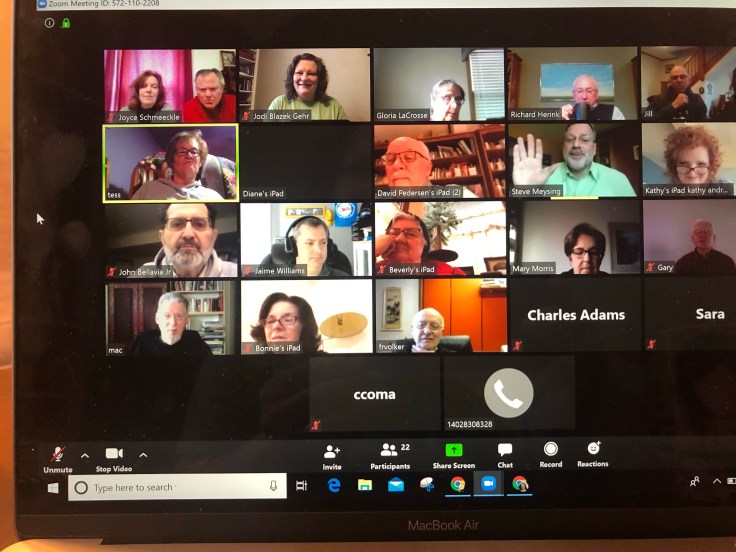
Our inaugural Zoom Oblate Meeting was a huge success!!

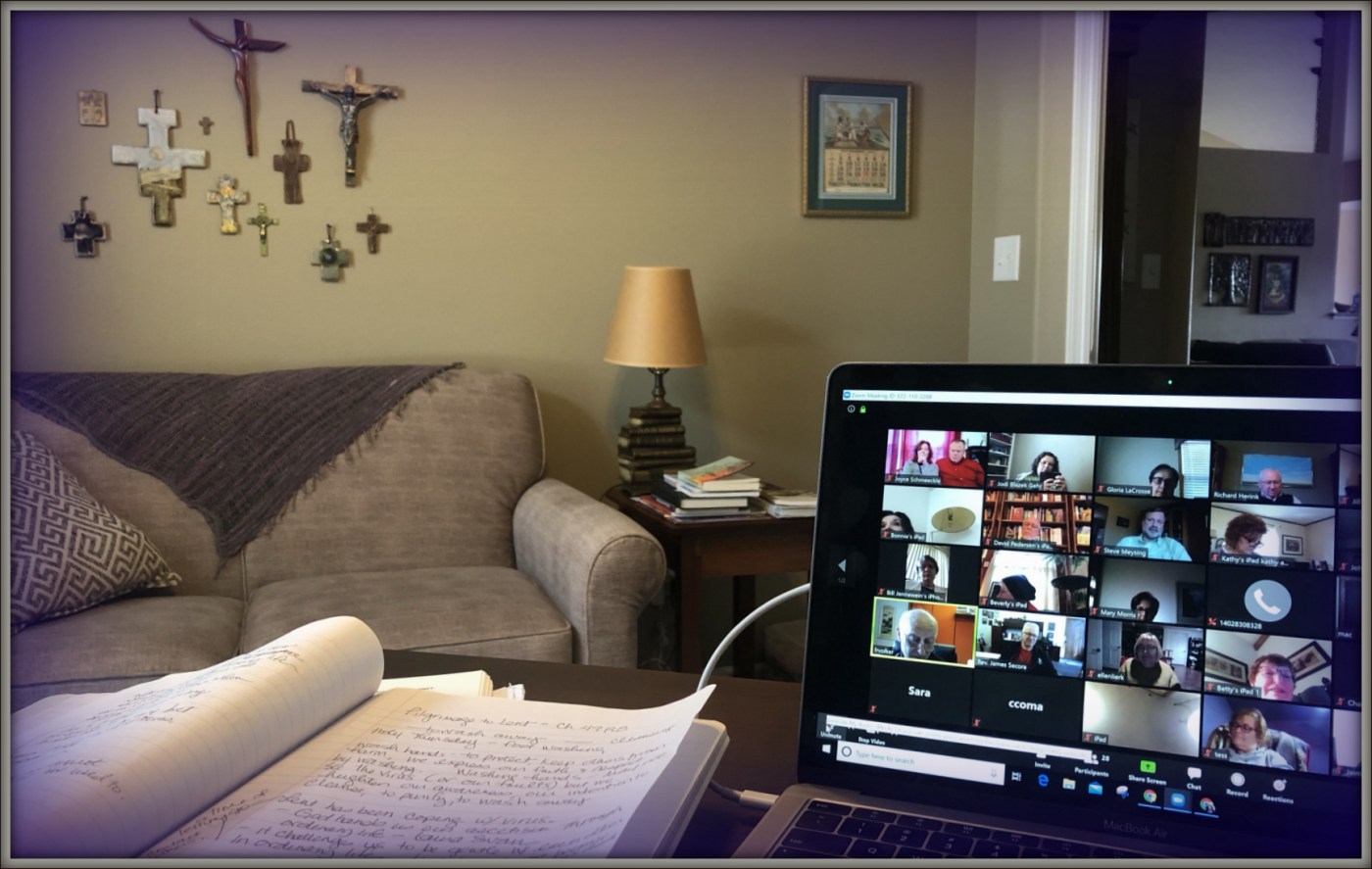
Yet, in this time of uncertainty when we cannot meet in person, we still crave the connectedness and the spiritual grounding of our Oblate promises. Being creative problem-solvers, several of our oblates organized a Zoom event for our April meeting. Fr. Volker reflects, “It worked out beyond any expectation and was a wonderful event. Our social media technology and the present challenging Coronavirus Pandemic turn out to be a hidden blessing.” We had 28 Oblates participate, many who typically cannot make the day trip for our monthly meeting. We started as we usually do with a few announcements, prayers and Lectio Divina, each in our own home, and yet we were together.

Our Lectio Divina reading: 

There were many words and phrases that resonated with us:

You know nothing. Gather into one. What are we going to do? If we leave him alone. Began to believe in him. All will believe in him. Jesus would die for the nation. They looked for Jesus. The whole nation may not perish. What do you think? Jesus no longer walked about in public among the Jews.

The layers of meaning in this Gospel reading are inexhaustible, especially as we consider the impact of the pandemic during Lent— Continue reading “Gather Into One: A Sacred Journey”

Holy Water: Image of Gratitude

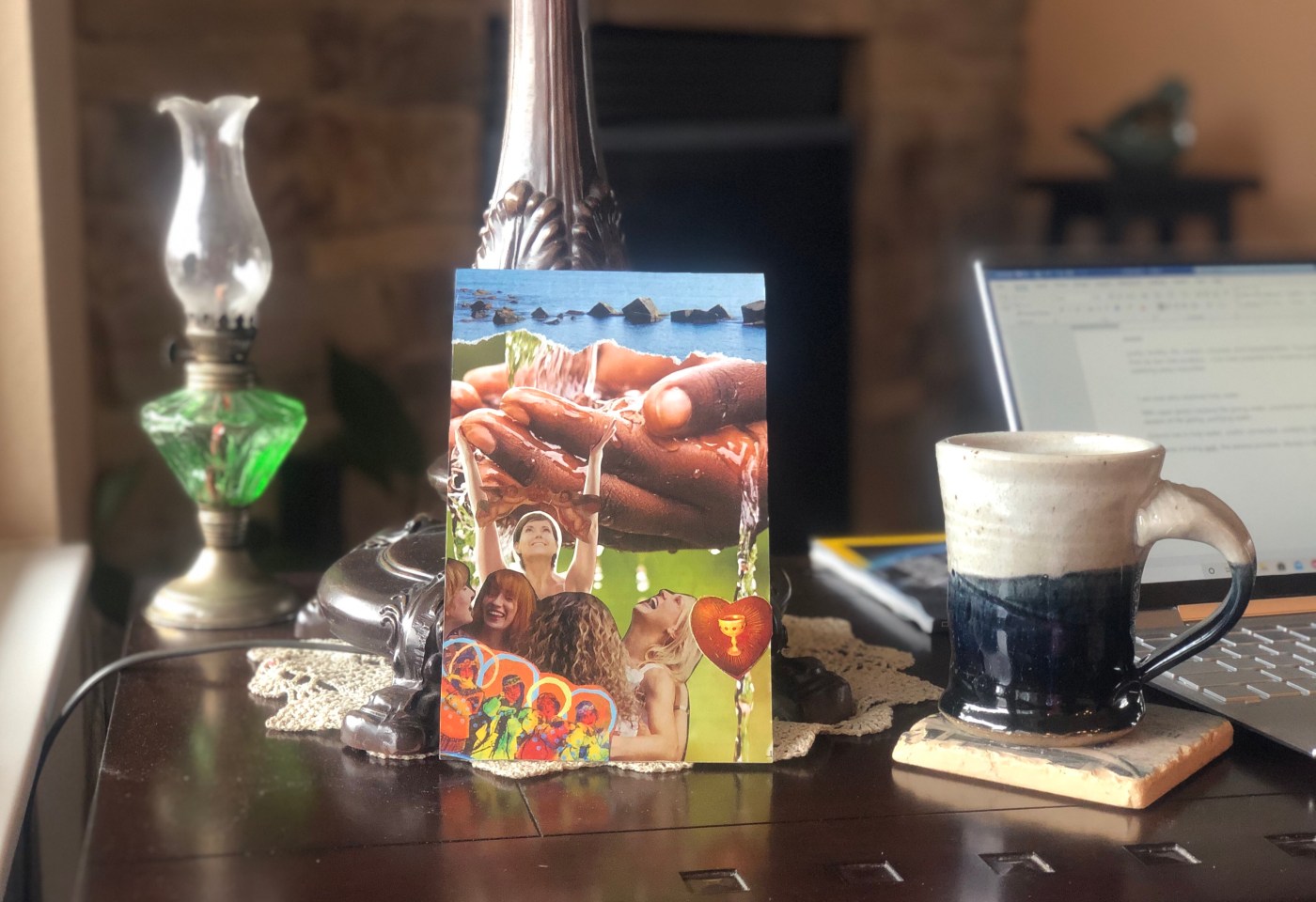
Practicing SoulCollage® is part of my spiritual practice that provides “boundaries and direction”, especially in this time of uncertainty.  I share an “I am one who” reflection for a card I created this week.  It came together slowly, over the course of several days, taking up space on my kitchen table until it felt complete.  The card has become a prayer of gratitude and a reminder to keep reaching for life-giving “holy water” in all its forms.

Card Name: “Holy Water”

I am one who stands in a circle of women who hold each other up, who embrace life and each other, who are connected, who grow together. I am one and many.

I am one who recognizes Source in the still, holy water. Stones, upright, are less about unsettling the water, and more about propelling motion, continually adapting, always transforming or conforming to what comes in its way. I can trust the peaceful, holy water.

I am one who stands in the stream of life-giving, purifying water.

I am one who, with open arms, is anointed with holy water. With joy, faith and a sense of solidarity, I am blessed with nourishment in abundance—above, below, around, overflowing.  

I am one who thirsts, not in an aching, despairing, dying, sort of way (at least not in this card, at this moment) but as a reminder that purification happens only when intentionally sought after and accepted. Water is the essential element to growth; I long for this fullness.

I am one who is grateful for thirst, to trust that the thirst will be quenched, and to drink from the chalice of holy water. Continue reading “Holy Water: Image of Gratitude”

Urbi et Orbi: A Blessing for the World

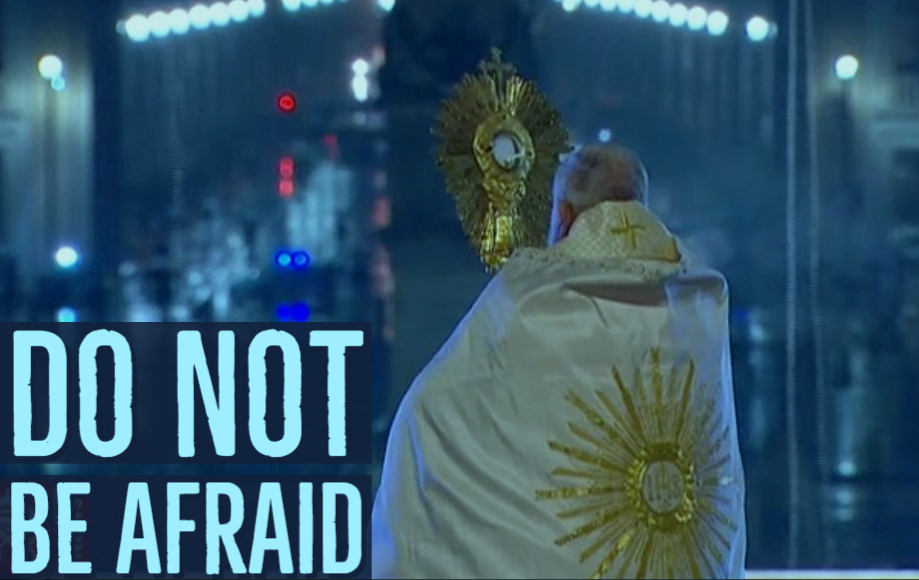
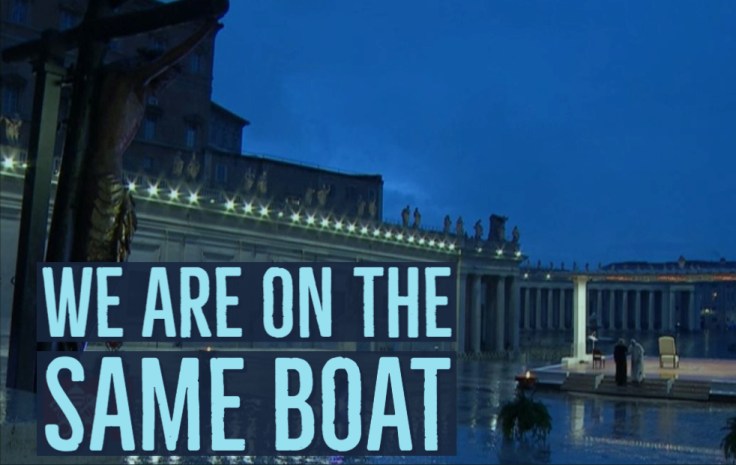
Listen with the ear of your heart to Pope Francis’ message to the world. Practice Lectio Divina, contemplating the words and/or images that speak to your soul. Full text and video available at the end of this post.

What are you called to learn during this “unexpected, turbulent storm?” Share your insights in the comment section.

world blessing pope

“Like the disciples in the Gospel (Mark 4: 35-41) we were caught off guard by an unexpected, turbulent storm. We have realized that we are on the same boat, all of us fragile and disoriented, but at the same time important and needed, all of us called to row together, each of us in need of comforting the other.

world blessing pope 2. jpgOn this boat… are all of us. Just like those disciples, who spoke anxiously with one voice, saying “We are perishing” (v. 38), so we too have realized that we cannot go on thinking of ourselves, but only together can we do this.”
world blessing pope4

The storm exposes our vulnerability and uncovers those false and superfluous certainties around which we have constructed our daily schedules, our projects, our habits and priorities. It shows us how we have allowed to become dull and feeble the very things that nourish, sustain and strengthen our lives and our communities.

world blessing pope3

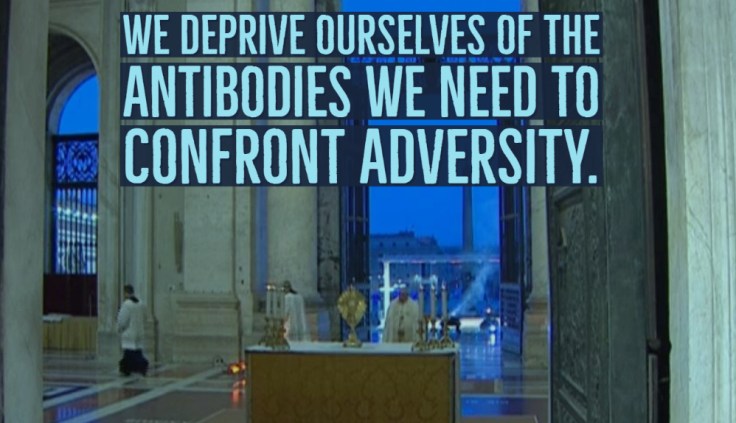
The tempest lays bare all our prepackaged ideas and forgetfulness of what nourishes our people’s souls; all those attempts that anesthetize us with ways of thinking and acting that supposedly “save” us, but instead prove incapable of putting us in touch with our roots and keeping alive the memory of those who have gone before us. We deprive ourselves of the antibodies we need to confront adversity. Continue reading “Urbi et Orbi: A Blessing for the World”

No Words: Praying with Art

“There are times when music and other forms of art become vital because words alone won’t suffice. This is one of them.”
–Parker J. Palmer

I love words—to write them and to read them (shared in In Praise of Words and Less Words)—but during the past few weeks, I have found my thoughts turn to words that spiral into feelings of fear, anxiety, and worry. It is one of those times when I need to listen deeply with the “ear of the heart,” according to St. Benedict, for good words, or no words, to replace that which is not edifying.

God is the Great Artist.

Art is incarnational, and the arts have long been celebrated by Christian tradition as a way of encountering Christ. Visio Divina is like Lectio Divina, but instead of using the words from a page of Scripture to pray with, you use an icon, a sacred image, a work of art, or even a sunrise, a sunset, the flash of an oriole, the flight of a red-tailed hawk. (St. Benedict Center, Praying with the Arts)

IMG_3808

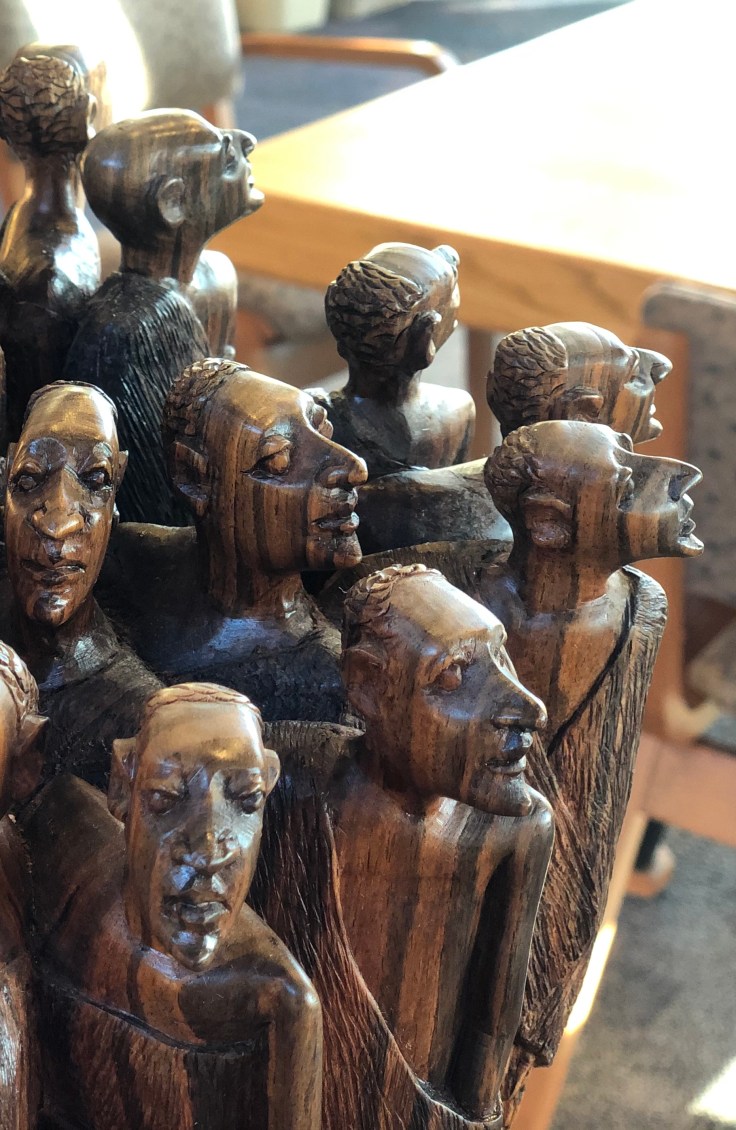
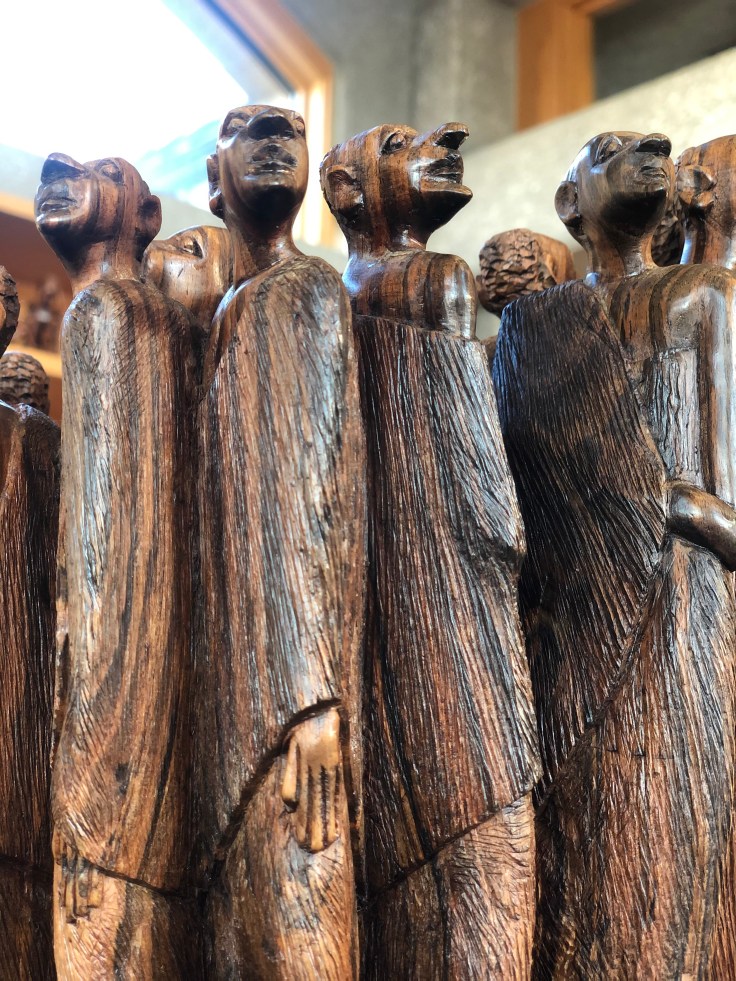
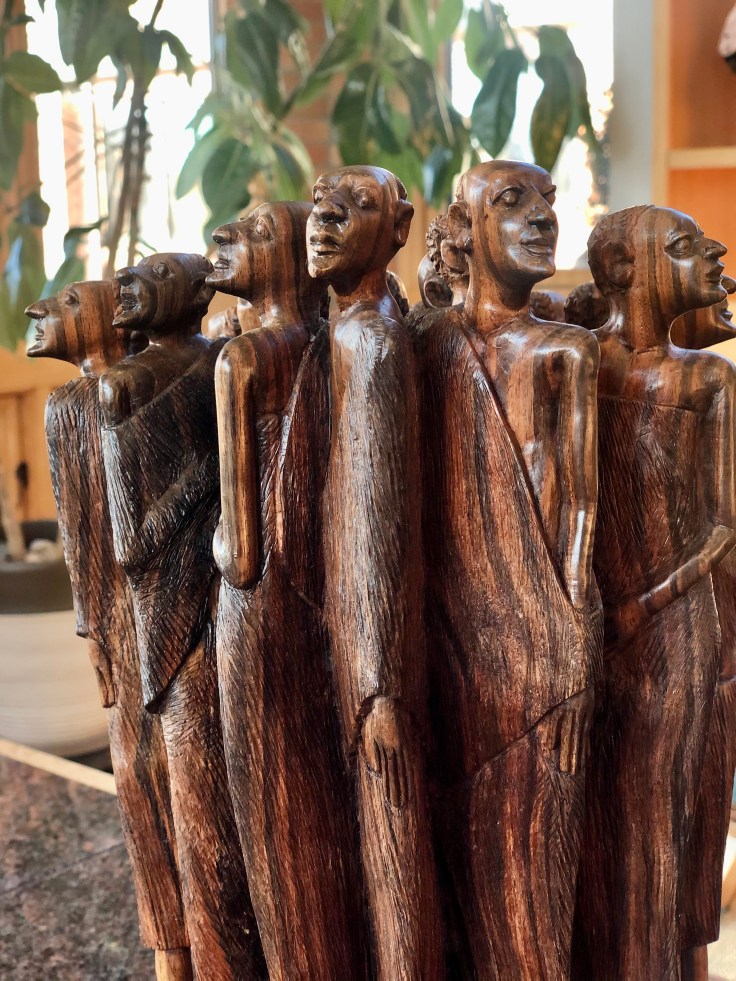
I invite you to practice Visio Divina with one of my favorite pieces of art at St. Benedict Center, a wood carving of the Makonde clan of Tanzania, east Africa. I have taken dozens of photos and contemplated its meaning from many angles and directions over the years. Only recently did I ask Fr. Thomas, administrator at the Center, if he knew the story behind it. He shared that it is titled “Democracy.”  He described that in the traditional Makonde clan when something important had to be discussed, the elder calls the extended family together. After the matter is discussed and everyone has had the opportunity to speak, the elder makes known the decision. The artist is saying, somewhat humorously, in a democracy everybody can speak but are those speakers really listening to one another?

IMG_3813IMG_3817

Practice Visio Divina

Relax and come to a quiet before the photos of “Democracy.”

IMG_3809

Read the work of art. Listen with the “ear of your heart.” Explore it. Does it remind you of a passage from Scripture or The Rule of St. Benedict?

IMG_3820

IMG_3811

What is the story being told? Notice colors, shapes, textures, shades, symbols, posture, expressions. How do they work together to tell the story?

IMG_3822

Continue reading “No Words: Praying with Art”

We Are The World, We Are The Children

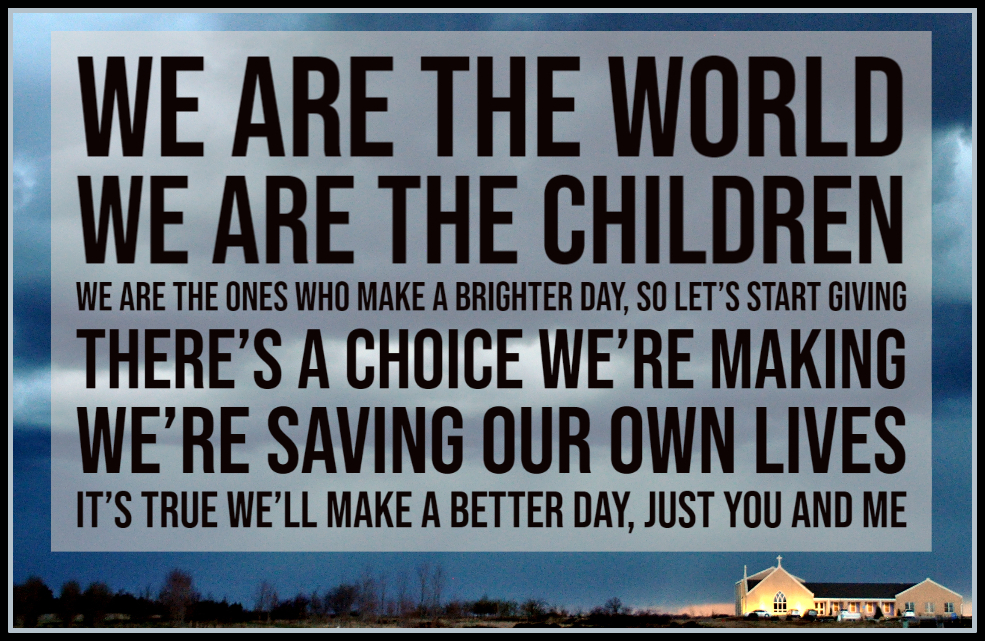
The award-winning song We Are The World, written by Michael Jackson and Lionel Richie, is an anthem for our time. On January 21, 1985, the most well-known artists in the music industry, under the direction of Quincy Jones, came together to support USA for Africa, bringing awareness and financial relief to the famine in Africa. It was a gesture of solidarity that is a reminder for us now and always. Listen here:

(First verse)
“There comes a time
When we heed a certain call
When the world must come together as one.”

 I have friends or family living in many countries–Germany, Italy, Switzerland, Austria, Czechia, Belgium, Spain, Canada, Argentina, Australia—and in all regions of the United States from California to New York, Washington to Arkansas. Being Benedictine has followers and visitors from over 75 countries. In the Benedictine Confederation, there are hundreds of monasteries and thousands of monks, nuns, sisters, and oblates in every part of the world.

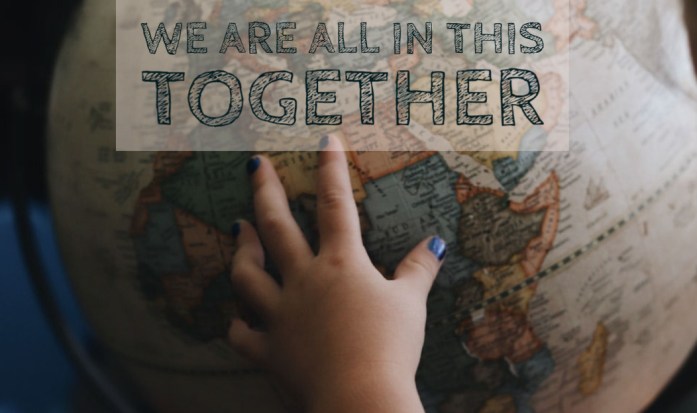
No matter where we call home, we are connecting with each other on social media, Zoom, Skype and Facetime to check in with each other, to ask how it’s going, to send a word of encouragement, to offer help. Never have we ALL been in such shared circumstances like this.

together

(First verse continued)
“There are people dying.”

An inevitability, St. Benedict reminds us to keep death daily before our eyes. But even that advice feels different now. The pandemic underscores our connectedness that we don’t take stock of regularly. Collectively we are staring death in the eyes. Depending on where we live, we are on varying points of “the curve” with differing strategies from our governments and medical professionals to “flatten the curve.” Continue reading “We Are The World, We Are The Children”

Happy Feast Day of St. Benedict!

Happy Feast Day of St. Benedict!

DSC_0911a
Montecassino Abbey

On March 21, Benedictines around the world celebrate the “transitus of St. Benedict, the day Benedict entered eternity. “Transitus” in Latin means passing from one state to the next—death is not the end of life, but the transition into eternity with God.  It is one of two days that St. Benedict is recognized on the Benedictine calendar.

Since this feast day is always during Lent, another commemoration date was set when Pope Paul VI declared St. Benedict the Patron of Europe at the rededication of the Church at Monte Cassino on July 11, 1964. July 11 is the Feast of St. Benedict for the Universal Church. Only Mary, the mother of Jesus and John the Baptist are remembered with both their birthdays and their day of entry into heaven. Continue reading “Happy Feast Day of St. Benedict!”

The road ahead is uncertain: 2020 Edition

The road ahead is uncertain. But isn’t it always?  The title of a blog post I wrote after a very difficult year has come to the forefront of my thoughts these past days.

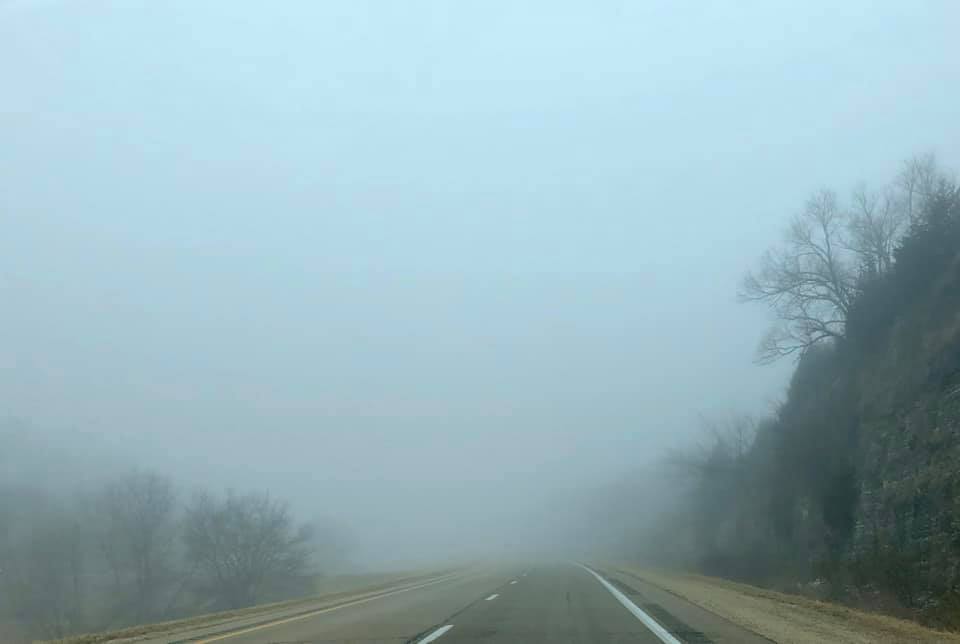
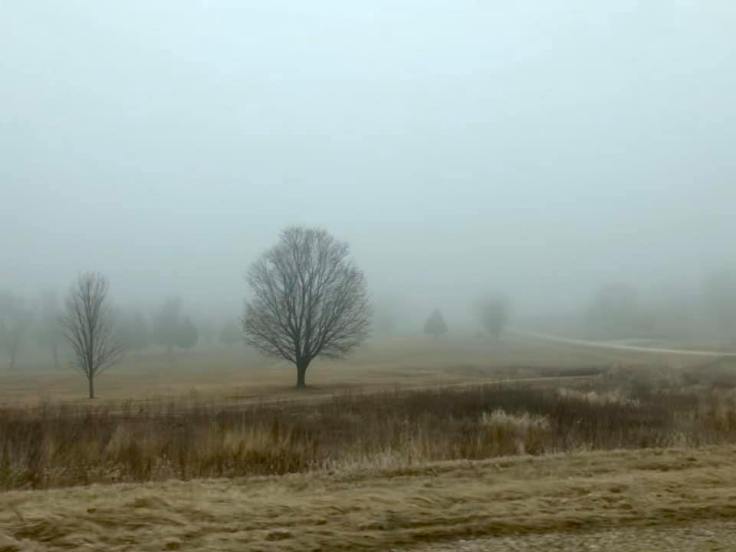
The weather on January 20, 2017, the day of the Presidential Inauguration, was foggy, rainy, and overall, depressing and dreary. It struck me then that although the road ahead, literally and figuratively, was unclear, eventually the fog would lift. The seasons teach us this.

89833225_10221463680331779_1366001442116075520_n

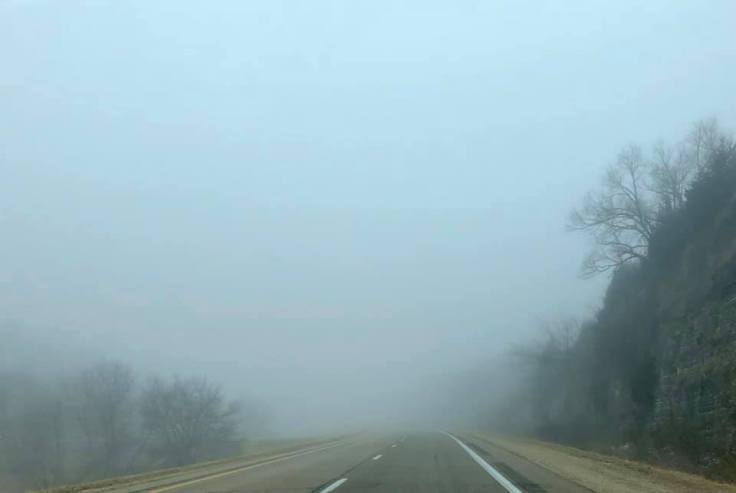
Last Thursday, the morning we headed home from a joyous spring break vacation in Wisconsin visiting our daughter and her boyfriend, there was limited visibility on the highway. Like the bathroom mirror steams over from a too-hot shower, a haziness settled on houses and barns, trees and tractors. A dense fog allowed us to see no further than a few hundred feet in front of us. On the side of the road, coffee-colored trees are more visible than trees just several feet behind, muted with the hue of a healthy dose of half-and-half, a church only distinguishable from a house or a barn by its steeple.

89209566_10221463679371755_7649926934222077952_n

Most visible were the white lines along either side of the road, the necessary boundaries to keep us confident about continuing, and the headlights of oncoming cars.

90000075_10221480768358969_7874352062203428864_n

I thought, here we are again: foggy weather and uncertain times. In the last day of our trip as reports of the seriousness of the pandemic gripped the news cycle, the encouragement to thoroughly handwash and to elbow bump instead of handshake turned into urgent messages of social distancing, self-isolation and quarantining to “flatten the curve.”

The road ahead is uncertain. Undeniably. Continue reading “The road ahead is uncertain: 2020 Edition”

Blog at WordPress.com.

Up ↑