Search

Being Benedictine

Living SoulFully as an Oblate of St. Benedict

Author

Jodi Blazek Gehr

SoulCollage® Facilitator, Benedictine Oblate of Christ the King Priory, Retreat Leader at St. Benedict Center, Blogger at Being Benedictine and SoulFully You, Teacher, Mother, Wife, Friend, Lover of learning, reading, creativity and spirituality.

2023 Word of the Year: Wonder

I love the practice of asking for a word, allowing a word or phrase to bubble up to ponder for the new year. Words that have chosen me in the last few years include Mercy (2017), Cushion (2018), You Are Free (I needed more words that year) (2019), Carry On (2020), Truth (2021), and Consent (2022).

My 2023 Word of the Year is WONDER.

This tradition (for desert mothers and fathers) of asking for a word was a way of seeking something on which to ponder for many days, weeks, months, sometimes a whole lifetime.  The “word” was often a short phrase to nourish and challenge the receiver.  A word was meant to be wrestled with and slowly grown into.

Christine Valters Painter

WONDER opens our eyes to synchronicity.

The images in a recent SoulCollage card brought forth the word WONDER, and it settled comfortably in my soul.  The title of my card, Sit A Spell, is an encouragement to be open and receptive to the wonders of the universe revealing themselves right where we are—comfortable on our perch, walking through the seasons of life, or, even, in our thoughts and imagination.

It is only with eyes open to wonder, holy surprises, and synchronicity that we experience the humbling and awesome fall to our knees. There we are uplifted by invisible forces and surrounded by angels seen and unseen. (Synchronicity and Holy Surprise)
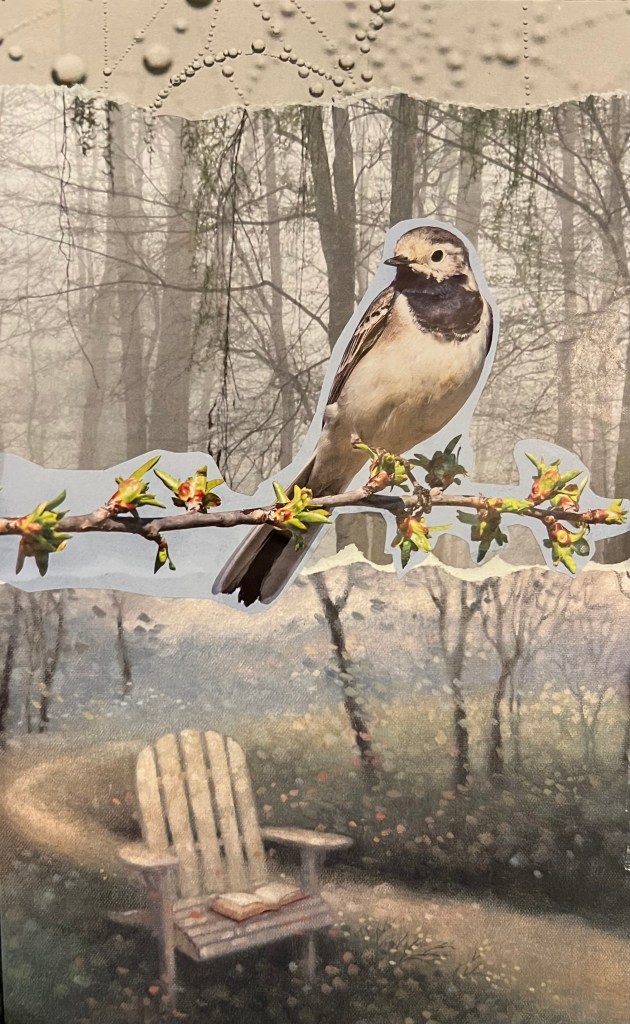
A card I created using images gathered on retreat and from a greeting card that screamed synchronicity!

WONDER makes us fall to our knees.

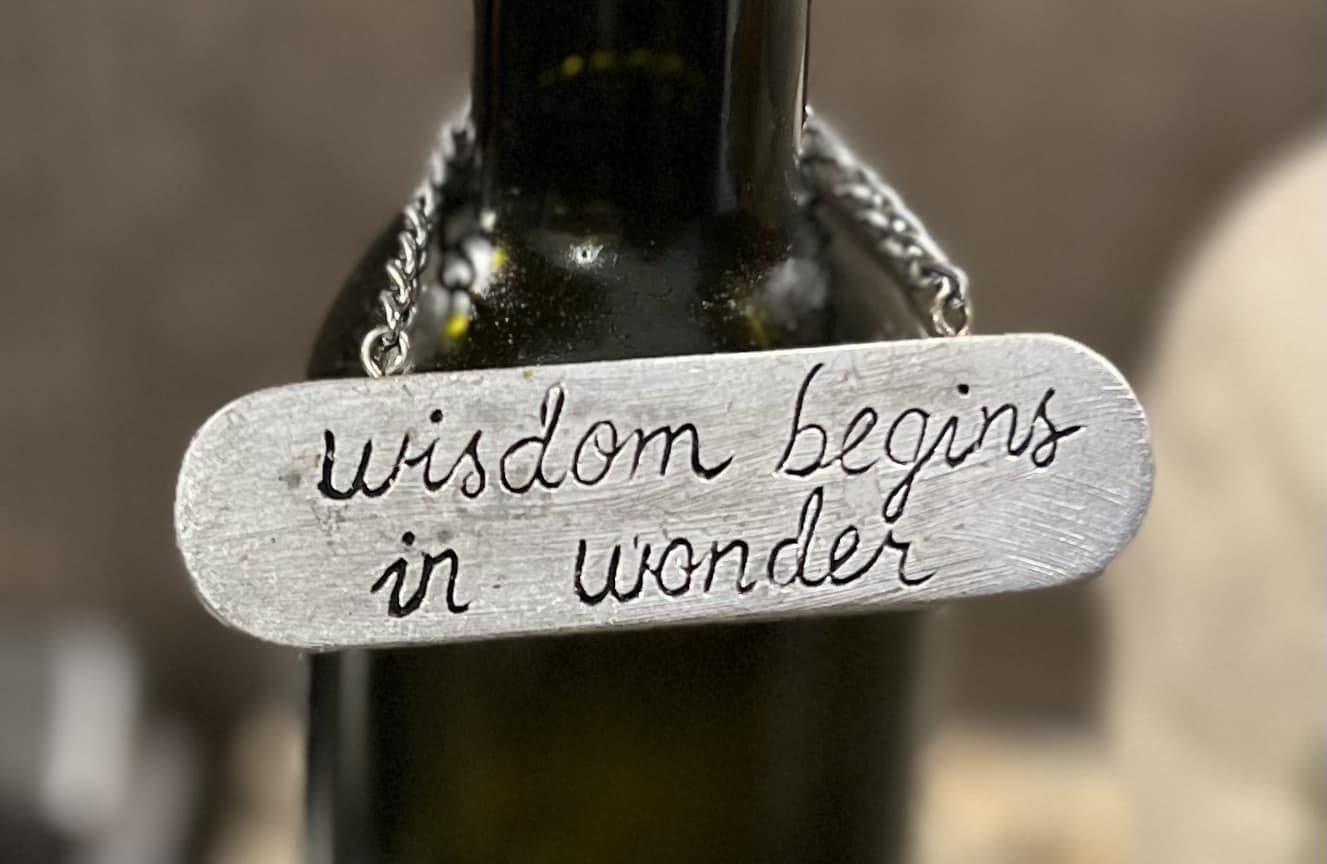
After the word WONDER rested in my awareness, it was providential how many words of wisdom, poems, and quotes I came across in my reading. The wisdom begins in wonder decoration (pictured above) hangs around an olive oil bottle in my kitchen. I pass by it many times every day, but I realize I wasn’t really SEEING it. Waking up to meaningful coincidences, C.J. Jung said, “could shift our thinking so we recognize a greater wholeness in all of creation…It could precipitate a spiritual awakening.”

“Concepts create idols; only wonder comprehends anything. People kill one another over idols. Wonder makes us fall to our knees.”

Gregory of Nyssa
Continue reading “2023 Word of the Year: Wonder”

Synchronicity and Holy Surprise

Synchronicities may seem like a rarity, but especially on retreat, it feels like these holy surprises happen often. Someone shares a story that resonates with another; an image appears just when one is seeking it; a deeper meaning is discovered creating a SoulCollage® card. There is an inkling of something more, a sense of being very near to the “thin place,” buoyed and embraced by the Divine. I wonder, do these moments actually happen more often than we notice?

Recently on retreat, our opening prayer invited us to be grateful for “moments of synchronicity and holy surprise.” Mary, Queen of Angels, a blessing from Birthing the Holy: Wisdom from Mary to Nurture Creativity and Renewal by Christine Valters Painter, prompted a discussion on synchronicity.

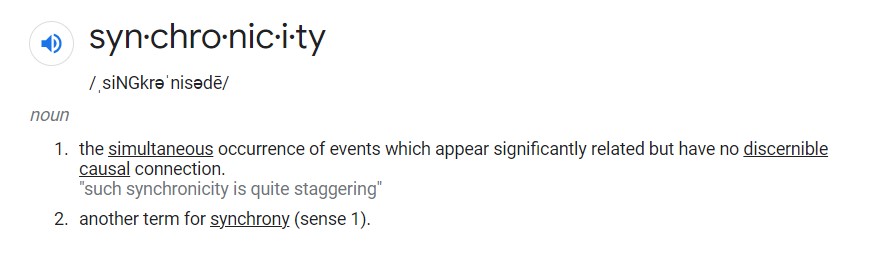
Marilyn, who has been to many retreats over the last several years (and is also my dad’s first cousin…another serendipitous story) was curious about the definition, so we looked it up:  

Simultaneous occurrence of events that appear significantly related, YES! But rather than events having “no discernible causal connection,” I think of synchronicities as connections seen with the inner eye. They are holy coincidences. Both mysterious and meaningful, these holy surprises open our eyes in new ways. The voice of synchronicity encourages us to be aware, to look and listen deeply. Throughout our retreat, we enjoyed identifying these many moments with an exuberant, “That’s synchronicity!”

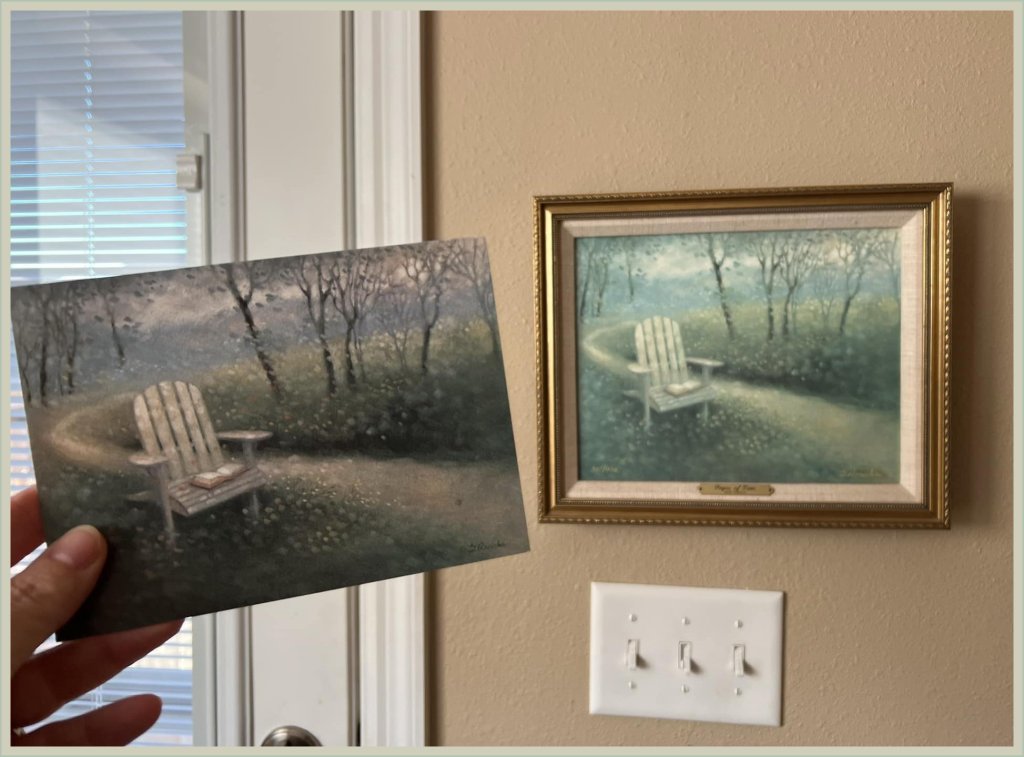
A few days after our retreat, when we were all back to our daily life, I received a card in the mail from Marilyn. She had written, “I hope the picture on this card brings you a moment of serenity.”

Indeed, it did, and a giddy feeling of serendipity! I love the image on the card so much that some twenty years ago I purchased a signed and numbered canvas of it titled “Pages of Time” by Gene Roncka and it is hanging in my kitchen!

Smiling in amazement, and yet not as surprised anymore when synchronicities occur, I took a photo of both and sent a message to Marilyn. She responded, “This is absolutely surreal. And I think it may be synchronicity.

I forwarded the photo to our retreat group with the message— “Can you say synchronicity?”

 C.J. Jung, who popularized the term synchronicity, believed that life was not just a series of random events. Waking up to meaningful coincidences, he said, “could shift our thinking so we recognize a greater wholeness in all of creation…It could precipitate a spiritual awakening.”

There are so many invisible forces and connections weaving a web that holds us in its grace. The more we look, the more we see. It is only with eyes open to wonder, holy surprises, and synchronicity that we experience the humbling and awesome fall to our knees. There we are uplifted by invisible forces and surrounded by angels who “walk among us in seen and unseen forms.” In these moments, we see new pathways and possibilities. I agree with Brian McLaren who said “The closest thing to God is when we say WOW!” Holding tight to this knowing sustains us when our faith is not as strong or challenges present themselves.


I used the Pages in Time card from Marilyn to create a SoulCollage card I titled “Sit A Spell.”

“You who sing among the angels, help us to feel their sheltering and guiding presence in our days. Reveal to us all the ways we are held, comforted, uplifted by invisible forces; remind us to call out for help when needed and to lean into the grace so freely offered to us. Let us see how angels walk among us in seen and unseen forms; encourage us to offer gratitude for moments of synchronicity and holy surprise when we are met with kindness and sacred possibility, when we see a new pathway where before was only bramble. Mary, Queen of Angels…help us to know you walk beside us always.” -Christine Valters Painter


More reflections on synchronicity:

In a Pair of Red Shoes

 
Some additional sources on synchronicity:

Faith and the Intuitive Arts

Carl Jung and Synchronicity: The Search for Meaning in Coincidence

The Power of Synchronicity and How It Can Shape Our Lives

© Jodi Blazek Gehr, Being Benedictine Blogger

A Child in a Straw Hat

Planning a retreat begins, not with brainstorming, but with a holy surprise. I have retreat dates scheduled years in advance including every Advent, but a theme unfolds only when the timing is just right. Usually, six months to a year before the retreat dates, I send out a signal to the Divine that I’m looking for an idea. In my spiritual reading, combined with following a variety of spiritual writers, religious leaders, poets, and musicians on social media, I look for synchronicities…sort of like “retreat radar.” It could be a profound quotation, an image, lyrics from a song, a blessing, or a prayer that grabs me—that’s when the ideas begin to flow, a pattern develops, a theme is revealed, and a retreat begins to take shape.

Several months before the 2022 Advent retreat, I spent more time than usual with my SoulCollage® cards—photographing and uploading each to a SoulCollage® app, considering archetypal energies that were expressed, contemplating the time of life the card was created, and how the meaning may have changed. I realized I had dozens of cards with images of Mary, or feminine and mothering energy, in them. Over the years, I read several books about the many sightings of Mary and sacred pilgrimages to Marian shrines, and my curiosity grew. Realizing the impact Mary had on so many of my cards, I felt the tug to take a deeper dive into what Mary might reveal in my spiritual journey. Time to read those books on my shelf that I hadn’t quite gotten to and, confession, I purchased several new books. I made Mary an all-out research project.

The book that initially inspired the Advent retreat “Pregnant with the Holy: Exploring Your Inner Mary” is Birthing the Holy: Wisdom from Mary to Nurture Creativity and Renewal by Christine Valters Painter, one of my favorite spiritual writers and abbess of the online Benedictine community, Abbey of the Arts. Each chapter focuses on a title given to Mary, providing the reader with a window into qualities we can call upon in ourselves. I chose to focus on several names for Mary including Queen, Mother, Virgin, Chosen, Theotokos, and Untier of Knots as well as the Annunciation, Mary’s response to a holy invitation, using poetry, music, art, icons, various articles, and excerpts from my reading.

Continue reading “A Child in a Straw Hat”

The Days of Awe

The Days of Awe is a ten-day period that begins with Rosh Hashanah (Jewish New Year) and concludes with the observance of Yom Kippur (Day of Atonement). I learned about this Jewish tradition that dates back to the third century BCE from my sister-in-law, Rachel Pred Gehr.

IMG_0287.jpeg
Rachel and me, grateful we both married into the Gehr family.

Rachel wrote about celebrating Rosh Hashanah several years ago on her blog, and it continues to make an impression on my own spirituality (I thought she wrote it just last year—lol, time flies.) I was touched by the ritual of “tashlich” that she described—“the congregation gathers at the creek for a ritual of tossing our sins into the moving stream, signaling a fresh start to the new year.”

She quotes,The custom of going to a body of water on Rosh Hashanah is a symbolic allusion, for the waters which now seem to be at this place were not here before and will not remain afterward. So, if the sinner says to himself or herself: “I will not repeat my sin; my behavior will change”, the sin, like the waters, will move on.” (A Feminist Tashlich, Rachel KastenOur sins are washed away….sounds familiar, doesn’t it?

71402885_10219892609375987_339861432147378176_n
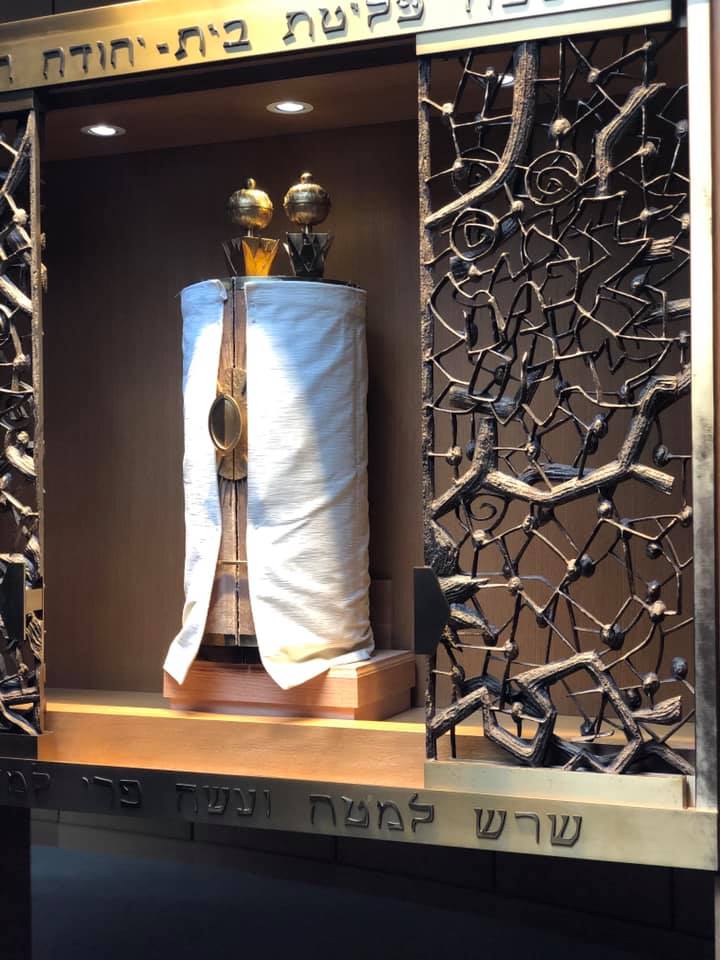
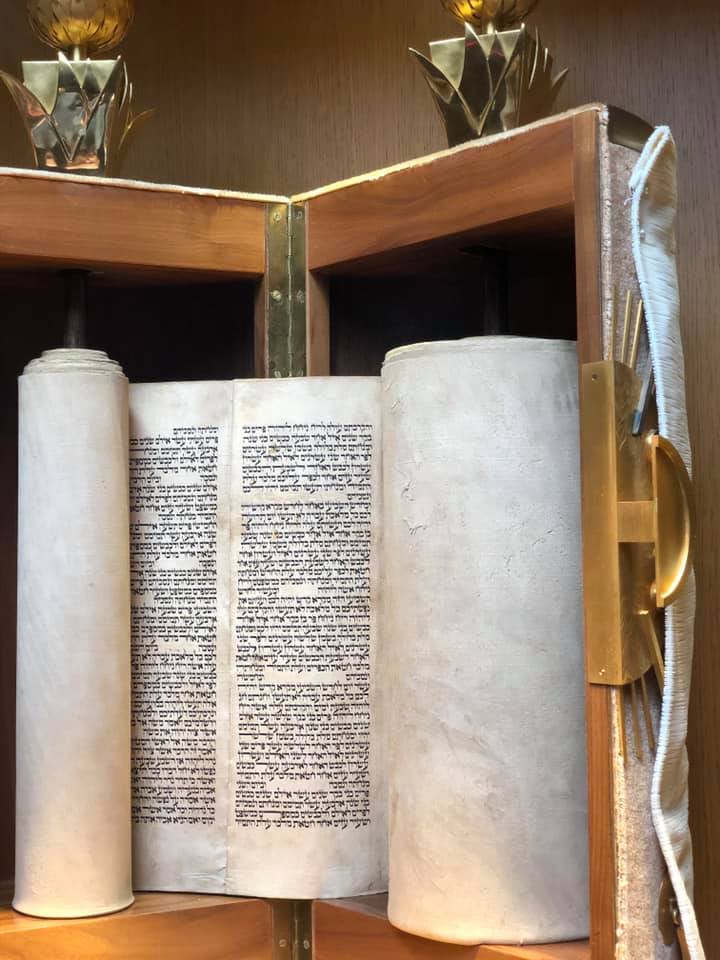
Torah at Temple Israel

71206637_10219892609775997_6935749842278809600_n

Most of what I know about the Jewish faith I learned in patchwork fashion—from a few friends, “The World’s Religions” by Huston Smith and Google. In elementary school, I had a friend who invited me to her Bat Mitzvah, a ceremony she explained as similar to Confirmation in the Christian church. But it seemed a lot different to this 12-year-old Catholic girl—it spanned two days, a lot of prayers that I didn’t understand, the carrying of a large package through the sanctuary and ending at a party with the fanciest finger food I’d ever eaten.

Continue reading “The Days of Awe”

Hospitality: Welcoming the Stranger

Hospitality is the foundation of Benedictine spirituality. St. Benedict insisted that hospitality be one of the highest values for monasteries, writing:

“Let all guests who arrive be received as Christ.”

Rule of St. Benedict 53:1

The “guest” may be a stranger, a friend in the making, those in our community who are marginalized, or our closest friends and family. Hospitality includes being truly present to others, becoming aware of their needs and challenges, and respectfully responding to them as much as one is able. For those close to us, we must welcome each other over and again, forgiving each other as we grow together or apart, giving each other grace and space as we become.

Recent news has caused me to reflect on how essential extending hospitality is to the health of our spirit and to the soul of organizations, communities, states, and countries; to consider how I have given and received hospitality, and how it has been withheld by myself or others.

Inadvertently or intentionally, we often do not extend welcome to others. We are human—busy, thoughtless, unaware—this is forgivable, but what we have witnessed—immigrants being lured to an undisclosed location with the promise of shelter and work—goes beyond withholding hospitality.

Diana Butler Bass writes about Radical Hospitality in her Cottage Sunday Musings, with commentary on the appalling news of “immigrants being lured from a shelter in San Antonio by the governor of Florida and shipped off to Massachusetts as a kind of political stunt is a profoundly cruel use of distressed people for political purposes. And the mirth and amusement that this episode inspired among self-declared “Christian” politicians has been nauseating… A church on Martha’s Vineyard sheltered unexpected arrivals, “angels unaware,” as guests worthy of dignified treatment, is a testimony to goodness and generosity, a vision of the world as God intends it to be — practicing hospitality toward strangers.”

I encourage you to read her letter which includes an excerpt adapted from her book, A People’s History of Christianity: The Other Side of the Story (2004).

She “makes the point that NO ONE can call themselves Christian unless they practice hospitality to strangers…Would that every faith community was like a swarm of bees, running out to meet the displaced, the lost, and the unexpected strangers with the same delight, zeal, and alacrity as the earliest Christians. Theologian Letty Russell once noted, “The word for hospitality in the Greek New Testament is philoxenia, love of the stranger. Its opposite is xenophobia, hatred of the stranger.” Philoxenia turns strangers into friends.

What a difference philoxenia would make a difference in our world — and in our politics — right now.

I also offer excerpts and links to other reflections I have written on hospitality:

Continue reading “Hospitality: Welcoming the Stranger”

Mindfulness and a Blue Heron

What is good medication for this time of conflict and anxiety? This question was posed by Fr. Mauritius Wilde, OSB, Ph.D. at a retreat he led called “Sober and Merciful: St. Benedict’s Journey of Mindfulness.”

Fr. Mauritius suggests we can learn how to approach the tensions in our lives and the conflicts in our family, community, and world by looking at the recommendations for selecting a leader of a monastic community in The Rule of St. Benedict, Chapter 64.  This chapter suggests that good leadership requires living the values of sound judgment, wisdom in teaching, pure motives, moderation, prudence, loving behavior, discernment, and as the retreat title suggests, soberness and mercy, among others.

Leadership starts with leading oneself. Cultivating the values of being sober and merciful can help us be our better selves in tough times. So often we want to escape or numb ourselves to any pain we may feel—to simply run away from our feelings, people, or situations. At other times we might become overwhelmed by distress or completely absorbed by worries. Neither of these approaches is effective to deal with conflict and anxiety but practicing soberness can provide a middle way—a more balanced, Benedictine way to help us accept our reality as it is, yet not becoming attached to it.

To be sober (Latin: sobrium) is to have an attitude of acceptance, to be temperate, and to take people, things, and activities just as they are. We can become “drunk with anxieties” of daily life, but as one who can compulsively think, ponder, wonder and what-if, this tendency can block one from seeing the truth of the way things truly are. It’s as if an alternate reality is created, one that takes us far away from the present moment.

Emotions can make us drunk; they can completely absorb us. Being sober and vigilant (1 Peter 5:8) is the absence of being drunk on emotion or being overcome with anxiety. By practicing mindfulness, we learn soberness tastes better—the purity and truth of circumstances are clear. One begins to sense when something is just too much—emotions, noise, activity, food, or drink—and is more able to set boundaries for what disturbs. Wanting more of this sobriety is craving what is real—the present moment, an ecstatic peace for only God can fill us with. To be sober is to be free. We must remain vigilant, alert, and open, for what God fills us with, for moments when Christ is revealed in our daily lives.

This retreat weekend is one of the last before I begin a new school year, so there is no shortage of uncertainty or anxiety. What I have learned about soberness is wisdom I will carry with me, a reminder to be gentle with myself while also being watchful and mindful of my tendency to be absorbed in emotion and the circumstances of a school day, whether it is a conflict with a student or colleague, disappointments of unmet expectations, or a frantic pace and frequent interruptions.

Continue reading “Mindfulness and a Blue Heron”

Walk With Me: A Wedding Promise of Stability

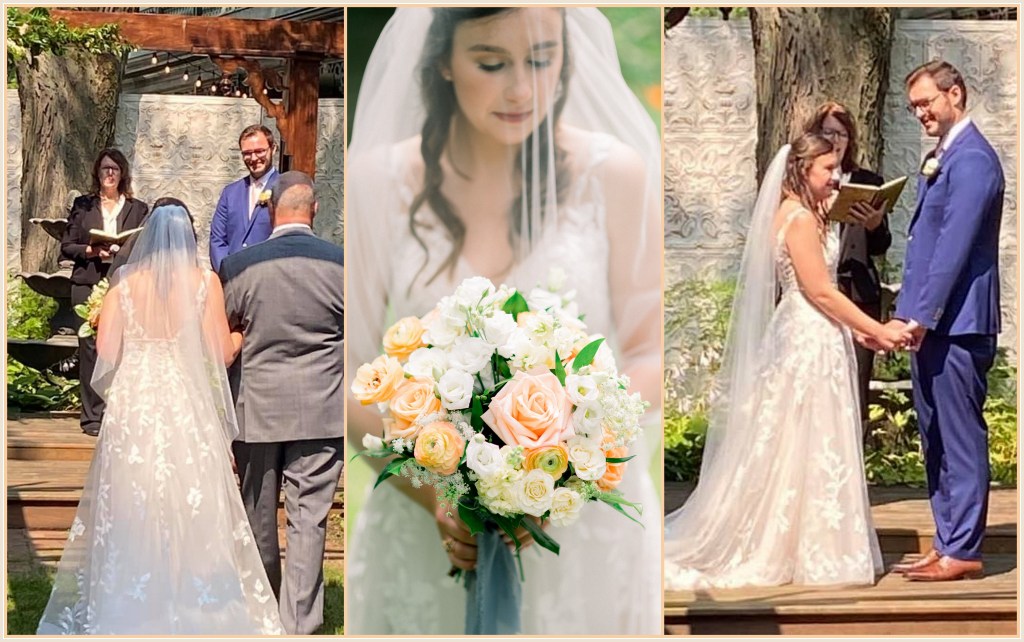
Last summer (July 17, 2021) we enjoyed celebrating the wedding of my daughter, Jessica, to John Holland with a beautiful ceremony officiated by my dear friend, Joyce.

This summer (June 25, 2022) I was so honored to be the officiant for the wedding of Travis and Sam, one of Jessica’s college friends. It was such a joy to walk with them in creating their ceremony and so humbling to be a part of their special day with family and dear friends.

It was a spiritual experience for me to consider again, after 37 years of marriage, what it means to make a marriage commitment—to promise “to have and to hold from this day forward, for better, for worse, for richer, for poorer, in sickness and in health, until death does us part” (Sam and Travis’ vows to each other) and to walk together on life’s journey.

Antoine de Saint-Exupéry, the famous French author of The Little Prince, wrote in Wind, Sand and Stars:

“Love is not just looking at each other, it’s looking in the same direction.”

I shared these words during the wedding ceremony:

“Walking together, in the same direction, is what your marriage commitment will require. The primary reason we commit to relationships, to promise stability, is to be there for the other. In a consumer-driven society, we are encouraged to buy new, better, more but the ancient monastic practice of stability encourages us to stay put. Nathan Oates writes, “Stability doesn’t mean you’re not trying to improve or that you don’t work on the problems. Just the opposite. It means you’re going to work hard, and you expect problems. This isn’t a fairy tale. This is learning how to love.”

Promising to stay, to walk together in all of life’s joys and challenges, is the vow of stability. One’s relationship can grow deep roots, in great love, by understanding that the other will always be there for you.

Selfies with the bride and groom!
Continue reading “Walk With Me: A Wedding Promise of Stability”

A Quarter-Century of Hospitality and the Saint John’s Bible

A quarter-century of hospitality offered in the cornfields of Nebraska now includes a permanent, interactive exhibit of the Saint John’s Bible (SJB) Heritage Edition, one of the most impressive and accessible displays in the country.

In the spirit of Benedictine hospitality, Saint Benedict Center was established in 1997 on behalf of Christ the King Priory of Schuyler, Nebraska to welcome all guests as Christ, offering a place of peace for people of many faiths who seek God.

On Sunday, July 17, 2022, the 25th anniversary of Saint Benedict Center was celebrated with the Grand Opening of the Saint John’s Bible Heritage Edition Display, set #150 out of a limited edition of #299, gifted during the year Nebraska observed its 150th Anniversary of Statehood.

The Saint John’s Bible is the first handwritten bible commissioned by a Benedictine monastery in more than 500 years. The Heritage Edition is a special leather-bound version, inspired by the original, printed on 100 percent cotton paper. In this state-of-the-art display, visitors can learn how The Saint John’s Bible was made using traditional materials like vellum (calfskin), ancient inks, and quills. They can see each of the Heritage Edition’s volumes in a separate display case and browse through the pages using an interactive kiosk. There is ample space for prayer and meditation using the texts and images.

Continue reading “A Quarter-Century of Hospitality and the Saint John’s Bible”

July 11: A Big Day for Being Benedictine

St. Benedict is special to me for a few reasons. First, we share a birthday. I admit I was disappointed when I first discovered this. My parents had given me an illustrated book of the “Lives of the Saints” to commemorate my Confirmation. As any nine-year-old would do, I immediately looked to see who the saint was for July 11, my birthday. Perhaps Elizabeth, Mary, or Theresa would be my special saint.

Instead, I see an illustration of a man with a dark hood, a scary-looking bird, a crooked cane, and an unusual name I had only associated with Benedict Arnold. July 11, St. Benedict, Abbot, it said. I had never heard of him and surely did not know what an Abbot was. Through the years, I returned to this image of St. Benedict, thinking that I should have some connection with my patron saint.

Fast forward 26 years. With a full and busy life—married with a young daughter, a career as a high school teacher and club sponsor—I felt a deep longing for times of silence. I answered the call of my heart and responded to an advertisement for a silent contemplative prayer retreat. I discovered an oasis of peace just a few hours from home in the cornfields of Nebraska…called St. Benedict Center.

Continue reading “July 11: A Big Day for Being Benedictine”

Blog at WordPress.com.

Up ↑