Search

Being Benedictine

Living SoulFully as an Oblate of St. Benedict

Atoms of Delight: A Pilgrimage to Iona

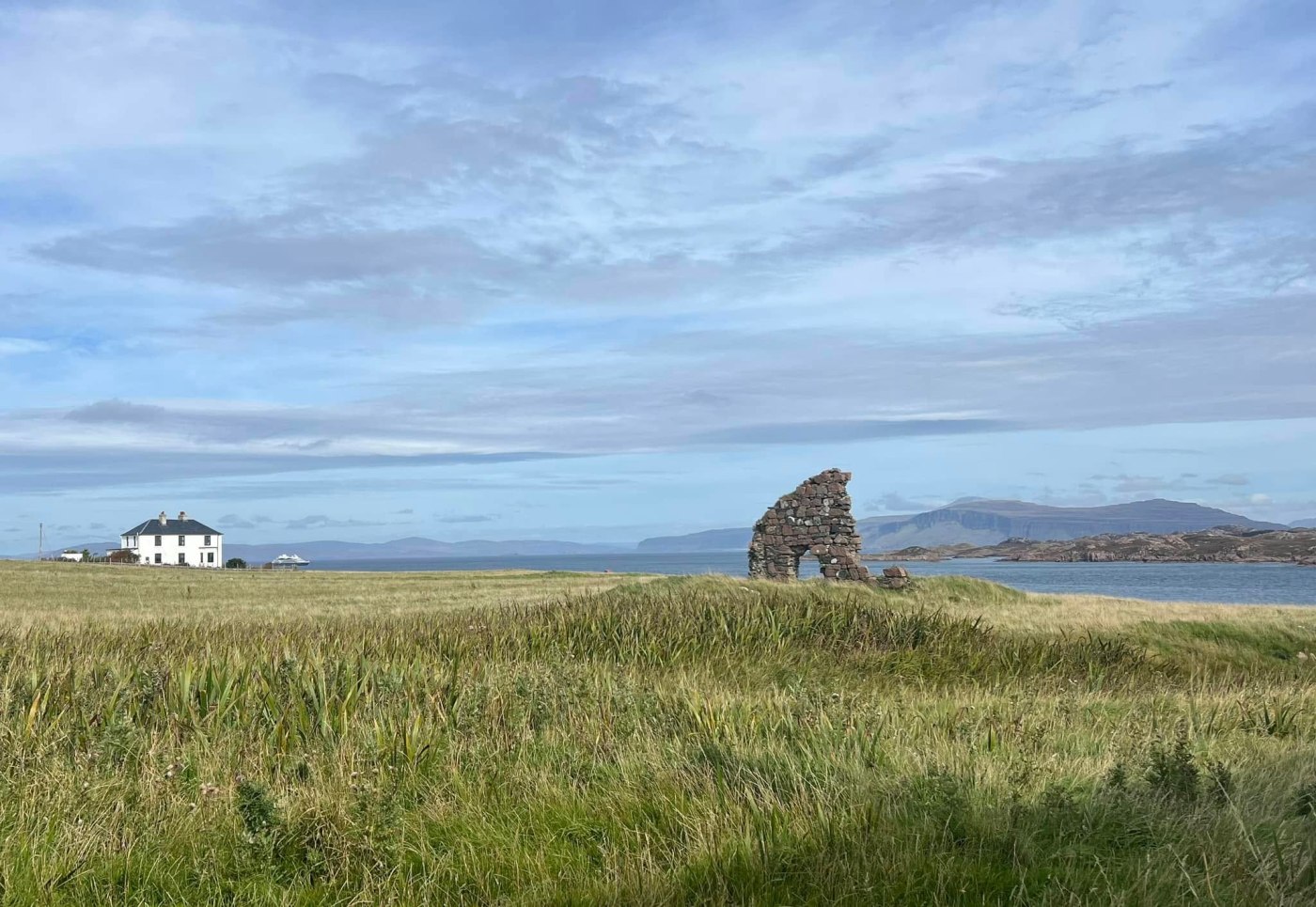
It was truly a dream to visit the sacred sites of Iona on a Celtic spirituality pilgrimage to Ireland and Scotland. Getting to Iona is a pilgrimage in itself, yet the journey has been made countless times since the 7th century. Most tourists visit for only a day, like we did, traveling from the coastal town of Oban, Scotland to Craignure on the Isle of Mull, then taking an hour-long bus ride on winding, narrow roads to the other side of the island arriving at the village of Fionnphort. From there, a foot ferry delivers you to the island of Iona. The day’s last ferry departs around 4:30 in the afternoon for the two-and-a-half-hour trip back to Oban. If the ferry is missed at the end of the day, staying overnight on the island is your only option.

Both the ferry and bus ride provided tremendous views. Our bus needed to occasionally pull over to the side of the narrow roads when meeting other vehicles.

Iona is the birthplace of Christianity in Scotland where St. Columba established an Abbey in 563. It might seem like a lot to get to this holy isle, only three miles long and one and a half miles wide, but walking the ground where St. Columba did 1500 years ago, where Benedictines established a monastery in 1204, the place where artists, sculptors, and writers have been inspired for centuries, is a holy, singular experience.

While I longed for more time to wander the beaches and secret coves, the time allowed for visits only to the most well-known sites closest to the ferry landing. Still, our pilgrimage group was able to participate in a meaningful community prayer for peace and reconciliation at the Abbey and visit the Nunnery ruins, St. Oran’s chapel, museums, gardens, and quaint shops including a bookstore, a “must-see” destination on my mini-pilgrimage to Iona.

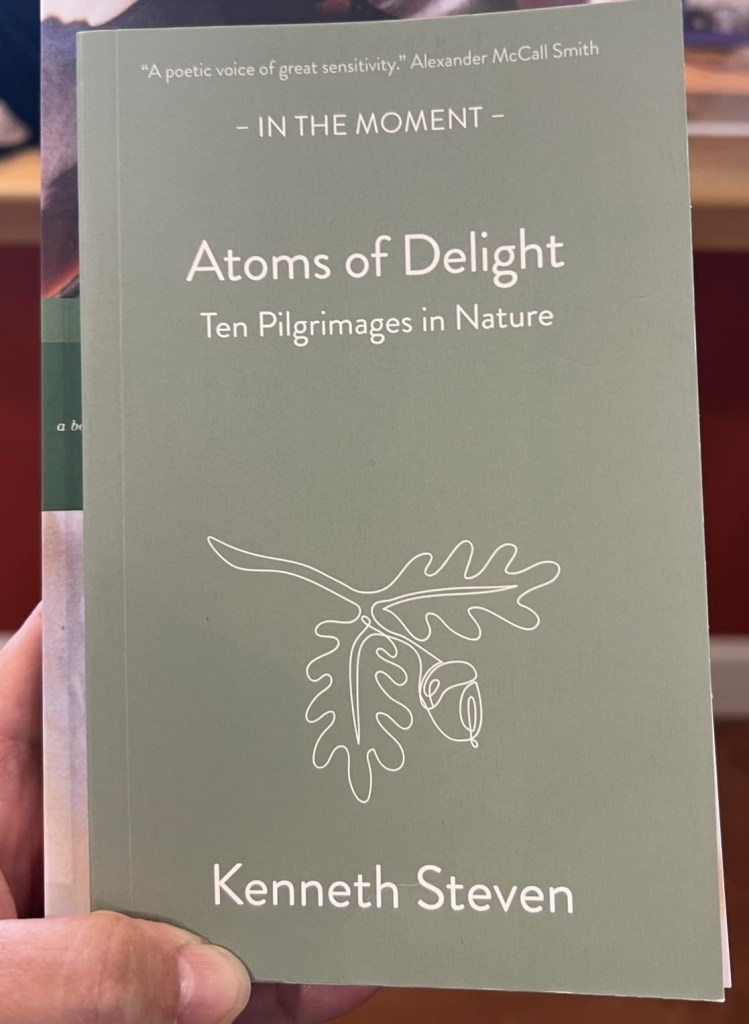
Months earlier, when I was planning the sites to visit in Ireland, a Benedictine Oblate friend, poet and photographer, Pat Leyko Connelly, reached out about some of her favorite experiences from her trips to Ireland. Pat and I connected through our shared love of Benedictine and Celtic spirituality, and she was generous in sharing tips about places to see in Ireland. When she learned I would also visit Oban and Iona in Scotland, she exclaimed that I must meet with her poet friend Kenneth Steven. Pat could not say enough wonderful things about his poetry. She also hoped I could bring back his newest book “Atoms of Delight” from the bookstore on Iona for her. Kenneth and I exchanged several messages and hoped to connect when I was there (unfortunately, our schedules didn’t allow it, but hopefully there is a next time!)

Visiting a bookstore is one of my favorite things to do, and I was just as excited about browsing book titles on this holy ground as praying in the abbey. The little bookstore was at the end of the walking trail, Sràid nam Marbh (‘Street of the Dead’,) where pilgrims have been walking for centuries. I quickly found THE book, took a photo of it to send to Pat, found another book by John Philip Newell for my friend Ellen, packed both of them away for my journey back to Oban, and later loaded them with all the souvenirs and other books I had purchased for the journey back home.

Continue reading “Atoms of Delight: A Pilgrimage to Iona”

The Longest Night

The winter solstice is the precise moment when the sun is situated exactly over the Tropic of Capricorn, seemingly at a standstill. The word solstice is derived from the Latin word sol, meaning sun, and sisterre, meaning standstill. We know that time does not really stand still, but time is a marker, an occasion of turning from and turning towards. This moment cannot be contained, sustained, or paused. Time is motion; it marches on.

There are moments in our lives when our great darkness feels interminable, infinite, beyond, and outside of time. “In the interior wintertime, we can easily lose heart, stop believing in our goodness, forget about our resilience, and discount the presence of those who love us. There is often sadness, loneliness, and a depletion of joy. This is the season of grief and depression, of searching and struggle.” (The Circle of Life: The Hearts Journey Through the Seasons, Joyce Rupp & Macrina Wiederkehr) It can be reassuring that just as the astronomical start to winter begins, the solstice gives way to longer days and the darkness will yield to a promised light. So we hope with us.

Continue reading “The Longest Night”

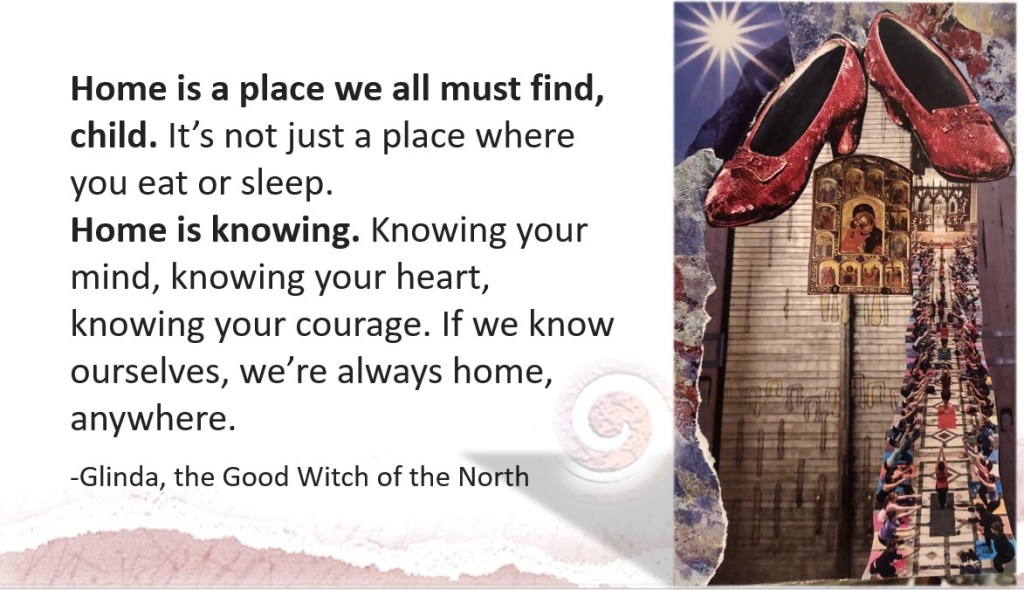
Homecoming: A SoulFully You Retreat

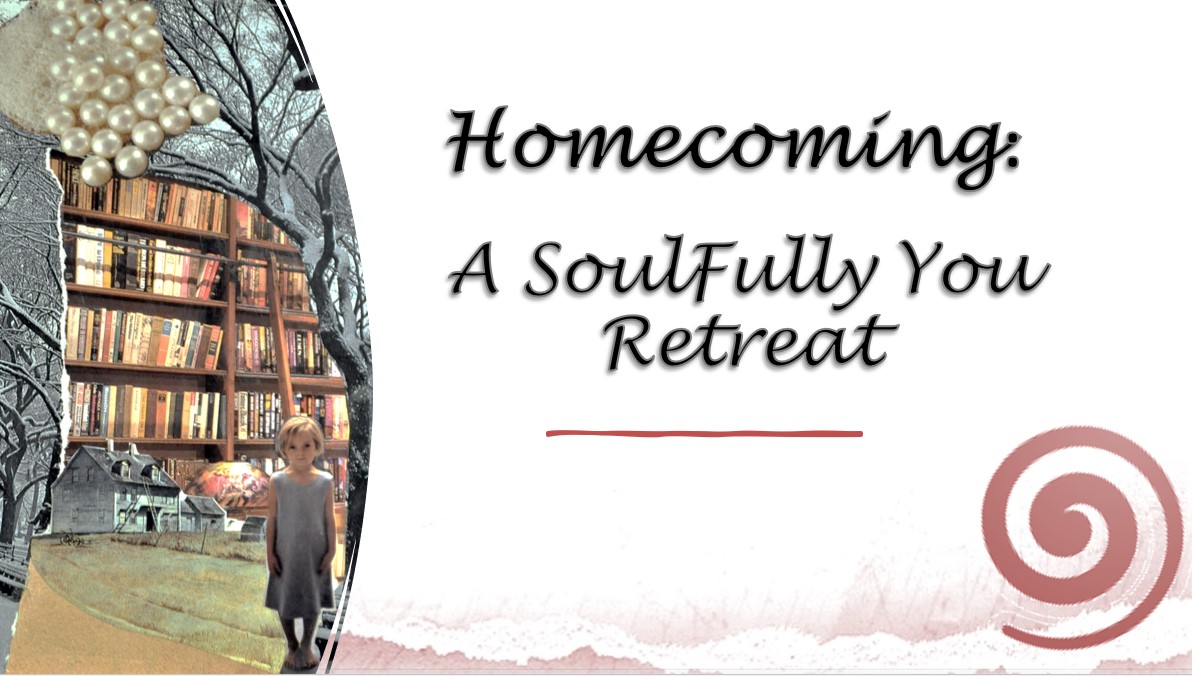
We long for the acceptance of home, a place of peace where we can be truly ourselves–seen and heard, loved and believed, held and yet free. Our longing is the existential homesickness that THIS isn’t all there is and that when we get a taste of unconditional acceptance and love, we want more. Our longings are good and holy—it is our Divine inheritance to experience all that it means to feel at home.

Inspired by the lyrics of Homesick, a song by friend Jana West, my annual Advent retreat was titled Homecoming: A SoulFully You Retreat. We explored how the Divine accompanies us, making a home within, and what it means to feel homesick or “at home” with ourselves and others. I offer some of our reflections so you, too, can take part:

“Love is home. Home is both an external dwelling and an internal abode. Home is the place where we belong, our place of acceptance and welcome. There, in this shame and judgment-free embryonic cocoon of love, we practice unconditional acceptance; we learn to relate to ourselves and the world around us.

And home is a soft place for the body to land, a safe place for the soul to fully disrobe. Home is the place where our failures don’t kill, our sins can’t crush, and even when we are at our worst, we’re safe. Home is a place where we are free to take our deepest, fullest, least encumbered breath.

At home, there’s no need to guess whether we’re in or out, welcomed or not. Home always prepares a place with us in mind.” (Center for Action and Contemplation, Home, 5/10/2024, Felicia Murrel)


What words or phrases resonate with you? Indeed, our personal experiences of home can bring a spectrum of feelings, from warm and fuzzy to sadness or terror, when we consider what being “at home” means. The ideal is what we seek and long for, both within ourselves and with others.

Continue reading “Homecoming: A SoulFully You Retreat”

The Good Zeal of Monks

December 2024 Oblate Reflections

Lectio Divina—Rule of St. Benedict, Chapter 72, The Good Zeal of Monks

In the 1500-year-old Rule of St. Benedict, monks who live in a monastic community are presented with a choice to guide their relationships—to embrace good zeal which monks should foster with fervent love rather than the zeal of bitterness. This choice is a call to holiness and contributes to an atmosphere of separation or togetherness in the community.

Benedict is clear—if monks choose to respond to their brothers with bitterness, they cultivate an environment of separateness. They become distant from God and the community. But if monks choose to foster enthusiasm for loving their brother, Benedict writes that it will “bring us all together to everlasting life.”

Love is the antidote to separation and bitterness. Benedict encourages enthusiasm and eagerness when expressing our fervent love to God, one’s abbot (or leader), and one’s brothers. He also provides an action plan to demonstrate love.

Chapter 72 begins and ends in love—what is hoped for (” a good zeal which separates from evil and leads to God and everlasting life) and what is the promised outcome ( to “bring us all together in everlasting life.”) The specific instructions to demonstrate “fervent love” are to show respect to others; be patient with other’s weaknesses; practice active listening; and to consider the best interest of others, not just our own.

God’s work and desire is to “bring us all together” through our acts of love. We must consciously choose between holding onto bitterness, which separates us from God and from others. We must be committed to this goal to keep a community, family, organization, or friendship from growing apart through conflict, misunderstandings, and the bitterness that might result. This can be hard, there is no denying it.

We demonstrate our preference for “nothing whatever but Christ” when we see and treat others as Christ. Christ dwells within us, defining who we are. Christ, then, is active in creating togetherness in the community.

In a community, each one matters. We cannot become holy without the other; we are responsible for co-creating and honoring connections with others. We live in context with everyone as a member of the body of Christ. God works in us as we work together. The whole thing falls apart when we do not consider the bigger picture.

The Rule is relevant today for Benedictine oblates, lay associates of a monastery, and those who find wisdom in the spiritual insights of St. Benedict to learn how to live in connectedness with family, friends, coworkers, team members, and in all our relationships. We have much to learn.

Benedictine Spirituality of Work

November 2024 Oblate Reflections

Sources

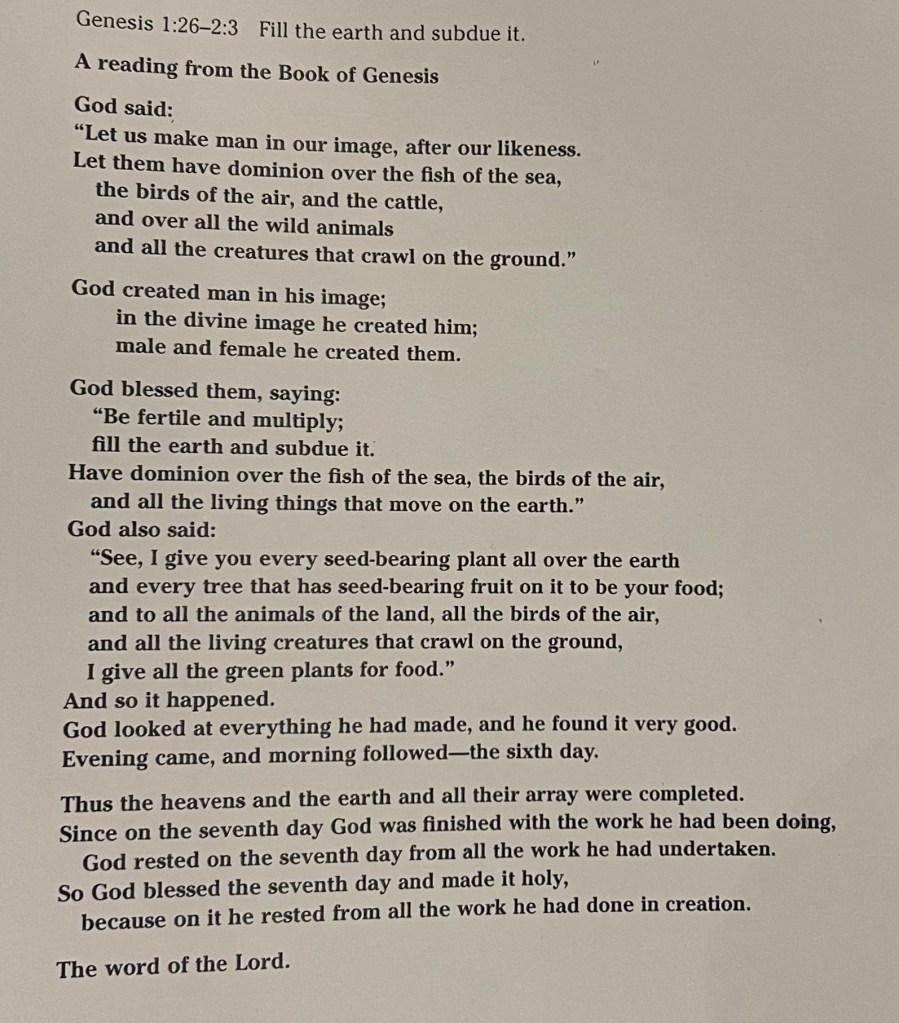
Lectio Divina—Genesis 1:26-2:3, Fill the earth and subdue it. 

Book DiscussionThe Oblate Life: Spirituality at Work, Dermot Tredget. Edited by Gervase Holdaway, OSB, 2008

Topics: Prayer, work, rest and study together provide a foundation for a Christian spirituality of work. St. Benedict recognized that work has a transformative power and for the monk is the principal means to seeking God. Our discussion flowed from words or phrases that resonated from sources listed above.

God created man in his image, in the divine image he created them.

We are created in the image of our Creator; we are creators, too, and it is our responsibility to contribute to the act of creation. Creation is not a once and done effort. Creation requires constant movement, growing, expanding, and even resting. We must ask ourselves if our work is valuable. Does my work add value to God’s creation? “We cannot speak about a spirituality of work without talking about an ethics of work.” (Dermot Tredget)

I give you every seed-bearing plant

In the image of our Creator, our work is to plant the seeds we are given which becomes our food. This isn’t quick and easy work; we need to rest, recover and have patience. We are in relationship with the Divine as co-creators. The Divine is not out of the picture. There is an unseen aspect of work–God is working even while we rest. Even further, what we see as useless toil may show value later. All is sacred.

Continue reading “Benedictine Spirituality of Work”

All Saints of the Order of Saint Benedict, Feast Day: November 13

Happy Feast of All Saints of the Order of St. Benedict!

The number of Benedictine saints, including Sts. Benedict, Scholastica, Hildegard, and Henry, is large: “At the beginning of the fourteenth century the order is estimated to have comprised the enormous number of 37,000 monasteries giving the Church no less than 24 popes, 200 cardinals, 7,000 archbishops, 15,000 bishops, and over 1,500 canonized saints.” (Catholic Encyclopedia) Seven more centuries have only added to this sanctified group. You can find them listed here, from Abbo to Zosimus, all gathered under one faith and one Rule.

Benedict Gaughan (Being Part of the Benedictine Family, The Oblate Life) gathered feedback from their Oblate family about what it means to be a part of their community. Christine Michael shared, “Being part of the Benedictine family means that I can benefit from the tried and tested wisdom of Benedictines over the countless generations. The Benedictine ethos transcends all boundaries of tradition; a Benedictine is a Benedictine whether Anglican or Catholic, and from whatever part of the world.”

This sentiment resonates with words from our new Abbot Primate of the Benedictine Confederation, Jeremias Schröder OSB, of St. Ottilien Archabbey, who wrote, “Uniformity is not the goal of the Benedictine way. In a world that often seeks to simplify and streamline differences, the Benedictine tradition reminds us that true community is not about making everyone the same, but rather about embracing each person’s unique journey in faith.” He continues,

Benedictine life celebrates the beauty of individuality within the context of unity in Christ. Just as St. Benedict envisioned, our calling is to live together in love and respect, cherishing the distinct gifts God has given each of us. May we all strive to build communities rooted not in conformity, but in a shared commitment to love, faith, and mutual support.”

This is what I love about Being Benedictine. I don’t have to fit my faith in a box, I am part of the Benedictine circle where all are invited to learn, grow, and love.

We are all called to be saints, to grow in holiness, and to become closer to God by loving our neighbor.and self. Pope Francis in his 2013 Angelus wrote, “The Saints are not supermen, nor were they born perfect. They are like us, like each one of us. They are people who, before reaching the glory of heaven, lived normal lives with joys and sorrows, struggles and hopes. What changed their lives? When they recognized God’s love, they followed it with all their heart without reserve or hypocrisy. They spent their lives serving others, they endured suffering and adversity without hatred and responded to evil with good, spreading joy and peace. This is the life of a Saint.”

A tree gives glory to God by being a tree.

-Thomas Merton

Being SoulFully You is discovering and becoming all that God has created you to be. Thomas Merton writes, “For me to be a saint means to be myself.” The call to be holy is the call to be more fully myself, just as a tree gives glory to God by being a tree. It is sacred work to ponder what the saints have offered as role models on our journey to becoming more holy.

Photo: The doorway to St. Hildegard of Bingen Abbey church in Rudesheim, Germany. More here.

© Jodi Blazek Gehr, Being Benedictine Blogger

Vote: The Sound of One Voice

Many of us have likely traversed a range of emotions this election season, experiencing the impact on our mind, body, and spirit. I have gone from one extreme to the next—exhausted, energized, concerned, confident, afraid, assured.

There is a time for everything…a time to be silent and a time to speak. (Ecclesiastes 3: 1,7)

It is the time to speak—to use our voice and vote for the values we hold dear, to endorse the leader we believe can advance our hopes and dreams for the United States of America.

While visiting a church in the Bohemian Alps of Nebraska, I lit a candle as a prayer for this very divided country and the election.

May my one voice join with others, especially with marginalized ones, for the good of all. May you be inspired, as was I, by the lyrics of the The Wailin’ Jennys in One Voice:

This is the sound of one voice
One spirit, one voice
The sound of one who makes a choice

This is the sound of one voice

This is the sound of voices two
The sound of me singing with you
Helping each other to make it through
This is the sound of voices two


This is the sound of voices three
Singing together in harmony
Surrendering to the mystery
This is the sound of voices three

This is the sound of all of us
Singing with love and the will to trust
Leave the rest behind, it will turn to dust
This is the sound of all of us

This is the sound of one voice
One people, one voice
A song for every one of us
This is the sound of one voice
Source: Musixmatch

“For where two or three gather in my name, there am I with them.” (Matthew 18:20)

Continue reading “Vote: The Sound of One Voice”

The Two Teresas and a Message of Peace

May today there be peace within. May you trust God that you are exactly where you are meant to be. May you not forget the infinite possibilities that are born of faith. May you use those gifts that you have received, and pass on the love that has been given to you. May you be content knowing you are a child of God. Let this presence settle into your bones, and allow your soul the freedom to sing, dance, praise and love. It is there for each and every one of us.Saint Terese of Lisieux

During a season of uncertainty and anxiety, I typed out the prayer above, laminated it, taped it to my desk at school, and posted it in the bathroom I got ready in every day. While waiting for additional tests after receiving a cancer diagnosis, this prayer brought peace that excessive research and reason could not. What soothed my soul was a daily routine of silent meditation and praying the words written by Saint Thérèse of Lisieux (1873-1897), also known as the “Little Flower” whose Feast Day we observe on October 1. As with Lectio Divina, one word or phrase might speak to me differently, and I could carry it throughout the day. This practice helped me keep my sanity when literally nothing else helped.

Twelve years have passed since I was diagnosed with chronic lymphocytic leukemia (CLL). Thankfully, medical treatment has not been required, and if I continue to be symptom-free, I only need to visit my oncologist every six months. As healthy months turn into years, I think about my diagnosis less. There are periods when I even forget that I have CLL, but the diagnosis changed my life forever. I am deeply intentional about living Soulfully; living with purpose, on purpose; being attentive to the present moment; practicing gratitude; making good choices and having no regrets; keeping “death daily before your eyes,” as St. Benedict writes; and leaving something beautiful from a life well-lived. But somewhere along the way, I stopped reading this prayer every day.

Set The World On Fire by Vinita Hampton Wright; translation of prayer by Carmen Acevedo Butcher. Original:
Let nothing disturb you, 
Let nothing frighten you, 
All things are passing away: 
God never changes. 
Patience obtains all things
Whoever has God lacks nothing; 
God alone suffices.

 
— St. Teresa of Avila

Continue reading “The Two Teresas and a Message of Peace”

Homecoming: A Window to the Soul

Last fall, at the beginning of the 2023-24 school year, teachers were asked to consider the question: Why are we here?  I shared my “WHY” for teaching in The Wonder of Work: A Labor Day Reflection. My motivation during my last year of full-time teaching and, now, as a retreat leader and blog writer is the same—to foster curiosity, wonder, and the love of learning. It is what makes me come alive!

Learning IS the greatest gift of being human. I am encouraged when others are enriched by a retreat experience as we learn about spiritual practices and living soulfully with joy, creativity, curiosity, and wonder. Recently I was affirmed that my WHY makes a difference. Jana, a kindred spirit who I met through Deb, another SoulCollage® facilitator, sent this message to both Deb and me:

“It has been my experience that sometimes a passion or interest I have invested in sharing with others becomes work and can become tiresome. I wonder, is all this effort worth my time? Are people benefiting as I hoped they would? Please save this message for future use — just in case you ever bump into such a pondering with your SoulCollage efforts.

When Deb first introduced this process to me, I was a bit intimidated, but very quickly saw its power and potential to unearth my subconscious and offer my body a voice. This past summer I attended an in-person gathering Deb hosted and created this card. I had an initial reading that day, but it wasn’t until this past December when Jodi encouraged her retreat group to spend time listening to existing cards that I realized this one had much more to offer me. It has been so powerful that I adopted the card as my guiding mantra for 2024.

Remain open like a child.
Your inner Sage knows.
Return to your roots for support in times of stress.
Slow down and go easy so you don’t miss the most important things.
OPEN, INTUIT, ROOTED, SLOW.

The day after Christmas, I received a breast cancer diagnosis. I cannot emphasize enough how this card has repeatedly guided and comforted me through the days that followed. 

Continue reading “Homecoming: A Window to the Soul”

Blog at WordPress.com.

Up ↑