Search

Being Benedictine

Living SoulFully as an Oblate of St. Benedict

Category

Lectio Divina Oblate Meeting Reflections

Curiosity is good for the soul, and for democracy too!

Cultivating curiosity is Being Benedictine.

As an educator and lover of learning, I appreciate the reference to schools in the Rule of St. Benedict. In the Prologue of The Rule, Benedict writes that the monastery is “a school for God’s service.” Whether in the monastery, home, or work—we are learning to live and love in community. Our life is a school of becoming—a continual learning.

Learning does not happen in solitude.

“A school is a community of learners: a group that comes together to learn with and from each other…education should expand our consciousness, capabilities, sensitivities, and cultural understanding. It should enlarge our worldview.”  –What Is Education For? by Sir Ken Robinson and Kate Robinson, Edutopia, March 2, 2022.

As a teacher, whether it was my high school students or those who attend retreats I lead, I appreciate a curious learner—someone who is open to new ideas, willing to listen, to question, to consider diverse perspectives, and, with humility, understand that there is always something new to learn.

Curiosity is a good first step toward living SoulFully and being Benedictine.

Being Benedictine, in my experience, is a genuine attempt to meet others in love and compassion, listening with the intent to understand, encouraging inclusiveness, and respecting diversity.  It is a blessing to share our feelings, faith, or perspectives and to have someone truly listen, especially those who might believe differently. Listening is the doorway to learning from others and growing in compassion; curiosity is the key.

“The spiritual life takes discipline,” Joan Chittister writes in The Rule of St. Benedict, A Spirituality for the 21st Century. “It is something learned, to be internalized. It’s not a set of daily exercises; it’s a way of life, an attitude of mind, an orientation of soul. And it is gotten by being schooled until no rules are necessary.”

Curiosity is good for the soul.

In Women Who Runs with the Wolves, Clarissa Pinkola Estes, defines the wild woman archetype as one who listens deeply, is intuitive, creative, playful, courageous, curious, loyal, and passionate. There is some wildness of divinity in us all, calling us to live fully, to reach beyond ourselves and, to discover something new. “When you limit your life to the one frame of thinking, you close out the mystery,” writes John O’ Donohue in Eternal Echoes: Celtic Reflections on Our Yearning to Belong.

Curiosity is good for community. Wonder is good for the world.

Wonder, my 2023 word of the year, is an attitude of curiosity, a willingness to withhold judgment, and to be open to what happens. Dacher Keltner in Awe: The New Science of Everyday Wonder and How It Can Transform Your Life writes, “People who find more everyday awe show evidence of living with wonder. They are more open to new ideas. To what is unknown. To what language can’t describe…to the strengths and virtues of other people.”  

Is it possible to behold our neighbor with wonder, in the spirit of hospitality? Could we hold a curious heart even when we passionately disagree with one another? Rather than defaulting to the shoulds and should-nots of orthodoxy, or a deeply held conviction, could we practice curiosity instead? Rather than seeking to change another’s opinion or defend our own, could we simply stand in awe of this great universe that holds such diversity of thought? Is it possible to let a disagreement stand to the side, while the desire to learn about the other steps forward?

Curiosity leads to wonder. Wonder leaves room for the unexpected, for learning something new.

This is how Lectio Divina, the Benedictine practice of sacred reading, can work in community. We hear different perspectives, drawing on the experiences and insights of those in our community. We can release the need for the one right way to interpret what we read and be curious about what others bring to the table. I share reflections from the richness of our oblate community discussions on this website but with a disclaimer,

“I cannot claim to have captured all the wisdom shared in our monthly oblate discussions or that I represent all oblates in attendance. The group discussion is a starting point for this reflection, but it is my interpretation of what I heard and what resonated with me. There could easily be as many different blog posts or reflections as oblates. Each of us comes to Lectio from our personal experience of God at that moment and we receive what we need in that moment as well. The beauty of Lectio Divina is that the reading, insights, and discussion may fall differently on each of our hearts. How blessed we are that there are “many dwelling places” (John 14:2)” and we are all invited to “listen with the ear of the heart.” (RB Prologue)”

Curiosity is good for democracy.

In Healing the Heart of Democracy: The Courage to Create a Politics Worthy of the Human Spirit, Parker Palmer encourages us to consider “What do I have in common with people who, for example, regard their religious or political convictions as so authoritative that they feel no need to listen to anyone who sees things differently—especially that small subgroup of extremists who would use violence to advance their views?”

This can be difficult. I get it. I know too well how disagreements can escalate, and how estrangements result. I have appreciated discussions where curiosity is a motivation to more deeply understand, but I also know the heartbreak of rejection when another is not interested in my story, feelings, or perspective. The door is slammed shut for exploring possibilities, another proclaims they know what they know and there is no need to share ideas or learn something new. But I believe for many situations curiosity, wonder, listening, and a little respect could be the remedy. It may not change minds or beliefs, but it can change hearts. I believe, as Palmer does, that I can find even “the smallest patch of common ground” with others whose views are different than mine. I can disagree with another while also being Benedictine.

Continue reading “Curiosity is good for the soul, and for democracy too!”
The Sound of Silence

December 2023 Oblate Reflections

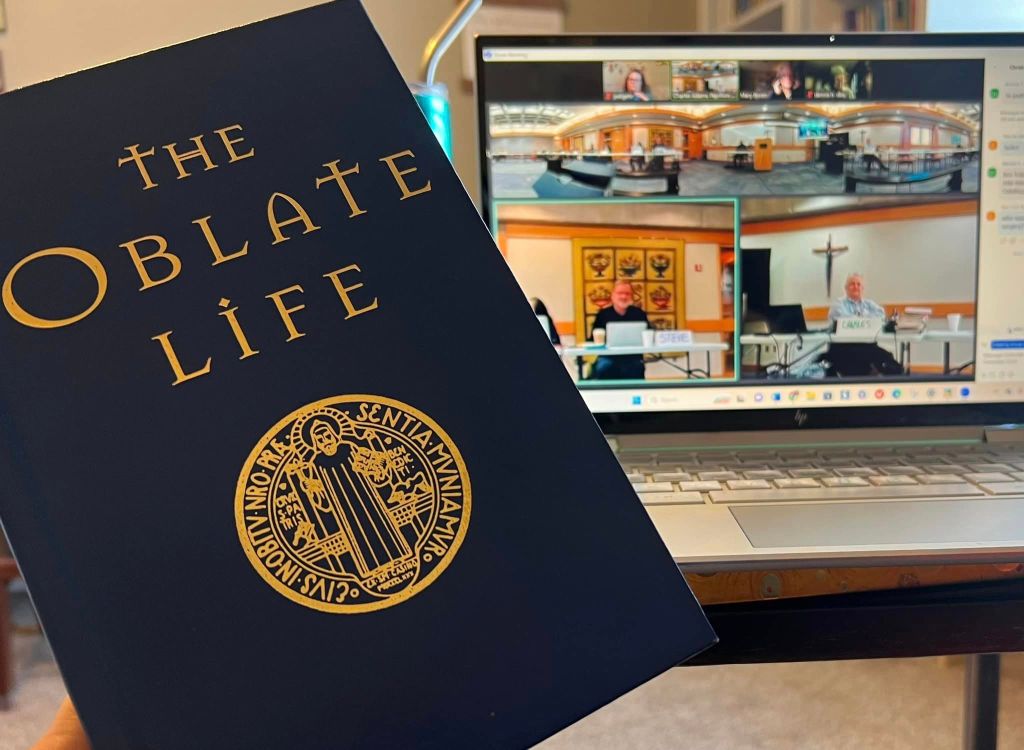
Source: The Oblate Life, edited by Gervase Holdaway, OSB, 2008

Men and women who have made monastic vows, called monks, practice stability by committing to a specific monastery. “The monk is an archetype, whether we live in a monastery or not, we have a sense of what it means to be a monk. We long to be together with God in solitude.” (Fr. Mauritius Wilde, OSB)

Being Benedictine as an oblate is making a commitment to a monastery, living the core values of obedience, conversion of life, and stability while following the Rule of St. Benedict as monks “in the world,” meeting monthly to practice Lectio Divina and discussing a spiritual reading. In the age of Zoom meetings (in which I, gratefully, participated this month), it is a good reminder that it is the monastery that I am drawn to—to the sacred rhythm of prayer and respect for silence, the theme of our discussion (December 2023.)

Grateful for the option of Zooming in to Oblate meetings, but it’s never quite the same. I love to go to our monastery and retreat center.

“If we are to learn about silence and cultivate its art form, the monastery is the first place to visit, for it is within the ancient tradition of monasticism, that we can begin to understand the relevance and the need for silence as a discipline, and a way of life. It is highly relevant that the very first word of the rule of Saint Benedict is listen.”—Susie Hayward, Silence, The Oblate Life

In silence, we can be transformed. “We will begin to see the ‘world’ differently, our breathing will become more rhythmical, surrounding color will intensify and brighten and our eyes will see more clearly and with greater perception.” (Hayward) We become more attentive. We notice the details around us, and we notice what is happening within us.

I had this experience during a contemplative prayer retreat over 20 years ago, my first visit to the monastery and retreat center that has become such an important part of my life. Even during our meals, we sat in silence, which contributed to a heightening of my senses—the quiet and stillness provided a backdrop through which I appreciated the color and tastes of ordinary foods—lettuce, tomatoes, bread, pasta, butter, milk.  It was pure ecstasy to look, touch, and taste—to interact with my food.  This sentiment—the sensitivity to physical, tangible cues—carried over into watching fish swim in the pond, grasshoppers jump from one station of the cross to the next, a candle flickering.  All things seemed to be created for me.  Every movement, color, taste, and sensation seemed special, whereas just days before it was ordinary.

Silence magnifies an experience. The practice of silence helps cultivate attentiveness to others and to how God is working in our lives. Thomas Merton writes, “By learning to listen… we can find ourself engulfed in such happiness that it cannot be explained: the happiness of being at one with everything in that hidden ground of Love for which there can be no explanations.” This type of interior silence must be cultivated. Visiting a monastery where there is silence can help, but one can create physical spaces in our own homes to remind us that times of silence are needed.

Hayward writes that “without silence, God has no voice.” No doubt silencing the noise of our daily lives can help us be more aware of the divine—in creation, in others, in words we read, in the thoughts that run through our mind, and in the story we tell ourselves. Indeed, silence allows us to experience the sacred, but many of us have felt God working, “God’s voice,” through the written or spoken words of others. In discussion, we wonder—do we really need absolute silence to hear God?

Perhaps Hayward means that we need to silence ourselves—to shut our mouths, to let go of thoughts and stories, and to be truly present wherever we find ourselves. If we are in conversation with another, there is sound, not silence, but we can practice interior silence by deeply listening to the other and standing witness to another’s story. It is important to remember that the first word in the Rule of St. Benedict is “Listen.” We must practice silence, both in words and thoughts, in the presence of the divine, including others.

Hayward writes about “the experience of feeling the total ‘presence’ of another person, in such a profound way that ‘in that moment’ we will have felt absolutely heard, totally cared for and completely understood.” What a gift to be heard and to hear others without the noise in our heads! She continues, “Listening reflectively in this attentive and empathic way allows each person to respond to the other fruitfully.”

God is working in this ‘total presence,’ the compassionate listening to another’s story. May we practice silence, to listen, see, and fully experience the humility of unknowing all that we think we know, to experience a oneness with our Creator, with creation, and with all those whom we share both.  

© Jodi Blazek Gehr, Being Benedictine Blogger

The way and the truth and the life

July 2023 Lectio Divina and Oblate Reflections

Sources

Lectio Divina—I am the way and the truth and the life, John 14:1-12

Book DiscussionThe Oblate Life, edited by Gervase Holdaway, OSB, 2008

Disclaimer:

I cannot claim to have captured all of the wisdom shared in our monthly oblate discussions or that I represent all oblates in attendance. The group discussion is a starting point for this reflection, but it is my interpretation of what I heard and what resonated with me. There could easily be as many different blog posts or reflections as oblates. Each of us comes to Lectio from our personal experience of God at that moment and we receive what we need in that moment as well. The beauty of Lectio Divina is that the reading, insights, and discussion may fall differently on each of our hearts. How blessed we are that there are “many dwelling places” (John 14:2)” and we are all invited to “listen with the ear of the heart.” (RB Prologue)

“Just as the word ‘oblate’ comes from a root word denoting the offering of a gift, each oblate’s life is an offering to God and a gift to the Benedictine community, which is enriched by the oblate’s presence and prayer…. A Benedictine way is not to be harsh or burdensome but is offered to those who seek God and the sweetness of God’s voice.”

The Oblate Life

Do not let your hearts be troubled

The opening verse of John 14:1-12 implies that we can let or NOT let our hearts be troubled. We have agency–we can choose or not to follow the way Jesus shares with his disciples. This way, having faith in God, will relieve us of our troubles. 

In my Father’s house, there are many dwelling places. If there were not, would I have told you that I am going to prepare a place for you?” Jesus asks. As a personal offer, he tells them “I will come back again and take you to myself, so that where I am you also may be.” 

Continue reading “The way and the truth and the life”

Lectio and Visio Divina during Lent

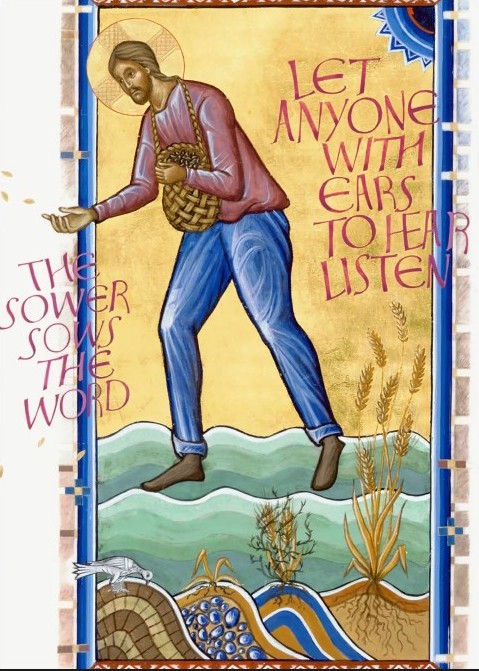
I am always amazed at new understanding and insight that come through meditative reading and discussion. St. Benedict Center is hosting a five-week Zoom retreat called Lent: Lectio and Visio Divina led by Steven Blum, PhD. to provide an opportunity to gain new understanding of often-heard Scripture.

During the first week’s session, we connect with over 140 participants to learn about the ancient practices of Lectio Divina (sacred reading) and Visio Divina (sacred seeing) using the Gospel reading, Mark 4: 13–20 and the Sower illumination from The Saint John’s Bible.

There are four phases of Lectio Divina. The movement through the steps of these practices engages the heart, mind, and spirit, as we sit together in periods of silence, reading, gazing, reflecting, prayer, and contemplation. We seek to have the Lord awaken “the ears and eyes of our hearts.”

In practicing Lectio Divina, after reading the Scripture out loud, we contemplate, consider and reflect on what we have heard. The Scripture is read again, and perhaps again for a third time. After some time of silence, we are welcomed to share or journal a word or phrase that speaks to us.

Continue reading “Lectio and Visio Divina during Lent”

The Sower Sows

May 2022 Lectio Divina and Oblate Reflections

Sources

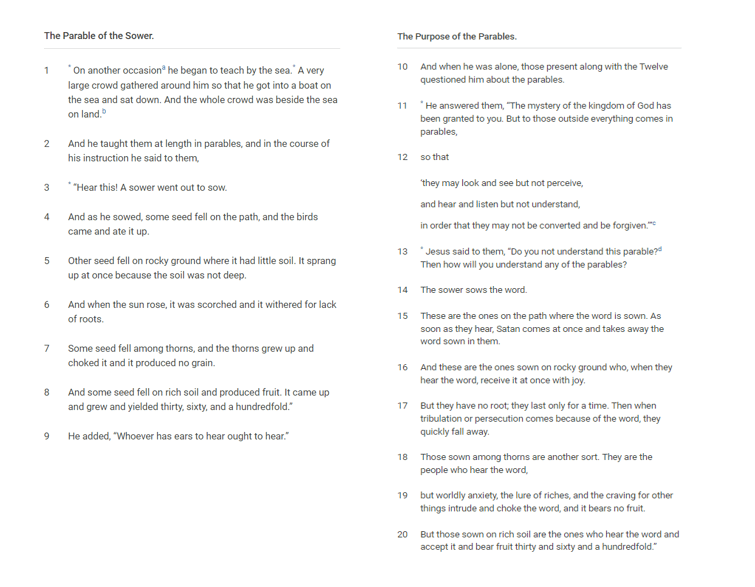
Lectio Divina—Parable of the Sower, Mark 4: 1-20

Book Discussion—Stability: How an ancient monastic practice can restore our relationships, churches, and communities by Nathan Oates. (Introduction)

Lectio Divina

Mark 4:1-20 A sower went out to sow

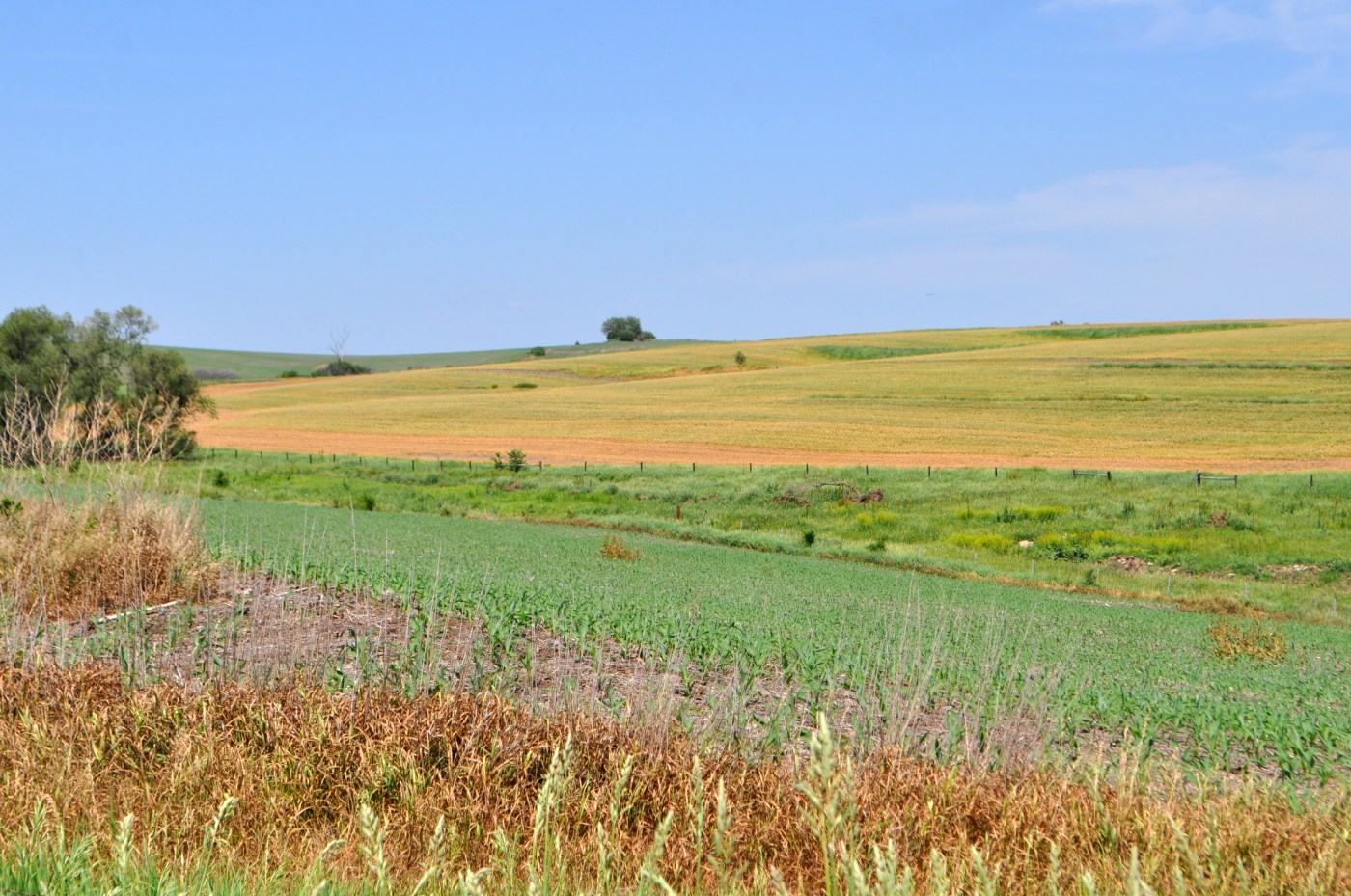
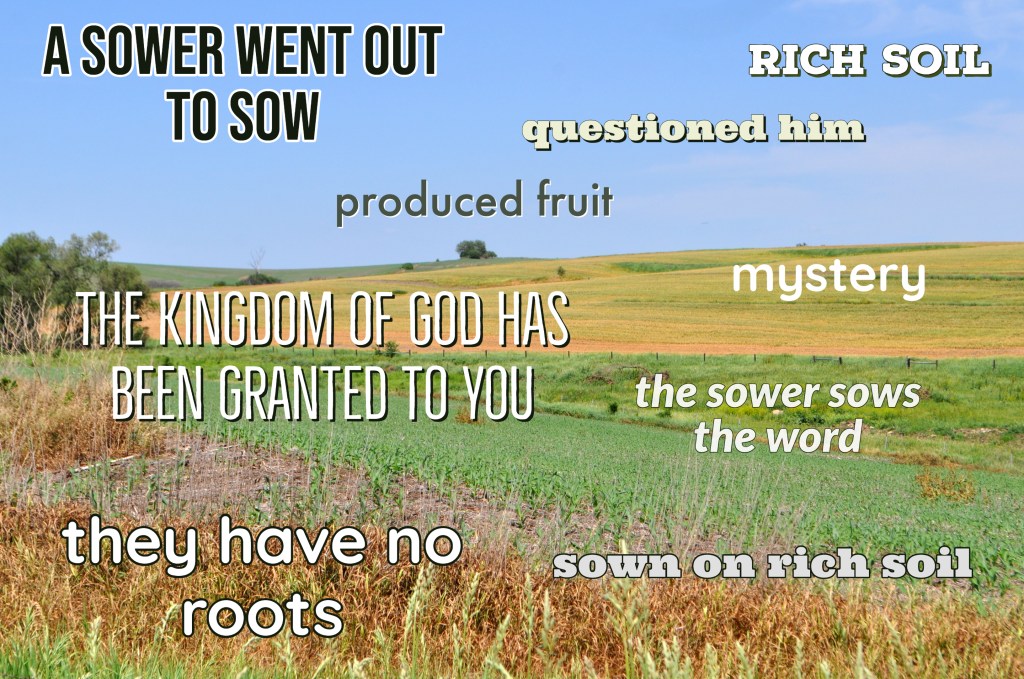
We consider the question: How does the Parable of the Sower apply to the Benedictine value of stability? Words and phrases that resonate give us a rich perspective of the sower, the seed, the soil, and the fruit.

The sower sows regardless of thorns, rocky ground, little soil, or rich soil. The sower sows—a committed action to continue to sow.

Continue reading “The Sower Sows”

Stay With Me

April 2022 Lectio Divina and Oblate Reflections

Sources

Lectio Divina, Matthew 26: 20-50, The Cross of Christ

Book Discussion, Stability: How an ancient monastic practice can restore our relationships, churches, and communities by Nathan Oates

Of Gods and Men, 2010 French film directed by Xavier Beauvois

Additional Resources: Paraclete Press Lenten Series on Stability with reflections from Nathan Oates, Kathleen Norris & Michael Patrick O’Brien, Jonathon Wilson Hartgrove, and Ronald Rohlheiser. Links below.

Lectio Divina

Matthew 26: 20-50, The Cross of Christ

Discussion

Stability “is the commitment to a purpose, a place, and a people…At its root, stability is the blend of two biblical concepts: patient endurance and standing firm.” (Stability, Nathan Oates) After reflecting on Matthew 26: 20-50, we consider:

How is the virtue of stability present in the gospel story? Are there similarities between what happened to Jesus in Gethsemane and what is happening in Ukraine?

Many people of Ukraine will not flee their country. “This is my home,” they say. Despite the many risks, they stay. They are rooted in their homeplace, their land. Jesus also stayed; despite knowing he was to be betrayed, despite the possibilities the next day would bring. Everything that can go wrong, does go wrong for Jesus. Everyone betrays him, even the best of friends. It would have been much easier to give up when left alone.

“My soul is very sorrowful even to death.” We all struggle with the virtue of stability, but Jesus stayed IN HIS sorrow; he could have fled. Despite our difficulties, we need to die before we die as Jesus did. Jesus’ steadfastness, his stability, was rooted in doing the will of God. “Your will be done” is an exclamation of surrender that gave Jesus the courage to stay. He died before his own death; he surrendered his will. He was able to face his suffering because he had consented to let God work out what would happen next. As St. Benedict said, “keep death daily before our eyes.”

Continue reading “Stay With Me”

Not To Be Served, But To Serve

November 2021 Lectio Divina and Oblate Reflections

Sources: Lectio Divina, Mark 10:35-45

Book Discussion, Always We Begin Again by John McQuiston II, “Service”, page 53-54

Morning prayer

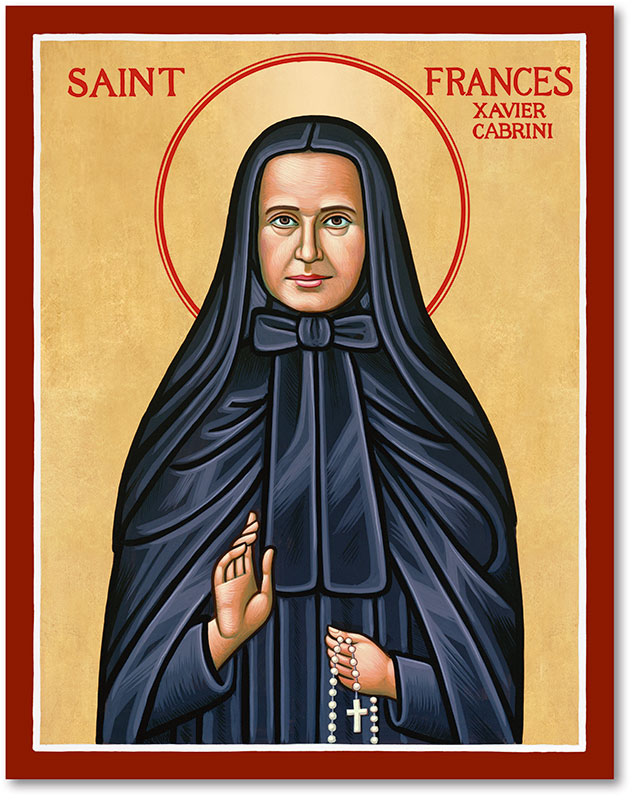
Saint of the Day: Francis Xavier Cabrini is a beautiful example of service to others and service to God. She humbly comforted the sick and infirm in the hospital and lent a helping hand to immigrants. She is a role model for our topic of service. For more information about Mother Cabrini.

Women Saints: St. Frances Cabrini Icon | Monastery Icons

Lectio Divina Reading: Mark 10:32-45

Some oblates meeting in person and some on Zoom.

Discussion

You do not know what you are asking. Can you drink the cup that I drink or be baptized with the baptism with which I am baptized?”

On their way to Jerusalem, Jesus shares with John and James what will inevitably happen to him. They certainly do not understand what they are requesting, to share in the glory of Jesus, and they do not want to believe that Jesus’ life will include suffering. “Grant that in your glory we may sit one at your right and the other at your left.” We must ask ourselves: Can we drink from the chalice that Jesus drinks? Or are we driven by ego, desiring the glory and honor for ourselves? Can we really DO life as Christ did? We may desire a journey with Jesus, the choice seat with God in glory and honor, but are we ready to face great suffering that accompanies it?

This applies to any part of our prayer life when we seek to follow Christ. We don’t know what we are in for! We must put ourselves wholly in the presence of Christ and be there for whatever happens–thy will be done. In the popular Christian song, Lord of the Dance, James and John are featured because they responded to the call of the Lord. With each passing verse, from morning to Sabbath to Good Friday, Jesus is the “Lord of the Dance.” We are called to that dance as well, as James and John were—we will have suffering. We are part of the dance, even when we find it difficult to consider the other first, to be more forgiving than self-centered, to accept that we aren’t just here for ourselves but to be of service to others.

Dance, then, wherever you may be,

I am the Lord of the Dance, said he,

And I’ll lead you all, wherever you may be,

And I’ll lead you all in the Dance, said he

Lord of the Dance, Ronan Hardiman
May be an image of tree, nature and sky

We are not in a good place spiritually when we are telling God what should be done, that we know what is best, our own power and glory. Bishop Barron addresses James and John’s ego-driven request in a Sunday Sermon, “Do You Really Want What God Wants?” Power and honor in themselves are not bad, but the problem is using power, not for God’s purpose, but for our own ego. Honor for its own sake is not helpful to others. Jesus flips the story on James and John…it isn’t all about you! You are here to serve. That is the dance you are called to.

Continue reading “Not To Be Served, But To Serve”

Stewardship: Using Our Gifts as Co-Creators

September Lectio Divina and Oblate Discussion

SourcesLectio Divina, Matthew 25: 14-30 The Parable of the Talents; Always We Begin Again-The Benedictine Way of Living, Stewardship, pages 49-51, John McQuiston II

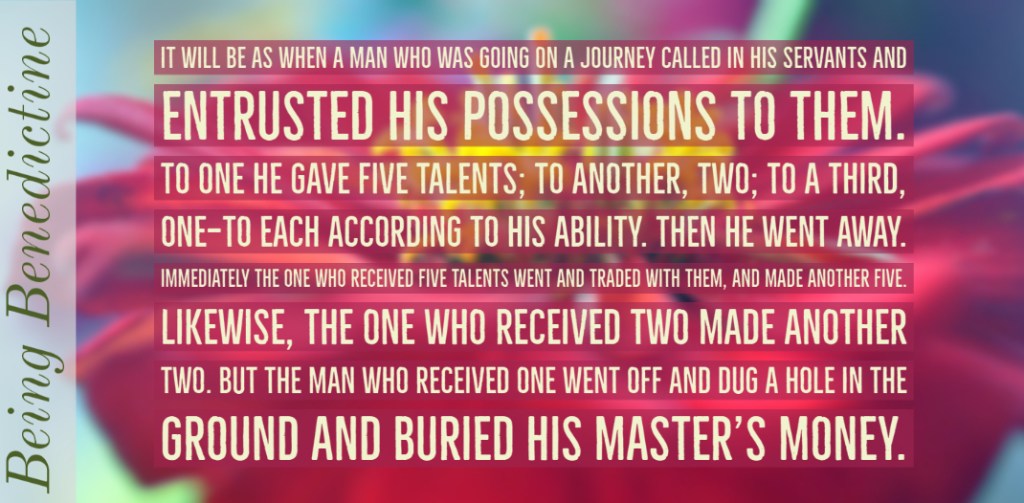
Our Lectio Divina discussion focused on The Parable of the Talents viewed through the lens of stewardship. In the reading, three people are given talents of varying amounts.

The two servants who had received five and two talents had increased their talents two-fold. They were praised, ‘Well done, my good and faithful servant. Since you were faithful in small matters, I will give you great responsibilities. Come, share your master’s joy.’ (Mt. 25:21)

The one who buried his talent was scolded, judged as wicked and lazy, and his one talent was taken away. “For to everyone who has, more will be given and he will grow rich; but from the one who has not, even what he has will be taken away.

We assume wealth has to do with money. Often, we see talent and gifts as economic gains or monetary contributions. Advertisements encourage us to buy more, of course, but we seem not to know when what we have is enough. In the Rule of St. Benedict, everyone should get what they need, but this requires understanding the difference between needs and wants (RB:34). Sadly, our culture says the more we have, the better off we are. We desire what another has—in possessions, money, time, relationships, almost anything, afraid that someone is getting something more than us—but the talents in this story were not equally given—two, five, one.

Continue reading “Stewardship: Using Our Gifts as Co-Creators”

A time for everything under the heavens

August Lectio Divina and Oblate Discussion

SourcesLectio Divina, Ecclesiastes 3:1-11, There is a time for everything under the heavens.

Come, let us worship God who holds the world and its wonders in his creating hand.

-Antiphon, Week 3 Saturday

Such an affirming antiphon for times when I think I am the glue that holds all things together. I am most definitely not. It is God who holds the world and its wonders in his creating head. And I just need to remember.

This morning, I remind myself of this as feelings of guilt creep in that I have not posted on behalf of my oblate family since April. Much has happened in this time for me: I finished a year of teaching during during a pandemic (how many people can say that?), I led a retreat, I went to a retreat, I helped my daughter plan her summer wedding, I helped my parents with health issues that surprised us ten days before the wedding AND most wonderfully, we celebrated the marriage of our daughter, Jessica, to John Holland. It has been a summer full of ALL of the emotions.

Much as happened, we can assume, in each of our lives. Knowing this, we can give ourselves and others compassion when we feel we are falling short, when we don’t meet the expectations we have placed on ourselves. Each of us has a story. There is a time for everything, and how wonderfully TIMELY is our lectio reading for today:

Continue reading “A time for everything under the heavens”

Blog at WordPress.com.

Up ↑