Search

Being Benedictine

Living SoulFully as an Oblate of St. Benedict

Category

Spiritual Journey

Cancer-Colored Glasses: Through Jana’s Eyes

“What a gift Jana has created. Curlers, Church & Whales is funny, wise, and deeply human. The blend of humor, depth, and grounded science is just perfect. I especially loved the gentle reminders to slow down and drop in, and the way the story comes full circle at the end — it’s stunning. I am honored to know Jana and have been a witness of her journey. She has turned her own challenges into something so beautiful and life-giving. What a blessing for everyone who gets to read it.” — Kathleen Amyot, MD

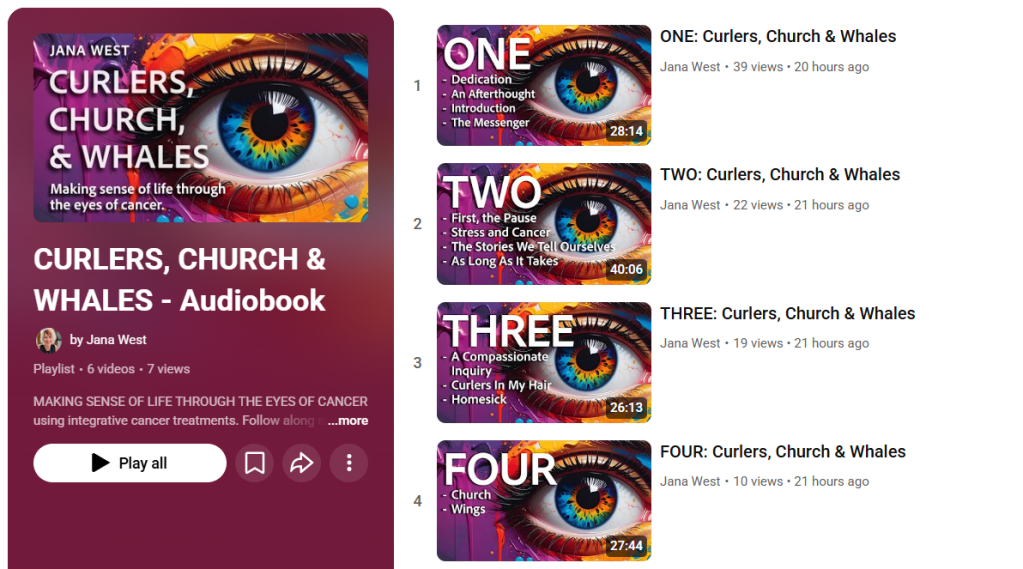
“Wow, wow, wow” was my reaction after Jana West sent me a preview copy of her memoir in early 2025, and now she is making it available as an audiobook, free on YouTube in six 30-minute segments.

I met Jana through a mutual SoulCollage® friend, and ever since, she has been a kindred spirit at many of the retreats I have guided. After receiving a breast cancer diagnosis, Jana found guidance and comfort from a SoulCollage® card she had created. To find healing, restore wellness, and prevent a recurrence of cancer, she began a search to learn about traditional and alternative forms of cancer treatment.

The search also turned inward. Jana writes about becoming attentive to and listening to her body, learning from her inner dialogue of shame-filled messages, navigating stressful situations, and making peace with past trauma, including religious and career choices that did not serve her well.  

Jana remembers a handwritten note that her mother kept in her baby book, which gave her some clues to her childhood— “Jana, age 5, I am allergic to curlers in my hair, church, and whales.” As Jana considered what she had been allergic to (or found stressful), it helped her to practice self-compassion.

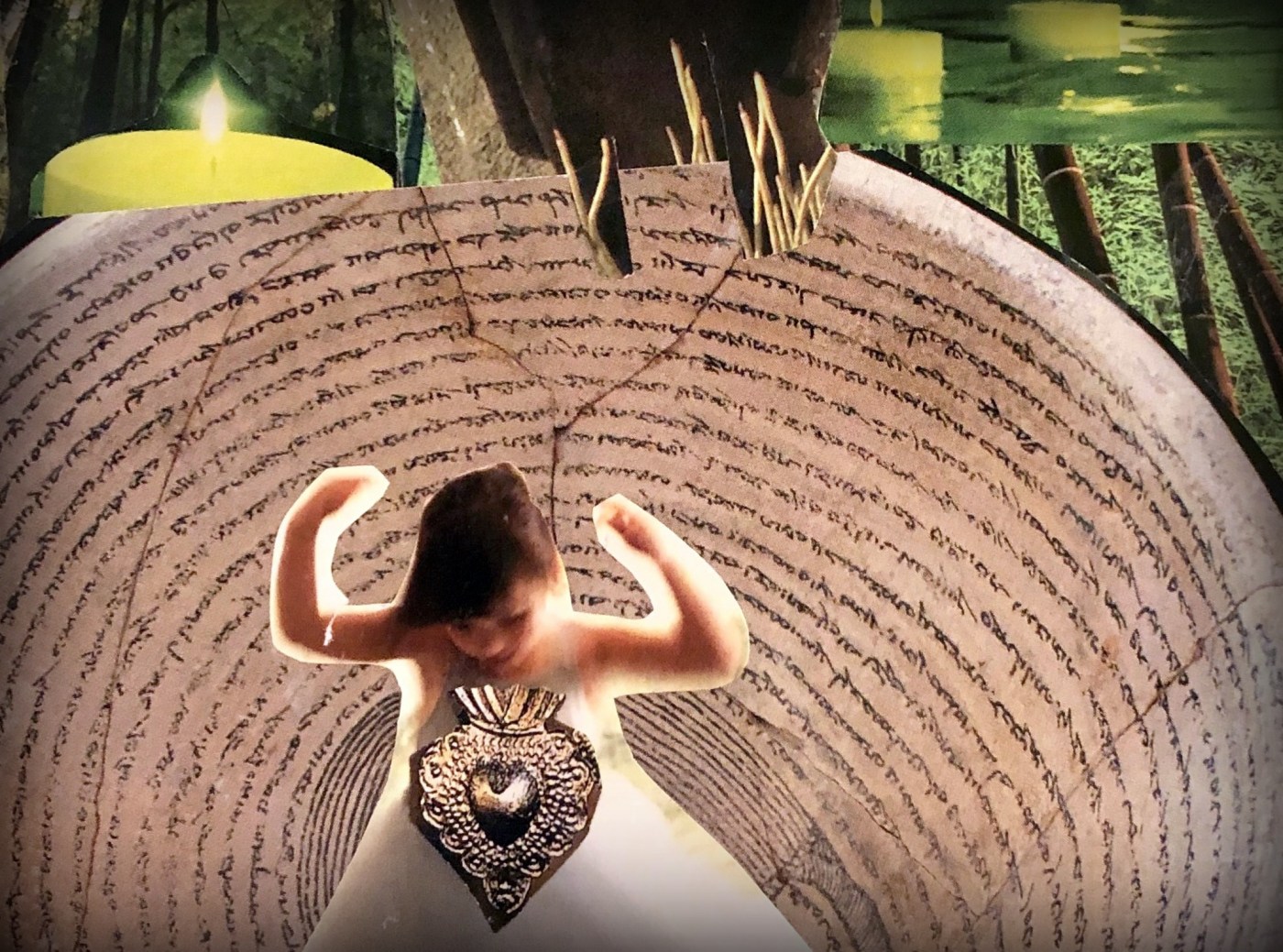
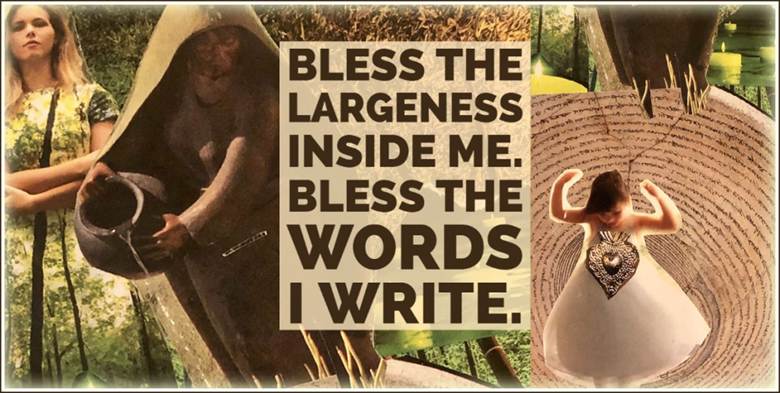
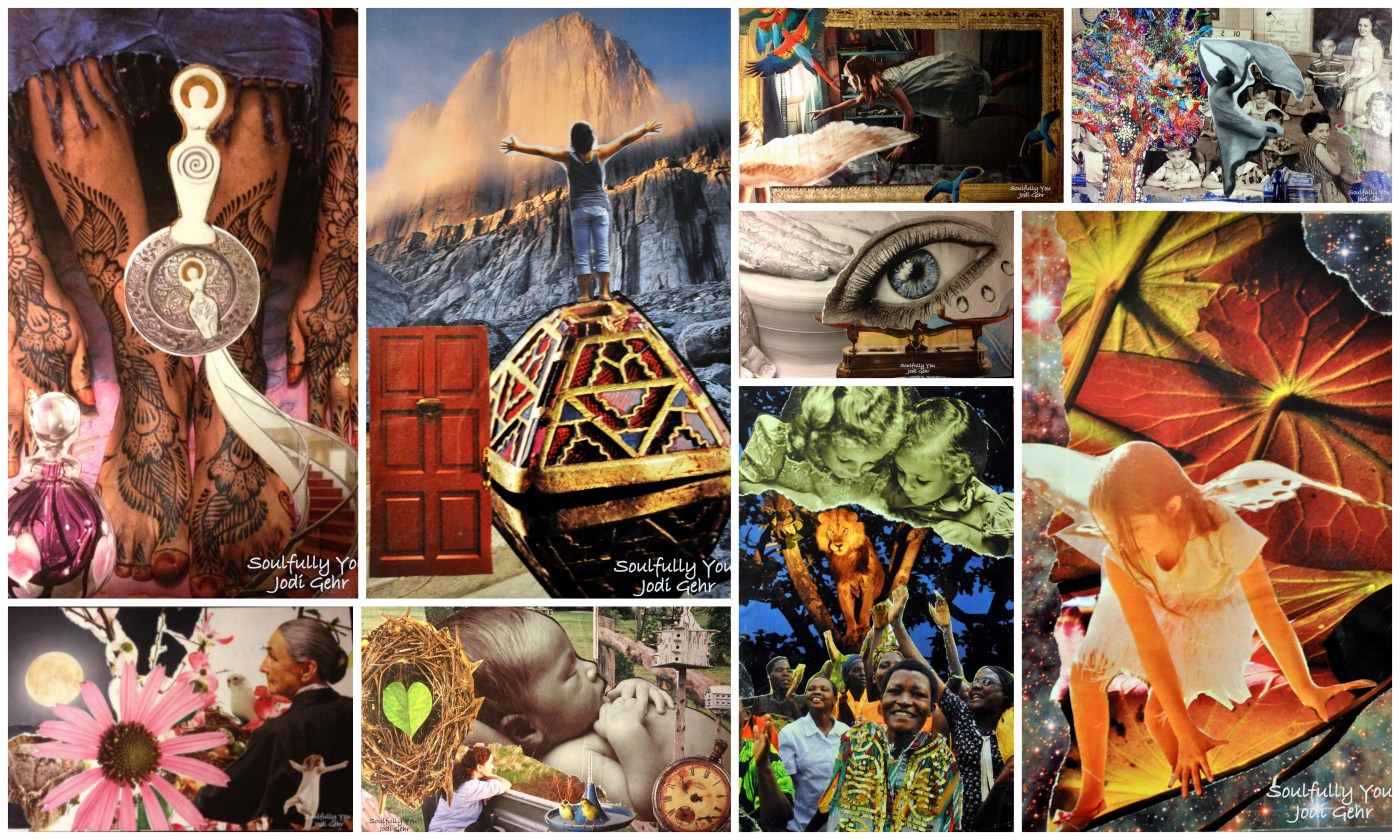
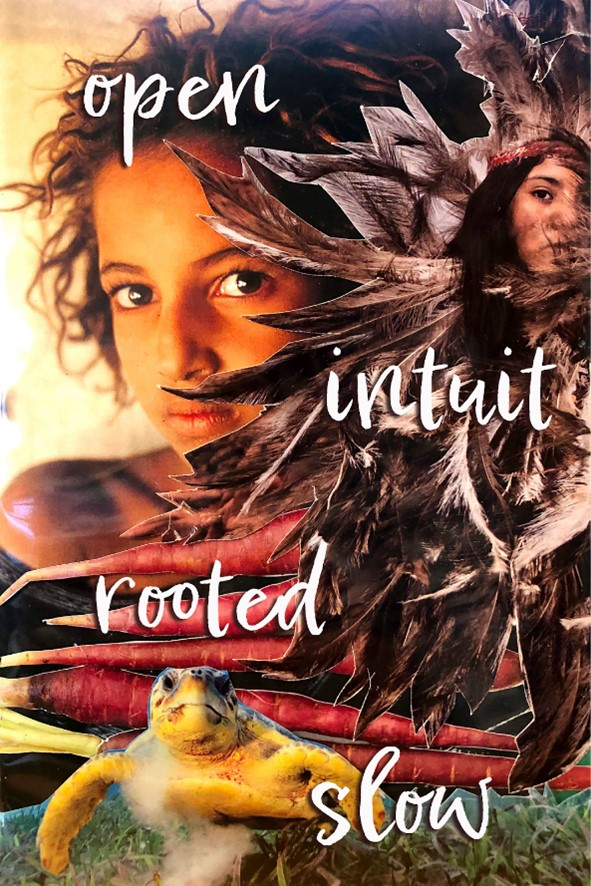
Jana shared, “A central theme (of the memoir) is the guidance I received from a SoulCollage® card…It’s been so incredibly powerful.” SoulCollage, a creative and intuitive act of cutting and pasting images into a collage, is more than a craft project; it is a form of self-reflection and prayer. Images can guide you to a new level of awareness and reveal a deeper understanding of thought and feeling.

Remain open like a child.
Your inner Sage knows.
Return to your roots for support in times of stress.
Slow down and go easy so you don’t miss the most important things.
OPEN, INTUIT, ROOTED, SLOW.

More at Homecoming: A Window to the Soul

Continue reading “Cancer-Colored Glasses: Through Jana’s Eyes”

Everyone Deserves To Be Heard

Everyone deserves to be heard.

I realized this most profoundly when I was the one who felt unheard. Perhaps you, too, have had a moment like this when you felt no one was listening—a meaningful, traumatic, challenging, or gratifying experience that needed to be shared fell on deaf ears.

I have written about the Benedictine promises of obedience and the importance of listening to God and others as part of one’s spiritual growth. “Listening requires us to pause, to have silence, and to be open to seeing in a new way. Listening can lead to a shift in perspective, a flash of insight, a new understanding. When you listen closely to another, it is an expression of love,” I shared in a recent reflection.

It is just as crucial to examine the impact it has on others when we are forgetful about listening—understandably, we get busy, or miss clues that others need our ear. Indeed, there are times when others may not realize how important it is (these slights may be easily forgiven), but there may be other times when you or another is summarily dismissed. The message is loud and clear—either you or what you have to say is not valued. It feels hurtful, as if you don’t matter, as if you are insignificant. Being intentionally rejected for your thoughts, ideas, feelings, and experiences leaves a wound, a hole in one’s heart, a sense of being rejected or abandoned.

For me, the experience of not being heard came during a traumatic time for women who had been sexually harassed, abused, or assaulted. I felt my trauma, but also the suffering of so many beyond me. It was a profound compassion, sharing the wound. It came to me then, weeping, that this is what it might feel like for those who have spent their entire lives not feeling listened to, of all those who have been unheard throughout our history, from the enslaved, defeated, oppressed, and marginalized—those who have no one to listen to or validate their pain. They had a story in their heart that needed to be heard, then and now.

Compassion asks us to go where it hurts, to enter places of pain, to share in brokenness, fear, confusion, and anguish. Compassion challenges us to cry out with those in misery, to mourn with those who are lonely, to weep with those in tears… Compassion means full immersion in the condition of being human.” –Donald McNeill, Douglas Morrison, and Henri Nouwen (quoted in Boundless Compassion by Joyce Rupp)

My heart felt broken—not just for me, but for the lack of compassion I may have shown others. Simultaneously wounded and regretful, a part of me died while something else was taking root—a desire to listen to those who feel unheard, to offer acceptance where there might not be, to advocate for those marginalized.  I felt pierced entirely with compassion. Tears flow often now for the suffering that, perhaps, I had not noticed before, the pain that I may have caused others, and the pain that continues to go unnoticed or even flatly denied.

I created a SoulCollage® card shortly after this eye-opening, traumatic experience. Consider the image and the following questions.

“The eyes of the Lord are toward the righteous and his ears toward their cry”. -Psalm 34:15

Questions for reflection:

Do you have a story you would like to share with someone? Have you been able to share it with another or write about it? If so, how did it make you feel to be heard? Does it inspire you to listen to the pain and suffering of the world?

Can there be some healing for your wound by expressing it to God if there is no one to share it with? Are you available for others to share their story with you? What is the consequence for a loved one if their story isn’t shared? Is there a person or marginalized group of people that you may listen to more closely than you have?

May our prayers be heard for all those suffering, and for those who have shared their stories but not been heard. May we listen with “the ear of our hearts,” as Benedict instructs. May we be moved to tears. Amen.


© Jodi Blazek Gehr, Being Benedictine Blogger


Our Ruby Anniversary: 40 Years of Marriage

“I promise to be true to you in good times and in bad, in sickness and in health. I will love you and honor you all the days of my life.”

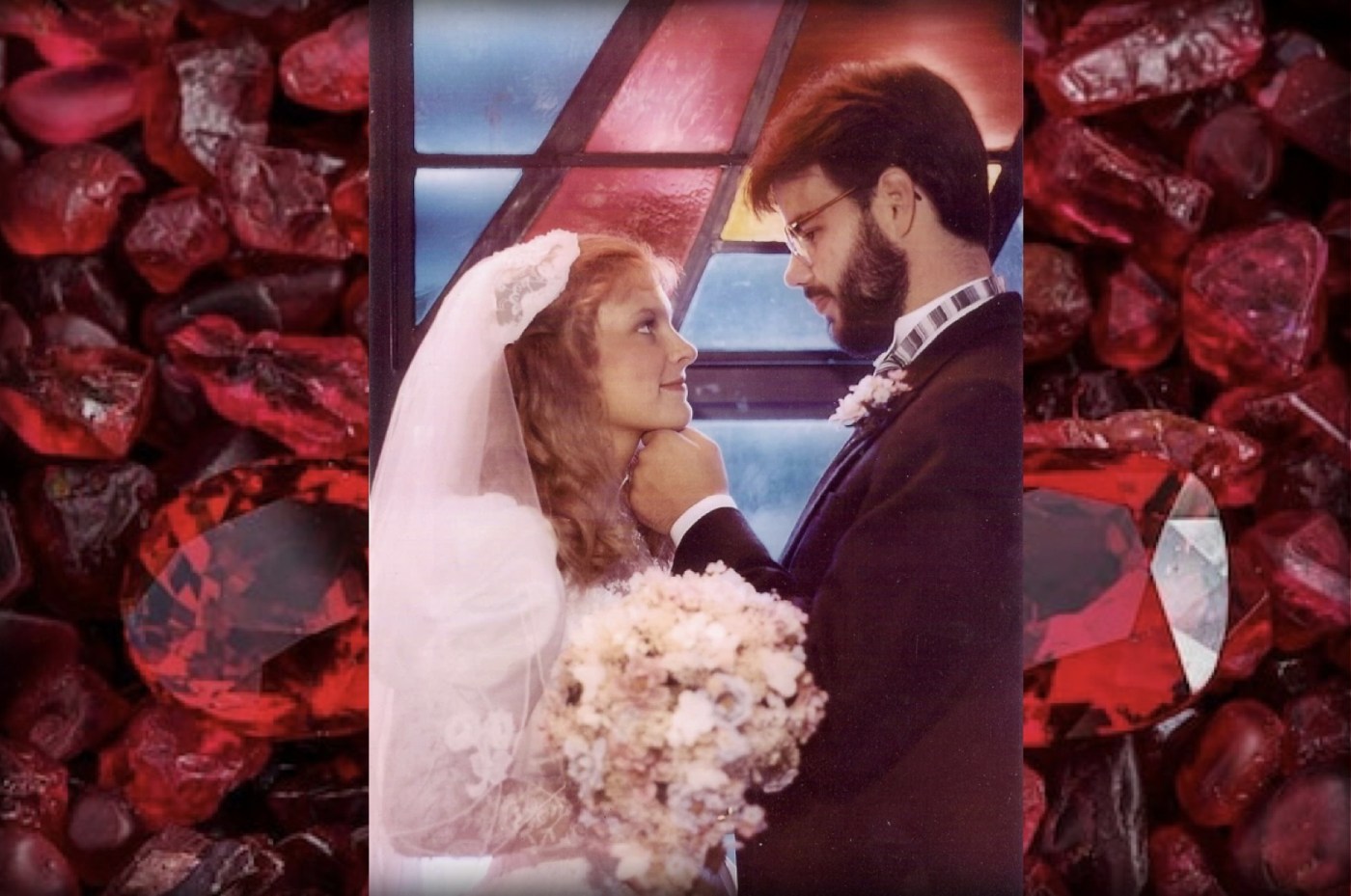
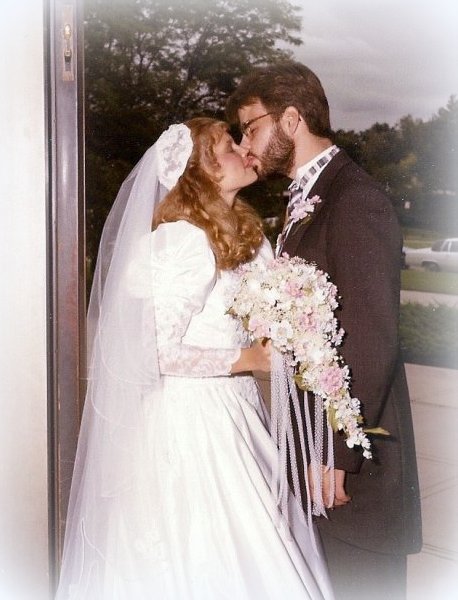
Forty year ago, my husband, Joe, and I made our marriage vows on August 17, 1985. As a 19-year-old bride, I had little understanding of what those words meant or would require. I imagine it is the same for many. We have hopes and expectations, albeit idealistic or romanticized. We may also have a good idea of what we hope our marriage will NOT be like. Surely, it’s a good place to start, but it is then that the real work of love begins.

Stability, a Benedictine value, is what is promised in marriage when we vow, “all the days of my life.”  We promise to stay, to not run away from challenges or difficulties; instead, we remain present to the relationship, to see what we discover about each other. After writing seventy-two chapters in The Rule, Benedict titles his last chapter,This rule only a beginning of perfection.” In other words, marriage, or any commitment we make, requires practice—making mistakes, forgiveness, and always beginning again.

To love is a decision. A marriage is not made, once and for all, when the I-dos are exchanged. A marriage is constantly being recreated; it is always in the process of becoming. A marriage is made of moments. Moments we would like to forget, moments we must forgive, and moments that help us become more fully who we are. There are moments of joy, adventure, contentment, and the making of beautiful memories. When you string them all together, you get a picture of a life built together.

I love that the ruby, a precious gem, second only to the diamond in toughness and durability, is the traditional symbol for a 40th wedding anniversary. Throughout history, many cultures and religions have associated the ruby with mystical or spiritual qualities, representing love, passion, protection, vitality, and wealth. (Ruby Symbolism and Legends)

The word “ruby” comes from the Latin word “ruber,” meaning red. The red heart of Valentine’s Day reminds us of a desire for passion and romantic love. One also thinks of the redness of blood, which carries oxygen to all parts of the body, giving life.

Joe and I have experienced this “ruby” nature, not all in one day, month, or year, but over time and as a way of life. The ruby’s “inner glow” led to beliefs that it contained an inner fire or “an inextinguishable flame”. This inner glow, with a playful spirit and sense of humor, has fueled our commitment to protect our marriage, to be resilient, to learn, grow and change. We are wealthy in countless ways—a beautiful daughter and son-in-law, great friends and family connections, opportunities for travel, hobbies, personal interests, and, now, more time for together.

Our new season of retirement. After lengthy careers in law enforcement and education, both Joe and I have retired—letting go of our careers, but not what was at the heart of our vocation. We continue to work in other ways: I lead SoulFully You retreats and workshops on creativity and the spiritual life, write essays for Being Benedictine, and belong to a variety of book/study groups, including oblates. Joe drives senior citizens to recreational activities and appointments, enjoys travel with his siblings, meeting with friends, and cultivating his bourbon collection. We have time to slow down, take a nap when we want, read, and binge-watch TV shows, travel more, and enjoy spontaneous trips to be with our daughter Jessica and her husband, John.

Continue reading “Our Ruby Anniversary: 40 Years of Marriage”

Be The Light: A 4th of July Message

“To be human is to live by sunlight and moonlight, with anxiety and delight, admitting limits and transcending them, falling down and rising up. To want a life with only half of these things in it is to want half a life, shutting the other half away where it will not interfere with one’s bright fantasies of the way things ought to be.-Barbara Brown Taylor, Learning to Walk in the Dark

Light and dark are the colors of life. No life is ever all of one or all of the other.

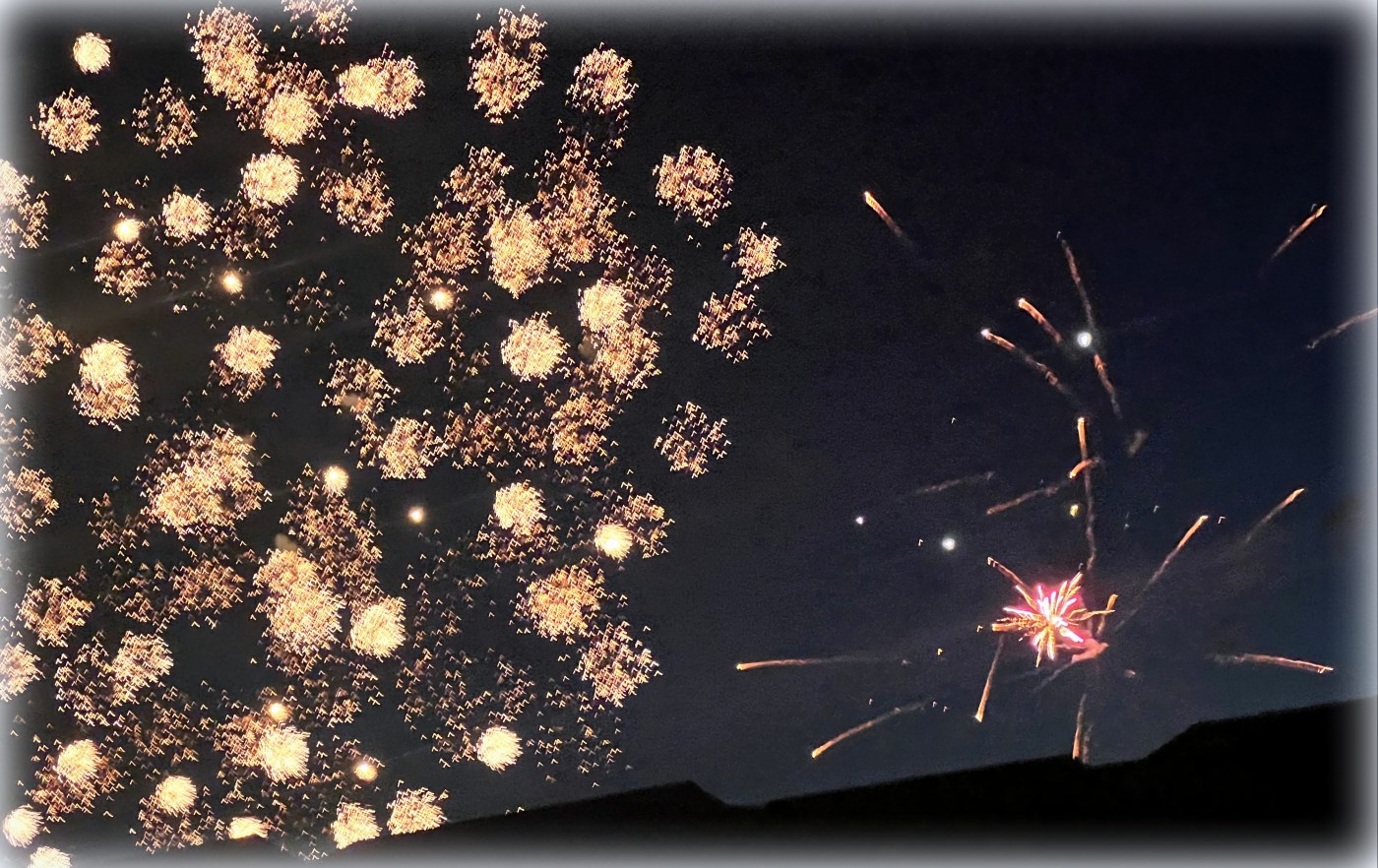
This is evident for many of us this 4th of July, the day we celebrate the independence of the United States of America. As daylight fades and darkness falls upon us, we gather in city parks and neighborhood driveways to witness crackling explosions, brilliant bursts of light, and glittering sparks as they cascade through the skies.

Fireworks can evoke a variety of feelings—from excitement, pride, and awe to anxiety, fear, and disbelief. I enjoy the displays but abhor the loud sounds. I think of shuddering dogs hiding under beds and the trauma that veterans may experience. I consider how much money is spent on fireworks that could be used in so many ways to help others. Still, with conflicted feelings, I watch and wonder.

To live in this country, to live in my body, is to face the realities of light and darkness. I have ideas of what democracy looks like, what the ideal is (see The Pledge of Allegiance of My Heart here). But I acknowledge that America is a work in progress, just as I am. Holding the tension between what is reality and what is our hope is a challenge. How do we stay present to the suffering in our souls and the world without losing the light inside?

 This, my dear, is the greatest challenge to being alive: to witness the injustice of this world, and not allow it to consume our light.’       – Thich Nhat Hanh

Continue reading “Be The Light: A 4th of July Message”

Atoms of Delight: A Pilgrimage to Iona

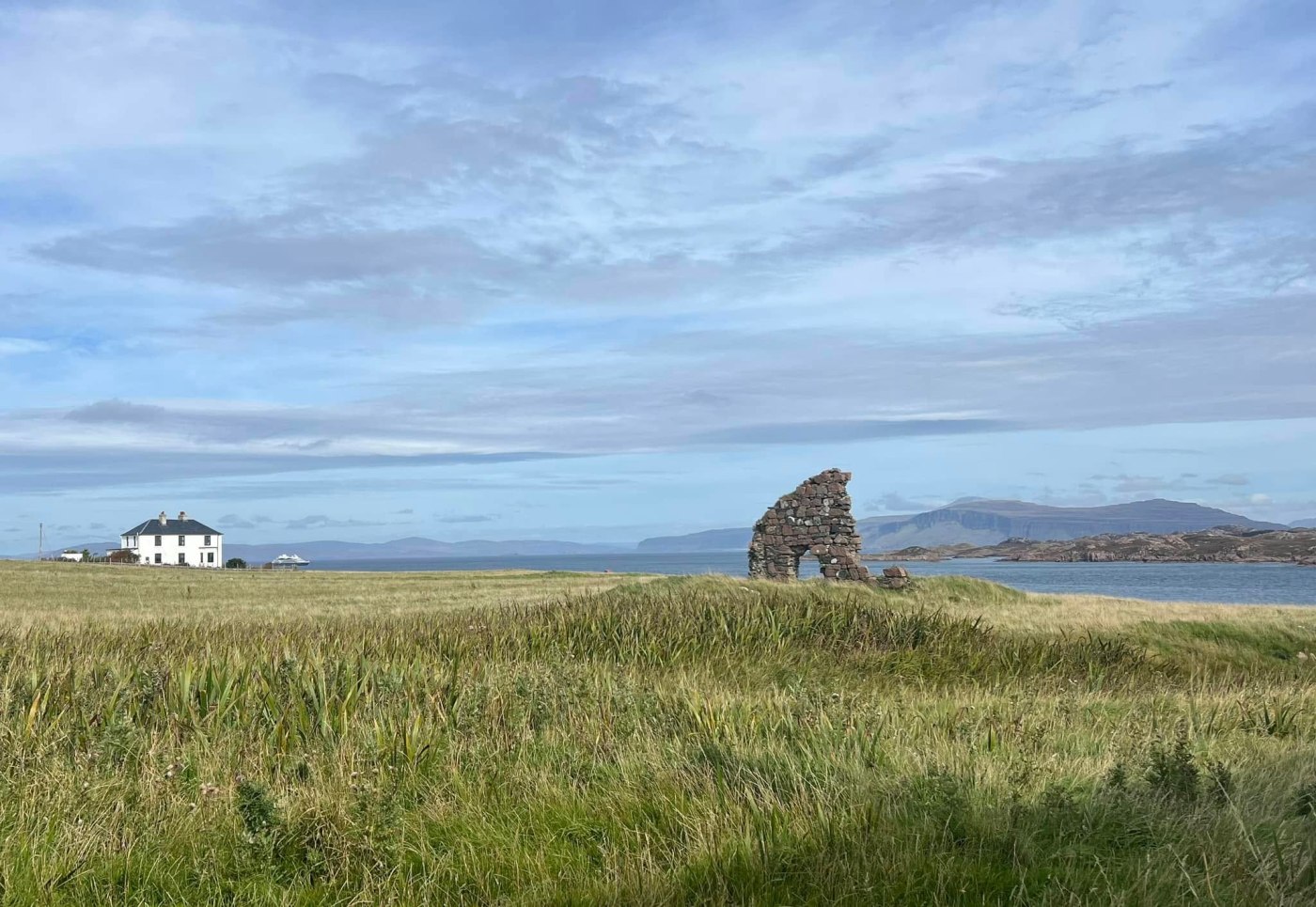
It was truly a dream to visit the sacred sites of Iona on a Celtic spirituality pilgrimage to Ireland and Scotland. Getting to Iona is a pilgrimage in itself, yet the journey has been made countless times since the 7th century. Most tourists visit for only a day, like we did, traveling from the coastal town of Oban, Scotland to Craignure on the Isle of Mull, then taking an hour-long bus ride on winding, narrow roads to the other side of the island arriving at the village of Fionnphort. From there, a foot ferry delivers you to the island of Iona. The day’s last ferry departs around 4:30 in the afternoon for the two-and-a-half-hour trip back to Oban. If the ferry is missed at the end of the day, staying overnight on the island is your only option.

Both the ferry and bus ride provided tremendous views. Our bus needed to occasionally pull over to the side of the narrow roads when meeting other vehicles.

Iona is the birthplace of Christianity in Scotland where St. Columba established an Abbey in 563. It might seem like a lot to get to this holy isle, only three miles long and one and a half miles wide, but walking the ground where St. Columba did 1500 years ago, where Benedictines established a monastery in 1204, the place where artists, sculptors, and writers have been inspired for centuries, is a holy, singular experience.

While I longed for more time to wander the beaches and secret coves, the time allowed for visits only to the most well-known sites closest to the ferry landing. Still, our pilgrimage group was able to participate in a meaningful community prayer for peace and reconciliation at the Abbey and visit the Nunnery ruins, St. Oran’s chapel, museums, gardens, and quaint shops including a bookstore, a “must-see” destination on my mini-pilgrimage to Iona.

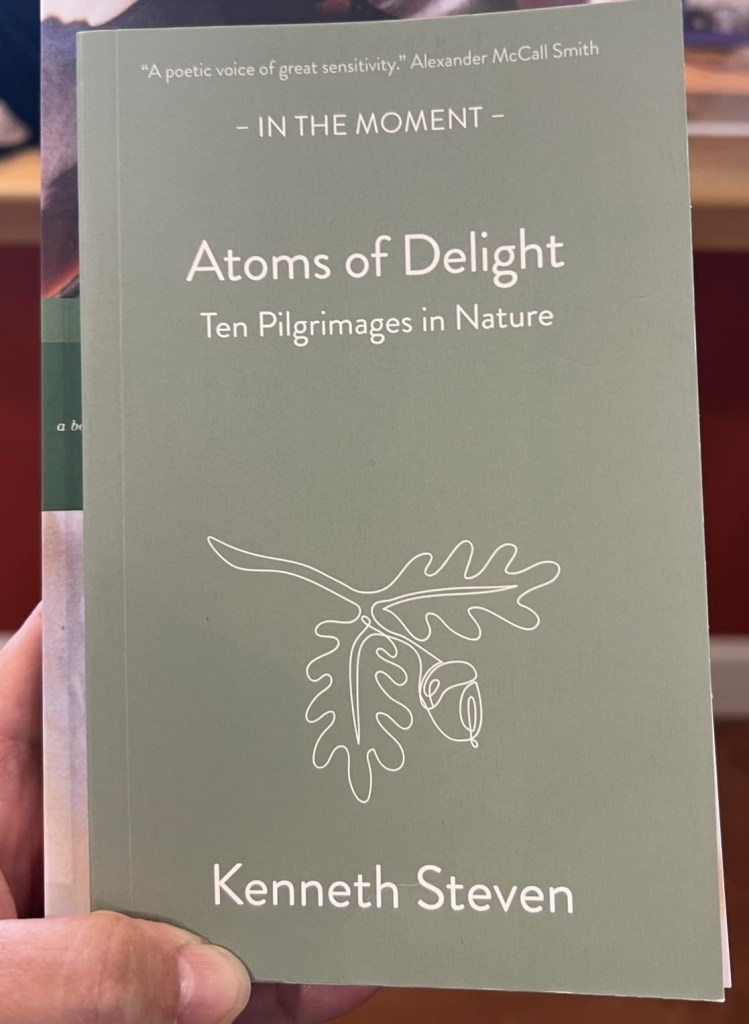
Months earlier, when I was planning the sites to visit in Ireland, a Benedictine Oblate friend, poet and photographer, Pat Leyko Connelly, reached out about some of her favorite experiences from her trips to Ireland. Pat and I connected through our shared love of Benedictine and Celtic spirituality, and she was generous in sharing tips about places to see in Ireland. When she learned I would also visit Oban and Iona in Scotland, she exclaimed that I must meet with her poet friend Kenneth Steven. Pat could not say enough wonderful things about his poetry. She also hoped I could bring back his newest book “Atoms of Delight” from the bookstore on Iona for her. Kenneth and I exchanged several messages and hoped to connect when I was there (unfortunately, our schedules didn’t allow it, but hopefully there is a next time!)

Visiting a bookstore is one of my favorite things to do, and I was just as excited about browsing book titles on this holy ground as praying in the abbey. The little bookstore was at the end of the walking trail, Sràid nam Marbh (‘Street of the Dead’,) where pilgrims have been walking for centuries. I quickly found THE book, took a photo of it to send to Pat, found another book by John Philip Newell for my friend Ellen, packed both of them away for my journey back to Oban, and later loaded them with all the souvenirs and other books I had purchased for the journey back home.

Continue reading “Atoms of Delight: A Pilgrimage to Iona”

Poems Come Out of Wonder

After canceling everything on my calendar this weekend (between a teacher work week and our first week with students….yes, eye twitching and back-to-school dreams are real), I revisited a poem and a SoulCollage® card I created on The Grandeur of God: Living Life with Wonder and Awe retreat. I gave myself permission to hunker down, pull back from social activities, and center myself in silence and solitude for my 27th year of teaching.

I love this poem from a book called Out of Wonder: Poems Celebrating Poets.

“Majestic” (Celebrating Maya Angelou)

I am one who” reflection:

It is only after taking time to pause, that I am able to celebrate “the wonder of daybreak.”

I will be phenomenal after a weekend of rest.

© Jodi Blazek Gehr, Being Benedictine Blogger

Is Barbie Being Benedictine?

Barbie is a big deal. The smash-hit movie “Barbie” has reached the coveted billion-dollar mark at the global box office and its director, Greta Gerwig, had the highest-grossing opening weekend ever for a film directed by a woman. Millions of women—from 20 something to 70 something—have donned pink attire with their besties or their daughters—and headed to the theatres for pre-movie selfies and a trip down memory lane.

Barbie is a big deal. And, yes, even some guys have gone to the movie and enjoyed it! Every major newspaper, magazine, and news organization has weighed in on a variety of Barbie themes from feminism, patriarchy and consumerism to mother-daughter relationships, authenticity, and existentialism. Since I saw Barbie with one of my besties, Katie, a few weeks ago, I have read dozens of commentaries on the film. One’s reaction to the movie, or, for that matter, any cultural, social, or political phenomenon, cannot be separated from our own interests, values, biases, and experiences.

My experience includes fond memories of playing with my Barbie dolls–selecting special clothes my parents told me Mrs. Clause had personally tailored, organizing my wardrobe suitcase and setting up camp with a Barbie drive-camper. My daughter celebrated a Barbie-themed birthday, loved her Pepto-Bismol pink bedroom with Barbie comforter and curtains, and had all the Barbie things, even a lunchbox. Barbie captured the imaginations of little girls, and when they became mothers, their little girls enjoyed them as well.

“We mothers stand still so our daughters can look back to see how far they have come,” the spirit of Handler, the inventor of Barbie, said to Barbie, played by Margot Robbie, in the film.

I absolutely loved the movie--from the set and costume design (I mean, a life-sized Barbie house!), the special effects, the song selections and dancing, the clever comedy/satire, the Birkenstocks and the many feminist themes that elevated the movie to one for serious discussion. Katie, and I shared laughs and tears, many de-briefing conversations, and a commitment to see the movie again. My one wish–that I can also see it with my daughter someday.

Oh, you know I created more than one! lol….for both myself and my daughter Jessica. You can create your own selfie here. https://www.barbieselfie.ai/step/1-upload/

But, this is what I have been considering: Is Barbie being Benedictine? Yes! I see a few themes in the Barbie movie that provide a glimpse of what it means to be Benedictine.

Barbie considers her death.

Early in the movie, Barbie asks her friends, “Do you guys ever think about dying?” This existential question is the impetus for Barbie’s (s)hero’s journey, one of curiosity, self-discovery, and transformation, depicted in religious literature, myths, and poetry since the beginning of storytelling. When Barbie’s perfect plastic curves are met with the disappointment of flat feet, cellulite, and clumsy accidents, she attempts to restore the status quo. She experiences a “dark night of the soul,” desperate only for life to go back to the way it was (as she lies face down, in humility, pining for untroubled times.)

When faced with our own mortality, we come face-to-face with the certain uncertainty of our lives. When Barbie adventures into the Real World, where events are not contrived, she is faced with the purpose and meaning of her life, eyes opened to embracing both joy and suffering, aging and death.

St. Benedict advises in his Rule, to Keep death daily before your eyes.” These thoughts of death make Barbie more human, real, authentic—once she realizes her own mortality, she cannot unsee it. Her old life has gone, and a new way must be birthed. Barbie is becoming.

Barbie listens.

In one of the most poignant scenes in the film, Barbie is overwhelmed with the stimuli of the Real World. She pauses to sit down on a bench to consider her next steps. This act of pausing to contemplate is the epitome of being Benedictine.

Continue reading “Is Barbie Being Benedictine?”

The way and the truth and the life

July 2023 Lectio Divina and Oblate Reflections

Sources

Lectio Divina—I am the way and the truth and the life, John 14:1-12

Book DiscussionThe Oblate Life, edited by Gervase Holdaway, OSB, 2008

Disclaimer:

I cannot claim to have captured all of the wisdom shared in our monthly oblate discussions or that I represent all oblates in attendance. The group discussion is a starting point for this reflection, but it is my interpretation of what I heard and what resonated with me. There could easily be as many different blog posts or reflections as oblates. Each of us comes to Lectio from our personal experience of God at that moment and we receive what we need in that moment as well. The beauty of Lectio Divina is that the reading, insights, and discussion may fall differently on each of our hearts. How blessed we are that there are “many dwelling places” (John 14:2)” and we are all invited to “listen with the ear of the heart.” (RB Prologue)

“Just as the word ‘oblate’ comes from a root word denoting the offering of a gift, each oblate’s life is an offering to God and a gift to the Benedictine community, which is enriched by the oblate’s presence and prayer…. A Benedictine way is not to be harsh or burdensome but is offered to those who seek God and the sweetness of God’s voice.”

The Oblate Life

Do not let your hearts be troubled

The opening verse of John 14:1-12 implies that we can let or NOT let our hearts be troubled. We have agency–we can choose or not to follow the way Jesus shares with his disciples. This way, having faith in God, will relieve us of our troubles. 

In my Father’s house, there are many dwelling places. If there were not, would I have told you that I am going to prepare a place for you?” Jesus asks. As a personal offer, he tells them “I will come back again and take you to myself, so that where I am you also may be.” 

Continue reading “The way and the truth and the life”

The Wonder of a Broken Arm

WONDER sees the everyday as sacred.

Living with a sense of wonder, my word for 2023, is my intention. Being open to surprises, having a sense of curiosity, and having the desire to learn is important to my spiritual practice of “being Benedictine.” Wonder sees the sacred in the ordinary and is a doorway to gratitude, but seeing with eyes of wonder is a much easier proposition when our daily life is comfortable. My sense of comfort was recently challenged.

On a cold, windy February morning, my little dog Bailey did not want to do her business outside. Fourteen degrees in Nebraska, who can blame her? Worried about potentially icy roads and getting myself to school in time, I hurriedly picked up my little dog and headed out to accompany her on a potty trip. After stepping down onto our (apparently icy) landing, my feet slipped out from underneath me. It happened so fast yet every second my body met the icy ground, pain pierced through me–first on my bottom, then as I slid to my left side hitting my elbow sharply. I felt several crunches on my arm as I continued sliding on the pavement finally stopping several feet away. 

I knew immediately I had broken my arm, and later it was confirmed–a fractured ulna and a chipped elbow. The entire event was captured on our doorbell video. I watched it only one time to see if it was as I had remembered. Seeing myself fall has ruined me forever from watching America’s Funniest Home Videos again. Falls that used to crack me up (no pun intended) seem not so funny anymore. 

Wonder is the doorway to gratitude.

Making meaning out of life’s experiences and practicing gratitude is foundational to my spirituality, but much of my broken arm experience (7 weeks to date) has been spent feeling like I am not being very Benedictine. I am grateful for much, but I have also been so tired, irritable, and moody. It has been more traumatic for my body, mind, and spirit than I could have imagined. 

Despite my general crabbiness, I know my injury could have been worse–for that I am grateful. Thank God I hadn’t hit my head and been knocked unconscious. I am grateful that it was my left arm that was broken, and not my dominant right. After a week of wearing a splint, I was grateful to learn that the fractured pieces of my ulna had, amazingly, stayed in alignment. I would not need surgery and instead of needing a cast, I would wear a brace that I could easily remove to shower. A welcome reprieve from the confinement of a splint, there would be enough space to wiggle a pencil through to scratch my arm. (More things to be grateful for at the end of this post.)

Gratitude is an emotion that reflects our deep appreciation for what we value, what brings meaning to our lives, and what makes us feel connected to ourselves and others.

Atlas of the Heart, Brene Brown

I thought my attitude of gratitude would carry me through the weeks of convalescence in front of me, but I underestimated the many conflicting emotions I would have–frustration, overwhelm, disappointment, empathy, compassion, and wonder, just to mention a few. Out of 87 identified emotions (and experiences or thoughts that can lead to emotions) in Atlas of the Heart by Brene Brown, I have felt no less than 40 of them since I fell. 

Early on I had decided I would be a resilient, strong, and compliant patient. I would remain calm in the face of discomfort or pain, knowing “this too shall pass.” Spoiler alert: I have grown weary, increasingly frustrated, and borderline hysterical from the discomfort and/or pain. Betty the brace–named after my strong, steady, prayerful oblate friend, Betty–has been called many other names besides Betty (Betty, the friend, took no offense.) 

Continue reading “The Wonder of a Broken Arm”

Blog at WordPress.com.

Up ↑