Search

Being Benedictine

Living SoulFully as an Oblate of St. Benedict

Category

Spiritual Journey

Why I Teach

In honor of Laura Ingalls Wilder’s birthday February 7,  1867, a personal essay on why I teach. 

Childhood Dreams

As early as kindergarten, I identified teacher as a potential
occupation
in my “School Years” book, a collection of elementary school Kindergarten teachermemories. My kindergarten-self chose nurse, teacher, model, and mother as possible career and life choices, although the options were limited to traditional girl-jobs only. (I’ve wondered why I didn’t dare to select baseball player or astronaut. Was it because those jobs did not interest me or did I not consider the boy-jobs? Or why were airline hostess and secretary NOT of interest to me?) Female stereotypes aside, by fourth grade, I had wisely eliminated model and nurse (yuk and yuk!!), leaving teacher and mother.fourth grade

I was interested in learning and teaching as soon as I was old enough to work my way through phonics, spelling and math workbooks, just for fun. And then creating worksheets and math problems, grading spelling quizzes and making lesson plans became my childhood joys. My brother was my first student and I worked him pretty hard. I remember taking the graded assignments I’d assigned to him to my fourth-grade teacher, proudly showing her what I was helping him accomplish outside of school hours. Rather than receiving the anticipated (and sought-after) praise, she promptly told me I should back off and not force him to be my student anymore or he might hate school—my first humbling opportunity at professional self-reflection.

BooksLaura Ingalls Wilder was my childhood heroine. Pioneer girl turned teacher; wide-open prairie sky and her own classroom, from Little House on the Prairie to These Happy Golden Years —I wanted to BE Laura. I admired her sense of self-confidence and independence, how she encouraged students to overcome learning challenges, many not much younger than her. (I am such a huge fan of Laura Ingalls Wilder that when my daughter could barely read I bought the entire book series,  picture books and television movies for her and also road-tripped to Mansfield, Missouri to see the house where Laura penned all of the Little House books. Quite a thrill!)

All the evidence indicates that, if I wasn’t born with the desire to teach, the passion was stirring when I was very young.  Continue reading “Why I Teach”
We Shall Overcome Someday

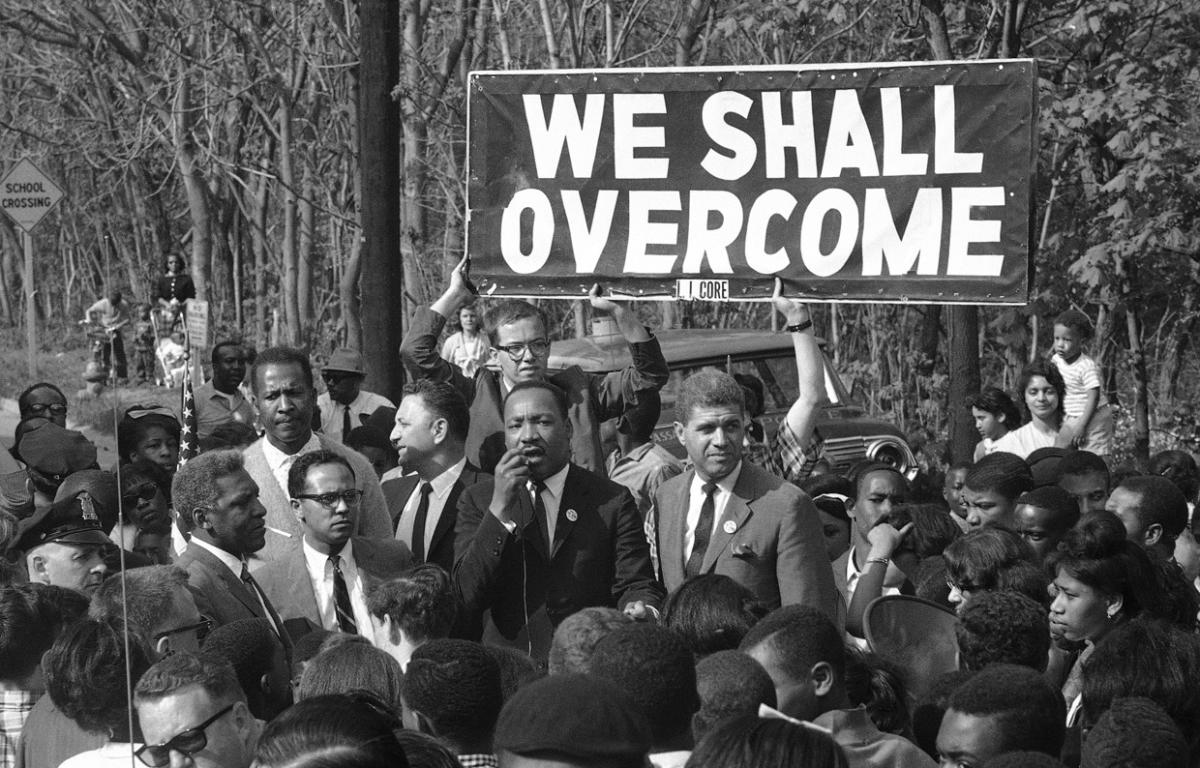
I had a soulful, musical experience this weekend that has left me (nearly) speechless. I went to a free afternoon concert of The American Spiritual Ensemble (ASE) at a local church—a concert to honor Martin Luther King Jr. with African American spirituals. I had no idea what a big deal the ASE is—they are “a critically-acclaimed professional group composed of some of the finest singers in the classical music world.” Their members have performed at the Metropolitan Opera, the Kennedy Center, Radio City Music Hall, the Aspen Music Festival and more. They are a big deal…and they are good. Incredibly good. 

ASE pics

IMG_3487

 I expected to hear some beautiful music, to be moved, yes—but it was so much more. It was a history lesson, a spiritual experience, and a reminder that we are all connected, that we must meet each other with compassion and in our suffering. We must lift each other up and Walk Together, Children—the first song. Continue reading “We Shall Overcome Someday”

2020 Words of the Year–Carry On!

Carry On!

The inspiration for my 2020 Word(s) of the Year came from the Sprigs of Rosemary Advent retreat that I recently led. The retreat was centered around the theme of sanctuary, inspired by the lyrics of Sanctuary written by Carrie Newcomer.

There were several questions participants were asked to consider as a guide for them during the retreat. “What do I need sanctuary from?” touched my heart.

I shared that I need sanctuary from the endless flood of thoughts that preoccupy my mind; thoughts that hold me back and keep me from being truly free. I need sanctuary from the constant rerun of conversations and/or situations that have led to hurt feelings and a sense of rejection. I need sanctuary from the relentless inner conversations that distract me from living fully and hold me a prisoner in the role of victim.

When I have strong feelings or attachments, compulsive mental role-playing commences. I replay conversations—what was said, what I could have or should have said, what he/she meant, and on and on. Once I can slow down my thoughts, create some space, and breathe, I can hear more clearly what God intends for me to know.

Being clear about what I need to detach from—my thoughts—was the creative fuel I needed to intuitively make my first card named “Sanctuary.”

“Our logical thinking mind cannot leap out of the loop, but our intuitive mind can step back and watch….the logical mind usually misses the symbolic voice heard by the intuitive senses.” Discernment Matters, Mary Margaret Funk, OSB

Sanctuary card.jpg
Sanctuary Card–the first card of my reading.

A culminating activity of the retreat was a SoulCollage® reading. Reflecting on, praying with, or “reading” your cards is a process that never fails—if you have questions, God provides answers that are tailor-made using the images that have spoken uniquely to you. We begin by selecting one card we made during the retreat and randomly selecting two other Soulcollage® cards from our personal collection, cards made months or years earlier, taking turns with questions and reflections.

The question for my cards, interestingly evolved while I was saying it out loud—”How can I find sanctuary from my thoughts? … Actually, how can I move on from them, how can I carry on?” Continue reading “2020 Words of the Year–Carry On!”

Gratitude for Teaching: A Mirror to the Soul

My friend Evi Wusk asked me to write a guest post for her blog, Gratitude Gal, about what I am grateful for as a teacher. The reflection that resulted has been a game-changer for me. It’s been a busy and challenging school year, but digging deeper about why I continue to choose to be an educator has uplifted my attitude and helped me deal with the daily challenges of teaching.

Capture

Here is what I wrote:

“Gratitude at its deepest level embraces all of life with thanksgiving: the good and the bad, the joyful and the painful, the holy and the not so holy… I am gradually learning that the call to gratitude asks us to say, ‘Everything is grace. “–Henri Nouwen

I am grateful to have had two grown-up careers—five years in advertising sales and the past 23 years as a Business educator. It is teaching that has taught me about the importance of practicing gratitude.

I am grateful to see teaching as a vocation, not just a paycheck. When I made my career change, it was certainly not for the money. I have never looked at teaching as just a job; it is a spiritual calling. Parker Palmer in The Courage to Teach writes, “I believe that knowing, teaching, and learning are grounded in sacred soil and that renewing my vocation as a teacher requires cultivating a sense of the sacred.”

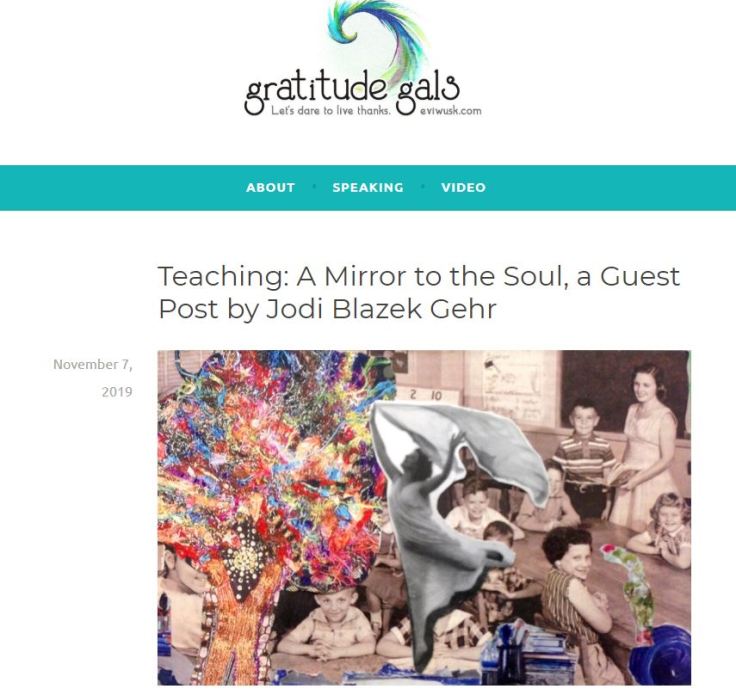
I am grateful that I have stayed in education even when it can be soooo hard. Several years ago, I tried to capture the essence of the evolving nature of teaching through SoulCollage®. When I started my first teaching job, I was incredibly naïve and idealistic about what it would be like, represented by the black and white, “country school” image —students with smiles on their faces, eagerly waiting to learn, happy, compliant, respectful, and totally mesmerized by every word I said. The reality is that teaching is a much more “colorful” role than I had expected or could have imagined. Continue reading “Gratitude for Teaching: A Mirror to the Soul”

Learning from the Seasons of Life

“Are you doing okay?” a friend asked me.

“Yes and no, ha,” an honest reply.

 “Why yes?”

Hmmm, I think.  “Good question…yes, because of faith and hope. Many blessings.”

This might not be the typical are-you-okay-what’s-wrong? line of questioning one might expect, but good friends know what’s behind your “yes and no” already.  Sometimes the no just needs to lie right where it is; it’s the yes that needs more attention.

21616232_10214007330207686_1585915307798533116_n

Likely, the question was meant for me to consider what is good? what is hopeful? what is well with my soul? 

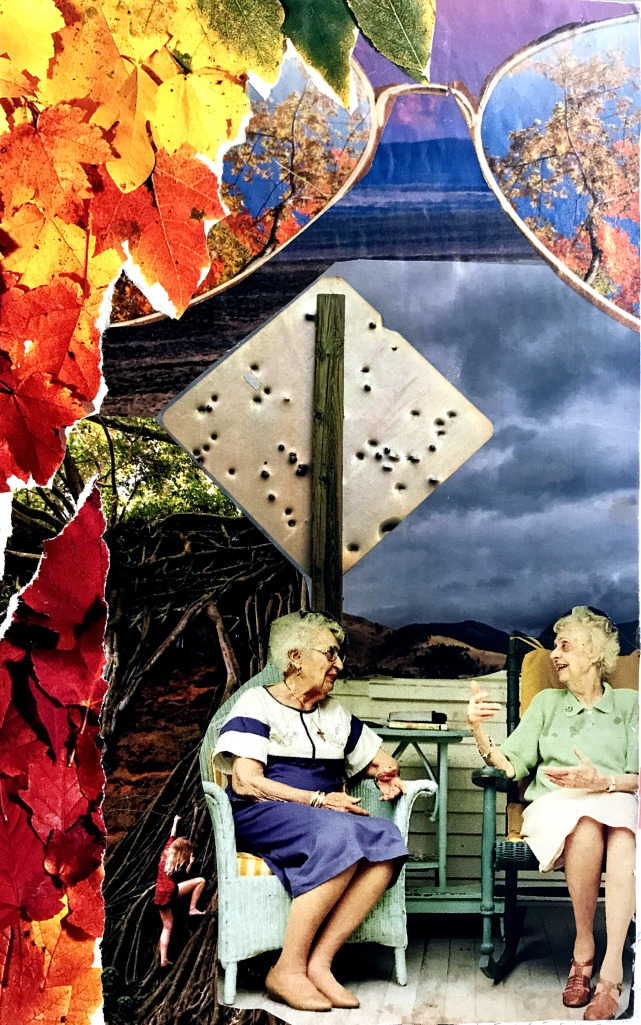
I have a SoulCollage® card that I created named “The Seasons of Life: I’ve Seen A Lot of Shit.”  Eloquent, I know, but it’s the first thing that came to mind when I looked at my finished card.

“Winter, spring, summer, and fall are mulch for each other. The seasons of our lives are like that also. We learn from the layers of life. Our joys, sorrows, regrets, hopes, miseries, and enthusiasms are mulch for each other.” The Flowing Grace of Now, Macrina Wiederkehr

seasons of life1

I had no idea what I was creating when I started, with no goal in mind. I was drawn to the older women sharing stories and enjoying each other’s company.  They look experienced (not old, please), rested, peaceful, connected, comfortable and wise. I imagined what they might be discussing. Perhaps, despite the storms of life and the many obstacles that make them feel all shot-up, they are grateful to be still standing, still sitting, still connecting, still enjoying.

Both women hold a little of each season, every year, and the many experiences they have lived within them. I imagine that these soul companions are teachers for each other. There are teachers all around us—our circle of friends, spiritual companions, authors, thought-leaders, poets and musicians.

One of my spiritual teachers is author Sister Macrina Wiederkehr. The first Benedictine book I was introduced to (back in the ’90s) was “A Tree Full of Angels:  Seeing the Holy in the Ordinary” written by Macrina. Several years later, at St. Benedict Center, I was honored to meet Macrina attending one of her retreats. Through the years, I’ve gotten to know her better, to attend more of her retreats and enjoy more of her writing.

DSC_0062
Me and Macrina at St. Benedict Center.

Her newest book, The Flowing Grace of Now,” has fifty-two meditative readings that weave their way through the seasons of the year, pointing to a different teacher for each week. The reading and reflective questions include wisdom lessons from Macrina, as well as poetry and prose from teacher-writers like Clarissa Pinkola Estes, Joyce Rupp, John O’Donahue, Henri Nouwen and Joan Chittister, mystics like Julian of Norwich, and from the stories of the Old and New Testament. By taking an entire week to devote to the reading, the seed has time to burrow. By meditating upon a line or two of scripture, poetry, lyrics or prose, it sinks to a deeper place of resting in one’s heart, taking root, becoming the “mulch” from which to grow from understanding to blooming and becoming.  The words take root in your life, impacting your thoughts, attitudes, and actions. 

“Autumn holds fragments of the other seasons in transformative arms…the mood of autumn is the ebb and flow of life. Autumn stands as an epiphany to the truth that all things are passing and even in the passing there is beauty. It holds out platters of death and life.” -The Circle of Life, Joyce Rupp & Macrina Wiederkehr

DSC_0267a

So many teachers, so many seasons in a long life—we are called to keep learning. Each of us is called to take the seasons of life into “transformative arms”, to become more of who we are. So this autumn weekend, I consider the seasons of life—all of it, especially the blessings. I think about the “yes” of life that threads itself through my days—the yes to faith, hope, learning new lessons and gratitude for many blessings. The daily yeses keep me focused on the bigger yes—the yes to God.

My yes is the desire to become more of who God created me to be, to keep learning from the “mulch” of the seasons and experiences of life. This I have hope for and believe in. This I am grateful for and what I say yes to.

Yes, it is well with my soul.

 “People often speak of becoming more grateful after having lost some of their health. Suddenly they see all they have taken for granted. Gratitude for all that has been enables them to say yes to all that is to come.” -The Circle of Life, Joyce Rupp & Macrina Wiederkehr

DSC_0383a

The Days of Awe

The Days of Awe is a ten-day period that begins with Rosh Hashanah (Jewish New Year) and concludes with the observance of Yom Kippur (Day of Atonement). I learned about this Jewish tradition that dates back to the third century BCE from my sister-in-law, Rachel Pred Gehr.

IMG_0287.jpeg
Rachel and me, grateful we both married into the Gehr family.

Rachel wrote about celebrating Rosh Hashanah several years ago on her blog, and it continues to make an impression on my own spirituality (I thought she wrote it just last year—lol, time flies.) I was touched by the ritual of “tashlich” that she described—“the congregation gathers at the creek for a ritual of tossing our sins into the moving stream, signaling a fresh start to the new year.”

She quotes,The custom of going to a body of water on Rosh Hashanah is a symbolic allusion, for the waters which now seem to be at this place were not here before and will not remain afterward. So, if the sinner says to himself or herself: “I will not repeat my sin; my behavior will change”, the sin, like the waters, will move on.” (A Feminist Tashlich, Rachel KastenOur sins are washed away….sounds familiar, doesn’t it?

71402885_10219892609375987_339861432147378176_n
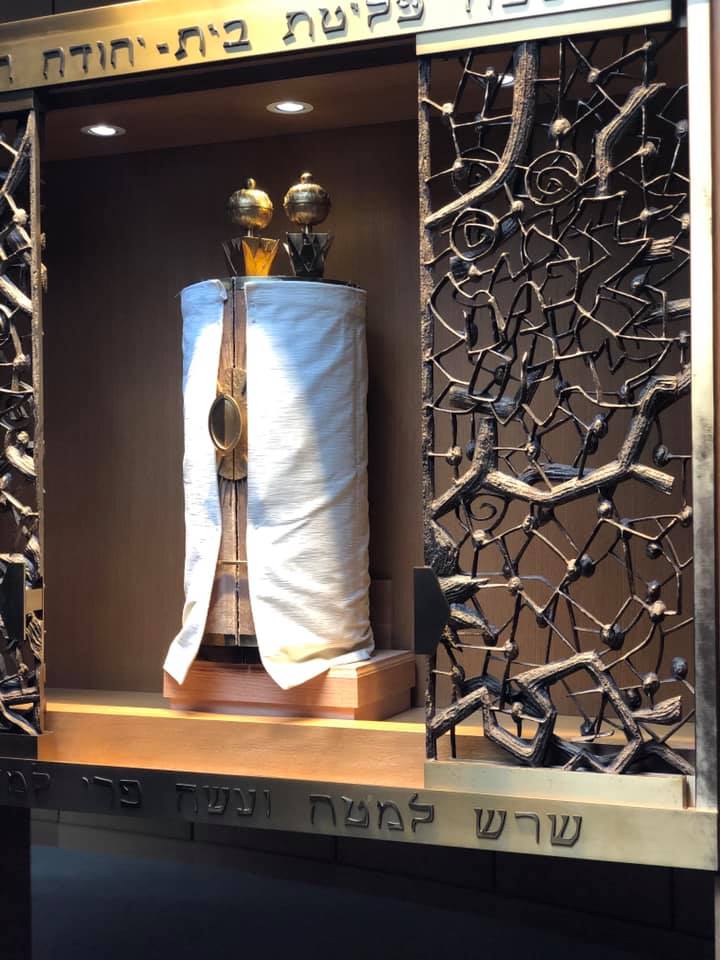
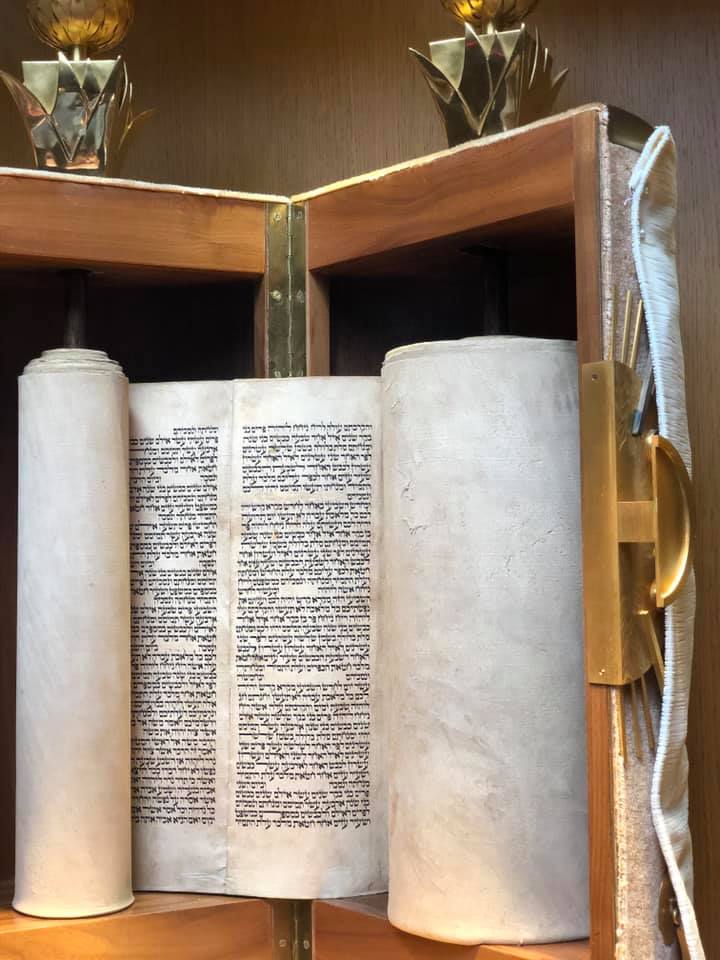
Torah at Temple Israel

71206637_10219892609775997_6935749842278809600_n

Most of what I know about the Jewish faith I learned in patchwork fashion—from a few friends, “The World’s Religions” by Huston Smith and Google. In elementary school, I had a friend who invited me to her Bat Mitzvah, a ceremony she explained as similar to Confirmation in the Christian church. But it seemed a lot different to this 12-year-old Catholic girl—it spanned two days, a lot of prayers that I didn’t understand, the carrying of a large package through the sanctuary and ending at a party with the fanciest finger food I’d ever eaten.

71935592_10219892608295960_9017926012872163328_n

I am grateful for that early introduction, though, even if I didn’t understand much. It provided me with a foundation of acceptance and a desire to learn more about all faiths…and a realization that wisdom and truth are found in all faith traditions.

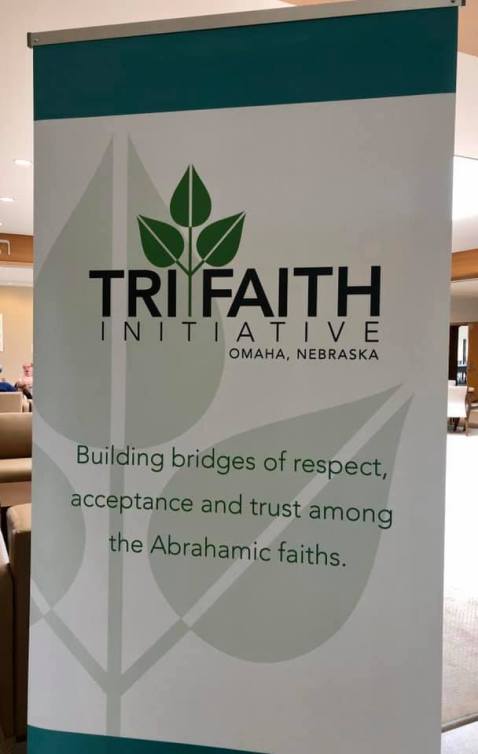
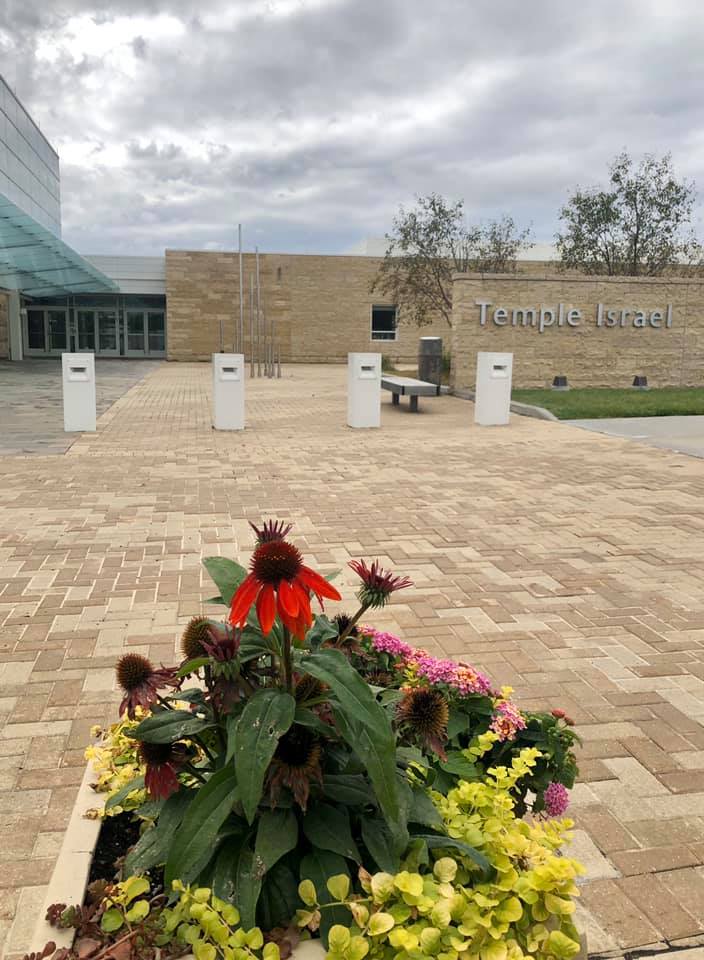
Recently my Spirit Circle and I had the opportunity to visit the Tri-Faith Initiative, a sacred space that brings together a synagogue, church, mosque, and interfaith center on one 38-acre campus in Omaha. The Tri-Faith Initiative started over 20 years ago with a vision to encourage relationships in the three Abrahamic faith groups—Jewish, Christian, and Islamic faiths. But it is just in the last year that Temple Israel, Countryside Community Church (UCC), and The American Muslim Institute, opened their new buildings, all connected by bridges and within view of each other.

71215744_10219892608175957_6694538350017118208_n

70629272_10219892605975902_7816796476780052480_n
A view of the temple from the mosque.
70831695_10219892604695870_8881525646916845568_n
Temple Israel as seen from the mosque.

It was a profound experience to see all of the prayer centers, but I was most impacted by the temple. Since childhood, I have had a chance to experience and learn more about Judaism. The Bat and Bar Mitzvahs of my niece and nephew, Alice and Mike, were special religious experiences that go beyond the boundaries of the faith I grew up in. Perhaps my fascination with Jewish tradition is because it feels new(ish) to me, but I find it peculiar that Christianity, a religion rooted in Judaism, doesn’t continue to celebrate many Jewish rituals and holidays including The Days of Awe. For 2400 years, Jewish people, likely Jesus too,  have reflected on their past year and repented for their sins with a spirit of beginning again.

70639119_10219892612856074_5887012991458607104_n.jpg

Rachel continues in her post, “And with the new year comes reflection on the past year, and commitments to improve ourselves and the community and the ripple effect continues…whether you celebrate Rosh Hashanah or not – a year can start any time.”

The essence of making resolutions at the new year, whether one follows the Gregorian or Jewish calendar, is that we desperately seek the chance to “do-over.” Celebrating the beginning of a new year is a reminder of our opportunity to “always begin again”—the embodiment of Being Benedictine. It’s not as simple as a “do-over” but Rosh Hashanah or New Year’s Day gives us a definitive time and space to honor our deepest longing to begin again. As St. Benedict proclaimed, “Always we begin again.”

These next days, no matter your faith tradition, can be a time for reflecting on the past, making amends and setting intentions for a hopeful future.

These next days, I shall get me to a river, practice some forgiveness of self and others….and begin again.

71499835_10219892613256084_4392121449100345344_n
Countryside Community Church
71818753_10219892611816048_5831815244296486912_n
The American Muslim Institute as seen from Temple Israel 

A lovely prayer to use for washing those “sins” away:

Here I am again
ready to let go of my mistakes.
Help me to release myself
from all the ways I’ve missed the mark.
Help me to stop carrying
the karmic baggage of my poor choices.
As I cast this bread upon the waters
lift my troubles off my shoulders.
Help me to know that last year is over,
washed away like crumbs in the current.
Open my heart to blessing and gratitude.
Renew my soul as the dew renews the grasses.
– Rabbi Rachel Barenblat

See Rachel’s full post here. And another one about “tashlich” here.

A few of my posts on beginning again—
Begin Again: New and Improved!
Always, we begin again.

All photos taken at Tri-Faith Initiative. always we begin

St. Johann, a Day of Rest: A Benedictine Pilgrimage, Part 10

I had a day of rest today. A headache and a very bad night of sleep was cause for intentional grounding.  So it is appropriate that today I also share about my day of rest in St. Johann, Tirol, Austria.

IMG_5067.JPEG
Amazing view from the balcony of my room. We stayed in St. Johann for three nights. It was wonderful to have a temporary home. Three days is the longest I stayed anywhere in 3 1/2 weeks. 

Sunday, June 23It was my 16th day of travel. Symptoms of a terrible cold that had started to work its way through the bus, combined with a forecast of rain, convinced me I should stay back from sight-seeing and take a day of rest.

I had visited Chiemsee, the day’s pilgrimage destination, with my cousins five years ago, so it made the decision to take this day off from travel much easier, admittedly despite a bit of FOMO. My dear friends, Joyce and Laura, left some breakfast for me in my room and said, “Go back to sleep.” And I did. Just like I did today when I realized going to school was not to be.

IMG_5066

I slept until 11:30 am (both then and today, so apparently rest was just what I needed), had a simple brunch and headed out to explore the town of St. Johann in search of throat drops and cold medicine. It was the right choice to sleep in and spend some time alone, but by myself I felt an acute sense of homesickness and a little bit lonely.  I reminded myself of the importance of balance—of being together and alone, of having activity and rest. This is what my body and spirit needed today. Continue reading “St. Johann, a Day of Rest: A Benedictine Pilgrimage, Part 10”

Welcoming the Stranger: A Benedictine Pilgrimage, Part 3

“Let all guests who arrive be received as Christ”—Rule of St. Benedict 53:1

Officially the Benedictine pilgrimage part of my trip does not start until I connect with thirty-six other pilgrims, but as I reflect on the readings/homily from Sunday, July 21, 2019 (the 16th Sunday of Ordinary Time, Year C), it occurs to me that the week I spent with my cousins was just as much part of the pilgrimage. It was the embodiment of being Benedictine and of the hospitality demonstrated in these readings.

1 Munich w Jefferey11.jpg

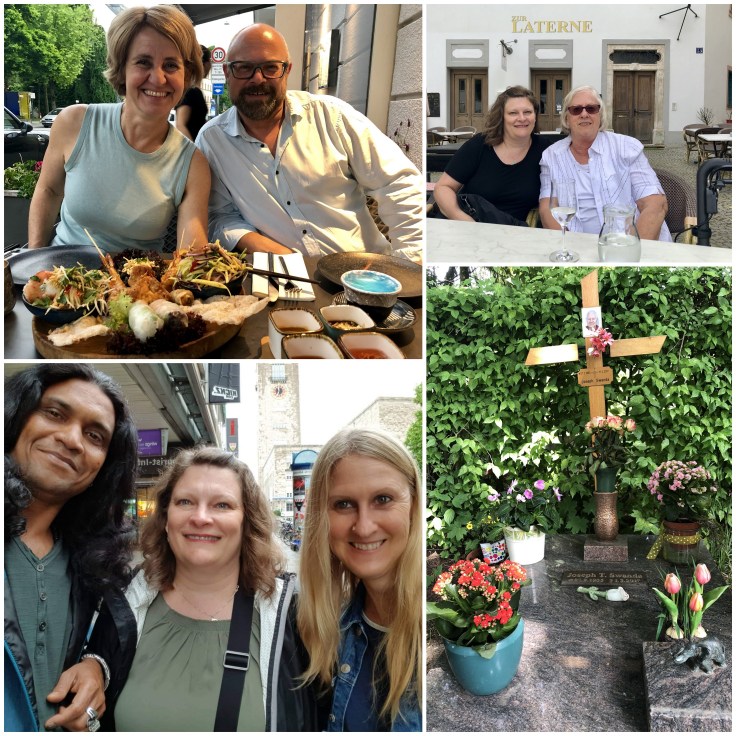
For having only met once, Jefferey and Sabine were practically welcoming a stranger in their home and yet, they received me with enthusiasm, providing food, water, bath, and bed for several days. So, too, did Jennifer and Santhosh. They planned events and excursions; they took care of transportation and many other practical details. Jennifer rearranged a room, asked if I needed shampoo, soap, lotion, a light, a different blanket, more food, a glass of water…so much hospitality that Santhosh had to drag her out of the room, laughing, “Let her sleep, she is tired.” But, mostly we were in each other’s company—listening, talking, asking questions. We were present to each other.

In Genesis 18:1-10a, Abraham welcomes three strangers, running enthusiastically to greet them; he offers the choicest food, water, rest, and a foot bath (okay, no one gave me a foot bath, but I did have wonderful hot showers!) He provides the strangers, often illustrated as the three angels of the Holy Trinity icon, the practical concerns of being hospitable, but he also “wait(ed) on them under the tree while they ate.” He meets their needs, but also gives them his attention; he is present to them.

trinity2

In Luke 10:38-42, Martha welcomes Jesus into her home, working hard on the practical elements of serving a guest, perhaps preparing the food, cleaning a room for the visitor, and setting the table. Mary, on the other hand, simply sits with Jesus and listens. She gives him her attention; she is present to him. Surely, the practical things are important (otherwise no one would ever eat), but Jesus tells them that “Mary has chosen what is better.” Both the practical actions and being present, or contemplative, are important elements of hospitality and being Benedictine. Continue reading “Welcoming the Stranger: A Benedictine Pilgrimage, Part 3”

Cousin Week: A Benedictine Pilgrimage, Part 2

Sunset over the Atlantic, sunrise over Europe and eight hours later, cousin week of the pilgrimage begins. Jefferey greets me with a huge smile at the Munich airport and we chat enthusiastically about our travel plans as we drive to Heidhausen, where he and Sabine live. We will spend a few days in Munich; we will visit his mother; I will travel to Stuttgart for a few days to visit Jennifer and her husband, Santhosh; and, then spend one final day in Munich before joining the group pilgrimage. Jefferey has planned everything down to the detail—even pre-booking my train trips to connect with others.

After a short rest, we have a wonderful brunch. The food is as amazing as I remember it. Jefferey is a great chef, using only fresh, organic and, always, a variety of ingredients. We can’t believe it has been 5 years since my last visit and we first met.


Continue reading “Cousin Week: A Benedictine Pilgrimage, Part 2”

Blog at WordPress.com.

Up ↑