Search

Being Benedictine

Living SoulFully as an Oblate of St. Benedict

Category

Wonder and Awe

Ooh, I Wonder

Ooh, I wonder
What is to come, out of this darkness
I’ve been moving moving moving moving through the darkness…
I wonder when the light is cracking open..

(Wonder by S. Nutting/ K. Longaker)

The first verse to the song Wonder by Ma’Muse poses questions about the “dark night of the soul” that most of us experience at some point in our lives. Whether it is melancholy, depression, fear, or grief that grips us, we wonder: When is this going to end? What is going to come out of this darkness? What comes next? When will we see relief from our suffering? When will there be more light than dark?

The song continues.

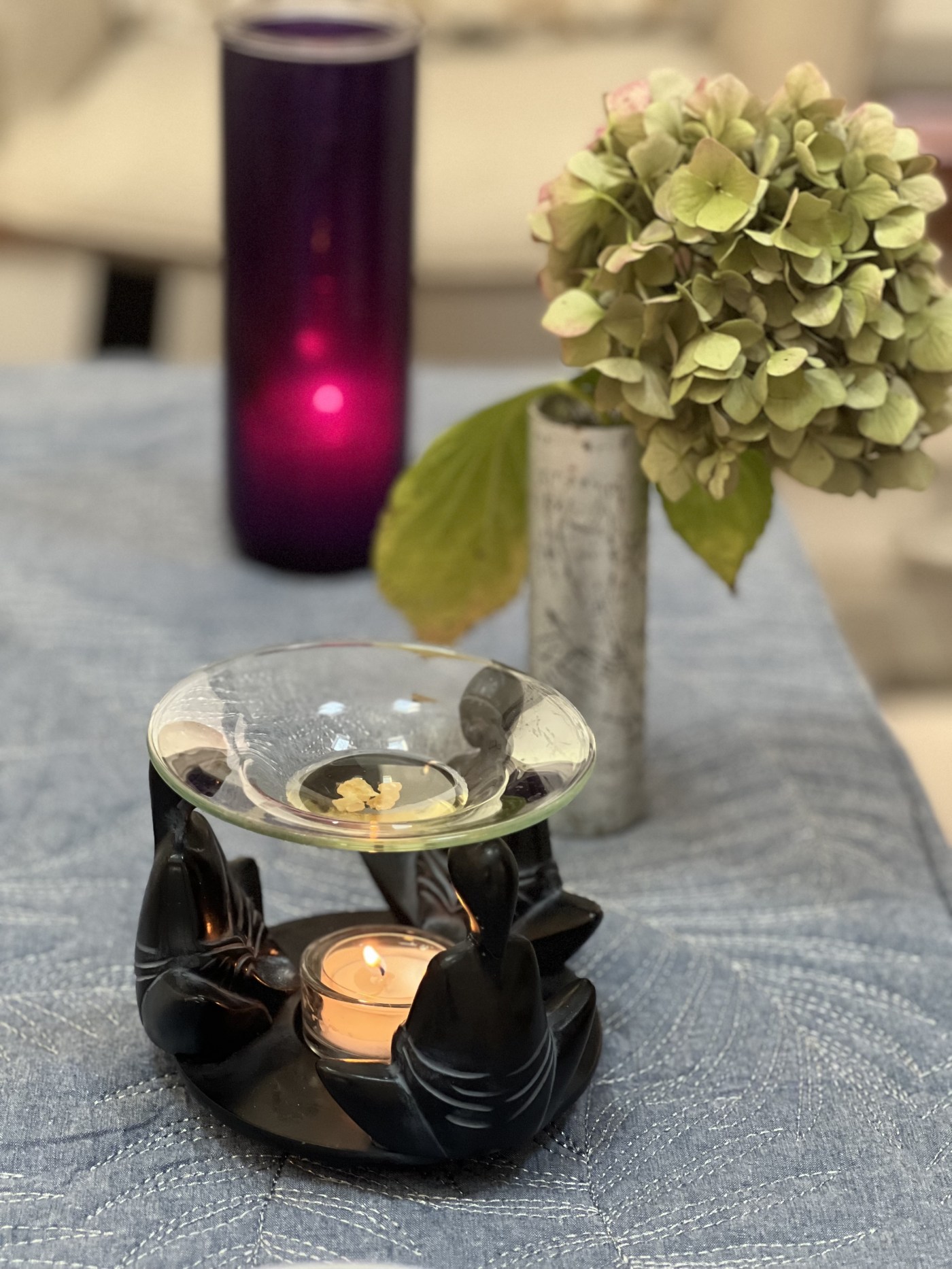
I thought this candle had long gone out…
But today today today today I can see
There’s still a flickering flickering

Today I saw a flickering, just a little light cracking open, after some weeks of darkness.

I had just finished reading a new poem from Ana Lisa de Jong, when Wonder came up in my Spotify playlist. The poem, Ceaseless Wonders, offers insights into when light may come.

CEASELESS WONDERS
Wonders never cease,
while we are sleeping
or awake in rumination
wonders are not ceasing
Wonders will not cease
until wonders are not needed,
meanwhile wonders are the signpost
to the Wonderful.
Wonders in the breath,
which has exhaled us into being,
and wonder in the
breath that keeps us living.
Wonder in the breath
of the fresh new morning,
the birds who sing of the
restoration of creation.
Wonders will not cease
while time keeps unfolding.
Time left ahead
assures us of wonder’s returning.
And wonders never cease
as darkness precedes the morning,
the morning star
points us to light’s dawning,
and the rounding sun,
which hardly falters in its momentum,
though wonders seem far flung
and courage is ebbing.

-Ana Lisa de Jong, Living Tree Poetry, February 2025

The synchronistic moment of the song and poem coming together was itself, a glimpse of light, my 2025 word of the year. Experiencing synchronicity is a holy surprise, an inkling of something more, a nudge to pay attention, to look and listen deeply. Perhaps this is a glimpse, a reminder, that darkness will pass with time because darkness always precedes the morning. Wonders will not cease/while time keeps unfolding. Time left ahead/assures us of wonder’s returning.

During this time of darkness, wonders never cease, are not ceasing, will not cease. The wonder is our breath. We can use our breath as prayer—the literal inhale and exhale, that takes us from one moment to the next, from this day to the next, from night into morning. We continue to

Burn burn burn burn on the inside
Burn burn burn burning like a bright light
Burn burn burn burn on the inside
This light’s still burning, burning bright
I thought this candle had long gone out…
but today i can see, there’s more than a flickering

Our longing for hope, peace, and light becomes the prayer. And in times of darkness, our purpose is not to question our lack of courage or hope, but instead to bring wonder as fuel to burn like a bright light, to keep the flame alive. Yes, I wonder and I wonder.

Apollo 8: Christmas Eve, December 24, 1968

Since the beginning of time, peoples of all cultures and religions have beheld the beauty of the earth, endeavoring to understand the universe and their place in it. We long for this sacred knowing. Just a century ago, we could not have conceived of the technology and space exploration that would produce photographs and telescopic images, inspiring such awe and wonder, my word for 2023. We are imbued with the grandeur of God.

Hildegard of Bingen, the 12th Century Benedictine Abbess and founder of German scientific natural history, captures this wonder:

“Glance at the sun. See the moon and the stars. Gaze at the beauty of earth’s greenings. Now, think. What delight God gives to humankind with all these things. All nature is at the disposal of humankind. We are to work with it. For without we cannot survive.” 

Hildegard of Bingen

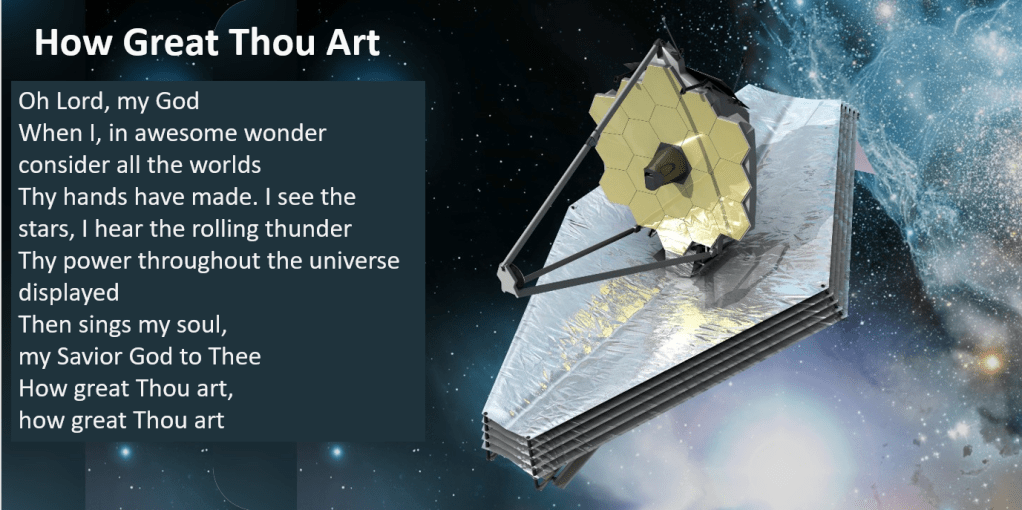
Since 1990, the Hubbel Telescope has captured the wonder of our universe’s distant past, more than 13.4 billion light-years away, capturing images of black holes, galaxies, and the birth and death of stars, changing how we look at our cosmos.

The James Webb Telescope launched on Christmas Day, 2021, has even greater potential, using infrared capabilities to see through dusty regions of space viewing objects that are too old, faint, or distant for the Hubble Space Telescope.

It is astounding to behold the images of what is beyond us, but, perhaps, even more profound are the images captured on Christmas Eve, 1968, of Earth. The three astronauts of Apollo 8 completed the first manned orbit around the moon, becoming the first humans to see, and photograph, the Earth from space.

The first color photograph taken beyond Earth’s orbit was later titled Earthrise. The film “Earthrise” tells the story of this image captured by the Apollo 8 astronauts—Bill Anders, Frank Borman, and Jim Lovell—and recounts their experiences, exploring the beauty, awe, and grandeur of the Earth against the blackness of space.

The vast loneliness is awe-inspiring and it makes you realize just what you have back on Earth. The Earth from here is a grand oasis in the big vastness of space.”

Astronaut Jim Lovell, Apollo 8

Looking beyond, looking upon, looking around, and within—all are filled with wonder.

“…take a look around you. Ponder how the solid-seeming ground beneath your feet is quietly shaking with the force of billions of years of cosmic collisions. Go outside…watch the wind blow through the trees … The endless comings and goings of galaxies, stars, and planets create a melding of songs that you are part of too. It’s a reminder that the world always has been, and always will be, worthy of wonder.”–Adam Frank, The Constant Fire

In awesome wonder, may your Christmas be filled with reminders of the beautiful mystery that surrounds you. May your prayer begin with “How Great Thou Art.”

How Great Thou Art performed by Chris Rice.

More reflections on awe and wonder.

© Jodi Blazek Gehr, Being Benedictine Blogger

The Grandeur of God: Care for Creation and for the Vulnerable

I have been enchanted by the poem The Grandeur of God, by Gerard Manley Hopkins, for years. I practiced Lectio Divina, a sacred reading practice, with this poem and wrote about it in God’s Grandeur: Praying with Poetry.

I cannot confess to understanding every word of this Victorian-era sonnet, published nearly 30 years after Hopkins’ death in 1889, but I feel the same passion for the beauty and sacredness of creation “that gathers to a greatness like the ooze of oil / Crushed” with which he writes. Hopkins writes with celebratory confidence,

“And for all this, nature is never spent;
There lives the dearest freshness deep down things”

But we know as global temperatures rise, more droughts, storms, rising sea levels, melting glaciers and warming oceans are impacting both human and animal life. Nature has been used and abused in so many ways. Is it true that “nature is never spent?” Can this earth withstand the heavy burden of “man’s smudge…and smell?” Indeed, we seek comfort in the notion that the sun will always rise as “the brown brink eastward, springs” and always sets as “last lights off the black West went.”

We hope for the future of our planet, but we must be caretakers, not just takers. We must be co-creators with the Divine to ensure the “grandeur of God,” our planet, is full of wonder and awe for future generations.

“Glance at the sun. See the moon and the stars. Gaze at the beauty of earth’s greenings. Now, think. What delight God gives to humankind with all these things. All nature is at the disposal of humankind. We are to work with it. For without we cannot survive.”

-Hildegard of Bingen
Continue reading “The Grandeur of God: Care for Creation and for the Vulnerable”

Wonder Begins in the Present Moment

Our being is often crowded out by our doing. Each day we are summoned to be creators of the present moment. Artists know the value of white space. Sometimes what isn’t there enables us to see what is.

Macrina Weiderkehr

In art and design, white space, also called negative space, is the area of a page without images or text. It is the space between lines, margins, graphics, and other design elements. Without white space a reader would be terribly distracted, having difficulty understanding the message or determining what is most important to see.

So, too, with our lives. Our moments can be filled with distractions, both in our thinking and in the many daily responsibilities we have. Macrina Wiederkehr, Benedictine sister, suggests that we are the creators of our present moment. We must, as the artists of our life, create our own white space—perhaps in simply being rather than doing, taking moments of silence to pause between activities, or practicing creativity or contemplation. It is when we create white space in our lives that we see differently, appreciating the wonder of an ordinary day.  

Recently I guided a retreat called “The Grandeur of God: Living Life with Wonder and Awe.” Taking a retreat, time away from ordinary life, can be the “white space” that one needs to relax, rejuvenate, and refocus. When we look at our life as a means to an end, something to endure until things get better, we steal opportunities to live a life with wonder and awe.

It is not always possible to leave our homes, families, or places of employment, but science and religion unequivocally agree on the importance of creating white space in our daily life to experience wonder and awe. Experiences of awe, what C.S. Lewis calls “golden moments,” can reduce stress, loneliness, and physical distress, and bring one a sense of expanded time, perspective, and connection.

Continue reading “Wonder Begins in the Present Moment”

The Awe of Moral Beauty: The Story of Regina & Achim

Life is difficult. The first three words in M. Scott Peck’s classic The Road Less Traveled, which I read in my early twenties, left me feeling both comforted and troubled. Oh, thank God, I’m not the only one going through hard things; this is normal…but oh my God, is life really this hard? As I “grew up”, I learned that despite the challenges of life there are plenty of opportunities to practice gratitude and seek joy and wonder.

I am inspired, and filled with awe, by those who meet challenges and overcome obstacles with resilience, courage, kindness, and positivity. In Awe: The New Science of Everyday Wonder and How It Can Transform Your Life, author Dacher Keltner outlines eight wonders of life that bring us a sense of awe and wonder. Music, nature, spiritual practices, and more influence us, but “we are most likely to feel awe when moved by moral beauty…in fact, it was other people’s courage, kindness, strength, or overcoming” that inspire us most.

This leads me to the story of Regina and Achim—I am inspired by them both. Regina met the challenge of a life-threatening illness with humor, positivity, faith, and courage. Achim showed selfless kindness and generosity by becoming Regina’s lifeline.

Continue reading “The Awe of Moral Beauty: The Story of Regina & Achim”

Blog at WordPress.com.

Up ↑