Search

Being Benedictine

Living SoulFully as an Oblate of St. Benedict

Tag

balance

Flowers and Fear, Side by Side

January 2026 Oblate Reflections, Christ the King Priory, Schuyler, Nebraska

Theme: Balance and Moderation; Lectio Divina: Matthew 6: 25-34

Sources: Wisdom Distilled from the Daily, Joan Chittister, Chapter 6 “Monastic Mindfulness: A Blend of Harmony, Wholeness, Balance; In place of confusing life patterns, the security of a healthy balance – The Holy Rule of St. Benedict Podcast w/ Fr. Mauritius Wilde, OSB

Our Lectio Divina reading mentions ‘worry’ six times. Our default emotion can be to worry in the face of an uncertain future, when we fear the worst or feel there may not be enough time, money, food, or stuff. Some of us worry more than others. We are constantly fed cultural and marketing messages that tell us we will be more comfortable if we buy this, more admired if we buy that, safer if we own this, and happier with that. When do we have enough? How do we find a balance? What is the secret to less worry?

So often, we worry about what we have no control over, and our stewing does not change the outcome. Only our peace of mind and heart are disturbed. Joan Chittister writes, “We’re a people who lack awareness. We’re a world that has lost a sense of balance…To live a life of Benedictine awareness means we must come to see what we cannot. To the monastic mind, everything speaks of God. What I have and what I do not have. What I want and what I do not want….Life takes a sense of significance and a happy admission of insignificance.”

We matter. Our wants and our needs matter, yet we are not the center of the universe. We are significant and insignificant simultaneously. Humbly, we must admit that we are not in control of everything, everyone, or every outcome. Things happen, but God accompanies. Our worry does not help. Our controlling tendencies do not get us what we want. Our worry, in fact, is an impediment to living our present moment most fully.

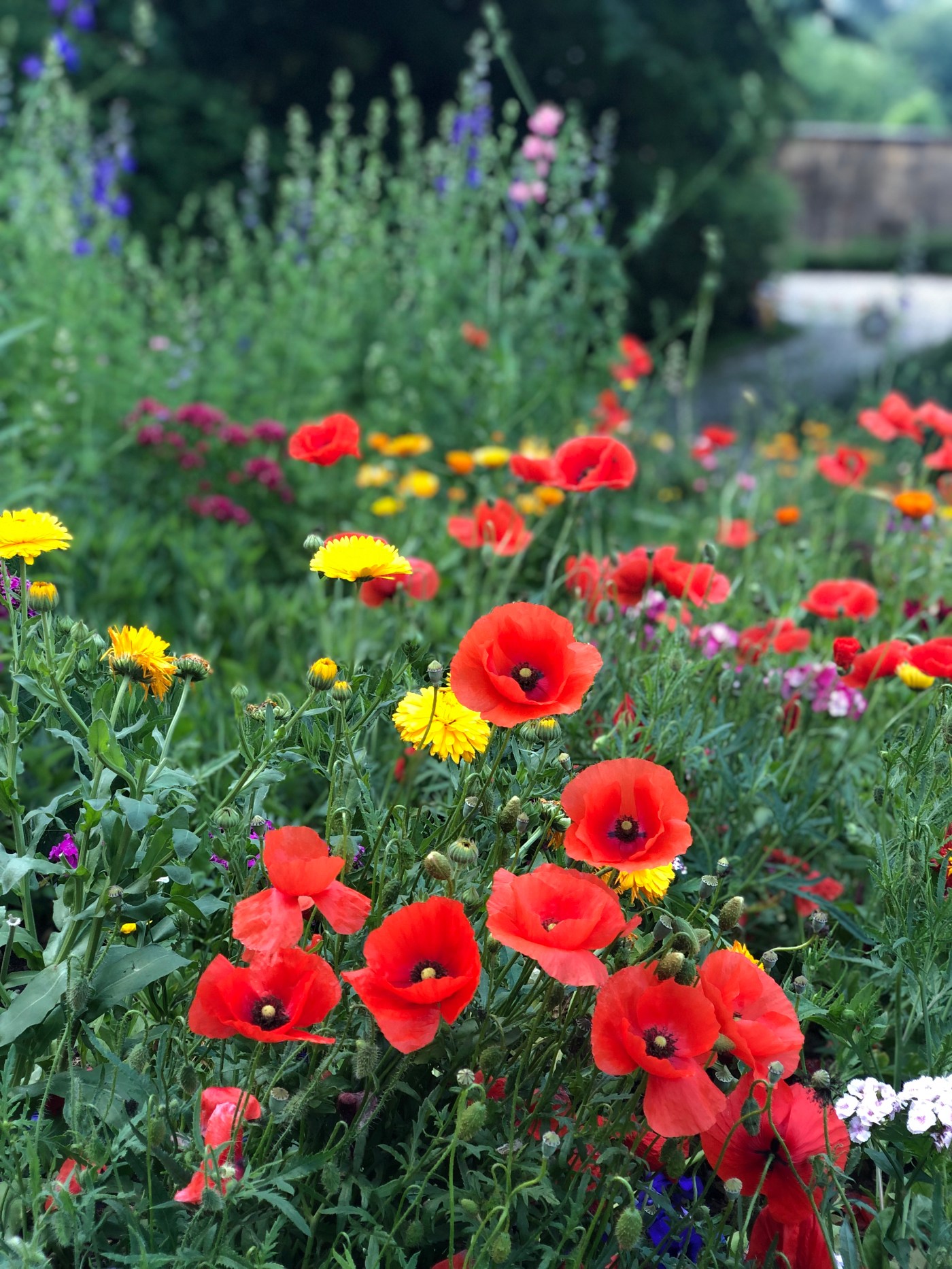
In Matthew 6, it is written, “Therefore I tell you, do not worry about your life, what you will eat or drink; or about your body, what you will wear. Is not life more than food, and the body more than clothes?  Look at the birds of the air; they do not sow or reap or store away in barns, and yet your heavenly Father feeds them. Are you not much more valuable than they?  Can any one of you by worrying add a single hour to your life? And why do you worry about clothes? See how the flowers of the field grow. They do not labor or spin. Yet I tell you that not even Solomon in all his splendor was dressed like one of these.  If that is how God clothes the grass of the field, which is here today and tomorrow is thrown into the fire, will he not much more clothe you—you of little faith? So do not worry, saying, ‘What shall we eat?’ or ‘What shall we drink?’ or ‘What shall we wear?’ For the pagans run after all these things, and your heavenly Father knows that you need them. But seek first his kingdom and his righteousness, and all these things will be given to you as well. Therefore, do not worry about tomorrow, for tomorrow will worry about itself. Each day has enough trouble of its own.”

These words can be comforting and a reminder that we can only do so much. We can put into action only what we can and let be what we cannot change. Recognizing and naming our emotions of worry and fear can be helpful. “Awareness of the sacred in life is what holds our world together and the lack of awareness and sacred care is what is tearing it apart,” writes Chittister.

Our attention is the first step. When we notice our attachment to physical things, habits, routines, our desire to fix, help, or solve, God is with us as we face our life in truth. Life gives us grief and uncertainty, over and over again. We must accept that this is part of the whole picture of our lives.

Chittister writes about a stained-glass window in the chapel of her monastery — each window carries a different concept, meaning, and design, yet they are not in conflict with one another. It is the light that gives each segment its integrity, blending them together as one. “What is it that makes for unity among the many opposing energies we meet in life that could instead become just so many instances of noisy clash and conflict? What is it that brings life together and nature and people together and the world together and nature together?”

Continue reading “Flowers and Fear, Side by Side”

Spring Equinox and Easter

Just for a moment, at 10:06 pm tonight, March 19, 2024, darkness and light will be held in perfect balance. Equinox, meaning “equal night” in Latin, is when the sun is directly over the Earth’s equator, causing day and night to be equal moments. In the northern hemisphere, where I live, we will begin to have longer days with more sunshine and hours of light.  As the earth continues moving around the sun, the position of the sunrise and sunset will change quickly, and the balance between night and day will not last long. 

Indeed, an apt metaphor for the balance we seek in our daily lives. It is good to remember that even in the cosmos there is either more dark or more light. This is life. 

During pre-Christian Europe, the pagan goddess, Ostara, was celebrated during the spring equinox. She was honored for renewal, rebirth, fertility, balance, and the coming of spring. In Western Christian churches, Easter is celebrated on the first Sunday after the first full moon following the spring equinox. The cosmic connection between spring equinox and Easter, the crucifixion, death, and resurrection of Jesus, cannot be missed–they follow the rhythm of nature and point to more light, either literally or through Christ.

I have been feeling some guilt this Lent season. St. Benedict devotes an entire chapter to observing Lent with advice for monks. He writes, “Let each one deny himself some food, drink, sleep, needless talking and idle jesting, and look forward to holy Easter with joy and spiritual longing (RB 49: 7).” I have not made any grand gestures of sacrifice, quite the opposite. During my spring break from school, which occurs during Lent, we tend to travel out of state to see our daughter and son-in-law, we wine and dine, gather with friends and family, and generally celebrate time on vacation. Return from spring break marks the beginning of the last quarter, or nine weeks, of school when teachers begin to see the light at the end of the tunnel.

My Lent intention is to “hold it all”– to live as prayerfully, joyfully, playfully, gratefully, mindfully, and soulfully as possible while balancing my school and home life. Striking a perfect balance in one’s life is more of an ideal than a reality. The celebrations of the liturgical and astronomical calendar are reminders that our spiritual longings can be met by following the rhythms of nature. Each season we have another opportunity to set new intentions and to honor them in sacred ritual. The Benedictine idea of balance comes from the monk’s life, moving between prayer and work, ora et labora. So, too, do those who live as “monks in the world” seek this balance–sometimes there is more work, less prayer–but both are seen as necessary, sacred, and part of the whole. 

“Blessed are you, spring, season of resurrection, sacrament of promise. Like Jesus you rise up out of the darkness, leaving around you a wake of new life.
Blessed are you, spring, season of hope and renewal. Wordless poem about all within us that can die. Each year you amaze us with the miracle of returning life.”

-Excerpt from A Spring Blessing in The Circle of Life: The Heart’s Journey Through the Seasons by Joyce Rupp & Macrina Wiederkehr

More on Balance and Being Benedictine:

Mindfulness and a Blue Heron
Enough: I Can Never Know It All

Our Life is a Balance

© Jodi Blazek Gehr, Being Benedictine Blogger

The Way The Wild Flowers Grow

June 2020 Oblate Reflections and Lectio Divina

Topic: Involvement or Detachment?

Sources: Matthew 6: 24-24; Study Guide for The Rule of St. Benedict, pages 119-123, Maria-Thomas Beil, OSB

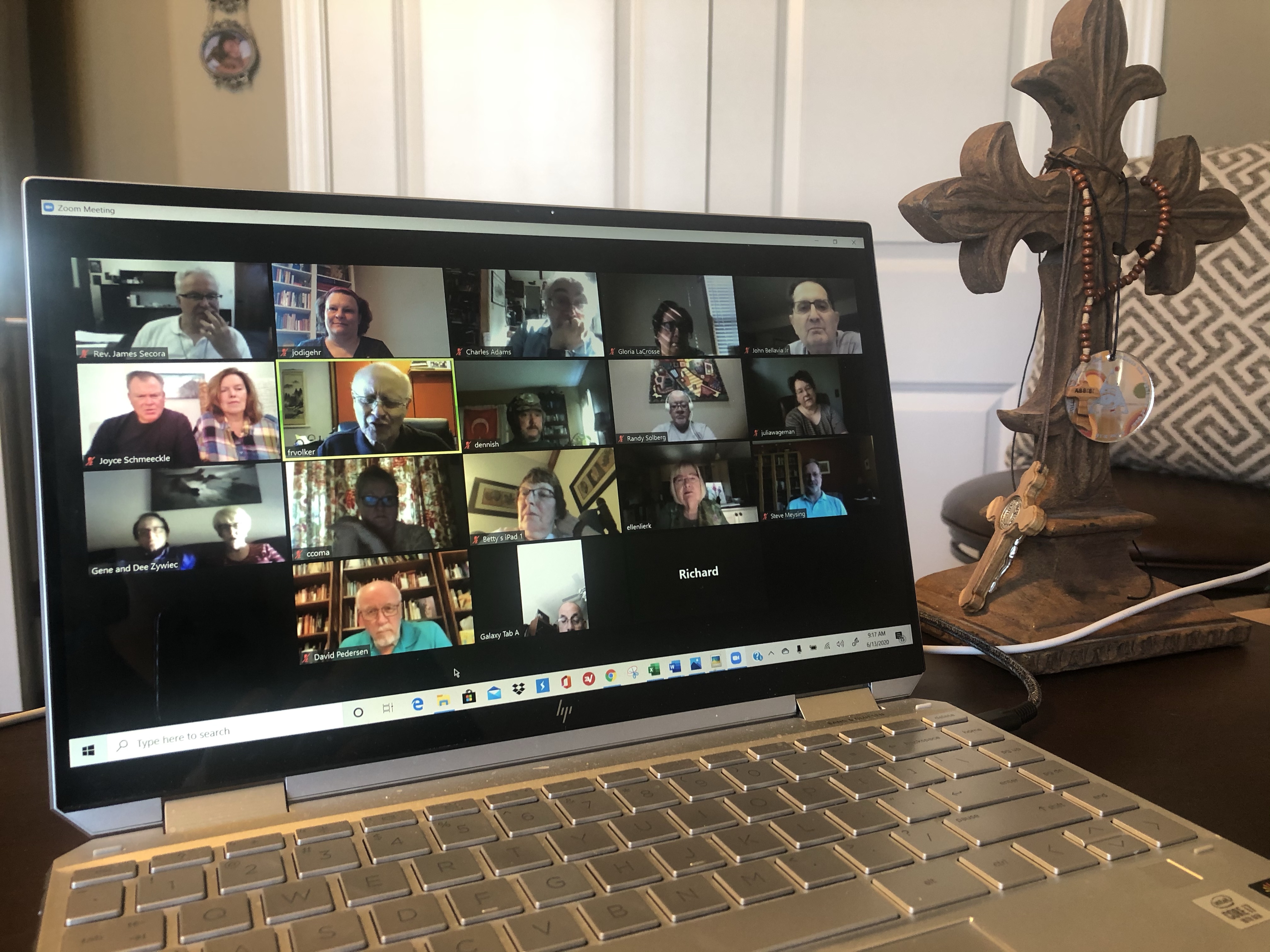
The focus of our June Oblate Zoom meeting is to explore our attachment to the world. A challenging question: How much are we to involve ourselves in improving our present world, while we are waiting and praying for a better world to come? We consider what St. Benedict teaches us about a balanced approach to the world that he was living in and about our outlook on living with the crisis of the coronavirus pandemic and the worldwide outcry for justice and end of racism.

We begin with morning prayer followed by sharing the challenges and blessings of living in this moment in time. Our challenges are many—because of the pandemic, it is difficult to not see others and we are missing our family and friends (and hugs!), there is uncertainty about how to reach out to others, and some of us suffer from PTSD, paranoia, negative thoughts, or anxiety. It is a time of letting go for many of us—there have been deaths, transitions in relationships and an adjustment of moving from old to new ways of doing things.

Life is different now. We live in uncertainty and some fear, not knowing what precautions to take—what is too much or too little in protecting our health, or what might offend another who responds to social distancing differently. We desire a middle way— to be in the world, carefully, but not looking at other people as a big germ. Finally, it is a challenge during this time of unrest, protest, and anger to see the world as it is, not as I want it to be. It is an opportunity to listen to how I am to respond to systemic racism, to withhold judgement and defensiveness, to educate myself, and to recognize there are things broken in the world. Evaluating how am I to respond and staying hopeful is essential. Continue reading “The Way The Wild Flowers Grow”

Sobriety: The Nature of our Need

Fr. Mauritius Wilde, Prior of Sant’ Anselmo in Rome, has a new podcast series on the Benedictine understanding of sobriety.

Can you get caught up in the swirl and chaos of fear, violence, and anger assaulting our world today? Practicing soberness means being detached from emotions, both overly negative or positive feelings. It is not good to be “drunk” on either extreme.

Soberness is taking just what we need. What do I take with me? What do I take in? What do I consume? How much wine, money, noise, whatever? Is it too much? The journey of soberness is to become more aware of whether there was too much.

But soberness is more than an absence of something—there is its own positive quality. The absence of the noise of tv is more than just turning off the tv. We begin to discover how beautiful silence is. Once you taste it, you want to have more of it.

Capture


2018 Word of the Year….drumroll, please

You know how spiritual gurus encourage you to pick a word of the year, something profound and inspirational to help you navigate a new year? Well, I found mine the other day. I had contemplated some lofty sounding words, but I don’t even remember them now because when this word fell on me, I knew it was the one.

My word for the year is going to be cushion.

When I have a lot of activity then I need to cushion it with some non-activity, some silence and solitude. When I have a lot of sitting, I need to cushion it with more standing and walking around (this I’ve learned from my back injury.) I love the “vorfreude”, the anticipation of travel, but my adventures need to be cushioned with the feeling of contentment when arriving home, sweet home. And the times when I think I can pour just a bit more information into my brain by reading one more article or one more chapter, I shall give myself a cushion, the needed space for new thoughts and ideas to bubble up. Continue reading “2018 Word of the Year….drumroll, please”

Our Life is a Balance

January 2017 Oblate Reflections and Lectio Divina
Balance: Our life is a balance between stability and openness to change

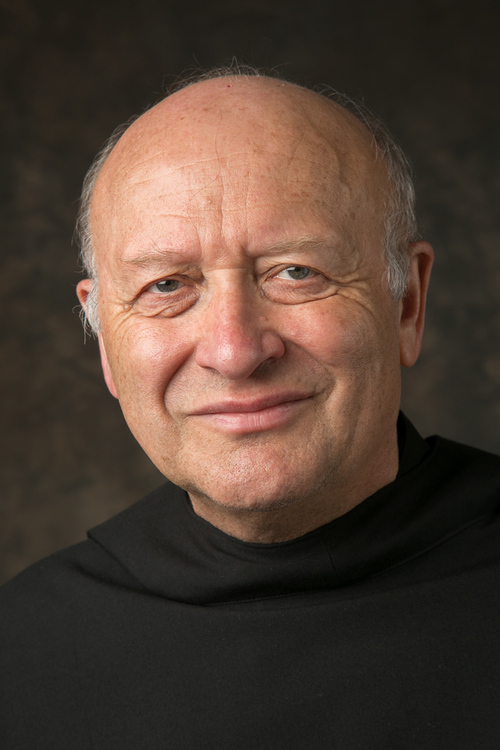
Invitation to Discussion by Fr. Volker Futter: The aim of Benedictine spirituality is the Fr. Volker Futter, OSB Subprior, Benedictine Retreat Center andconversion of the whole person. “Benedictine spirituality wants no sector of life to be isolated from God’s presence; work becomes a means through which we can know and love God more deeply…God is present and accessible in every moment and in every activity.”

Balance, proportion, harmony, moderation are central.  They so underpin everything else in the Rule, that without them the whole Benedictine approach to the individual and to the community loses its keystone. Continue reading “Our Life is a Balance”

Blog at WordPress.com.

Up ↑