Search

Being Benedictine

Living SoulFully as an Oblate of St. Benedict

Tag

darkness

Naming the Darkness Within: An Advent Reflection

December 2025 Oblate Reflections

Presentation Leader: Fr. Jim Secora – Advent “He is Coming”

“The people who walked in darkness have seen a great light.” (Isaiah 9:2)

We seek the light. In total darkness, our eyes can see a single point of light up to 5 miles away. This is the lesson of Advent, shared by Fr. Jim Secora, a retired priest and Benedictine oblate. We must accept the darkness, become comfortable with it, and not run from it. We must confront the darkness in the world and from within.

We live in a generation of darkness, as many generations before us have. There is much suffering—with refugees, immigrants, those lacking good health care, those who cannot afford necessities, who are sick, or have personal suffering. Advent calls us to confront the darkness. We cannot appreciate the light around us until we do.

Gaudete Sunday, the third Sunday of Advent, is a reminder of the joy we have and of the joy to come. The light of Christ is here and is coming—both are true. Miracles happen every day when we pay attention.

The fear of uncertainty, the unknown, leads to personal darkness. Even Jesus felt it. And he faced it head-on. We must practice trusting, letting go, and sitting in discomfort. If we don’t have an opportunity to see the need for light in our lives, why do we need Christmas? Fr. Jim suggests.

In small groups, we shared our personal experiences in response to the following questions—

1. Name the experiences of darkness that you find in the world, the church, the lives of people, and if only if you are comfortable, any area of darkness that you have or are experiencing. Where or when have you experienced light piercing the darkness?

2. The people of Israel sought out John because he offered them a vision of salvation. Where in the life of the world do you see the need for a savior? Where in my life, do I need to experience a rebirth of Jesus and his gift of salvation?

3. What is the star you are following now? And where is that star in its present radiance in your life leading you?

Much of our personal darkness comes from a feeling of helplessness. We want our discomfort relieved, our problems fixed. We live in a cloud of doubt and uncertainty, where we can’t “fix it” and no one else can “fix it” for us either. We forget that often the fear of the unknown may be worse than the reality that may be to come. But this presents the question: What do we trust in?

During my greatest fear, waiting for a life-changing health diagnosis, I experienced this desperation. And the only answer, the only peace is to trust in the breath of the Divine. Taking one deep breath at a time, I was more aware of the connection to the greater Source of peace. The breath prayer is the start of a surrendering practice, a continual turning it over to God, a reminder that we cannot assume to know how things will turn out or that we know what is best. This spiritual practice is impossible without humility.

“We have made ourselves the love of our lives and found little to adore at the altar of our egos. We have made ourselves our own gods and have forgotten God in the process…Joy, the deep-down awareness of what it means to live well, to live productively, to live righteously, is made out of self-giving, simplicity, and other-centeredness…Joy is not about what happens to us, the manger indicates. It is the meaning we give to what we do that determines the nature, the quality of the lives we live.”

-Joan Chittister, The Liturgical Year

It takes humility to surrender our “me” to “we.” We need a redemption of me. The stars we can follow are trust, acceptance, joy, and peace. Practicing gratitude for the present moment, finding peace, joy, and strength in whatever situation we are in, not wishing that we were somewhere else. Our star is directly above our present moment.

More reflections on Advent.

The Light Shines in the Darkness

Holy Darkness: An Advent Meditation

You Are A Sanctuary for the Divine ~ Sprigs of Rosemary Online Advent Retreat

An Advent Call of Humility: Mary and Zechariah

Flood the World with Love: An Antidote to Darkness

© Jodi Blazek Gehr, Being Benedictine Blogger

Wonder At The Art Museum

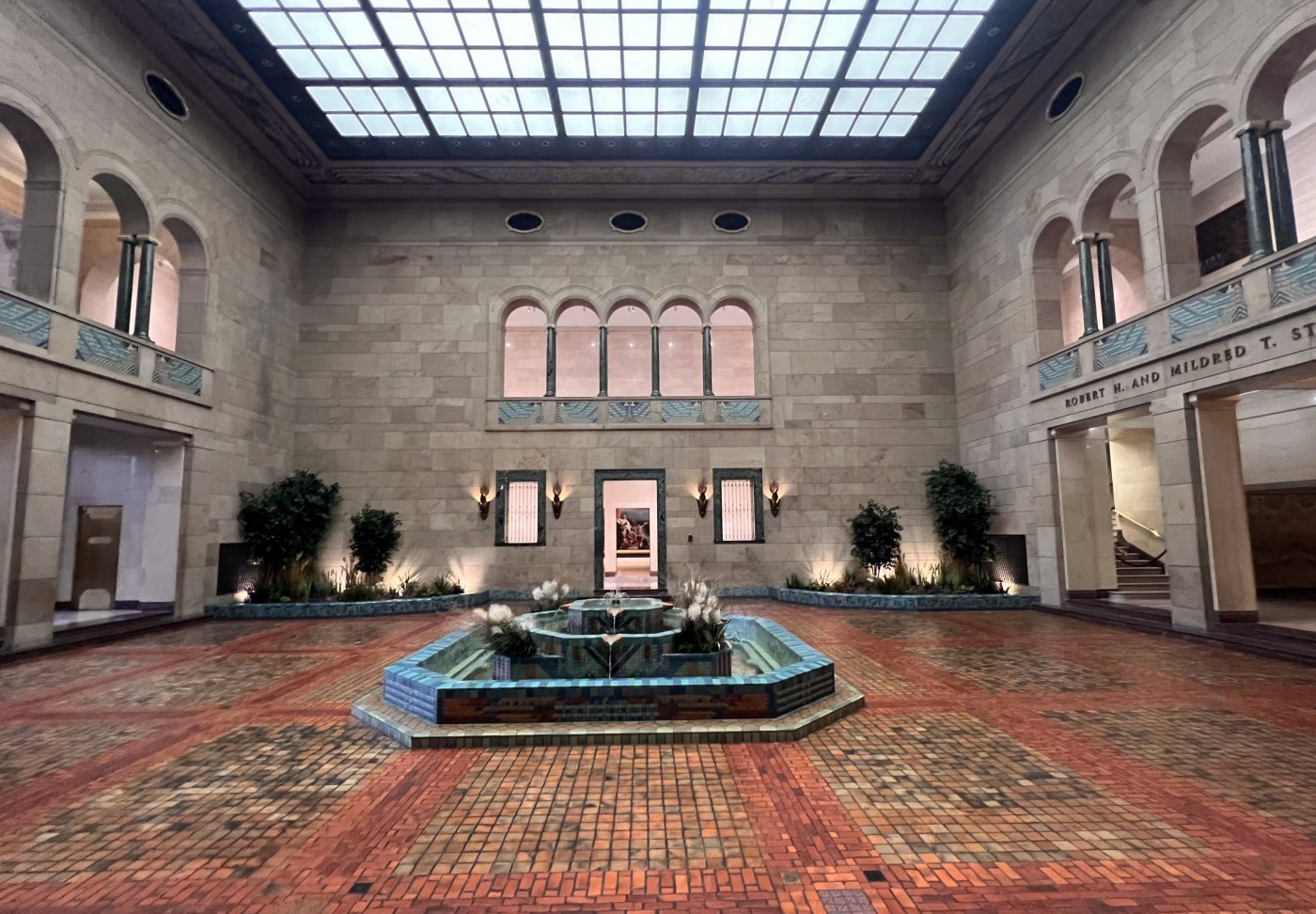
It was a joy to spend the day with kindred spirits at The Joslyn, an art museum in Omaha, Nebraska, discussing art, creativity, life, aging, grief, family, and more.

“All art is a terrific bridge…Music, paintings, words, they really do speak to the soul, to the heart, to the spirit…” -Julia Cameron

Conversation with loved ones requires little effort, but time with Nancy and Marilyn was enhanced by the insights from the art pieces that drew us in. We easily transitioned from discussing art techniques to our own creative projects, from religious and contemporary art to our own spirituality and religious traditions, and from what the artist might have felt or intended to convey to our own feelings and responses to life’s challenges. Skipping from one topic to the next, which might not have made much sense to onlookers, made perfect sense to us.

When I started leading SoulFully You retreats at St. Benedict Center, Nancy and Marilyn, my dad’s first cousins, were some of my first participants. I am so grateful that we reconnected and get together a few times a year. My memories of them were mainly as a child, and now we are good friends.

“Viewing art activates the dopamine network in the brain…people’s minds open to wonder: they demonstrate greater creativity, inspiration, problem-solving abilities, and openness to others’ perspectives. Art empowers our saintly tendencies.“ –Dacher Keltner, Awe: The New Science of Everyday Wonder and How It Can Transform Your Life

Sharing some of the art and insights that filled our day with wonder, I hope to inspire an in-person or online visit to an art museum or your own creative project, such as SoulCollage.

Continue reading “Wonder At The Art Museum”

Be The Light: A 4th of July Message

“To be human is to live by sunlight and moonlight, with anxiety and delight, admitting limits and transcending them, falling down and rising up. To want a life with only half of these things in it is to want half a life, shutting the other half away where it will not interfere with one’s bright fantasies of the way things ought to be.-Barbara Brown Taylor, Learning to Walk in the Dark

Light and dark are the colors of life. No life is ever all of one or all of the other.

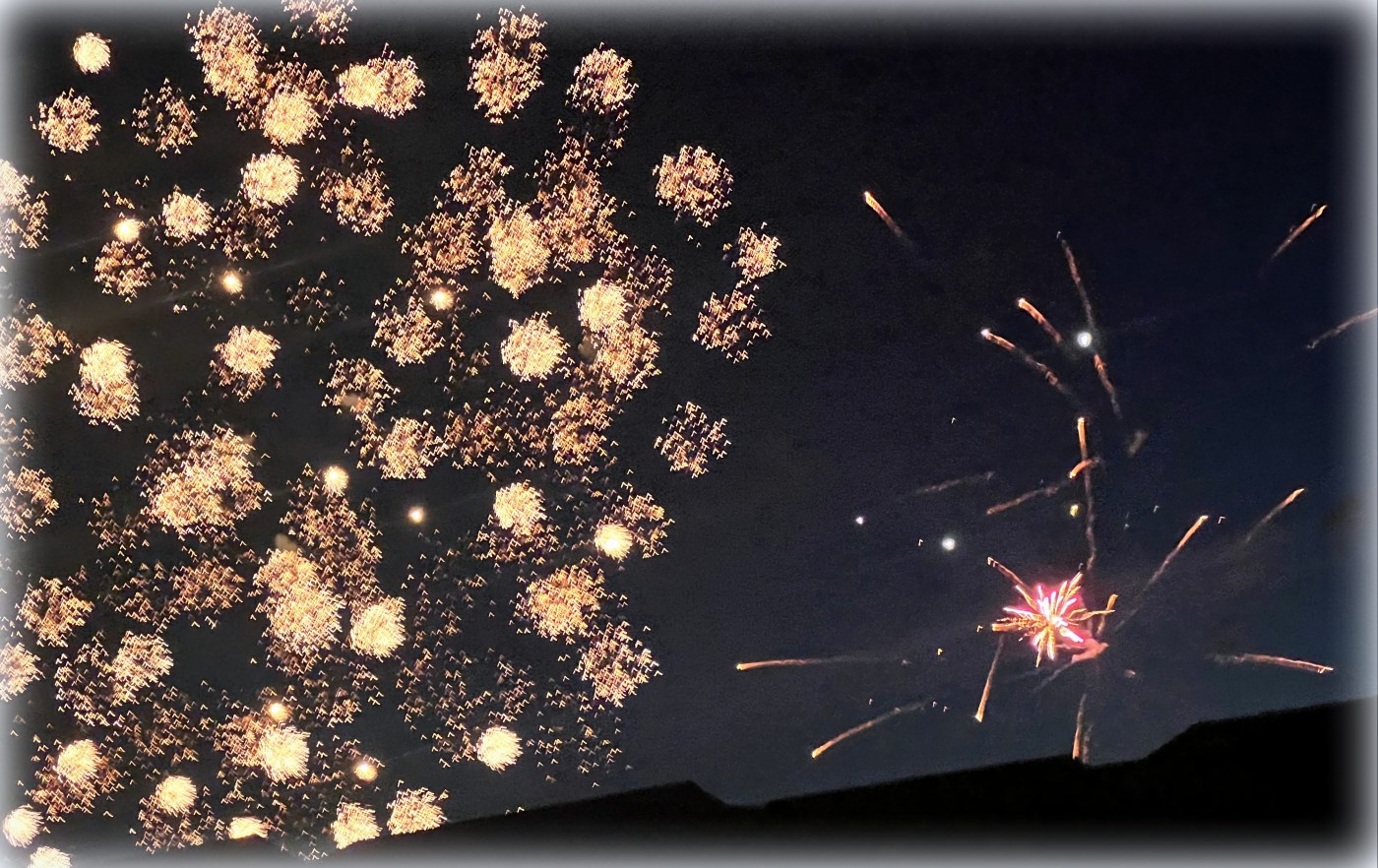
This is evident for many of us this 4th of July, the day we celebrate the independence of the United States of America. As daylight fades and darkness falls upon us, we gather in city parks and neighborhood driveways to witness crackling explosions, brilliant bursts of light, and glittering sparks as they cascade through the skies.

Fireworks can evoke a variety of feelings—from excitement, pride, and awe to anxiety, fear, and disbelief. I enjoy the displays but abhor the loud sounds. I think of shuddering dogs hiding under beds and the trauma that veterans may experience. I consider how much money is spent on fireworks that could be used in so many ways to help others. Still, with conflicted feelings, I watch and wonder.

To live in this country, to live in my body, is to face the realities of light and darkness. I have ideas of what democracy looks like, what the ideal is (see The Pledge of Allegiance of My Heart here). But I acknowledge that America is a work in progress, just as I am. Holding the tension between what is reality and what is our hope is a challenge. How do we stay present to the suffering in our souls and the world without losing the light inside?

 This, my dear, is the greatest challenge to being alive: to witness the injustice of this world, and not allow it to consume our light.’       – Thich Nhat Hanh

Continue reading “Be The Light: A 4th of July Message”

Ooh, I Wonder

Ooh, I wonder
What is to come, out of this darkness
I’ve been moving moving moving moving through the darkness…
I wonder when the light is cracking open..

(Wonder by S. Nutting/ K. Longaker)

The first verse to the song Wonder by Ma’Muse poses questions about the “dark night of the soul” that most of us experience at some point in our lives. Whether it is melancholy, depression, fear, or grief that grips us, we wonder: When is this going to end? What is going to come out of this darkness? What comes next? When will we see relief from our suffering? When will there be more light than dark?

The song continues.

I thought this candle had long gone out…
But today today today today I can see
There’s still a flickering flickering

Today I saw a flickering, just a little light cracking open, after some weeks of darkness.

I had just finished reading a new poem from Ana Lisa de Jong, when Wonder came up in my Spotify playlist. The poem, Ceaseless Wonders, offers insights into when light may come.

CEASELESS WONDERS
Wonders never cease,
while we are sleeping
or awake in rumination
wonders are not ceasing
Wonders will not cease
until wonders are not needed,
meanwhile wonders are the signpost
to the Wonderful.
Wonders in the breath,
which has exhaled us into being,
and wonder in the
breath that keeps us living.
Wonder in the breath
of the fresh new morning,
the birds who sing of the
restoration of creation.
Wonders will not cease
while time keeps unfolding.
Time left ahead
assures us of wonder’s returning.
And wonders never cease
as darkness precedes the morning,
the morning star
points us to light’s dawning,
and the rounding sun,
which hardly falters in its momentum,
though wonders seem far flung
and courage is ebbing.

-Ana Lisa de Jong, Living Tree Poetry, February 2025

The synchronistic moment of the song and poem coming together was itself, a glimpse of light, my 2025 word of the year. Experiencing synchronicity is a holy surprise, an inkling of something more, a nudge to pay attention, to look and listen deeply. Perhaps this is a glimpse, a reminder, that darkness will pass with time because darkness always precedes the morning. Wonders will not cease/while time keeps unfolding. Time left ahead/assures us of wonder’s returning.

During this time of darkness, wonders never cease, are not ceasing, will not cease. The wonder is our breath. We can use our breath as prayer—the literal inhale and exhale, that takes us from one moment to the next, from this day to the next, from night into morning. We continue to

Burn burn burn burn on the inside
Burn burn burn burning like a bright light
Burn burn burn burn on the inside
This light’s still burning, burning bright
I thought this candle had long gone out…
but today i can see, there’s more than a flickering

Our longing for hope, peace, and light becomes the prayer. And in times of darkness, our purpose is not to question our lack of courage or hope, but instead to bring wonder as fuel to burn like a bright light, to keep the flame alive. Yes, I wonder and I wonder.

The Longest Night

The winter solstice is the precise moment when the sun is situated exactly over the Tropic of Capricorn, seemingly at a standstill. The word solstice is derived from the Latin word sol, meaning sun, and sisterre, meaning standstill. We know that time does not really stand still, but time is a marker, an occasion of turning from and turning towards. This moment cannot be contained, sustained, or paused. Time is motion; it marches on.

There are moments in our lives when our great darkness feels interminable, infinite, beyond, and outside of time. “In the interior wintertime, we can easily lose heart, stop believing in our goodness, forget about our resilience, and discount the presence of those who love us. There is often sadness, loneliness, and a depletion of joy. This is the season of grief and depression, of searching and struggle.” (The Circle of Life: The Hearts Journey Through the Seasons, Joyce Rupp & Macrina Wiederkehr) It can be reassuring that just as the astronomical start to winter begins, the solstice gives way to longer days and the darkness will yield to a promised light. So we hope with us.

Continue reading “The Longest Night”

Easter: Embracing Light and Darkness

“We love to think of Easter as the feast of dazzling light. We get up on Easter Sunday morning knowing that the sorrow of Good Friday is finally ended… that Jesus is vindicated, that the faith of the disciples is confirmed for all to see, and that everyone lived happily ever after. We love fairy tales. Unfortunately, Easter is not one of them.” (Joan Chittister)

DSC_0593

During the Holy Triduum, we remember the events leading up to Easter. Each Holy Day is significant to the fullness of Jesus’ story—his life, death, and resurrection. Jesus’ life was full of joy—learning, teaching, helping others, growing in his authentic identity, and embracing his essence—but, also, as the Gospel of John poignantly states, “Jesus wept.” Even Jesus could not escape his own suffering—the death of a friend, concern for political and religious corruption, the betrayal of his disciples, his own physical persecution, and, finally, his fear of abandonment, that he had been forgotten by God and everyone. No doubt about it, Jesus experienced both joy and suffering.

Jesus’ life is an archetype for our own spiritual journey. There is nothing that happens in our lives that Jesus didn’t also experience. When we live out our own Good Fridays, mini-deaths that bring us face to face with darkness, we know we are not alone. We may feel betrayed by loved ones, blamed for problems we didn’t create, forsaken by those we trust. We grieve the loss of loved ones and lament our own mistakes. We are depressed or sad.

Our Holy Saturday is a time of waiting, enduring or resting, perhaps a respite from problems, a time when we can separate from our pain for moments, even days at a time. In the tomb, we wait for healing. Perhaps, we allow others to mourn with us and wait with us in hope. Our waiting is a gray space of in-between.

DSC_0420a

This darkness is not what we want—and anytime we experience something unwanted, or conversely don’t get what we do want, we live in some shade of darkness. Truth be told, we simply want peace and joy. We don’t want to be patient, to feel bad, to hurt. There are times when we cling to the darkness and choose to stay in a place of suffering, but we can both honor the darkness while looking towards a glimmer of light, to Easter. Continue reading “Easter: Embracing Light and Darkness”

Flood the World with Love: An Antidote to Darkness

Flood the world with love. These words came to me this morning after I woke up anxious and fearful. I had a disturbing dream, but it was more about what is happening in this country— a foreboding sense of hopelessness for the future, so much political tension, blatant racism and xenophobia, and strained relationships with, even aggressiveness from, those who don’t see what is so very wrong with the words and actions coming from the White House.

Flood the world with love. I remembered that several months ago I had written a blog post titled, Flood The World With Love, but I didn’t remember exactly what I had written, or why. As I read it again, I realized that my own words had come at just the moment I needed them.

Flood the world with love. Inspired by the lyrics of a Carrie Newcomer song, what I wrote gave me enough light to start my day with the hope that if I just flood the world with love, I am doing something.

Flood the world with love. I had written about practicing lectio divina with both song (“I Heard an Owl” by Carrie Newcomer, much-loved folk singer, and spiritual teacher) and scripture.

I heard an owl call last night
Homeless and confused
I stood naked and bewildered
By the evil people do

Up upon a hill there is a terrible sign
That tells the story of what darkness waits
When we leave the light behind.

Don’t tell me hate is ever right or God’s will
Those are the wheels we put in motion ourselves
The whole world weeps and is weeping still
Though shaken I still believe
The best of what we all can be
The only peace this world will know
Can only come from love.

I am a voice calling out
Across the great divide
I am only one person
That feels they have to try
The questions fall like trees or dust
Rise like prayers above
But the only word is “Courage”
And the only answer “Love”

Light every candle that you can
For we need some light to see
In the face of deepest loss,
Treat each other tenderly
The arms of God will gather in
Every sparrow that falls
And makes no separation
Just fiercely loves us all.

(Carrie Newcomer, The Gathering of Spirits, 2001)

My heart is heavy with the darkness of the world, of “the evil people do” in the name of our own opinion, religion, political party, racial or economic privilege. Our collective anxiety, fear, anger, and hostility have led to so much division and violence—in our spirits and in relationships. We must

Flood the world with love.

The words are a meditation of love, peace and courage—and a good reminder of how to be a living light in the world. As the antidote to confusion, fear, hatred, and darkness, we must

Flood the world with love.

With so much darkness, “the best of what we all can be” is to

Flood the world with love.

 I want to “fiercely love,” to build others up, to “treat each other tenderly,” to ease another’s suffering, to remind others of their divine spark, to err on the side of compassion, to

Flood the world with love.

I want to be a light in this world. We are creators, too—with our thoughts, actions, and energy. We can either live in love or live in fear. Mother Teresa said, “If we have no peace, it is because we have forgotten we belong to each other.”

Flood the world with love.

St. Benedict instructs, “Let peace be your quest and aim.” (RB, Prologue 18) We cannot accept hate as the new normal. It can feel overwhelming at times—“I am only one person,” but we must, at least, try. We must “light every candle” that we can. We must

Flood the world with love.

The only word is “Courage”/ And the only answer “Love.” I pray for the courage to bring more light and less darkness in the world. And as I wait for the ultimate display of love that “The arms of God will gather in / Every sparrow that falls / And makes no separation / Just fiercely loves us all”, I choose, in all my imperfection, to 

Flood the world with love.

Read the original post in its entirety HERE.
And if you haven’t listened to I Heard an Owl, you must.

IMG_4424
Missionary Benedictines of Tutzing, chapel artwork, “The Living Water” 

Holy Darkness: An Advent Meditation

*Note: This was not a session at the Sprigs of Rosemary retreat but from a previous Advent retreat called Holy Darkness. Nevertheless, a timely reflection on the Advent wreath and the importance of waiting during the Advent season.

As a child, the Advent season was musically frustrating for me. With so many beautiful Christmas carols and hymns, I just could not fathom any reason why Catholics must wait until Christmas Eve to sing them. Every department store was playing Christmas songs. Television stations were showing Christmas movies and special programs.

Why wait?  

I prefer not to wait in many situations. For example, I would rather get to the destination of a planned vacation immediately than endure the hours it takes to drive or make the airline transfers needed to get there. I much preferred nursing my infant daughter, playing with her and watching her sleep to the nine months of back-aching pregnancy. When I want to write or create, I often need to wait for the inspiration to strike. Waiting can be an inconvenience, even excruciating, but there is no denying that we must wait for many good things in life. Continue reading “Holy Darkness: An Advent Meditation”

Easter of Light… and Darkness

“We love to think of Easter as the feast of dazzling light. We get up on Easter Sunday morning knowing that the sorrow of Good Friday is finally ended… that Jesus is vindicated, that the faith of the disciples is confirmed for all to see, and that everyone lived happily ever after. We love fairy tales. Unfortunately, Easter is not one of them.” (Joan Chittister)

DSC_0593

During the Holy Triduum, we remember the events leading up to Easter. Each Holy Day is significant to the fullness of Jesus’ story—his life, death, and resurrection. Jesus’ life was full of joy—learning, teaching, helping others, growing in his authentic identity, and embracing his essence—but, also, as the Gospel of John poignantly states, “Jesus wept.” Even Jesus could not escape his own suffering—the death of a friend, concern for political and religious corruption, the betrayal of his disciples, his own physical persecution, and, finally, his fear of abandonment, that he had been forgotten by God and everyone. No doubt about it, Jesus experienced both joy and suffering.

Jesus’ life is an archetype for our own spiritual journey. There is nothing that happens in our lives that Jesus didn’t also experience. When we live out our own Good Fridays, mini-deaths that bring us face to face with darkness, we know we are not alone. We may feel betrayed by loved ones, blamed for problems we didn’t create, forsaken by those we trust. We grieve the loss of loved ones and lament our own mistakes. We are depressed or sad.

Our Holy Saturday is a time of waiting, enduring or resting, perhaps a respite from problems, a time when we can separate from our pain for moments, even days at a time. In the tomb, we wait for healing. Perhaps, we allow others to mourn with us and wait with us in hope. Our waiting is a gray space of in-between.

DSC_0420a

This darkness is not what we want—and anytime we experience something unwanted, or conversely don’t get what we do want, we live in some shade of darkness. Truth be told, we simply want peace and joy. We don’t want to be patient, to feel bad, to hurt. There are times when we cling to the darkness and choose to stay in a place of suffering, but we can both honor the darkness while looking towards a glimmer of light, to Easter. Continue reading “Easter of Light… and Darkness”

Blog at WordPress.com.

Up ↑