“Do not grumble or think ill of others.” (Rule of St. Benedict Ch. 4:39)
What is the key to practicing gratitude rather than grumbling? How can we live a grateful life in the midst of pain and suffering, our own, that of others, and that of the world around us? Is it possible to be thankful for challenging experiences?
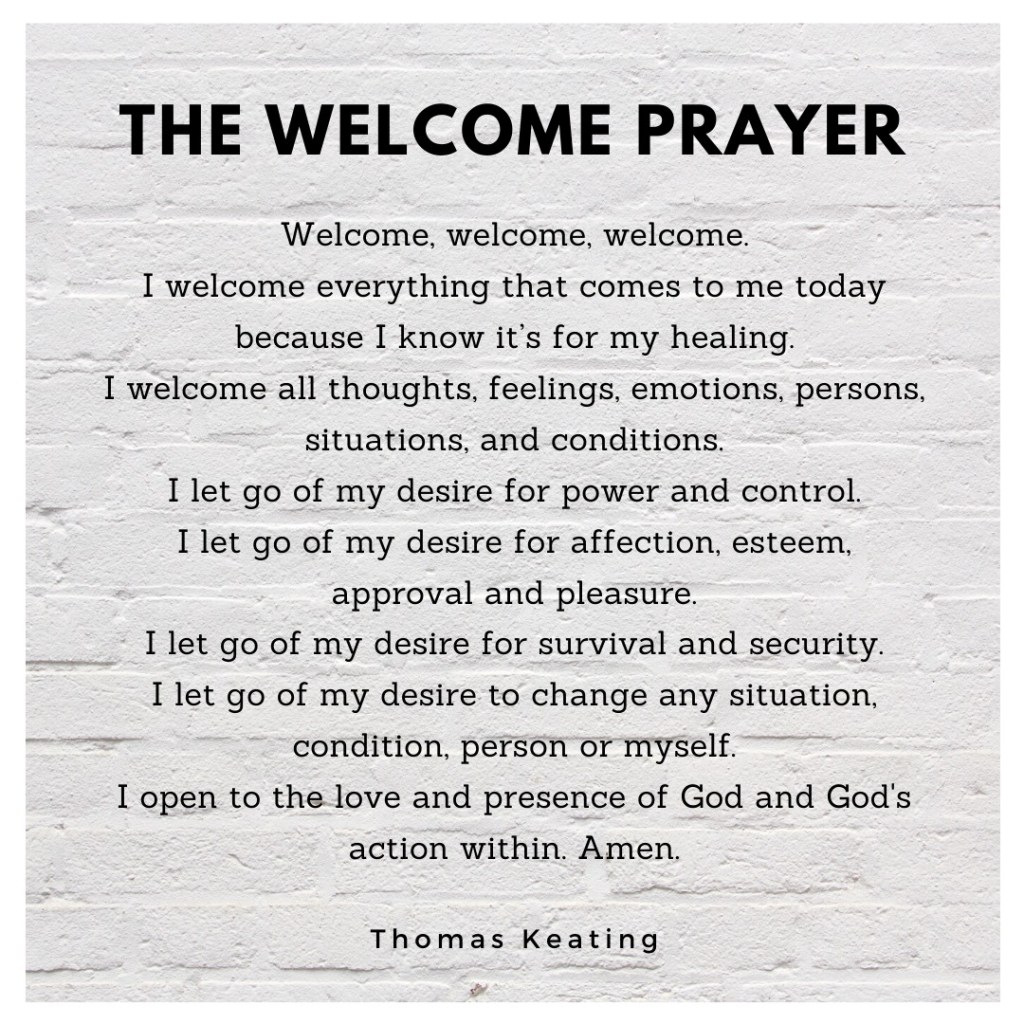
We use the Rule of St. Benedict and Scripture to address these questions at our November oblate meeting. We opened our meeting with the Welcome Prayer written by Fr. Thomas Keating).
If we truly practice this prayer to welcome all of the above, we find that the benefit of grumbling is minimal. In fact, grumbling is self-sabotage. The benefit of welcoming everything is that through the moments of distress, unease, discomfort, or suffering, we learn that another way could be a blessing. What can be difficult about the Welcome Prayer is the “letting go” of our control—and oh my, how much we prefer when things go our way.
St. Benedict has a few things to say about grumbling, a form of letting go of our own gripes, opinions, and negativity for the greater good of the community and ultimately our own selves. He encourages his monks to cultivate humility, patience, and a joyful acceptance of their station in life. It requires a surrender of pride to be content even when it is challenging to be.
We read the following excerpts and practice Lectio Divina as a group, sharing the insights we gained.
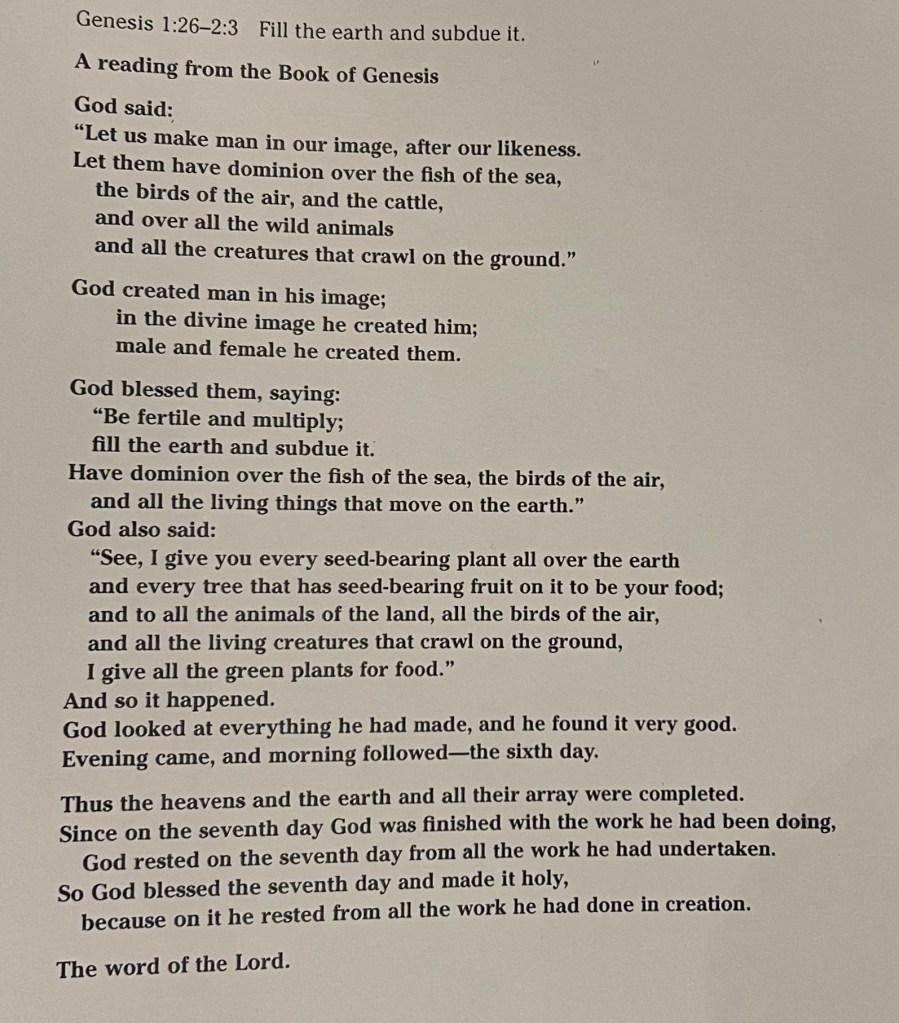
Lectio Divina—Genesis 1:26-2:3, Fill the earth and subdue it.
Book Discussion—The Oblate Life: Spirituality at Work, Dermot Tredget. Edited by Gervase Holdaway, OSB, 2008
Topics: Prayer, work, rest and study together provide a foundation for a Christian spirituality of work. St. Benedict recognized that work has a transformative power and for the monk is the principal means to seeking God. Our discussion flowed from words or phrases that resonated from sources listed above.
God created man in his image, in the divine image he created them.
We are created in the image of our Creator; we are creators, too, and it is our responsibility to contribute to the act of creation. Creation is not a once and done effort. Creation requires constant movement, growing, expanding, and even resting. We must ask ourselves if our work is valuable. Does my work add value to God’s creation? “We cannot speak about a spirituality of work without talking about an ethics of work.” (Dermot Tredget)
I give you every seed-bearing plant
In the image of our Creator, our work is to plant the seeds we are given which becomes our food. This isn’t quick and easy work; we need to rest, recover and have patience. We are in relationship with the Divine as co-creators. The Divine is not out of the picture. There is an unseen aspect of work–God is working even while we rest. Even further, what we see as useless toil may show value later. All is sacred.
Living with a sense of wonder, my word for 2023, is my intention. Being open to surprises, having a sense of curiosity, and having the desire to learn is important to my spiritual practice of “being Benedictine.” Wonder sees the sacred in the ordinary and is a doorway to gratitude, but seeing with eyes of wonder is a much easier proposition when our daily life is comfortable. My sense of comfort was recently challenged.
On a cold, windy February morning, my little dog Bailey did not want to do her business outside. Fourteen degrees in Nebraska, who can blame her? Worried about potentially icy roads and getting myself to school in time, I hurriedly picked up my little dog and headed out to accompany her on a potty trip. After stepping down onto our (apparently icy) landing, my feet slipped out from underneath me. It happened so fast yet every second my body met the icy ground, pain pierced through me–first on my bottom, then as I slid to my left side hitting my elbow sharply. I felt several crunches on my arm as I continued sliding on the pavement finally stopping several feet away.
I knew immediately I had broken my arm, and later it was confirmed–a fractured ulna and a chipped elbow. The entire event was captured on our doorbell video. I watched it only one time to see if it was as I had remembered. Seeing myself fall has ruined me forever from watching America’s Funniest Home Videos again. Falls that used to crack me up (no pun intended) seem not so funny anymore.
Wonder is the doorway to gratitude.
Making meaning out of life’s experiences and practicing gratitude is foundational to my spirituality, but much of my broken arm experience (7 weeks to date) has been spent feeling like I am not being very Benedictine. I am grateful for much, but I have also been so tired, irritable, and moody. It has been more traumatic for my body, mind, and spirit than I could have imagined.
Despite my general crabbiness, I know my injury could have been worse–for that I am grateful. Thank God I hadn’t hit my head and been knocked unconscious. I am grateful that it was my left arm that was broken, and not my dominant right. After a week of wearing a splint, I was grateful to learn that the fractured pieces of my ulna had, amazingly, stayed in alignment. I would not need surgery and instead of needing a cast, I would wear a brace that I could easily remove to shower. A welcome reprieve from the confinement of a splint, there would be enough space to wiggle a pencil through to scratch my arm. (More things to be grateful for at the end of this post.)
Gratitude is an emotion that reflects our deep appreciation for what we value, what brings meaning to our lives, and what makes us feel connected to ourselves and others.
Atlas of the Heart, Brene Brown
I thought my attitude of gratitude would carry me through the weeks of convalescence in front of me, but I underestimated the many conflicting emotions I would have–frustration, overwhelm, disappointment, empathy, compassion, and wonder, just to mention a few. Out of 87 identified emotions (and experiences or thoughts that can lead to emotions) in Atlas of the Heart by Brene Brown, I have felt no less than 40 of them since I fell.
Early on I had decided I would be a resilient, strong, and compliant patient. I would remain calm in the face of discomfort or pain, knowing “this too shall pass.” Spoiler alert: I have grown weary, increasingly frustrated, and borderline hysterical from the discomfort and/or pain. Betty the brace–named after my strong, steady, prayerful oblate friend, Betty–has been called many other names besides Betty (Betty, the friend, took no offense.)
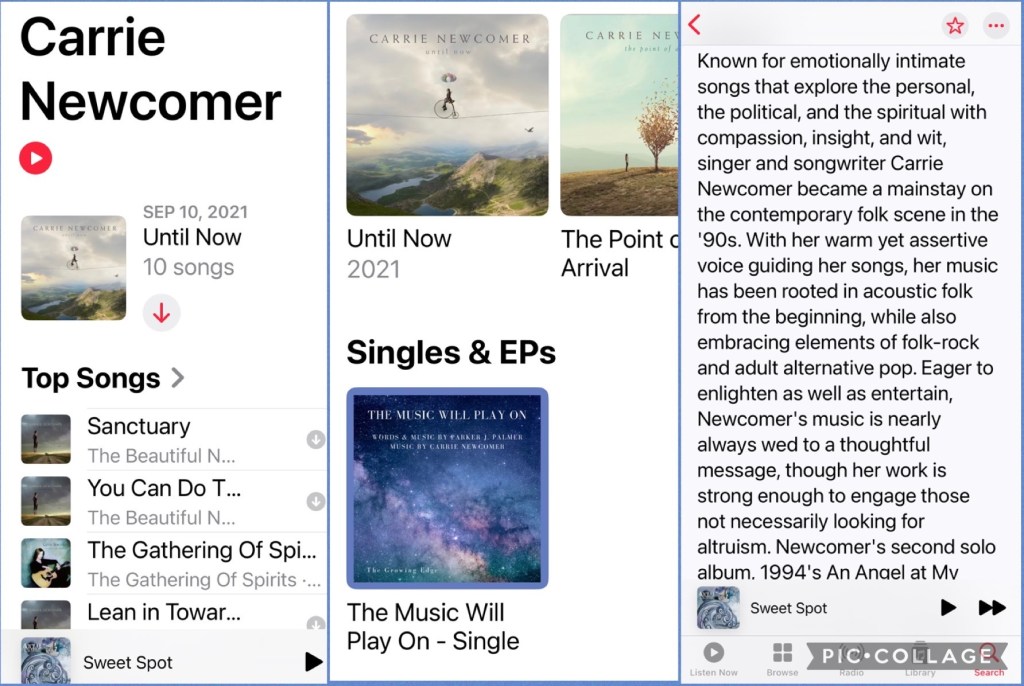
On my country road drives to and from St. Benedict Center, I often listen to an audiobook or podcast, but on my way home from an oblate weekend of beautiful sunrises and special monk moments, listening to some Carrie Newcomer music called to my spirit. I cued up Carrie Newcomer on my iPhone.
“The Music Will Play On” caught my eye. Sweet memories of meeting Parker Palmer, one of my favorite writers and thinkers, and Carrie Newcomer, one of my favorite musicians, at a 2019 Growing Edge retreat flooded my memories. Parker shared that he wanted to learn how to write a song, specifically about his own mortality. He asked Carrie to help him with some song-writing tips.
Parker writes,“I messed with metaphors, and began thinking about living and dying as part of what Thomas Merton, in a classic meditation, called “the general dance.” I’ve always loved dancing, so the metaphor felt just right. One morning, I woke up with a line running through my mind— “If I could, I’d dance this way forever”—and I knew I had the start of a song.”
It was such a special experience to witness the first performance of their song on retreat and to sing it along with them (saved in my personal video archives.) Here is a beautifully produced video of “The Music Will Play On” with lyrics:
No one knows for certain when their time will come, But life does not go silent once our dancing’s done. These harmonies will always call from beyond the years, The heavens dance forever to the music of the spheres.
If I could, I’d dance this way forever, But some soon day my dancing here will end. The music will play on, then one day I’ll be gone. I’ll dance into the darkness as new life dances in. Into the holy darkness where new life begins.
Indeed, our days are finite. We are inevitably “heading home to the music’s source.” As St. Benedict advises, “Keep death daily before your eyes.” Perhaps this sounds morbid, but this message encourages me to live each moment with wonder and gratitude.
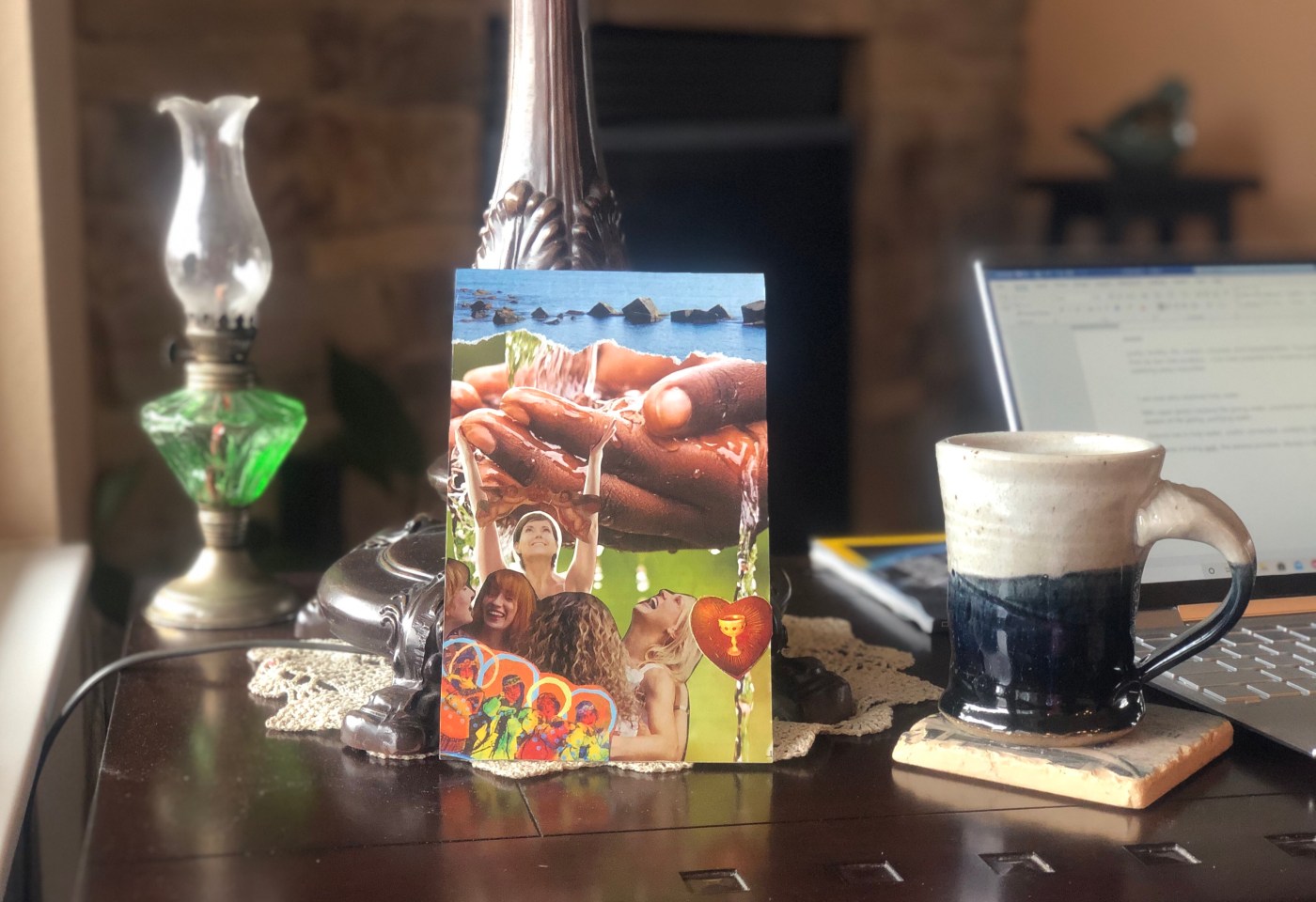
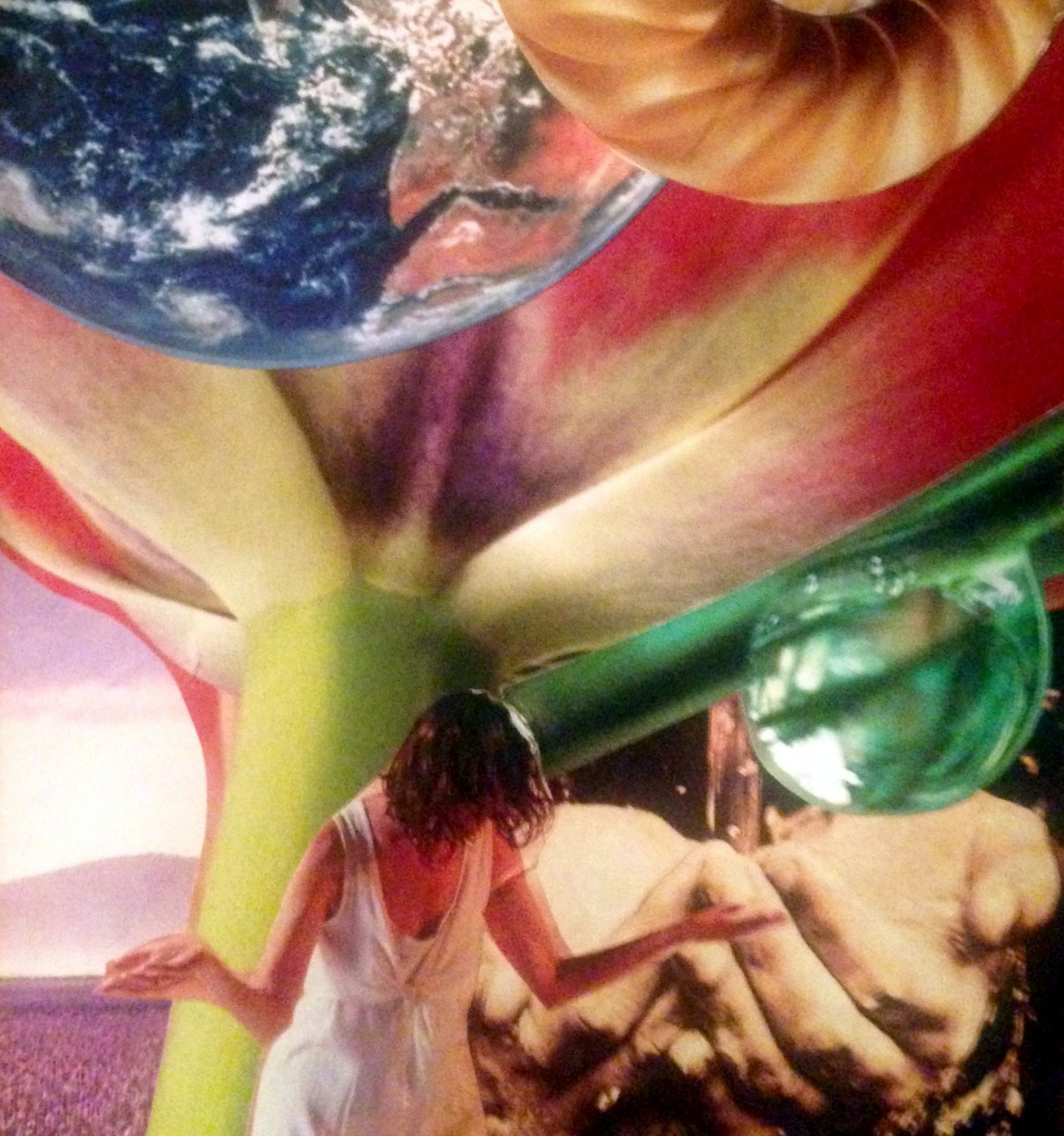
Practicing SoulCollage® is part of my spiritual practice that provides “boundaries and direction”, especially in this time of uncertainty. I share an “I am one who” reflection for a card I created this week. It came together slowly, over the course of several days, taking up space on my kitchen table until it felt complete. The card has become a prayer of gratitude and a reminder to keep reaching for life-giving “holy water” in all its forms.
Card Name: “Holy Water”
I am one who stands in a circle of women who hold each other up, who embrace life and each other, who are connected, who grow together. I am one and many.
I am one who recognizes Source in the still, holy water. Stones, upright, are less about unsettling the water, and more about propelling motion, continually adapting, always transforming or conforming to what comes in its way. I can trust the peaceful, holy water.
I am one who stands in the stream of life-giving, purifying water.
I am one who, with open arms, is anointed with holy water. With joy, faith and a sense of solidarity, I am blessed with nourishment in abundance—above, below, around, overflowing.
I am one who thirsts, not in an aching, despairing, dying, sort of way (at least not in this card, at this moment) but as a reminder that purification happens only when intentionally sought after and accepted. Water is the essential element to growth; I long for this fullness.
I am one who believes in the Divine birthing of our planet and the life-force that is poured out for us by our mere existence in this dynamic, evolving, growing, breathing earth home.
I am one who exists as part of this environment, receiving the mysterious flow of energy and outpouring of nourishment with open hands. I bow my head at the splendor of shades and shapes, the rebirth of nature through the sacred spirals of the seasons, the purpose and patterns that are sometimes evident and always sought after. The waters of life flow through us—cleansing, renewing, blessing us with existence. Nature gives to us without hesitation.
Consider creating a collage for Earth Day that represents your feelings toward our environment or your feelings about how humans interact with the environment. Be creative!! Show your love, anger, doubt, concerns, joys, gratitude—let your spirit moves you. Make it your Earth Day prayer.
My friend Evi Wusk asked me to write a guest post for her blog, Gratitude Gal, about what I am grateful for as a teacher. The reflection that resulted has been a game-changer for me. It’s been a busy and challenging school year, but digging deeper about why I continue to choose to be an educator has uplifted my attitude and helped me deal with the daily challenges of teaching.
Here is what I wrote:
“Gratitude at its deepest level embraces all of life with thanksgiving: the good and the bad, the joyful and the painful, the holy and the not so holy… I am gradually learning that the call to gratitude asks us to say, ‘Everything is grace. “–Henri Nouwen
I am grateful to have had two grown-up careers—five years in advertising sales and the past 23 years as a Business educator. It is teaching that has taught me about the importance of practicing gratitude.
I am grateful to see teaching as a vocation, not just a paycheck. When I made my career change, it was certainly not for the money. I have never looked at teaching as just a job; it is a spiritual calling. Parker Palmer in The Courage to Teach writes, “I believe that knowing, teaching, and learning are grounded in sacred soil and that renewing my vocation as a teacher requires cultivating a sense of the sacred.”
I am grateful that I have stayed in education even when it can be soooo hard. Several years ago, I tried to capture the essence of the evolving nature of teaching through SoulCollage®. When I started my first teaching job, I was incredibly naïve and idealistic about what it would be like, represented by the black and white, “country school” image —students with smiles on their faces, eagerly waiting to learn, happy, compliant, respectful, and totally mesmerized by every word I said. The reality is that teaching is a much more “colorful” role than I had expected or could have imagined.Continue reading “Gratitude for Teaching: A Mirror to the Soul”→
Hmmm, I think. “Good question…yes, because of faith and hope. Many blessings.”
This might not be the typical are-you-okay-what’s-wrong? line of questioning one might expect, but good friends know what’s behind your “yes and no” already. Sometimes the no just needs to lie right where it is; it’s the yes that needs more attention.
Likely, the question was meant for me to consider what is good? what is hopeful? what is well with my soul?
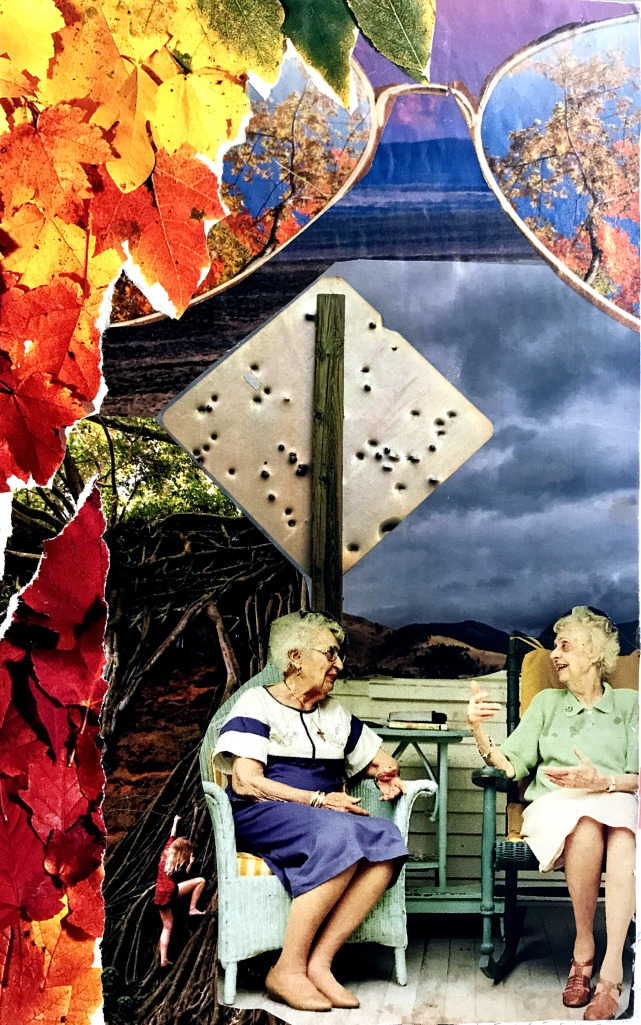
I have a SoulCollage® card that I created named “The Seasons of Life: I’ve Seen A Lot of Shit.” Eloquent, I know, but it’s the first thing that came to mind when I looked at my finished card.
“Winter, spring, summer, and fall are mulch for each other. The seasons of our lives are like that also. We learn from the layers of life. Our joys, sorrows, regrets, hopes, miseries, and enthusiasms are mulch for each other.” The Flowing Grace of Now, Macrina Wiederkehr
I had no idea what I was creating when I started, with no goal in mind. I was drawn to the older women sharing stories and enjoying each other’s company. They look experienced (not old, please), rested, peaceful, connected, comfortable and wise. I imagined what they might be discussing. Perhaps, despite the storms of life and the many obstacles that make them feel all shot-up, they are grateful to be still standing, still sitting, still connecting, still enjoying.
Both women hold a little of each season, every year, and the many experiences they have lived within them. I imagine that these soul companions are teachers for each other. There are teachers all around us—our circle of friends, spiritual companions, authors, thought-leaders, poets and musicians.
One of my spiritual teachers is author Sister Macrina Wiederkehr. The first Benedictine book I was introduced to (back in the ’90s) was “A Tree Full of Angels: Seeing the Holy in the Ordinary” written by Macrina. Several years later, at St. Benedict Center, I was honored to meet Macrina attending one of her retreats. Through the years, I’ve gotten to know her better, to attend more of her retreats and enjoy more of her writing.
Me and Macrina at St. Benedict Center.
Her newest book,“The Flowing Grace of Now,” has fifty-two meditative readings that weave their way through the seasons of the year, pointing to a different teacher for each week. The reading and reflective questions include wisdom lessons from Macrina, as well as poetry and prose from teacher-writers like Clarissa Pinkola Estes, Joyce Rupp, John O’Donahue, Henri Nouwen and Joan Chittister, mystics like Julian of Norwich, and from the stories of the Old and New Testament. By taking an entire week to devote to the reading, the seed has time to burrow. By meditating upon a line or two of scripture, poetry, lyrics or prose, it sinks to a deeper place of resting in one’s heart, taking root, becoming the “mulch” from which to grow from understanding to blooming and becoming. The words take root in your life, impacting your thoughts, attitudes, and actions.
“Autumn holds fragments of the other seasons in transformative arms…the mood of autumn is the ebb and flow of life. Autumn stands as an epiphany to the truth that all things are passing and even in the passing there is beauty. It holds out platters of death and life.” -The Circle of Life, Joyce Rupp & Macrina Wiederkehr
So many teachers, so many seasons in a long life—we are called to keep learning. Each of us is called to take the seasons of life into “transformative arms”, to become more of who we are. So this autumn weekend, I consider the seasons of life—all of it, especially the blessings. I think about the “yes” of life that threads itself through my days—the yes to faith, hope, learning new lessons and gratitude for many blessings. The daily yeses keep me focused on the bigger yes—the yes to God.
My yes is the desire to become more of who God created me to be, to keep learning from the “mulch” of the seasons and experiences of life. This I have hope for and believe in. This I am grateful for and what I say yes to.
Yes, it is well with my soul.
“People often speak of becoming more grateful after having lost some of their health. Suddenly they see all they have taken for granted. Gratitude for all that has been enables them to say yes to all that is to come.” -The Circle of Life, Joyce Rupp & Macrina Wiederkehr
Preparing for the Thanksgiving holiday can be a sacred ritual. Weeks in advance several family members begin planning the menu for our Thanksgiving dinner. Of course, there is little variation from year to year—turkey, dressing, dumplings, sweet potatoes, green bean casserole, pies, dinner rolls, and so on—but an afternoon of list-making, guest-counting, and recipe-searching ensues. Some years, even a second planning session is required—to count plates and chairs, to create a map of the food line, or to scour advertisements for butter sales. The planning sessions have become part of the practice of Thanksgiving.
The Thanksgiving planning sessions and meals that immediately followed the passing of each of Joe’s parents was bittersweet. We missed their presence. But the ritual itself, while grounding us in the present, was a reminder to be grateful even in our sadness and grief.Continue reading “Thanksgiving: A Ritual of Gratitude”→











 Being Benedictine