Search

Being Benedictine

Living SoulFully as an Oblate of St. Benedict

Tag

humility

How To Bear Discomfort Well

I do not bear discomfort well, I said, half-seriously, half-jokingly, to my son-in-law, John, the other day, as I took a little longer to get out of the car than the rest of the family. We both laughed as John noted that his wife shares this same trait at times. Like mother, like daughter.

It was a cold day in Nebraska, so we had to bundle up to go out, but once we were in the car, and the heat kicked in, I broke out into a sweat. Struggling in the back seat, off comes the coat. Two minutes later, we arrived at our destination. I wrestled my coat back on to re-enter the frigid temperatures. (An aside: Nebraska weather is a burden of extremes, from hot to cold. Our low temperature today is 12 degrees; on Saturday, 89 degrees is forecasted—how is one to cope?)

To add to my discomfort, several weeks ago, I sprained the peroneal tendons in my right foot. I will spare you the details, but it is reminiscent of the broken arm I experienced three years ago. Let’s just say—it adds to my discomfort, and I repeat, I don’t bear discomfort well. I feel a little guilty (and more discomfort) about admitting this out loud to John and writing it now. There are so many people suffering throughout the world—from war, displacement, poverty, hunger, trauma, poor health, grief, and every imaginable and unimaginable discomfort.

It is a lot for each of us to bear—our own discomfort and the wounds of the world that we also carry in our thoughts, physical bodies, emotional responses, and spirits. So much discomfort, uncertainty, ambiguity, and waiting can make us irritable and impatient—and there is so much to activate our discontent these days.

Recently, on my Being Benedictine Facebook page, I shared some wisdom from Pierre Teilhard de Chardin. Within 24 hours, the post had 130 times the average likes, comments, and views of a typical post.
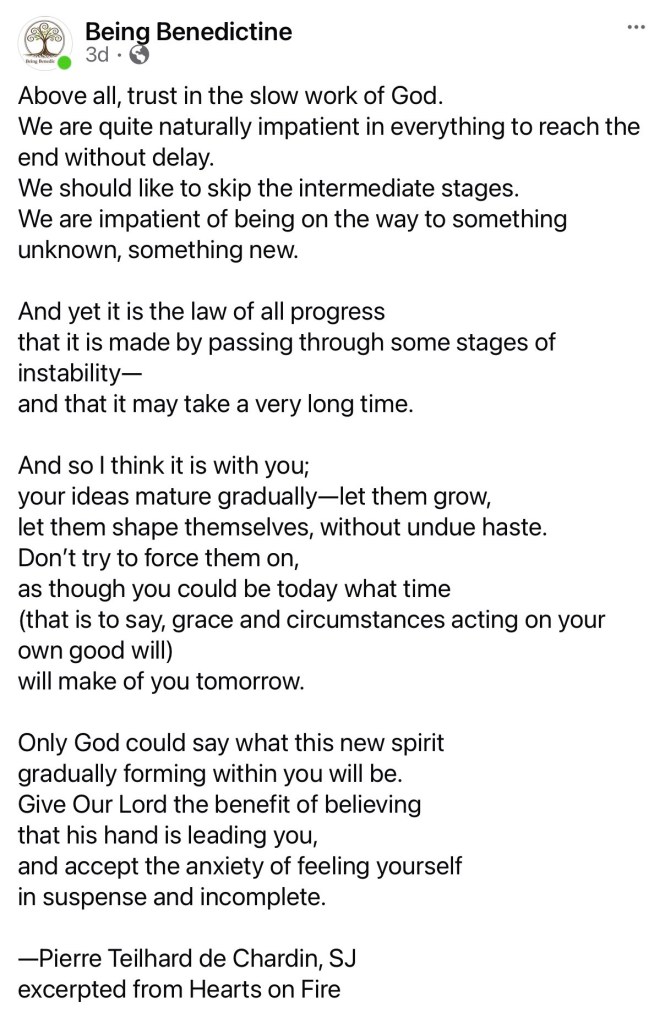
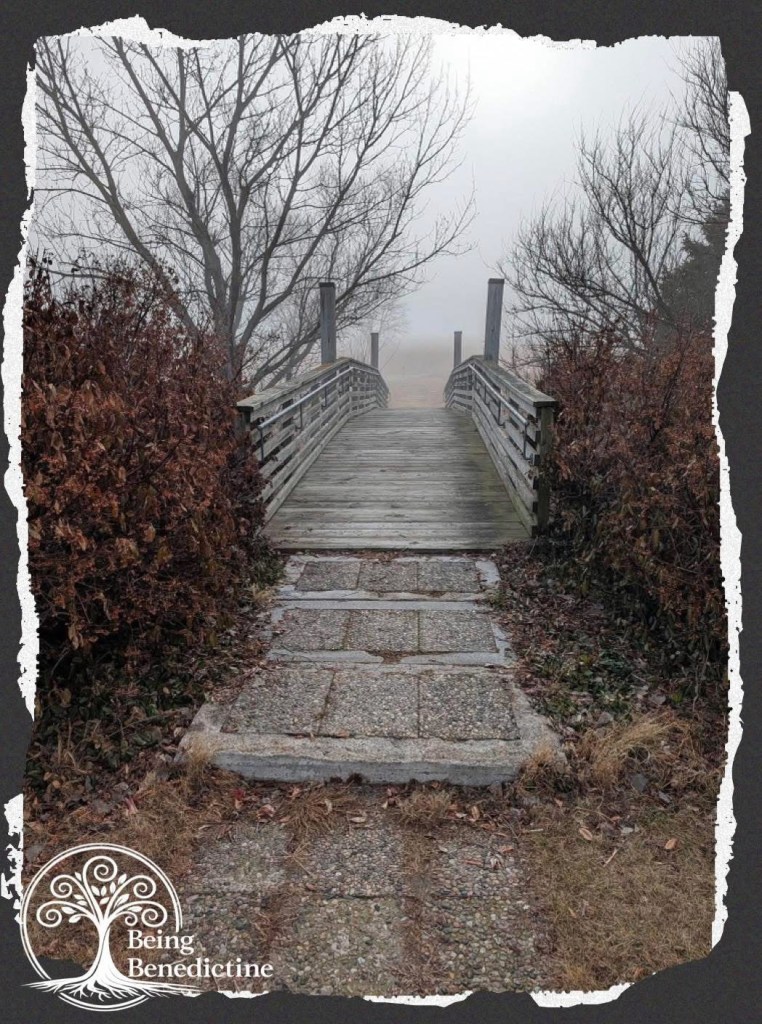
This idea of waiting, and the discomfort that results, seems to resonate with many these days. It is increasingly challenging to “trust in the slow work of God,” and we need constant reminders that this is how we must cope.

Continue reading “How To Bear Discomfort Well”
Stewardship: Using Our Gifts as Co-Creators

September Lectio Divina and Oblate Discussion

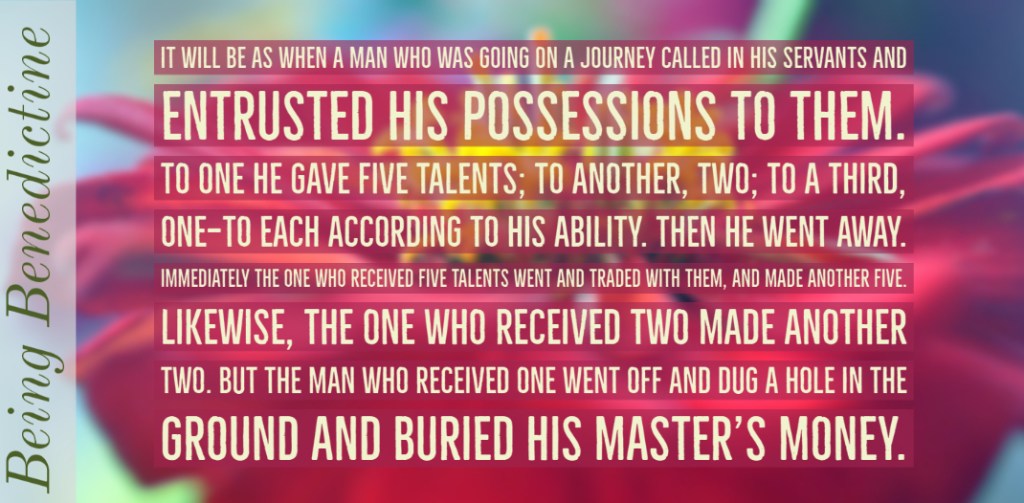
SourcesLectio Divina, Matthew 25: 14-30 The Parable of the Talents; Always We Begin Again-The Benedictine Way of Living, Stewardship, pages 49-51, John McQuiston II

Our Lectio Divina discussion focused on The Parable of the Talents viewed through the lens of stewardship. In the reading, three people are given talents of varying amounts.

The two servants who had received five and two talents had increased their talents two-fold. They were praised, ‘Well done, my good and faithful servant. Since you were faithful in small matters, I will give you great responsibilities. Come, share your master’s joy.’ (Mt. 25:21)

The one who buried his talent was scolded, judged as wicked and lazy, and his one talent was taken away. “For to everyone who has, more will be given and he will grow rich; but from the one who has not, even what he has will be taken away.

We assume wealth has to do with money. Often, we see talent and gifts as economic gains or monetary contributions. Advertisements encourage us to buy more, of course, but we seem not to know when what we have is enough. In the Rule of St. Benedict, everyone should get what they need, but this requires understanding the difference between needs and wants (RB:34). Sadly, our culture says the more we have, the better off we are. We desire what another has—in possessions, money, time, relationships, almost anything, afraid that someone is getting something more than us—but the talents in this story were not equally given—two, five, one.

Continue reading “Stewardship: Using Our Gifts as Co-Creators”

The Gift of Good Works

March 2021 Lectio Divina and Oblate Reflections

Sources: Luke 18: 9-14; Good Work; Teaching and Learning—Always We Begin Again by John McQuiston II

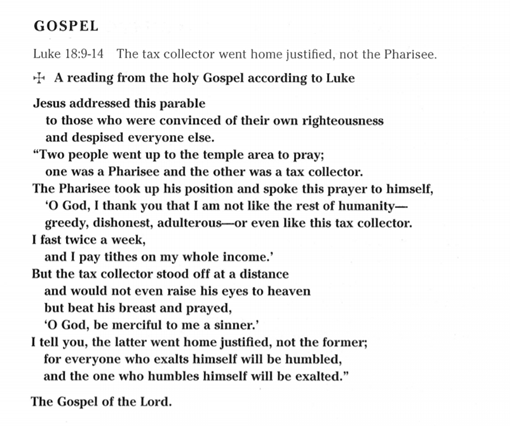
We begin our Oblate Meeting with Lectio Divina practice by reading Luke 18:9-14.

We began our discussion with the question: Can I find myself in both the Pharisee and the tax collector? There is no doubt that we have each of them within us, not just one or the other.

We can dig deeper by asking: How can I come into relationship with Jesus and others knowing I am a multi-faceted person, not all good or all bad. This parable is addressed to those who feel their righteousness (I’m a good guy), and may despise others for not being as good. We compare ourselves to others—our good works become a score card rather than a gift from our heart. We must avoid creating a tally of our good works or making comparisons with others about how good or bad I am (or how good or bad someone else is)—we  are ALL sinners and in need of God’s mercy; not one of us is more worthy than another.

Continue reading “The Gift of Good Works”

In Humility, We Begin Again

January 2021 Lectio Divina and Oblate Reflections

Sources: Mark 1:7-11; Always We Begin Again: The Benedictine Way of Living by John McQuiston II (Preface-p. 14)

For our Lectio Divina practice, we read more deeply Mark 1:7-11, the baptism of Jesus.

Words and phrases that resonate with us, shared in our discussion:

It is with great humility that John proclaims there is one more powerful than I. In an area of rabid individualism, it is hard to turn things over, to admit that I am not the fount of all wisdom. Even if we feel called to speak truth to power, to share our faith or ideas that may differ from another, we must humble ourselves as John did. John admits he is not to untie the sandals of Jesus, and even stoops down to show his humility. Indeed, there is one more powerful than I.

Both John and Jesus show humility. By going down into the water, Jesus foreshadows going down into the tomb. It is a descent, a submission to the obedience of the will of God, and then a rising.  Jesus chose to be baptized; he did not have to be, but he chose to be weak, to become humble. This is the beginning of his service. He has been chosen to be Messiah. Jesus did not shy away from this service.

As part of Jesus’ baptism—the heavens were torn apart. Jesus’ identity was affirmed by the father; this is how we get our identity too. The heavens are torn apart for us as well. We live our lives in the balance of humility and knowing that we are made in the image of God.

Always We Begin Again—A new year, a new book.

We begin 2021 by reading the introduction and first section of Always We Begin Again: The Benedictine Way of Living by John McQuiston II (Preface through page 14.) The Rule of St. Benedict provided guidelines for monastic living by giving order to the monk’s day with a balance of prayer and work. Although it may be impossible to follow the Rule strictly while maintaining a life in the world, it is the longing of the Benedictine oblate to have a “creatively balanced framework for life.”

Continue reading “In Humility, We Begin Again”

God’s Grandeur: Praying with Poetry

The Jesuit poet, Gerard Manley Hopkins, was born July 28, 1884. I spent time in prayer, the practice of Lectio Divina, with his poem “God’s Grandeur.”

95254825_10222035129977663_186492500809089024_n

God’s Grandeur, Gerard Manley Hopkins (1844-1889)

The world is charged with the grandeur of God.
It will flame out, like shining from shook foil;
It gathers to a greatness, like the ooze of oil
Crushed. Why do men then now not reck his rod?
Generations have trod, have trod, have trod;
And all is seared with trade; bleared, smeared with toil;
And wears man’s smudge and shares man’s smell: the soil
Is bare now, nor can foot feel, being shod.

And for all this, nature is never spent;
There lives the dearest freshness deep down things;
And though the last lights off the black West went
Oh, morning, at the brown brink eastward, springs–
Because the Holy Ghost over the bent
World broods with warm breast and with ah! bright wings. Continue reading “God’s Grandeur: Praying with Poetry”

Humor is the Hand of Hospitality: A Benedictine Pilgrimage, Part 6

hospitality

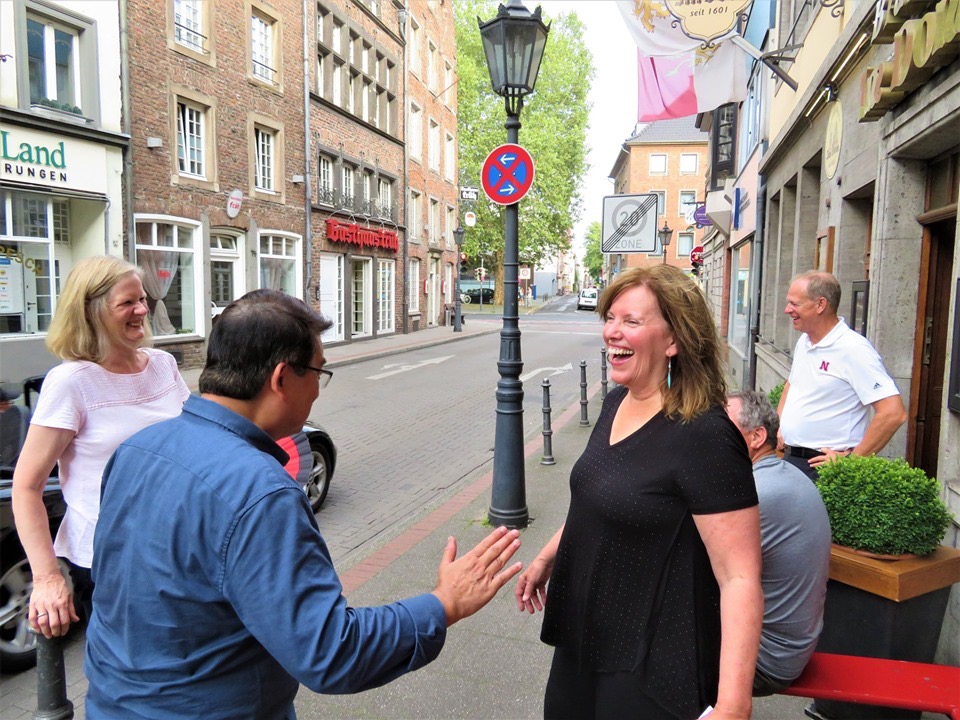
Hospitality can look different from one situation to another. It can be opening one’s home to another or serving a meal, but it can also be cracking a joke to break the ice or ease some tension. Humor is the hand of hospitality. Today I get my chance to practice.

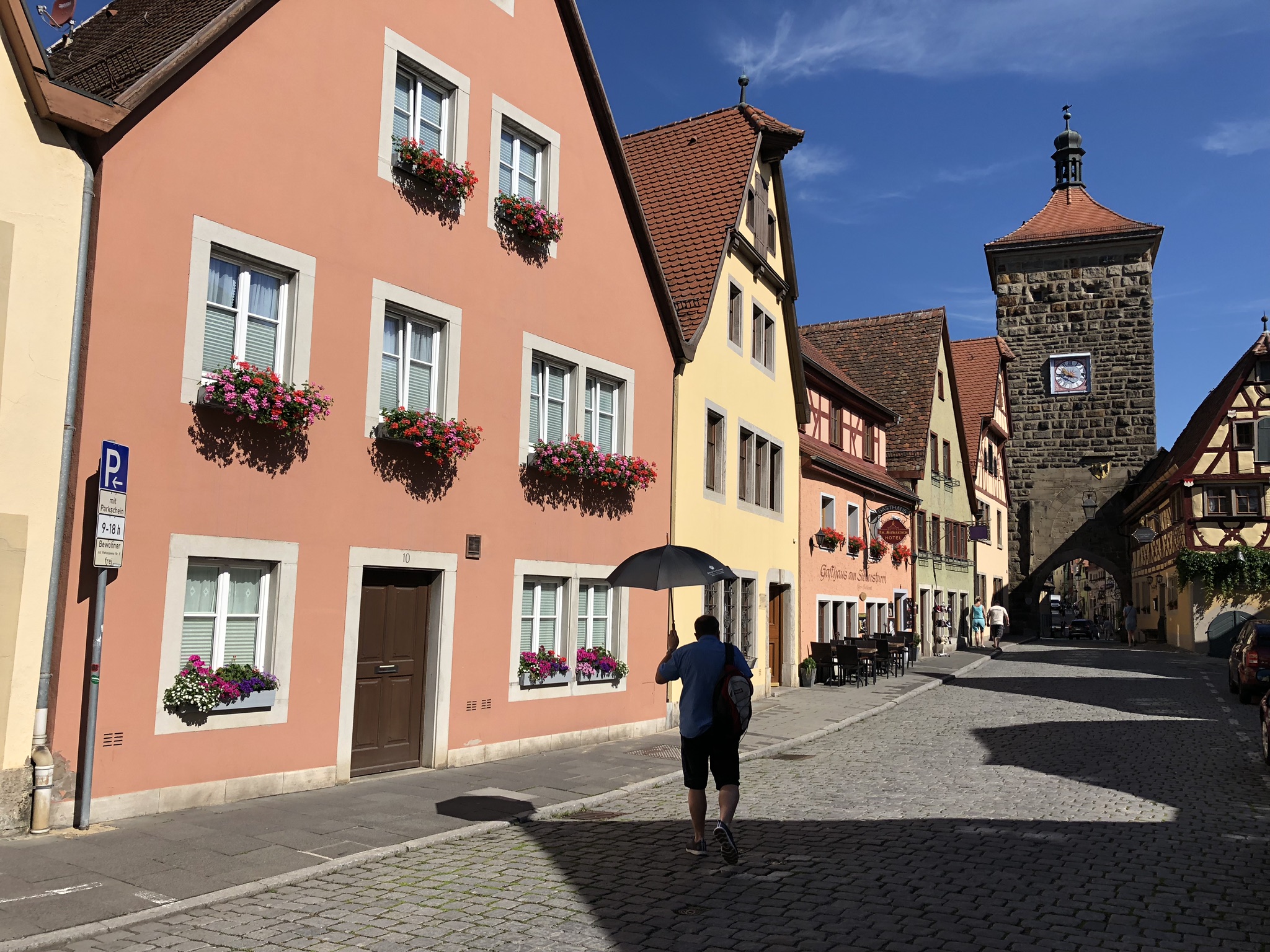
Wednesday, June 19—This day begins with a trip to Rothenburg ob der Tauber, located in the Franconia region of Bavaria, Germany. It is a well-known medieval old town, having survived the Thirty Years War and World War II (limited damage that was repaired). Rothenburg, a walled village with many towers, is part of the popular Romantic Road through southern Germany.

5 Rothenburg.jpg

In Rothenburg, there were many sites to see—churches, garden walks, spectacular views, quaint shops, many Christmas stores, a part Gothic/part Renaissance Town Hall, and beautiful fountains.

IMG_3903

Continue reading “Humor is the Hand of Hospitality: A Benedictine Pilgrimage, Part 6”

I Don’t Know Nothin’

I don’t know nothin’.

Eight years ago today, my father-in-law Marv passed away—so today, more than usual, I am thinking of him and missing our kitchen table conversations. We would talk about politics and religion, the economy and education, and the best brands of Cabernet for the cheapest prices. After sharing his wisdom, attempting to solve world problems, and philosophizing over a glass of wine, Marv would throw up his hands in disbelief and exclaim, “What do I know? I don’t know nothin’.”

131207_10200564020853354_135052895_o
Marv and I enjoying some cheap Cabernet in Las Vegas.

He had thoughts, opinions and plenty of experience, but, self-admittedly, he felt he still didn’t know much. Marv said it often enough that it was the opening line in the eulogy my husband gave for his dad’s funeral. This phrase, “I don’t know nothin’” holds so much meaning, far beyond a simple or flippant segue into another subject, rather I believe he was saying “I have ideas, but I will stay open to other possibilities.”

I’m sure there was a time or two when he knew exactly how things should be, but they didn’t turn out the way he expected, as so often happens. Perhaps he meant—I surrender needing to know. Perhaps he meant—I don’t know it all. I don’t know the big picture. I don’t have all the answers. I thought I knew a lot, but now, I wonder if I know much at all. I am humbled by what I do not know. Continue reading “I Don’t Know Nothin’”

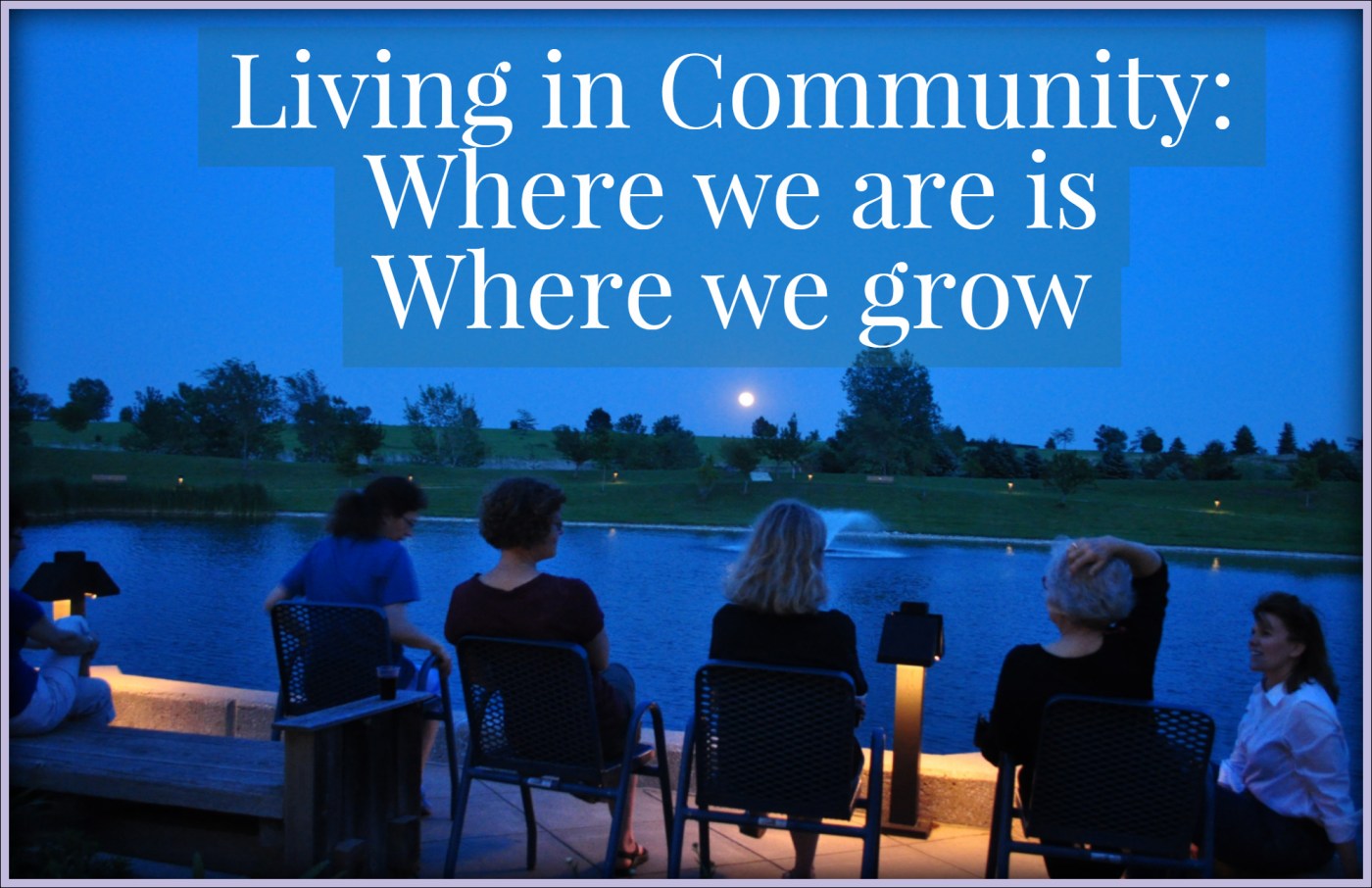
Living in Community: Where we are is Where we grow

May 2018 Oblate Lectio Divina and Discussion

Topic: Community

IMG_0667

“Just as there is a wicked zeal of bitterness which separates from God and leads to hell, so there is a good zeal which separates from evil and leads to God and everlasting life. This, then is the good zeal which monks must foster with fervent love: They should each try to be the first to show respect to the other (Rom 12:10) supporting with the greatest patience one another’s weaknesses of body or behavior, and earnestly competing in obedience to one another.” (RB:72)

Learning to live well in community is the foundation of Benedictine spirituality and the topic of Chapter 72 in the Rule of St. Benedict.  “A person living in solitary retirement will not readily discern his own defects, since he has no one to admonish and correct him with mildness and compassion.” (Beil, Study Guide) Continue reading “Living in Community: Where we are is Where we grow”

O God, Who Are Moved By Acts of Humility

February 2017 Oblate Lectio Divina and Discussion

Topic: Lent and Humility

humility

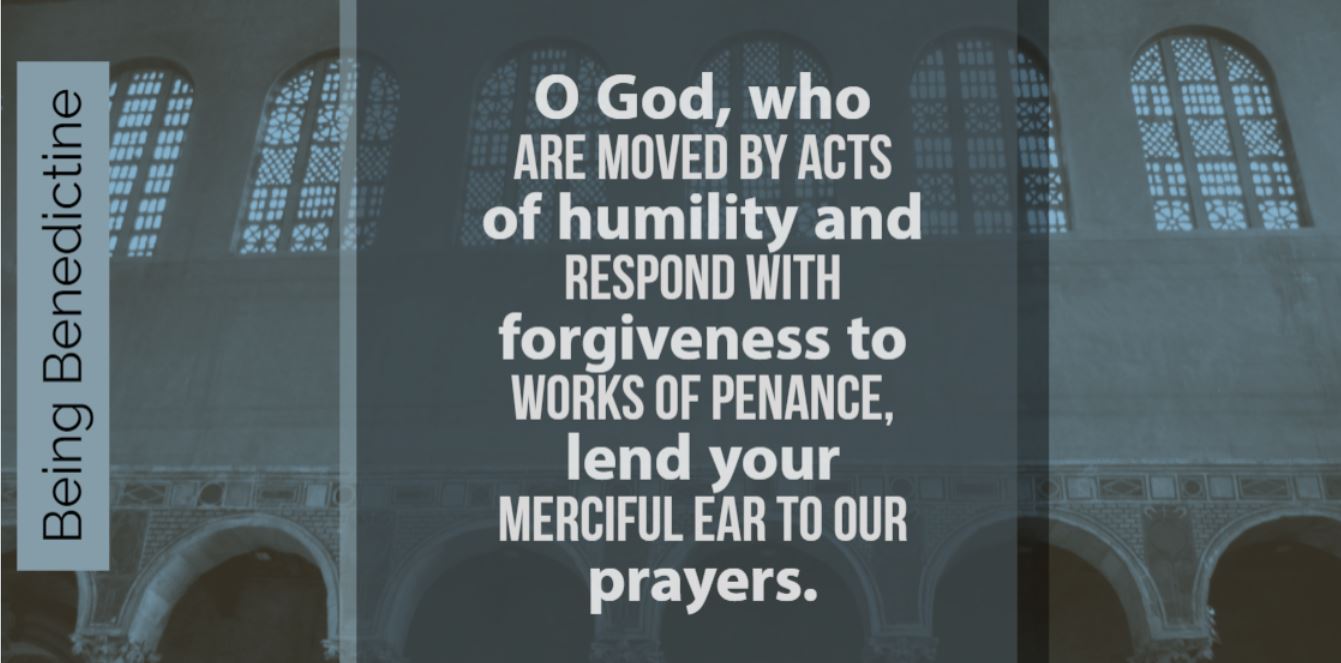
“O God, who are moved by acts of humility and respond with forgiveness to works of penance, lend your merciful ear to our prayers.” These lines in the Catholic Prayer for Blessing and Distribution of Ashes resonated with me during Ash Wednesday Mass, especially after a recent oblate discussion.

This prayer suggests our Creator is moved by what we do, by our acts of humility. The Latin word for “are moved” is flectaris, meaning to bend down. God bends down to us, moves to us, is moved by us. In our humility, we become vulnerable and open ourselves for a deeper connection with God. Continue reading “O God, Who Are Moved By Acts of Humility”

Blog at WordPress.com.

Up ↑