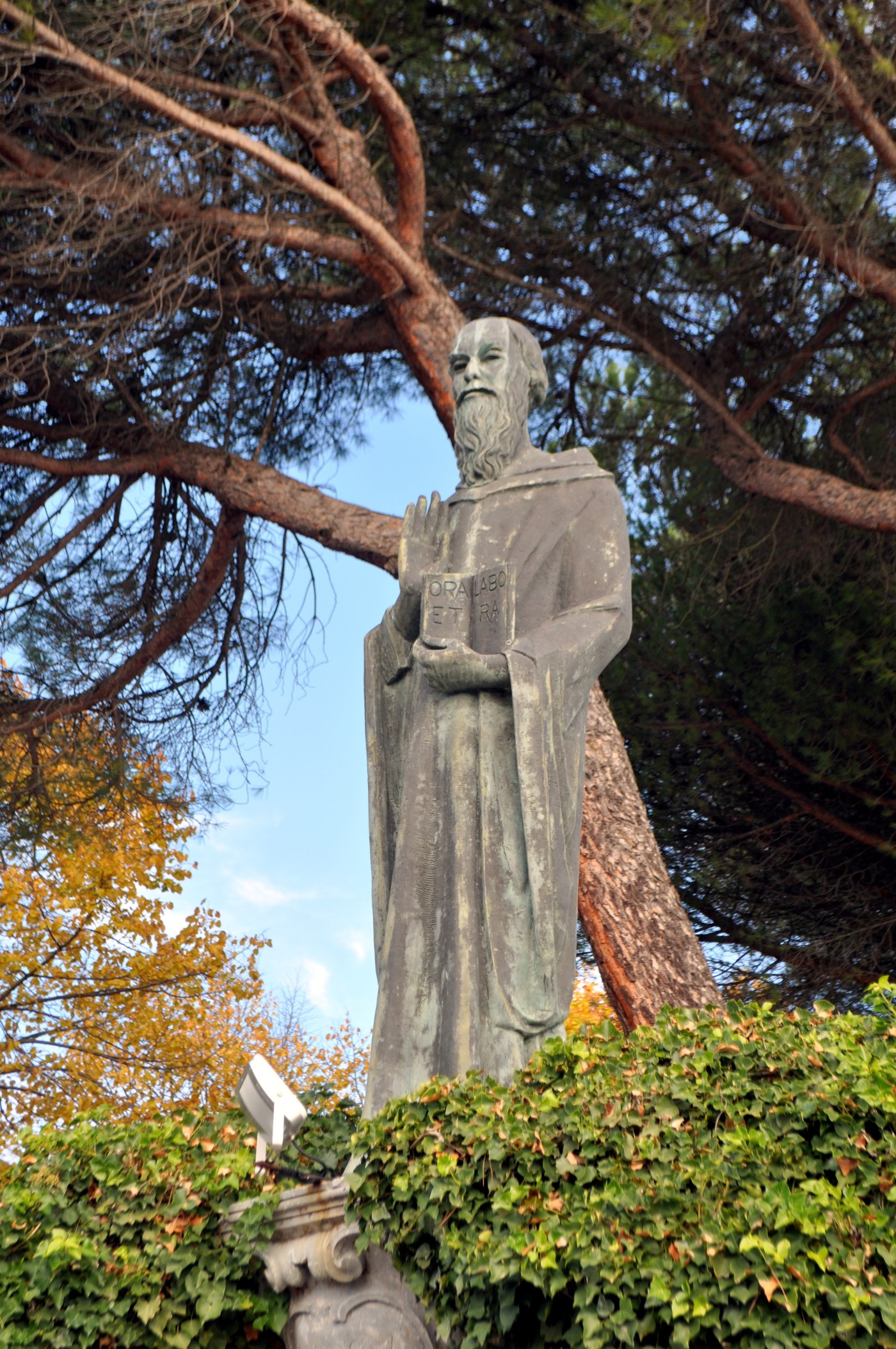
The day St. Benedict died, he was ready.
In the Rule of St. Benedict, he instructs, “Keep death daily before your eyes” as a way of life. At the Abbey of Montecassino, where St. Benedict wrote his Rule for monks, there is a statue in the courtyard depicting the moment of St. Benedict’s death.
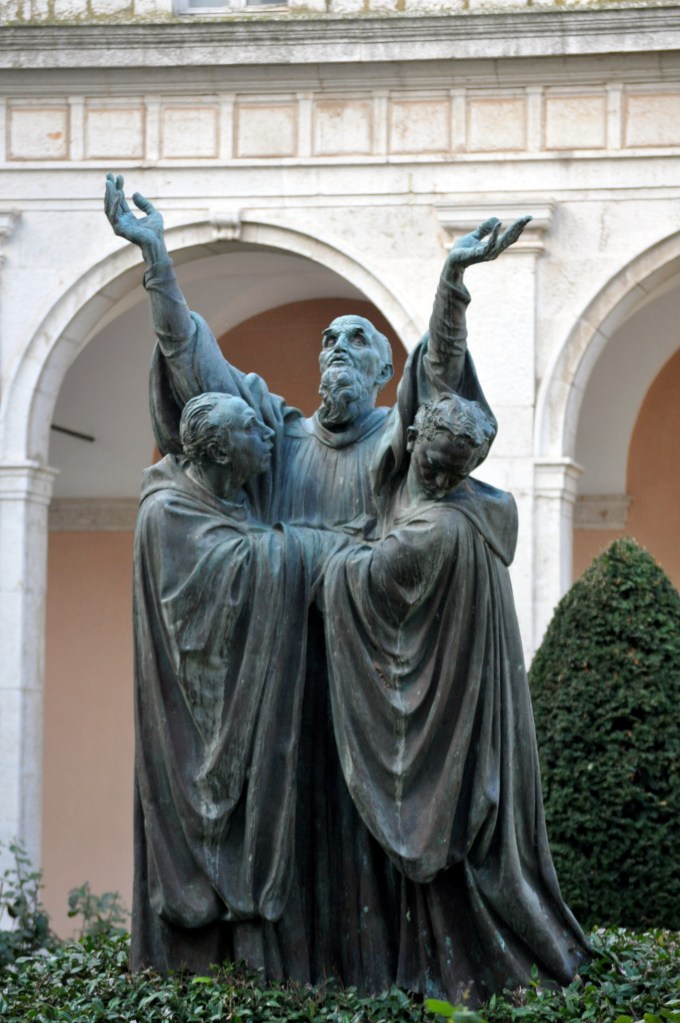
On March 21, Benedictines around the world celebrate the “transitus,” St. Benedict’s passing from one state to the next, from death into life. Death is not seen as final, but rather a transition into eternity with God.
St. Gregory the Great writes about St. Benedict’s last days:
“Six days before he died, he gave orders for his tomb to be opened. Almost immediately, he was seized with a violent fever that rapidly wasted his remaining energy. Each day his condition grew worse until finally, on the sixth day, he had his disciples carry him into the chapel where he received the Body and Blood of our Lord to gain strength for his approaching end. Then, supporting his weakened body on the arms of his brethren, he stood with his hands raised to heaven and, as he prayed, breathed his last.” (St. Gregory the Great, Book Two of Dialogues, chapter 37).
The advice to keep death always in our minds is the core of being Benedictine and living soulfully. Perhaps this sounds morbid, but it encourages me to live each moment with wonder and gratitude, with purpose, on purpose, and to be attentive to the present moment. Practicing gratitude, having no regrets, living with death daily before your eyes, as St. Benedict writes, and leaving something beautiful from a life well lived, help prepare us for a more peaceful transition from here to eternity. St. Benedict’s life and death are an exemplar for how we are to be Benedictine.
Continue reading “The Day St. Benedict Died”


 Being Benedictine