Search

Being Benedictine

Living SoulFully as an Oblate of St. Benedict

Tag

longing

When The Moon is Full

“When we ‘name’ we connect… Naming allows for relationship. When we name anyone or anything, there’s the possibility of coming closer.” –Fragments of Your Ancient Name, Joyce Rupp

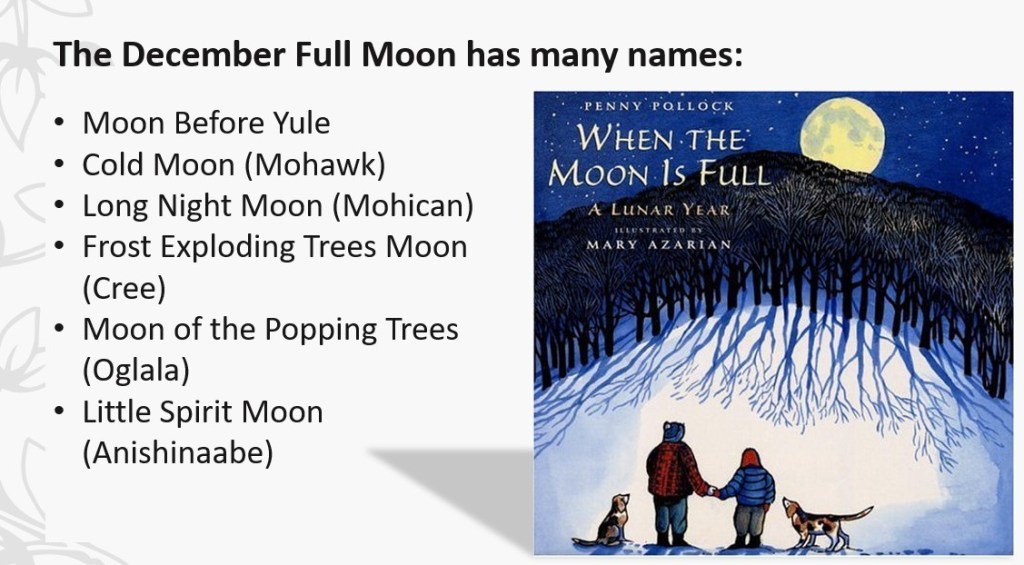
For millennia, people have looked to the moon to mark time, to guide their planting, harvesting, hunting, and gathering. Naming the full moon was both practical and sacred. The moon names were a way to notice, remember, and honor the patterns of the living world, drawing from the seasons and ordinary life events. It was also a way to remember that time itself is sacred, fleeting, passing with each full moon. For Native Americans, time was expressed by how many moons had passed.

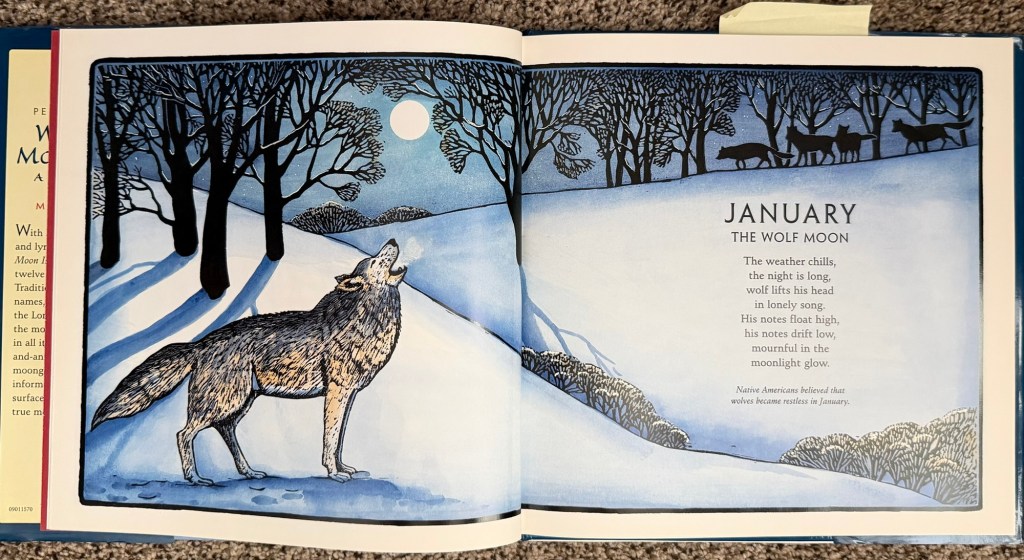
“Many Native American peoples, and later the colonists who lived beside these winter lands, noticed how the wolves’ voices grew strongest when the year was at its emptiest. Food was scarce, snow lay deep, and the nights stretched wide and unbroken. And so this moon—January’s full moon—came to be known as the Wolf Moon, a name born from the simple truth of those winter evenings: wolves calling out to one another through the dark.” –Friends of the Forest

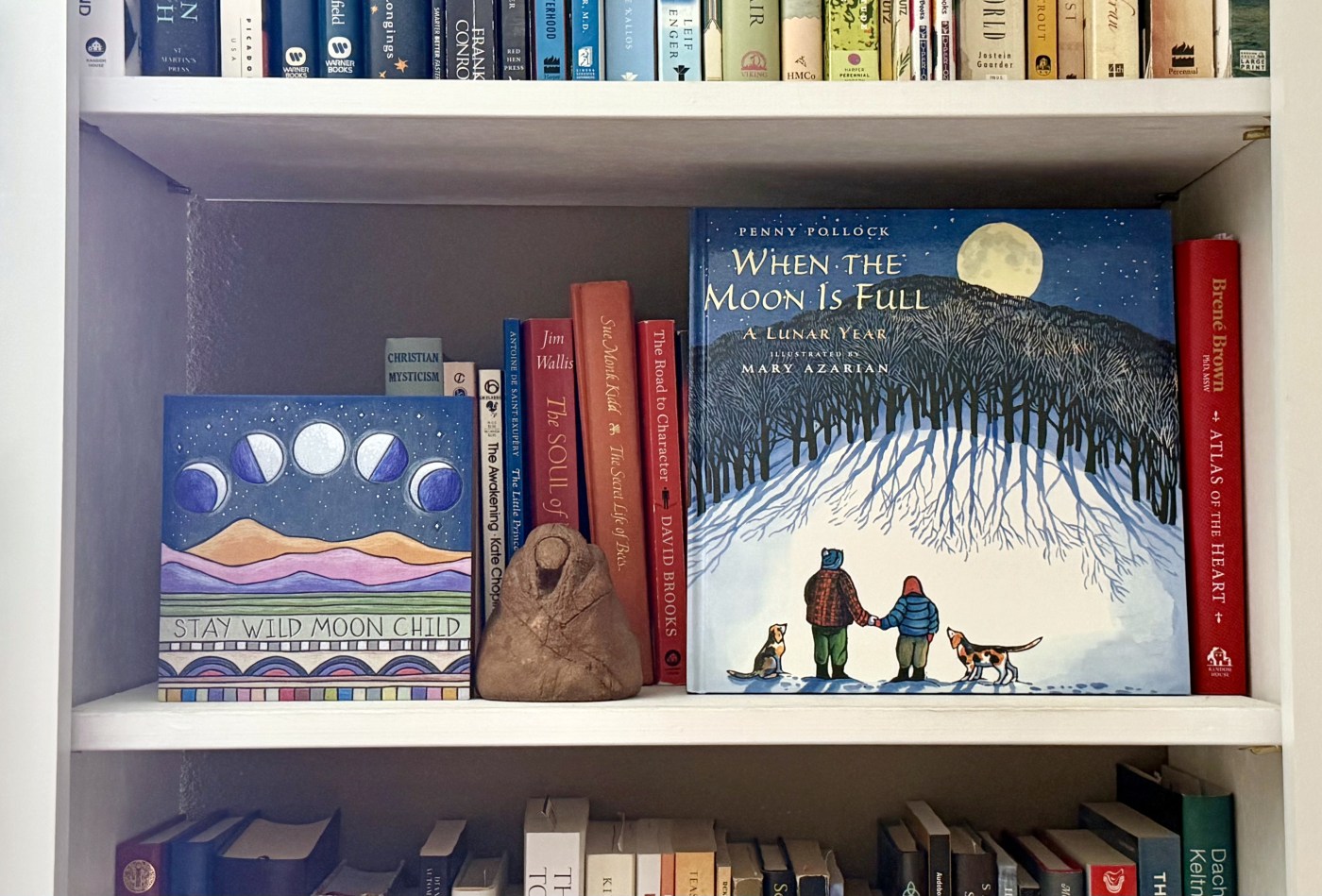
Recently, I led a Full Moon Soulfully You retreat with kindred spirits. We celebrated the diversity of names for the moon and read the endearing children’s book “When the Moon Is Full” by Penny Pollack.

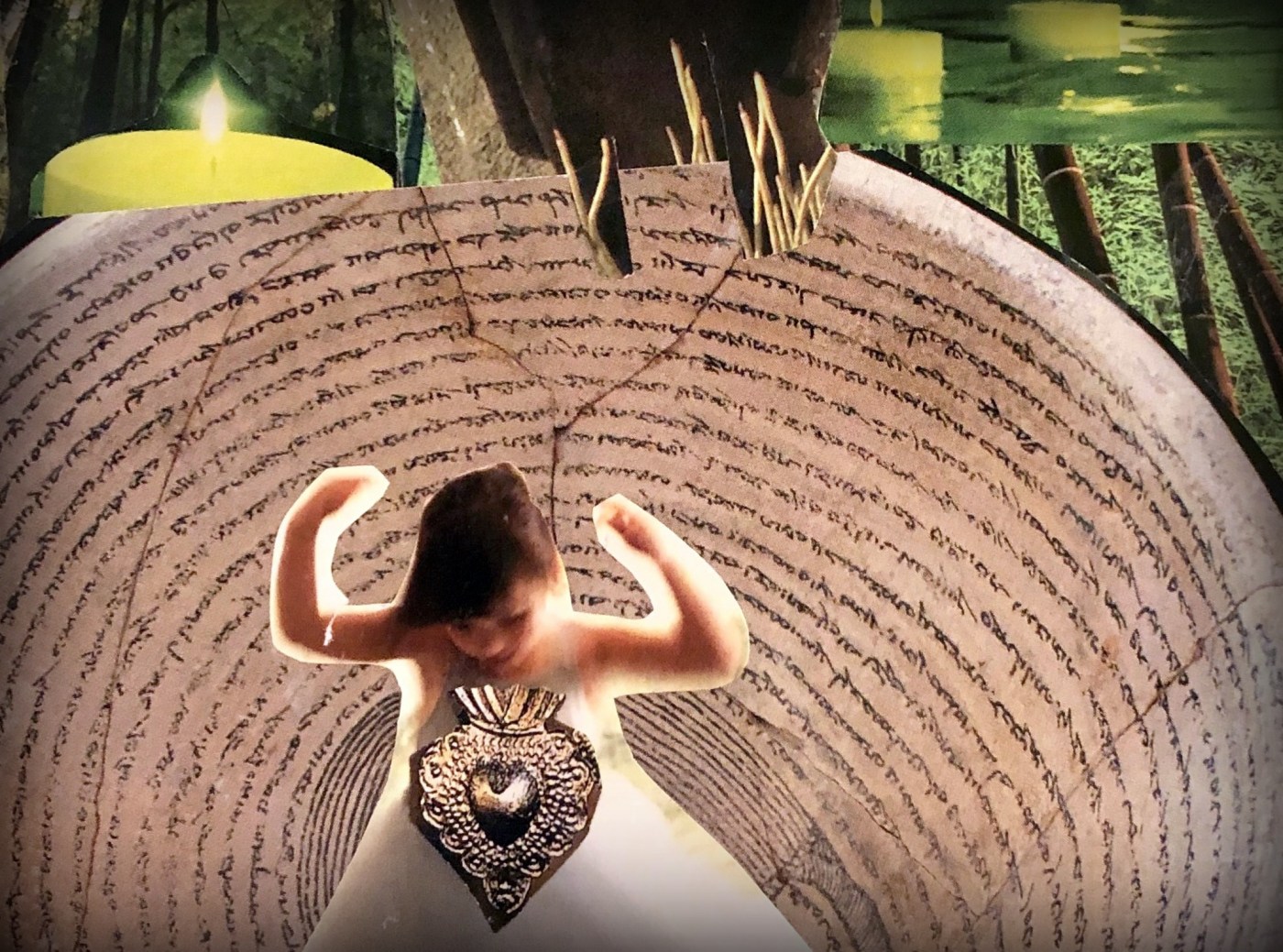
Each month holds a rhythm of expansion and contraction—of growth, fullness, release, and renewal. Our spiritual journey and the seasons of our life align with the deep rhythms of the universe. Naming our longings and fears, the parts of ourselves that we might see as fragile or vulnerable, is holy work and prayer. Every aspect of our life has meaning, especially the challenging ones, the aspects of ourselves we hide out of fear that we’ll be misunderstood or judged. To live fully, wholly, holy, whole is to gather the fragments, the bones of who we are, and bless them. On retreat, we use the prayerful, creative SoulCollage practice to name these parts.

“Full moons come, full moons go, softening nights with their silver glow. They pass in silence, all untamed, but as they travel, they are named.” -When the Moon is Full, Penny Pollock

As you gaze at the full moon tonight (or any month), consider the following journaling or card-making prompts. Listen to the Full Moon chant, or like a wolf, howl at the moon!

  • What is your longing? What do you fear?
  • How can you hold your longings and fears together?
  • What part of yourself would you like to name?
  • Is there a name or archetype you want to embrace?
  • What name for the Divine resonates with you?
  • Are you in a season of darkness? Does it need to be named?

May the Full Moon remind you of your blessings, tonight and for many moons to come!

There are never enough names and images for what we love. -Dorothee Soelle

© Jodi Blazek Gehr, Being Benedictine Blogger

To Love and Be Loved: The Monk and The Marriage

But now faith, hope, and love remain, these three; but the greatest of these is love. –1 Corinthians 13:13

This scripture verse is one of the most frequently read at wedding ceremonies, but it is meant for more than those getting married. We are created to love and be loved—all of us, no matter who we are or our chosen paths in life, whether monk or married.

Our deepest longing is to be loved. Love is the thread that runs through all the world’s religions. In Christianity, the Great Commandment is to “love the Lord your God with all your heart, and with all your soul, and with all your mind” and to “love your neighbor as yourself.” 

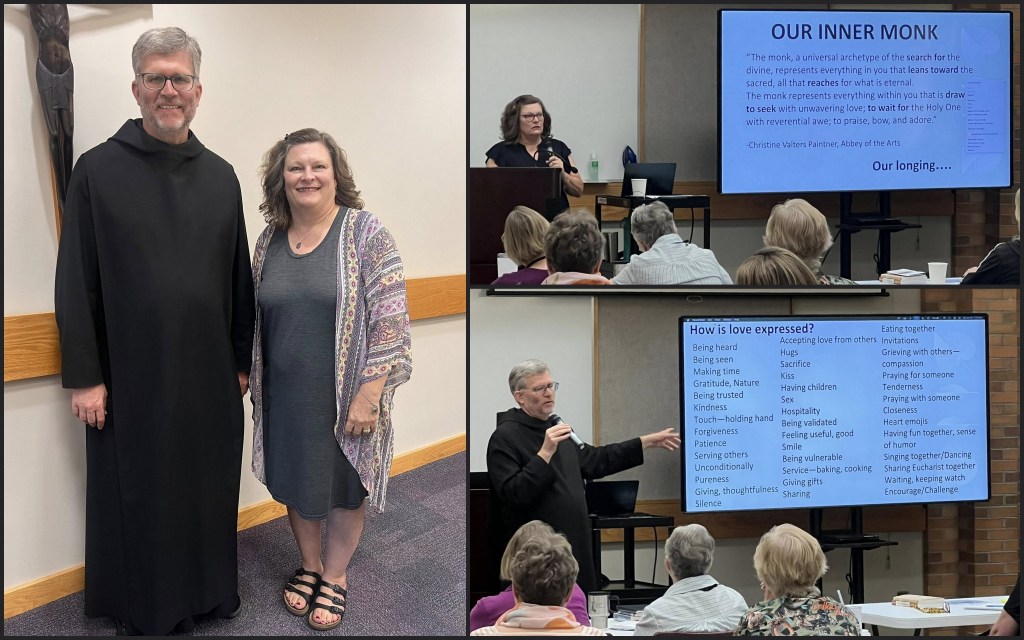
Several years ago, during spiritual direction with Benedictine monk, Fr. Mauritius Wilde, we discussed, despite our different vocations, how much we have in common. We each have a holy longing—to love God, to have a healthy love for ourselves, and to give and receive love. Practically speaking, we are the same age, we are both teachers and retreat leaders, have one brother, have the same middle name (Marie—seriously, what are the odds on that?), we share similar Enneagram personality traits, and each of us professed our marriage or monastic vows 40 years ago, a day apart. I was married on August 17, 1985, and Fr. Mauritius entered the monastery as a novice on August 18, 1985.

After one of many conversations where one of us would say, “That is exactly how it is for me!” or “Me, too!”, I half-seriously, half-jokingly suggested that we write a book about how, setting the whole monk vs. being married thing aside, we experience our love of God and others in many of the same ways. Nearly forgotten, this idea resurfaced a year or so ago, and we decided that leading a retreat together would be a good beginning. Our theme would be love, specifically how the Rule of St. Benedict can help us grow in love and to discover our “inner monk.”

“The monk, a universal archetype of the search for the divine, represents everything in you that leans toward the sacred, all that reaches for what is eternal. The monk represents everything within you that is drawn to seek with unwavering love; to wait for the Holy One with reverential awe; to praise, bow, and adore.” -Christine Valters Paintner

The Rule of St. Benedict shows us the path of love, of nurturing the monk within while living in community. During our retreat, held in July 2025, we shared how the monk’s promises—stability, obedience, and conversion of life—are the foundation for learning and growing in the “school for God’s service.” (RB Prologue 45) For the monk, this place of learning is the monastery. For me, it begins in my family as wife and mother. But each of us is more than our role as a monk or a married person. Each can be transformed by practicing love in our friendships, workplaces, community, and environment.

Continue reading “To Love and Be Loved: The Monk and The Marriage”

Blog at WordPress.com.

Up ↑