Search

Being Benedictine

Living SoulFully as an Oblate of St. Benedict

Tag

Rule of St. Benedict

Gratitude or Grumbling: A Thanksgiving Choice

November 2025 Oblate Reflections

“Do not grumble or think ill of others.” (Rule of St. Benedict Ch. 4:39)

What is the key to practicing gratitude rather than grumbling? How can we live a grateful life in the midst of pain and suffering, our own, that of others, and that of the world around us? Is it possible to be thankful for challenging experiences?

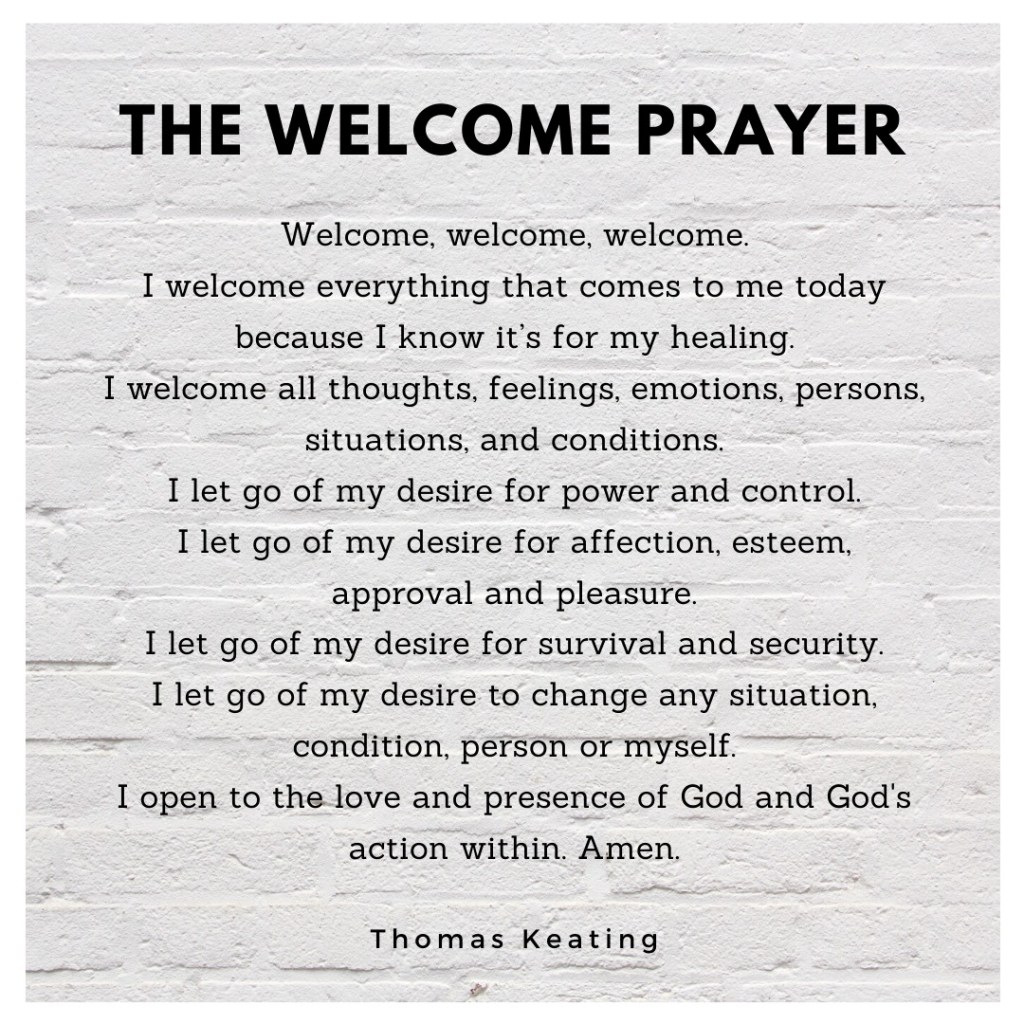
We use the Rule of St. Benedict and Scripture to address these questions at our November oblate meeting. We opened our meeting with the Welcome Prayer written by Fr. Thomas Keating).

If we truly practice this prayer to welcome all of the above, we find that the benefit of grumbling is minimal. In fact, grumbling is self-sabotage. The benefit of welcoming everything is that through the moments of distress, unease, discomfort, or suffering, we learn that another way could be a blessing. What can be difficult about the Welcome Prayer is the “letting go” of our control—and oh my, how much we prefer when things go our way.

St. Benedict has a few things to say about grumbling, a form of letting go of our own gripes, opinions, and negativity for the greater good of the community and ultimately our own selves. He encourages his monks to cultivate humility, patience, and a joyful acceptance of their station in life. It requires a surrender of pride to be content even when it is challenging to be.

We read the following excerpts and practice Lectio Divina as a group, sharing the insights we gained.

Continue reading “Gratitude or Grumbling: A Thanksgiving Choice”

10 Reasons Benedictines Love Silence

I carefully consider everything that I write and share here, especially the more personal or contentious reflections. I rarely write and post on the same day. Not so with my speech. I find myself saying often enough, “Did I just say that out loud?” Words fly out of my mouth much faster than they flow from my pen or keyboard.

 Perhaps this is why I enjoy journaling and writing so much. It slows my mind down. In silence, I can be more deliberate, careful, and organized in what I share. A healthy respect for silence could save me some angst in times when my mouth works faster than my mind.

At our annual oblate retreat, with the theme “Building Community Through Our Oblate Promises,” the importance of silence was the topic of the opening session led by Fr. Thomas Leitner, the administrator of St. Benedict Center and a monk who lives at the monastery across the road. Throughout the weekend, we would learn about and practice silence.

Why is silence so fundamental to Benedictine spirituality?

Silence is the way to self-knowledge. A discipline of silence confronts us with ourselves. “Silence is a way for us to put up with ourselves the way we are. Not everything that comes to mind at times of silence is pleasant. Repressed needs and wishes may come up, repressed anger, and perhaps missed opportunities,” Fr. Thomas shared. Silence gives our wounds space to surface, allowing us time to wrestle with and soothe our pain in healthy ways. Silence allows us to see ourselves unfiltered without the influence of others.

In The Interior Castle, St. Teresa of Avila uses imagery of a castle for our soul, emphasizing “how necessary this room (of self-knowledge) is…we shall never completely know ourselves if we don’t strive to know God.” She writes that God dwells within us, and to know God, we must first know ourselves. Hard, but necessary, work to “know thyself,” as the ancient Greek maxim suggests.

Silence connects us to the Divine. Seventh-century bishop and theologian, St. Isaac of Syria, writes:

We enter this “treasure house,” our very soul, through the practice of prayer. Some of us may be conditioned to think of prayer as a transactional bubble-gum-machine approach to asking God for what we want. We put in a coin; God supplies the big gumball. Our prayers are “answered.” Yet this is not the kind of prayer that leads to self-knowledge or to a connection with God. Consider a poem by the 19th-century Danish theologian Søren Kierkegaard that points to a different kind of prayer.

Silence builds confidence and leads to self-respect.

“As my prayer became more and more devout and interior,” I come to know myself with greater depth. This knowing builds my confidence: I have been created just as I am, in the image of God. I forgive myself for weaknesses and celebrate my gifts. I seek less approval from others. I have “less and less” to say to justify, convince, or plead my case of worthiness to myself or others.

Teacher, writer, and friend, Parker Palmer, writes,One of our most debilitating illusions (is) that the answer to our problems is always ‘out there’ somewhere, never ‘in here.’ It’s an illusion that’s constantly reinforced by educational and religious institutions that make us dependent on “experts” and “authorities.” We need not look for knowledge in others; we can trust our own interiority, the Divine Expert Within. I can grow in self-respect, knowing God is within me, intimately speaking to me when I am silent long enough.

Continue reading “10 Reasons Benedictines Love Silence”

Our Ruby Anniversary: 40 Years of Marriage

“I promise to be true to you in good times and in bad, in sickness and in health. I will love you and honor you all the days of my life.”

Forty year ago, my husband, Joe, and I made our marriage vows on August 17, 1985. As a 19-year-old bride, I had little understanding of what those words meant or would require. I imagine it is the same for many. We have hopes and expectations, albeit idealistic or romanticized. We may also have a good idea of what we hope our marriage will NOT be like. Surely, it’s a good place to start, but it is then that the real work of love begins.

Stability, a Benedictine value, is what is promised in marriage when we vow, “all the days of my life.”  We promise to stay, to not run away from challenges or difficulties; instead, we remain present to the relationship, to see what we discover about each other. After writing seventy-two chapters in The Rule, Benedict titles his last chapter,This rule only a beginning of perfection.” In other words, marriage, or any commitment we make, requires practice—making mistakes, forgiveness, and always beginning again.

To love is a decision. A marriage is not made, once and for all, when the I-dos are exchanged. A marriage is constantly being recreated; it is always in the process of becoming. A marriage is made of moments. Moments we would like to forget, moments we must forgive, and moments that help us become more fully who we are. There are moments of joy, adventure, contentment, and the making of beautiful memories. When you string them all together, you get a picture of a life built together.

I love that the ruby, a precious gem, second only to the diamond in toughness and durability, is the traditional symbol for a 40th wedding anniversary. Throughout history, many cultures and religions have associated the ruby with mystical or spiritual qualities, representing love, passion, protection, vitality, and wealth. (Ruby Symbolism and Legends)

The word “ruby” comes from the Latin word “ruber,” meaning red. The red heart of Valentine’s Day reminds us of a desire for passion and romantic love. One also thinks of the redness of blood, which carries oxygen to all parts of the body, giving life.

Joe and I have experienced this “ruby” nature, not all in one day, month, or year, but over time and as a way of life. The ruby’s “inner glow” led to beliefs that it contained an inner fire or “an inextinguishable flame”. This inner glow, with a playful spirit and sense of humor, has fueled our commitment to protect our marriage, to be resilient, to learn, grow and change. We are wealthy in countless ways—a beautiful daughter and son-in-law, great friends and family connections, opportunities for travel, hobbies, personal interests, and, now, more time for together.

Our new season of retirement. After lengthy careers in law enforcement and education, both Joe and I have retired—letting go of our careers, but not what was at the heart of our vocation. We continue to work in other ways: I lead SoulFully You retreats and workshops on creativity and the spiritual life, write essays for Being Benedictine, and belong to a variety of book/study groups, including oblates. Joe drives senior citizens to recreational activities and appointments, enjoys travel with his siblings, meeting with friends, and cultivating his bourbon collection. We have time to slow down, take a nap when we want, read, and binge-watch TV shows, travel more, and enjoy spontaneous trips to be with our daughter Jessica and her husband, John.

Continue reading “Our Ruby Anniversary: 40 Years of Marriage”

Tree of Life

“Everything in this world—every quark, atom, dust speck, heartbeat—quivers with the presence of God and is the presence of God…a kind of fourth dimension to all of life.”

-Thomas Keating: The Making of a Modern Christian Mystic by Cynthia Bourgeault

I find this divine quivering in the creative process of SoulCollage®, writing, planning retreats, deep listening with kindred spirits, reading good books and poetry, and in this season, beholding the beauty of springtime in the shimmering of every conceivable shade of green.

The presence of God quivers especially in the holy surprise of synchronicities, often referred to as a “thin place” by the Celts. Just minutes after creating a SoulCollage® card titled Tree of Life, I stumbled upon the most perfect poem.

Continue reading “Tree of Life”

The Good Zeal of Monks

December 2024 Oblate Reflections

Lectio Divina—Rule of St. Benedict, Chapter 72, The Good Zeal of Monks

In the 1500-year-old Rule of St. Benedict, monks who live in a monastic community are presented with a choice to guide their relationships—to embrace good zeal which monks should foster with fervent love rather than the zeal of bitterness. This choice is a call to holiness and contributes to an atmosphere of separation or togetherness in the community.

Benedict is clear—if monks choose to respond to their brothers with bitterness, they cultivate an environment of separateness. They become distant from God and the community. But if monks choose to foster enthusiasm for loving their brother, Benedict writes that it will “bring us all together to everlasting life.”

Love is the antidote to separation and bitterness. Benedict encourages enthusiasm and eagerness when expressing our fervent love to God, one’s abbot (or leader), and one’s brothers. He also provides an action plan to demonstrate love.

Chapter 72 begins and ends in love—what is hoped for (” a good zeal which separates from evil and leads to God and everlasting life) and what is the promised outcome ( to “bring us all together in everlasting life.”) The specific instructions to demonstrate “fervent love” are to show respect to others; be patient with other’s weaknesses; practice active listening; and to consider the best interest of others, not just our own.

God’s work and desire is to “bring us all together” through our acts of love. We must consciously choose between holding onto bitterness, which separates us from God and from others. We must be committed to this goal to keep a community, family, organization, or friendship from growing apart through conflict, misunderstandings, and the bitterness that might result. This can be hard, there is no denying it.

We demonstrate our preference for “nothing whatever but Christ” when we see and treat others as Christ. Christ dwells within us, defining who we are. Christ, then, is active in creating togetherness in the community.

In a community, each one matters. We cannot become holy without the other; we are responsible for co-creating and honoring connections with others. We live in context with everyone as a member of the body of Christ. God works in us as we work together. The whole thing falls apart when we do not consider the bigger picture.

The Rule is relevant today for Benedictine oblates, lay associates of a monastery, and those who find wisdom in the spiritual insights of St. Benedict to learn how to live in connectedness with family, friends, coworkers, team members, and in all our relationships. We have much to learn.

Curiosity is good for the soul, and for democracy too!

Cultivating curiosity is Being Benedictine.

As an educator and lover of learning, I appreciate the reference to schools in the Rule of St. Benedict. In the Prologue of The Rule, Benedict writes that the monastery is “a school for God’s service.” Whether in the monastery, home, or work—we are learning to live and love in community. Our life is a school of becoming—a continual learning.

Learning does not happen in solitude.

“A school is a community of learners: a group that comes together to learn with and from each other…education should expand our consciousness, capabilities, sensitivities, and cultural understanding. It should enlarge our worldview.”  –What Is Education For? by Sir Ken Robinson and Kate Robinson, Edutopia, March 2, 2022.

As a teacher, whether it was my high school students or those who attend retreats I lead, I appreciate a curious learner—someone who is open to new ideas, willing to listen, to question, to consider diverse perspectives, and, with humility, understand that there is always something new to learn.

Curiosity is a good first step toward living SoulFully and being Benedictine.

Being Benedictine, in my experience, is a genuine attempt to meet others in love and compassion, listening with the intent to understand, encouraging inclusiveness, and respecting diversity.  It is a blessing to share our feelings, faith, or perspectives and to have someone truly listen, especially those who might believe differently. Listening is the doorway to learning from others and growing in compassion; curiosity is the key.

“The spiritual life takes discipline,” Joan Chittister writes in The Rule of St. Benedict, A Spirituality for the 21st Century. “It is something learned, to be internalized. It’s not a set of daily exercises; it’s a way of life, an attitude of mind, an orientation of soul. And it is gotten by being schooled until no rules are necessary.”

Curiosity is good for the soul.

In Women Who Runs with the Wolves, Clarissa Pinkola Estes, defines the wild woman archetype as one who listens deeply, is intuitive, creative, playful, courageous, curious, loyal, and passionate. There is some wildness of divinity in us all, calling us to live fully, to reach beyond ourselves and, to discover something new. “When you limit your life to the one frame of thinking, you close out the mystery,” writes John O’ Donohue in Eternal Echoes: Celtic Reflections on Our Yearning to Belong.

Curiosity is good for community. Wonder is good for the world.

Wonder, my 2023 word of the year, is an attitude of curiosity, a willingness to withhold judgment, and to be open to what happens. Dacher Keltner in Awe: The New Science of Everyday Wonder and How It Can Transform Your Life writes, “People who find more everyday awe show evidence of living with wonder. They are more open to new ideas. To what is unknown. To what language can’t describe…to the strengths and virtues of other people.”  

Is it possible to behold our neighbor with wonder, in the spirit of hospitality? Could we hold a curious heart even when we passionately disagree with one another? Rather than defaulting to the shoulds and should-nots of orthodoxy, or a deeply held conviction, could we practice curiosity instead? Rather than seeking to change another’s opinion or defend our own, could we simply stand in awe of this great universe that holds such diversity of thought? Is it possible to let a disagreement stand to the side, while the desire to learn about the other steps forward?

Curiosity leads to wonder. Wonder leaves room for the unexpected, for learning something new.

This is how Lectio Divina, the Benedictine practice of sacred reading, can work in community. We hear different perspectives, drawing on the experiences and insights of those in our community. We can release the need for the one right way to interpret what we read and be curious about what others bring to the table. I share reflections from the richness of our oblate community discussions on this website but with a disclaimer,

“I cannot claim to have captured all the wisdom shared in our monthly oblate discussions or that I represent all oblates in attendance. The group discussion is a starting point for this reflection, but it is my interpretation of what I heard and what resonated with me. There could easily be as many different blog posts or reflections as oblates. Each of us comes to Lectio from our personal experience of God at that moment and we receive what we need in that moment as well. The beauty of Lectio Divina is that the reading, insights, and discussion may fall differently on each of our hearts. How blessed we are that there are “many dwelling places” (John 14:2)” and we are all invited to “listen with the ear of the heart.” (RB Prologue)”

Curiosity is good for democracy.

In Healing the Heart of Democracy: The Courage to Create a Politics Worthy of the Human Spirit, Parker Palmer encourages us to consider “What do I have in common with people who, for example, regard their religious or political convictions as so authoritative that they feel no need to listen to anyone who sees things differently—especially that small subgroup of extremists who would use violence to advance their views?”

This can be difficult. I get it. I know too well how disagreements can escalate, and how estrangements result. I have appreciated discussions where curiosity is a motivation to more deeply understand, but I also know the heartbreak of rejection when another is not interested in my story, feelings, or perspective. The door is slammed shut for exploring possibilities, another proclaims they know what they know and there is no need to share ideas or learn something new. But I believe for many situations curiosity, wonder, listening, and a little respect could be the remedy. It may not change minds or beliefs, but it can change hearts. I believe, as Palmer does, that I can find even “the smallest patch of common ground” with others whose views are different than mine. I can disagree with another while also being Benedictine.

Continue reading “Curiosity is good for the soul, and for democracy too!”

The Sound of Silence

December 2023 Oblate Reflections

Source: The Oblate Life, edited by Gervase Holdaway, OSB, 2008

Men and women who have made monastic vows, called monks, practice stability by committing to a specific monastery. “The monk is an archetype, whether we live in a monastery or not, we have a sense of what it means to be a monk. We long to be together with God in solitude.” (Fr. Mauritius Wilde, OSB)

Being Benedictine as an oblate is making a commitment to a monastery, living the core values of obedience, conversion of life, and stability while following the Rule of St. Benedict as monks “in the world,” meeting monthly to practice Lectio Divina and discussing a spiritual reading. In the age of Zoom meetings (in which I, gratefully, participated this month), it is a good reminder that it is the monastery that I am drawn to—to the sacred rhythm of prayer and respect for silence, the theme of our discussion (December 2023.)

Grateful for the option of Zooming in to Oblate meetings, but it’s never quite the same. I love to go to our monastery and retreat center.

“If we are to learn about silence and cultivate its art form, the monastery is the first place to visit, for it is within the ancient tradition of monasticism, that we can begin to understand the relevance and the need for silence as a discipline, and a way of life. It is highly relevant that the very first word of the rule of Saint Benedict is listen.”—Susie Hayward, Silence, The Oblate Life

In silence, we can be transformed. “We will begin to see the ‘world’ differently, our breathing will become more rhythmical, surrounding color will intensify and brighten and our eyes will see more clearly and with greater perception.” (Hayward) We become more attentive. We notice the details around us, and we notice what is happening within us.

I had this experience during a contemplative prayer retreat over 20 years ago, my first visit to the monastery and retreat center that has become such an important part of my life. Even during our meals, we sat in silence, which contributed to a heightening of my senses—the quiet and stillness provided a backdrop through which I appreciated the color and tastes of ordinary foods—lettuce, tomatoes, bread, pasta, butter, milk.  It was pure ecstasy to look, touch, and taste—to interact with my food.  This sentiment—the sensitivity to physical, tangible cues—carried over into watching fish swim in the pond, grasshoppers jump from one station of the cross to the next, a candle flickering.  All things seemed to be created for me.  Every movement, color, taste, and sensation seemed special, whereas just days before it was ordinary.

Silence magnifies an experience. The practice of silence helps cultivate attentiveness to others and to how God is working in our lives. Thomas Merton writes, “By learning to listen… we can find ourself engulfed in such happiness that it cannot be explained: the happiness of being at one with everything in that hidden ground of Love for which there can be no explanations.” This type of interior silence must be cultivated. Visiting a monastery where there is silence can help, but one can create physical spaces in our own homes to remind us that times of silence are needed.

Hayward writes that “without silence, God has no voice.” No doubt silencing the noise of our daily lives can help us be more aware of the divine—in creation, in others, in words we read, in the thoughts that run through our mind, and in the story we tell ourselves. Indeed, silence allows us to experience the sacred, but many of us have felt God working, “God’s voice,” through the written or spoken words of others. In discussion, we wonder—do we really need absolute silence to hear God?

Perhaps Hayward means that we need to silence ourselves—to shut our mouths, to let go of thoughts and stories, and to be truly present wherever we find ourselves. If we are in conversation with another, there is sound, not silence, but we can practice interior silence by deeply listening to the other and standing witness to another’s story. It is important to remember that the first word in the Rule of St. Benedict is “Listen.” We must practice silence, both in words and thoughts, in the presence of the divine, including others.

Hayward writes about “the experience of feeling the total ‘presence’ of another person, in such a profound way that ‘in that moment’ we will have felt absolutely heard, totally cared for and completely understood.” What a gift to be heard and to hear others without the noise in our heads! She continues, “Listening reflectively in this attentive and empathic way allows each person to respond to the other fruitfully.”

God is working in this ‘total presence,’ the compassionate listening to another’s story. May we practice silence, to listen, see, and fully experience the humility of unknowing all that we think we know, to experience a oneness with our Creator, with creation, and with all those whom we share both.  

© Jodi Blazek Gehr, Being Benedictine Blogger

A Heart Expanded by The Unspeakable Sweetness of Love: World Oblate Congress 2023

The Benedictine spirit is characterized by “a heart expanded by the unspeakable sweetness of love.” Pope Francis addressed the 5th World Congress of Benedictine Oblates in a private audience on September 15, 2023, as reported by Vatican News. The Congress theme, “Moving forward: Living the Wisdom of the Rule,” is an opportunity for Oblates, lay associates of a Benedictine monastery, to learn about their calling as monks in the world.

I participated in the 2017 Congress in Rome, attending the General Audience of Pope Francis at St. Peter’s Square. I reflected, “We were delighted to be seated on the platform, very near where the Holy Father was also seated. His message on the Eucharist was followed with a welcome for visiting groups with a special mention of Benedictine Oblates. For many oblates, this was one of the most magical moments of the week.” Indeed, it was very special.

But I can only imagine that a private audience with Pope Francis has left oblates still pinching themselves. Jaime Williams, Oblate from Christ the King Priory where I also belong, shared he cannot find the words to describe the experience (although he has promised a guest post when the words begin to flow.) Jaime shared photos of the program with the words of Pope Francis’ message, of which I will comment.

Jaime Williams, Oblate of Christ the King Priory, Schuyler NE, in the background (blue shirt) as Pope Francis greets Abbot Primate Gregory Polan.

The Holy Father spoke to three aspects of this “expansion of heart”: the search for God, enthusiasm for the Gospel, and hospitality. “The Benedictine life is marked first of all by a continual search for God, for His will and for the wonders He works,” the Pope said. He emphasized the importance of practicing contemplation with the practice of Lectio Divina, as well as contemplation of creation, the challenges of daily life, the experience of work as prayer, and especially through other people.

Like the monks,” he said, “who make the places where they live fruitful and mark their days with industriousness, you also are called in this way to transform your everyday settings, wherever you live, by acting as a leaven in the dough, with skill and responsibility, and at the same time with gentleness and compassion.”

Finally, Pope Francis reflected on the characteristic of “hospitality,” noting that Benedict instructed monks to receive guests at the monastery as they would receive Jesus Himself. As Oblates our “wider monastery is the world, the city, and the workplace, for it is there that you are called to be models of welcome with regard to whoever knocks at your door, and models in preferential love for the poor.”

Pope Francis captures what being Benedictine means to me. It is not about interpreting the literal words in the gospel, but how I take its timeless message into my daily life—in my work, family, relationships, community, environment, and more. The words of Franciscan monk, Richard Rohr, resonate with me, “I’m convinced that one of the only reasons Roman Catholicism has lasted is because we have these satellites of freedom on the edge of the inside—religious communities of Benedictines, Jesuits, Dominicans, Franciscans, Sisters of Charity, Sisters of Mercy, and many more.” It is the connection with my favorite monks, our monastery, and Benedictine spirituality, a 1600-year-old tradition, that has sustained my search for God, my desire to learn from the ancient texts and rituals, and to practice hospitality as a monk in the world.

Read more about the 2017 World Congress: The Future Is The Spirit’s Work

Jaime William’s 2023 World Congress reflections.

© Jodi Blazek Gehr, Being Benedictine Blogger

Mindfulness and a Blue Heron

What is good medication for this time of conflict and anxiety? This question was posed by Fr. Mauritius Wilde, OSB, Ph.D. at a retreat he led called “Sober and Merciful: St. Benedict’s Journey of Mindfulness.”

Fr. Mauritius suggests we can learn how to approach the tensions in our lives and the conflicts in our family, community, and world by looking at the recommendations for selecting a leader of a monastic community in The Rule of St. Benedict, Chapter 64.  This chapter suggests that good leadership requires living the values of sound judgment, wisdom in teaching, pure motives, moderation, prudence, loving behavior, discernment, and as the retreat title suggests, soberness and mercy, among others.

Leadership starts with leading oneself. Cultivating the values of being sober and merciful can help us be our better selves in tough times. So often we want to escape or numb ourselves to any pain we may feel—to simply run away from our feelings, people, or situations. At other times we might become overwhelmed by distress or completely absorbed by worries. Neither of these approaches is effective to deal with conflict and anxiety but practicing soberness can provide a middle way—a more balanced, Benedictine way to help us accept our reality as it is, yet not becoming attached to it.

To be sober (Latin: sobrium) is to have an attitude of acceptance, to be temperate, and to take people, things, and activities just as they are. We can become “drunk with anxieties” of daily life, but as one who can compulsively think, ponder, wonder and what-if, this tendency can block one from seeing the truth of the way things truly are. It’s as if an alternate reality is created, one that takes us far away from the present moment.

Emotions can make us drunk; they can completely absorb us. Being sober and vigilant (1 Peter 5:8) is the absence of being drunk on emotion or being overcome with anxiety. By practicing mindfulness, we learn soberness tastes better—the purity and truth of circumstances are clear. One begins to sense when something is just too much—emotions, noise, activity, food, or drink—and is more able to set boundaries for what disturbs. Wanting more of this sobriety is craving what is real—the present moment, an ecstatic peace for only God can fill us with. To be sober is to be free. We must remain vigilant, alert, and open, for what God fills us with, for moments when Christ is revealed in our daily lives.

This retreat weekend is one of the last before I begin a new school year, so there is no shortage of uncertainty or anxiety. What I have learned about soberness is wisdom I will carry with me, a reminder to be gentle with myself while also being watchful and mindful of my tendency to be absorbed in emotion and the circumstances of a school day, whether it is a conflict with a student or colleague, disappointments of unmet expectations, or a frantic pace and frequent interruptions.

Continue reading “Mindfulness and a Blue Heron”

Blog at WordPress.com.

Up ↑