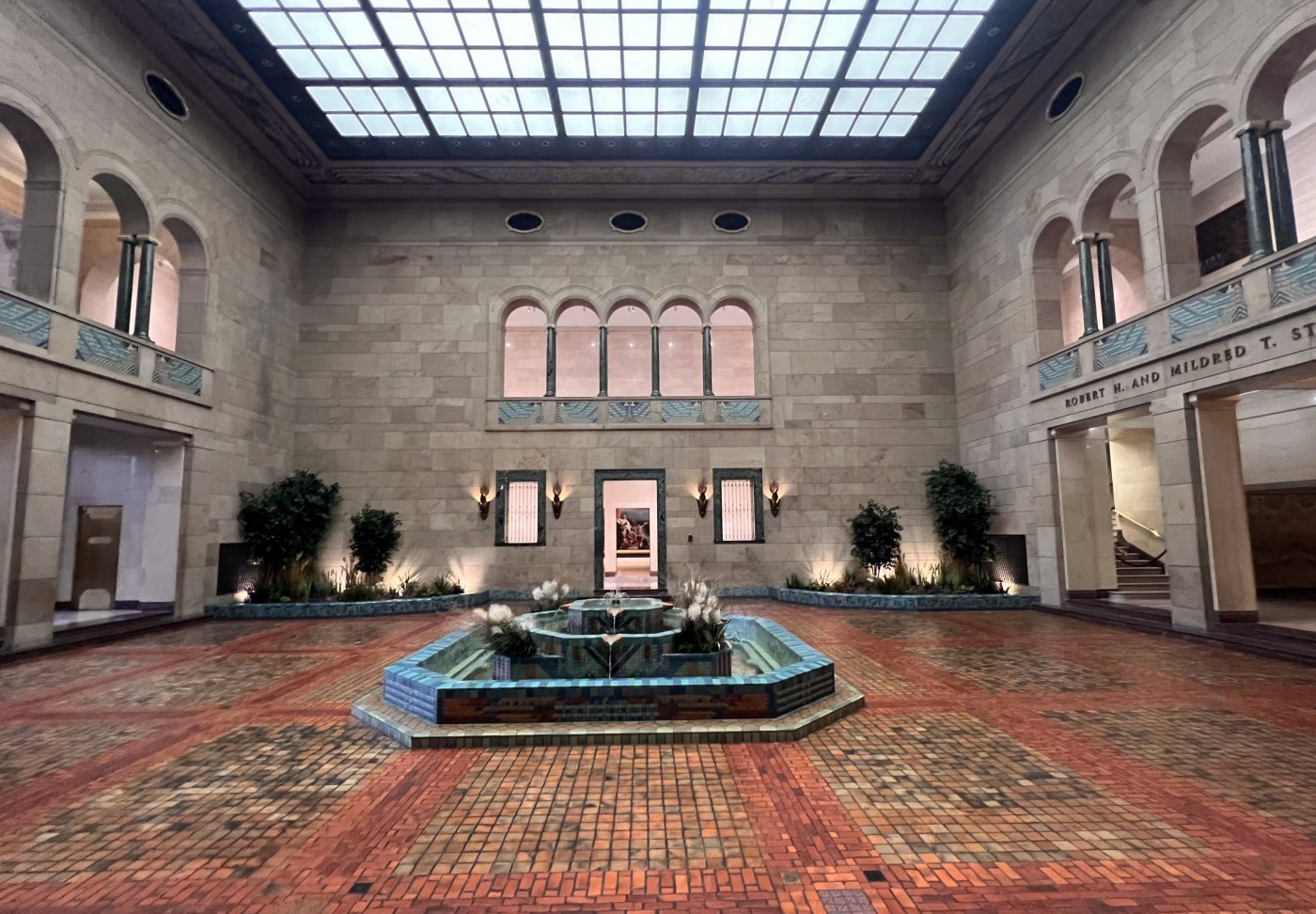
It was a joy to spend the day with kindred spirits at The Joslyn, an art museum in Omaha, Nebraska, discussing art, creativity, life, aging, grief, family, and more.
“All art is a terrific bridge…Music, paintings, words, they really do speak to the soul, to the heart, to the spirit…” -Julia Cameron
Conversation with loved ones requires little effort, but time with Nancy and Marilyn was enhanced by the insights from the art pieces that drew us in. We easily transitioned from discussing art techniques to our own creative projects, from religious and contemporary art to our own spirituality and religious traditions, and from what the artist might have felt or intended to convey to our own feelings and responses to life’s challenges. Skipping from one topic to the next, which might not have made much sense to onlookers, made perfect sense to us.
When I started leading SoulFully You retreats at St. Benedict Center, Nancy and Marilyn, my dad’s first cousins, were some of my first participants. I am so grateful that we reconnected and get together a few times a year. My memories of them were mainly as a child, and now we are good friends.
“Viewing art activates the dopamine network in the brain…people’s minds open to wonder: they demonstrate greater creativity, inspiration, problem-solving abilities, and openness to others’ perspectives. Art empowers our saintly tendencies.“ –Dacher Keltner, Awe: The New Science of Everyday Wonder and How It Can Transform Your Life
Sharing some of the art and insights that filled our day with wonder, I hope to inspire an in-person or online visit to an art museum or your own creative project, such as SoulCollage.
Vacation planning is a lot like lesson planning in the classroom and preparing for SoulFully You retreats and workshops I lead. I always over-plan. When my friend Sara invited me to go on a Celtic Christianity pilgrimage, I dove headfirst into researching all the possible places we could spend four days before the pilgrimage began. I found enough possibilities for a four-week vacation!
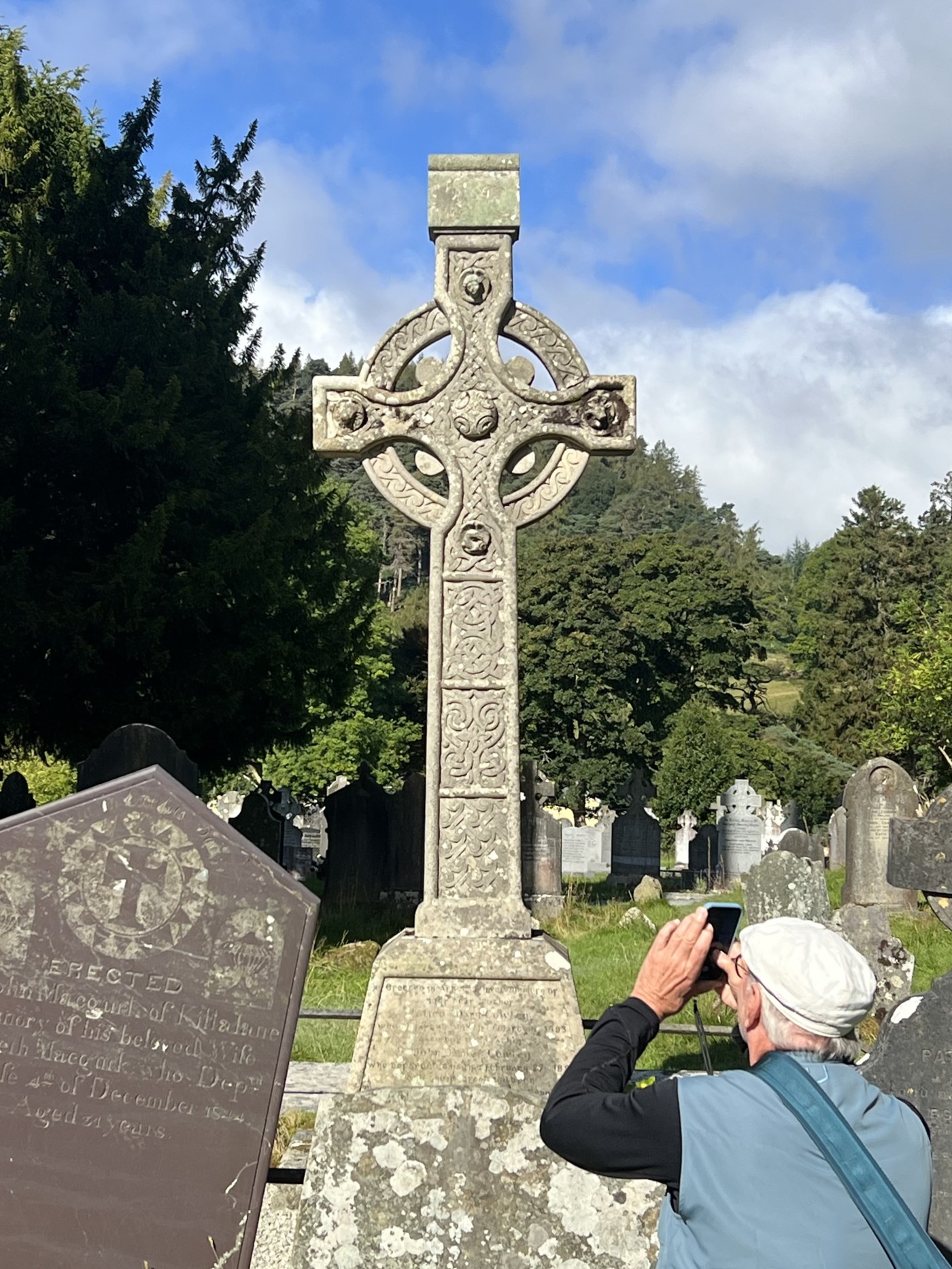
Visiting the monastic ruins of Glendalough, the holy wells of St. Brigid, and the High Crosses of Monasterboice, to name a few sacred sites on the pilgrimage, was all I had hoped for. But I hadn’t expected to be so enamored by the diversity and beauty of Ireland’s landscape, its rich culture and history, and the hospitality of locals and tourists.
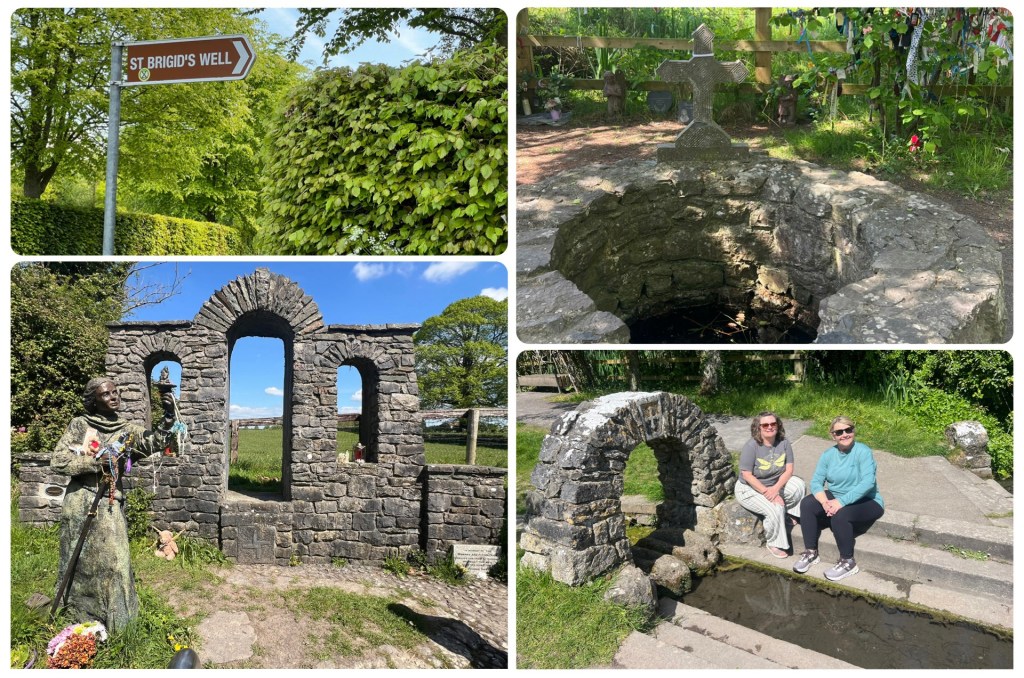
St. Brigid’s Holy Well in Kildare. I visited in Fall 2024 and again with Joe, Dave, and Kris (pictured with me.)
So often, I found myself saying, “Joe would love this.” I knew I needed to come back with my husband, that he would enjoy the Irish pubs, beautiful scenery, and visiting with locals. And, of course, I was thinking about all the places I had learned about that I still wanted to see.
And so it happened, I asked my husband whether he would like to go in May or September the following year. (See how I did that?) We decided on May, the best time to see wildflowers blooming in the Burren. I pulled up my research spreadsheet and got to work planning a two-week vacation. Again, over planning is my gift, so we decided on a few days shy of three weeks. Our friends, Dave and Kristine, who we met when our daughters were five years old (that’s 26 years ago!) would join us for most of the trip, and to my delight they let me plan the itinerary!
When deciding where to go, I knew I had to return to Solas Bhride in Kildare, the “thin place” where one of our pilgrims, Mike, had a medical emergency and passed away. The Sisters of Solas Bhride Centre & Hermitages had been so compassionate and hospitable, offering a gathering place for prayer and reflection, serving tea and cookies, and welcoming us to experience the presence of Brigid throughout the center, in its garden, labyrinth, and sacred art.
I enjoyed visiting with Sr. Rita Minehan and when I purchased her book Rekindling the Flame: A Pilgrimage in the Footsteps of Brigid of Kildare, she eagerly signed it. I learned even more about the sacred sites of St. Brigid nearby, including the Cathedral, the parish church, a holy well, and the village itself.
With the help of Sr. Rita’s book, we planned a pilgrimage day to Kildare, returning to Solas Bhride, where Mike crossed life’s greatest threshold, from the here to the hereafter. Sr. Rita welcomed my husband and me, sharing local art and memorabilia from “St. Brigid: A Woman, A Life, A Legacy,” a celebration of the 1500th anniversary of the death of St. Brigid, and the first year that the Feast of St. Brigid was declared a national holiday in Ireland. More about St. Brigid here.
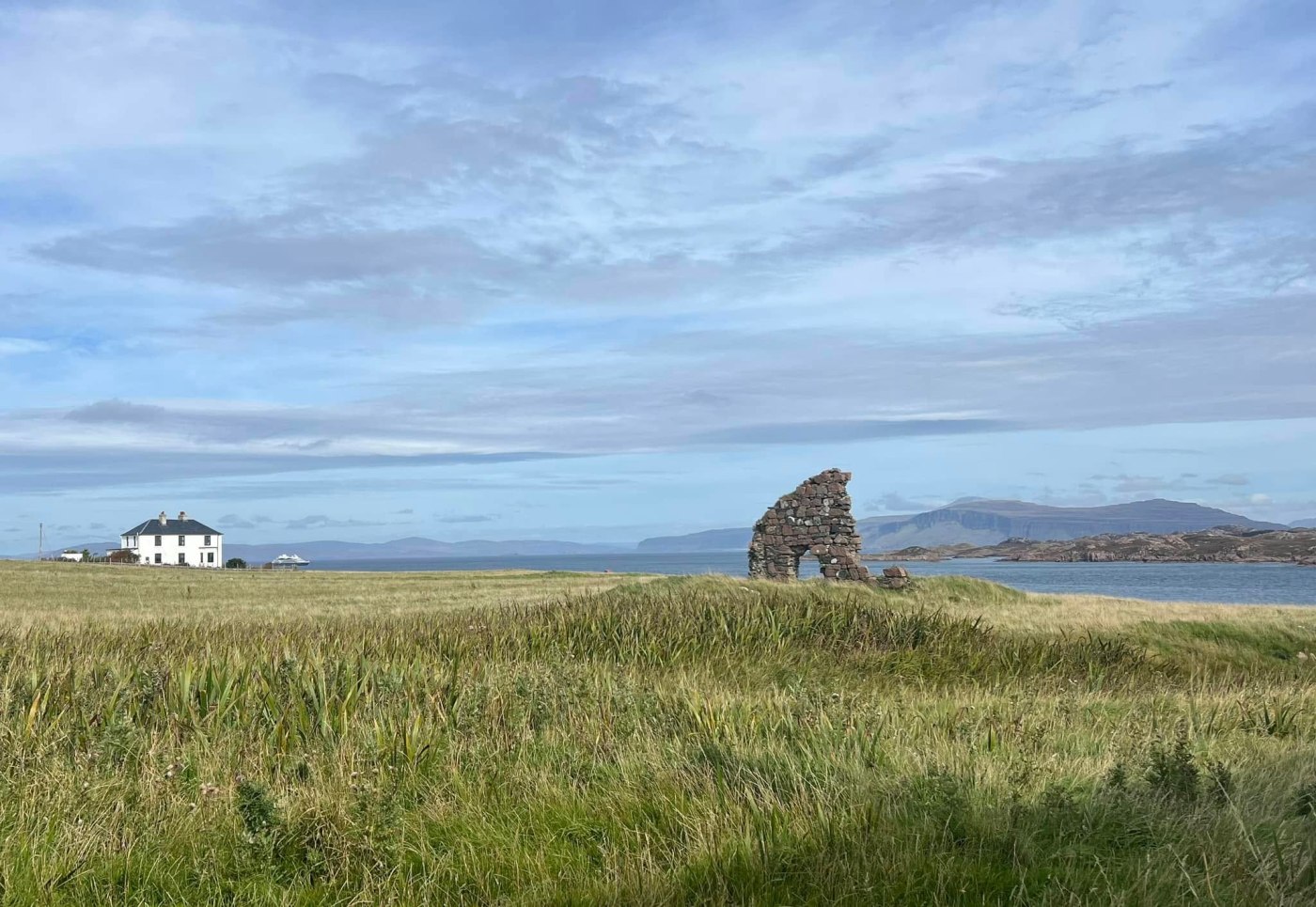
It was truly a dream to visit the sacred sites of Iona on a Celtic spirituality pilgrimage to Ireland and Scotland. Getting to Iona is a pilgrimage in itself, yet the journey has been made countless times since the 7th century. Most tourists visit for only a day, like we did, traveling from the coastal town of Oban, Scotland to Craignure on the Isle of Mull, then taking an hour-long bus ride on winding, narrow roads to the other side of the island arriving at the village of Fionnphort. From there, a foot ferry delivers you to the island of Iona. The day’s last ferry departs around 4:30 in the afternoon for the two-and-a-half-hour trip back to Oban. If the ferry is missed at the end of the day, staying overnight on the island is your only option.
Both the ferry and bus ride provided tremendous views. Our bus needed to occasionally pull over to the side of the narrow roads when meeting other vehicles.
Iona is the birthplace of Christianity in Scotland where St. Columba established an Abbey in 563. It might seem like a lot to get to this holy isle, only three miles long and one and a half miles wide, but walking the ground where St. Columba did 1500 years ago, where Benedictines established a monastery in 1204, the place where artists, sculptors, and writers have been inspired for centuries, is a holy, singular experience.
While I longed for more time to wander the beaches and secret coves, the time allowed for visits only to the most well-known sites closest to the ferry landing. Still, our pilgrimage group was able to participate in a meaningful community prayer for peace and reconciliation at the Abbey and visit the Nunnery ruins, St. Oran’s chapel, museums, gardens, and quaint shops including a bookstore, a “must-see” destination on my mini-pilgrimage to Iona.
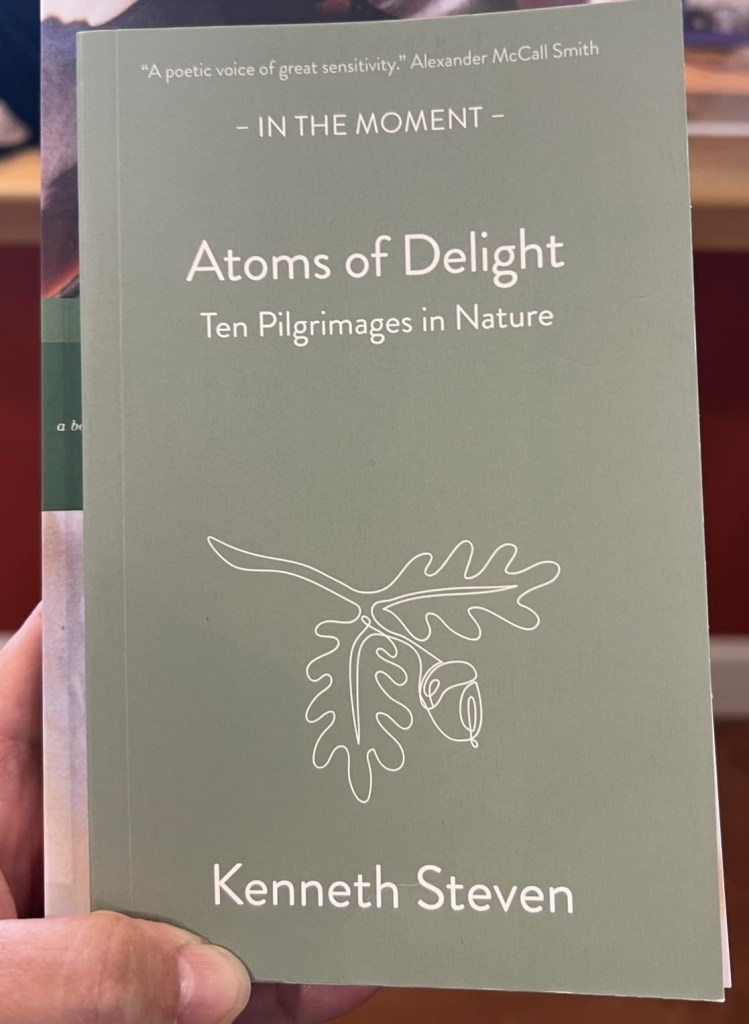
Months earlier, when I was planning the sites to visit in Ireland, a Benedictine Oblate friend, poet and photographer, Pat Leyko Connelly, reached out about some of her favorite experiences from her trips to Ireland. Pat and I connected through our shared love of Benedictine and Celtic spirituality, and she was generous in sharing tips about places to see in Ireland. When she learned I would also visit Oban and Iona in Scotland, she exclaimed that I must meet with her poet friend Kenneth Steven. Pat could not say enough wonderful things about his poetry. She also hoped I could bring back his newest book “Atoms of Delight” from the bookstore on Iona for her. Kenneth and I exchanged several messages and hoped to connect when I was there (unfortunately, our schedules didn’t allow it, but hopefully there is a next time!)
Visiting a bookstore is one of my favorite things to do, and I was just as excited about browsing book titles on this holy ground as praying in the abbey. The little bookstore was at the end of the walking trail, Sràid nam Marbh (‘Street of the Dead’,) where pilgrims have been walking for centuries. I quickly found THE book, took a photo of it to send to Pat, found another book by John Philip Newell for my friend Ellen, packed both of them away for my journey back to Oban, and later loaded them with all the souvenirs and other books I had purchased for the journey back home.
Day by day remind yourself that you are going to die. Hour by hour keep careful watch over all you do, aware that God’s gaze is upon you, wherever you may be.
Rule of St. Benedict 4:47-49
One of the gifts of a pilgrimage is those you connect with on the journey—greeting each other in the morning, offering small kindnesses, enjoying meals together, appreciating the sacredness of the sights, and sharing insights. On a recent Celtic Christianity pilgrimage to Ireland and Scotland, I knew only one person, my friend, SoulCollage® companion, and travel roommate, Sara, who I met several years ago at St. Benedict Center as a Benedictine Oblate.
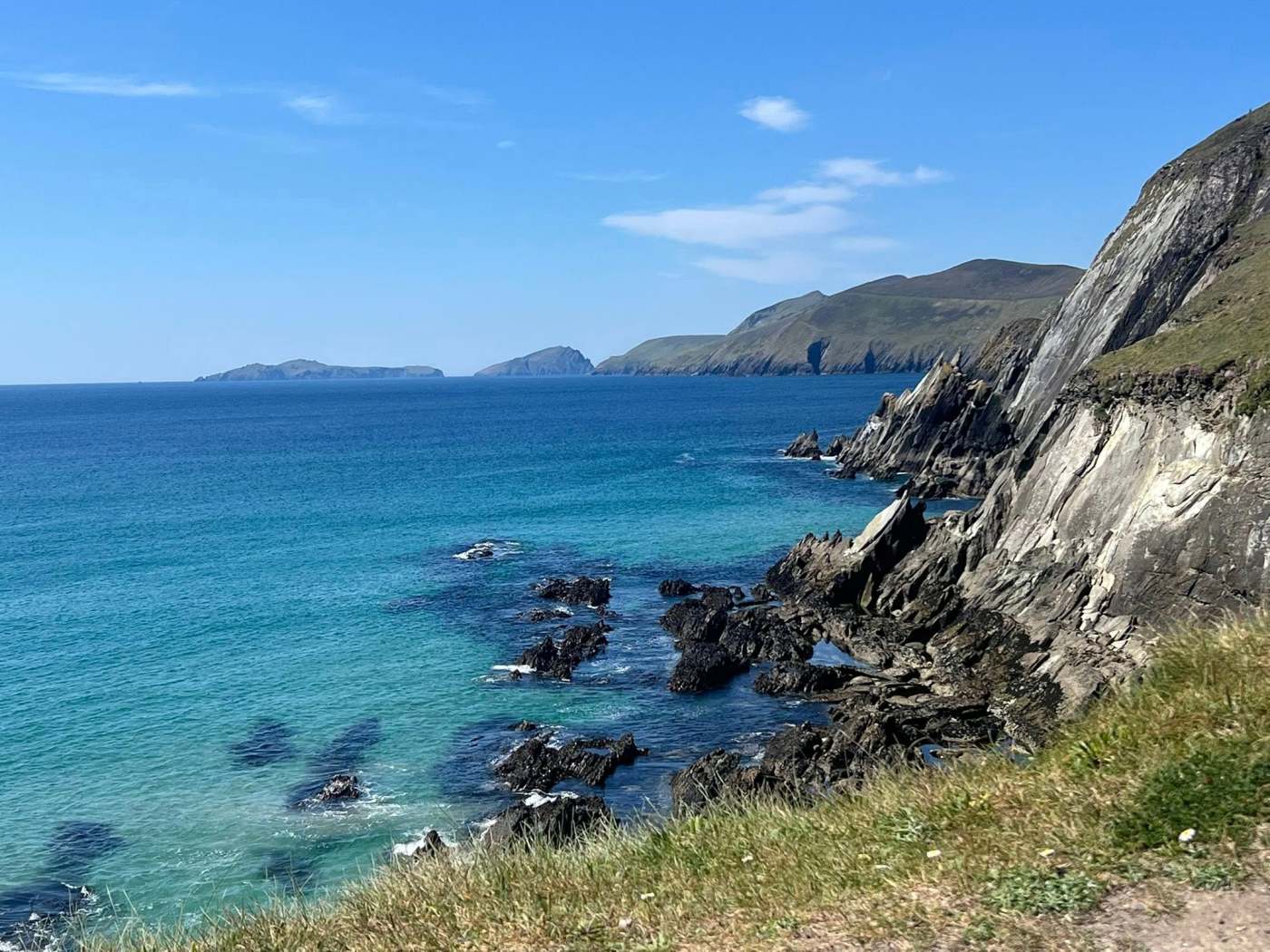
Sara and I had decided to begin our pilgrimage four days earlier at the Cliffs of Moher, in the west of Ireland, and then travel by train to Dublin to catch up with the group once they arrived. Many pilgrims knew each other beforehand, so introductions in Zoom meetings and social media proved to be a helpful head-start to our shared time. Just a few days into our pilgrimage, I shared breakfast with one of the pilgrims, Mike, at a two-person table.
We ordered porridge and discussed the lengthy lines for fancy coffee from the European espresso machines, hoping for just a quick pot of black coffee. I was clearly more irritable about getting my first cup when Mike commented that he recently started taking a spiritual approach, a detachment from coffee, he said. If he gets coffee in the morning, all the better, but not getting coffee would not be a deal-breaker for his day. He would not allow the absence of coffee to interfere with his interior peace.
As I calmed down about the lack of morning caffeine, our conversation continued to a depth not often reached in such a short time. We shared that through the years our spirituality had changed, impacting how we experience life, especially how we respond viscerally as we witness racism, homophobia, injustice, and hateful behavior in our country. We shared our deepest grief about the estrangements in our family and the uncertainty of how healing might come.
Navigating long lines and crowds in the breakfast area, we finally achieved the goal of a cup of coffee. Mike commented that people were not even looking at each other while getting food and drink. He was right. Mike’s comments remained in my heart throughout the day and I am grateful to have had such a meaningful conversation with him.
The gift of a pilgrimage “lies in the gaps of the agenda, in the conversations and relationships with others, and in the details of the day that cannot be planned or controlled. This is where the grace of God enters—sometimes it is in the form of discomfort and challenges and other times in opportunities that new insights and “aha moments” of new understanding bring.” (A Busload of Hospitality: A Benedictine Pilgrimage, Part 4, Jodi Blazek Gehr)






 Being Benedictine