
November 2024 Oblate Reflections
Sources:
Lectio Divina—Genesis 1:26-2:3, Fill the earth and subdue it.
Book Discussion—The Oblate Life: Spirituality at Work, Dermot Tredget. Edited by Gervase Holdaway, OSB, 2008
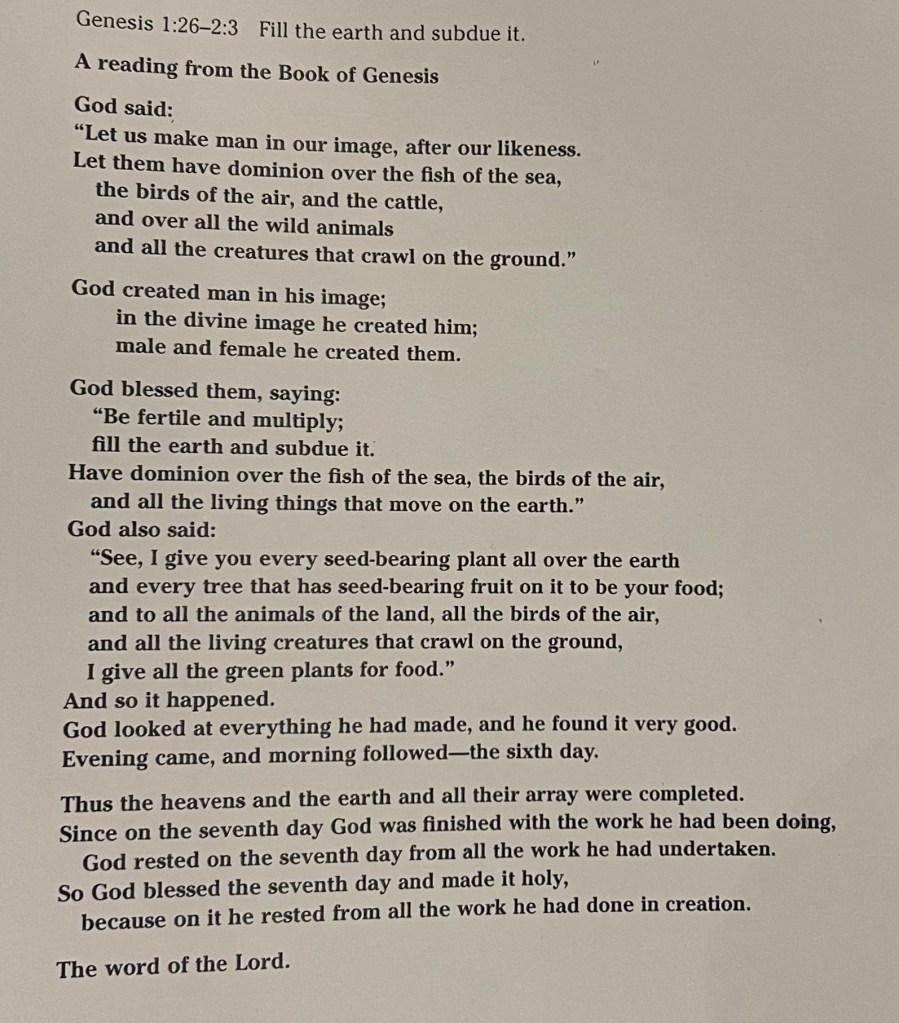
Topics: Prayer, work, rest and study together provide a foundation for a Christian spirituality of work. St. Benedict recognized that work has a transformative power and for the monk is the principal means to seeking God. Our discussion flowed from words or phrases that resonated from sources listed above.
God created man in his image, in the divine image he created them.
We are created in the image of our Creator; we are creators, too, and it is our responsibility to contribute to the act of creation. Creation is not a once and done effort. Creation requires constant movement, growing, expanding, and even resting. We must ask ourselves if our work is valuable. Does my work add value to God’s creation? “We cannot speak about a spirituality of work without talking about an ethics of work.” (Dermot Tredget)
I give you every seed-bearing plant
In the image of our Creator, our work is to plant the seeds we are given which becomes our food. This isn’t quick and easy work; we need to rest, recover and have patience. We are in relationship with the Divine as co-creators. The Divine is not out of the picture. There is an unseen aspect of work–God is working even while we rest. Even further, what we see as useless toil may show value later. All is sacred.
Let them have dominion
Our dominion, the gift of being “in control,” requires that we are good stewards of what we have been given. The earth is not ours for the taking. We cannot use up all of our resources; our work needs to be thoughtful and careful, not simply for our own use. In the monastery, the cellarar makes decision about material things and how resources should be allocated. This is holy work where the tension between generosity, prudence and equity is held.

God rested on the seventh day
The Divine rested from the work of creation. Our Creator is the ultimate role model of being Benedictine –having a balance between work and rest. Rest is holy work too. We may feel guilty when we rest; it seems that we are not being productive. But rest is required for regeneration, for inspiration to bubble up. We must resist the idea that rest is useless and not productive; something is happening even if we do not see it. Our rest is renewing, inspiring, reflective, prayerful.
In the Rule, Benedict reminds us ‘Idleness (or boredom) is the enemy of the soul’…lectio divina is a form of activity that could lead the reader to contemplation. “What the practice of lectio divina can do for the oblate is to help restore the contemplative dimension to leisure which, hopefully only temporarily, has been lost. With this important aid in their spiritual toolbox the oblate has the ability to see work in a new light.” (Dermot Tredget)
There is a difference between idleness, boring, time-wasting activities vs. leisure and restful recreation that may lead to contemplation. Our day of rest may look different in different seasons of our life–sometimes we need more solitude or time of renewal and other times we may be as productive as an energizer bunny.
“For today’s monastics much of the work is intellectual rather than manual, such as scholarly research, studying, pastoral work, teaching and so on… We value others, or inflate our own importance, according to what we do rather than for who we are. We lose sight of the fact that our work is primarily about service to others.” (Dermot Tredget). We have different ways of working– with our hands or minds, in solitude or groups–but none of that work can be done 24/7. Everything has its time–a time to relax, work, and pray. Certainly in thriving economies we have more choices–not all of our work is for survival, but a genuine privilege to use our talents in unique ways.
Conversatio morum, the Benedictine promise of conversion of life, affirms that inner work is holy work. Inner work is the preparation for the outer work. We must cease our anxious striving (Psalm 46, 127). Our work, and the purpose of sabbath, is to show appreciation and gratitude for all God has done for us and continues to do.
Consider the questions our small groups reflected on:
Questions for reflection:
1, The Benedictine spirituality of work offers valuable insight into work-life balance issues; integrating prayer and work, and coping with difficult work relationships or situations. How has being an oblate impacted how you see your personal life vs. your work life? What changes have you made?
2. How do you integrate prayer into your work day? How do you pray before, during, or after work? What changes have you made?
3. Describe a situation or relationship where you gained insight from what you learned about the spirituality of work. How has putting yourself at “the disposal of another” impacted your relationships at work? empathy
4. How has your work had a “transformative power” in your journey to seeking God?

Oblate Steve reminded us of the song, “Morning has Broken” as proper praise for all the beauty in creation. In times of rest, may we practice such gratitude.
Morning has broken like the first morning
Blackbird has spoken like the first bird
Praise for the singing, praise for the morning
Praise for them springing fresh from the world
Sweet the rains new fall, sunlit from Heaven
Like the first dewfall on the first grass
Praise for the sweetness of the wet garden
Sprung in completeness where His feet pass
Mine is the sunlight, mine is the morning
Born of the one light, Eden saw play
Praise with elation, praise every morning
God’s recreation of the new day
Morning has broken like the first morning
Blackbird has spoken like the first bird
Praise for the singing, praise for the morning
Praise for them springing fresh from the world
Disclaimer: I cannot claim to have captured all of the wisdom shared in our monthly oblate discussions or that I represent all oblates in attendance. The group discussion is a starting point for this reflection, but it is my interpretation of what I heard and what resonated with me. There could easily be as many different blog posts or reflections as oblates. Each of us comes to Lectio from our personal experience of God at that moment and we receive what we need in that moment as well. The beauty of Lectio Divina is that the reading, insights, and discussion may fall differently on each of our hearts. How blessed we are that there are “many dwelling places” (John 14:2)” and we are all invited to “listen with the ear of the heart.” (RB Prologue)


 Being Benedictine
Leave a comment