Search

Being Benedictine

Living SoulFully as an Oblate of St. Benedict

Tag

Prayer

Labyrinth as Pilgrimage and Prayer

Throughout history, pilgrims have sought an experience of the holy by visiting temples, shrines, cathedrals, monasteries, and other sacred sites. Some take lengthy journeys on foot, such as the famous Camino de Santiago (The Way of St. James) or the annual Muslim pilgrimage to Mecca, walking 10-20 miles a day.

By definition, a pilgrimage is a purposeful journey to a religious or sacred site, yet it is not necessary to travel a great distance, or walk many miles, to undertake one. Walking the path of a labyrinth is a symbolic representation of a spiritual pilgrimage, and one of many creative ways to pray.

 
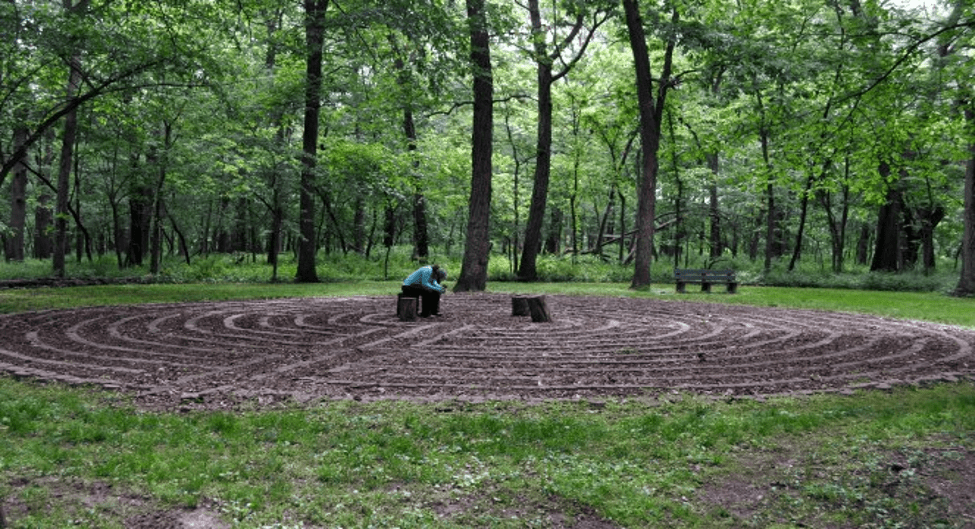
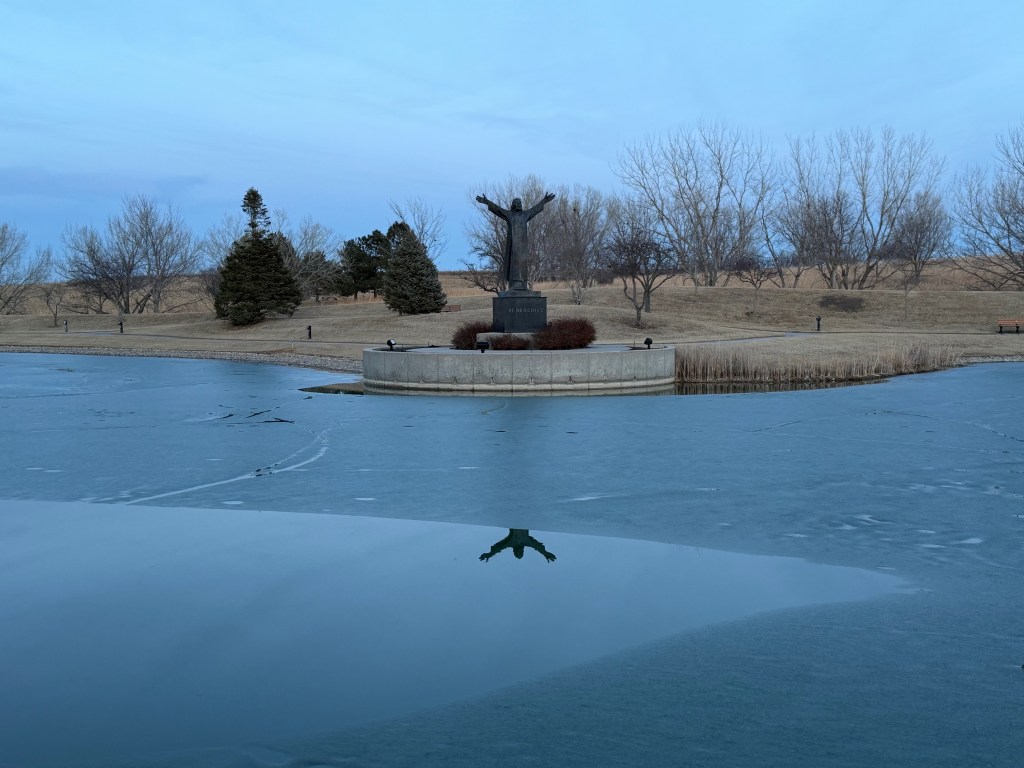
Creighton University Retreat Center in Griswold, Iowa

The use of labyrinths for meditation and prayer dates back thousands of years. During the Middle Ages, labyrinths were abundant, as opportunities to travel to the Holy Land or other sacred sites were limited by war, poverty, and other constraints. They remain a contemporary spiritual practice for quieting the mind, letting go of our personal agendas or expectations, learning to trust, and seeking guidance from the Divine. Bringing one’s prayer to the labyrinth engages the mind, body, and spirit.

“The labyrinth is an archetype, a divine imprint, found in all religious traditions in various forms around the world…Walking the labyrinth is a spiritual discipline that invites us to trust the path, to surrender to the many turns our lives take, and to walk through the confusion, the fear, the anger, and grief that we cannot avoid experiencing as we live our earthly lives.”  Rev. Dr. Lauren Artress

A labyrinth is not a maze; there are no dead ends and no choices that need to be made. There is a clear design for a labyrinth with only one winding path to reach the center and the same path to walk from the center outwards, arriving where you had begun. There is no way to lose the path once one is on it.  

Often before starting a labyrinth walk, I offer an intention, ask a question, or prayerfully surrender a situation to the Divine. Sometimes I carry a SoulCollage® card that resonates. Because there is only one path inward, the mind can let go of when one will arrive at the center. It is a certainty that one will get there eventually. I practice trusting that wherever God takes me, in my mind and body, I must simply put one foot in front of the other. I can settle into knowing that Spirit is with me, accompanying me.

This walk, or journey inward, is a metaphor for life. So often we don’t know where we are headed, even with the best of plans or intentions. “Pilgrimage calls us to yield our own agendas and follow where we are being led,” writes Christine Valters Paintner in The Soul of a Pilgrim: Eight Practices for the Journey Within. With a labyrinth walk, one experiences letting go of a plan or agenda—surrendering and trusting that the center will be reached. 

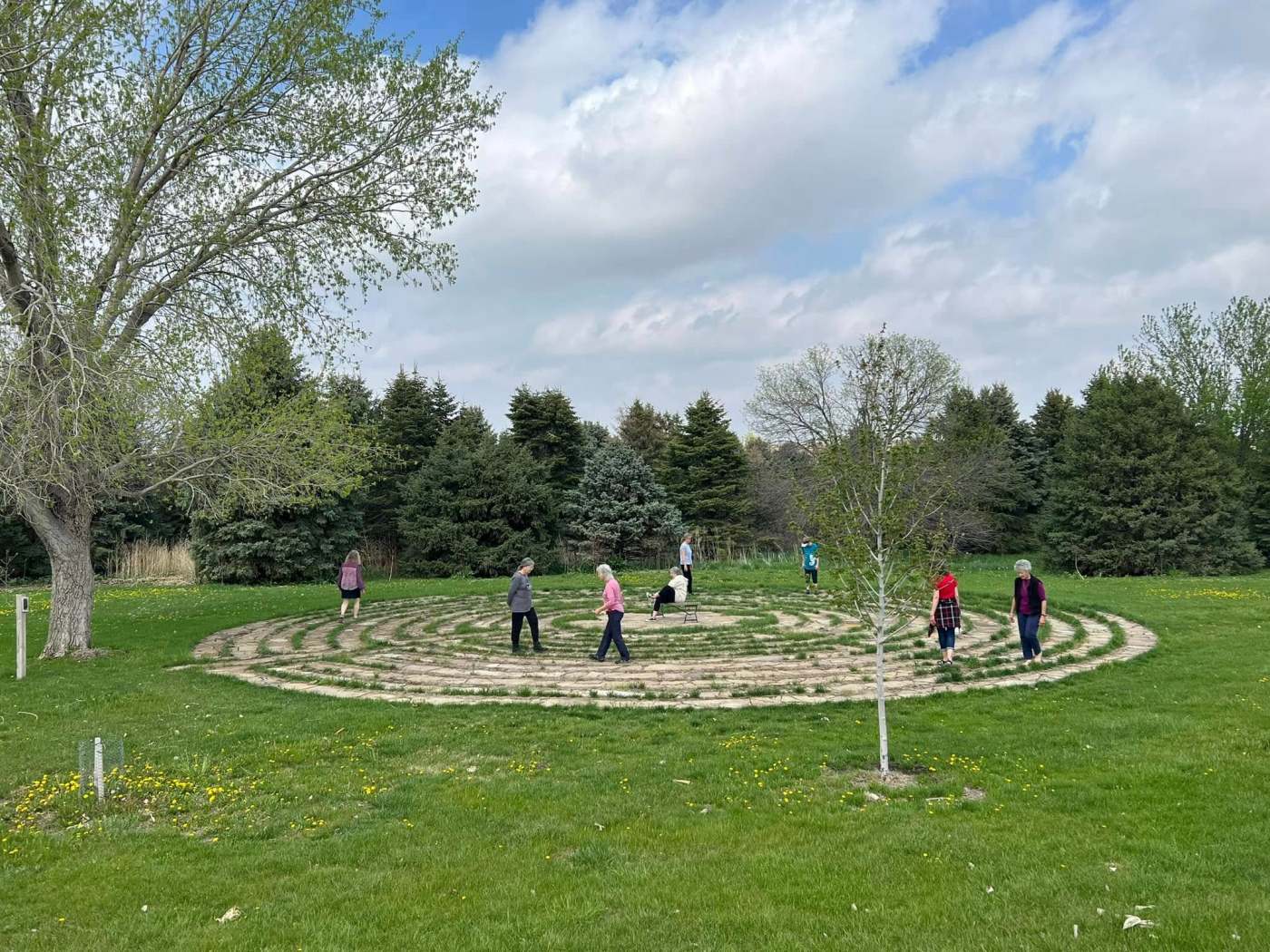
Even with only one path, the route may still not be apparent. The appearance of a dead end becomes a switchback; the path continues inward. A labyrinth I walk often is at St. Benedict Center in Schuyler, Nebraska. It is modeled after the famous Cathedral of Chartres in France, which has eleven concentric circles divided into four quadrants. The path is clear from looking from higher ground, but as many times as I have walked it alone and with others, I find myself wondering if I somehow lost my way. Am I just walking in circles? Is this taking longer than it should?

Continue reading “Labyrinth as Pilgrimage and Prayer”

Pray without Ceasing: A Way of Being

Being a Benedictine oblate is a way of life. Oblates desire to live as monks in the world, seeking God by recognizing the sacred in their everyday life, in their family, and in their workplace. Being part of a community of monks and oblates is a source of learning and support for our spiritual journey.

On the second Saturday of each month, the oblates of Christ the King Priory, the monastery I am an oblate of, gather to learn more about the Rule of St. Benedict. Our day includes morning prayer, monastery news, Lectio Divina, Mass, midday prayer, lunch, reading the Rule of St. Benedict, and small-group discussions of a selected book.

Prayer is the foundation of Benedictine spirituality. In August, we focused on Ways to Pray (Chapter 5) in the book Saint Benedict on the Freeway: A Rule of Life for the 21st Century by Corinne Ware. Benedict wrote in the Prologue of the Rule— “First of all, every time you begin a good work, you must pray to him most earnestly to bring it to perfection.” In the Apostle Paul’s letter to Thessalonica, he instructed the new church community to “Pray without ceasing.” (1 Thessalonians 5:17)

But what is prayer? And how is it possible to always be praying?

A friend recently asked me how I prayed, especially for others. So often we think that prayer means choosing the right words to speak to God, and that somehow, if we find those magic words, prayer might work “better”. We will get what we prayed for. Many believe that the purpose of prayer is to express what we desire—and that the right words might bring about the reality we hope for. But prayer is i much more than words or being attached to a specific, longed-for outcome.

The definition of prayer must be reimagined. There are many ways to pray, and it is possible to pray without ceasing. “Prayer is not so much our words to God as our life in God.” (Unknown author quoted by Caroline Myss) Reflecting on the chapter, I created a list of what prayer is:

Continue reading “Pray without Ceasing: A Way of Being”

Hysterics and Hail Marys: Holding the Hand of Fear

A month before my birthday, I wasn’t sure I was going to have another one. 

Lately, I have been contemplating aging and dying more than usual. Turning 60 feels different than turning any other age before it. I take seriously the advice from The Rule of St. Benedict to “Keep death daily before your eyes,” but most often I heed it by how I live my daily life. I try not to dwell on the actual dying part. But this year is different.  

Less than a week before he turned 60, a long-time friend suddenly passed away. He went to bed not feeling well and didn’t wake up. Colin and I would share birthday greetings every year, even if we hadn’t seen each other in a while. Now that will never happen again.

I have spent the few months since his passing considering how quickly life can change, how we are never promised another day. As grateful as I am for each new day, I can still be filled with fear at the idea of dying.

And that was my state of mind when, after breakfast on a Tuesday morning, my throat felt unusual, like I hadn’t swallowed something completely. I asked my husband, Joe, to look at it before I joined a Zoom meeting.

Looks okay,” he said, so I drank some water and filled my mug with coffee and prepared to begin. Less than ten minutes into the meeting, my eyes started to itch. I realized I was experiencing a health emergency when I looked in a mirror—in real time, I could see my eyes swelling and closing. (Remember The Incredible Hulk? That transformation is what came to mind as I watched my eyes and face change shape.)

On a hurried internet search, my symptoms indicated “anaphylaxis: a sudden, severe, and potentially life-threatening allergic reaction.”  I had never experienced anything like this, so I knew I needed emergency care, and fast. I told Joe something serious was happening, and we needed to go RIGHT NOW. Worry and anxiety are not new to me, but I experienced panic and fear as I never had.

“I am so scared,” I said.

On the way to urgent care, between hysterics and Hail Marys, I could only think of dying and not wanting to, and that we needed to hurry, knowing things can happen so quickly. After my husband dropped me off near the door, I cut the long line, crying for help. Within minutes, I was given my first injection of epinephrine and instructed to get to the emergency department.

“I am so scared.”

When we arrived at the ED, I was escorted past other waiting patients, hooked up to IVs, given a second EpiPen injection, and had blood tests. Several doctors, specialists, and nurses came in and out.

“I am so scared,” I told Joe, for perhaps the hundredth time.

Doctors recommended that I be admitted to the hospital to be monitored. If I had a rebound reaction and couldn’t swallow, I would be put on a ventilator.

“I am so scared,” I kept saying.

Joe told me I’d be okay, to think positively, to stay calm- perhaps excellent advice when I am in my right mind. But I was hysterical. I screamed, “Colin probably thought he was going to be okay too! Things happen; people die!”  Colin certainly didn’t think he would die the night his blood sugar was low. How could Joe tell me I’m going to be okay? Sometimes things aren’t okay. Sometimes people die.

Continue reading “Hysterics and Hail Marys: Holding the Hand of Fear”

Every Day is Happy Mother’s Day!

“You got your girl!” my husband exclaimed.

Wrapped up in the frenzy of labor, I had all but forgotten that the baby I was going to deliver (hopefully sooner rather than later) even had a gender. Despite having 25 hours of labor, I was so exhilarated with having accomplished the feat of bringing this baby to the outside of my body that I felt like I could have run a marathon. It was a surreal moment, time outside of time. I will never forget this sacred moment of birthing a daughter.

“There should be a song for women to sing at this moment, or a prayer to recite. But perhaps there is none because there are no words strong enough to name that moment. Like every mother since the first mother, I was overcome and bereft, elated and ravaged. I had crossed over from girlhood. I beheld myself as an infant in my mother’s arms, and caught a glimpse of my own death. I wept without knowing whether I rejoiced or mourned.”Anita Diamant, The Red Tent

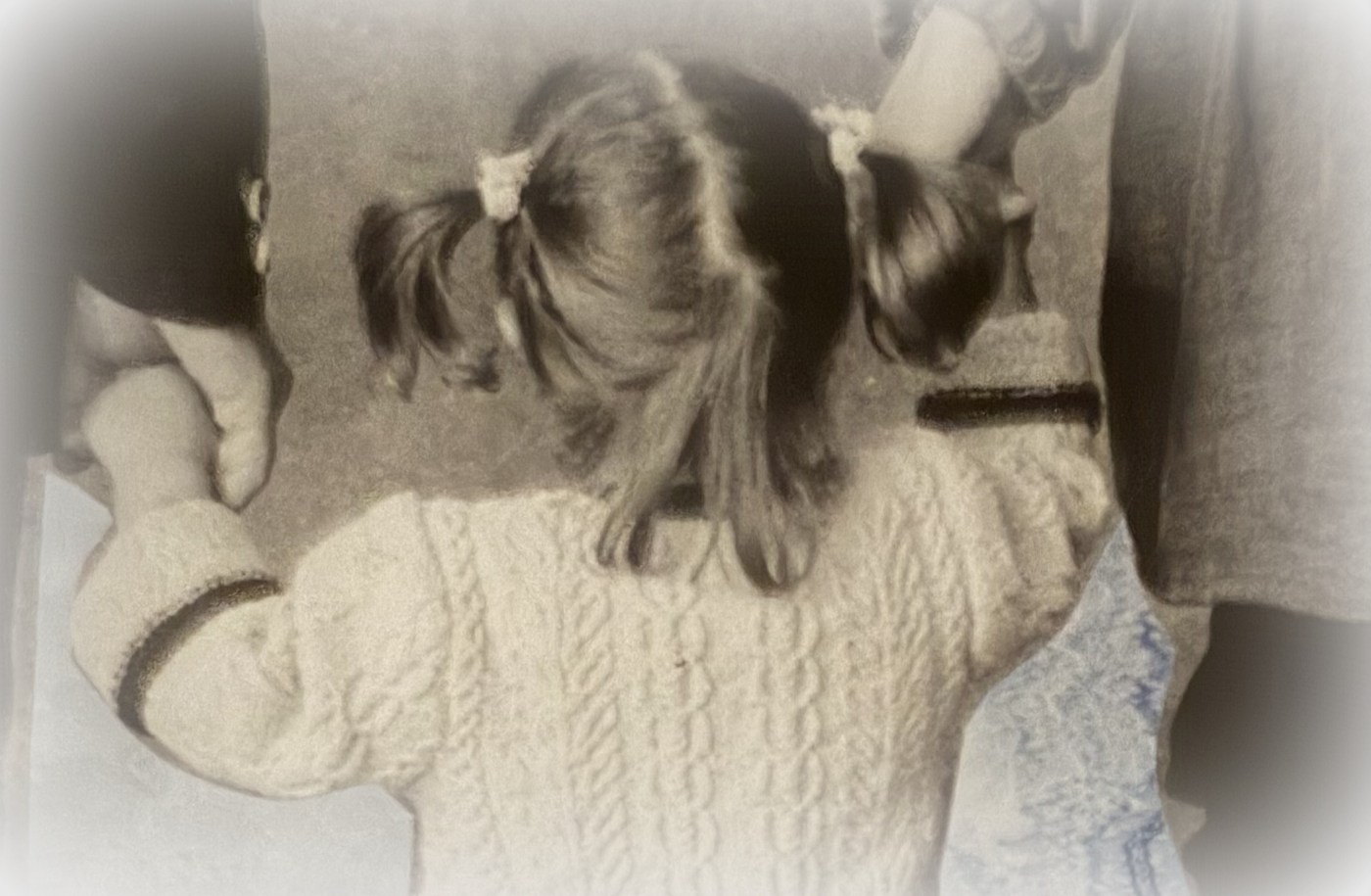
That baby girl, Jessica Morgan, will be 32 years old in July, and I am still singing a song of elation. Certainly, the adult Jessica years are different from the first words, first steps, kindergarten-to-teenager-in-the-blink-of-an-eye years, but her becoming is still beautiful to behold, no matter her age.

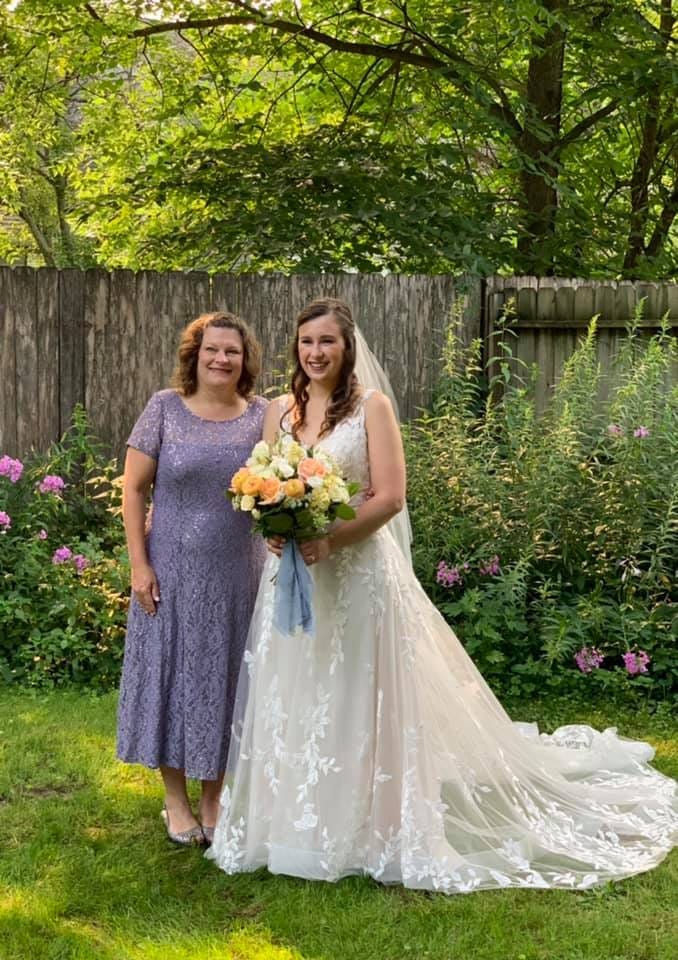
It has been ten years since she graduated from college and moved out of state—from Nebraska to Washington, D.C., and then to Madison, Wisconsin, for graduate school. There, she fell in love with John, got married, and gave us a kind-hearted, hilarious, intelligent, perfect-for-our-family son-in-law. It has been a joy to watch her grow in her marriage and career as a health care policy advisor.

Jessica’s wedding, 2021

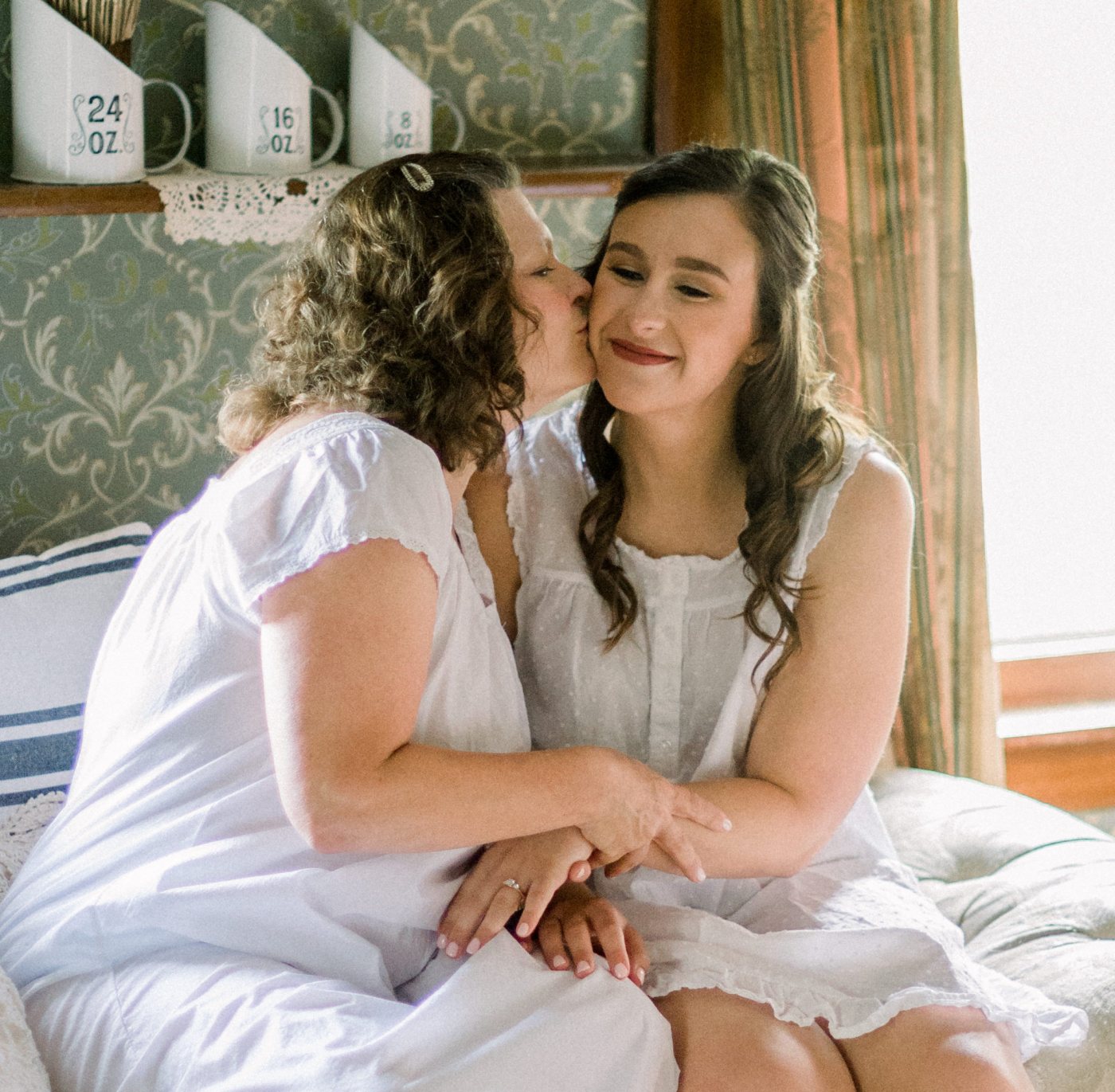
There are years when Jessica and I cannot spend Mother’s Day together, but it matters little. Most days, we talk or text, and truly, it feels like every day is Mother’s Day, no matter where the other is. But Mother’s Day is always an opportunity to reflect on her growing-up years.

When Jessica was just a toddler, I created a bedtime prayer that I blessed her with each night. Some nights, in a hurry, it was shortened to “God bless Jessica’s mind, body, and spirit. Amen.” Still, it remains my prayer for Jessica as she continues to become, giving birth to herself over and over again, becoming more herself.

God bless Jessica’s mind so that she makes good decisions and choices.

God bless Jessica’s body so that she grows strong and healthy and safe.

God bless Jessica’s spirit so that she knows the love of God and others. Amen.”

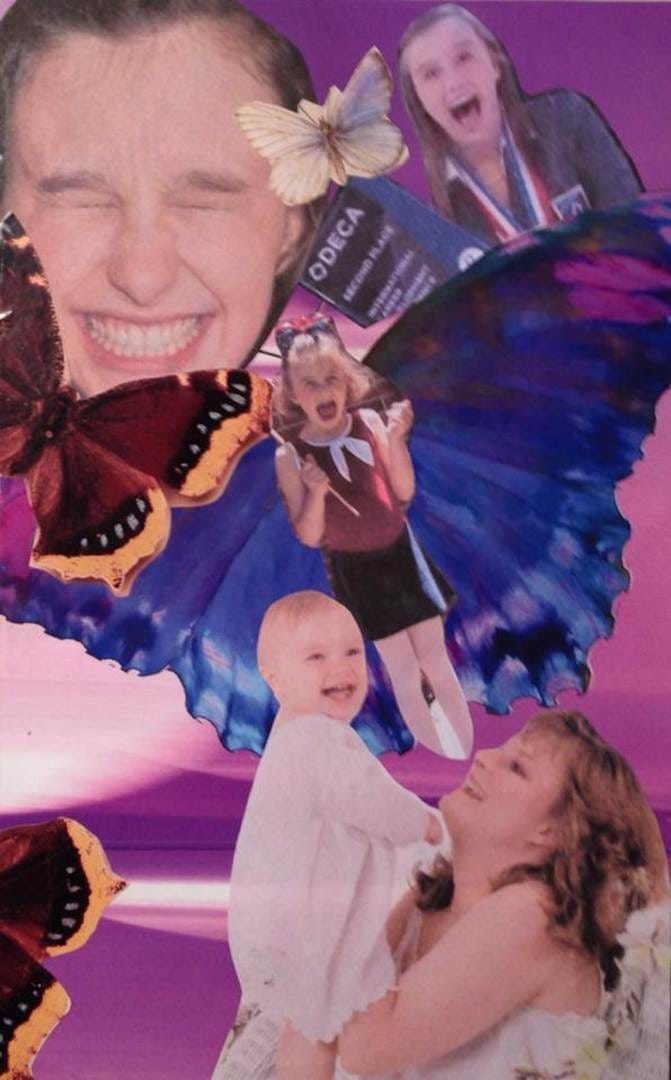
(from Jessica Becoming)

Jessica becoming
Jessica Becoming, a special card for all the phases of Jessica’s life through high school, 2012.

There is nothing that could make my Mother’s Day any happier than knowing that my prayers have been, and are being, answered. Jessica has made good decisions; she is strong and healthy, and she knows the love of God and of others. She is becoming.

A Mother’s Blessing SoulCollage I created when Jessica graduated from college in 2016.

“Blessing Jessica, as my grown-up child, is a journey of becoming comfortable with the uncertainty and the many possibilities for her future, letting go slowly, surely, courageously. The blessing card is as much a reminder for me as it is for Jessica.” (from A Mother’s Blessing)

That sacred moment of birth continues into all the moments of becoming. This is all a mother desires—to know that her child is happy, at peace, learning, growing, working hard, loving well, and always becoming.

I journey with Jessica in her becoming. As she grows, I grow. It makes every day a Happy Mother’s Day.

© Jodi Blazek Gehr, Being Benedictine Blogger

The Day St. Benedict Died

The day St. Benedict died, he was ready. 

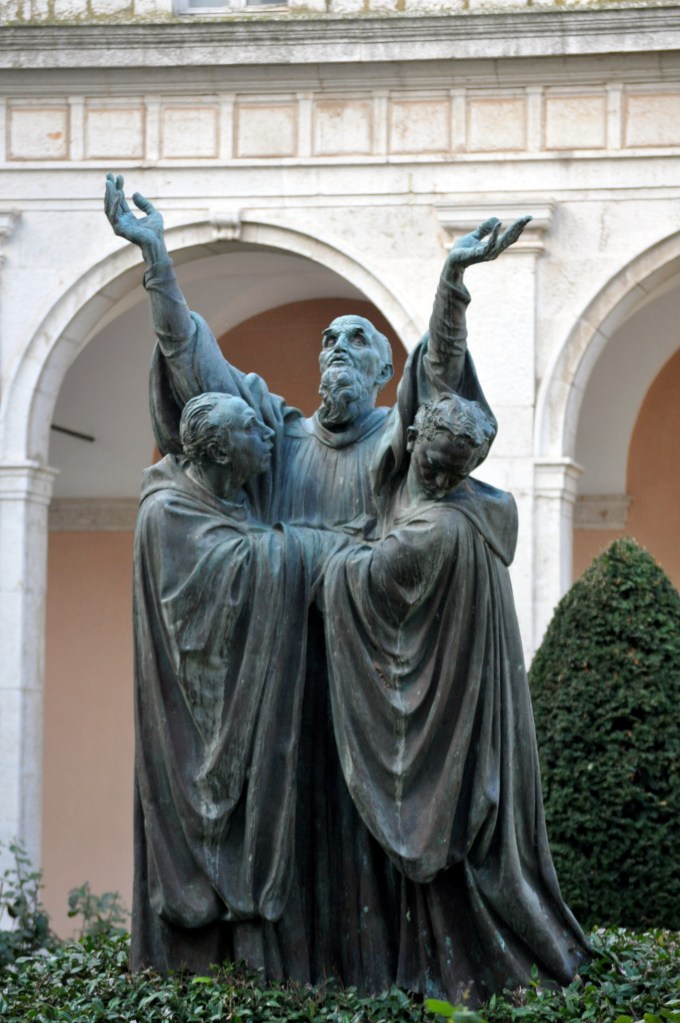
In the Rule of St. Benedict, he instructs, “Keep death daily before your eyes” as a way of life. At the Abbey of Montecassino, where St. Benedict wrote his Rule for monks, there is a statue in the courtyard depicting the moment of St. Benedict’s death.

Montecassino Abbey, the statue depicts the passing of St. Benedict. Photo by Jodi Gehr, 2017.

On March 21, Benedictines around the world celebrate the “transitus,” St. Benedict’s passing from one state to the next, from death into life. Death is not seen as final, but rather a transition into eternity with God.

St. Gregory the Great writes about St. Benedict’s last days:

“Six days before he died, he gave orders for his tomb to be opened. Almost immediately, he was seized with a violent fever that rapidly wasted his remaining energy. Each day his condition grew worse until finally, on the sixth day, he had his disciples carry him into the chapel where he received the Body and Blood of our Lord to gain strength for his approaching end. Then, supporting his weakened body on the arms of his brethren, he stood with his hands raised to heaven and, as he prayed, breathed his last.” (St. Gregory the Great, Book Two of Dialogues, chapter 37).

The advice to keep death always in our minds is the core of being Benedictine and living soulfully. Perhaps this sounds morbid, but it encourages me to live each moment with wonder and gratitude, with purpose, on purpose, and to be attentive to the present moment.  Practicing gratitude, having no regrets, living with death daily before your eyes, as St. Benedict writes, and leaving something beautiful from a life well lived, help prepare us for a more peaceful transition from here to eternity. St. Benedict’s life and death are an exemplar for how we are to be Benedictine.

Continue reading “The Day St. Benedict Died”

International Women’s Day & A Prayer of Longing

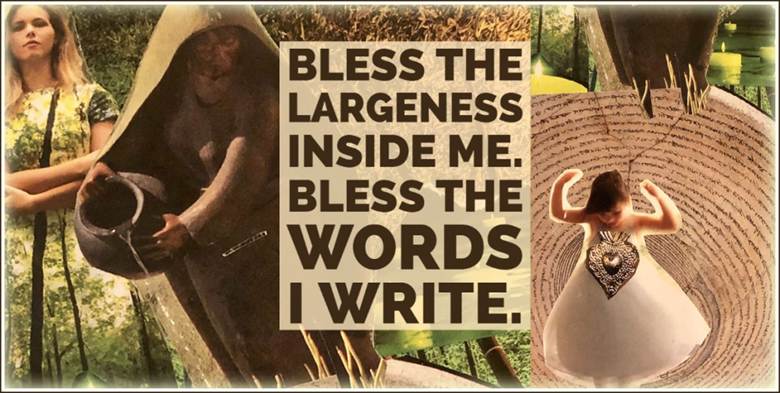
“Lord our God, hear my prayer, the prayer of my heart. Bless the largeness inside me, no matter how I fear it. Bless my reed pens and my inks. Bless the words I write. May they be beautiful in your sight. May they be visible to eyes not yet born. When I am dust, sing these words over my bones: she was a voice.” –Ana, The Book of Longings

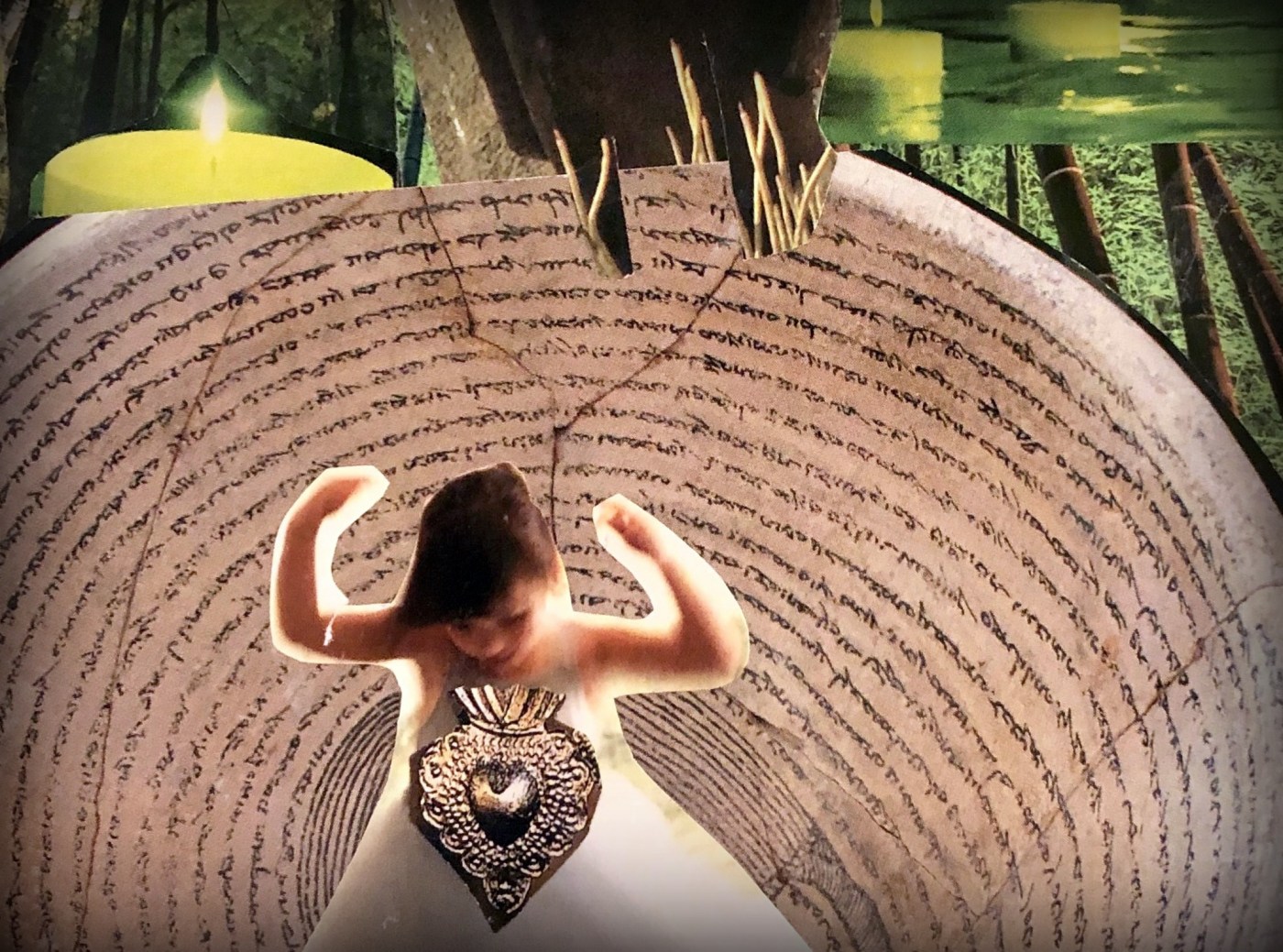
In The Book of Longings by Sue Monk Kidd, Ana writes this prayer of longing on the incantation bowl her aunt Yaltha has gifted her. 

“Do you know what an incantation bowl is?” Yaltha asked. “In Alexandria we women pray with them. We write our most secret prayer inside them…Every day we sign the prayer. As we do, we turn the bowl in slow circles and the words wriggle to life and spin off toward heaven.”

On International Women’s Day, we celebrate the social, economic, cultural, and political achievements of women. We honor the women who have a “secret prayer inside them” to improve the quality of life for women, to raise awareness of discriminatory treatment, and to seek inclusiveness and equality for future generations.

In The Book of Longings, Sue Monk Kidd, one of my favorite writers, shared that she wanted “to write a story that encouraged us to follow our longings and bring forth the largeness inside ourselves…to portray how much women’s voices and stories matter.”

Ana’s prayer of longing is to have a voice, to be heard, and truly listened to. Ana lives during the time of Jesus when women’s stories were not valued or heard, often intentionally silenced and oppressed. Like Ana, we long for our authentic selves to be seen and heard. When we are listened to, we know that we are loved.

“All my life, longings lived inside me, rising up like nocturnes to wail and sing through the night. That my husband bent his heart to mine on our thin straw mat and listened was the kindness I most loved in him. What he heard was my life begging to be born.”-Ana, The Book of Longings

Listening is an important theme in The Book of Longings. St. Benedict thought it was so important to listen that it is the first word in the Rule. “Listen carefully, my son, to the master’s instructions, and attend to them with the ear of your heart.” John McQuiston II, in Always We Begin Again, The Benedictine Way of Living, paraphrases, “Listen with the heart and mind.” These instructions to listen to God extend to the many ways God may speak to us—through our daily circumstances, unique situations, the people in our lives, and in our hearts and minds through the voice of truth within us.

Continue reading “International Women’s Day & A Prayer of Longing”

A Time to Wash Away: A Continuous Lent

February 2026 Oblate ReflectionsChrist the King Priory, Schuyler, Nebraska

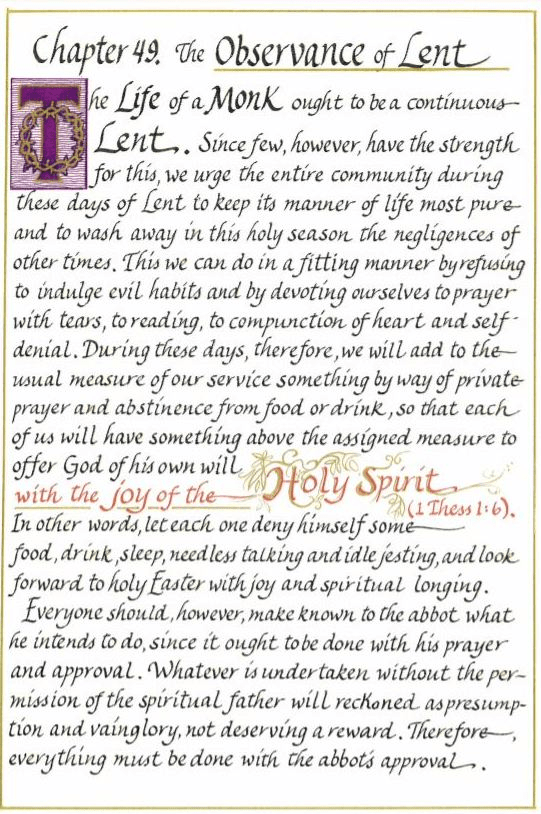
Theme: Love and Lent; Lectio Divina: Rule of St. Benedict: Chapter 49: Pictured above: The oldest copy of the Rule of Saint Benedict, from the eighth century.

Benedictine Sisters Benevolent Association, St. Scholastica Monastery, Copyrighted 1990. Meredith Schifsky, Calligrapher; Mary Charles McGough OSB, Illuminator

What is your first thought when you consider the season of Lent? Many of us think of giving up sweets, donating to good causes, reading spiritual books or devotions, or going to Mass daily or more often. St. Benedict devotes an entire chapter of The Rule to how monks should practice Lent. He instructs that “the life of a monk should be a continuous Lent.” As an oblate, or lay member of a Benedictine monastery, seeking to live the life of a monk in the world, this can sound like a tall order. Fortunately, Benedict knows that we are only human, that everything must be done in moderation. He writes, “few…have the strength for this.”  

We consider what he might mean by the ideal of a “continuous Lent” as well as other words or phrases that resonate with our oblate community during our Lectio Divina discussion.

St. Benedict Center–our monthly Oblate meetings are held in Schuyler, Nebraska More info here.

A continuous Lent. The holy season of Lent, Benedict writes, is a time “to keep its manner of life most pure and to wash away…the negligences of other times.” He offers specific ideas: avoiding evil habits, praying with tears, reading, compunction of heart, and self-denial. Unlike a New Year’s resolution, which we often resolve to add or subtract from our lives (and often lose track of what we resolved to do), a continuous Lent encourages us to keep checking in with our spiritual journey.

Our intentions are not one-and-done. We fall; we get up—again and again. Our spiritual lives can be likened to a spiral—a continuous journey in which we return to learn anew. Lent is a continuous preparation for Easter—a time of resurrection, new life, and beginning again. Even when our hearts are pierced by our own suffering and by the suffering of the world, there is a promise of something new being born, something resurrected. Joy will come again.

Continue reading “A Time to Wash Away: A Continuous Lent”

O Antiphons: O Come, O Come, Emmanuel!

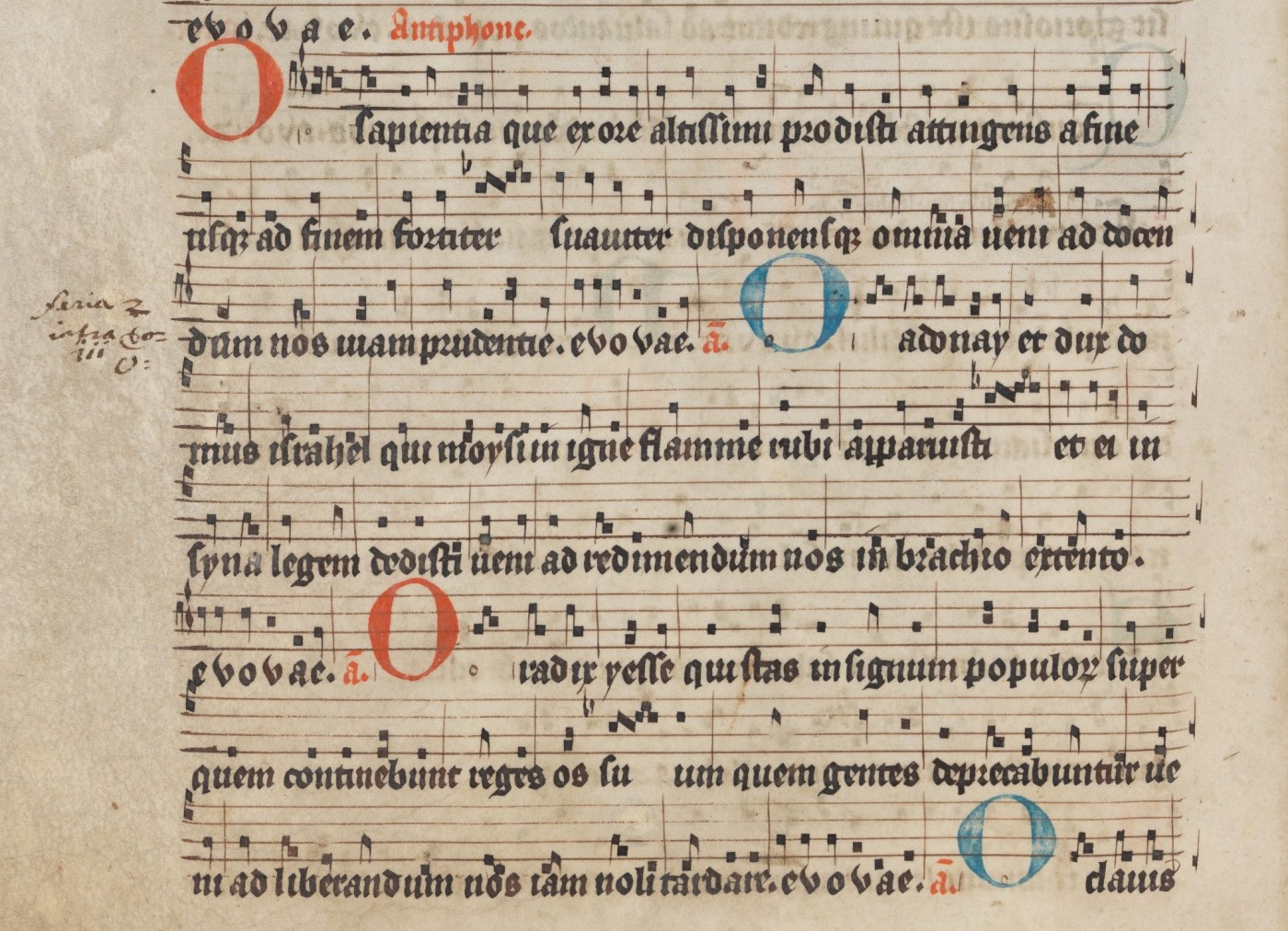
The traditional Advent hymn “O Come, O Come, Emmanuel,” which many are familiar with, is a paraphrase of the lesser-known O Antiphons written by Benedictine monks in the Middle Ages. One of the oldest liturgical rituals in the Church, the O Antiphons have been sung since at least the 8th century. These short prayers, starting with O followed by a title given to the Messiah from Old Testament prophecies, are sung before the Magnificat during Evening Prayer from December 17–23, the last seven days before Christmas. Each antiphon describes God in terms of Old Testament traits and images.

Images and symbols that appear in dreams, art, literature, or scripture carry both personal and universal meaning. Serving as a bridge between the unconscious and the conscious, images can nourish our spirit. “Images open windows through which we can see realities formerly hidden from us. Images want to infuse themselves into us and to change us from the inside out, ” writes Anselm Grün.

Images are an essential part of rituals, prayer, self-reflection, and creativity. When practicing SoulCollage®, one of my favorite spiritual practices, images can guide us to a new level of awareness and reveal a deeper understanding of thought and feeling. Perhaps this is what attracts me to the tradition of praying the O Antiphons.


“Reflecting on the words and images prepares us to let Christ himself enter into us…We are all an image, an icon, of God. It is our task to become ever more like this unique image of God.”

Anselm Grün, A Time of Fulfillment: Spiritual Reflections for Advent and Christmas

The O Antiphons use images to help us envision the Christ we long for, and to draw us into a more profound connection to the God of history. “In the O-Antiphons the art of interpreting Old Testament text as images for the coming of Jesus Christ into the world becomes apparent.” (Anselm Grün) The repeated word “Come!” expresses our deepest longing for Christ. When we accept that we are not God, we yearn for fulfillment, for all that a Messiah can bring, not just in the hereafter but in the here and now. We long for wisdom, freedom, hope, peace, belonging, light, healing, salvation, dignity, protection, love, and accompaniment. Each of these longings is addressed in the O Antiphons.

For an extensive examination of our longings and the use of images in praying the O Antiphons, I highly recommend A Time of Fulfillment by Anselm Grün, a Benedictine monk from Münsterschwarzach Abbey, the motherhouse of the monastery of which I am an oblate.

Feel free to download and share any of the images in this reflection, or follow Being Benedictine on Facebook to share daily posts. Join the monks of St. John’s Abbey for each of the O Antiphons as Benedictine monks have done for 1300 years.

St. John’s Abbey sings O Antiphons: Holy Wisdom—

December 17th – O Sapientia (O Wisdom)
December 18th – O Adonai (O Lord)
Continue reading “O Antiphons: O Come, O Come, Emmanuel!”

Cancer-Colored Glasses: Through Jana’s Eyes

“What a gift Jana has created. Curlers, Church & Whales is funny, wise, and deeply human. The blend of humor, depth, and grounded science is just perfect. I especially loved the gentle reminders to slow down and drop in, and the way the story comes full circle at the end — it’s stunning. I am honored to know Jana and have been a witness of her journey. She has turned her own challenges into something so beautiful and life-giving. What a blessing for everyone who gets to read it.” — Kathleen Amyot, MD

“Wow, wow, wow” was my reaction after Jana West sent me a preview copy of her memoir in early 2025, and now she is making it available as an audiobook, free on YouTube in six 30-minute segments.

I met Jana through a mutual SoulCollage® friend, and ever since, she has been a kindred spirit at many of the retreats I have guided. After receiving a breast cancer diagnosis, Jana found guidance and comfort from a SoulCollage® card she had created. To find healing, restore wellness, and prevent a recurrence of cancer, she began a search to learn about traditional and alternative forms of cancer treatment.

The search also turned inward. Jana writes about becoming attentive to and listening to her body, learning from her inner dialogue of shame-filled messages, navigating stressful situations, and making peace with past trauma, including religious and career choices that did not serve her well.  

Jana remembers a handwritten note that her mother kept in her baby book, which gave her some clues to her childhood— “Jana, age 5, I am allergic to curlers in my hair, church, and whales.” As Jana considered what she had been allergic to (or found stressful), it helped her to practice self-compassion.

Jana shared, “A central theme (of the memoir) is the guidance I received from a SoulCollage® card…It’s been so incredibly powerful.” SoulCollage, a creative and intuitive act of cutting and pasting images into a collage, is more than a craft project; it is a form of self-reflection and prayer. Images can guide you to a new level of awareness and reveal a deeper understanding of thought and feeling.

Remain open like a child.
Your inner Sage knows.
Return to your roots for support in times of stress.
Slow down and go easy so you don’t miss the most important things.
OPEN, INTUIT, ROOTED, SLOW.

More at Homecoming: A Window to the Soul

Continue reading “Cancer-Colored Glasses: Through Jana’s Eyes”

Blog at WordPress.com.

Up ↑