“It has been said that in recent decades we have been moving from the experience of authority to the authority of experience. More people are giving value to their own spiritual experience…(recognizing) the presence and unique whispers of God in our personal lives…” Tilden Edwards, Foreword, Saint Benedict on the Freeway
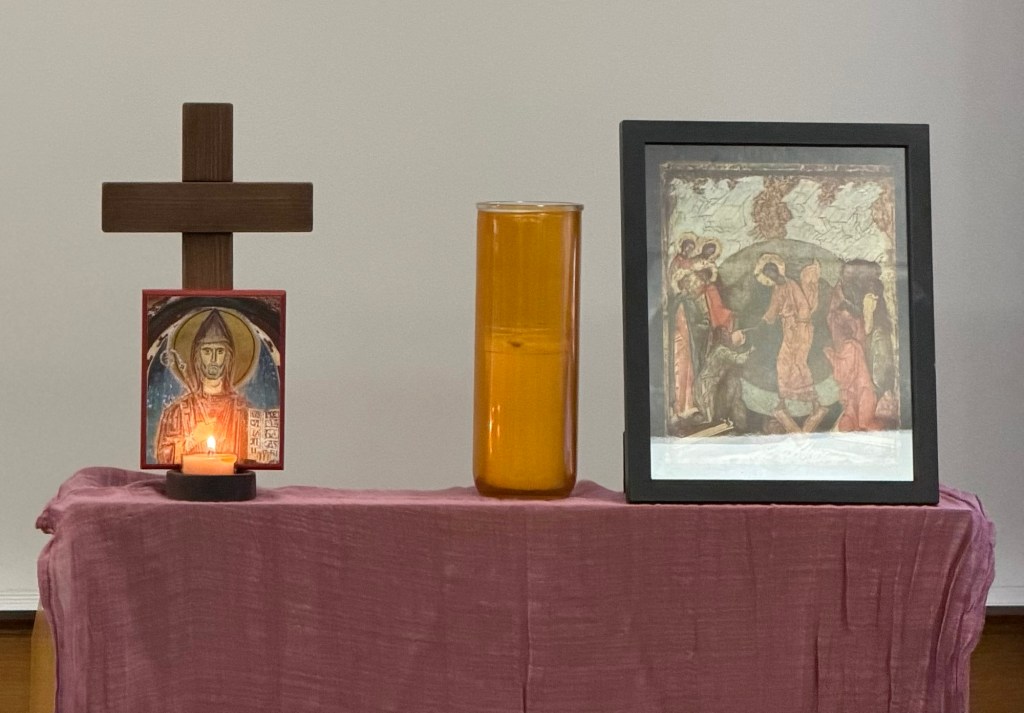
This is precisely what the practice of Lectio Divina, sacred reading, brings to one’s spiritual journey. We contemplate what we read, reflecting on the words or phrases that resonate, listening to the voice of God for insights and wisdom. It is a personal experience of what a text uniquely says to us. It can work for all great literature, poetry, scripture, and sacred writing.
As if through the lens of a kaleidoscope, with each turn one sees a slightly different message, a new perspective, another a-ha! Likely, you have heard The Parable of the Sower many times, but TODAY may bring something new to embrace. With return visits to a passage, we come to understand that we are always learning, drawing new insights based on where we are in our spiritual journey and season of life.
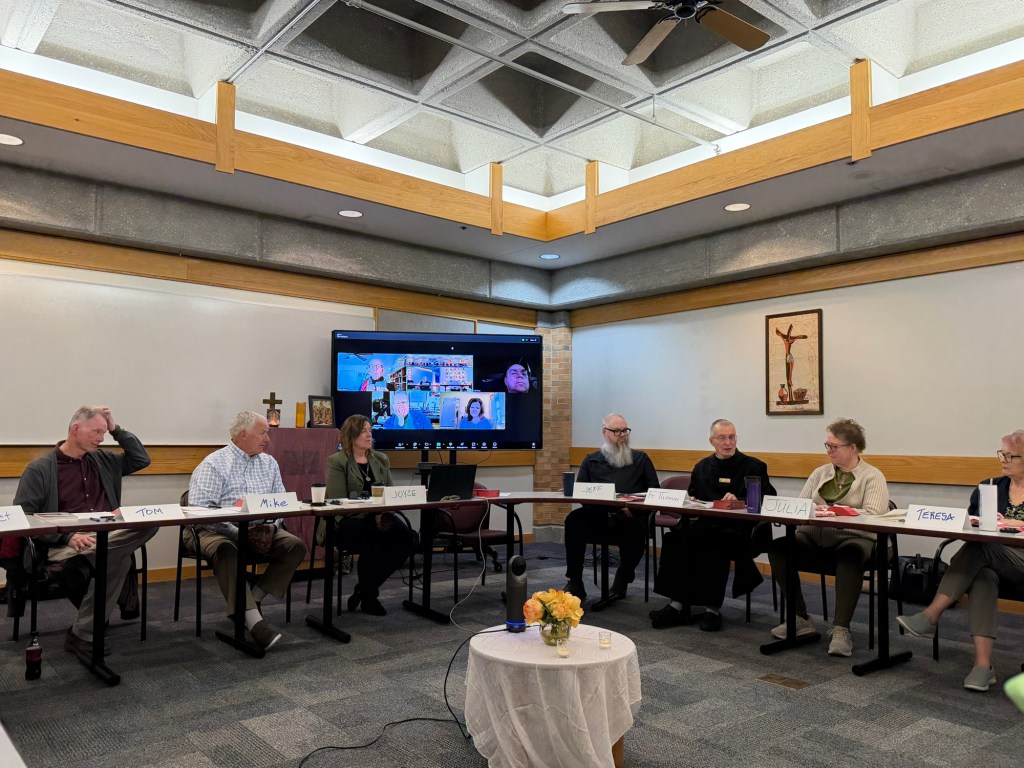
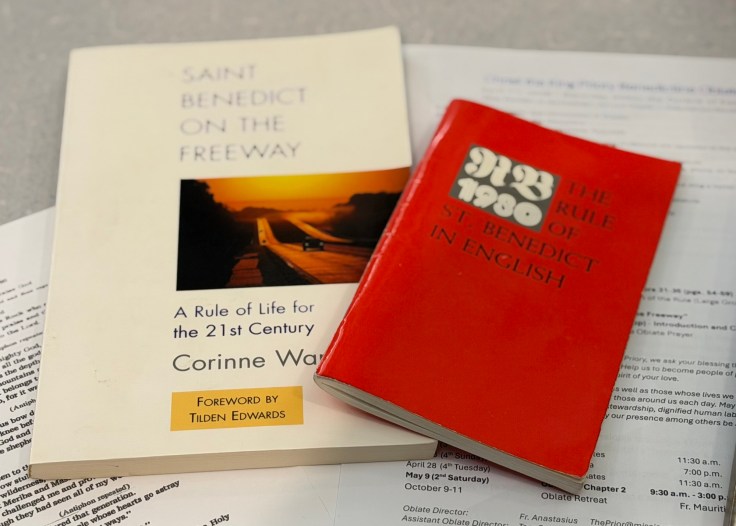
At the April 2026 Oblate meeting of Christ the King Priory, as is our monthly practice, we read and reflect on a scripture passage. The Parable of the Sower (Matthew 13:1-9) with readings from a new book selection, Saint Benedict on the Freeway, and The Rule of St. Benedict, Chapters 31-35, was the focus.
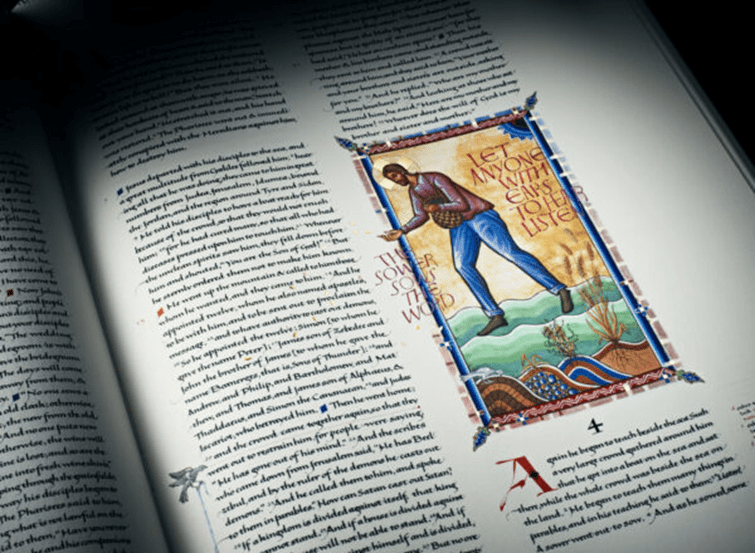
Matthew 13:1-9, The Parable of the Sower. On that day, Jesus went out of the house and sat down by the sea. Such large crowds gathered around him that he got onto a boat and sat down, and the whole crowd stood along the shore. And he spoke to them at length in parables, saying “A sower went out to sow. And as he sowed, some seed fell on the path, and birds came and ate it up. Some fell on rocky ground, where it had little soil. It sprang up at once because the soil was not deep, and when the sun rose it was scorched, and it withered for lack of roots. Some seed fell among thorns, and the thorns grew up and choked it. But some seed fell on rich soil, and produced fruit, a hundred or sixty or thirtyfold. Whoever has ears ought to hear.”
So often we interpret this story as a particular person being like the rocky ground, the rich soil, and so on, but the author of Saint Benedict on the Freeway: A Rule of Life for the 21st Century, Corinne Ware asks: “If I were to think of myself as having within me all the varieties of soils, in other words, of manifesting each of these varied responses to God, how then would I see myself as the subject of this parable?” We can read this parable, a short story intended to teach spiritual truths, in many ways.
Sometimes we are the seed. We are being planted; we may bear fruit. Sometimes we, the seed, are rooted deeply in our faith, and sometimes not. A flowering tree models for us what it means to grow, flourish, and bear fruit thirty, sixty, or one hundredfold. The evidence is in the beauty. We may be blessed with deep roots, a stability that guides us in challenging or distracting times. There are certainly times, though, when we can feel deeply uprooted.
There is power in being the seed. Not everything is left up to the Sower. We can adopt a receptive attitude, be willing to learn, have curiosity, see a new level of understanding, and consider other possibilities. We return to our practice of stability, taking care of the soil that we are grounded in (just as The Little Prince takes care of his own planet in the popular tale). We consider how we care for our own little world—remaining attentive, returning as with a spiral image, to seeing with the eyes of the heart and remembering “whoever has ears ought to hear.” We must care for the soil of our souls to feel the depths of Divine Love. Perhaps the boat symbolizes self-care, of keeping our soil rich, among other possibilities. It is an example of creating some distance, a chance to see more clearly, or to gain a new perspective.
We may also be the Sower. How blessed we feel when our sowing is received on rich soil, when our prayer and work bear fruit. But it is not always what the Sower does, but where the seed falls. It may grow in places we might not have considered, like flowers growing through cracks in the pavement or in the ashes of a volcanic eruption or burned land. We are tempted to judge or question the Sower who throws seeds on rocky ground. But it was the land they were given and the work they had to do. We plant because we must—there is work to be done regardless of the outcome. Learning to detach from results is our spiritual work.
“How can God’s still small voice, which is the seed in the story, get a hearing if all the other voices are so much louder?”
Saint Benedict on the Freeway
Consider the following questions:
What aspects of your life feel most in conflict with your desire for a spiritual life?
What helps you return to your spiritual roots when feeling scattered?
How are you caring for the soil of your soul? How might you interpret this parable pondering the image from The Saint John’s Bible?
More Being Benedictine reflections:
The Sower Sows: A reflection on the Parable of the Sower, Mark 4: 1-20, and the Benedictine promise of stability.
The Flowing Grace of Now: A review of The Flowing Grace of Now by Macrina Wiederkehr. She reflects on Matthew 13:1-9. We are instructed to keep “in mind that you are the seed being sown…This is a parable about you. You are the seed. Jesus is the sower. What is said about the seed can be said of you….You have been created and sent forth to be a blessing…”
© Jodi Blazek Gehr, Being Benedictine Blogger
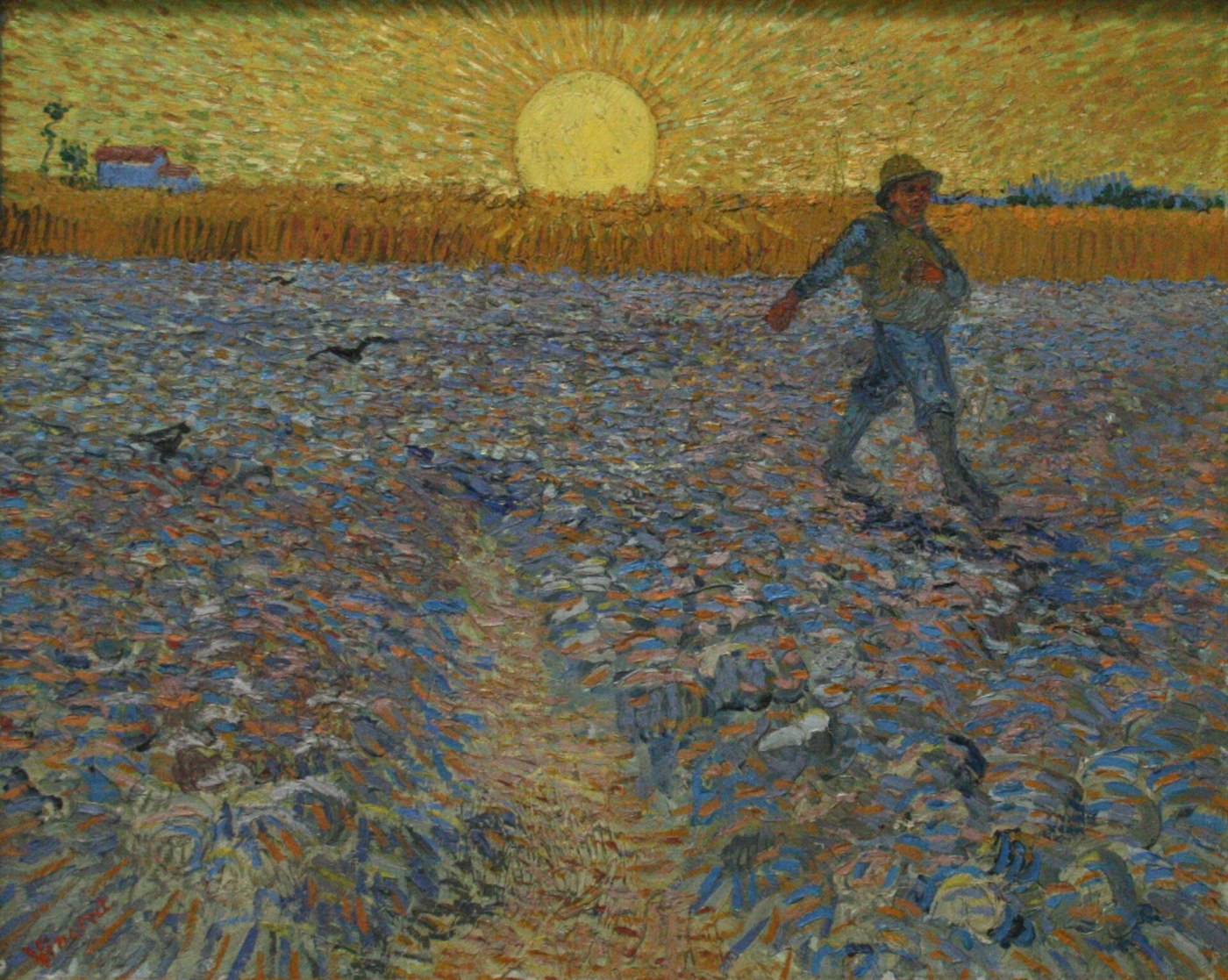
Art in header: The Sower – painting by Vincent Van Gogh


Leave a Reply