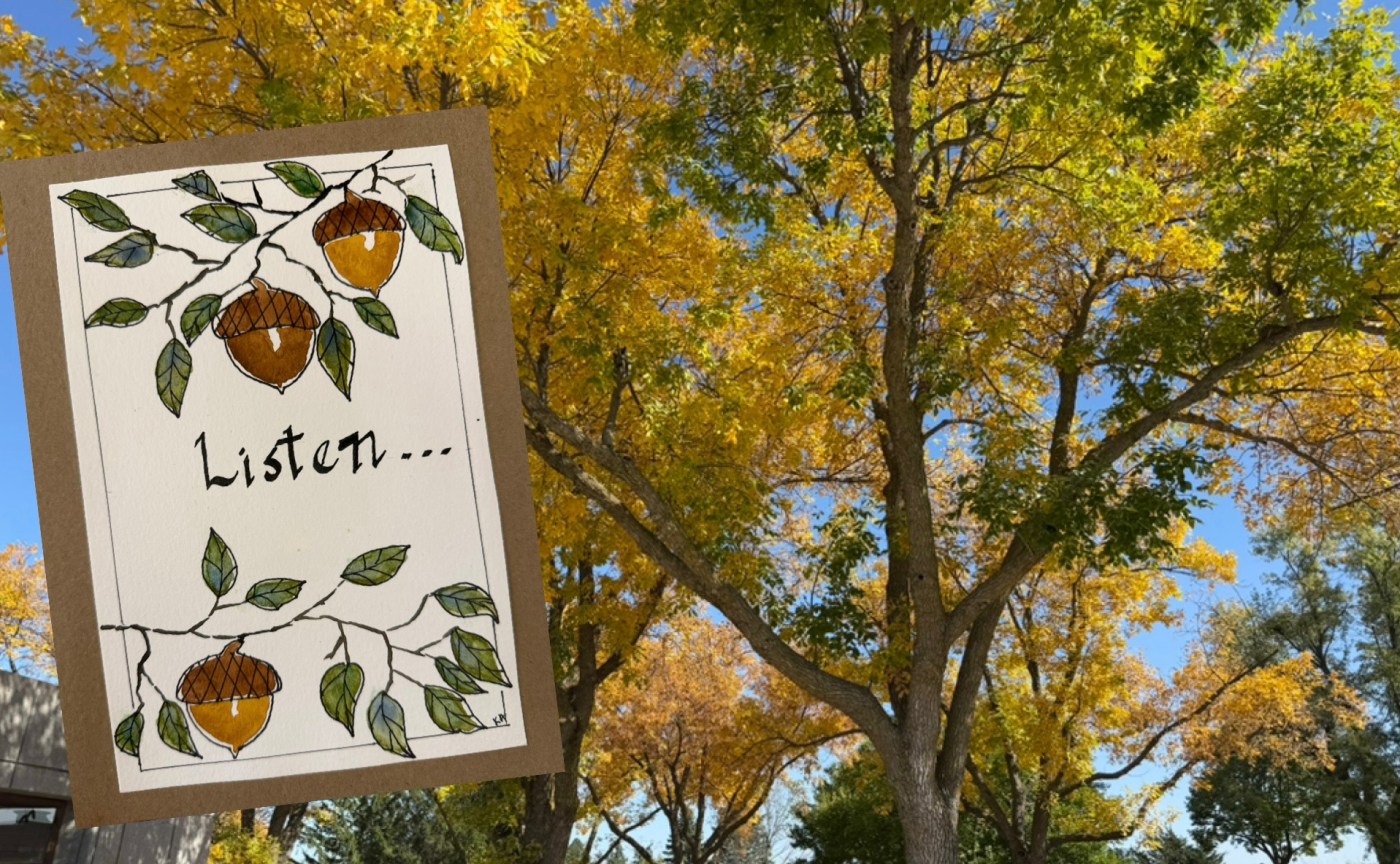
Search

Being Benedictine

Living SoulFully as an Oblate of St. Benedict

Tag

Jesus

St. Benedict’s Life of Love and Freedom…And My Own Journey

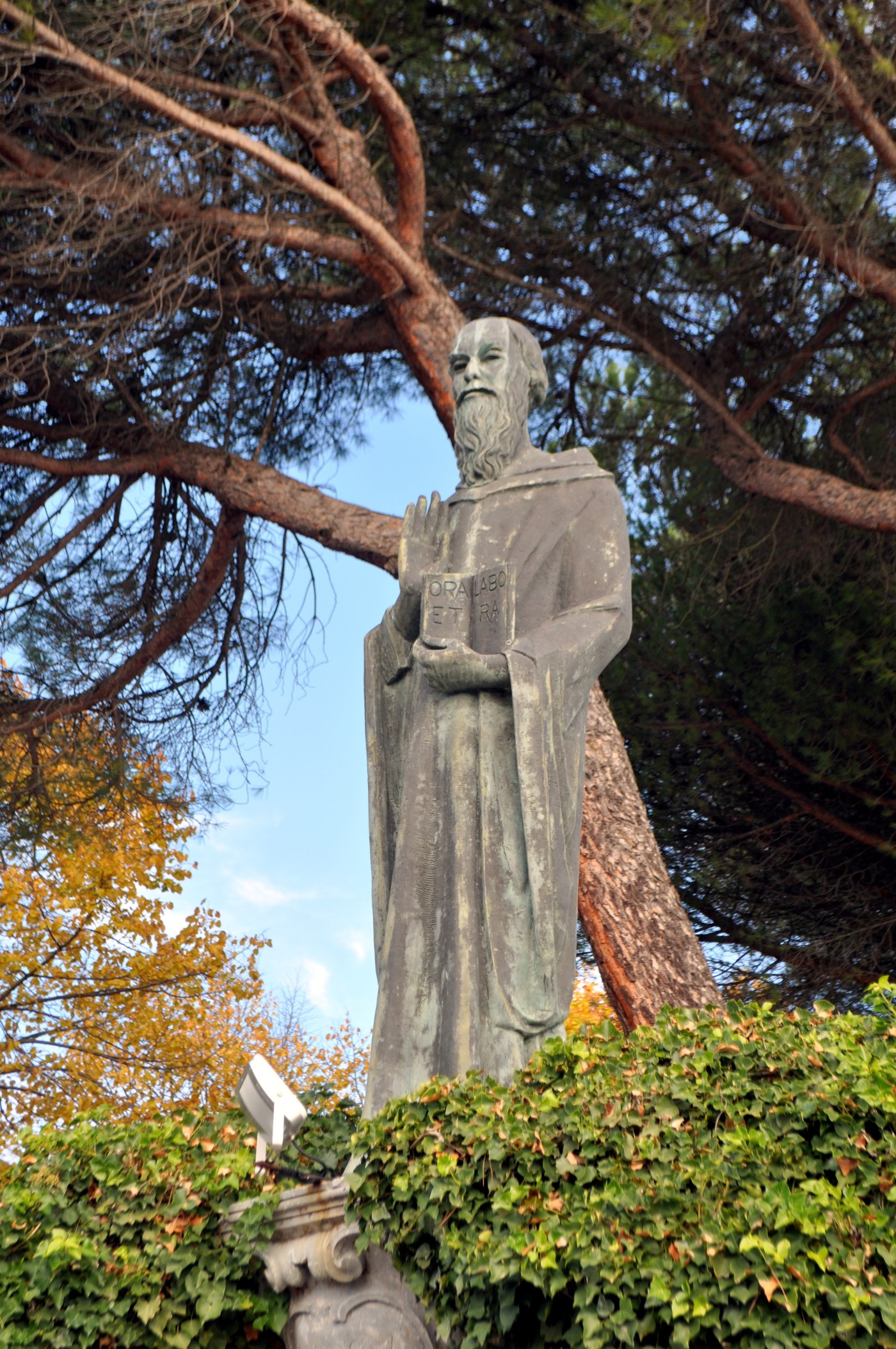
St. Benedict lived in a cave in Subiaco, Italy, for three years, committing to detach from the world and be alone with God. The archetype of a monk is in each person, so we can look to St. Benedict as a spiritual role model.

As a Benedictine oblate, one strives to live as a monk in the world, in the everyday life of family, work, and community. Our longing to be alone with God requires time to listen to the voice of God in solitude—for prayer, silence, spiritual reading, contemplation, or retreat.

Every October, oblates of Christ the King Priory meet for an annual weekend retreat to renew their oblate promises, deepen their understanding of Benedictine spirituality, and enjoy each other’s company. This year our retreat leader was Abbot Mauritius Wilde, OSB PhD., former Prior of our monastery, Christ the King Priory. Abt. Mauritius is an author, lecturer, and spiritual director, and currently serves as abbot of Maria Laach Abbey in Glees, Germany. He guided our retreat based on his upcoming book, The Monk Within You, a perspective on the Life and Miracles of St. Benedict, Book II of the Dialogues written by Pope Gregory the Great.
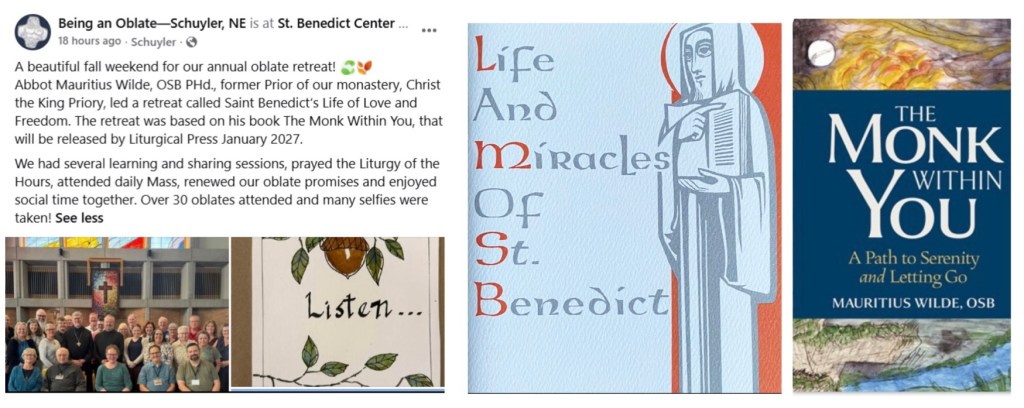
During the Middle Ages, according to Benedictine historian Gregorio Penco, OSB, Life and Miracles of St. Benedict was the most widely read book after the Bible. The Monk Within You, a commentary by Mauritius Wilde, OSB, will be released by Liturgical Press in January, 2027.

During our monthly oblate meetings we practice Lectio Divina by reading an excerpt from The Rule of St. Benedict or scripture. Lectio Divina, translated as divine reading, is a Benedictine practice of seeking deeper meaning in words and stories. It is listening to what lies beneath the words. During our retreat, we were able to read more deeply the life and miracles of St. Benedict, listening to what the stories may mean for us today.

Detachment from the world, including one’s father, mother, culture, sexuality, church, and desire for power, is critical to becoming oneself. Fuga mundi, or flight from the world, allows one to encounter all that is happening within us in solitude. The first stories of Benedict begin with his departure from his studies in Rome, relinquishing the wealth of his family, detaching from his father, mother and nurse, and performing miracles. We go to our cave, as Benedict did, to learn what our attachments are. Ultimately, we realize there is no escaping the world. We bring it with us in our minds.

The monastic way is about letting go, attaching to less and less, so in the end I know there is God and me. We take this spiritual journey to become more Christlike, to gain an inner understanding of the mysteries we celebrate as our truth. This lifelong journey of surrendering attachments that St. Benedict models for us can bring tranquility and peace.

Some questions we considered during our retreat:

Who are your spiritual role models?

What might you need to detach from—mother, family, culture, church, sexual desires or power? When I think of these areas of detachment, what am I thankful for, what makes me angry or sad, what am I missing?

What little deaths, or detachments, have you experienced?
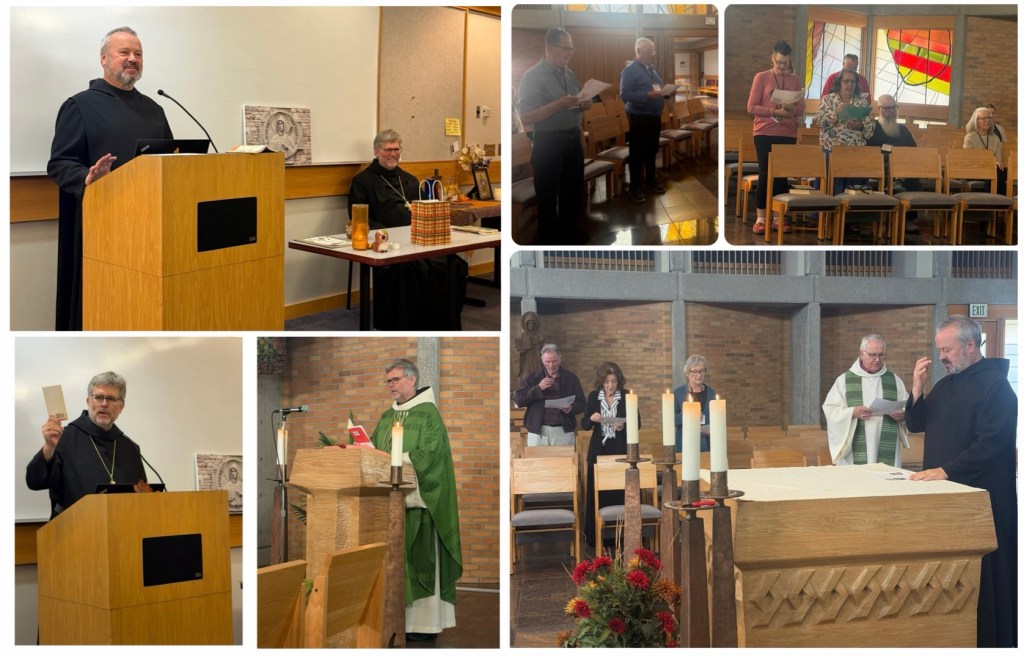
During retreat we had several sessions led by Abt. Mauritius, we prayed the Liturgy of the Hours, attended Mass, shared meals and discussions, had opportunity for confessions or spiritual direction, and renewed for oblate promises.

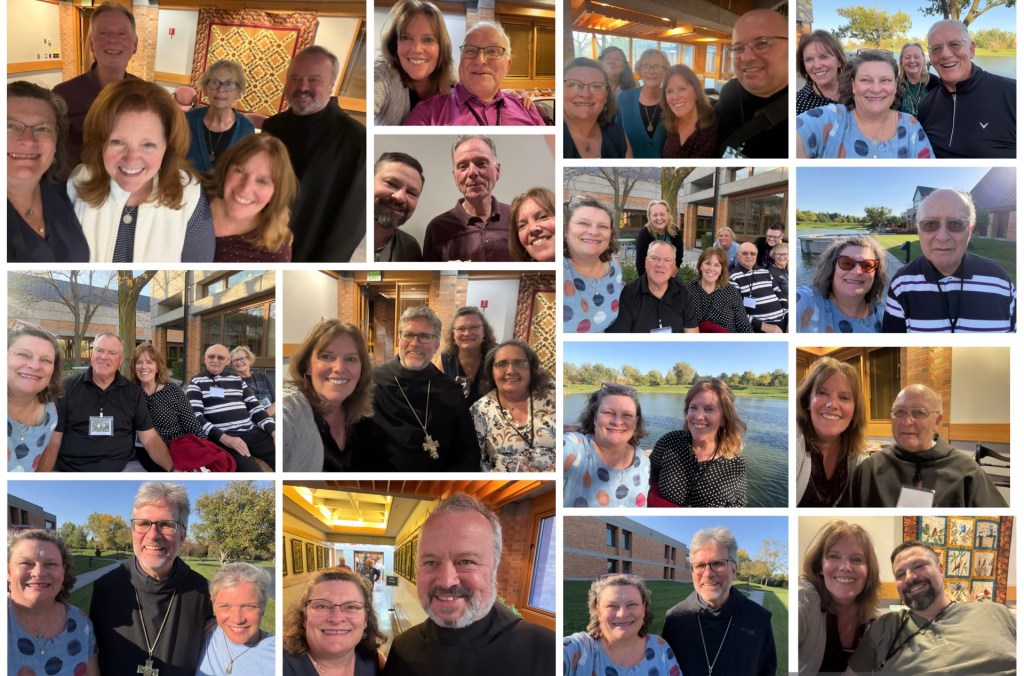
We had much joy and a lot of laughs taking selfies! I think selfies with others (is that an oxymoron?) capture joy, playfulness and community

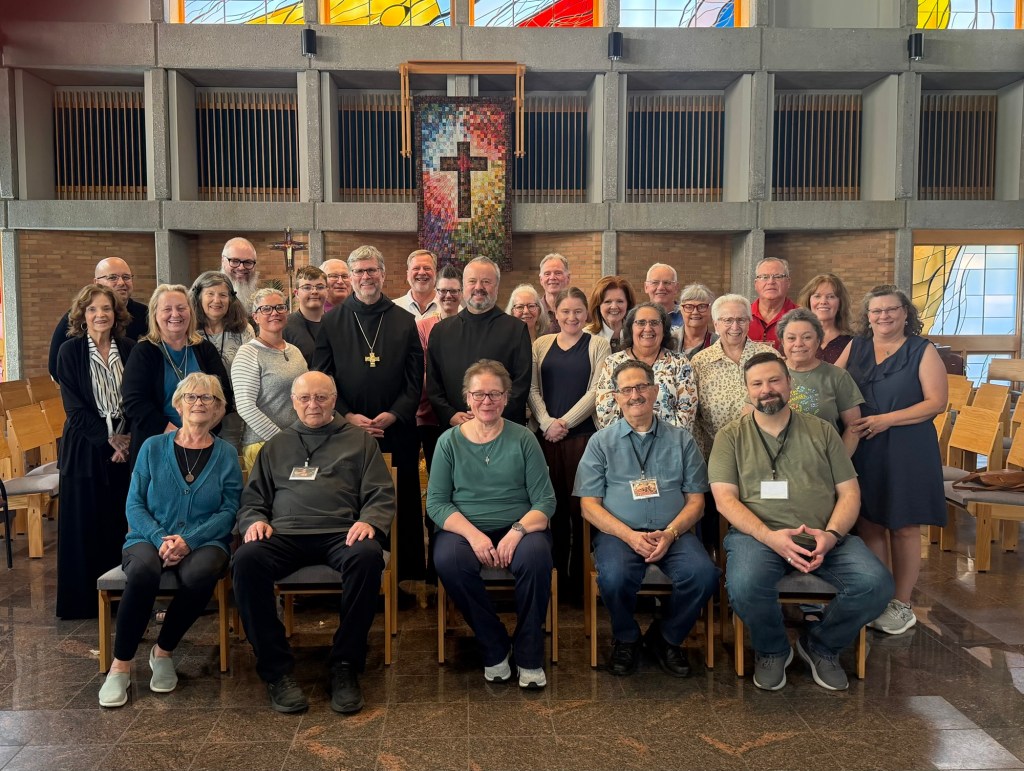
Our 2026 group of oblates attending the retreat. Pictured in the chapel at St. Benedict Center.

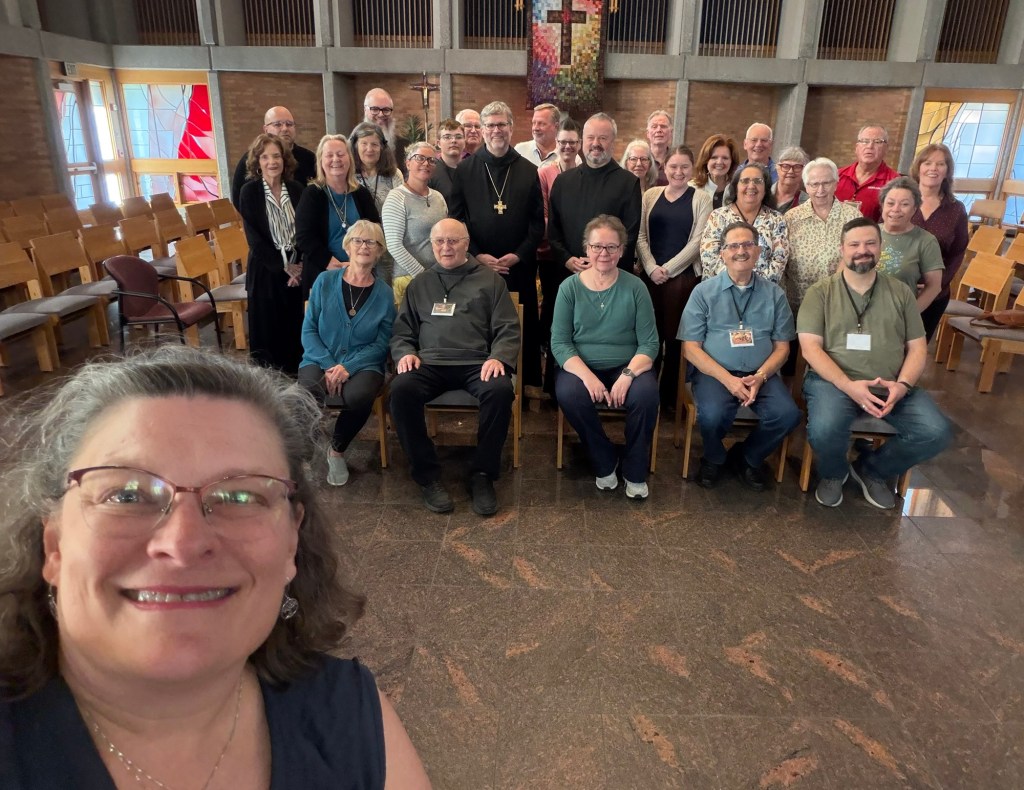
Why not? Another selfie with the group!
Continue reading “St. Benedict’s Life of Love and Freedom…And My Own Journey” →

Pray without Ceasing: A Way of Being

Being a Benedictine oblate is a way of life. Oblates desire to live as monks in the world, seeking God by recognizing the sacred in their everyday life, in their family, and in their workplace. Being part of a community of monks and oblates is a source of learning and support for our spiritual journey.

On the second Saturday of each month, the oblates of Christ the King Priory, the monastery I am an oblate of, gather to learn more about the Rule of St. Benedict. Our day includes morning prayer, monastery news, Lectio Divina, Mass, midday prayer, lunch, reading the Rule of St. Benedict, and small-group discussions of a selected book.

Prayer is the foundation of Benedictine spirituality. In August, we focused on Ways to Pray (Chapter 5) in the book Saint Benedict on the Freeway: A Rule of Life for the 21st Century by Corinne Ware. Benedict wrote in the Prologue of the Rule— “First of all, every time you begin a good work, you must pray to him most earnestly to bring it to perfection.” In the Apostle Paul’s letter to Thessalonica, he instructed the new church community to “Pray without ceasing.” (1 Thessalonians 5:17)

But what is prayer? And how is it possible to always be praying?

A friend recently asked me how I prayed, especially for others. So often we think that prayer means choosing the right words to speak to God, and that somehow, if we find those magic words, prayer might work “better”. We will get what we prayed for. Many believe that the purpose of prayer is to express what we desire—and that the right words might bring about the reality we hope for. But prayer is i much more than words or being attached to a specific, longed-for outcome.

The definition of prayer must be reimagined. There are many ways to pray, and it is possible to pray without ceasing. “Prayer is not so much our words to God as our life in God.” (Unknown author quoted by Caroline Myss) Reflecting on the chapter, I created a list of what prayer is:

Continue reading “Pray without Ceasing: A Way of Being” →

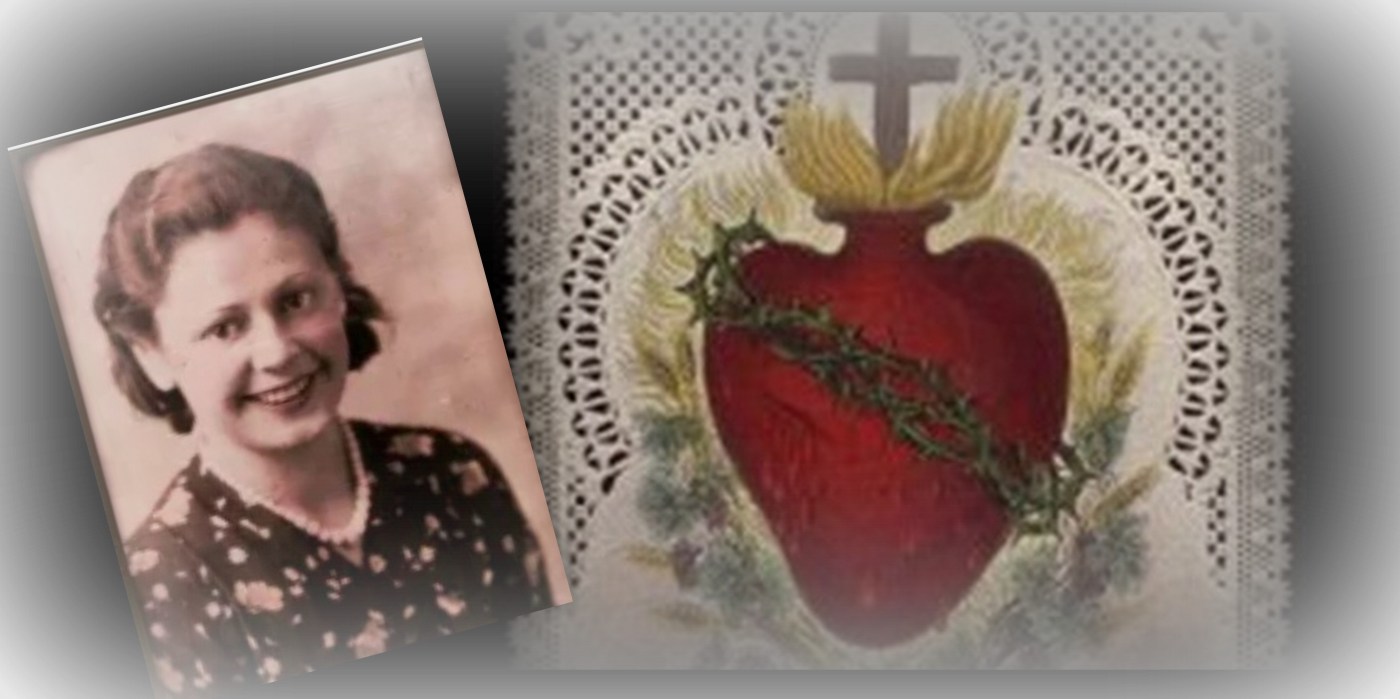
Images of Faith: The Sacred Heart of Jesus and My Grandma

Images are so powerful. They tap into the pool of memories, both personal and universal, that are deep within us. One image can be understood in so many ways—for different people, faiths, and cultures, or for the same person over time.

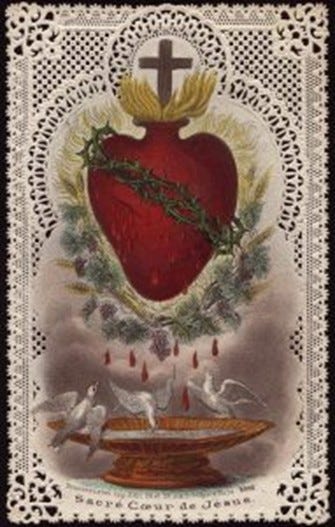
In June, the Catholic Church observes a special devotion to the Sacred Heart of Jesus. Whenever I see an image of the Sacred Heart of Jesus pop up in my social media feed or in a spiritual setting, memories of my grandma come flooding back.

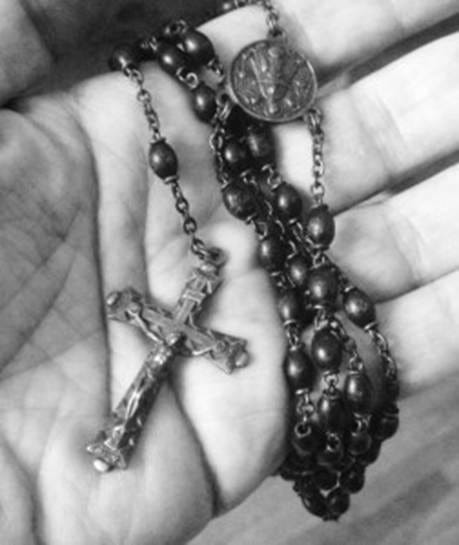
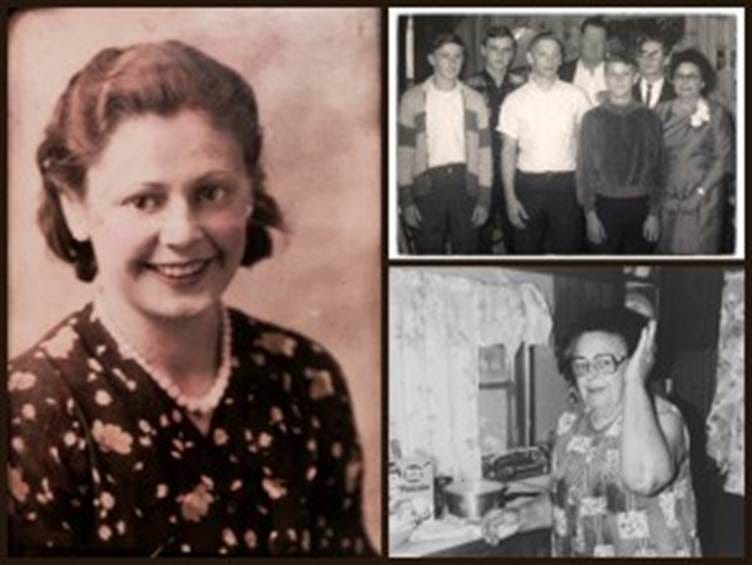
She had a framed image of the Sacred Heart between her living room and her kitchen. As a young child, I remember wondering why the heart had fire and blood on it…and, quite honestly, I was a little afraid of the image. I never asked about it, and she never said anything either. Same with the rosary on her nightstand (pictured below). Or the prayer cards on her dresser. But I remember them. Those images communicated a deep faith in Catholicism and belief in and devotion to Jesus that I intuitively knew she had.

rosary

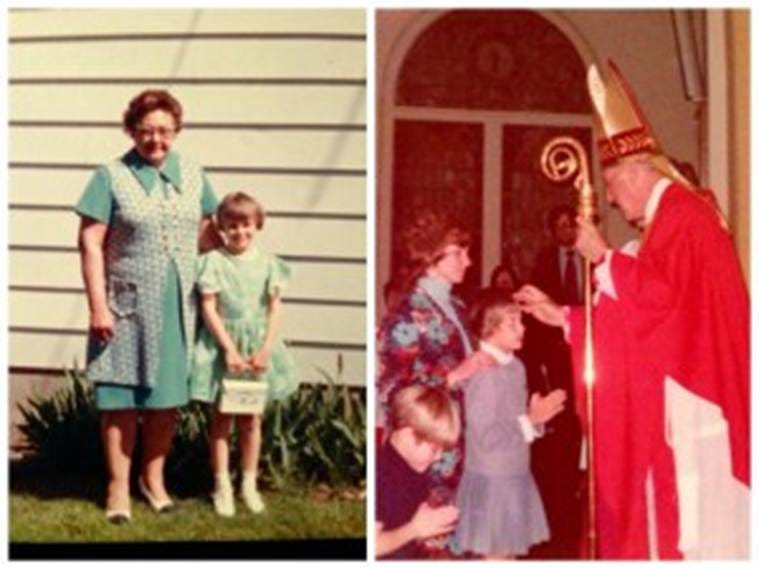
We didn’t talk much about faith, but she always encouraged her sons, their wives, and grandchildren to go to church, and she was so proud when I received my First Communion and Holy Confirmation. Her faith in God was important to her, but she didn’t need many words to convey it.

Communion Confirmation

So often, words can narrow an experience, while images can broaden our understanding and invite new insights. Words are road signs to an understanding or experience, but it is through images, with their universal and archetypal qualities, that we make connections. Images stand the test of time, linking generations and reaching across cultures.

In Why We Need Fairytales Now, a Wonder Cabinet podcast interview, author Sharon Blackie shares how images are a gateway to wonder. “Images come to us with a moral claim. They reveal themselves to us, and they nag at us, and they gnaw away at us, and they will not let us go… it is the beauty of image…It has its own process of becoming.”

No doubt, words help us understand, articulate, and explain, but as I age and grow, I find that words that used to be sufficient to express my beliefs need to be reimagined. My understanding of God and others has evolved with new experiences and insights. I like searching for, writing, and finding words that resonate with me—that give me the feeling that YES, that’s IT!! THAT’S what I believe, THAT’S how I feel! I love words. I love to write them, and I love to read them.

But increasingly, it’s images that take me to a place of connectedness with God, a place that is beyond words. Images can be a path to contemplative prayer. Images connect to the essence of what I believe, as words simply attempt to clarify or define, but always fall short. Images take me into the Presence, the Mystery of Christ.

grandma collage
Helen Theresa Raiter Blazek, November 16, 1914 – June 16, 1984

Meditating upon an image, such as the Sacred Heart of Jesus, allows the image to penetrate our entire being. We open our hearts to hearing what God is saying at this moment, with an image. We let the Holy Spirit bring us heart understanding rather than just intellectual understanding (flashback to memorizing catechism questions for my Holy Confirmation!) The Sacred Heart of Jesus reaches beyond the mind into our body and spirit. Christ’s infinite love surrounds, permeates, and emanates. The mystery of Christ becomes its fullest expression.

What images of your faith have resonated with you through the years? How was faith communicated through the generations in your family? Share in the comments.

May you have a Blessed Feast of the Sacred Heart of Jesus.

© Jodi Blazek Gehr, Being Benedictine Blogger

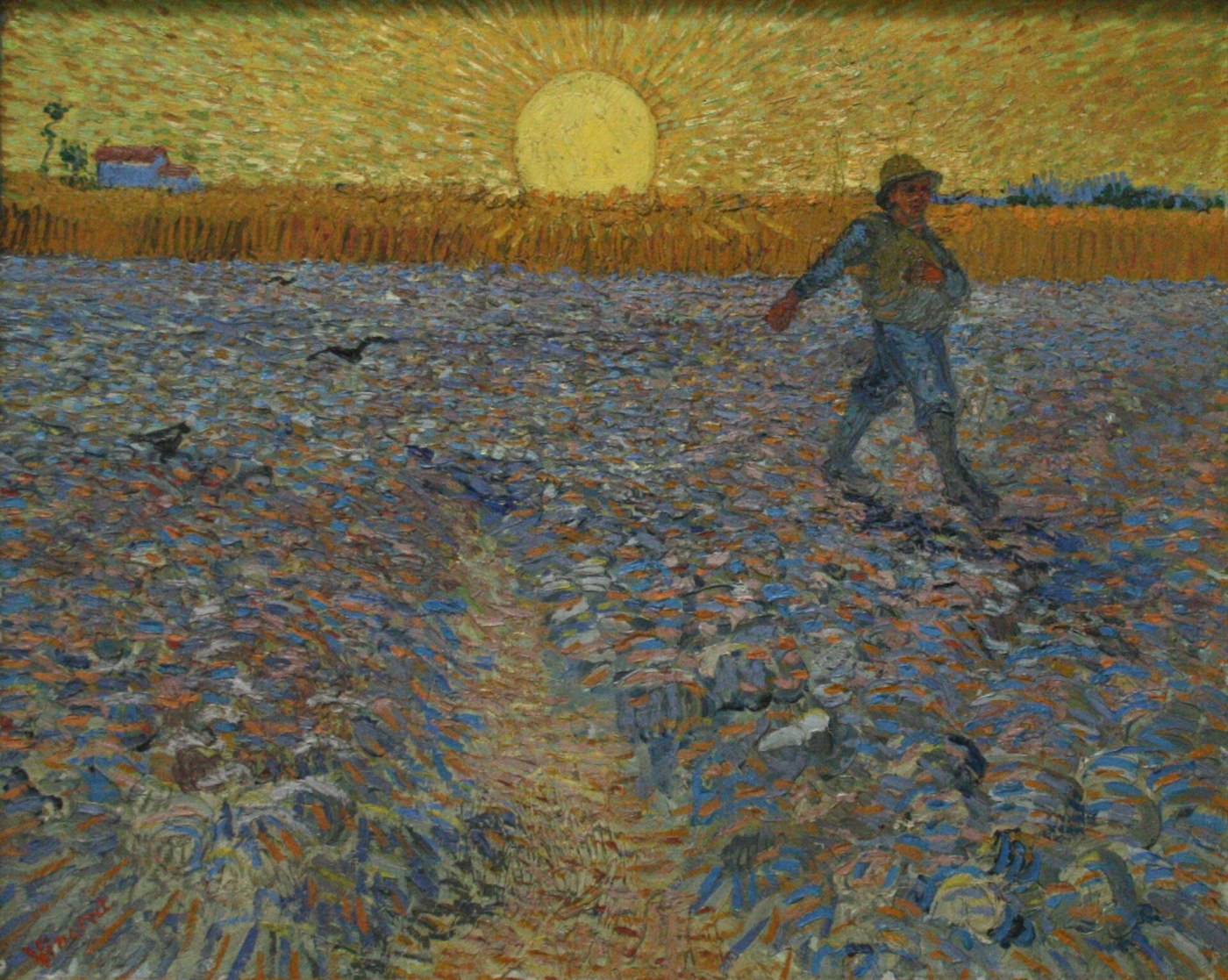
The Sower and The Seed

“It has been said that in recent decades we have been moving from the experience of authority to the authority of experience. More people are giving value to their own spiritual experience…(recognizing) the presence and unique whispers of God in our personal lives…” Tilden Edwards, Foreword, Saint Benedict on the Freeway

This is precisely what the practice of Lectio Divina, sacred reading, brings to one’s spiritual journey. We contemplate what we read, reflecting on the words or phrases that resonate, listening to the voice of God for insights and wisdom. It is a personal experience of what a text uniquely says to us. It can work for all great literature, poetry, scripture, and sacred writing.

As if through the lens of a kaleidoscope, with each turn one sees a slightly different message, a new perspective, another a-ha! Likely, you have heard The Parable of the Sower many times, but TODAY may bring something new to embrace. With return visits to a passage, we come to understand that we are always learning, drawing new insights based on where we are in our spiritual journey and season of life.

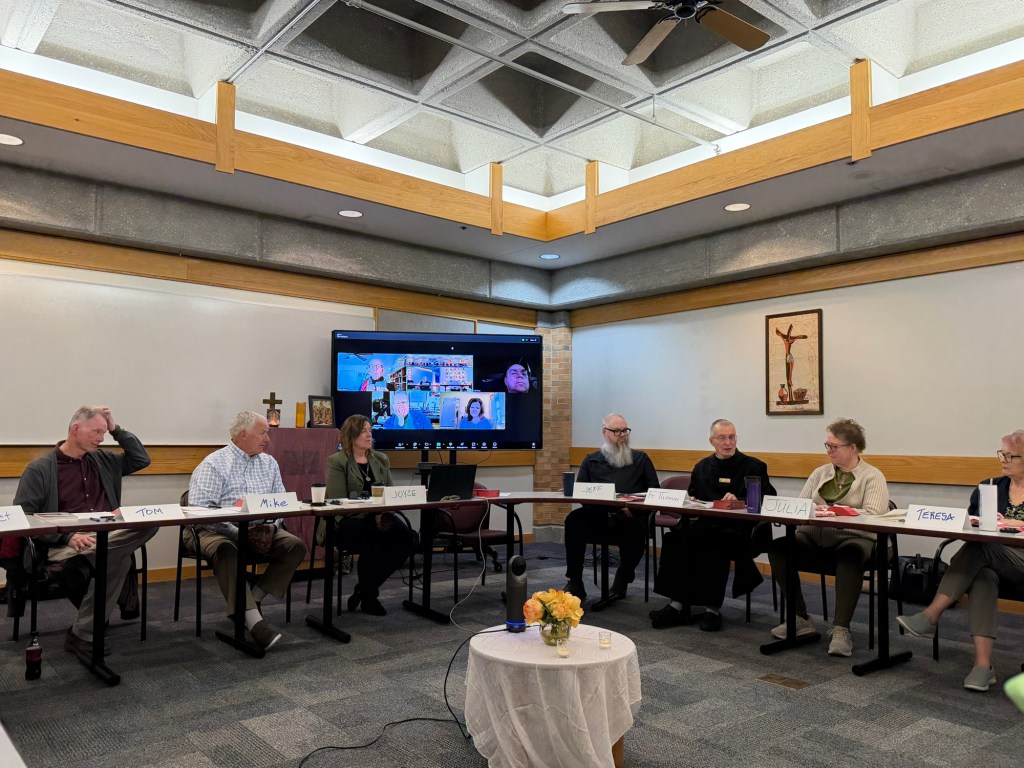
At the April 2026 Oblate meeting of Christ the King Priory, as is our monthly practice, we read and reflect on a scripture passage. The Parable of the Sower (Matthew 13:1-9) with readings from a new book selection, Saint Benedict on the Freeway, and The Rule of St. Benedict, Chapters 31-35, was the focus.

Matthew 13:1-9, The Parable of the Sower. On that day, Jesus went out of the house and sat down by the sea. Such large crowds gathered around him that he got onto a boat and sat down, and the whole crowd stood along the shore. And he spoke to them at length in parables, saying “A sower went out to sow. And as he sowed, some seed fell on the path, and birds came and ate it up. Some fell on rocky ground, where it had little soil. It sprang up at once because the soil was not deep, and when the sun rose it was scorched, and it withered for lack of roots. Some seed fell among thorns, and the thorns grew up and choked it. But some seed fell on rich soil, and produced fruit, a hundred or sixty or thirtyfold.  Whoever has ears ought to hear.”

So often we interpret this story as a particular person being like the rocky ground, the rich soil, and so on, but the author of Saint Benedict on the Freeway: A Rule of Life for the 21st Century, Corinne Ware asks: “If I were to think of myself as having within me all the varieties of soils, in other words, of manifesting each of these varied responses to God, how then would I see myself as the subject of this parable?” We can read this parable, a short story intended to teach spiritual truths, in many ways.

Continue reading “The Sower and The Seed” →

The Day St. Benedict Died

The day St. Benedict died, he was ready. 

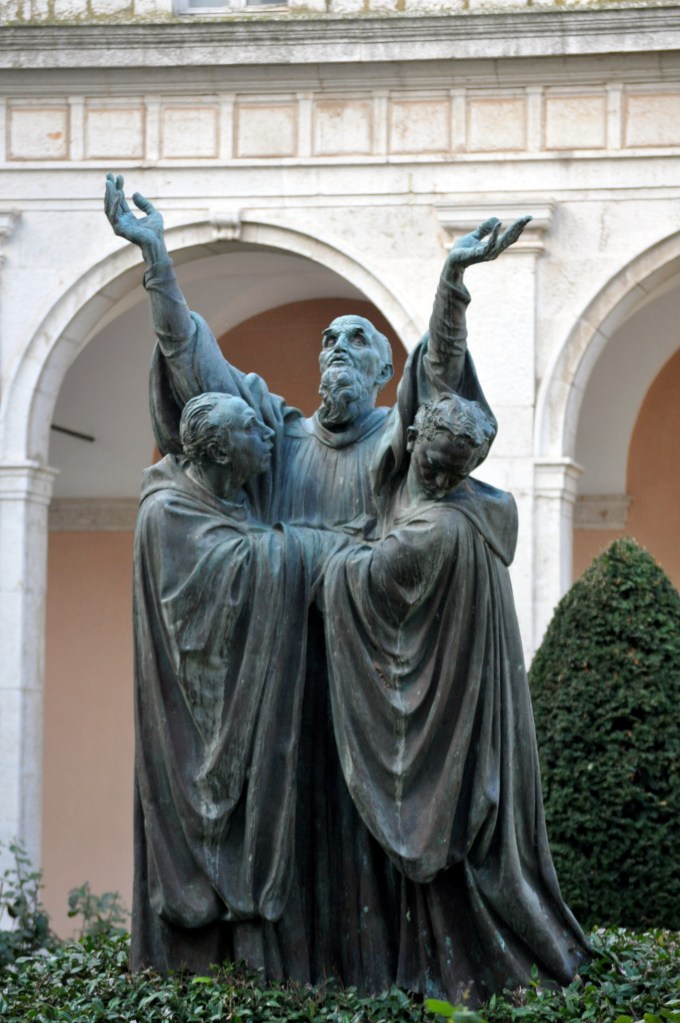
In the Rule of St. Benedict, he instructs, “Keep death daily before your eyes” as a way of life. At the Abbey of Montecassino, where St. Benedict wrote his Rule for monks, there is a statue in the courtyard depicting the moment of St. Benedict’s death.

Montecassino Abbey, the statue depicts the passing of St. Benedict. Photo by Jodi Gehr, 2017.

On March 21, Benedictines around the world celebrate the “transitus,” St. Benedict’s passing from one state to the next, from death into life. Death is not seen as final, but rather a transition into eternity with God.

St. Gregory the Great writes about St. Benedict’s last days:

“Six days before he died, he gave orders for his tomb to be opened. Almost immediately, he was seized with a violent fever that rapidly wasted his remaining energy. Each day his condition grew worse until finally, on the sixth day, he had his disciples carry him into the chapel where he received the Body and Blood of our Lord to gain strength for his approaching end. Then, supporting his weakened body on the arms of his brethren, he stood with his hands raised to heaven and, as he prayed, breathed his last.” (St. Gregory the Great, Book Two of Dialogues, chapter 37).

The advice to keep death always in our minds is the core of being Benedictine and living soulfully. Perhaps this sounds morbid, but it encourages me to live each moment with wonder and gratitude, with purpose, on purpose, and to be attentive to the present moment.  Practicing gratitude, having no regrets, living with death daily before your eyes, as St. Benedict writes, and leaving something beautiful from a life well lived, help prepare us for a more peaceful transition from here to eternity. St. Benedict’s life and death are an exemplar for how we are to be Benedictine.

Continue reading “The Day St. Benedict Died” →

How To Bear Discomfort Well

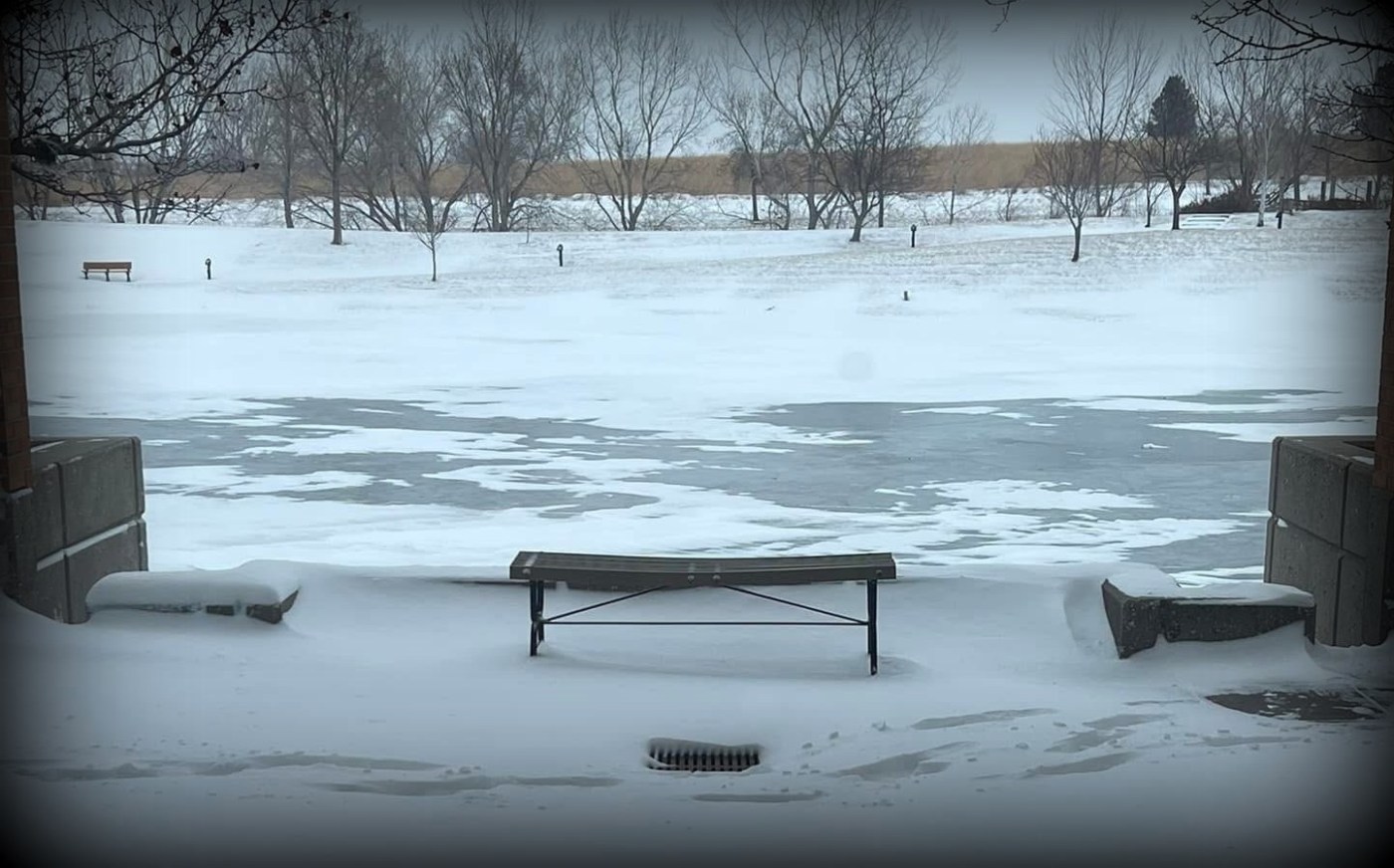
I do not bear discomfort well, I said, half-seriously, half-jokingly, to my son-in-law, John, the other day, as I took a little longer to get out of the car than the rest of the family. We both laughed as John noted that his wife shares this same trait at times. Like mother, like daughter.

It was a cold day in Nebraska, so we had to bundle up to go out, but once we were in the car, and the heat kicked in, I broke out into a sweat. Struggling in the back seat, off comes the coat. Two minutes later, we arrived at our destination. I wrestled my coat back on to re-enter the frigid temperatures. (An aside: Nebraska weather is a burden of extremes, from hot to cold. Our low temperature today is 12 degrees; on Saturday, 89 degrees is forecasted—how is one to cope?)

To add to my discomfort, several weeks ago, I sprained the peroneal tendons in my right foot. I will spare you the details, but it is reminiscent of the broken arm I experienced three years ago. Let’s just say—it adds to my discomfort, and I repeat, I don’t bear discomfort well. I feel a little guilty (and more discomfort) about admitting this out loud to John and writing it now. There are so many people suffering throughout the world—from war, displacement, poverty, hunger, trauma, poor health, grief, and every imaginable and unimaginable discomfort.

It is a lot for each of us to bear—our own discomfort and the wounds of the world that we also carry in our thoughts, physical bodies, emotional responses, and spirits. So much discomfort, uncertainty, ambiguity, and waiting can make us irritable and impatient—and there is so much to activate our discontent these days.

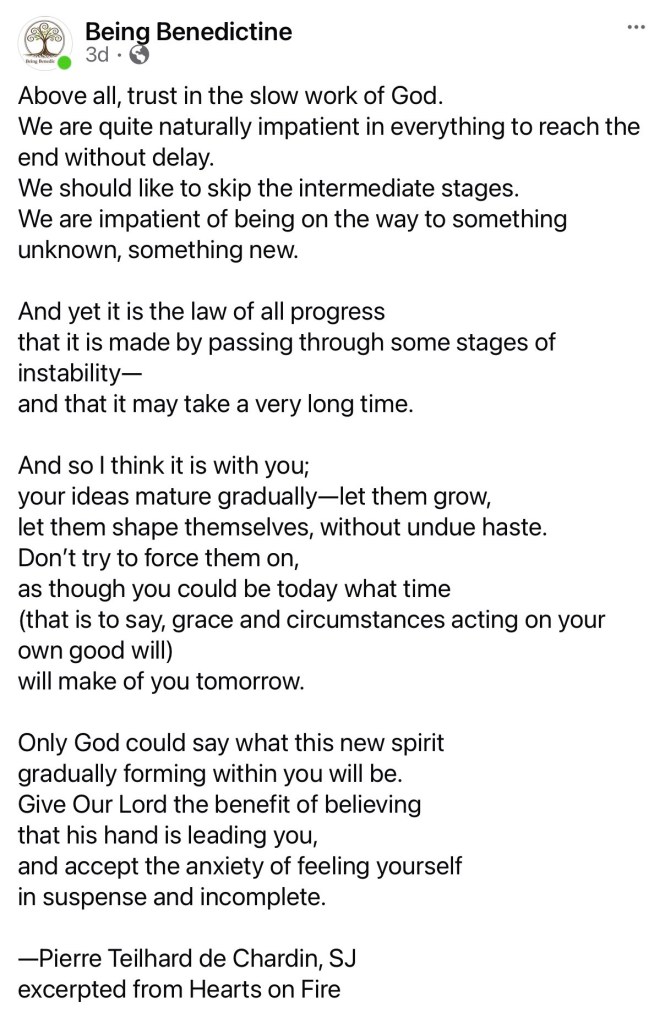
Recently, on my Being Benedictine Facebook page, I shared some wisdom from Pierre Teilhard de Chardin. Within 24 hours, the post had 130 times the average likes, comments, and views of a typical post.

This idea of waiting, and the discomfort that results, seems to resonate with many these days. It is increasingly challenging to “trust in the slow work of God,” and we need constant reminders that this is how we must cope.

Continue reading “How To Bear Discomfort Well” →

International Women’s Day & A Prayer of Longing

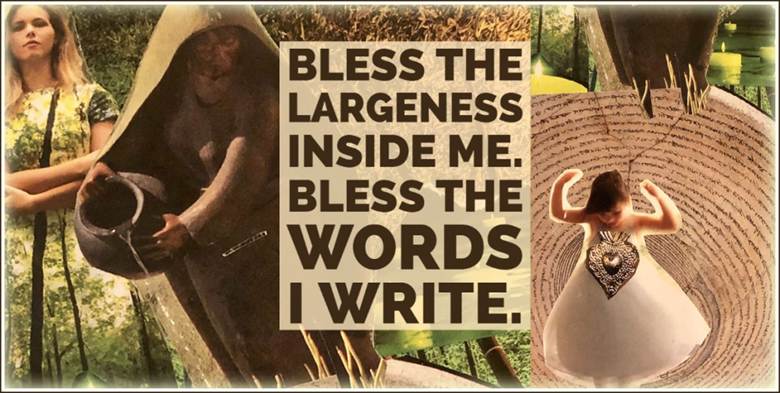
“Lord our God, hear my prayer, the prayer of my heart. Bless the largeness inside me, no matter how I fear it. Bless my reed pens and my inks. Bless the words I write. May they be beautiful in your sight. May they be visible to eyes not yet born. When I am dust, sing these words over my bones: she was a voice.” –Ana, The Book of Longings

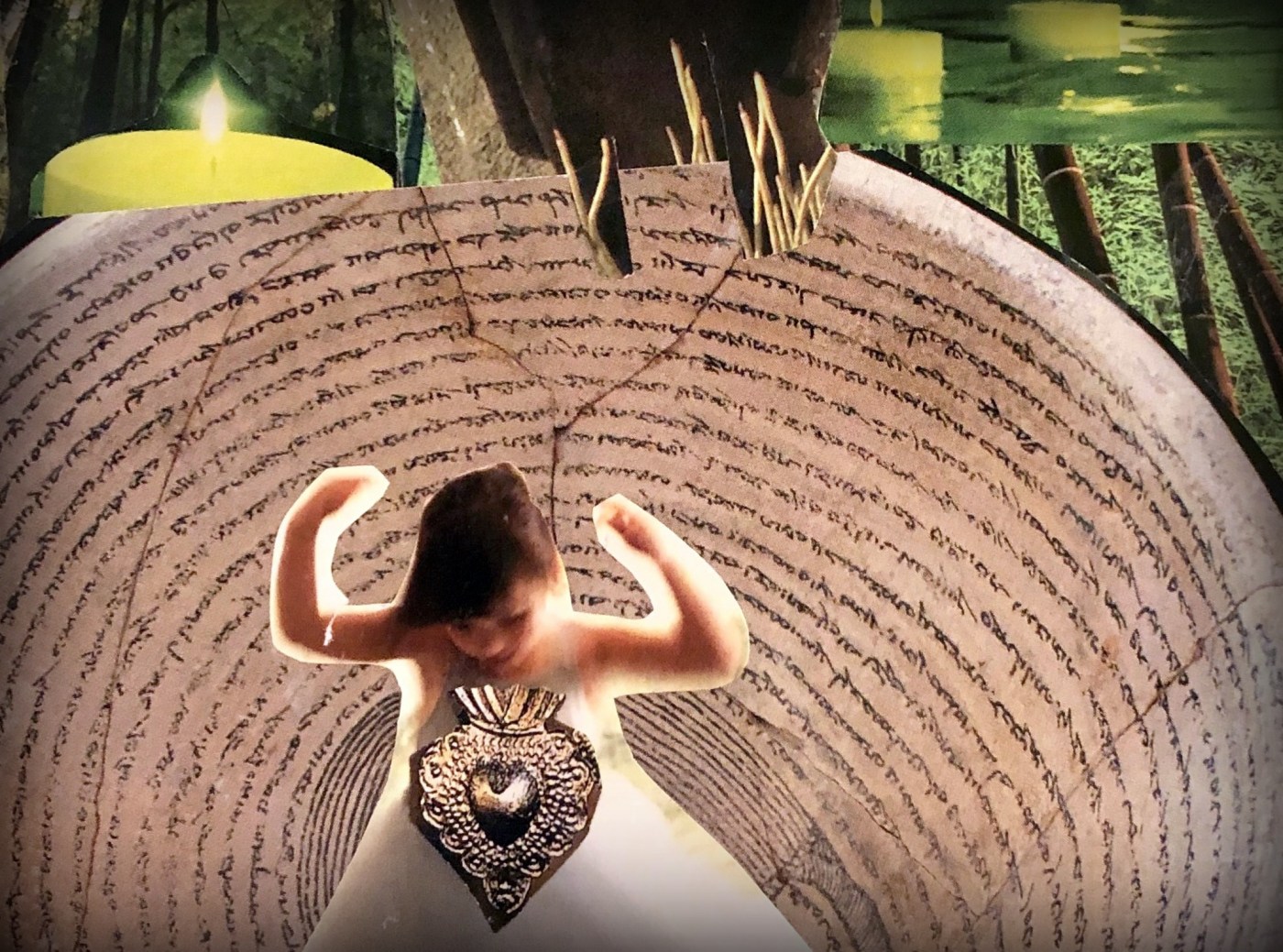
In The Book of Longings by Sue Monk Kidd, Ana writes this prayer of longing on the incantation bowl her aunt Yaltha has gifted her. 

“Do you know what an incantation bowl is?” Yaltha asked. “In Alexandria we women pray with them. We write our most secret prayer inside them…Every day we sign the prayer. As we do, we turn the bowl in slow circles and the words wriggle to life and spin off toward heaven.”

On International Women’s Day, we celebrate the social, economic, cultural, and political achievements of women. We honor the women who have a “secret prayer inside them” to improve the quality of life for women, to raise awareness of discriminatory treatment, and to seek inclusiveness and equality for future generations.

In The Book of Longings, Sue Monk Kidd, one of my favorite writers, shared that she wanted “to write a story that encouraged us to follow our longings and bring forth the largeness inside ourselves…to portray how much women’s voices and stories matter.”

Ana’s prayer of longing is to have a voice, to be heard, and truly listened to. Ana lives during the time of Jesus when women’s stories were not valued or heard, often intentionally silenced and oppressed. Like Ana, we long for our authentic selves to be seen and heard. When we are listened to, we know that we are loved.

“All my life, longings lived inside me, rising up like nocturnes to wail and sing through the night. That my husband bent his heart to mine on our thin straw mat and listened was the kindness I most loved in him. What he heard was my life begging to be born.”-Ana, The Book of Longings

Listening is an important theme in The Book of Longings. St. Benedict thought it was so important to listen that it is the first word in the Rule. “Listen carefully, my son, to the master’s instructions, and attend to them with the ear of your heart.” John McQuiston II, in Always We Begin Again, The Benedictine Way of Living, paraphrases, “Listen with the heart and mind.” These instructions to listen to God extend to the many ways God may speak to us—through our daily circumstances, unique situations, the people in our lives, and in our hearts and minds through the voice of truth within us.

Continue reading “International Women’s Day & A Prayer of Longing” →

A Time to Wash Away: A Continuous Lent

February 2026 Oblate Reflections, Christ the King Priory, Schuyler, Nebraska

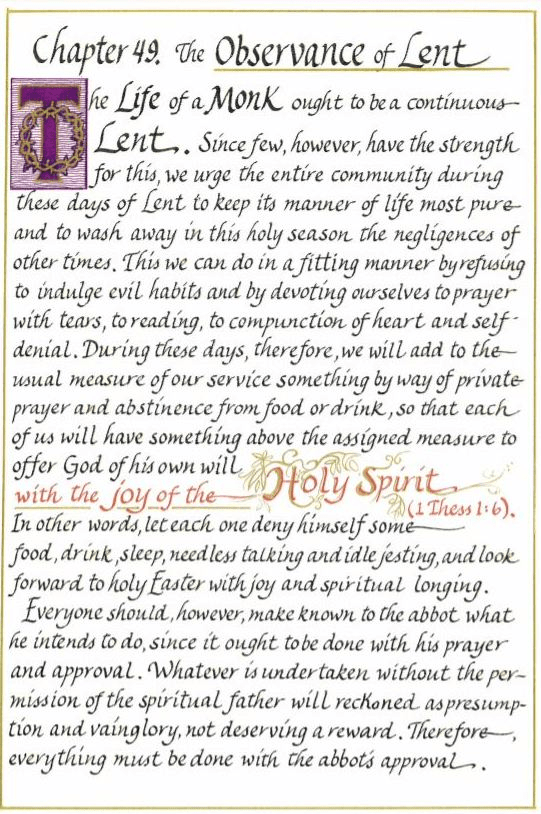
Theme: Love and Lent; Lectio Divina: Rule of St. Benedict: Chapter 49: Pictured above: The oldest copy of the Rule of Saint Benedict, from the eighth century.

Benedictine Sisters Benevolent Association, St. Scholastica Monastery, Copyrighted 1990. Meredith Schifsky, Calligrapher; Mary Charles McGough OSB, Illuminator

What is your first thought when you consider the season of Lent? Many of us think of giving up sweets, donating to good causes, reading spiritual books or devotions, or going to Mass daily or more often. St. Benedict devotes an entire chapter of The Rule to how monks should practice Lent. He instructs that “the life of a monk should be a continuous Lent.” As an oblate, or lay member of a Benedictine monastery, seeking to live the life of a monk in the world, this can sound like a tall order. Fortunately, Benedict knows that we are only human, that everything must be done in moderation. He writes, “few…have the strength for this.”  

We consider what he might mean by the ideal of a “continuous Lent” as well as other words or phrases that resonate with our oblate community during our Lectio Divina discussion.

St. Benedict Center–our monthly Oblate meetings are held in Schuyler, Nebraska More info here.

A continuous Lent. The holy season of Lent, Benedict writes, is a time “to keep its manner of life most pure and to wash away…the negligences of other times.” He offers specific ideas: avoiding evil habits, praying with tears, reading, compunction of heart, and self-denial. Unlike a New Year’s resolution, which we often resolve to add or subtract from our lives (and often lose track of what we resolved to do), a continuous Lent encourages us to keep checking in with our spiritual journey.

Our intentions are not one-and-done. We fall; we get up—again and again. Our spiritual lives can be likened to a spiral—a continuous journey in which we return to learn anew. Lent is a continuous preparation for Easter—a time of resurrection, new life, and beginning again. Even when our hearts are pierced by our own suffering and by the suffering of the world, there is a promise of something new being born, something resurrected. Joy will come again.

Continue reading “A Time to Wash Away: A Continuous Lent” →

O Antiphons: O Come, O Come, Emmanuel!

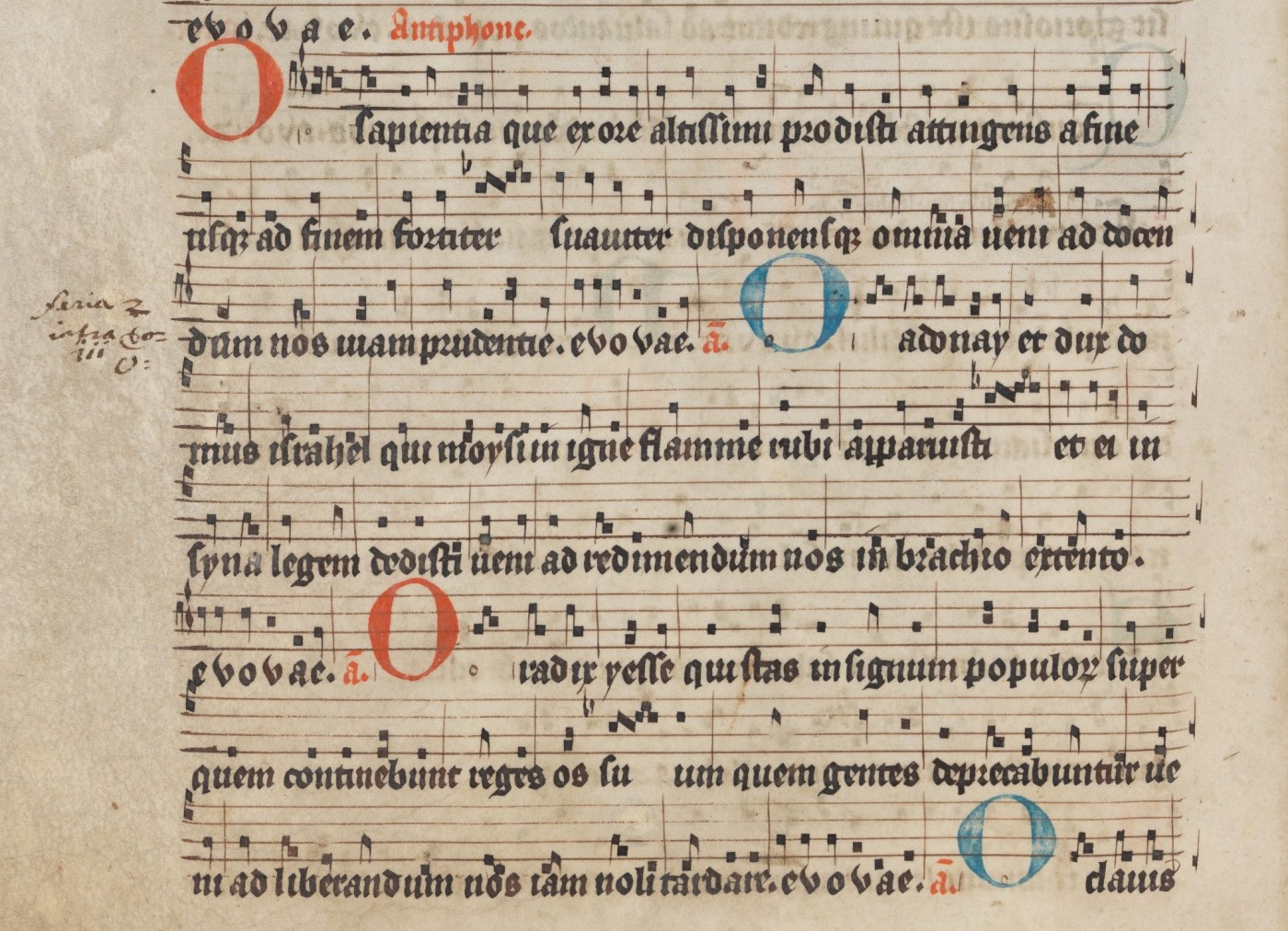
The traditional Advent hymn “O Come, O Come, Emmanuel,” which many are familiar with, is a paraphrase of the lesser-known O Antiphons written by Benedictine monks in the Middle Ages. One of the oldest liturgical rituals in the Church, the O Antiphons have been sung since at least the 8th century. These short prayers, starting with O followed by a title given to the Messiah from Old Testament prophecies, are sung before the Magnificat during Evening Prayer from December 17–23, the last seven days before Christmas. Each antiphon describes God in terms of Old Testament traits and images.

Images and symbols that appear in dreams, art, literature, or scripture carry both personal and universal meaning. Serving as a bridge between the unconscious and the conscious, images can nourish our spirit. “Images open windows through which we can see realities formerly hidden from us. Images want to infuse themselves into us and to change us from the inside out, ” writes Anselm Grün.

Images are an essential part of rituals, prayer, self-reflection, and creativity. When practicing SoulCollage®, one of my favorite spiritual practices, images can guide us to a new level of awareness and reveal a deeper understanding of thought and feeling. Perhaps this is what attracts me to the tradition of praying the O Antiphons.


“Reflecting on the words and images prepares us to let Christ himself enter into us…We are all an image, an icon, of God. It is our task to become ever more like this unique image of God.”

Anselm Grün, A Time of Fulfillment: Spiritual Reflections for Advent and Christmas

The O Antiphons use images to help us envision the Christ we long for, and to draw us into a more profound connection to the God of history. “In the O-Antiphons the art of interpreting Old Testament text as images for the coming of Jesus Christ into the world becomes apparent.” (Anselm Grün) The repeated word “Come!” expresses our deepest longing for Christ. When we accept that we are not God, we yearn for fulfillment, for all that a Messiah can bring, not just in the hereafter but in the here and now. We long for wisdom, freedom, hope, peace, belonging, light, healing, salvation, dignity, protection, love, and accompaniment. Each of these longings is addressed in the O Antiphons.

For an extensive examination of our longings and the use of images in praying the O Antiphons, I highly recommend A Time of Fulfillment by Anselm Grün, a Benedictine monk from Münsterschwarzach Abbey, the motherhouse of the monastery of which I am an oblate.

Feel free to download and share any of the images in this reflection, or follow Being Benedictine on Facebook to share daily posts. Join the monks of St. John’s Abbey for each of the O Antiphons as Benedictine monks have done for 1300 years.

St. John’s Abbey sings O Antiphons: Holy Wisdom—

December 17th – O Sapientia (O Wisdom)
December 18th – O Adonai (O Lord)
Continue reading “O Antiphons: O Come, O Come, Emmanuel!” →

Blog at WordPress.com.

Up ↑