Search

Being Benedictine

Living SoulFully as an Oblate of St. Benedict

Tag

growth

Wood: A Symbol for Five Years of Marriage

Symbols and rituals mark special anniversaries just as smells and bells evoke the sacred in the liturgy. Both are invitations to celebration.

Our daughter, Jessica, married her Prince Charming, John Holland, in a fairytale, storybook wedding on July 17, 2021, five (?!#?) years ago. It feels more like two, but I’ve realized that no matter how many years ago I thought something was, I should simply double it. When Jessica was little (which seems like just a minute ago), she said she wanted to be a princess when she grew up—so Prince Charming found his perfect match as well. And we gained a son.

We gathered—John and Jessica’s community, their friends and family—to support and bless their marriage. Hearts and flowers, vows and wedding rings, first kisses and champagne toasts were the symbols and rituals of the day.

Medieval traditions marked twenty-five and fifty-year anniversaries with silver and gold, metals of great value. As anniversary celebrations became more common in the Victorian era, materials of increasing strength and durability were assigned to the years of a couple’s marriage. Last year, my husband, Joe, and I celebrated forty years of marriage, our Ruby Anniversary.

Wood, the symbol for a five-year marriage, represents the roots Jessica and John planted together on their wedding day. Like a tree, a marriage that celebrates five years has weathered some challenges, becoming stronger and more resilient. Wood, as a living, breathing part of creation, reflects how a marriage must constantly evolve, grow, and expand to be more fruitful through the years. Indeed, marriage is between the two who professed their love and stability, but their community also plays a role.

In How to Live: What the Rule of St. Benedict Teaches Us About Happiness, Meaning and Community, Judith Valente writes that a monastic community is “a place where people agree to link arms, support one another, and help each other grow.”

John and Jessica’s community “linked arms” with them to help plan and celebrate their wedding day. Both dads and John’s brother shared a toast, the mothers gave a blessing, and a family friend was the officiant. Their guests were a part of the ceremony as well—

Continue reading “Wood: A Symbol for Five Years of Marriage”
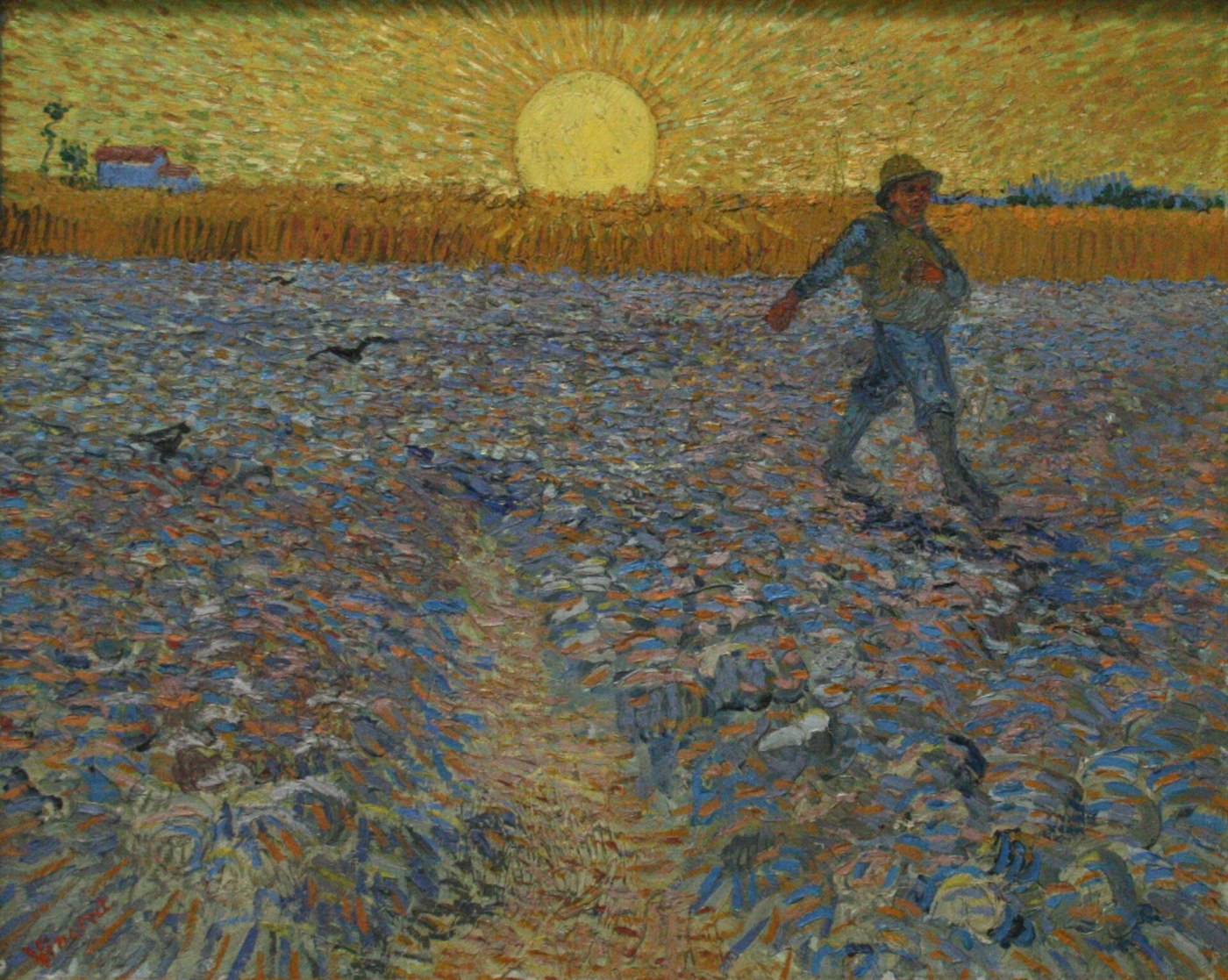
The Sower and The Seed

“It has been said that in recent decades we have been moving from the experience of authority to the authority of experience. More people are giving value to their own spiritual experience…(recognizing) the presence and unique whispers of God in our personal lives…” Tilden Edwards, Foreword, Saint Benedict on the Freeway

This is precisely what the practice of Lectio Divina, sacred reading, brings to one’s spiritual journey. We contemplate what we read, reflecting on the words or phrases that resonate, listening to the voice of God for insights and wisdom. It is a personal experience of what a text uniquely says to us. It can work for all great literature, poetry, scripture, and sacred writing.

As if through the lens of a kaleidoscope, with each turn one sees a slightly different message, a new perspective, another a-ha! Likely, you have heard The Parable of the Sower many times, but TODAY may bring something new to embrace. With return visits to a passage, we come to understand that we are always learning, drawing new insights based on where we are in our spiritual journey and season of life.

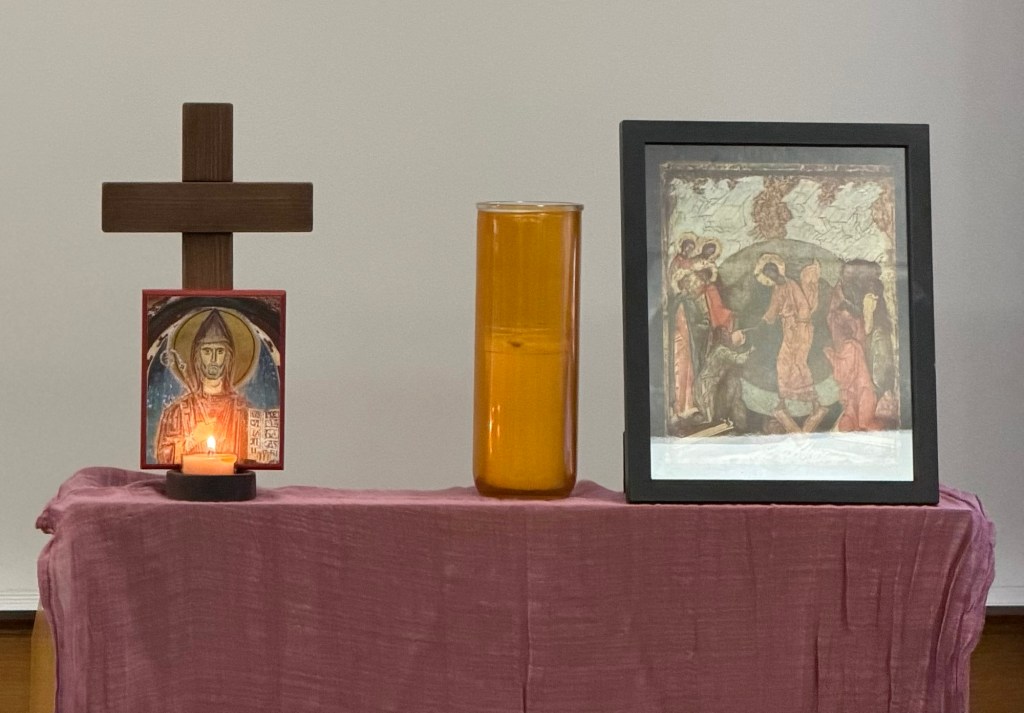
At the April 2026 Oblate meeting of Christ the King Priory, as is our monthly practice, we read and reflect on a scripture passage. The Parable of the Sower (Matthew 13:1-9) with readings from a new book selection, Saint Benedict on the Freeway, and The Rule of St. Benedict, Chapters 31-35, was the focus.

Matthew 13:1-9, The Parable of the SowerOn that day, Jesus went out of the house and sat down by the sea. Such large crowds gathered around him that he got onto a boat and sat down, and the whole crowd stood along the shore. And he spoke to them at length in parables, saying “A sower went out to sow. And as he sowed, some seed fell on the path, and birds came and ate it up. Some fell on rocky ground, where it had little soil. It sprang up at once because the soil was not deep, and when the sun rose it was scorched, and it withered for lack of roots. Some seed fell among thorns, and the thorns grew up and choked it. But some seed fell on rich soil, and produced fruit, a hundred or sixty or thirtyfold.  Whoever has ears ought to hear.”

So often we interpret this story as a particular person being like the rocky ground, the rich soil, and so on, but the author of Saint Benedict on the Freeway: A Rule of Life for the 21st Century, Corinne Ware asks: “If I were to think of myself as having within me all the varieties of soils, in other words, of manifesting each of these varied responses to God, how then would I see myself as the subject of this parable?” We can read this parable, a short story intended to teach spiritual truths, in many ways.

Continue reading “The Sower and The Seed”

Blog at WordPress.com.

Up ↑