Part pilgrimage, part retreat.
Retreat: an act or process of withdrawing especially from what is difficult, dangerous, or disagreeable; a place of privacy or safety; a period of group withdrawal for prayer, meditation, study, or instruction.
It may seem paradoxical—going both outward and inward—but the Benedictine Footprints group I journeyed with to Italy was exactly that: a balanced, Benedictine way to travel. A carefully planned itinerary of culinary, cultural, and spiritual experiences nurtured mind, body, and spirit. A rhythm of activity followed by time for retreat embraces the “ora et labora” (pray and work) foundation for being Benedictine—wisdom for all of life and the travel tips that follow.
Stay put. Go slowly. Experience community. Be curious. Rest into moments. Have a sense of humor. Keep time in your schedule for nothing to happen. Give your soul time to catch up. Be grateful.
Benedictine Travel Tip #1: Stay put.
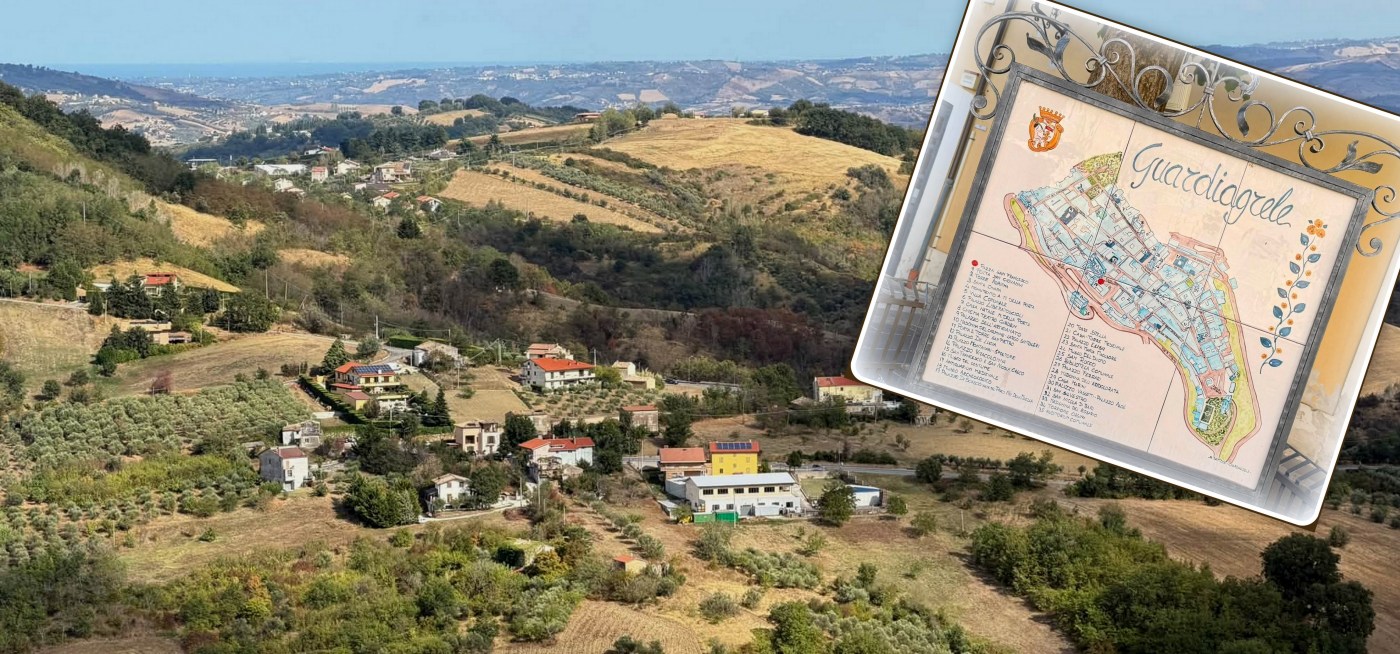
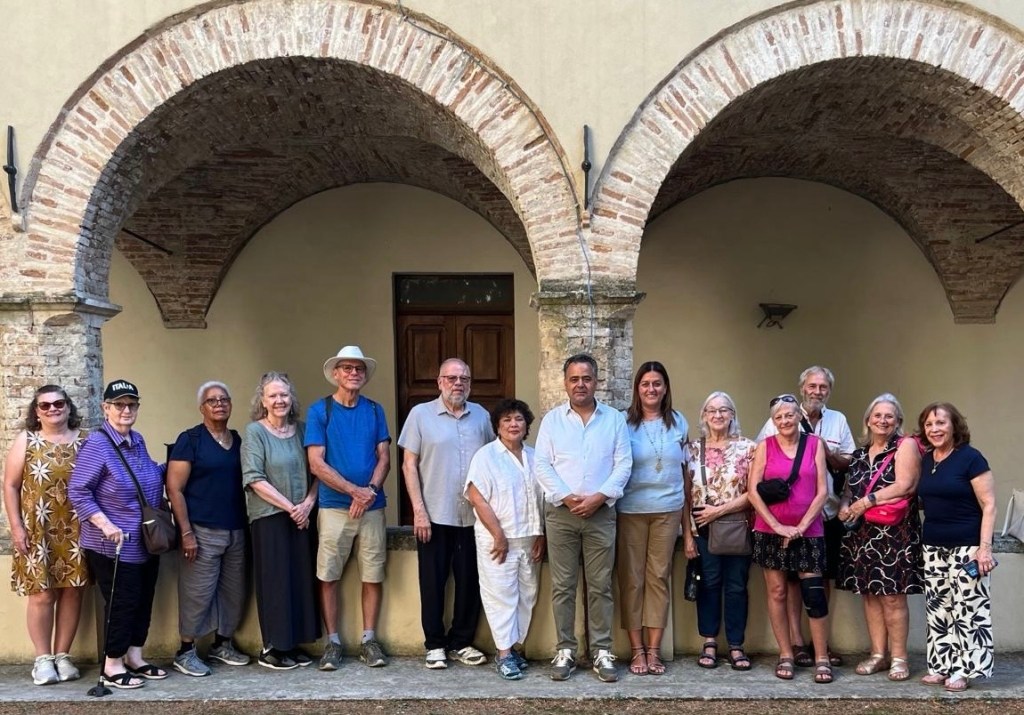
For twelve days, we immersed ourselves in the community of Guardiagrele, a historic medieval town in Italy’s Abruzzo region. In “The Italian Soul: How to Savor the Full Joys of Life,” Judith Valente writes that slow tourism is spending an extended time in one place. The rhythm and routine of a retreat offer an opportunity to step back from the pace, noise, and responsibilities of a busy life and go inward—to reflect, listen, and renew one’s spirit. Becoming familiar with local surroundings and having a home base from which to take day excursions was the heart of the retreat experience Valente created with locals Dr. Jessica Sciubba and Dr. Leila Caramanico for the Benedictine Footprint Retreat/Pilgrimage.
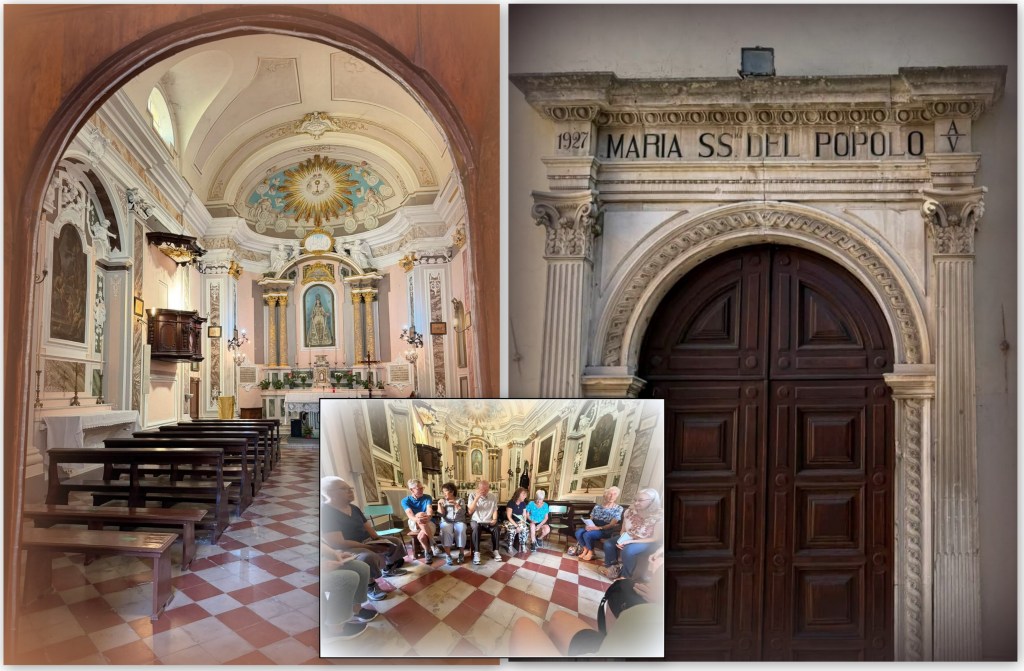
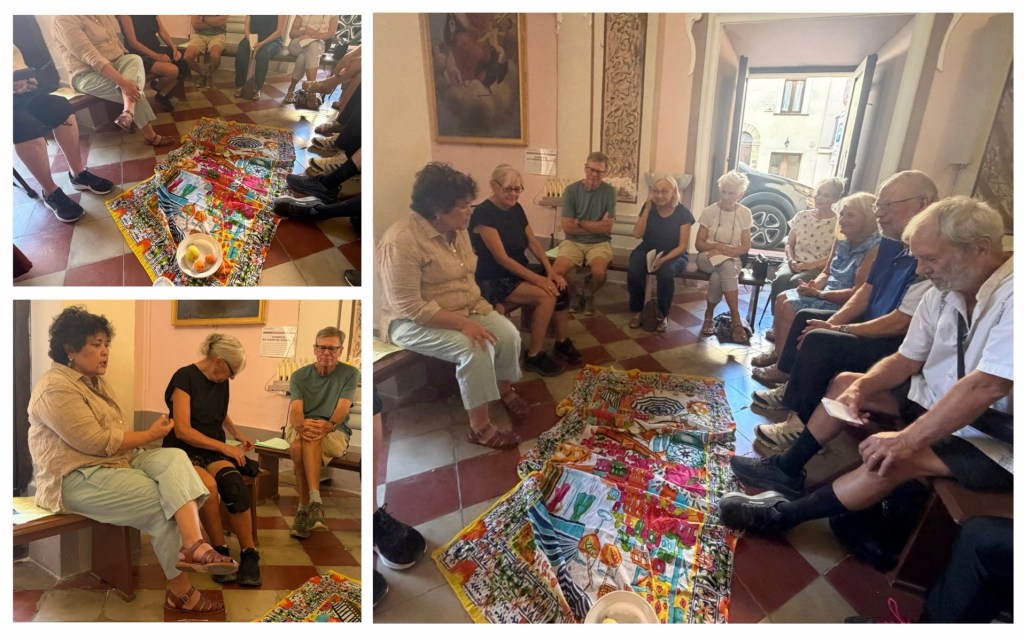
Meeting for prayer at Santa Chiara Church, near the town park, served as bookends for most of our days. In the mornings, we gathered for espressos and croissants at the same coffee shop on La Roma, a ten-minute stroll from the apartment I shared with Joanne. A few mornings I slept in and ate a biscuit (more like a cookie) on the walk to morning prayers. We practiced Lectio Divina with sacred readings, poetry and scripture, often guided by one of our pilgrims, and ended evenings in this same church, praying Compline and blessing each other.
Benedictine Travel Tip #2: Go slowly.
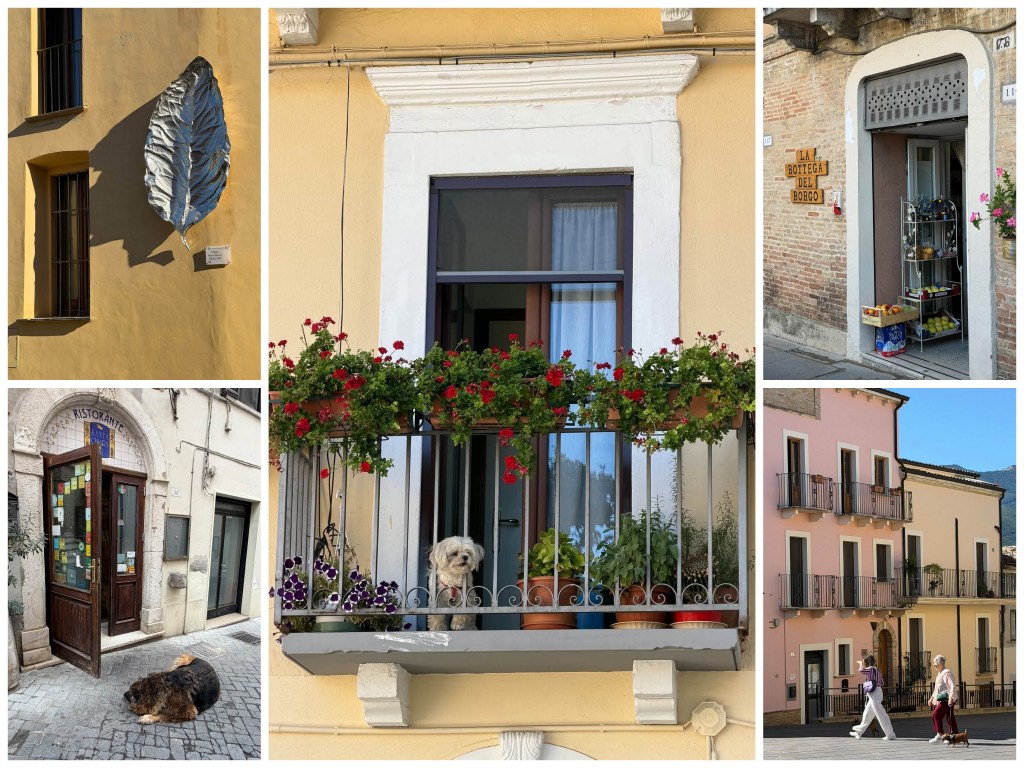
Walking the same streets and alleys, I noticed store window displays, hanging planters on shops and apartments, and loyal dogs on morning walks with their owners. As I round the corner near Piazza San Francesco, I admired the crimson mandevillas trailing from a second-floor terrace and delighted at the Marco Mazzei sculpture, Folio, on the Town Hall building, now a favorite landmark on my daily walk. I could walk down that same street twice a day, sometimes more, for twelve days and still see something new: the clock high on Santa Maria Maggiore, a shop I hadn’t noticed before, another shortcut possibility, the blooms that perked up after a much-needed rain shower. Even when I slept in, I tried not to rush. I moved slowly.
Benedictine Travel Tip #3: Experience community.
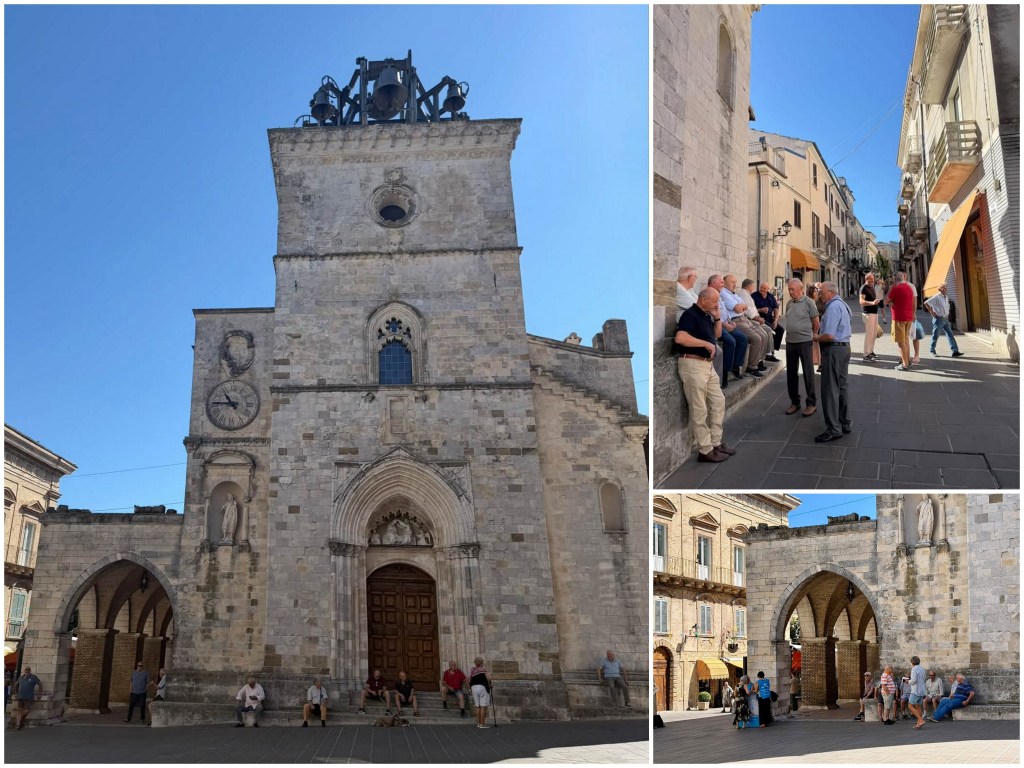
No matter which street you take, you’ll likely encounter a church—nine churches in all. The thirteen-century Santa Maria Maggiore Church is not just a sacred site in Guardiagrele, but a local hangout and meeting place. Children rode scooters and bikes through the plaza, while men gathered for conversation—every day, not just on Sundays.
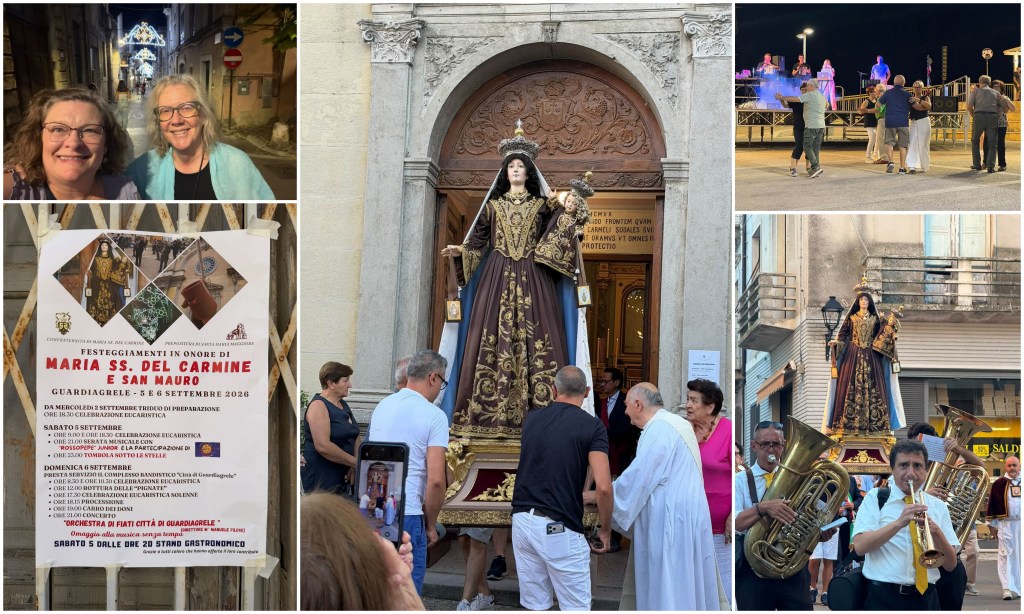
It was evident how special religious traditions are for locals. Participating in the annual festival honoring La Madonna del Carmine (Our Lady of Mount Carmel) was a glimpse into how feast days for special saints are observed. After Mass, men carried the life-sized Madonna statue through alleys, passing by each of the nine churches. People joined the procession or stopped what they were doing to watch. After the Madonna statue was returned, dancing, games, and other social activities began.
Benedictine Travel Tip #4: Be curious.
“Do not be like superficial sightseers… Pilgrims, on the other hand, immerse themselves fully in the places they encounter.” – Pope Francis
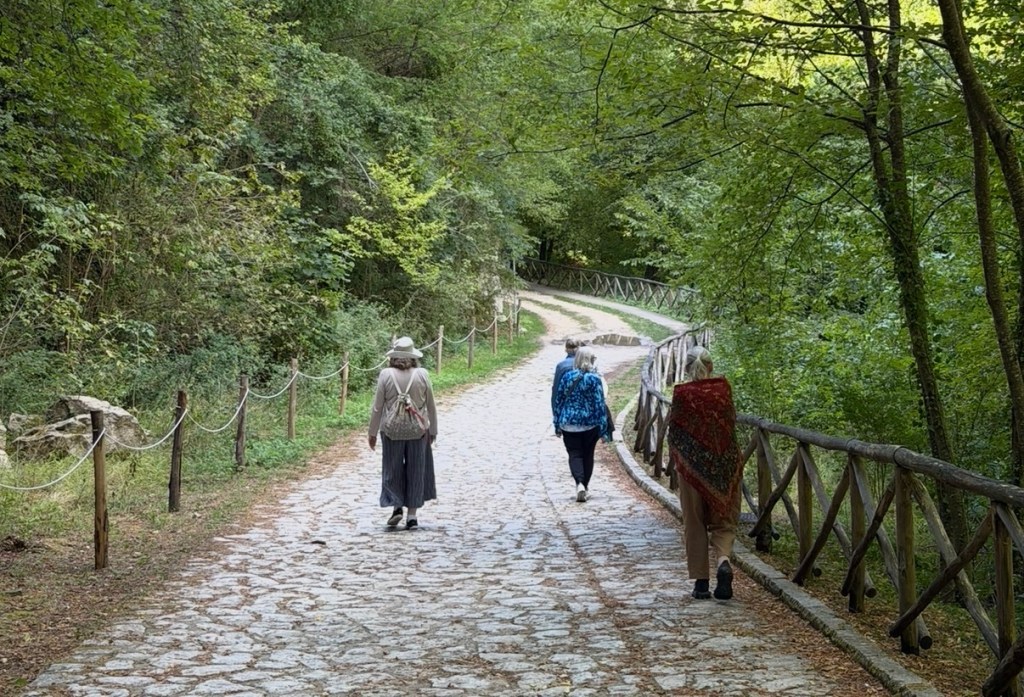
Every other day or so, we went on pilgrimage to lesser-known Benedictine sacred sites. Pilgrimage is more than sightseeing or checking off places to see; it’s an opportunity to be open to something new, to go deeper, to see with new eyes. Always, in a pilgrimage, there is a change of heart and mind, an inner journey, Valente shared in our opening session.
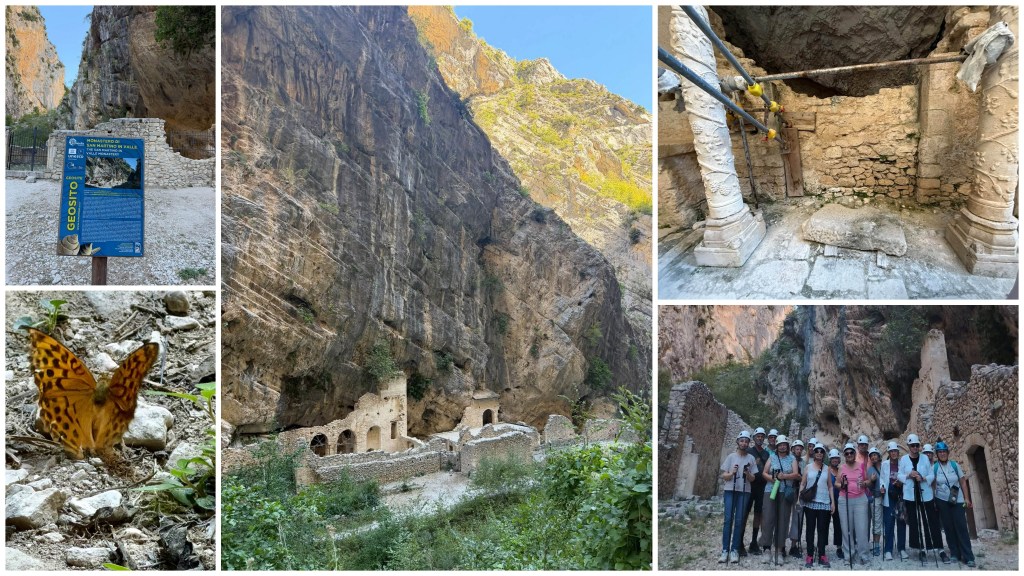
One of my favorite sacred sites we visited was the 9th-century ruins of the Benedictine monastery of San Martino in Valle. Located in the Maiella National Park, the ruins are typically off-limits to tourists, but our group was able to walk through, see the chapel and crypt, and have our daily prayer and contemplation. I was so impressed with the altar of St. Benedict and the carvings that have survived. For a thousand years, until the 1800s, Benedictines prayed and worked in this monastery.
Benedictine Travel Tip #5: Rest into moments.
Our prayerfulness enriched our visit to the monastery ruins. I was moved to tears by our silence and spontaneous sacred movement—a moment of eternal standstill, where I felt the past, present, and future come together in this ancient place of prayer. Some experiences go beyond words, and require us to just receive, to rest into the moment. During our time of silence, we were visited by many butterflies and drops of holy water at the site where monks have been blessed for centuries.
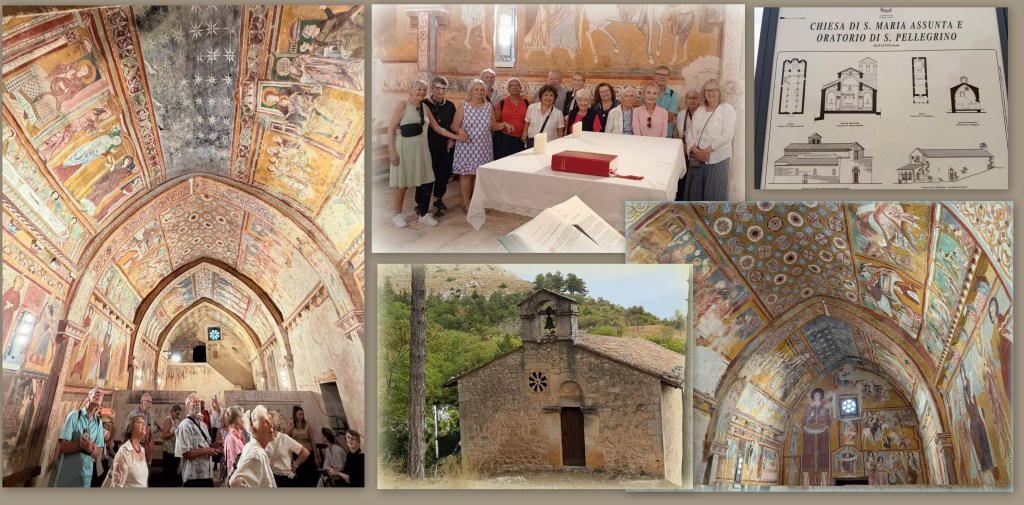
We also paused for the Lord’s Prayer at the Oratorio di San Pellegrino in Bominaco, a prayer chapel that was part of the Benedictine monastery Santa Maria Assunta. Known as “the Sistine Chapel of Abruzzo”, the walls and ceiling are entirely covered in frescoes painted by Benedictine monks in the 13th century. The oratory was believed to have been built over the tomb of San Pellegrino of Syria, a saint highly regarded in this area, yet little was known about him, so the generic name Pellegrino is used, meaning pilgrim. It felt as if this place was made for us, too, not just for monks hundreds of years ago—we are pilgrims and called to be saints as well.
Benedictine Travel Tip #6: Have a sense of humor.
After a 2019 pilgrimage to Germany, I wrote, “Humor is the hand of hospitality,” sharing a unique example of when I needed to laugh at my own blunder. Laughter truly is medicine. Having a sense of humor is important when patience is tested or to lighten up the mood. One evening at dinner, I nearly ended up on the floor, laughing when an announcement was made about a time change for the following day. A series of “What?” and “What time?” followed. The message was passed around our large dinner table, with people repeating correct and incorrect time adjustments—it was if the message being passed was a secret game of telephone. I love one liners that I can put in my pocket and giggle about throughout the day. For instance, Joanne’s reply when we were talking about age, “I don’t know how old anyone is. I can never remember peoples ages, they change every year.” Indeed, they do.
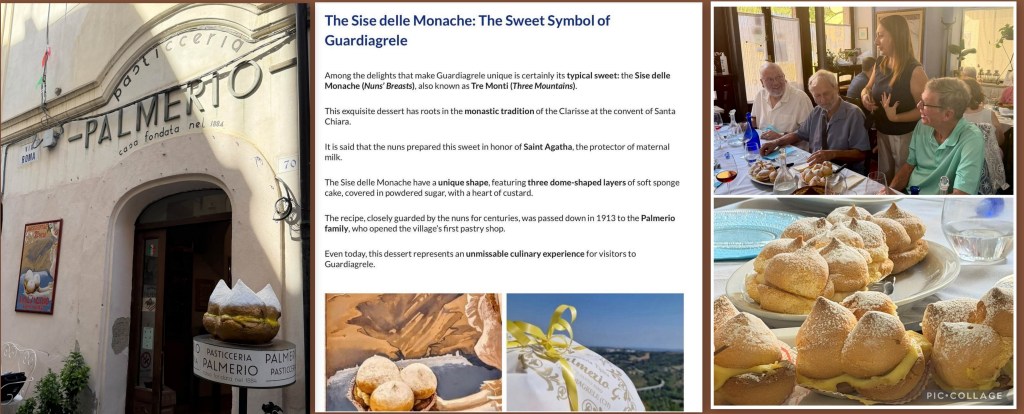
All of our meals, local food and wine were beyond words, the best food of any trip I have been on, but it was a sweet treat Guardiagrele is known for that provided much humor. The Sise delle Monache (Nuns’ Breasts), also known as Tre Monti (Three Mountains) is a tradition of the convent of Santa Chiara. Legend holds that the nuns prepared them to honor Saint Agatha, the protector of maternal milk. The recipe, closely guarded for centuries, was passed down in 1913 to the Palmerio family, who opened the village’s first pastry shop. We walked by two pastry shops with signs and exhibits multiple times a day that brought a lot of smiles.
Benedictine Travel Tip #7: Keep time in your schedule for nothing to happen. Give your soul time to catch up.
“He had no particular destination or goal in mind. Whenever he saw an object or site that interested him— and he was a man very easily interested —he paused and lingered until his curiosity was satisfied.”—Theo of Golden, Allen Levi
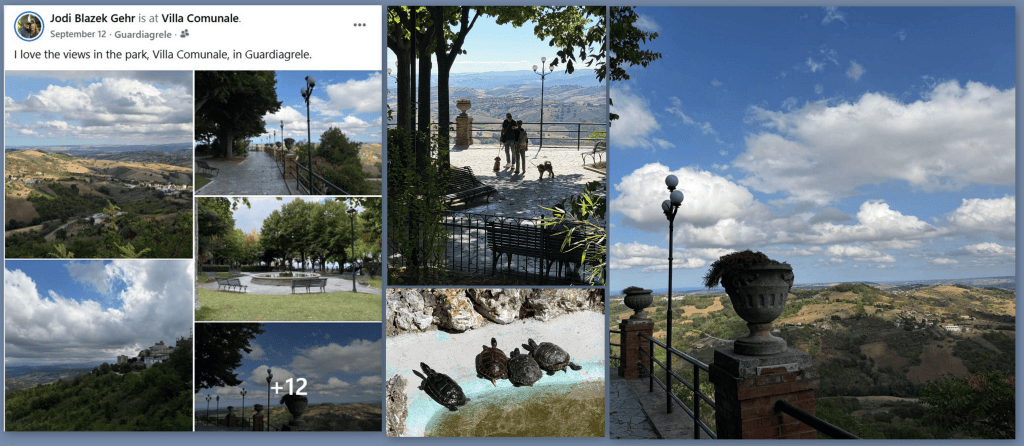
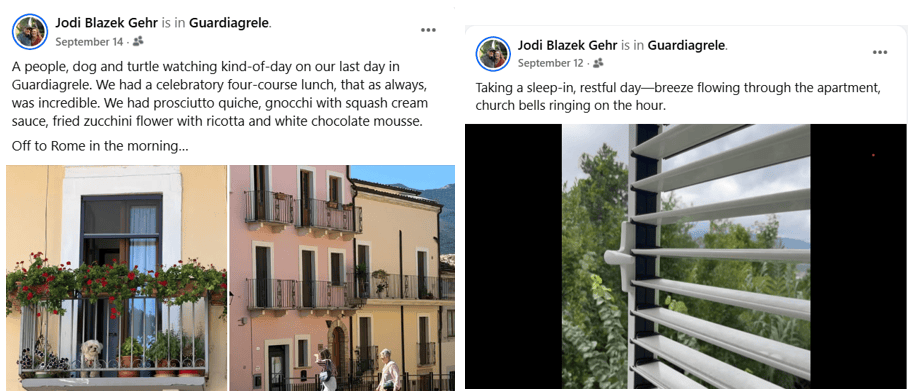
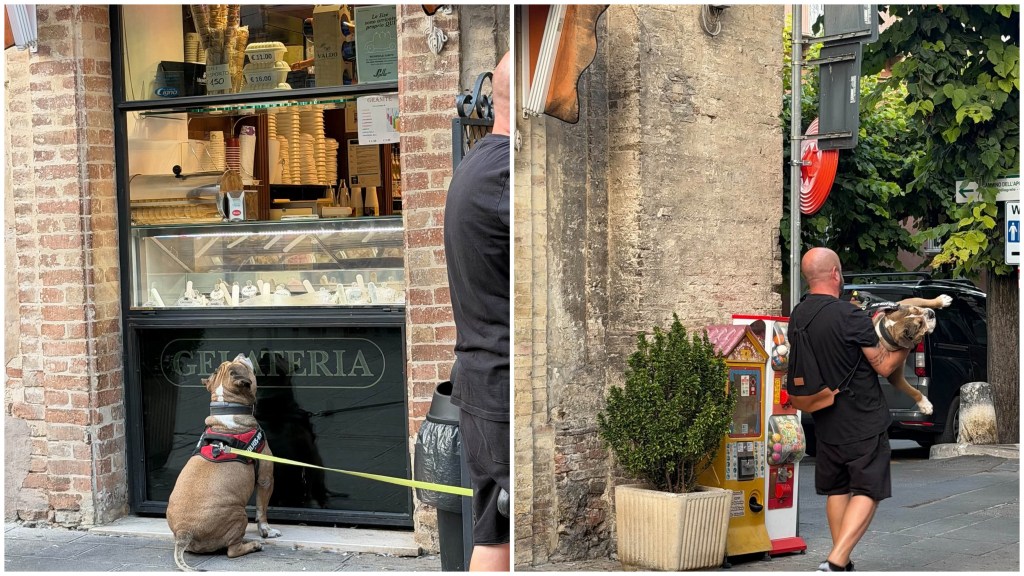
Sometimes the best experiences and memories are unplanned—no expectations, utter openness. Not overplanning allows for rest, relaxation, relationships, wandering, wondering, surprises, and synchronicities. Watching a little girl blowing bubbles, an anxious (and disappointed) dog waiting for a taste of gelato, a meeting of dog parents in the park, or seizing the moment to not go out at all, staying put in my apartment enjoying the sights and sounds right there.
Benedictine Travel Tip #8: Be grateful.
“If the only prayer you ever say in your entire life is thank you, it will be enough.” –Meister Eckhart
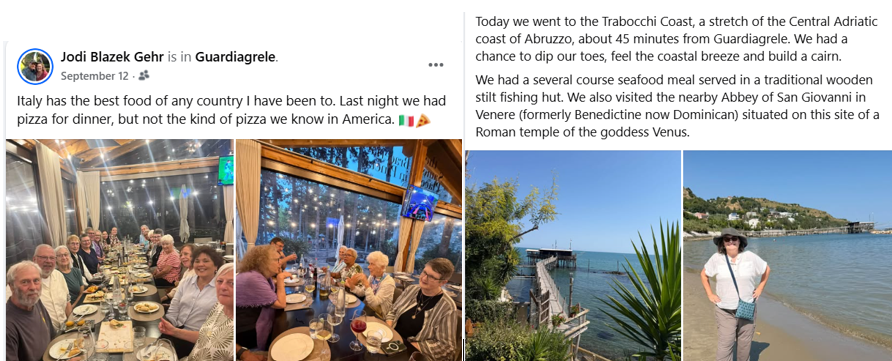
Eucharist literally means thanksgiving. We were fortunate to break bread in group meals many times, and yet there is still so much more to be grateful for. I am grateful for the most amazing food, the wine tasting, particularly a new-to-me wine Cerasuolo d’Abruzzo, a deeply colored rosé wine made primarily from the Montepulciano grape (that I cannot find anywhere in Nebraska or Wisconsin, the two states I call home).
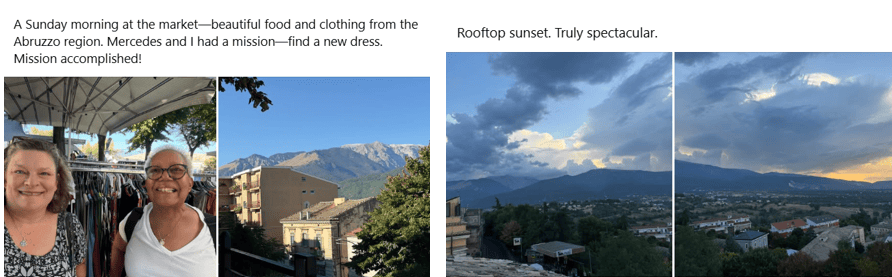
I am grateful for the special conversations, impromptu cups of cappuccino, glasses of wine, and scoops of gelato. I am grateful for the dogs, turtles, beautiful views, and wandering walks. I am grateful for sunsets, Sunday markets, and seafood for the Adriatic sea.
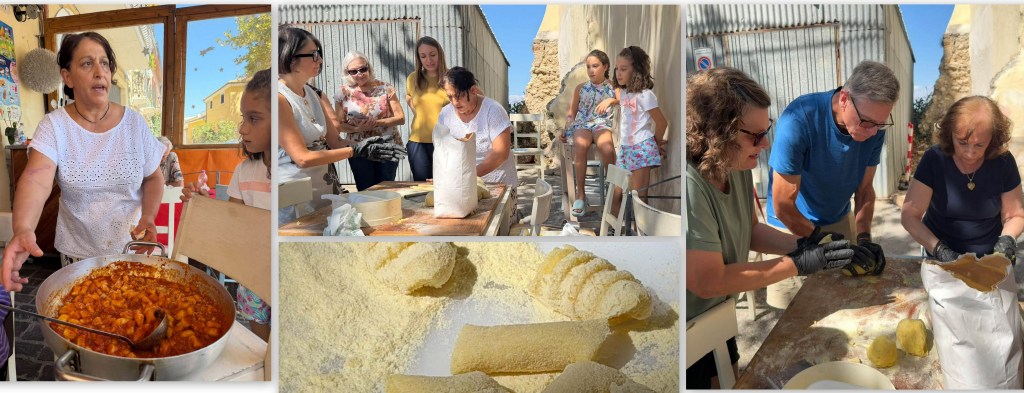
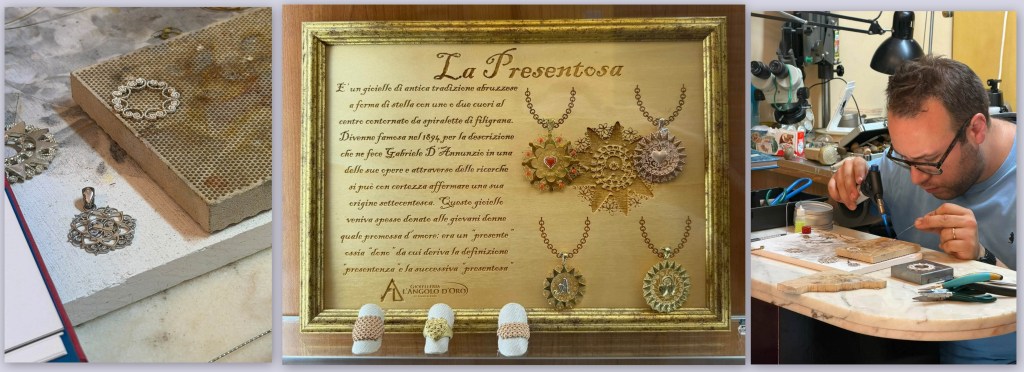
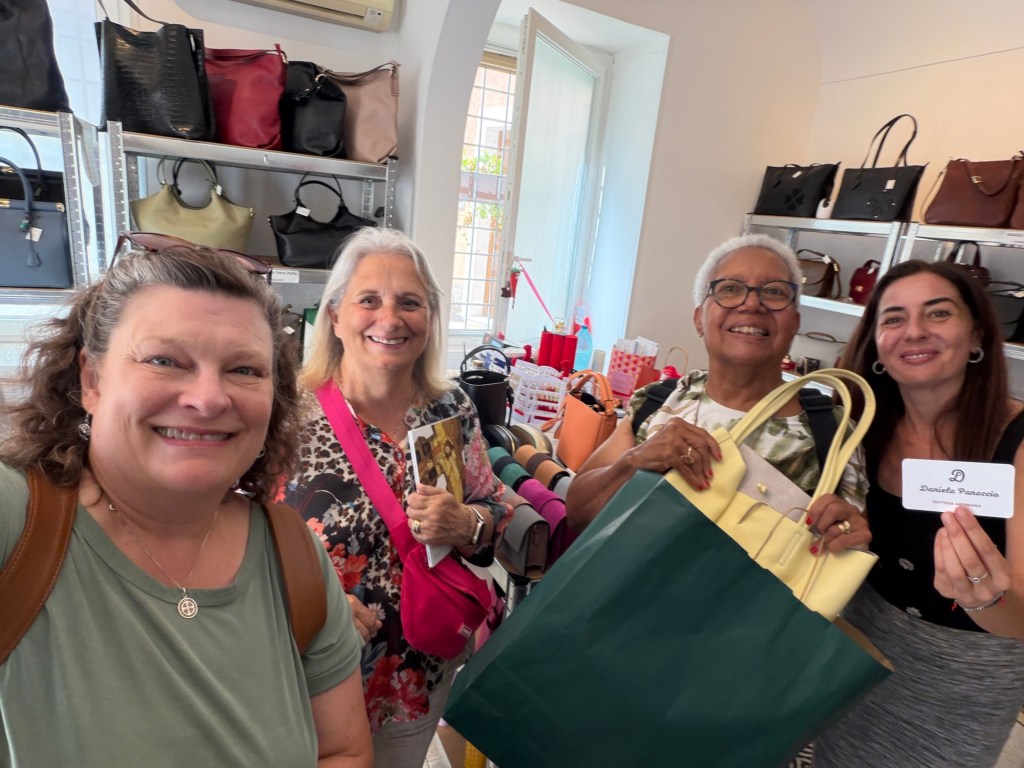
I am grateful for having time for retreat and pilgrimage. I am grateful to Jessica, Leila, and Judith, who conceived the Benedictine Footprints idea, introduced us to friends and family, coordinated visits with local craftspeople, the mayor, shop and restaurant owners, and planned pilgrimage days to sacred sites.
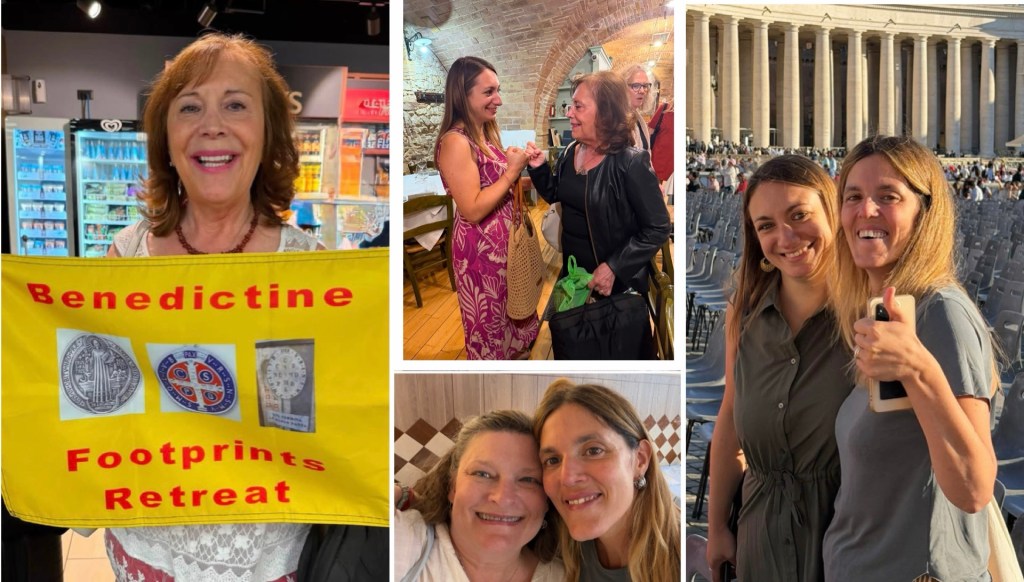
The last two days of our Benedictine Footprints pilgrimage were spent in Rome, but Pope Leo deserves a reflection on his own. To be continued…


Leave a Reply