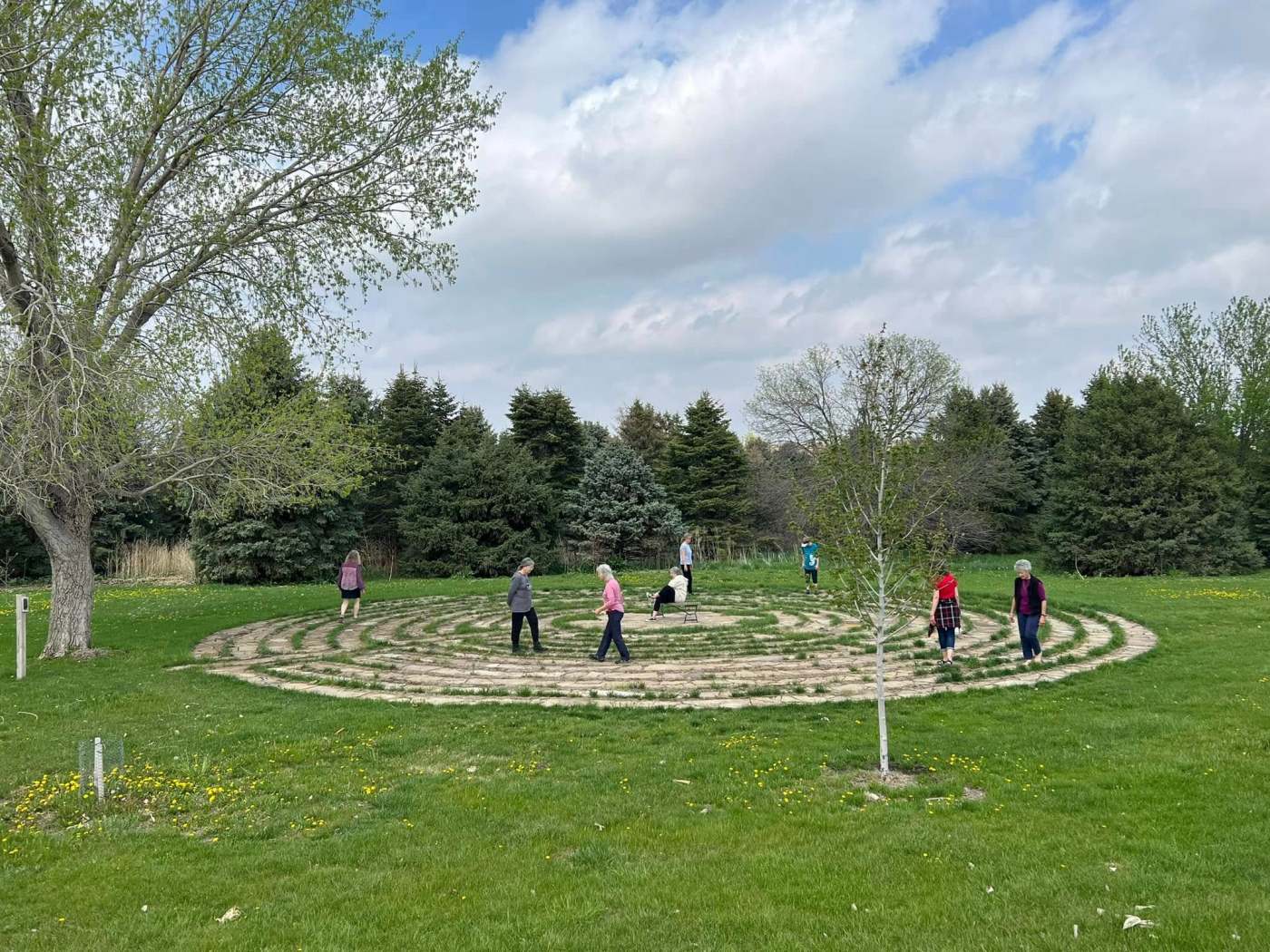
Throughout history, pilgrims have sought an experience of the holy by visiting temples, shrines, cathedrals, monasteries, and other sacred sites. Some take lengthy journeys on foot, such as the famous Camino de Santiago (The Way of St. James) or the annual Muslim pilgrimage to Mecca, walking 10-20 miles a day.
By definition, a pilgrimage is a purposeful journey to a religious or sacred site, yet it is not necessary to travel a great distance, or walk many miles, to undertake one. Walking the path of a labyrinth is a symbolic representation of a spiritual pilgrimage, and one of many creative ways to pray.
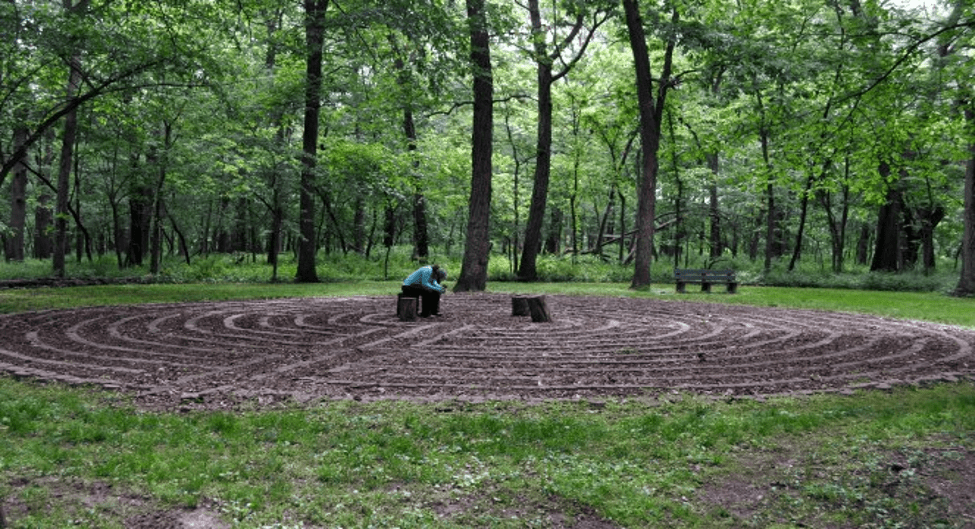
Creighton University Retreat Center in Griswold, Iowa
The use of labyrinths for meditation and prayer dates back thousands of years. During the Middle Ages, labyrinths were abundant, as opportunities to travel to the Holy Land or other sacred sites were limited by war, poverty, and other constraints. They remain a contemporary spiritual practice for quieting the mind, letting go of our personal agendas or expectations, learning to trust, and seeking guidance from the Divine. Bringing one’s prayer to the labyrinth engages the mind, body, and spirit.
“The labyrinth is an archetype, a divine imprint, found in all religious traditions in various forms around the world…Walking the labyrinth is a spiritual discipline that invites us to trust the path, to surrender to the many turns our lives take, and to walk through the confusion, the fear, the anger, and grief that we cannot avoid experiencing as we live our earthly lives.” Rev. Dr. Lauren Artress
A labyrinth is not a maze; there are no dead ends and no choices that need to be made. There is a clear design for a labyrinth with only one winding path to reach the center and the same path to walk from the center outwards, arriving where you had begun. There is no way to lose the path once one is on it.
Often before starting a labyrinth walk, I offer an intention, ask a question, or prayerfully surrender a situation to the Divine. Sometimes I carry a SoulCollage® card that resonates. Because there is only one path inward, the mind can let go of when one will arrive at the center. It is a certainty that one will get there eventually. I practice trusting that wherever God takes me, in my mind and body, I must simply put one foot in front of the other. I can settle into knowing that Spirit is with me, accompanying me.
This walk, or journey inward, is a metaphor for life. So often we don’t know where we are headed, even with the best of plans or intentions. “Pilgrimage calls us to yield our own agendas and follow where we are being led,” writes Christine Valters Paintner in The Soul of a Pilgrim: Eight Practices for the Journey Within. With a labyrinth walk, one experiences letting go of a plan or agenda—surrendering and trusting that the center will be reached.
Even with only one path, the route may still not be apparent. The appearance of a dead end becomes a switchback; the path continues inward. A labyrinth I walk often is at St. Benedict Center in Schuyler, Nebraska. It is modeled after the famous Cathedral of Chartres in France, which has eleven concentric circles divided into four quadrants. The path is clear from looking from higher ground, but as many times as I have walked it alone and with others, I find myself wondering if I somehow lost my way. Am I just walking in circles? Is this taking longer than it should?
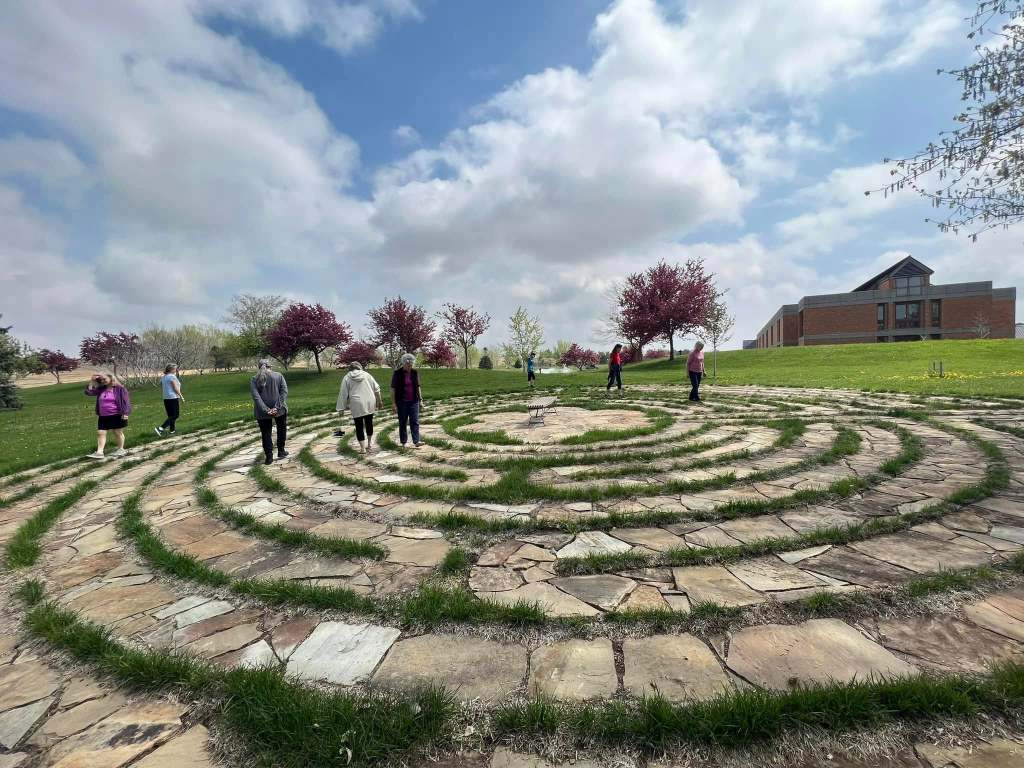
“Growth is a spiral process, doubling back on itself, reassessing and regrouping.”
– Julia Cameron
It is nearly impossible to rush through a labyrinth; just imagine how dizzying that might be, whipping around the circuits and taking 180-degree turns with speed. The best practice for walking the labyrinth, perhaps for all of life, is to walk a slow, steady, meditative pace. Trust is a spiritual practice—and I grow in trust knowing that I am right where I need to be, and right on time. If we could carry this trust to our everyday life, imagine how free one might feel!
Coming to the center of the labyrinth, one can rest. We have arrived; it was inevitable. It is important to take time to “center down,” so to speak, to integrate the experiences and insights, to pray, and reflect, before beginning the journey outward, a continued expression of prayerful surrender. Walking a labyrinth brings new insights each time—about the process itself, as a metaphor for life’s journey, and about the situation in need of prayer.
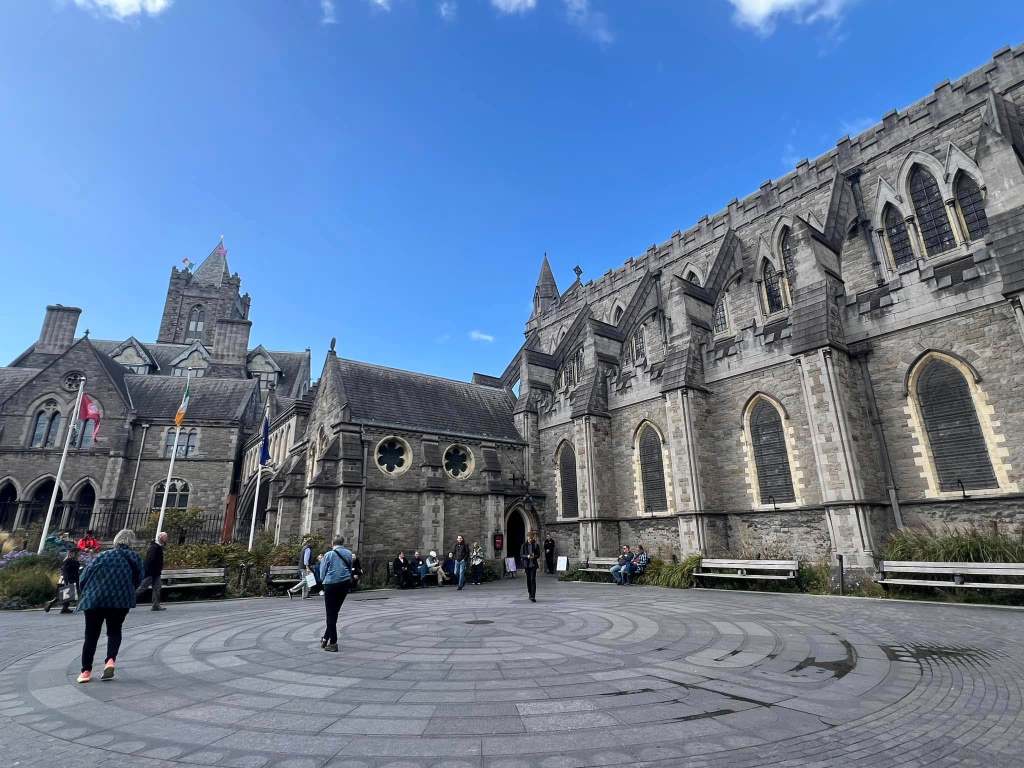
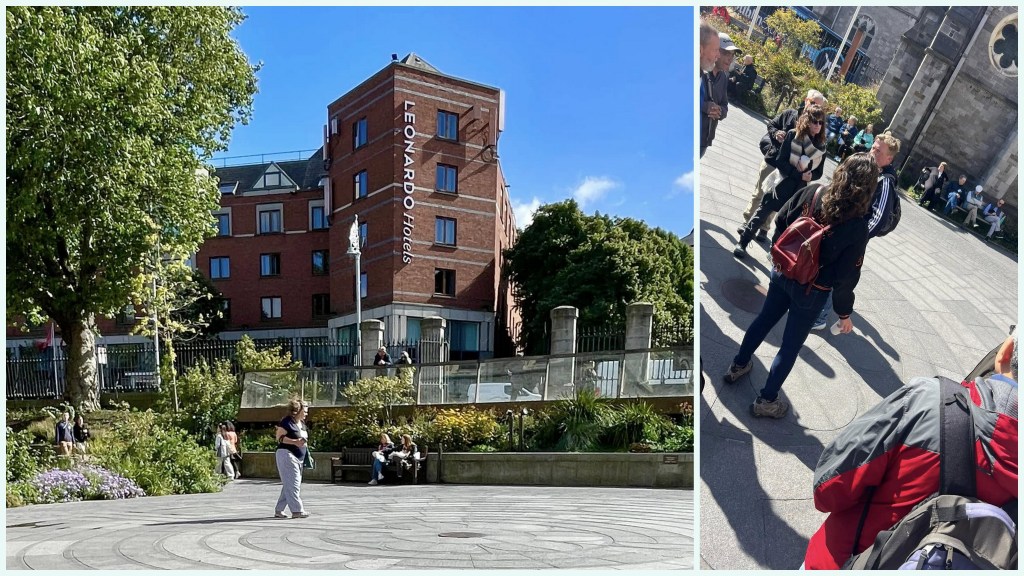
On pilgrimage to Ireland in 2024, I had an unusual experience walking the labyrinth of Dublin’s Christ Church Cathedral. After visiting inside the church, a sacred site for pilgrims for nearly 1000 years, I had time to be outside in the courtyard before our tour departed, so I began the path. There were many people walking through the labyrinth design, listening to tour guides, sightseeing, or chatting with their companions, so I needed to pause or circle around those who were standing. When I was nearly at the center, the resting place, a group of 20 or more tourists planted themselves directly in the center of the labyrinth for what seemed like a lengthy information session about the Cathedral. Slightly irritated but amused, I realized there just might be a lesson here. Stay on the path; be patient. Just rest, breathe, and move on when you can. Be present to what is.
Eventually, I arrived. Of course, I did.
St. Benedict, in his Rule, encourages monks to always begin again. He knew there would be times when life, even our prayer life, could feel more like a maze than a labyrinth. Will we really get over this cold? Will this sadness ever end? Will that difficult person become more cooperative? Despite its challenges, our experiences of uncertainty and doubt are a prayerful opportunity to practice awareness, patience, and gratitude.
Our life itself is a pilgrimage, and we can never stray from our center, our true home in God. We must just get back on the path. We begin again. Fr. Thomas Leitner, Administrator of St. Benedict Center writes, “Living our life as a pilgrimage means paying attention to and gratefully naming the presence and work of God around us. And it means embarking upon a journey inwards in order to become one with ourselves and with God who dwells in us.”
Walking a labyrinth can be combined with many other forms of prayer, such as music, silence, or time spent in nature. Movement and other forms of body prayer that I have found helpful include walking the Stations of the Cross, dancing, taking a nature hike, and practicing yoga or tai chi. I invite you to share your favorite labyrinth experience or prayer practice in the comments.


August 30, 2026 at 10:19 am
Beautiful reflection. In these turbulent times we need to “get off” the freeway and take a quiet pilgrimage on the “road less traveled” but the road that leads us to the heart, to God.
LikeLiked by 1 person