Search

Being Benedictine

Living SoulFully as an Oblate of St. Benedict

Tag

labyrinth

Labyrinth as Pilgrimage and Prayer

Throughout history, pilgrims have sought an experience of the holy by visiting temples, shrines, cathedrals, monasteries, and other sacred sites. Some take lengthy journeys on foot, such as the famous Camino de Santiago (The Way of St. James) or the annual Muslim pilgrimage to Mecca, walking 10-20 miles a day.

By definition, a pilgrimage is a purposeful journey to a religious or sacred site, yet it is not necessary to travel a great distance, or walk many miles, to undertake one. Walking the path of a labyrinth is a symbolic representation of a spiritual pilgrimage, and one of many creative ways to pray.
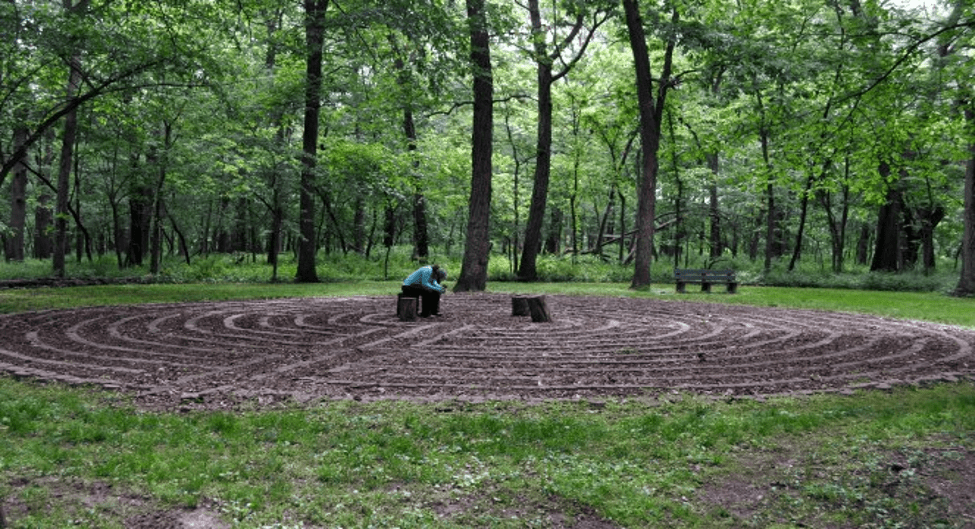
 
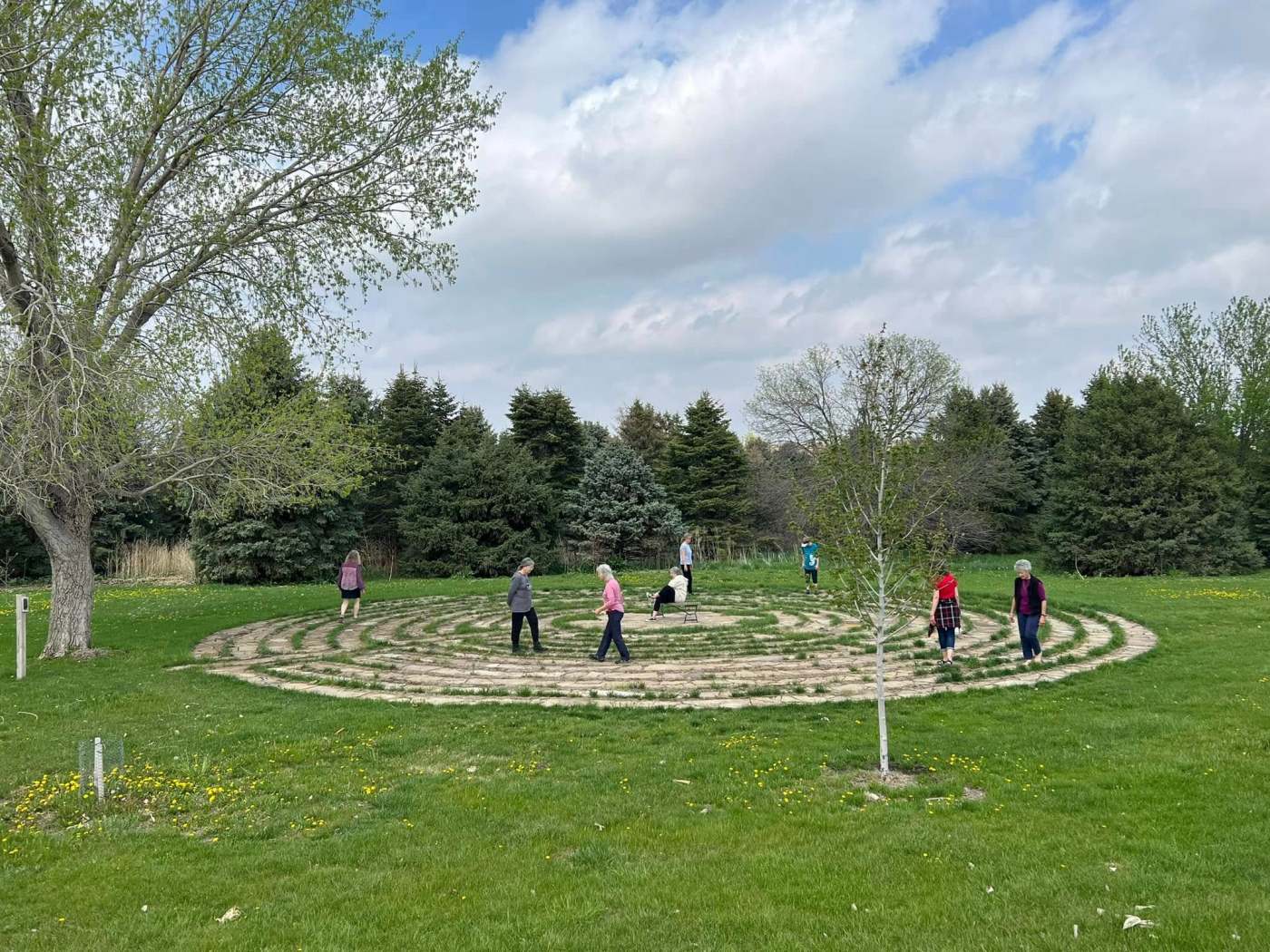
Creighton University Retreat Center in Griswold, Iowa

The use of labyrinths for meditation and prayer dates back thousands of years. During the Middle Ages, labyrinths were abundant, as opportunities to travel to the Holy Land or other sacred sites were limited by war, poverty, and other constraints. They remain a contemporary spiritual practice for quieting the mind, letting go of our personal agendas or expectations, learning to trust, and seeking guidance from the Divine. Bringing one’s prayer to the labyrinth engages the mind, body, and spirit.

“The labyrinth is an archetype, a divine imprint, found in all religious traditions in various forms around the world…Walking the labyrinth is a spiritual discipline that invites us to trust the path, to surrender to the many turns our lives take, and to walk through the confusion, the fear, the anger, and grief that we cannot avoid experiencing as we live our earthly lives.”  Rev. Dr. Lauren Artress

A labyrinth is not a maze; there are no dead ends and no choices that need to be made. There is a clear design for a labyrinth with only one winding path to reach the center and the same path to walk from the center outwards, arriving where you had begun. There is no way to lose the path once one is on it.  

Often before starting a labyrinth walk, I offer an intention, ask a question, or prayerfully surrender a situation to the Divine. Sometimes I carry a SoulCollage® card that resonates. Because there is only one path inward, the mind can let go of when one will arrive at the center. It is a certainty that one will get there eventually. I practice trusting that wherever God takes me, in my mind and body, I must simply put one foot in front of the other. I can settle into knowing that Spirit is with me, accompanying me.

This walk, or journey inward, is a metaphor for life. So often we don’t know where we are headed, even with the best of plans or intentions. “Pilgrimage calls us to yield our own agendas and follow where we are being led,” writes Christine Valters Paintner in The Soul of a Pilgrim: Eight Practices for the Journey Within. With a labyrinth walk, one experiences letting go of a plan or agenda—surrendering and trusting that the center will be reached. 

Even with only one path, the route may still not be apparent. The appearance of a dead end becomes a switchback; the path continues inward. A labyrinth I walk often is at St. Benedict Center in Schuyler, Nebraska. It is modeled after the famous Cathedral of Chartres in France, which has eleven concentric circles divided into four quadrants. The path is clear from looking from higher ground, but as many times as I have walked it alone and with others, I find myself wondering if I somehow lost my way. Am I just walking in circles? Is this taking longer than it should?

Continue reading “Labyrinth as Pilgrimage and Prayer”

World Labyrinth Day: Many Ways to Pray

“There are hundreds of ways to kneel and kiss the ground.” –Rumi

There are many ways to pray—in song, spoken or written words, silence, creativity, nature, and movement, just to mention a few. Paul recommends to “pray without ceasing” (1 Thessalonians 5:17), which is only possible if we are able to connect with our Creator in a variety of ways. We are meant to engage our senses, our whole bodies, in prayer.

I’ve come to appreciate this about the Catholic Mass, even if visitors might think there is a lot of up and down. We genuflect, sit, stand, kneel, and bow. These gestures, postures, or movement help to bring our whole being into prayerful expression—raising our hands when saying the “Our Father”, making the sign of the cross or receiving the Eucharist allows us to use our bodies in prayer.

lab signIn addition, walking the stations of the cross or a labyrinth, taking a nature hike, or practicing yoga or tai chi are prayerful forms of movement that engage our bodies while quieting our mind. Going away on retreat is an opportunity to explore and practice various forms of prayer.

DSC_0925a
Labyrinth at St. Benedict Center in Schuyler, NE

A few summers ago  I had the opportunity to pray in many ways while attending an eight-day Ignatian retreat at the Creighton University Retreat Center. Each day, for about an hour, I met with a spiritual director to receive guidance and to share my faith journey; the remainder of the day was spent reflecting on these discussions and praying. One of the ways that I prayed was by walking a labyrinth.

“A labyrinth is not a maze. A maze is a symbol of life without meaning, it is an agent of confusion, deception with dead ends that lead you nowhere. But a labyrinth is a symbol of a life of deeper meaning, an on-going sacred journey leading us inward, outward and to greater wholeness.” –Carrie Newcomer Continue reading “World Labyrinth Day: Many Ways to Pray”

Pictures are worth a thousand words

Images are powerful. They conjure up feelings, memories, and ideas. They tell stories. They stand for something.

A brandmark or logo conveys the identity of a business that is easily recognized without the need for words. Businesses spend a ton of money developing their brand identity, but we don’t need the business world’s affirmation of the power of images. We already know it. We know it in our soul.

soul-picture

Continue reading “Pictures are worth a thousand words”

Happy 20th Anniversary, St. Benedict Center!! 

Happy 20th Anniversary, St. Benedict Center!! Tens of thousands of people have enjoyed the many gifts of St. Benedict Center since 1997. At our celebration and blessing of our new labyrinth on Sunday, July 16, I shared the following words:

IMG_4788Some things change the trajectory of your life forever—getting married, having a baby, getting a new job, for some becoming a monk or a sister. For me, I add to the list coming to St. Benedict Center for the first time in June 2002. It was the beginning of a relationship that has changed my life in many ways.

First, the retreats that I’ve attended at the Center have nurtured my love of learning. The first retreat I went to was a Contemplative Prayer retreat, a 4-day silent retreat. I wasn’t sure if I would come back for a silent retreat again (it was hard!) but I knew I would be coming back to this sacred getaway soon. It started out that I came two or three times a year….and it gradually increased over time to be once or twice a month. There was one summer that I came every week and it was suggested that I build a little cabin out back. I’ve particularly enjoyed attending retreats given by the monks of Christ the King and by authors like Macrina Weiderkehr, Anselm Gruen, Helen Prejean, and Michael Casey. I have even come back for more silent retreats too, and I eagerly look forward to them now.

DSC_0532a.JPG

Second, I am grateful for the relationships I have made at St. Benedict Center. I have met some of my best friends here—the monks and oblates, people I have met on retreat and those that have come to retreats that I lead. It has become a spiritual home for me, and now it can be difficult to find silent time because I run into so many friends and interesting people that I want to connect with.  If I have a friend that I didn’t meet here, you can be sure I have invited them to come with me. Which brings me to the next gift that the Center has given me.

I have a passion for sharing what I love.  If you know me, you know that when I feel passionate about something I have a hard time keeping my mouth shut. If I read a good book, I want to tell everyone about it and start a book discussion. If I take a photograph that moves me, I feel compelled to share it with others. Fr. Thomas has given me the opportunity to put purpose and passion together by helping with the St. Benedict Center Facebook page and other social media marketing. It’s something I love to do and it’s helped me think more like a monk too; with everything I post I say, “What would a monk do?” Continue reading “Happy 20th Anniversary, St. Benedict Center!! “

Many Ways to Pray: Walking a Labyrinth

“There are hundreds of ways to kneel and kiss the ground.” –Rumi

There are many ways to pray—in song, spoken or written words, silence, creativity, nature and movement, just to mention a few. Paul recommends to “pray without ceasing” (1 Thessalonians 5:17), which is only possible if we are able to connect with our Creator in a variety of ways. We are meant to engage our senses, our whole bodies, in prayer.

I’ve come to appreciate this about the Catholic Mass, even if visitors might think there is a lot of up and down. We genuflect, sit, stand, kneel and bow. These gestures, postures or movement help to bring our whole being into prayerful expression—raising our hands when saying the “Our Father”, making the sign of the cross or receiving the Eucharist allows us to use our bodies in prayer.

lab signIn addition, walking the stations of the cross or a labyrinth, taking a nature hike, or practicing yoga or tai chi are prayerful forms of movement that engage our bodies while quieting our mind. Going away on retreat is an opportunity to explore and practice various forms of prayer.

St. Benedict Center is building a labyrinth modeled after the famous labyrinth in the Cathedral of Chartres, France.  “When the Holy Land was closed to pilgrims in the Middle Ages, labyrinths abounded in the churches of Europe.  They were used to symbolically represent the pilgrimage to the Holy Land.  Our life is a pilgrimage, a journey to our eternal home with God in heaven.” –Father Thomas Leitner The labyrinth will be completed in late summer or fall. 

DSC_0925a

This summer I had the opportunity to pray in many ways while attending an eight-day Ignatian retreat at the Creighton University Retreat Center. Each day, for about an hour, I met with a spiritual director to receive guidance and to share my faith journey; the remainder of the day was spent reflecting on these discussions and praying. One of the ways that I prayed was by walking a labyrinth.

“A labyrinth is not a maze. A maze is a symbol of life without meaning, it is an agent of confusion, deception with dead ends that lead you nowhere. But a labyrinth is a symbol of a life of deeper meaning, an on-going sacred journey leading us inward, outward and to greater wholeness.” –Carrie Newcomer Continue reading “Many Ways to Pray: Walking a Labyrinth”

Blog at WordPress.com.

Up ↑