Search

Being Benedictine

Living SoulFully as an Oblate of St. Benedict

Month

July 2026

Hysterics and Hail Marys: Holding the Hand of Fear

A month before my birthday, I wasn’t sure I was going to have another one. 

Lately, I have been contemplating aging and dying more than usual. Turning 60 feels different than turning any other age before it. I take seriously the advice from The Rule of St. Benedict to “Keep death daily before your eyes,” but most often I heed it by how I live my daily life. I try not to dwell on the actual dying part. But this year is different.  

Less than a week before he turned 60, a long-time friend suddenly passed away. He went to bed not feeling well and didn’t wake up. Colin and I would share birthday greetings every year, even if we hadn’t seen each other in a while. Now that will never happen again.

I have spent the few months since his passing considering how quickly life can change, how we are never promised another day. As grateful as I am for each new day, I can still be filled with fear at the idea of dying.

And that was my state of mind when, after breakfast on a Tuesday morning, my throat felt unusual, like I hadn’t swallowed something completely. I asked my husband, Joe, to look at it before I joined a Zoom meeting.

Looks okay,” he said, so I drank some water and filled my mug with coffee and prepared to begin. Less than ten minutes into the meeting, my eyes started to itch. I realized I was experiencing a health emergency when I looked in a mirror—in real time, I could see my eyes swelling and closing. (Remember The Incredible Hulk? That transformation is what came to mind as I watched my eyes and face change shape.)

On a hurried internet search, my symptoms indicated “anaphylaxis: a sudden, severe, and potentially life-threatening allergic reaction.”  I had never experienced anything like this, so I knew I needed emergency care, and fast. I told Joe something serious was happening, and we needed to go RIGHT NOW. Worry and anxiety are not new to me, but I experienced panic and fear as I never had.

“I am so scared,” I said.

On the way to urgent care, between hysterics and Hail Marys, I could only think of dying and not wanting to, and that we needed to hurry, knowing things can happen so quickly. After my husband dropped me off near the door, I cut the long line, crying for help. Within minutes, I was given my first injection of epinephrine and instructed to get to the emergency department.

“I am so scared.”

When we arrived at the ED, I was escorted past other waiting patients, hooked up to IVs, given a second EpiPen injection, and had blood tests. Several doctors, specialists, and nurses came in and out.

“I am so scared,” I told Joe, for perhaps the hundredth time.

Doctors recommended that I be admitted to the hospital to be monitored. If I had a rebound reaction and couldn’t swallow, I would be put on a ventilator.

“I am so scared,” I kept saying.

Joe told me I’d be okay, to think positively, to stay calm- perhaps excellent advice when I am in my right mind. But I was hysterical. I screamed, “Colin probably thought he was going to be okay too! Things happen; people die!”  Colin certainly didn’t think he would die the night his blood sugar was low. How could Joe tell me I’m going to be okay? Sometimes things aren’t okay. Sometimes people die.

Continue reading “Hysterics and Hail Marys: Holding the Hand of Fear”

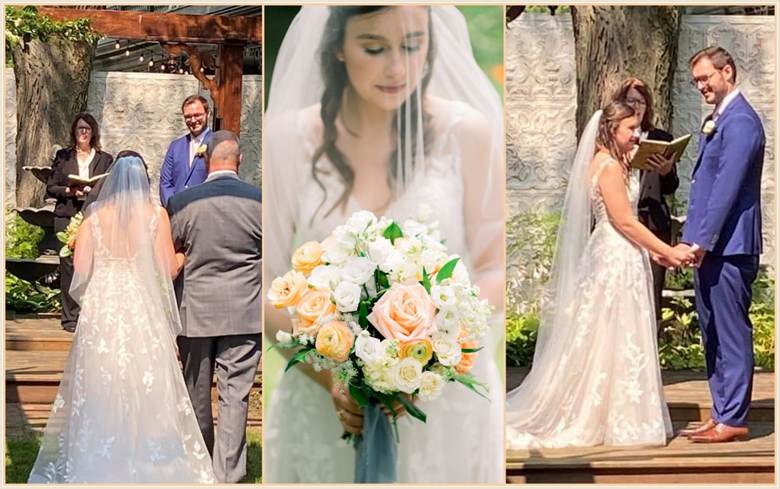
Wood: A Symbol for Five Years of Marriage

Symbols and rituals mark special anniversaries just as smells and bells evoke the sacred in the liturgy. Both are invitations to celebration.

Our daughter, Jessica, married her Prince Charming, John Holland, in a fairytale, storybook wedding on July 17, 2021, five (?!#?) years ago. It feels more like two, but I’ve realized that no matter how many years ago I thought something was, I should simply double it. When Jessica was little (which seems like just a minute ago), she said she wanted to be a princess when she grew up—so Prince Charming found his perfect match as well. And we gained a son.

We gathered—John and Jessica’s community, their friends and family—to support and bless their marriage. Hearts and flowers, vows and wedding rings, first kisses and champagne toasts were the symbols and rituals of the day.

Medieval traditions marked twenty-five and fifty-year anniversaries with silver and gold, metals of great value. As anniversary celebrations became more common in the Victorian era, materials of increasing strength and durability were assigned to the years of a couple’s marriage. Last year, my husband, Joe, and I celebrated forty years of marriage, our Ruby Anniversary.

Wood, the symbol for a five-year marriage, represents the roots Jessica and John planted together on their wedding day. Like a tree, a marriage that celebrates five years has weathered some challenges, becoming stronger and more resilient. Wood, as a living, breathing part of creation, reflects how a marriage must constantly evolve, grow, and expand to be more fruitful through the years. Indeed, marriage is between the two who professed their love and stability, but their community also plays a role.

In How to Live: What the Rule of St. Benedict Teaches Us About Happiness, Meaning and Community, Judith Valente writes that a monastic community is “a place where people agree to link arms, support one another, and help each other grow.”

John and Jessica’s community “linked arms” with them to help plan and celebrate their wedding day. Both dads and John’s brother shared a toast, the mothers gave a blessing, and a family friend was the officiant. Their guests were a part of the ceremony as well—

Continue reading “Wood: A Symbol for Five Years of Marriage”

July 11–My Birthday & The Feast of St. Benedict

St. Benedict is pretty special to me for a few reasons.

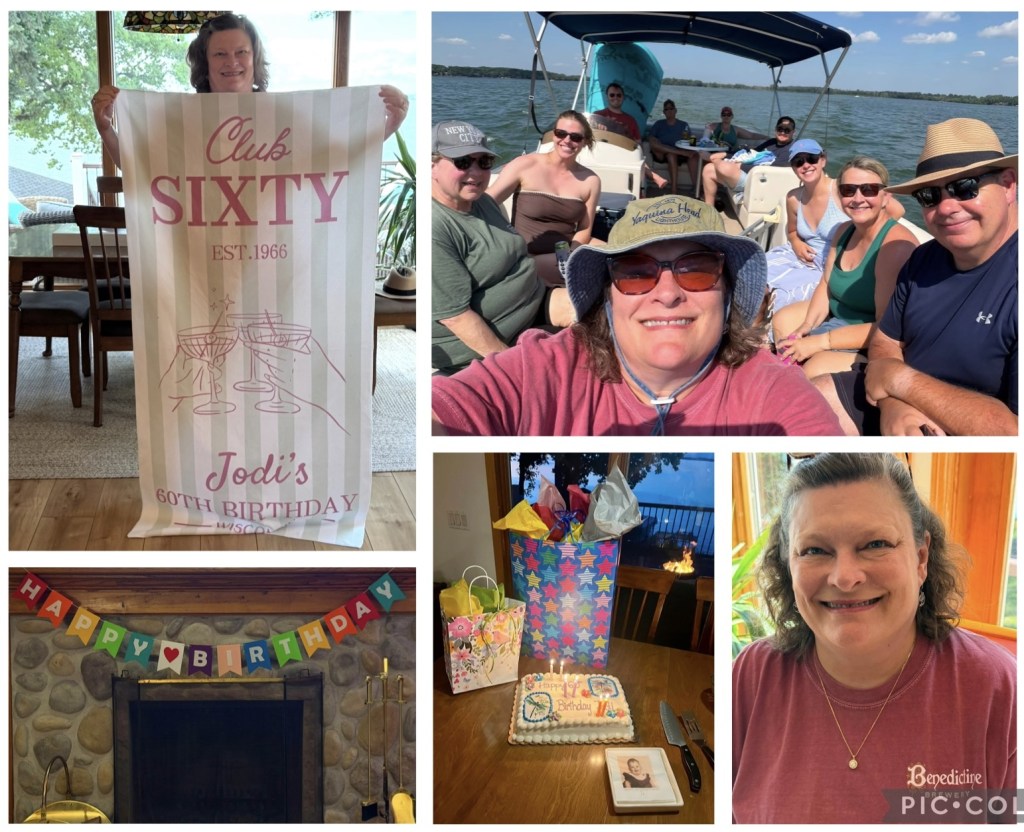
July 11, the Feast of St. Benedict, is also my birthday. (And oops, I was having so much fun celebrating my 60th birthday that I forgot to share this post.) Although I could not be more delighted to have St. Benedict as my patron saint, I must admit that I was pretty disappointed when I first discovered it.

I believe in birthday weeks, celebrations, having fun, and the Rule of St. Benedict!

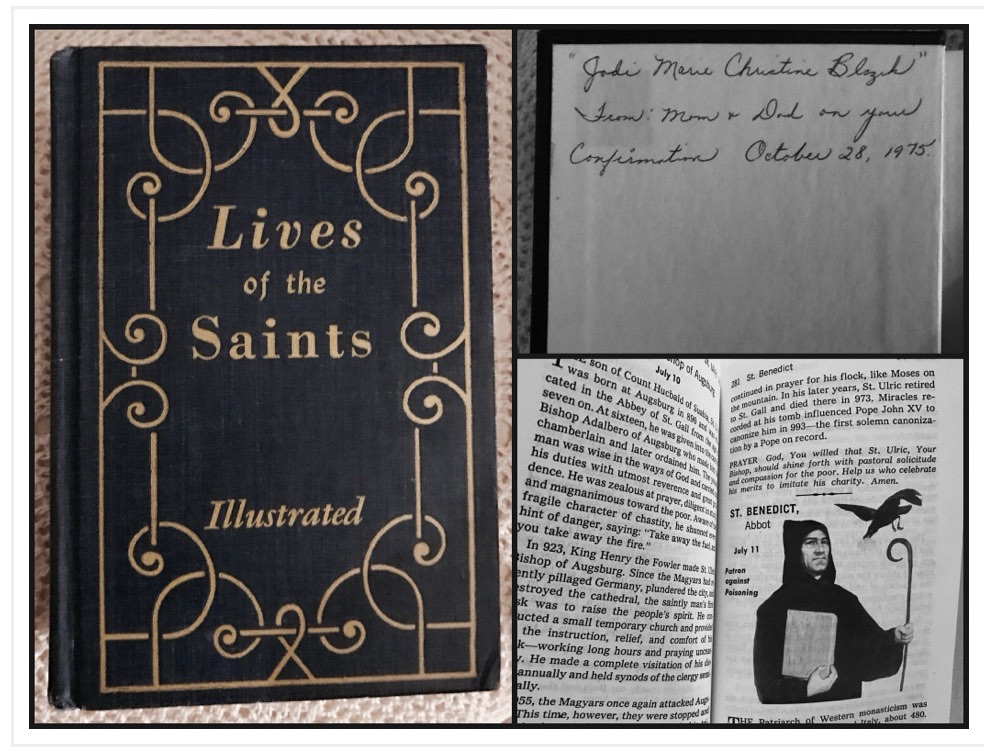
My parents had given me an illustrated book of the “Lives of the Saints” for my Confirmation. As any nine-year-old would do, I immediately looked to see who the saint was for July 11, my birthday. A lovely woman saint with a beautiful name, I had hoped. Perhaps Elizabeth or Mary, Theresa or Christine (my confirmation name) would be my special saint.

Instead, I saw an illustration of a man with a dark hood, a scary-looking bird, some sort of walking cane, and an unusual name that I had only associated with Benedict Arnold, a famous American traitor.

July 11, St. Benedict, Abbot, it said.

I had never heard of St. Benedict and surely did not know what an Abbot was. Through the years, I returned to these pages often, thinking that I should have some connection with this man, my patron saint.

Fast forward 26 years. Married, a mother of a seven-year-old daughter, a high school teacher, and a club sponsor, I had a full, busy, and satisfying life, yet also a longing for silence. An advertisement for a contemplative prayer retreat in our local newspaper caught my eye. It promised an “oasis of peace” at a retreat house in the cornfields of Nebraska called St. Benedict Center.

And then I remember St. Benedict. My saint.

Continue reading “July 11–My Birthday & The Feast of St. Benedict”

Independence Day: Childhood Memories of the Bicentennial Year

Joy is an act of spiritual and political resistance. Childhood memories of joy: the 4th grade, a one-room schoolhouse, a New Jersey pen pal, and 4th of July fireworks!

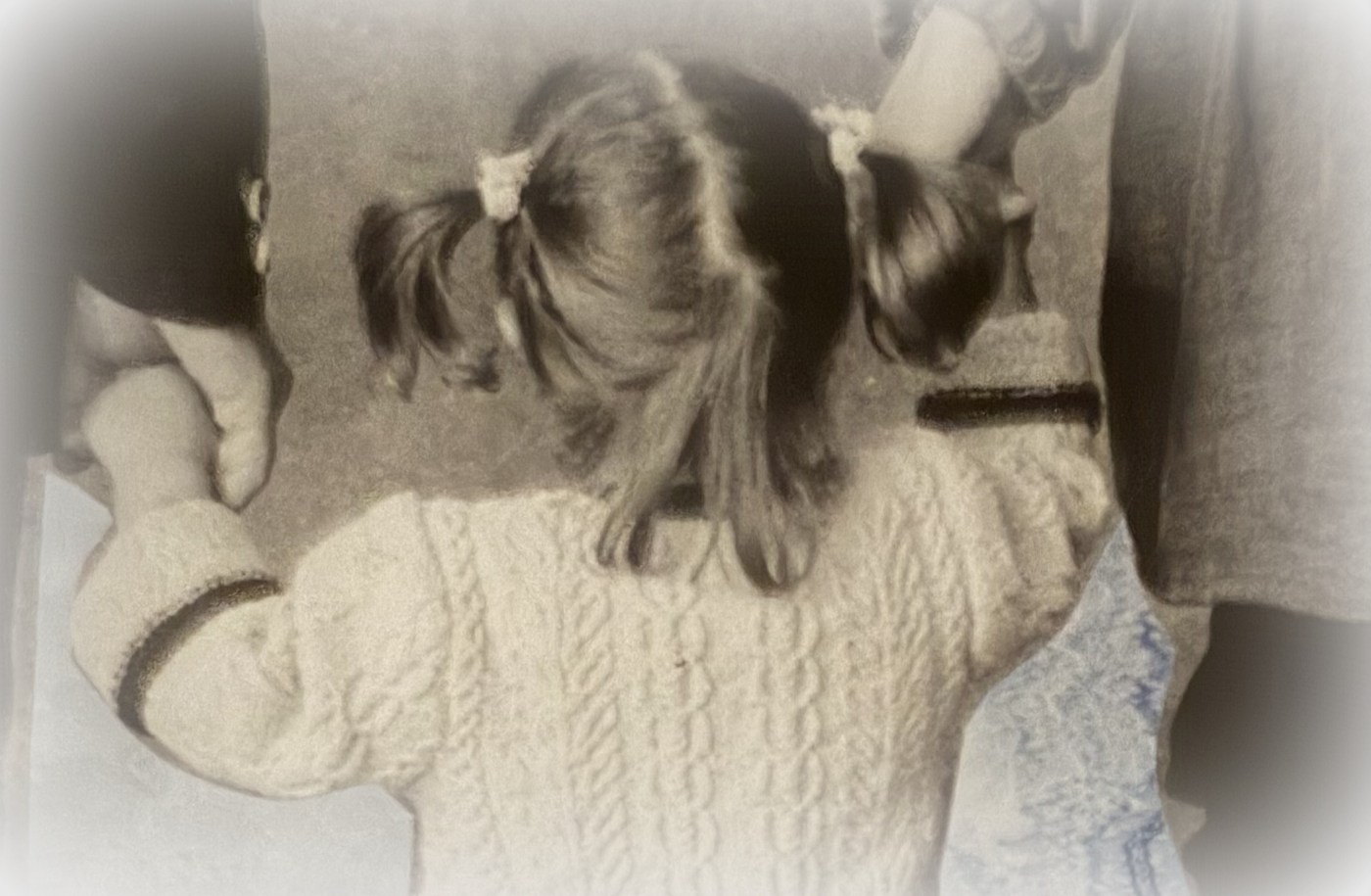
In 1976, when the United States celebrated its Bicentennial Year, I had just finished the fourth grade. I will never forget that school year and the following summer. My family moved from the north side of town to the south side, and I was anxious about starting at a new school in the fall. I turned ten, a coveted double-digit age, and everyone was alive with the Spirit of ’76.

The fourth grade was a big deal in Nebraska. Students learned about Nebraska history and attended a school day in a one-room schoolhouse, just like the “olden days”—bonnets for the girls, suspenders for the boys, slate boards, dunce caps, and more. We also learned about the American Revolution and participated in the Bicentennial Correspondence*, a pen pal project that encouraged students to connect with peers in other parts of the country. I remember the excitement when Denise from Paterson, New Jersey, responded to my letter. We continued to write to each other throughout our school years.

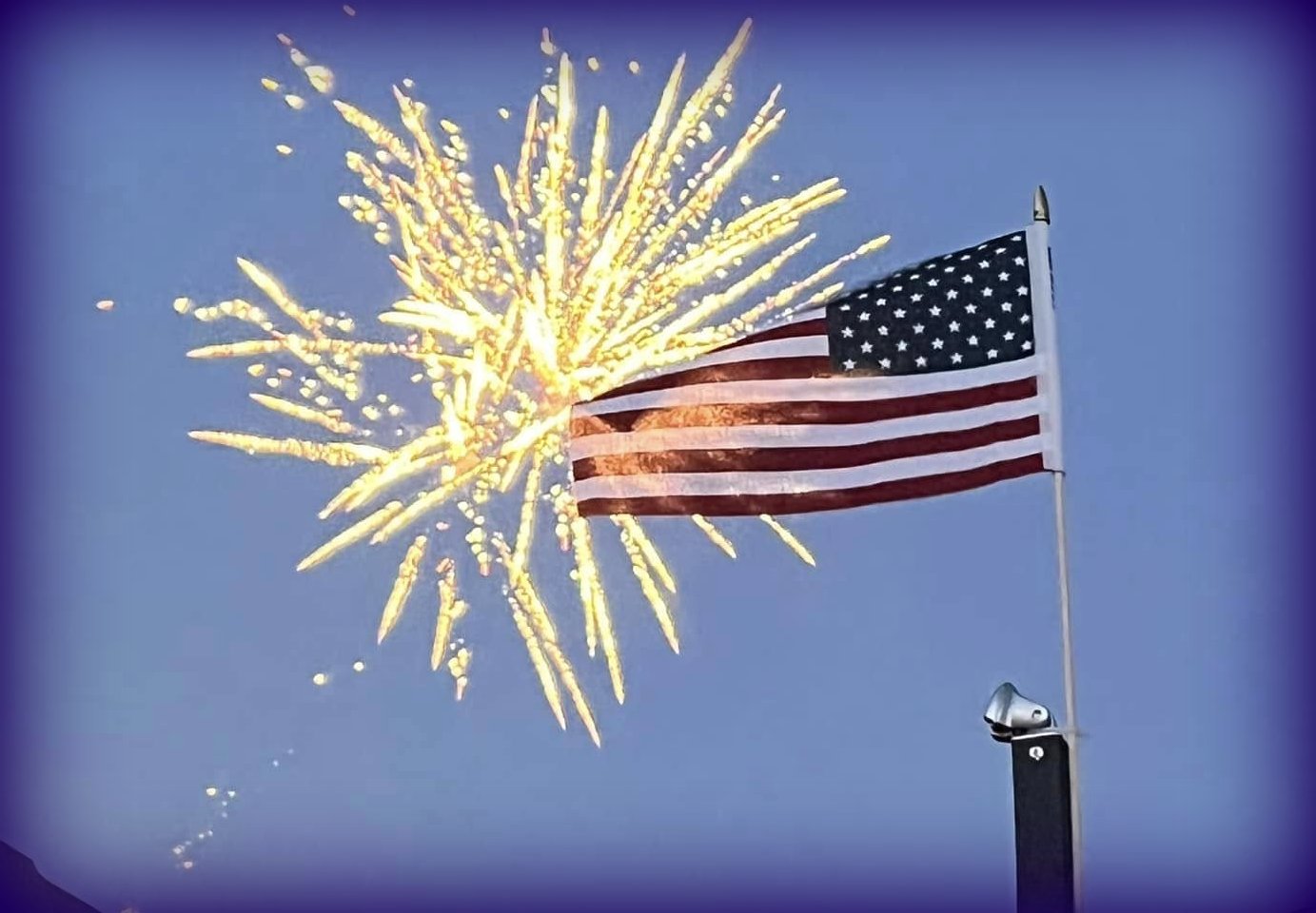
And, of course, every child (and plenty of adults) eagerly anticipated the grand finale, the Independence Day fireworks celebration. As daylight fades and darkness falls, whether at the end of one’s driveway, on a small-town baseball diamond, or in a city park, scintillating sparks soaring through the skies, crackling explosions, and brilliant bursts of light have become the pinnacle of any Fourth of July celebration.

Fireworks can evoke a variety of feelings—from excitement, pride, and awe to anxiety, fear, and disbelief. I enjoy the displays but abhor the loud sounds. I think of shuddering dogs hiding under beds and the trauma that many veterans experience, a vivid reminder of war. I consider how much money is spent on fireworks that could be used in so many ways to help others. Feeling conflicted, I watch and wonder. For this moment, I hold the tension between light and dark, beauty and terror.

Continue reading “Independence Day: Childhood Memories of the Bicentennial Year”

Blog at WordPress.com.

Up ↑