Symbols and rituals mark special anniversaries just as smells and bells evoke the sacred in the liturgy. Both are invitations to celebration.
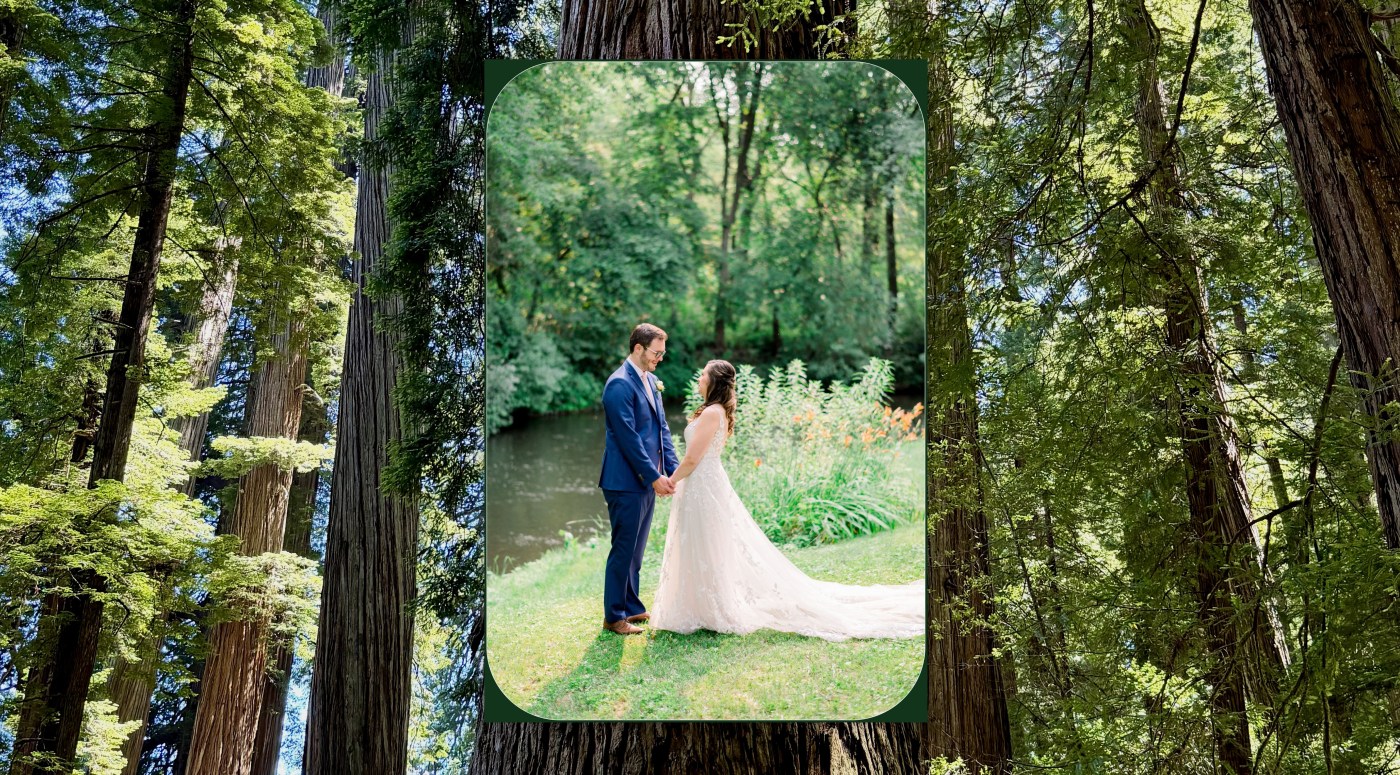
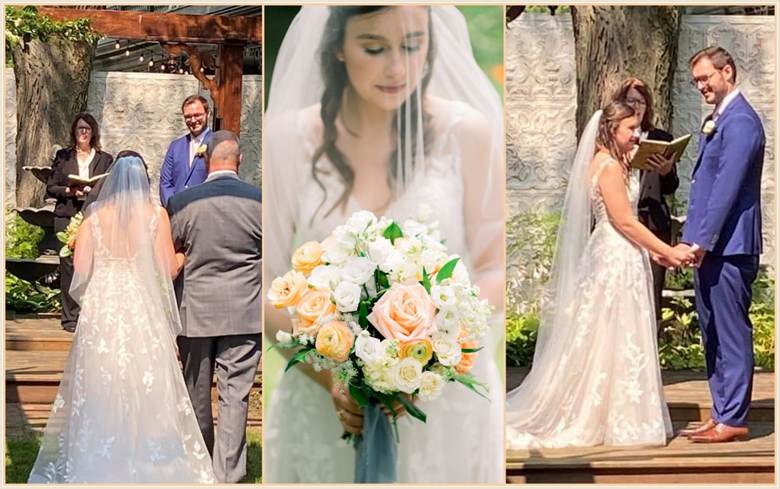
Our daughter, Jessica, married her Prince Charming, John Holland, in a fairytale, storybook wedding on July 17, 2021, five (?!#?) years ago. It feels more like two, but I’ve realized that no matter how many years ago I thought something was, I should simply double it. When Jessica was little (which seems like just a minute ago), she said she wanted to be a princess when she grew up—so Prince Charming found his perfect match as well. And we gained a son.
We gathered—John and Jessica’s community, their friends and family—to support and bless their marriage. Hearts and flowers, vows and wedding rings, first kisses and champagne toasts were the symbols and rituals of the day.
Medieval traditions marked twenty-five and fifty-year anniversaries with silver and gold, metals of great value. As anniversary celebrations became more common in the Victorian era, materials of increasing strength and durability were assigned to the years of a couple’s marriage. Last year, my husband, Joe, and I celebrated forty years of marriage, our Ruby Anniversary.
Wood, the symbol for a five-year marriage, represents the roots Jessica and John planted together on their wedding day. Like a tree, a marriage that celebrates five years has weathered some challenges, becoming stronger and more resilient. Wood, as a living, breathing part of creation, reflects how a marriage must constantly evolve, grow, and expand to be more fruitful through the years. Indeed, marriage is between the two who professed their love and stability, but their community also plays a role.
In How to Live: What the Rule of St. Benedict Teaches Us About Happiness, Meaning and Community, Judith Valente writes that a monastic community is “a place where people agree to link arms, support one another, and help each other grow.”
John and Jessica’s community “linked arms” with them to help plan and celebrate their wedding day. Both dads and John’s brother shared a toast, the mothers gave a blessing, and a family friend was the officiant. Their guests were a part of the ceremony as well—
“All who are here today are an important part of John and Jessica’s community of family and friends. And while their love for each other will also extend to nourish and serve others, may today, we as their community, extend our love and support for their marriage and the new family they are creating today.
Will all who are present here today surround John and Jessica in love, offering them the joys of love and friendship, and support them in their marriage? If so, please say “We will.”
This community vow mirrors the importance of The Rule of St. Benedict, written 1500 years ago. It was not a guide for individual pursuits but for living in community, which is integral to one’s growth in holiness and happiness. John and Jessica have created a community that will walk beside them, people they have known all their lives as well as those whom they have met along the way. As a couple, they will continue to gather new friends as well.
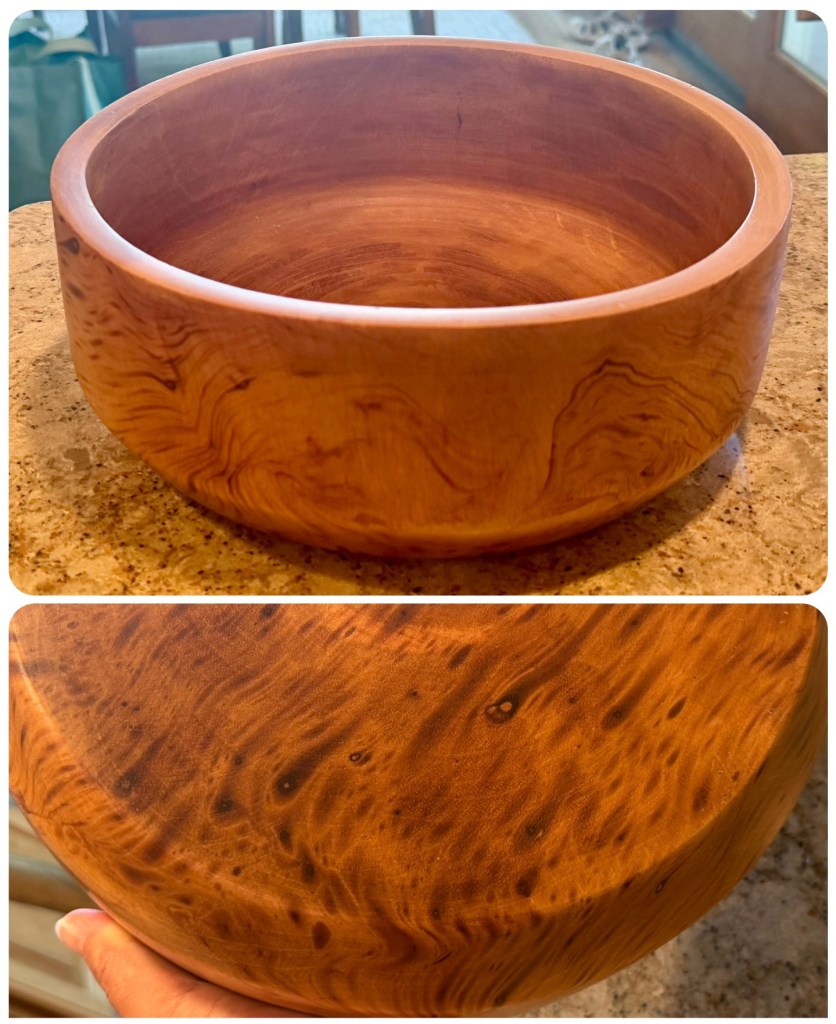
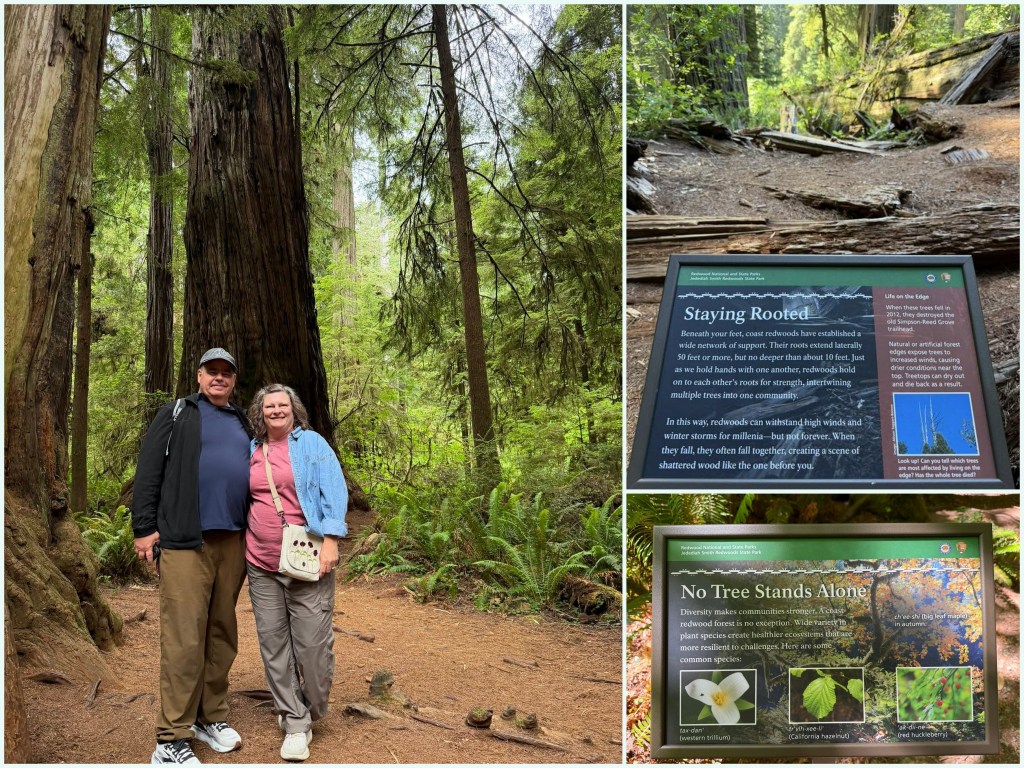
To commemorate five years of marriage, Joe and I gave John and Jessica a wooden bowl made of burled wood. The bowl reminded us of the redwood forests we had just visited in California and Oregon.
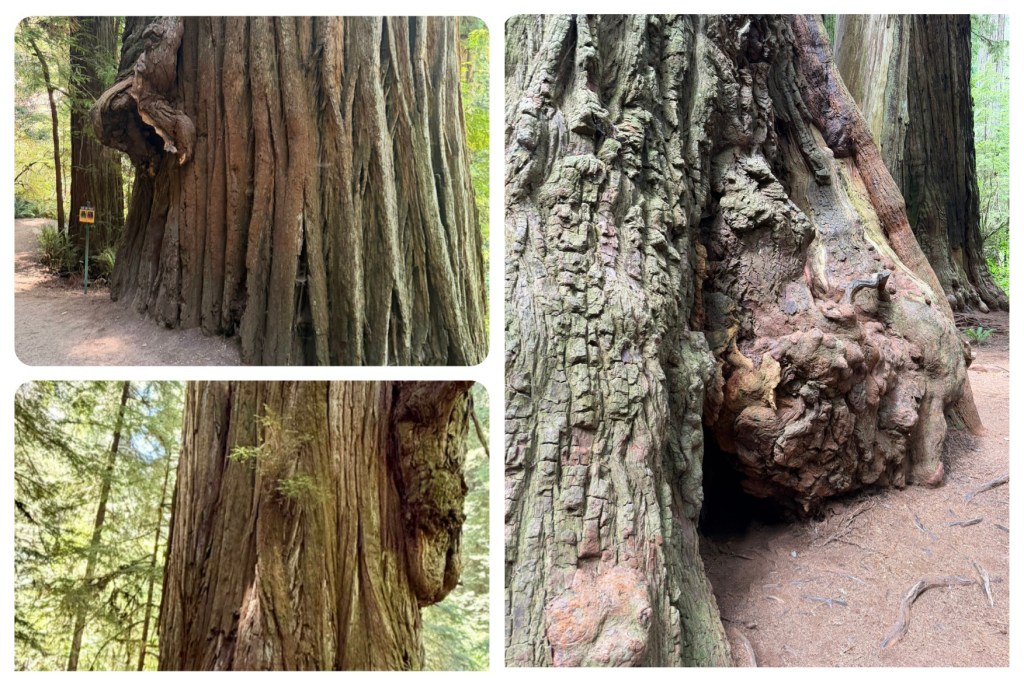
“The roots of coast redwoods have a practice of what seems like holding hands,” writes Leah Rampy in Discovering the Spiritual Wisdom of Trees. Redwood trees have relatively shallow root systems, but through wind, rain, and storms, they stand strong, “because their roots are intertwined in a collective underground network that helps to stabilize all the trees in the forest.”
Have you ever noticed those bumpy, unusual wooden protrusions in a large tree? They are burls. “Burls usually result from an insect or microbial intrusion. If intrusions are not deadly, the tree simply grows around the wound.” (Beth Norcross, Discovering the Spiritual Wisdom of Trees) When burled wood is sliced open, the knobby growth reveals intricate, swirling grain patterns. Because no two pieces are identical, it is highly prized.
How appropriate! A marriage embodies the beauty and value of burled wood, as special and unique as the two joined together. John and Jessica are each special in their own right, but so good together! Their marriage is a work of art—full of beauty, uniqueness, humor, teamwork, acceptance, challenge, and joy. They have grown individually and expanded their community through their generosity and hospitality. I look forward to witnessing their fruitfulness for years to come.
As their roots deepen, John and Jessica are becoming.
Read more about their unique wedding ceremony here: From This Day Forward, To Have and To Hold


Leave a Reply