Search

Being Benedictine

Living SoulFully as an Oblate of St. Benedict

Month

August 2026

Labyrinth as Pilgrimage and Prayer

Throughout history, pilgrims have sought an experience of the holy by visiting temples, shrines, cathedrals, monasteries, and other sacred sites. Some take lengthy journeys on foot, such as the famous Camino de Santiago (The Way of St. James) or the annual Muslim pilgrimage to Mecca, walking 10-20 miles a day.

By definition, a pilgrimage is a purposeful journey to a religious or sacred site, yet it is not necessary to travel a great distance, or walk many miles, to undertake one. Walking the path of a labyrinth is a symbolic representation of a spiritual pilgrimage, and one of many creative ways to pray.
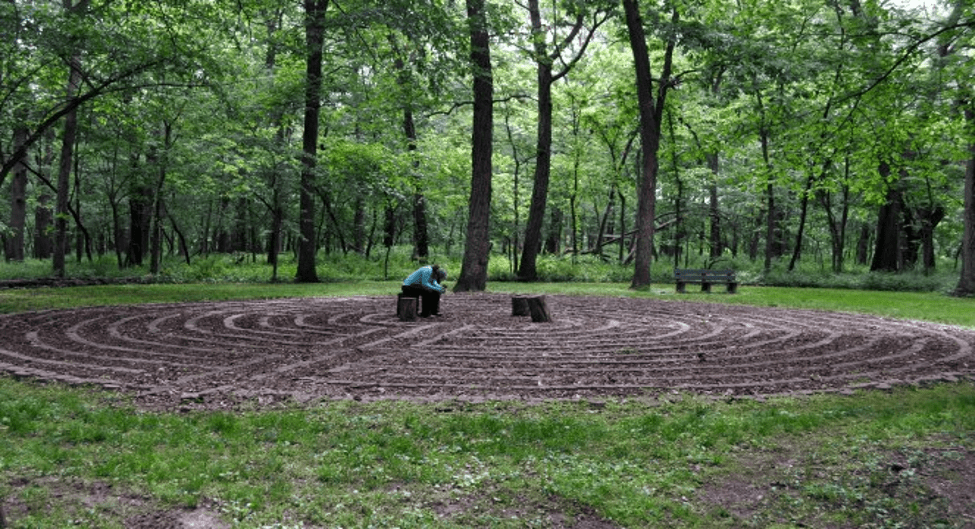
 
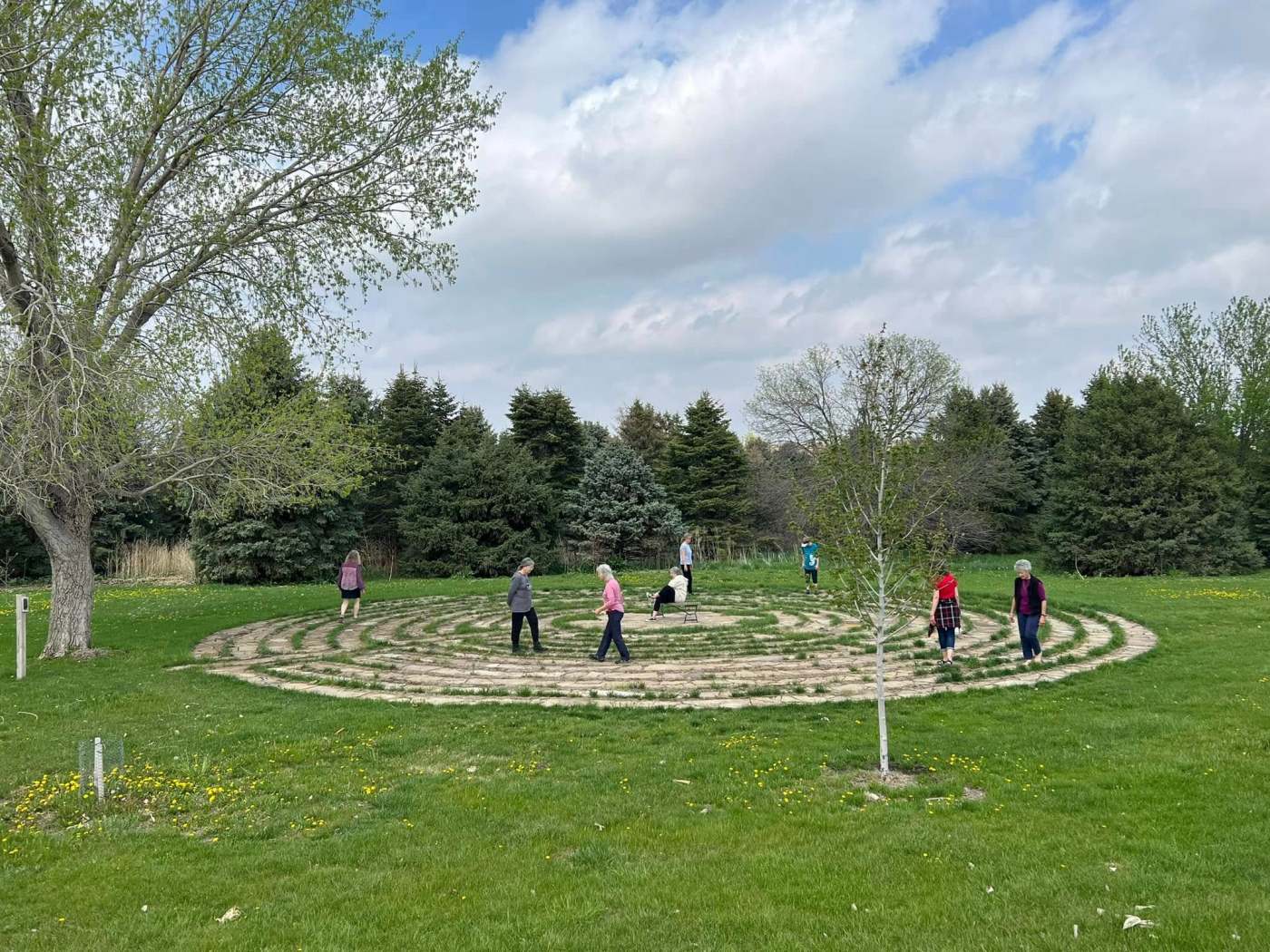
Creighton University Retreat Center in Griswold, Iowa

The use of labyrinths for meditation and prayer dates back thousands of years. During the Middle Ages, labyrinths were abundant, as opportunities to travel to the Holy Land or other sacred sites were limited by war, poverty, and other constraints. They remain a contemporary spiritual practice for quieting the mind, letting go of our personal agendas or expectations, learning to trust, and seeking guidance from the Divine. Bringing one’s prayer to the labyrinth engages the mind, body, and spirit.

“The labyrinth is an archetype, a divine imprint, found in all religious traditions in various forms around the world…Walking the labyrinth is a spiritual discipline that invites us to trust the path, to surrender to the many turns our lives take, and to walk through the confusion, the fear, the anger, and grief that we cannot avoid experiencing as we live our earthly lives.”  Rev. Dr. Lauren Artress

A labyrinth is not a maze; there are no dead ends and no choices that need to be made. There is a clear design for a labyrinth with only one winding path to reach the center and the same path to walk from the center outwards, arriving where you had begun. There is no way to lose the path once one is on it.  

Often before starting a labyrinth walk, I offer an intention, ask a question, or prayerfully surrender a situation to the Divine. Sometimes I carry a SoulCollage® card that resonates. Because there is only one path inward, the mind can let go of when one will arrive at the center. It is a certainty that one will get there eventually. I practice trusting that wherever God takes me, in my mind and body, I must simply put one foot in front of the other. I can settle into knowing that Spirit is with me, accompanying me.

This walk, or journey inward, is a metaphor for life. So often we don’t know where we are headed, even with the best of plans or intentions. “Pilgrimage calls us to yield our own agendas and follow where we are being led,” writes Christine Valters Paintner in The Soul of a Pilgrim: Eight Practices for the Journey Within. With a labyrinth walk, one experiences letting go of a plan or agenda—surrendering and trusting that the center will be reached. 

Even with only one path, the route may still not be apparent. The appearance of a dead end becomes a switchback; the path continues inward. A labyrinth I walk often is at St. Benedict Center in Schuyler, Nebraska. It is modeled after the famous Cathedral of Chartres in France, which has eleven concentric circles divided into four quadrants. The path is clear from looking from higher ground, but as many times as I have walked it alone and with others, I find myself wondering if I somehow lost my way. Am I just walking in circles? Is this taking longer than it should?

Continue reading “Labyrinth as Pilgrimage and Prayer”

Saint Dolly: We Will Always Love You

Hee Haw. It’s been a long time since I thought of that corny country music comedy show that Dolly Parton often appeared on as a guest artist. But within minutes of hearing that beloved Dolly Parton, aka Saint Dolly, had passed away, my social media feeds and text messages were blowing up with shared memories of loving Dolly.

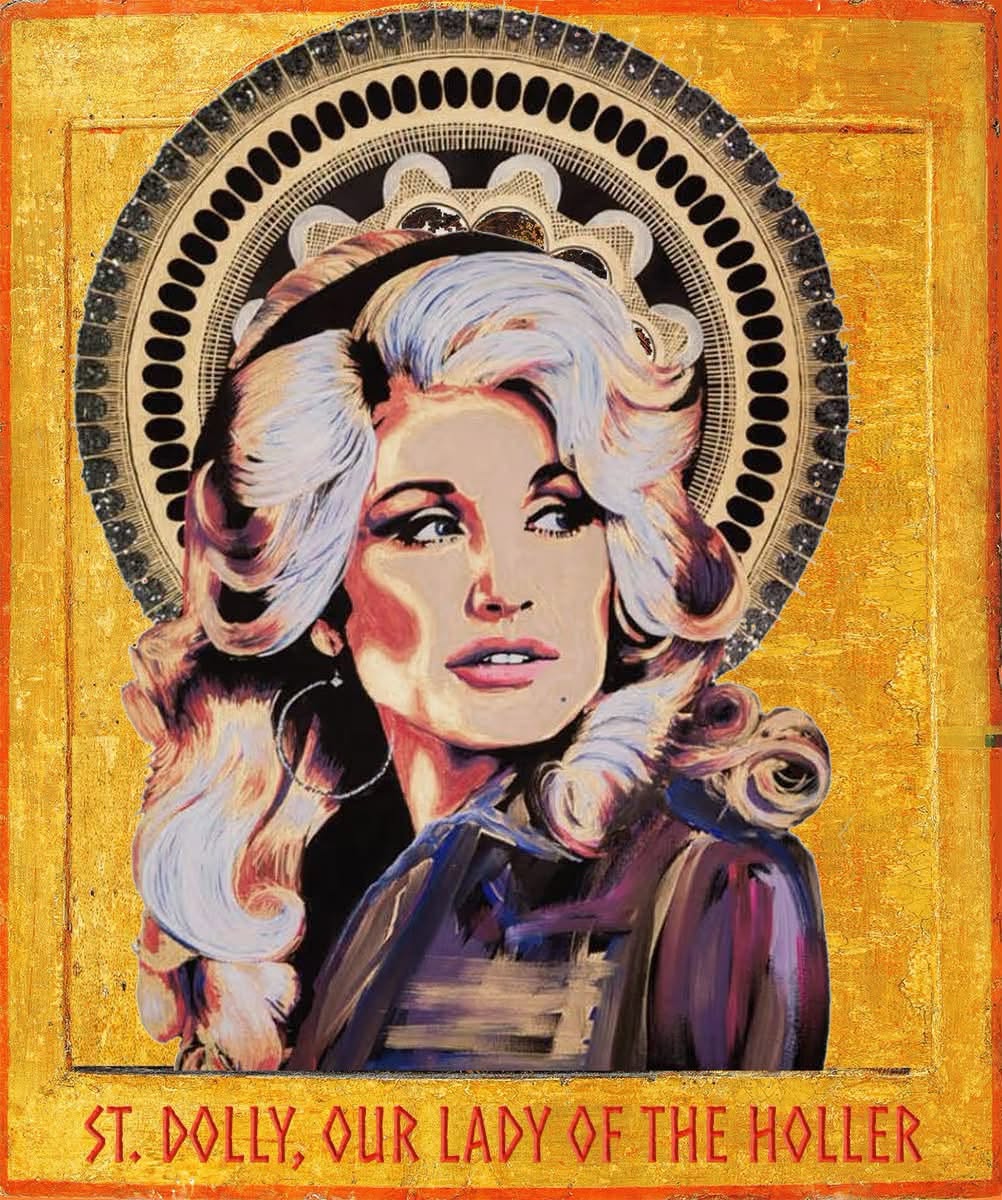
(Cover image credit: Kara Renee Art Apparently I am not the only one who called Dolly a saint. Search “Saint Dolly.” Incredible art!)

Watching Hee Haw as a little girl in the ‘70s and singing to the lyrics of Jolene and I Will Always Love You at my grandma’s house are my first, very fond memories of Dolly. My cousin Michelle and I would sit on our grandma’s couch listening to Dolly Parton albums.

We thought it was very cool when an album folded out and included the song lyrics. Sometimes we peacefully belted out the lyrics to a Dolly song, and other times we would tug that album cover back and forth, vying for more territory to see the lyrics better. Occasionally, our tugging resulted in a hair-pulling episode over who held the album cover the longest, or so our cousin Kim reports.

I have often shared my love for Dolly on social media. I admire her advocacy for education and literacy, as well as her generous book donations through Imagination Library. I admire her acceptance of self and others. She is known for saying, “I am comfortable in my own skin… I know who I am and I don’t try to be nobody else” and “I think everybody has the right to be who they are.” She used her voice to speak out for LGBTQ issues, Black Lives Matters, and Covid vaccinations.

A touching, more recent Dolly memory was from the 2019 Grammy Awards, when she performed her newest song, “Red Shoes,” from the Dumplin‘ movie soundtrack. I share the original reflection below.

Trappist monk Thomas Merton wrote, “For me to be a saint means to be myself. Therefore the problem of sanctity and salvation is in fact the problem of finding out who I am and of discovering my true self.”

Dolly shined her light in life, finding her purpose, living authentically and encouraging others to do the same. Her light will perpetually shine in the lives she influenced. I will always love Dolly, and all she stood for. Rest in peace, good and faithful servant.

Continue reading “Saint Dolly: We Will Always Love You”

Pray without Ceasing: A Way of Being

Being a Benedictine oblate is a way of life. Oblates desire to live as monks in the world, seeking God by recognizing the sacred in their everyday life, in their family, and in their workplace. Being part of a community of monks and oblates is a source of learning and support for our spiritual journey.

On the second Saturday of each month, the oblates of Christ the King Priory, the monastery I am an oblate of, gather to learn more about the Rule of St. Benedict. Our day includes morning prayer, monastery news, Lectio Divina, Mass, midday prayer, lunch, reading the Rule of St. Benedict, and small-group discussions of a selected book.

Prayer is the foundation of Benedictine spirituality. In August, we focused on Ways to Pray (Chapter 5) in the book Saint Benedict on the Freeway: A Rule of Life for the 21st Century by Corinne Ware. Benedict wrote in the Prologue of the Rule— “First of all, every time you begin a good work, you must pray to him most earnestly to bring it to perfection.” In the Apostle Paul’s letter to Thessalonica, he instructed the new church community to “Pray without ceasing.” (1 Thessalonians 5:17)

But what is prayer? And how is it possible to always be praying?

A friend recently asked me how I prayed, especially for others. So often we think that prayer means choosing the right words to speak to God, and that somehow, if we find those magic words, prayer might work “better”. We will get what we prayed for. Many believe that the purpose of prayer is to express what we desire—and that the right words might bring about the reality we hope for. But prayer is i much more than words or being attached to a specific, longed-for outcome.

The definition of prayer must be reimagined. There are many ways to pray, and it is possible to pray without ceasing. “Prayer is not so much our words to God as our life in God.” (Unknown author quoted by Caroline Myss) Reflecting on the chapter, I created a list of what prayer is:

Continue reading “Pray without Ceasing: A Way of Being”

Announcing an International Traveling Benedictine Art Exhibit

“Looking at art is one way of listening to God.”

Sister Wendy Beckett, A Child’s Book of Prayer in Art

Listen, the first word in the Rule of St. Benedict, is the source of all creativity. Before the first word of a poem or essay can be written or a stroke of a paintbrush can be made, one must listen to self, soul, and the Divine. From listening, a flash of insight may strike, an idea bubbles up…

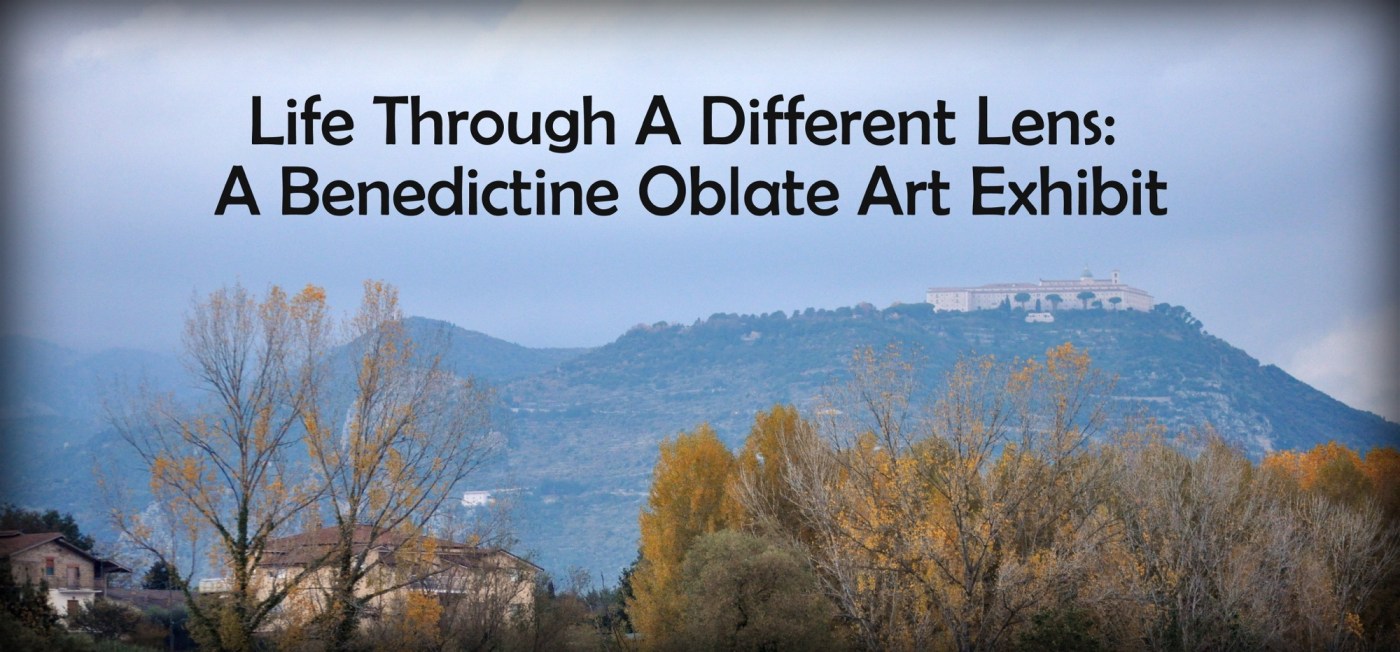
Life Through A Different Lens, an international traveling Benedictine art exhibit, is an idea that came from the deep soul-listening of Benedictine Oblates Linda Mingos (Benedictine Sisters of Virginia) and Kent Onah (Ewu Monastery, Nigeria).

The vision of Life Through a Different Lens is to celebrate “the light and grace of God, alive in the Rule of St. Benedict, illuminated through time, and reflected in every race and culture throughout the world today.”  Our hope is to communicate the importance of Benedictine spirituality and monasticism through art and creativity.

Each creative piece in the traveling exhibit—a reflection, poem, or visual art—will reflect the Benedictine way of life through the charisms of the Rule of Benedict within the artist’s current culture and society. Visual art, poems, reflections, and more can illuminate the values of hospitality, community, justice, listening, humility, silence, prayer, and work, to name a few.

We are seeking individuals who create (artists and writers), monasteries in the United States and Africa, where the artwork can reside for three months before it moves to its next location, and financial sponsors, to help make all this happen in 2027. An exhibit catalog of all art and creative work, and a companion study guide for personal reflection or small-group discussion, will accompany the traveling exhibit.

Capturing our creativity through art is both prayer and work. And for those who will see it, like viewing art in a museum or reading a good book, listening to the message or intent of the artist can be a spiritual practice. Both creativity and listening are ways to pray.  

Our first planned exhibition site and opening ceremony will be held at the Ewu Monastery in Nigeria, the birthplace of monasticism in the prayer and work of desert mothers and fathers of the desert of Africa. If you would like to be a part of Life Through A Different Lens, we would love to hear from you.

“All art is a terrific bridge…Music, paintings, words, they really do speak to the soul, to the heart, to the spirit…” 

-Julia Cameron

Artwork will be juried for admission into the exhibit. See submission examples below. If you would like to learn more about this project, please email mingoslindaj@gmail.com. Your response should include: your name, email address, the name of your monastery, the country in which you live, and the language you speak.

Some guidelines:

  • Artwork size 2’ x 3’ minimum, 3’x 4’ maximum, shipped ready to hang.
  • Written work should not exceed 500 words single-spaced or 250-300 words double-spaced, 12 pt font, 1” margins.
  • Submissions accepted from committed or professed Benedictines, monks or oblates.

Submission Examples

Reflection Submission—From Cave to Community by Linda Land-Closson, Oblate Benet Hill Monastery, Colorado Springs, Colorado

Benedict of Nursia: born in Rome four short years after the fall of the western roman empire, an aristocrat in a crumbling world. so much to lose. more to fear. yet tethered to Scholastica, the one with whom he shared a womb.

He fled that world at 20 or so and retreated to a cave. I get that. In my bones. I get that urge to escape what a collapsing empire feels like: the power-grabbing, the unfettered egos, the lies, manipulation, violence. the fear-based finger pointing, gaslighting, and scapegoating: all slung about as distractions, magic sleight-of-hand, them-Them-THEM…not-us. I’d return to the womb if I could. a cave—any cave—will do.

Run away. oh, how I want to run away! how I want to lock myself in a room and have a Veruca-Salt-sized temper tantrum: “I want the world to go away, Daddy, and I want that now!”

Three years of solitude sounds about right. three years of praying, of silence, of only-enough-human-contact-to-resupply and nothing more. Three years of not listening to news and fake news and fake news about fake news, of not hearing the voices of those with the power to be heard above the din of oppression and social decay. Maybe it will all be over in three years.

Three years did something for Benedict. He came out of his cave, out of his solitude, and he wrote about community. He wrote for community because community becomes resistance when the Sirens of despair call. Who knows what Benedict riddled for three years, but he realized community was the answer, the answer to power-over, the answer to ego and to malaise, the answer to anger, the answer to our feigned independence. His life began by sharing the most intimate of spaces with another person, after all.

Community is the Way, Love-centered, God-centered community. This is where we find forgiveness-grace-mercy, sometimes for the first time. Where we find ourselves, usually for the first time. and somewhere, sometime, somehow, this is where we find forgiveness-grace-mercy for the Other. over and over, knitted into benign and seemingly meaningless moments, words, and actions. Community finds us and we find the Other. We find that both—that all—contain the divine spark.

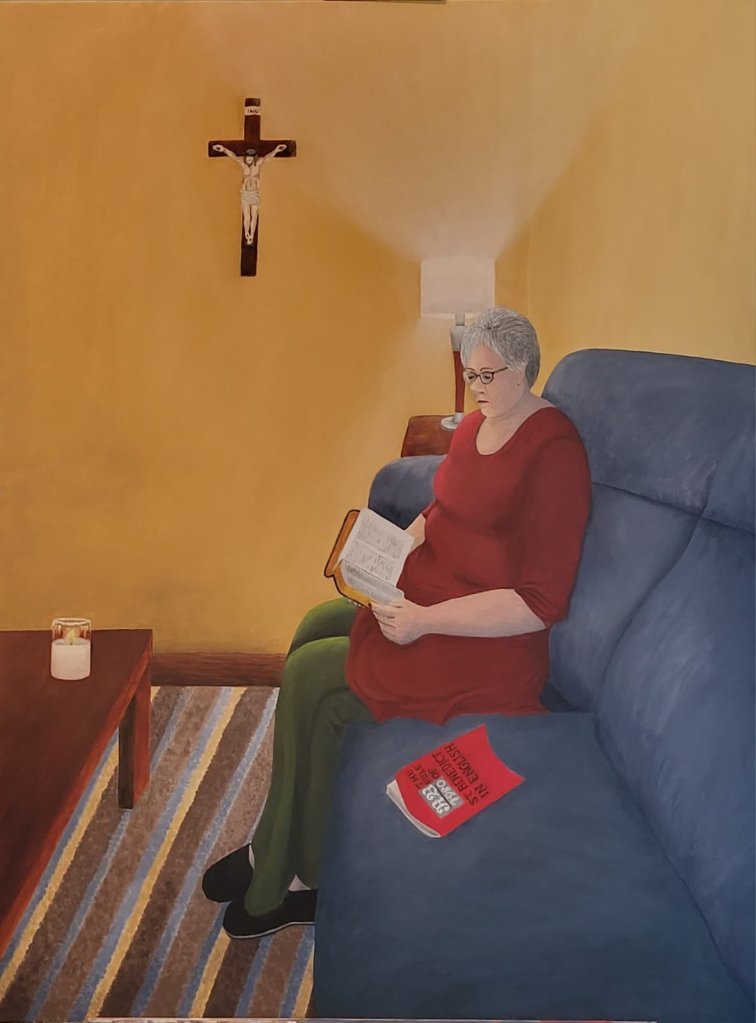
Visual Art SubmissionOil on Canvas by Linda Mingos, Oblate, Benedictine Sisters of Virginia, Bristow, Virginia

Poetry Submission—The Smiling Heart Serves by Mike Gurak, Benedictine Sisters of Virginia, Bristow, Virginia

© Jodi Blazek Gehr, Being Benedictine Blogger

Blog at WordPress.com.

Up ↑