
Joy is an act of spiritual and political resistance. Childhood memories of joy: the 4th grade, a one-room schoolhouse, a New Jersey pen pal, and 4th of July fireworks!
In 1976, when the United States celebrated its Bicentennial Year, I had just finished the fourth grade. I will never forget that school year and the following summer. My family moved from the north side of town to the south side, and I was anxious about starting at a new school in the fall. I turned ten, a coveted double-digit age, and everyone was alive with the Spirit of ’76.
The fourth grade was a big deal in Nebraska. Students learned about Nebraska history and attended a school day in a one-room schoolhouse, just like the “olden days”—bonnets for the girls, suspenders for the boys, slate boards, dunce caps, and more. We also learned about the American Revolution and participated in the Bicentennial Correspondence*, a pen pal project that encouraged students to connect with peers in other parts of the country. I remember the excitement when Denise from Paterson, New Jersey, responded to my letter. We continued to write to each other throughout our school years.
And, of course, every child (and plenty of adults) eagerly anticipated the grand finale, the Independence Day fireworks celebration. As daylight fades and darkness falls, whether at the end of one’s driveway, on a small-town baseball diamond, or in a city park, scintillating sparks soaring through the skies, crackling explosions, and brilliant bursts of light have become the pinnacle of any Fourth of July celebration.
Fireworks can evoke a variety of feelings—from excitement, pride, and awe to anxiety, fear, and disbelief. I enjoy the displays but abhor the loud sounds. I think of shuddering dogs hiding under beds and the trauma that many veterans experience, a vivid reminder of war. I consider how much money is spent on fireworks that could be used in so many ways to help others. Feeling conflicted, I watch and wonder. For this moment, I hold the tension between light and dark, beauty and terror.
This, my dear, is the greatest challenge to being alive: to witness the injustice of this world, and not allow it to consume our light.’ – Thich Nhat Hanh
To live in this country, to live in my body, is to face the realities of light and darkness—some days head-on and others with a pillow over my eyes. I must stay informed, looking squarely at the destruction that has occurred since the last inauguration and determining what my response must be. I cannot stop learning. Other days, I must protect my own mental, spiritual, and physical health by distancing myself from what feels like insurmountable loss. (See truth-tellers like Heather Cox Richardson, Robert Reich, Rebecca Solnit, Parker Palmer, and Pope Leo who shine their light into the darkness of a threatened democracy, giving hope to those marginalized and suffering around the world.)
I have ideas about what democracy looks like and what the ideal is for this country I feel both pride and shame for (see The Pledge of Allegiance of My Heart here). Ultimately, I acknowledge that America is a work in progress, just as I am. Holding the tension between reality and the ideal is challenging, but it is helpful to consider the creativity, resilience, courage, tenacity, hope, and compassion that impel so many to continue working to protect our democracy.
This is the American spirit I believe in—when the government is crooked, we, the leaders of our community and country, must straighten it out, continuing to be present to the suffering in our souls and the world, while not losing the light inside.
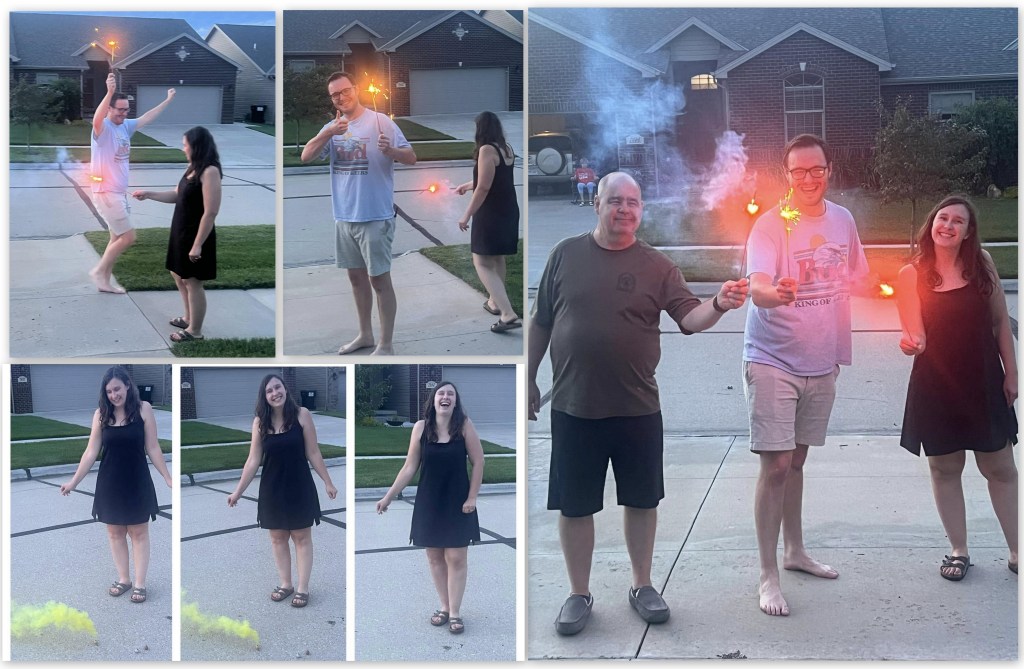
Joy is an act of spiritual and political resistance, writes Rabbi Sharon Kleinbaum. Like a ten-year-old child, eager to learn about the “olden days,” curious how others live in a city or state they have never been to, or excited for the big fireworks show, we too can bring childlike enthusiasm to our present moment, practicing gratitude, spreading joy and kindness, keeping hope alive, comforting the suffering, standing up for the marginalized, all while acknowledging we shall always live in challenging times.
“TO BE HOPEFUL in bad times is not just foolishly romantic. It is based on the fact that human history is a history not only of cruelty, but also of compassion, sacrifice, courage, kindness. What we choose to emphasize in this complex history will determine our lives. If we see only the worst, it destroys our capacity to do something. If we remember those times and places—and there are so many—where people have behaved magnificently, this gives us the energy to act, and at least the possibility of sending this spinning top of a world in a different direction. And if we do act, in however small a way, we don’t have to wait for some grand utopian future. The future is an infinite succession of presents, and to live now as we think human beings should live, in defiance of all that is bad around us, is itself a marvelous victory.” ― Howard Zinn
Happy Independence Day! While you hold the light and darkness together, be the LIGHT!
© Jodi Blazek Gehr, Being Benedictine Blogger
*Bicentennial Correspondence was sponsored by the U.S. Postal Service, the American Revolution Bicentennial Administration (ARBA), and the National Association of Elementary School Principals.


July 2, 2026 at 12:45 pm
Beautifully written, Jodi.
LikeLiked by 1 person