SoulCollage® Facilitator, Benedictine Oblate of Christ the King Priory,
Retreat Leader at St. Benedict Center, Blogger at Being Benedictine and SoulFully You,
Teacher, Mother, Wife, Friend, Lover of learning, reading, creativity and spirituality.
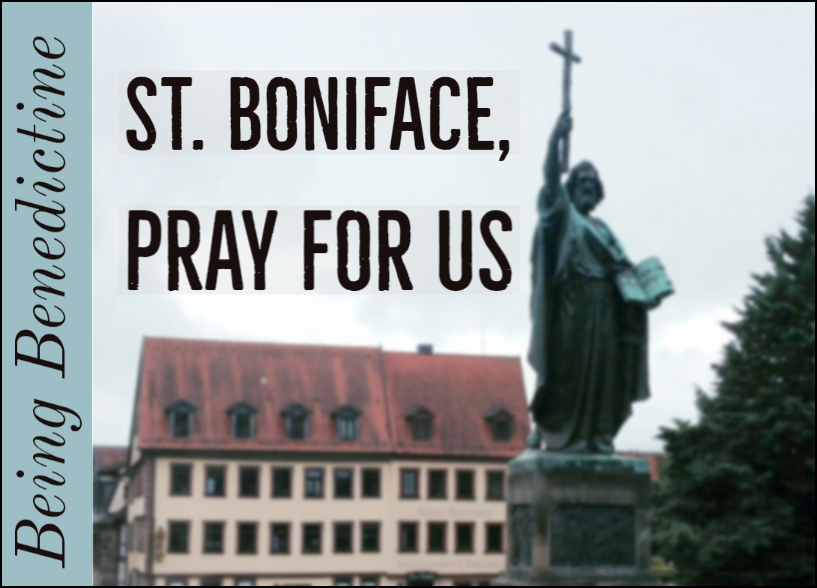
Happy Feast Day of St. Boniface, the “Apostle of the Germans” and patron saint of Germany!
“In her voyage across the ocean of this world, the Church is like a great ship being pounded by the waves of life’s different stresses. Our duty is not to abandon ship but to keep her on her course.”― Saint Boniface
June 5 is the feast of St. Boniface, the English Benedictine monk who planted Christianity and Benedictine spirituality in Germany. Boniface was first a Benedictine monk and later commissioned by Pope Gregory II in the 8th century to preach the gospel in Germany. For 35 years he did missionary work in various parts of Germany and was consecrated as Bishop of Germany in 722. Later he served as the Archbishop of Mainz, having founded the dioceses of Wurzburg and Erfurt. His efforts went to ensure that political authorities and rulers were committed to Christianity.
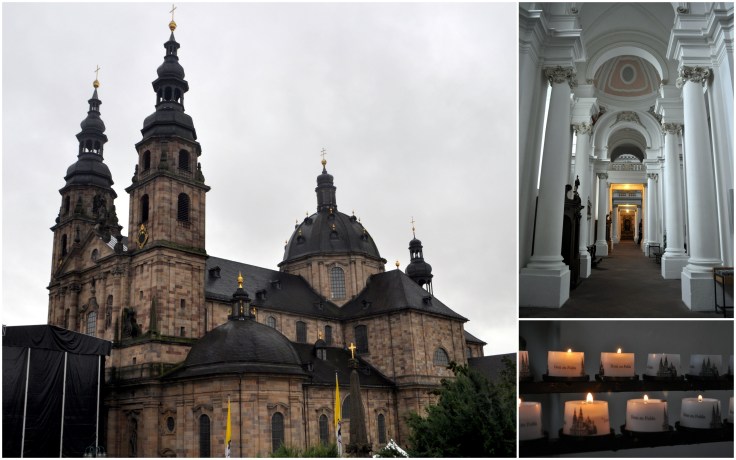
St. Boniface statue outside of the Mainz Cathedral. Visited on Benedictine Pilgrimage, June 2019.St. Boniface Cathedral in Fulda, Germany.
He traveled to many churches to encourage them, but his mission to Frisia, which resulted in many conversions, ultimately led to his martyrdom. His relics were brought to Fulda where a monastery founded in 744 served as a base for his missionary work. Continue reading “Happy Feast Day of St. Boniface!!”→
Let me seek, then, the gift of silence, and poverty, and solitude, where everything I touch is turned into prayer: where the sky is my prayer, the birds are my prayer, the wind in the trees is my prayer, for God is in all. — Thomas Merton, Thoughts In Solitude
A new favorite pandemic pastime is sitting on the deck in our backyard. We travel the long distance, a pilgrimage of sorts, from the living room to the outdoors several times a day to enjoy the sights and sounds of nature.
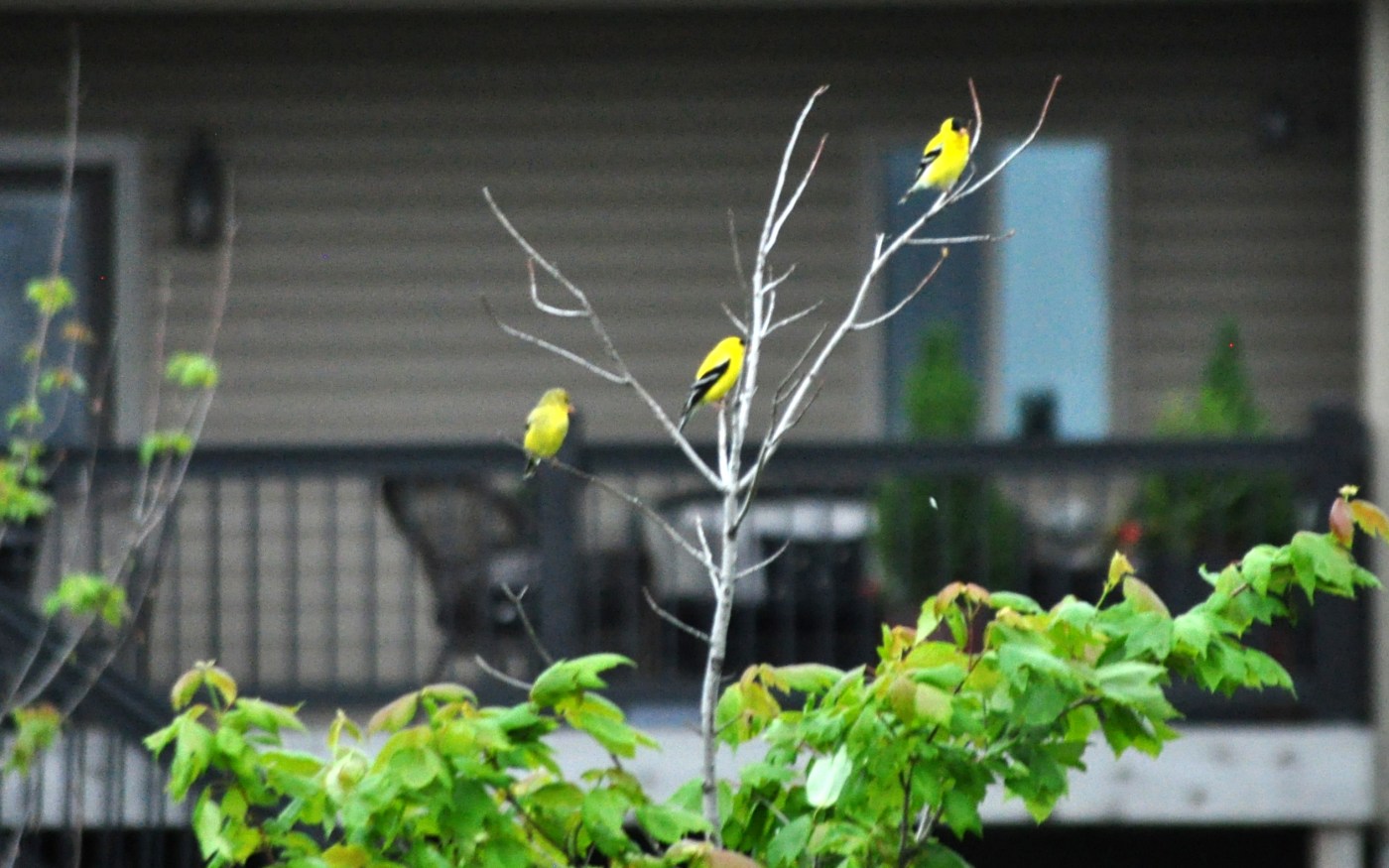
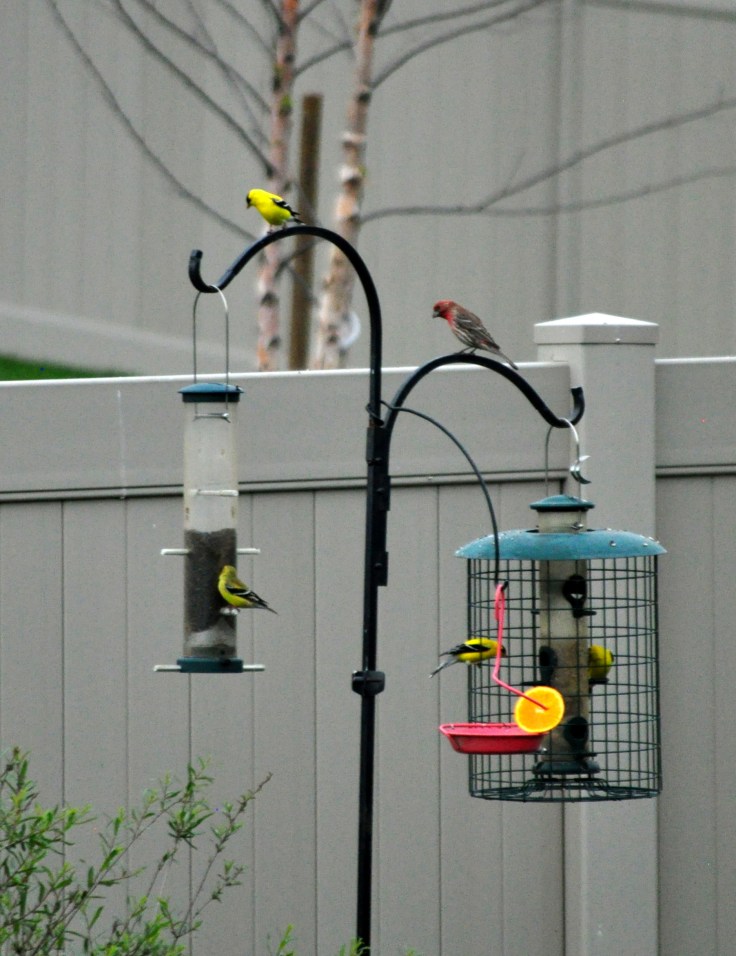
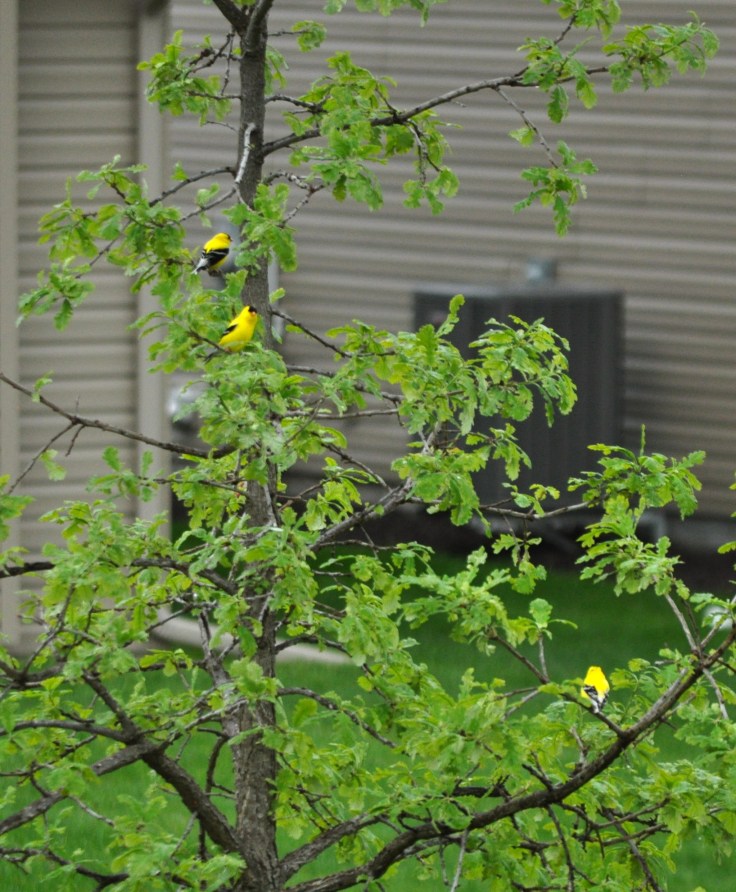
Birds chirping, frogs croaking, raindrops meeting their “splat” on the flowerpots and patio chairs, wind rustling in the trees—the simple sounds suggest that all is well with the world. Yellow finches dart from one tree to another and then to a neighbor’s bird feeder and back again; perhaps a brief landing in the new tallest tree in the neighbor’s yard to the other side of us. It is as if there is a new piece of equipment in the aviary playground of our connected backyards. Birds swoop down to meet each other in a shared tree, chirp a few sentiments, and then take flight again. I wonder what makes them gather together, or what makes them fly solo.
I am not alone in my amateur birdwatching pandemic pastime. One afternoon, I shared text messages with the neighbors on both sides about our backyard bird show. Beth texted first and then I texted Julie. We feel the same: no one should miss out on the escapades of our yellow finches.
Our slower pace is a time to be present to the moment, to notice the simple things that may have been overlooked in the hurry of a pre-pandemic schedule. The Benedictine life is contemplative, “one capable of deep enjoyment free of the obsession with consumption (Laudato Si’, 222).” There has been some talk these past weeks about whether physically distancing and/or staying at home is living in fear or if our freedom is being taken away.
For me, true freedom is to be fully who I am, right where I am, in this moment, and in these circumstances. It is not necessary to go shopping or to a restaurant or on vacation (as much as I was looking forward toJessica’s graduation, to visit New York City with friends, and to host my cousin from Germany on his first trip to Nebraska), I can find contentment and enjoyment in my own backyard. If we cannot find contentment at home, I am not certain that it can be found anywhere. Continue reading “The Birds Are My Prayer”→
Topic: The Emmaus Story, Creating a Peaceful Environment
Sources: Luke 24:13-35
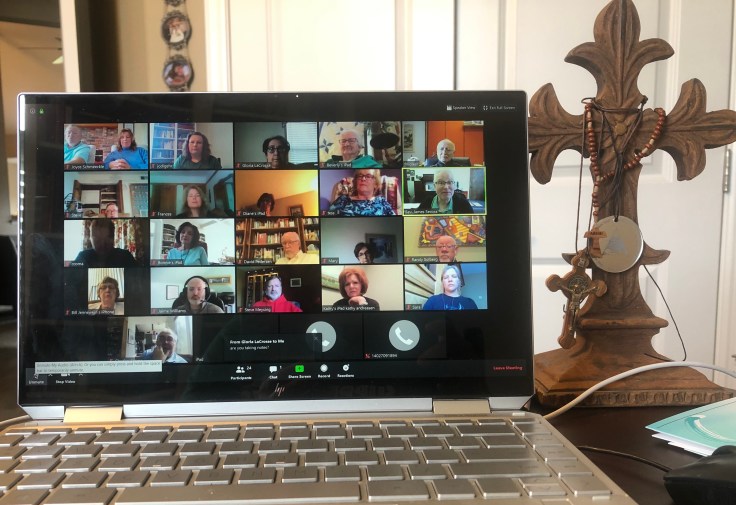
After a successful inaugural Zoom meeting in April, the Oblates of Christ the King Priory were excited to meet again “virtually” as we continue to physically distance and adapt to the uncertainty that the pandemic brings. We began our morning with introductions, personal prayer intentions and Morning Prayer from the breviary.
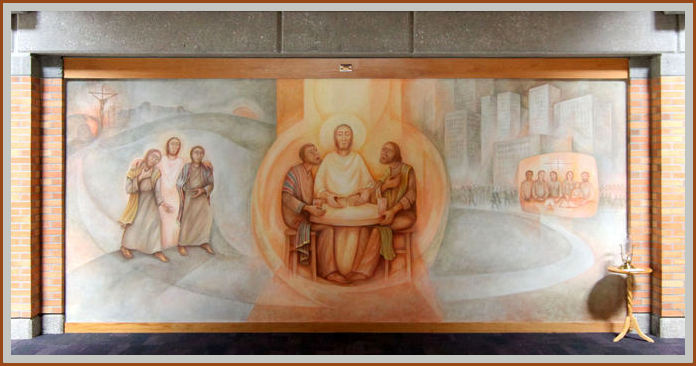
The Emmaus Story painted by Josef Mahler of Sautee Nacoochee, Georgia
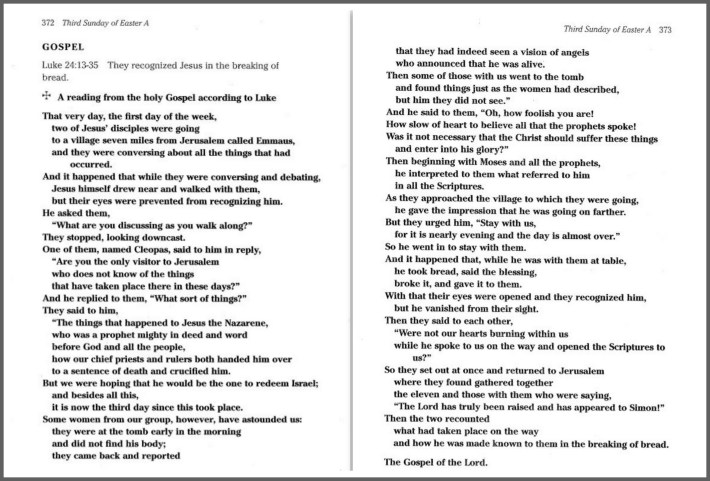
Our Lectio Divina reading was Luke 24:13-35, the Emmaus Story.At St. Benedict Center, adjacent to Christ the King Priory and our typical oblate meeting place, all who enter are greeted with a mural of the Emmaus Story. It is the hope of the monks that visitors to the Center may have an Emmaus experience. “Were not our hearts burning within us as He spoke?” (Luke 24:32) Just as Jesus opened the Scriptures, revealing himself in the breaking of the bread, so too can those on the spiritual journey meet the living Christ.
Rich in meaning, there are many words and phrases that resonate with our group:
Stay with us. Initially, the disciple’s eyes were prevented from seeing the Risen Christ when encountering him on the road. They are talking, debating, and rehashing the events of the last days. They are downcast; disappointed, that the one they had hoped would redeem Israel was crucified. They are incredulous, sharing that the women of their group had reported that Jesus’ body was gone. The stranger promptly gave them an Old Testament lesson— “Oh, how foolish you are! How slow of heart to believe all that the prophets spoke!” The disciples ask the stranger to stay with them. In the breaking of the bread, they see him. Isn’t it interesting, an oblate shared, that the disciples were not put off with Jesus immediately vanishing? He vanishes, and yet now they recognize him. It is a paradox that he is gone, but also present. Continue reading “Hearts Burning Within Us”→
Today my child should be walking across the stage at her graduation ceremony to receive her Masters in Public Affairs diploma. I should be there, applauding and celebrating her achievements. But, you know…. the pandemic and all. It would have been a beautiful way to spend Mothers’ Day.
Although I would love to be with Jessica on this day, to have recognized her achievements with ceremony, what makes this Mothers’ Day truly happy (and my heart full on ordinary days as well), is having a child who lives a life of joy and purpose.
This is all a mother desires—to know that her child is happy, at peace, learning, growing, working hard, loving well, and always becoming.
Jessica Becoming, a special card for all the phases of Jessica’s life through high school, 2012.
It’s been a few years since Jess and I have spent an official Mothers’ Day together. In 2016, after graduating from college, Jessica moved to Washington, DC. to work as a full-time research assistant. And in 2018, Jessica moved to Madison, Wisconsin, earning a fellowship to study public policy at the LaFollette School of Public Affairs.Continue reading “Every Day is Happy Mothers’ Day!”→
A house is made of walls and beams, a home is built with love and dreams.
(And, of course) Home sweet home.
Platitudes? Perhaps.But what may seem overly sentimental is what we yearn for in a home—a place of comfort, expression, warmth, understanding, love, hope, and shelter. An ideal home is a refuge, a haven, a sanctuary that provides safety and protection, a shelter in more ways than one. Our home can be an expression of our personality and values. We bring our whole self into a house and make it a home.
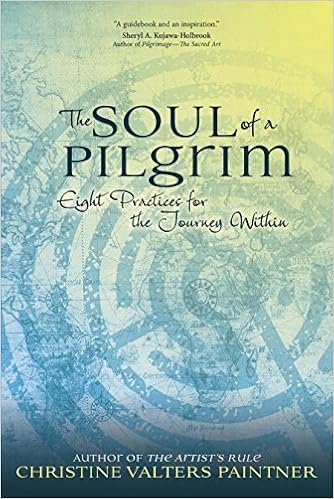
On day 50-something of “sheltering at home,” I am grateful for the roof over our head and all that our home provides us. Our current home is the result of “packing lightly” and “crossing the threshold”, themes from The Soul of a Pilgrim by Christine Valters Paintner.
“The journey of pilgrimage is about returning home with a new awareness of what home really means.”—The Soul of a Pilgrim
Five years ago, my husband and I put our house up for sale with no idea what we were going to do when it sold. It was an adventure—kind of exciting, a little scary, but certainly a threshold opportunity to see what our next step would be. We went through a process of considering what we really needed, what we would keep, what would be given away or sold, what might be tucked away in storage until we knew more decisively what we would do.
Some essential questions to consider in “The Practice of Packing Lightly” are: What would create more lightness in your life? What can you let go of to pack more lightly?
We knew the home we had lived in for nine years was not the place we wanted to be forever. Coming to that decision did not happen overnight. We had tossed it around, tabled it, brought it back up…but finally decided that we had been standing at the threshold of this decision for far too long. For us it came down to two issues: we did not need as much space or stuff and we wanted to have more free time to spend on things we loved, not just working on, or thinking about, household projects.
It felt right to let go of an attachment to our house and our things to see what might be in store for us. We were brought to a threshold, a clearing out of the old, and were ready to move into the uncertainty that lied ahead.
A voice comes to your soul saying,
Lift your foot. Cross over.
Move into emptiness of question and answer and question.
—Rumi, The Glance
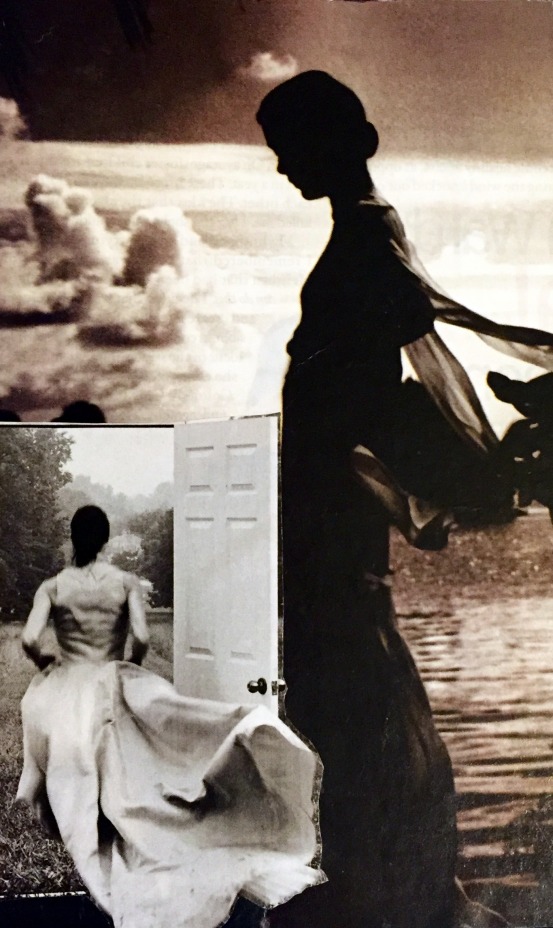
Card Name: Witness I am one who is Witness to self. I am one who stands tall Upright, resilient, longsuffering Despite winds of change. I am one who, with the pace of a praying monk, Glides gently through breeze and shadow, clouds and sea. I stand centered I move with purpose I am one who is Witness to self It is time The door is open.
“The LORD said to Abram: Go forth from your land, your relatives, and from your father’s house to a land that I WILL show you. I WILL make of you a great nation, and I WILL bless you; I WILL make your name great, so that you WILL be a blessing.”—Genesis 12:1-3
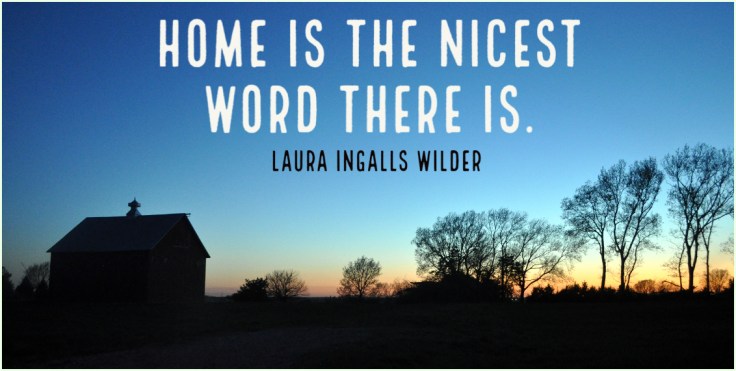
In the story of Abram and Sarai (Genesis 12:1-9; The Soul of a Pilgrim, Chapter 2), they are guided to a new life in an unknown and distant land. When practicing Lectio Divina with this story, I imagine the couple had a sense of loss at leaving their familiar home, but that they also desired an adventure, something new. Despite mixed feelings, they were open to hearing the blessings God promised, they trusted God’s will. Continue reading “Home Is The Nicest Word There Is”→
“There are hundreds of ways to kneel and kiss the ground.” –Rumi
There are many ways to pray—in song, spoken or written words, silence, creativity, nature, and movement, just to mention a few. Paul recommends to “pray without ceasing” (1 Thessalonians 5:17), which is only possible if we are able to connect with our Creator in a variety of ways. We are meant to engage our senses, our whole bodies, in prayer.
I’ve come to appreciate this about the Catholic Mass, even if visitors might think there is a lot of up and down. We genuflect, sit, stand, kneel, and bow. These gestures, postures, or movement help to bring our whole being into prayerful expression—raising our hands when saying the “Our Father”, making the sign of the cross or receiving the Eucharist allows us to use our bodies in prayer.
In addition, walking the stations of the cross or a labyrinth, taking a nature hike, or practicing yoga or tai chi are prayerful forms of movement that engage our bodies while quieting our mind. Going away on retreat is an opportunity to explore and practice various forms of prayer.
Labyrinth at St. Benedict Center in Schuyler, NE
A few summers ago I had the opportunity to pray in many ways while attending an eight-day Ignatian retreat at the Creighton University Retreat Center. Each day, for about an hour, I met with a spiritual director to receive guidance and to share my faith journey; the remainder of the day was spent reflecting on these discussions and praying. One of the ways that I prayed was by walking a labyrinth.
“A labyrinth is not a maze. A maze is a symbol of life without meaning, it is an agent of confusion, deception with dead ends that lead you nowhere. But a labyrinth is a symbol of a life of deeper meaning, an on-going sacred journey leading us inward, outward and to greater wholeness.” –Carrie NewcomerContinue reading “World Labyrinth Day: Many Ways to Pray”→
Planting trees is a big deal in Nebraska…so important that the planting and preservation of trees are celebrated with an actual holiday, Arbor Day, started right here in Nebraska and now observed in all fifty states and in several countries.
The founder of Arbor Day, J. Sterling Morton, was a transplant to the Nebraska Territory from Detroit in the mid-1850s. He was a journalist, newspaper editor and served as President Grover Cleveland’s Secretary of Agriculture. Morton understood the importance of trees to agriculture, for windbreaks to keep soil in place, for fuel and building materials, and for shade from the hot sun.
He believed in getting everyone, particularly students, involved in planting trees. An estimated one million trees were planted in Nebraska on April 10, 1872, encouraged by contests between counties and promotion in schools. “Students of different grades met at their respective school rooms in the morning for the purpose of planting at least one tree. Each tree that was planted was labeled with the grade, the time planted, and was to be specially cared for by that grade.” (The History of Arbor Day)
On the final Friday of April every year thereafter, Arbor Day has been celebrated. Throughout the year the Arbor Day Foundation works to “help others understand and use trees as a solution to many of the global issues we face today, including air quality, water quality, a changing climate, deforestation, poverty, and hunger” through conservation and education programs.
Each generation takes the earth as trustees. —J. Sterling Morton
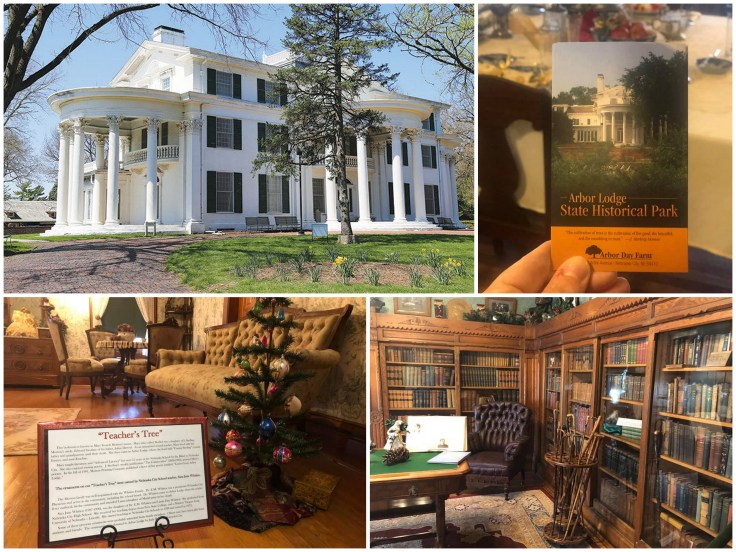
Arbor Day Lodge is open for tours–we were just there a few months ago! Many activities and, of course, lots of trees in Nebraska City, Nebraska.
I recently finished reading The Overstory, the Pulitzer Prize-winning novel by Richard Powers and I have not stopped thinking about trees since. I think about climate change, our responsibility to creation and to future generations, the beauty of trees, the importance of nature in our spiritual lives, about knowing our place in the world, about Arbor Day and EarthDay and all the things that conscientious people do to make a difference.
Trees fall with spectacular crashes. But planting is silent and growth is invisible. –Richard Powers, The Overstory
The Overstory weaves together the stories of nine characters, their relationship to trees, and their awareness of and desire to stop the destruction of forests. The characters, each with a short story of their own, are the backdrop of a narrative that is less about them and more about trees. The Overstory was a reminder of how destructive humans have been and how significant non-human elements are to the survival of our planet.
“There would be neither an economic crisis in the world today, nor an ecological threat, were it not for the evil done by greed. Monastic poverty means being content with the simple things that sustain human existence in its inherent goodness. This poverty allows man to live in harmony with field and forest, without feeling the need to brutally strip the earth of her resources in order to realize an immediate gain. (Brother Philip Anderson, Prior Our Lady of Clear Creek Abbey )
Abbot John Klassen, OSB of St. John’s Abbey in Minnesota writes about our responsibility to the environment in Benedictine Life and Care for the Environment (highly recommended!) St. Benedict wrote about humility, stability, and frugality in The Rule he used for his monastic communities…there is much we can learn from his wisdom even 1500 years later.
In honor of Arbor Day, I share “Benediction of the Trees”, written and performed by Derek Dibben. This prayerful song is a recognition that Nature blesses us with trees for our healing, enjoyment, leisure, and protection. Our very breath is dependent on the Benediction of the Trees.
Benediction of the Trees
From the Heart to the Heavens
Rooted in the Earth
Branching out above us
Healing what was hurt
Reaching down to lift us
Swing us in the breeze
the air we breathe She gives us
Benediction of the Trees
Home before our houses
Cornered us inside
Gentle arms around us
Above the rising tide
Can you hear them calling?
Like music in a dream
The leaves are always falling
A Benediction from the Trees
A shout becomes a whisper
A Sermon into Song
It’s useless to resist her
She’s where we all belong
In our Sanctuary Forest
Beneath the Pleiades
Cicadas in the chorus
Benediction to the Trees
As the moon reflects the sunlight
From a million miles away
I’ll try to get the words right
So you can hear her say
In a melody familiar
That brings us to our knees
In Liturgy peculiar
Benediction to the Trees
Seeing the beauty in nature is the first step in taking action to protect it.Our planet needs all the love, prayer, and protection it can get. Celebrate creation this Earth Day by sending positive energy and intention into the universe through some creative and prayerful practices including contemplative photography, nature meditation, Visio Divina, Soul Collage® and Lectio Divina. There are many ways to pray!
Let me seek, then, the gift of silence, and poverty, and solitude, where everything I touch is turned into prayer: where the sky is my prayer, the birds are my prayer, the wind in the trees is my prayer, for God is in all. — Thomas Merton, Thoughts In Solitude
Practice contemplative photography
Contemplative photography is a prayerful practice of seeing with new eyes. With camera in hand, I have learned to slow down, be more aware of details, be less goal-oriented and more process-oriented, to enjoy the beauty of simple things, and take more time to appreciate the surprises of a new country road or the change of seasons. This sense of adventure brings a deep joy in capturing a scene that will never quite be that same way again. It is when silence, solitude, creativity, and nature collide into an oneness that can only be received, not pursued.
The great Catholic writer Ernesto Cardenal in Abide in Love observes: “Everything in nature has a trademark, God’s trademark: the stripes on a shell and the stripes on a zebra; the grain of the wood and the veins of the dry leaf; the markings on the dragonfly’s wings and the pattern of stars on a photographic plate; the panther’s coat and the epidermal cells of the lily petal; the structure of atoms and galaxies. All bear God’s fingerprints.”
Visio Divina is like Lectio Divina, but instead of using the words from a page of Scripture to pray with, you use an icon, a sacred image, a work of art, or even a sunrise or sunset. “The Flowers Are Burning… Oceans A Rising: An Art and Climate Justice Exhibition” was to have taken place at Holy Wisdom Monastery, a Benedictine monastery in Madison, Wisconsin, to celebrate the 50th Earth Day. Due to the global pandemic of COVID-19, the poignant collection of eco-inspired watercolors painted collaboratively by artists, Helen Klebesadel and Mary Kay Neumann, will instead be offered digitally.
“Using their artworks as a source of strength in the face of adversity, they call upon the power of beauty and love to guide us towards taking action to protect what we love and care deeply about…The artists believe deeply that humans must embrace the reality that we are all connected to nature…that what happens in the Ocean, on Earth or to any life forms above and below the water, is happening to us as well. Everything is related and we can no longer go forward believing in the superiority of human life over all other life, if we are to survive. The artists sense of urgency is born out of their love of the natural world and the desire to protect and preserve what is left before it is too late.” Source: Warning Signs—A Powerful Earth Day Exhibit Goes Digital.Continue reading “Earth Day: Many Ways to Pray for Creation”→
Just one year ago, I started reading “The Soul of a Pilgrim” by Christine Valters Painter in preparation for a trip to visit family in Germany and to go on a Benedictine pilgrimage to Germany, Austria, and Switzerland.
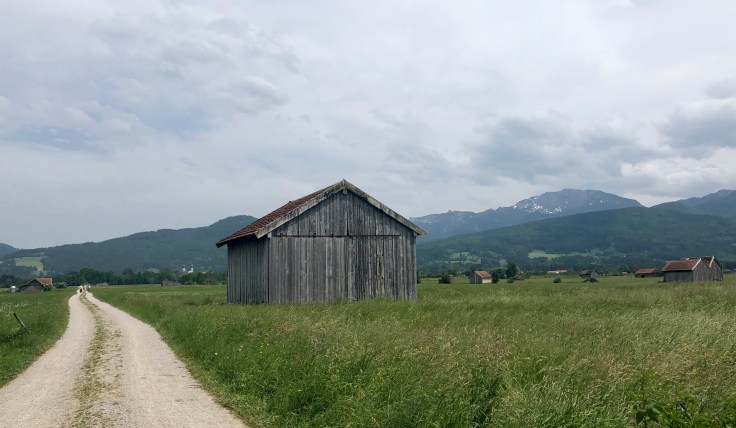
Kloster Benedicktbeuren, Germany
“When we take inward and outward journeys, we can be pilgrims as long as we stay open to new experiences.”—Christine Valters Paintner, The Soul of a Pilgrim
If we are “attentive to the divine at work in our lives through deep listening, patience, (and) opening ourselves to the gifts that arise in the midst of discomfort” (Paintner), we are on pilgrimage. A pilgrimage may be intentional or not: becoming a new parent, losing a loved one, resolving a relationship conflict, or going on a spiritual retreat can be a pilgrimage if one seeks to learn, reflect and be transformed from the experience. Our life itself is a pilgrimage.
Bohemian Alps, Nebraska
The cousin I visited in Germany was planning a pilgrimage of his own this summer. Jefferey and his wife, Sabine, were planning to visit Nebraska for the first time. I was excited to show him the Bohemian Alps, where his father (my uncle) grew up, the village where he went to school and to introduce him to family he has never met. Instead, Nebraska, Germany, and countries all over the world are on a different kind of pilgrimage altogether—the coronavirus pandemic. Instead of planning or hosting trips, we are staying put.
Spring came on time, pandemic or not.
The pandemic transformed our world in an instant, personally and collectively—how, where and if we work has changed; how students are learning is different; the economy, health care, personal finances, shopping and travel no longer look like they used to. There is nothing that hasn’t been impacted by the pandemic.
Although each of us is affected differently, we are all on a pilgrimage, not of our own choosing, but from circumstances unimaginable just a few months ago. Still, we can “make the choice for the journey to become meaningful and soulful.” (Painter) We can choose this time as an opportunity to become more aware of who we are and who we want to be.
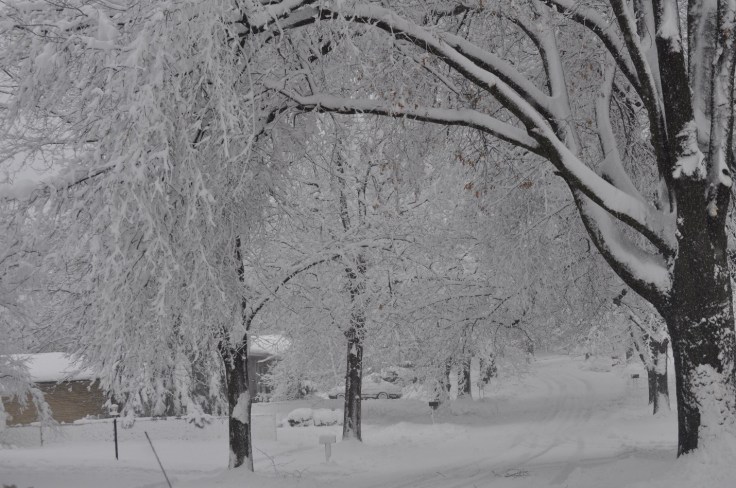
Despite the early spring flowers, Nebraska had an April snowstorm.
I have returned to “The Soul of a Pilgrim,” for insight, re-reading the book and also participating in an online retreat with the Abbey of the Arts, to navigate this pilgrimage of uncertainty and its library of emotions, as Mary Pipher calls it. I go from gratitude to grief in short order. I am both content and irritable, joyful and disappointed, trusting and afraid. In this smaller world of “stay at home”, I have a heightened awareness of the little things, both the beauty and the idiosyncrasies. More hours alone together in our home, my husband and I brush up against each other with all our uncertainty, anxiety, and fear, but also gratitude and joy. We have a lot of fun but can also get on each other’s nerves. We are a bundle of contradictions now more than ever. Continue reading “Naked Before God”→








 In addition, walking the stations of the cross or a labyrinth, taking a nature hike, or practicing yoga or tai chi are prayerful forms of movement that engage our bodies while quieting our mind. Going away on retreat is an opportunity to explore and practice various forms of prayer.









 Being Benedictine