Search

Being Benedictine

Living SoulFully as an Oblate of St. Benedict

Author

Jodi Blazek Gehr

SoulCollage® Facilitator, Benedictine Oblate of Christ the King Priory, Retreat Leader at St. Benedict Center, Blogger at Being Benedictine and SoulFully You, Teacher, Mother, Wife, Friend, Lover of learning, reading, creativity and spirituality.

Cousin Week: A Benedictine Pilgrimage, Part 2

Sunset over the Atlantic, sunrise over Europe and eight hours later, cousin week of the pilgrimage begins. Jefferey greets me with a huge smile at the Munich airport and we chat enthusiastically about our travel plans as we drive to Heidhausen, where he and Sabine live. We will spend a few days in Munich; we will visit his mother; I will travel to Stuttgart for a few days to visit Jennifer and her husband, Santhosh; and, then spend one final day in Munich before joining the group pilgrimage. Jefferey has planned everything down to the detail—even pre-booking my train trips to connect with others.

After a short rest, we have a wonderful brunch. The food is as amazing as I remember it. Jefferey is a great chef, using only fresh, organic and, always, a variety of ingredients. We can’t believe it has been 5 years since my last visit and we first met.


Continue reading “Cousin Week: A Benedictine Pilgrimage, Part 2”

Happy Birthday, St. Benedict!

St. Benedict is pretty special to me for a few reasons.

First, we share a birthday. I have to admit that I was pretty disappointed when I first discovered this. My parents had given me an illustrated book of the “Lives of the Saints” to commemorate my Confirmation. As any nine-year-old would do, I immediately looked to see who the saint was for July 11, my birthday. Perhaps Elizabeth or Mary, Theresa or Christine (my confirmation name) would be my special saint. A lovely woman saint with a beautiful name—I had hoped.

confirmation

Instead, I beheld an illustration of a man with a dark hood, a scary looking bird, some sort of walking cane and an unusual name that I had only associated with Benedict Arnold, a famous American traitor.

July 11, St. Benedict, Abbot, it said. Continue reading “Happy Birthday, St. Benedict!”

The Soul of a Pilgrim: A Benedictine Pilgrimage, Part 1

“A pilgrimage is an intentional journey into the experience of unknowing and discomfort for the sake of stripping away preconceived expectations. We grow closer to God beyond our own imagination and ideas.” The Soul of a Pilgrim: Eight Practices for the Journey Within, Christine Valters Paintner

Recently my Spirit Circle chose to read Christine Valters Paintner’s “The Soul of a Pilgrim”, a book that explores pilgrimage as both an inner and outer journey. Several of us were preparing for “Footsteps of St. Benedict and St. Scholastica,” a Benedictine pilgrimage to Germany, Austria, and Switzerland sponsored by the Benedictine Oblates of Christ the King Priory.

9781933495873_p0_v1_s550x406

By definition, a pilgrimage is a sacred journey or holy expedition, but we do not need to travel a great distance to go on pilgrimage. It is more about choosing to be “attentive to the divine at work in our lives through deep listening, patience, opening ourselves to the gifts that arise in the midst of discomfort, and going out to our own inner wild edges to explore new frontiers.”

The purpose of going on a journey “is always to return home carrying the new insight back to everyday life,Paintner writes. “When we take inward and outward journeys, we can be pilgrims as long as we stay open to new experiences.”  A week of hard work, becoming a new parent, losing a loved one, resolving a relationship conflict, or going on a spiritual retreat can all be a pilgrimage if one seeks to learn, reflect and be transformed from the experience.

These insights from the first few chapters and the book “The Soul of a Pilgrim” travel with me on my two-part pilgrimage. First, I visit cousins in Germany and then I join thirty-six other pilgrims to learn more about St. Benedict and to visit sacred sites including churches, monasteries, abbeys, castles, small villages, and large cities.

Three weeks, three days I will be gone. As I journey from Nebraska to Europe, I reflect on both my outer and inner experiences—the people, places, feelings and insights that I encounter on the journey. Continue reading “The Soul of a Pilgrim: A Benedictine Pilgrimage, Part 1”

Be Yourself! The Call of a Christian

Evangelization used to be a scary word to me. I thought it meant that I must convince another of what to believe in or, on the other hand, that I, held captive, would be the recipient of a sales pitch about another’s faith. Both situations make me extremely uncomfortable.

I have come to feel differently about this intimidating word, “evangelization”, through the insight of Fr. Mauritius Wilde, OSBshared in spiritual direction and guided retreats on the topic.  He captures those thoughts in his newest book, Be Yourself! The Call of a Christian. He writes, “Faith is about what I believe, who I am in my innermost heart…It isn’t good to constantly hold back what is in our hearts. If your heart is full, let it overflow!” What evangelization really means is “to get the word out…to share your joy.”  Continue reading “Be Yourself! The Call of a Christian”

Trust: Justice Breaks Forth Like the Light

Deep prayer, or contemplation, requires a commitment. Prayer can happen anytime, anywhere, in an instant, but deep prayer requires attention and intention to create pockets of silence in our day to listen to what the Divine is revealing. God speaks always and in diverse ways, but it is our own awareness that must be cultivated.

presence of god

The practice of Lectio and Visio Divina, sacred reading and seeing, is a prayer practice that helps me slow down, to be quiet, to become aware and to listen. The value of Lectio Divina is that our understanding of Scripture or other spiritual writing is influenced by what is happening in our life. The richness of what we read can breathe new life into us and bring new thoughts for us to consider again and again. Continue reading “Trust: Justice Breaks Forth Like the Light”

The Desert Experience

April 2019 Oblate Lectio Divina and Discussion
Topic: The Desert, Life In Solitude
Luke 4:1-13 Jesus was led by the Spirit into the desert and was tempted.

To be led by the Spirit requires listening and obedience to God, one of the three promises of a Benedictine monk, sister or oblate.  Jesus was a listener. After his baptism in the Jordan, which prepared him for his journey ahead, Jesus was called into desert time.

Desert time is often associated with time for solitude.  “Seeking solitude means searching for a time to be alone.” (Beil) Time alone can be renewing and recharging, a dedicated opportunity for reflection and prayer, a time for us to see more clearly and to put our struggles into proper perspective. It is important to go to the desert to come closer to God. “The desert journey was a time of learning to know and to trust God, but also an increase in self-knowledge.” (Beil) The desert time gives us a deepening awareness of our thoughts. We can never fully escape our struggles and temptations—time alone reminds us often it is our own thoughts and behaviors that are our biggest obstacles. Continue reading “The Desert Experience”

Being Benedictine in the 21st Century: Spiritual Seekers in Conversation

You are invited to “Being Benedictine in the 21st Century: Spiritual Seekers in Conversation,” planned for June 26-28, 2020 at Mount St. Scholastica in Atchison, KS. This opportunity marks the first-ever gathering of professed Benedictines, Oblates, staff, volunteers, friends and benefactors of Benedictine ministries and monasteries, and any seeker who has read The Rule of St. Benedict and experienced a conversion of heart.

The Rule of St. Benedict, a text written in the sixth century for monks living in community, contains wisdom that can be applied to the questions and pressing needs of the 21st century for those seeking purpose, inclusivity and connection—Catholic and Protestant, professed monks, religious leaders, Benedictine Oblates and spiritual seekers, young and old, married and single. Many have found the Rule, relevant 1500 years later, to be a guidebook for growing a deeper relationship to God and others. Benedictine values, including listening, community and consensus building, hospitality, humility, prayer and good work, provide an antidote for troubled times. Continue reading “Being Benedictine in the 21st Century: Spiritual Seekers in Conversation”

Transitus of St. Benedict: Happy Feast Day!

Happy Feast Day of St. Benedict!

transitius

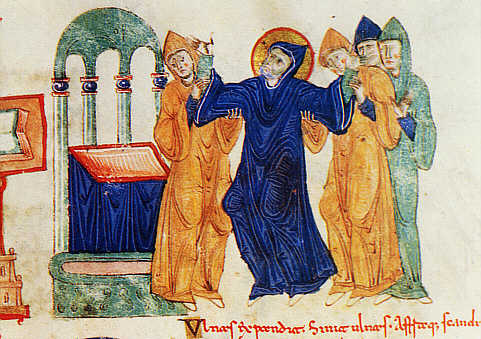
On March 21, Benedictines around the world celebrate the “transitus of St. Benedict, the day Benedict entered eternity. “Transitus” in Latin means passing from one state to the next—death is not the end of life, but the transition into eternity with God.  It is one of two days that St. Benedict is recognized on the Benedictine calendar.

Since this feast day is always during Lent, another commemoration date was set when Pope Paul VI declared St. Benedict the Patron of Europe at the rededication of the Church at Monte Cassino on July 11, 1964. July 11 is the Feast of St. Benedict for the Universal Church. Only Mary, the mother of Jesus and John the Baptist are remembered with both their birthdays and their day of entry into heaven. Continue reading “Transitus of St. Benedict: Happy Feast Day!”

I Don’t Know Nothin’

I don’t know nothin’.

Eight years ago today, my father-in-law Marv passed away—so today, more than usual, I am thinking of him and missing our kitchen table conversations. We would talk about politics and religion, the economy and education, and the best brands of Cabernet for the cheapest prices. After sharing his wisdom, attempting to solve world problems, and philosophizing over a glass of wine, Marv would throw up his hands in disbelief and exclaim, “What do I know? I don’t know nothin’.”

131207_10200564020853354_135052895_o
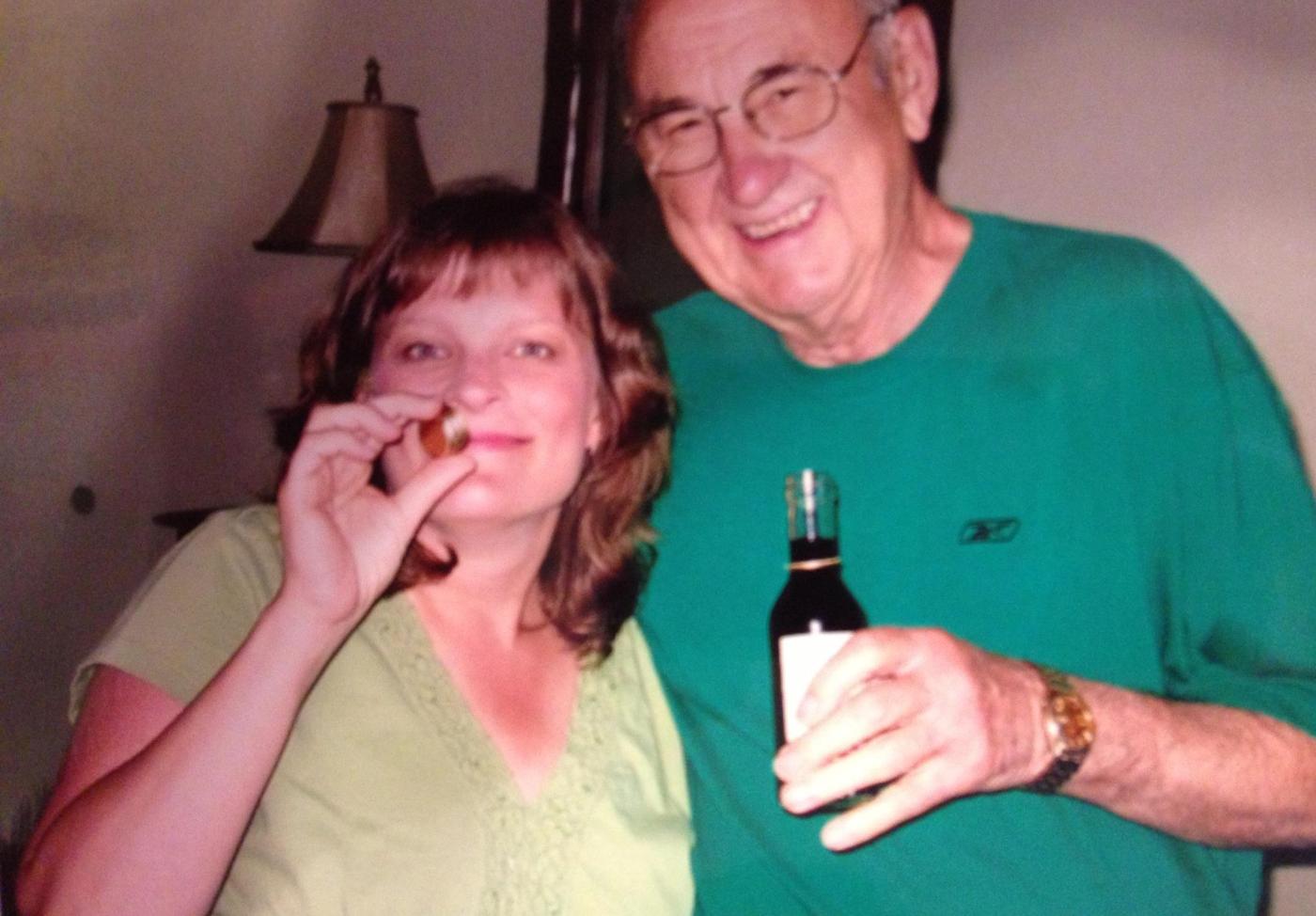
Marv and I enjoying some cheap Cabernet in Las Vegas.

He had thoughts, opinions and plenty of experience, but, self-admittedly, he felt he still didn’t know much. Marv said it often enough that it was the opening line in the eulogy my husband gave for his dad’s funeral. This phrase, “I don’t know nothin’” holds so much meaning, far beyond a simple or flippant segue into another subject, rather I believe he was saying “I have ideas, but I will stay open to other possibilities.”

I’m sure there was a time or two when he knew exactly how things should be, but they didn’t turn out the way he expected, as so often happens. Perhaps he meant—I surrender needing to know. Perhaps he meant—I don’t know it all. I don’t know the big picture. I don’t have all the answers. I thought I knew a lot, but now, I wonder if I know much at all. I am humbled by what I do not know. Continue reading “I Don’t Know Nothin’”

Blog at WordPress.com.

Up ↑