Search

Being Benedictine

Living SoulFully as an Oblate of St. Benedict

Author

Jodi Blazek Gehr

SoulCollage® Facilitator, Benedictine Oblate of Christ the King Priory, Retreat Leader at St. Benedict Center, Blogger at Being Benedictine and SoulFully You, Teacher, Mother, Wife, Friend, Lover of learning, reading, creativity and spirituality.

Curiosity is good for the soul, and for democracy too!

Cultivating curiosity is Being Benedictine.

As an educator and lover of learning, I appreciate the reference to schools in the Rule of St. Benedict. In the Prologue of The Rule, Benedict writes that the monastery is “a school for God’s service.” Whether in the monastery, home, or work—we are learning to live and love in community. Our life is a school of becoming—a continual learning.

Learning does not happen in solitude.

“A school is a community of learners: a group that comes together to learn with and from each other…education should expand our consciousness, capabilities, sensitivities, and cultural understanding. It should enlarge our worldview.”  –What Is Education For? by Sir Ken Robinson and Kate Robinson, Edutopia, March 2, 2022.

As a teacher, whether it was my high school students or those who attend retreats I lead, I appreciate a curious learner—someone who is open to new ideas, willing to listen, to question, to consider diverse perspectives, and, with humility, understand that there is always something new to learn.

Curiosity is a good first step toward living SoulFully and being Benedictine.

Being Benedictine, in my experience, is a genuine attempt to meet others in love and compassion, listening with the intent to understand, encouraging inclusiveness, and respecting diversity.  It is a blessing to share our feelings, faith, or perspectives and to have someone truly listen, especially those who might believe differently. Listening is the doorway to learning from others and growing in compassion; curiosity is the key.

“The spiritual life takes discipline,” Joan Chittister writes in The Rule of St. Benedict, A Spirituality for the 21st Century. “It is something learned, to be internalized. It’s not a set of daily exercises; it’s a way of life, an attitude of mind, an orientation of soul. And it is gotten by being schooled until no rules are necessary.”

Curiosity is good for the soul.

In Women Who Runs with the Wolves, Clarissa Pinkola Estes, defines the wild woman archetype as one who listens deeply, is intuitive, creative, playful, courageous, curious, loyal, and passionate. There is some wildness of divinity in us all, calling us to live fully, to reach beyond ourselves and, to discover something new. “When you limit your life to the one frame of thinking, you close out the mystery,” writes John O’ Donohue in Eternal Echoes: Celtic Reflections on Our Yearning to Belong.

Curiosity is good for community. Wonder is good for the world.

Wonder, my 2023 word of the year, is an attitude of curiosity, a willingness to withhold judgment, and to be open to what happens. Dacher Keltner in Awe: The New Science of Everyday Wonder and How It Can Transform Your Life writes, “People who find more everyday awe show evidence of living with wonder. They are more open to new ideas. To what is unknown. To what language can’t describe…to the strengths and virtues of other people.”  

Is it possible to behold our neighbor with wonder, in the spirit of hospitality? Could we hold a curious heart even when we passionately disagree with one another? Rather than defaulting to the shoulds and should-nots of orthodoxy, or a deeply held conviction, could we practice curiosity instead? Rather than seeking to change another’s opinion or defend our own, could we simply stand in awe of this great universe that holds such diversity of thought? Is it possible to let a disagreement stand to the side, while the desire to learn about the other steps forward?

Curiosity leads to wonder. Wonder leaves room for the unexpected, for learning something new.

This is how Lectio Divina, the Benedictine practice of sacred reading, can work in community. We hear different perspectives, drawing on the experiences and insights of those in our community. We can release the need for the one right way to interpret what we read and be curious about what others bring to the table. I share reflections from the richness of our oblate community discussions on this website but with a disclaimer,

“I cannot claim to have captured all the wisdom shared in our monthly oblate discussions or that I represent all oblates in attendance. The group discussion is a starting point for this reflection, but it is my interpretation of what I heard and what resonated with me. There could easily be as many different blog posts or reflections as oblates. Each of us comes to Lectio from our personal experience of God at that moment and we receive what we need in that moment as well. The beauty of Lectio Divina is that the reading, insights, and discussion may fall differently on each of our hearts. How blessed we are that there are “many dwelling places” (John 14:2)” and we are all invited to “listen with the ear of the heart.” (RB Prologue)”

Curiosity is good for democracy.

In Healing the Heart of Democracy: The Courage to Create a Politics Worthy of the Human Spirit, Parker Palmer encourages us to consider “What do I have in common with people who, for example, regard their religious or political convictions as so authoritative that they feel no need to listen to anyone who sees things differently—especially that small subgroup of extremists who would use violence to advance their views?”

This can be difficult. I get it. I know too well how disagreements can escalate, and how estrangements result. I have appreciated discussions where curiosity is a motivation to more deeply understand, but I also know the heartbreak of rejection when another is not interested in my story, feelings, or perspective. The door is slammed shut for exploring possibilities, another proclaims they know what they know and there is no need to share ideas or learn something new. But I believe for many situations curiosity, wonder, listening, and a little respect could be the remedy. It may not change minds or beliefs, but it can change hearts. I believe, as Palmer does, that I can find even “the smallest patch of common ground” with others whose views are different than mine. I can disagree with another while also being Benedictine.

Continue reading “Curiosity is good for the soul, and for democracy too!”

SoulFully You Summer 2024 Recap

The end of summer typically means it’s back-to-school time, but this SoulFully You summer recap is just the beginning! This is what I do now–I am officially open for business! I have crossed the threshold from being a full-time teacher to a full-time creative–planning and leading retreats, writing more, pursuing creative ventures, and sharing the joy of living fully! I have dreamed of this since becoming a SoulCollage® facilitator in 2012. I was honored to be a part of the following SoulFully You activities this summer:

Echo Collective–The Power of Story

The ECHO Collective project (I wrote about it in April) celebrated its conclusion, with participants putting the final touches on their weaved tapestries. After creating a SoulCollage® card expressing an aspect of their personal story, a pattern was sketched to create their tapestry design. Then the weaving began! It was a sense of accomplishment for participants to go through this reflective and creative process.

Sisters of MercySelf and Spirit: The Power of Images

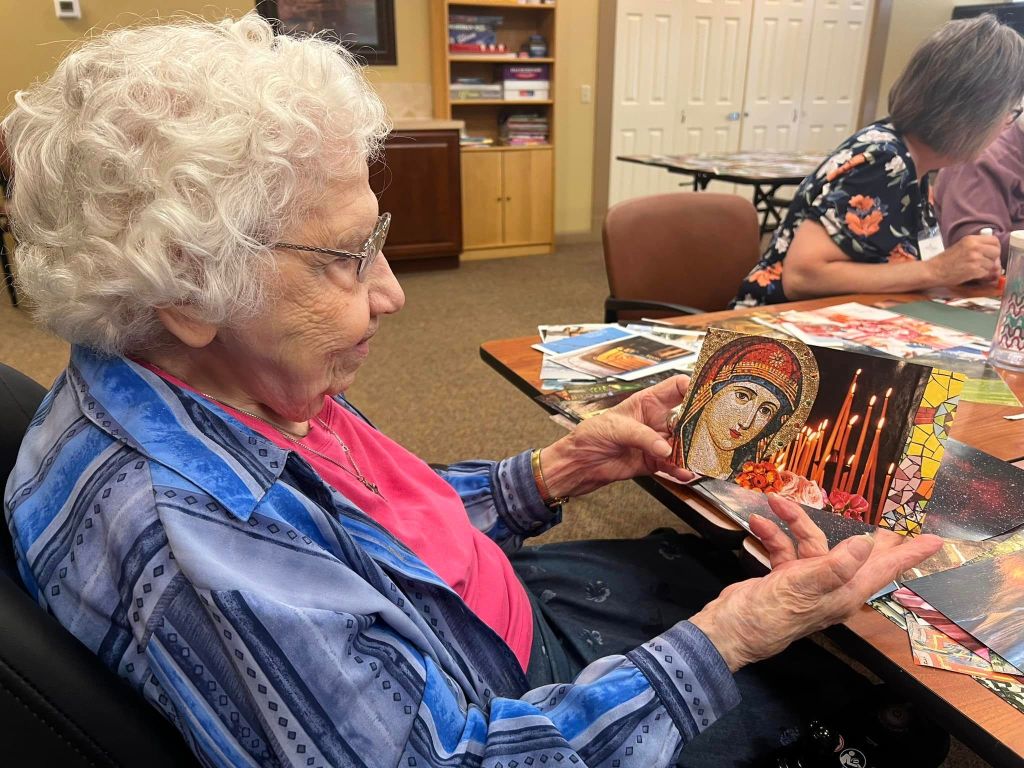
I spent a special Saturday morning in June with retired Sisters of Mercy in Omaha leading a SoulCollage retreat called Self and Spirit: The Power of Images. Several years ago, I met Cheryl Poulin, Pastoral Care Coordinator with the Sisters of Mercy of the Americas, when her cousin Macrina Wiederkehr (one of my favorite Benedictine authors and sheroes) introduced us at St. Benedict Center. Each month, Poulin plans creative activities for the sisters, who have had long careers in teaching and nursing. I was touched to witness their joy when they connected with special images and when their collages came together so beautifully.

Exploring Your Wild Woman: A Full Moon SoulFully You Retreat

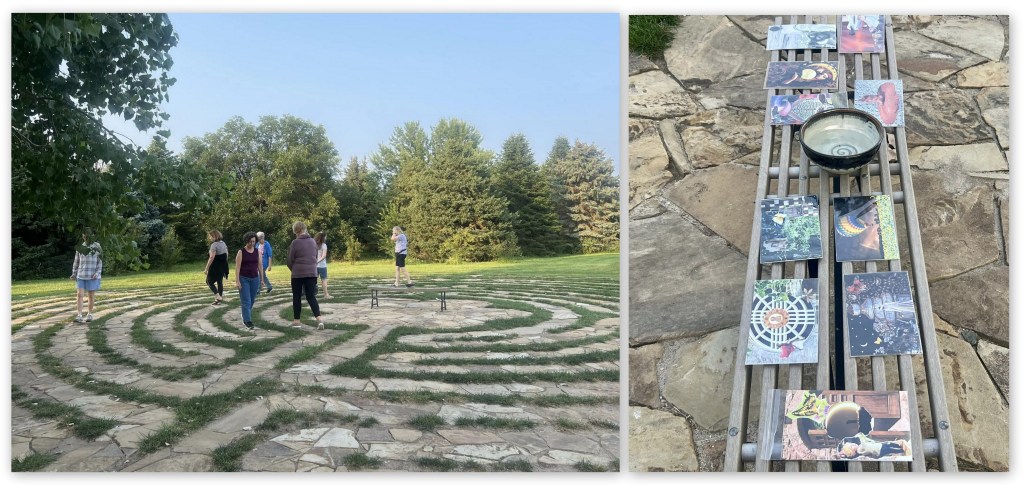
In July, several whimsical, wonderful, and wise women attended Exploring Your Wild Woman: A Full Moon SoulFully You Retreat at St. Benedict Center Schuyler, NE. Inspiring songs, poetry, soul talk, plus SoulCollage and an awesome full moon was a good reminder that wild woman is one who listens deeply and who “carries the medicine for all things. She carries stories and dreams and words and songs and signs and symbols.”

Abbey of the Arts, Monk in the World Guest Post

Finally, I am delighted to share that my Monk in the World reflection was shared as an Abbey of the Arts guest post.

“Choosing a word to focus on each year has become a nourishing, soulful ritual. I love participating in an ancient practice of contemplation recommended by Christine Valters Painter: “This tradition (for desert mothers and fathers) of asking for a word was a way of seeking something on which to ponder for many days, weeks, months, sometimes a whole lifetime…A word was meant to be wrestled with and slowly grown into.

I savor the word, that more so chooses me, throughout the year—it brings great joy when in perfect synchronicity, it appears over and again in what I read, hear, and see. I trust that the word, as it settles in my heart, will be a guiding light for months to come—challenging, inspiring, and transforming me.

My 2024 word of the year, FULLY, is a throwback to ten years ago when I birthed and named my first website and creative venture, SoulFully You.” Read more here.

For more information about SoulFully You retreats, see upcoming retreats held at St. Benedict Center. If you are interested in having a retreat or workshop created for your organization, church, or special interest group, contact me here. Possible retreat themes listed here.

© Jodi Blazek Gehr, Being Benedictine Blogger

A Controversial Commencement Address and Being Benedictine

The commencement address given by professional football player Harrison Butker at Benedictine College, a small liberal arts college in Kansas, has generated some big social media buzz. The narrow vision of Catholicism, the limited view of gender roles in the family, and the many backhanded as well as overt insults that thread their way through the message left me stunned. I am concerned the speech will be interpreted as a reflection of the Benedictine tradition and the incredible monks, sisters, and oblates I know.

Being Benedictine, as I have come to understand, is a spirituality that is inclusive, loving, and accepting of all. The speech seemed judgmental, hurtful, and exclusive. Not wanting to jump to conclusions with just a few quotes taken out of context, I read the entire script more than a few times, looking for something redeemable, and anything resembling a celebratory graduation message.

This was as close as I could come:

Ladies and gentlemen of the class of 2024, you are sitting at the edge of the rest of your lives. Each of you has the potential to leave a legacy that transcends yourselves and this era of human existence. In the small ways, by living out your vocation, you will ensure that God’s Church continues and the world is enlightened by your example.

Unfortunately, the “potential to leave a legacy” is very narrowly defined in Butker’s speech, one that restricts women’s roles in their families while limiting “God’s Church” to those Catholics who believe in precisely the way that Butker does. In an already contentious political and religious environment, the message prompted a statement in response from the Sisters of Mount St. Scholastica, a founding institution and sponsor of Benedictine College:

The commencement speech has fostered division rather than promoting unity using the foolproof methods of taking a superior tone, insulting those who believe differently, and claiming to possess the truth as others are surely lost souls. Being Benedictine, in my experience, is a genuine attempt to meet others in love and compassion, listening with the intent to understand, encouraging inclusiveness, and respecting diversity.  Yet, Butker claims, “The world around us says that we should keep our beliefs to ourselves whenever they go against the tyranny of diversity, equity, and inclusion.”

The tyranny? Diversity encourages learning, creativity, personal growth, social justice, and more. It is a blessing to share our faith and to have someone truly listen, especially those who might believe differently. How are we to learn or grow in compassion without diversity? Growing up in the Catholic Church, I was taught my religion was the “one, true faith” and, later, in a brief experience with fundamentalism, the assumed imminent rapture was used to convince others that they should urgently accept Jesus as their “personal Lord and Savior” so as not to be “left behind.” Neither of these religious messages was delivered in love. When one thinks they know for certain who God is, they feel entitled to judge that God is for them and not for others, or that their place in heaven is secured while others are surely burning in hell.  Being certain about something is likely the biggest sign of ignorance and self-righteousness; being open to hearing who God is to another brings possibility, understanding, and appreciation of diversity. Not all Catholics, Christians, or Benedictines agree with this limited view of the love of Christ, but, sadly, this is what Christianity has come to look like to many.

Continue reading “A Controversial Commencement Address and Being Benedictine”

SoulFully You: Special Programs in April 2024

It is a joy to create workshops and retreats for special projects. I had the opportunity to lead a few SoulFully You programs in April for ECHO Collective and St. Andrew’s Episcopal Church – Omaha.

ECHO Collective connects and empowers refugee and immigrant women providing opportunities for personal growth and cross-cultural relationships.  With a grant from the Nebraska Arts Council, ECHO is offering a weaving class to women and children using SoulCollage® as a springboard for a tapestry design. In the first session, we explored the power of their unique stories, reflected with images to create a SoulCollage card, and discussed how weaving their stories together can bring healing. Mothers, teens, and young children participated, including my youngest ever–a two-year-old sweet girl particularly attracted to images of white bunnies. Participants will learn weaving techniques for several weeks to create their own and a community tapestry.

The promise of peace comes through story. When we are willing to bear witness to one another, to take other’s and joy seriously, to listen deeply, with full attention, to tell other’s stories over–we reweave the bonds of civil society.“- Rabbi Dr. Ariel Burger

St. Andrew’s Episcopal Church hosted a women’s retreat titled “SoulFully You: Many Ways to Pray” that focused on finding God in music, movement, nature, words, and creativity. Richard Rohr writes, “We are already in the presence of God. What is absent is our awareness.” Twenty participants practiced Lectio Divina with the poem I Happened to Be Standing by Mary Oliver and learned how to create mandalas. Group discussions, journaling, and prayerful activities highlighted the wisdom of Simone Weil, that “pure attention is prayer.”

 If you begin to live life looking for the God that is all around you every moment becomes a prayer.” -Frank Bianco

For more information about SoulFully You retreats, see upcoming retreats held at St. Benedict Center and possible retreat themes here. If you are interested in having a retreat or workshop created for your organization, church, or special interest group, contact me here.

© Jodi Blazek Gehr, Being Benedictine Blogger

Spring Equinox and Easter

Just for a moment, at 10:06 pm tonight, March 19, 2024, darkness and light will be held in perfect balance. Equinox, meaning “equal night” in Latin, is when the sun is directly over the Earth’s equator, causing day and night to be equal moments. In the northern hemisphere, where I live, we will begin to have longer days with more sunshine and hours of light.  As the earth continues moving around the sun, the position of the sunrise and sunset will change quickly, and the balance between night and day will not last long. 

Indeed, an apt metaphor for the balance we seek in our daily lives. It is good to remember that even in the cosmos there is either more dark or more light. This is life. 

During pre-Christian Europe, the pagan goddess, Ostara, was celebrated during the spring equinox. She was honored for renewal, rebirth, fertility, balance, and the coming of spring. In Western Christian churches, Easter is celebrated on the first Sunday after the first full moon following the spring equinox. The cosmic connection between spring equinox and Easter, the crucifixion, death, and resurrection of Jesus, cannot be missed–they follow the rhythm of nature and point to more light, either literally or through Christ.

I have been feeling some guilt this Lent season. St. Benedict devotes an entire chapter to observing Lent with advice for monks. He writes, “Let each one deny himself some food, drink, sleep, needless talking and idle jesting, and look forward to holy Easter with joy and spiritual longing (RB 49: 7).” I have not made any grand gestures of sacrifice, quite the opposite. During my spring break from school, which occurs during Lent, we tend to travel out of state to see our daughter and son-in-law, we wine and dine, gather with friends and family, and generally celebrate time on vacation. Return from spring break marks the beginning of the last quarter, or nine weeks, of school when teachers begin to see the light at the end of the tunnel.

My Lent intention is to “hold it all”– to live as prayerfully, joyfully, playfully, gratefully, mindfully, and soulfully as possible while balancing my school and home life. Striking a perfect balance in one’s life is more of an ideal than a reality. The celebrations of the liturgical and astronomical calendar are reminders that our spiritual longings can be met by following the rhythms of nature. Each season we have another opportunity to set new intentions and to honor them in sacred ritual. The Benedictine idea of balance comes from the monk’s life, moving between prayer and work, ora et labora. So, too, do those who live as “monks in the world” seek this balance–sometimes there is more work, less prayer–but both are seen as necessary, sacred, and part of the whole. 

“Blessed are you, spring, season of resurrection, sacrament of promise. Like Jesus you rise up out of the darkness, leaving around you a wake of new life.
Blessed are you, spring, season of hope and renewal. Wordless poem about all within us that can die. Each year you amaze us with the miracle of returning life.”

-Excerpt from A Spring Blessing in The Circle of Life: The Heart’s Journey Through the Seasons by Joyce Rupp & Macrina Wiederkehr

More on Balance and Being Benedictine:

Mindfulness and a Blue Heron
Enough: I Can Never Know It All

Our Life is a Balance

© Jodi Blazek Gehr, Being Benedictine Blogger

St. Brigid of Kildare: Standing on the Threshold

What do a threshold, a cow, fire, and water have in common? 

St. Brigid of Kildare! 

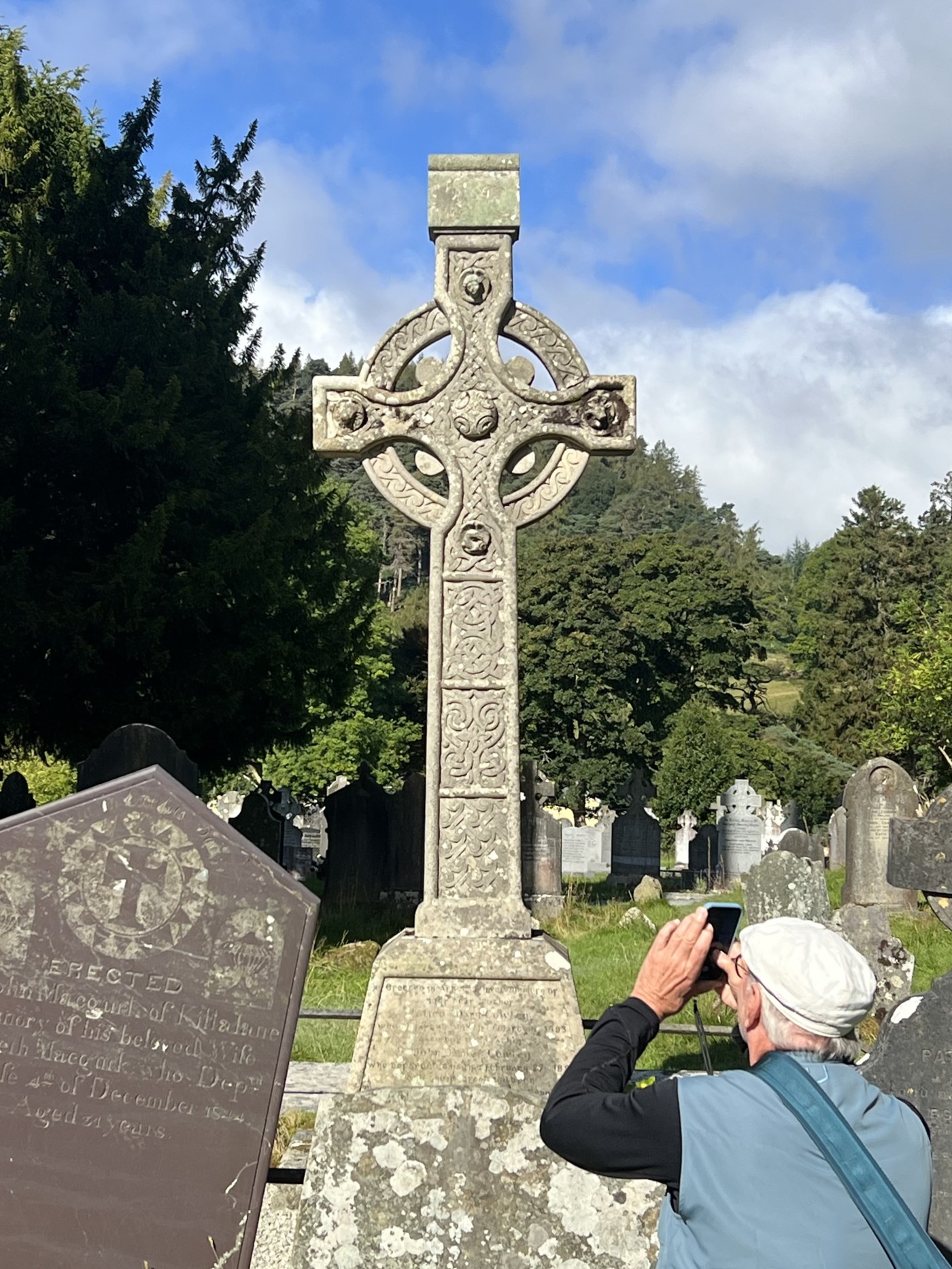
Recently I was introduced to St. Brigid while preparing for a Celtic Christianity pilgrimage and she could not have arrived at a more apt time for me. Admittedly, I’ve fallen down the rabbit hole (or holy well?) of the legends and stories of St. Brigid, a 5th-century abbess and founder of monasteries. St. Brigid is known by many names —Bhride, Bride, Brighid, Brigid, Bridget—and many titles including Muire na nGael (Mary of the Irish) Brigid of the Mantle, Brigid of the Fire, and Mary of the Gael. Brigid is recognized as the patron of midwives including new beginnings, birth, thresholds, and transformation. She has also been linked to fire, blacksmiths, wells, healing waters, springs, and poets. This year, 2024, is the 1500th anniversary of the death of St. Brigid with many celebrations and for the first year has been declared a national holiday in Ireland.

The Threshold

Legend holds that Brigid was born in the doorway of a barn at dawn, at the threshold between light and dark, inside and outside, winter and spring. She is celebrated on February 1, the anniversary of her death, and the same day as the Celtic Feast of Imbolc. Imbolc, a celebration of the Celtic sun goddess Brigid is the halfway point between the Winter Solstice and Spring Equinox in the Northern Hemisphere. Imbolc, which literally means “in the belly”, celebrates the change of seasons, a threshold time of welcoming more sunlight in the day. What is hidden in the earth’s dark belly is beginning to stir—darkness gives way to light and spring is coming!  

Continue reading “St. Brigid of Kildare: Standing on the Threshold”

PlayFULLY You: Pixie Dust and the Pink Motel

I am one who is playful, spirited, and connected in good company with wise women. The “pink motel” is a place of pixie dust and playfulness, joy, humor, carefree delights, childhood innocence, and magical moments.

One of the sweet surprises of SoulCollage® is when images come together to capture the essence of a memory, message, feeling, or archetype so effortlessly. This card reminds me of a recent playful, weekend gathering of friends. The women standing on the hayrack spoke to me of comradery, comfort, and community. It was later that I noticed the small child beside his mother. From a child’s vantage point, the energy in a room can easily shift from adult-ing to playfulness. Tinkerbell, the spirited fairy, spreads pixie dust and playfulness over adults and children alike—one can be both grown-up, wise, sober, AND playful, friendly, and funny. We can live more fully by embracing the playful child within.

My intention for 2024 is to live FULLY— “To be SoulFully You is to live prayerfully, joyfully, playfully, gratefully, mindfully, soulfully.” (2024 Word of the Year)

The spirit of Tinkerbell was alive and well on our farm weekend. Soom playful memories:

Continue reading “PlayFULLY You: Pixie Dust and the Pink Motel”

2024 Word of the Year: FULLY

Choosing a word to focus on each year has become a nourishing, soulful ritual. I savor the word, that more so chooses me, throughout the year—it brings great joy when in perfect synchronicity, it appears over and again in what I read, hear, and see. I trust that the word, as it settles in my heart, will be a guiding light for months to come—challenging, inspiring, and transforming me.

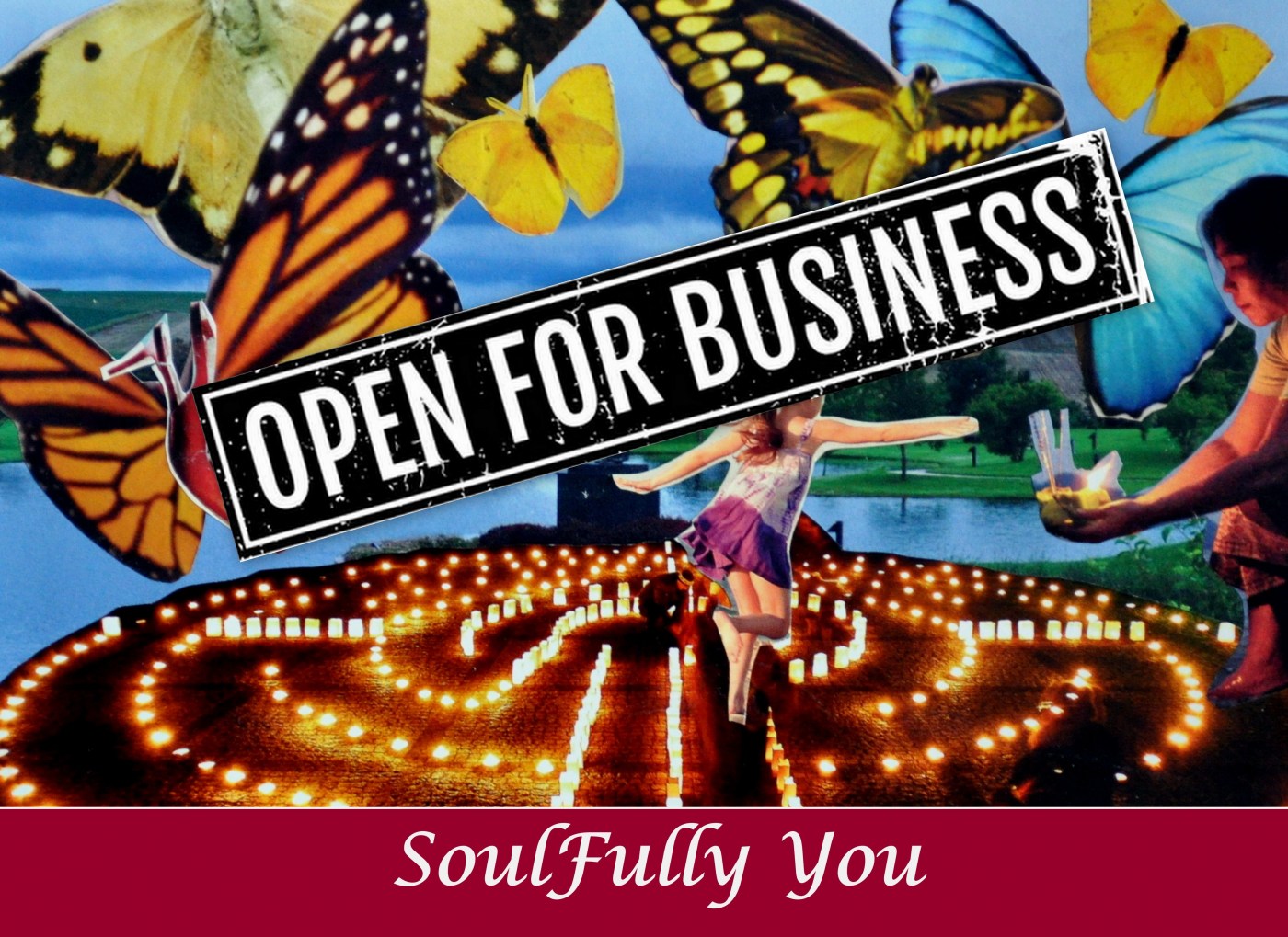
My 2024 word of the year, FULLY, is a throwback to ten years ago when I birthed and named my first website and creative venture, SoulFully You. I participated in training to become a certified SoulCollage® facilitator, to lead retreats on creativity and spirituality. As a Marketing teacher, creating a brand name felt like the best first step. With my daughter Jessica and her friend Claire (both students of my high school classes) we brainstormed a variety of words, phrases, and combinations, and then it clicked, that “aha moment” of knowing I have come to trust—SoulFully You. I loved what it meant, and still do. The image at the top of this page, a SoulCollage® card to represent SoulFully You, came later.

Being SoulFully You is living with purpose, on purpose; being attentive to the present moment; practicing gratitude; making good choices and having no regrets; living with death daily before your eyes, as St. Benedict writes; and leaving something beautiful from a life well-lived. It is living life to the fullest, using the gifts and talents you have while being open and responsive to opportunities and surprises that come your way.

A tree gives glory to God by being a tree.

Thomas Merton

Being SoulFully You is discovering and becoming all that God has created you to be. Thomas Merton writes, “For me to be a saint means to be myself.” The call to be holy is the call to be more fully myself, just as a tree gives glory to God by being a tree.

Continue reading “2024 Word of the Year: FULLY”

Remember, You Are Free

Ever have one of those eyes-wide-open at 2:00 am moments of mind-racing, self-doubting, anxiety-stricken, what-if fretting? I had one such panic attack, recently, after making a big decision about the future of my work. I found myself wracked with despair, vacillating between whether I made the right decision or if I was making a mistake, despite having done my due diligence in heart, soul, and mind for many weeks.

In the morning light (and after several days), with the help of some calming meditation, conversations with good friends, and spiritual direction, I began to see more clearly—that it is normal when making big life changes to experience uncertainty, that I have been here before.

“For me, the process of discernment, especially when I have strong feelings or attachments, often begins with compulsive mental role-playing,” I wrote in 2019 when I was in a similar state of distress about making the right decision. But it was these words of wisdom that helped me get to the other side of anxiety, and at the root of it, fear.

YOU ARE FREE.

“I am free to make THIS decision, or I am free to make THAT decision. I am free to choose. It was the decision-making process that was binding me, making me a prisoner of my own thoughts. The freedom came from not being attached to one possibility or the other, one reaction, one outcome, one person, or one feeling. Accompanied by a stream of what ifs, fear had become the primary consideration in discerning what if I did THIS or what if I did THAT.”

This reflection on my 2019 word(s) of the year, YOU ARE FREE, still rings true today. Fear is at the root of anxiety, a response to uncertainty. Ironically, the only thing that is certain IS uncertainty. All else is an illusion of control. Brene Brown in Atlas of the Heart writes, “In a world where perfection, pleasing, and proving are used as armor to protect our egos and our feelings, it takes a lot of courage to show up and be all in when we can’t control the outcome.”  

Fear of making mistakes, a symptom of perfectionism, can sabotage even soulful decision-making. Fear can lead to a sense of feeling trapped, nearly immobile, agonizing about whether there is a right or wrong, rather than accepting that a decision is simply a decision, that often there is no one right way. The Divine works in all our decisions no matter what forks in the road we may take. Fear, or regret, limits our ability to be open to surprises and from being fully present to what is. I am free to make this or that decision, trusting, knowing that I will continue to listen to how the Divine is working in new ways. It is freedom that brings peace.

Yes, you are free, too,” I wrote. “These words can be a prayer, an intention for yourself. Try it as an experiment. Ask yourself—What if I choose love instead of fear? What if I let go of what I am holding onto? What if I detach from what I want and, instead, accept that I am free, that God is with me whether I choose this or choose that?”

I captured the essence of these three words in a SoulCollage® card that embodies this sense of freedom. The image and words, YOU ARE FREE, have become a prompt for me to reflect on a dilemma or state of uncertainty from this perspective of liberation, encouraging me to move forward peacefully, soulfully, without obligation, burden, or restriction, in freedom.

Continue reading “Remember, You Are Free”

Blog at WordPress.com.

Up ↑