Search

Being Benedictine

Living SoulFully as an Oblate of St. Benedict

Category

Benedictine Spirituality

A Big Day for Benedictines: July 11, Feast Day of St. Benedict

Learn more about St. Benedict on July 11 in an original EWTN docu-drama presenting the life and spirituality of Saint Benedict of Nursia.  Fr. Prior Mauritius Wilde and Abbot Primate Gregory Polan contribute to this one-hour program taped at Sant’ Anselmo, the Benedictine monastery in Rome.  The program airs Tuesday, July 11 at  8:00 am and Wednesday, July 12 at 12:00 AM Central Time.  See EWTN schedule for your time zone.

Listen to The Life of St. Benedict –The Holy Rule of St. Benedict with Fr. Mauritius Wilde O.S.B.  Podcasts #28-33 reflect on the life of St. Benedict by using the biography penned by St. Gregory the Great. The first episode looks at the pivotal discernment he made as a young man to pursue the religious life. The aspect of detachment from our earthly family in favor of our Heavenly Father is explored by Fr. Mauritius. There are six reflections on the life of St. Benedict in this Discerning Heart series.

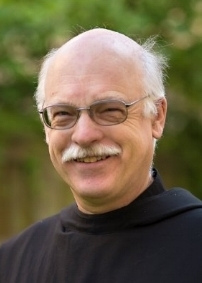
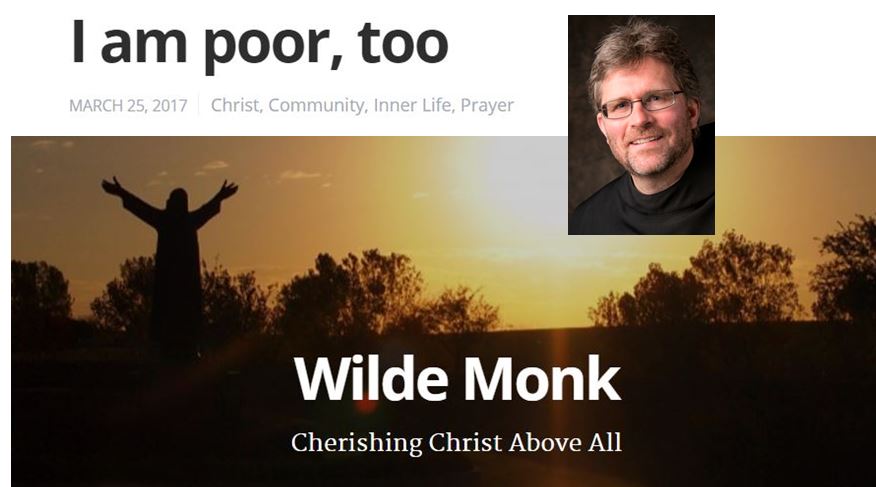
Read Benedict-inspired blog posts from Fr. Mauritius Wilde, OSB at WildeMonk.net

Learn more about living Benedictine spirituality as a monk or oblate at Christ the King Monastery’s website.  

And finally, St. Benedict is pretty special to me too.

“My parents gave me an illustrated book of the “Lives of the Saints” to commemorate the occasion and as any nine-year-old would do, the first thing I did was look up my birthday. I was immediately disappointed. The illustration seemed so dark –a man with a hood, a scary looking bird and a funny name that I had only associated with Benedict Arnold, a famous American traitor.  After gaining such a beautiful name like Christine, what kind of luck did I have to get a guy named Benedict on my birthday?!  July 11, St. Benedict, Abbot, it said.  I read the pages about St. Benedict often, thinking that I should have some connection with this man as my patron saint, but then I forgot about him until…

Read more of St. Benedict, St. Scholastica and Spiritual Friendship at SoulFully You.

Happy Feast Day of St. Benedict!

Many Ways to Pray: Walking a Labyrinth

“There are hundreds of ways to kneel and kiss the ground.” –Rumi

There are many ways to pray—in song, spoken or written words, silence, creativity, nature and movement, just to mention a few. Paul recommends to “pray without ceasing” (1 Thessalonians 5:17), which is only possible if we are able to connect with our Creator in a variety of ways. We are meant to engage our senses, our whole bodies, in prayer.

I’ve come to appreciate this about the Catholic Mass, even if visitors might think there is a lot of up and down. We genuflect, sit, stand, kneel and bow. These gestures, postures or movement help to bring our whole being into prayerful expression—raising our hands when saying the “Our Father”, making the sign of the cross or receiving the Eucharist allows us to use our bodies in prayer.

lab signIn addition, walking the stations of the cross or a labyrinth, taking a nature hike, or practicing yoga or tai chi are prayerful forms of movement that engage our bodies while quieting our mind. Going away on retreat is an opportunity to explore and practice various forms of prayer.

St. Benedict Center is building a labyrinth modeled after the famous labyrinth in the Cathedral of Chartres, France.  “When the Holy Land was closed to pilgrims in the Middle Ages, labyrinths abounded in the churches of Europe.  They were used to symbolically represent the pilgrimage to the Holy Land.  Our life is a pilgrimage, a journey to our eternal home with God in heaven.” –Father Thomas Leitner The labyrinth will be completed in late summer or fall. 

DSC_0925a

This summer I had the opportunity to pray in many ways while attending an eight-day Ignatian retreat at the Creighton University Retreat Center. Each day, for about an hour, I met with a spiritual director to receive guidance and to share my faith journey; the remainder of the day was spent reflecting on these discussions and praying. One of the ways that I prayed was by walking a labyrinth.

“A labyrinth is not a maze. A maze is a symbol of life without meaning, it is an agent of confusion, deception with dead ends that lead you nowhere. But a labyrinth is a symbol of a life of deeper meaning, an on-going sacred journey leading us inward, outward and to greater wholeness.” –Carrie Newcomer Continue reading “Many Ways to Pray: Walking a Labyrinth”

The Presence of the Saints

The Presence of the Saints

Capture

Saint Benedict, founder of the Benedictine Order, writes in his Rule:

When the novice is to be received, he comes before the whole community in the oratory and promises stability, fidelity to monastic life, and obedience. This is done in the presence of God and his saints … He states his promise in a document drawn up in the name of the saints whose relics are there, and of the abbot, who is present. (RB 58:17-19).

At the important moment of their vows, the monks are reminded of the presence of the Saints. The Church believes for some people with certainty that they are with God. They have risen to a life eternal, which means they are with God in unending light, joy, and community. In the Catholic Church we have the custom to invoke the Saints on certain occasions. For some this seems to be superstition. However, when you try to do it, you might be surprised that it “works”. St. Anthony has helped me a lot. He is the Saint you call when you have lost things. I often lose things. When I call him, I calm down. I trust that I will find what I have lost, and he has never disappointed me. One may argue this is self-suggestion – and if so, why not? There are other Saints you can call. Saint Christopher helps the travelers. Recently I heard about St. Leonard who helps to find a parking space. Yes, it made me smile. It is a playful way in which we recall the presence of the Saints. Who are your favorite Saints?  (Read more at WildeMonk)


Learn more about St. Benedict and his sister, St. Scholastica.  Capture

Earthquake and Easter go together

Homily for the Easter Vigil 2017 at Christ the King Priory/St. Benedict Center, Prior Fr. Joel Macul OSB

Vigil readings: Gn 1:–2:2 • Gn 22:1–18 • Ex 14:15–15:1 • Is 54:5–14 • Is 55:1–11 • Bar 3:9–15 • Ez 36:16–28 • Rom 6:3–11 • Mt 28:1–10

Earthquake! Earthquake and Easter go together today. Most of us could probably use a little earthquake right now to wake us up and get our attention. We have been sitting and listening for a long time. ….God is so full of surprises. Dawn comes, a new day and Fr. Joel Macul, O.S.B.what do we feel? An earthquake. Everything is splitting open, the old is collapsing, and the new is stepping out. The sound of the earthquake and stones rolling away, that is the announcement of Easter this year. But it is a new day, a new creation, the old has passed. After the earthquake, we cannot go back. Life is not the same, for Jesus, for the women, for disciples. Dare I say, for us also?

The readings we have just heard are like photos in a family or community album. Each year on this night we gather to sit down and look at these pictures. We gather here to listen to the stories and poems about God’s ways in our faith community’s story. We sit and listen to the stories and words of the prophets and apostles. Every time we look at a family or community photo album, the pictures remind someone of another story, of another member of the family and community. Sometimes the stories are the same, sometimes they are not. A new memory is added. It is like that with the words and rituals of this Easter Vigil. Each year the same words are read but each year they sound new and different. Something in them is heard for the first time. Why? Because each year we have grown and experienced another piece of life since the hearing last Easter. This year a particular word hits us; it makes sense, more sense than ever before. God is penetrating into our hearts ever more deeply. Each year we hear these words and each year we become these words more and more. Or so we hope.

Continue reading “Earthquake and Easter go together”

Prayer during Lent (and other times too)

March 2017 Oblate Reflections and Lectio Divina

Topics: Lent for Benedictines; Ways to Pray

Source for discussion: Study Guide for the Rule of St. Benedict with Reflections for Oblates and All Who Seek God, Maria-Thomas Beil, OSB
Readings in the Rule of Saint Benedict: RB 48:14-15 THE DAILY MANUAL LABOR, RB 49:1-10   THE OBSERVANCE OF LENT

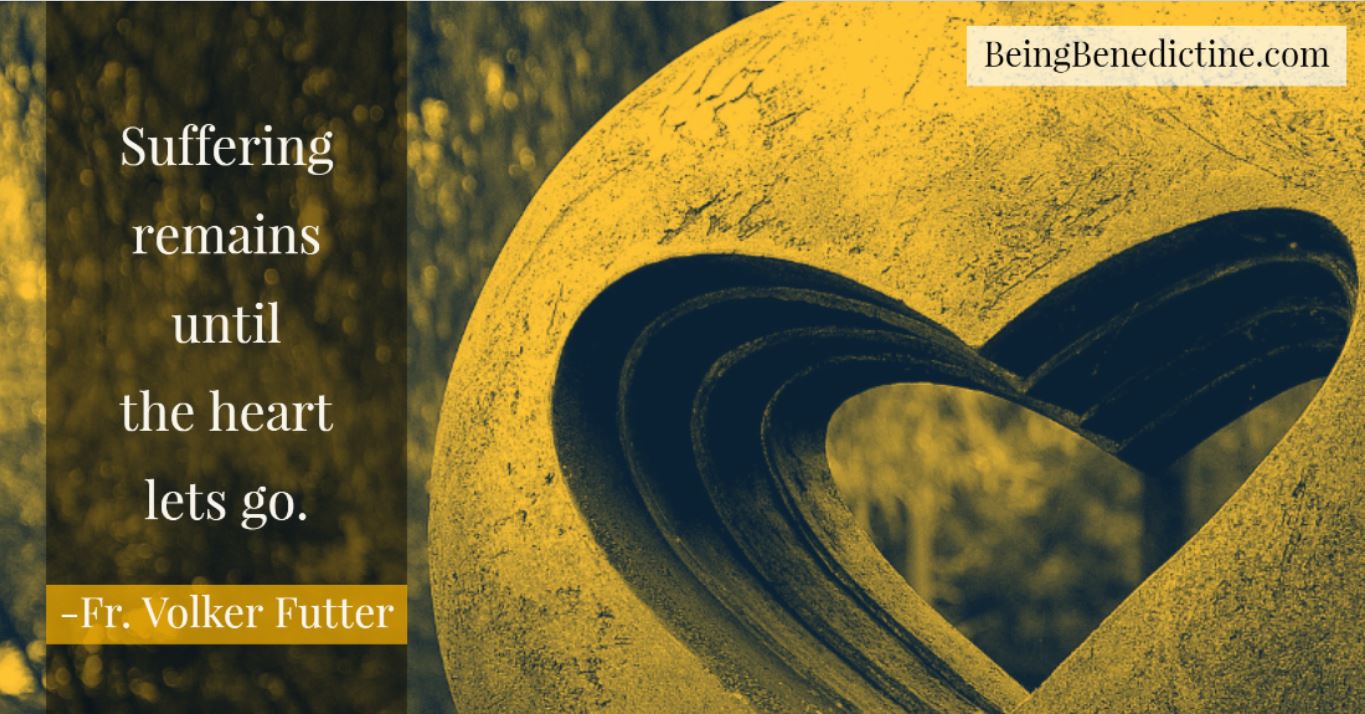
St. Benedict states that the life of a monk ought to be a continuous Lent  (RB:49). St. Benedict in his wisdom knew few would have the strength for this, so he has other suggestions. Fr. Volker Futter, Oblate Director, shared two important ideas:

  1. Lent is self-offering, not denial, it comes from the heart.
  2. We need to acknowledge  the presence of God then we can do sacrifice.  Sacrifice can be giving up something specific like food, TV or internet, or we can give a positive sacrifice.

Oblates shared that “giving of your time is priceless—you can’t get it back”.  So a short visit to the nursing home, or a visit to a neighbor or sending someone a long overdue card—that is your gift of time. “This may sound simple, but one of the hardest things for me to do is find that priceless gift of time for others.  It really is a sacrifice.”

A definition of compunction of heart was requested.  Compunction of heart is when we have an uneasiness or anxiety of the conscience because of something we may have done that may have caused worry, fear, etc. in someone’s heart.  When we give this up we receive more in return. Continue reading “Prayer during Lent (and other times too)”

Blessed are the Poor

I’ve been thinking about the decision to give (or not to give) to a beggar on the street since Pope Francis suggested that giving “is always right,” whether one thinks the other is truly in need or not.  A few evenings ago, as I was leaving a movie theater, having spent a lovely evening with friends, there was a homeless man with a sign asking for donations. Engaged in conversation, I quickly walked by him. I was unsure if I had any cash on me at the time, but as I reflected on my thoughts and actions, I realized that I did not (or could not) look the man in the eye, and I wondered why.  If I had money with me, would I have given it to him? Would I have looked him in the eye then? I felt a sense of shame–some for not giving him money,  but more so that I hadn’t looked at him directly.  Looking someone in the eye honors their dignity–it acknowledges WHO THEY ARE.

poor

Continue reading “Blessed are the Poor”

A Benedictine monk and 900 pounds of cheese  

How did Fr. Volker end up with over 900lbs of cheese?? Learn how this modern day ‘Traveling Brother’ drives 2500 miles to meet with over 150 families every year!


Shortly after coming to the United States, three of the Benedictine Monks began the task of fundraising by traveling to communities in various states. Brother Egbert, Brother Felix and Brother Placidus began their work in New York, among the German immigrant communities. They became known as the ‘Traveling Brothers’. 

Since World War II displaced many immigrants, several groups from Luxenburg and Germany settled in Wisconsin. A large group started their lives over in Port Washington, Sheboygan and Marathon City. These people were primarily farmers–many were dairy farmers. As the brothers reached out to them for support of the missions, relationships and friendships developed that have lasted to this day. Often during these visits the farmers would gift the brothers with the fruits of their labors – cheese. 

Read story – http://bit.ly/2lIg3pQ

Article written by Mary Vrbicky, Benedictine Mission House. 

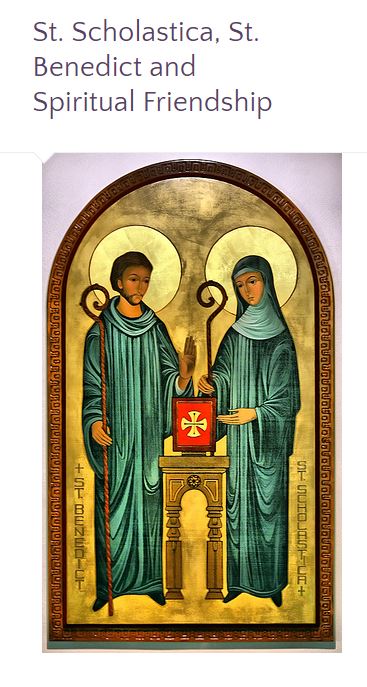
St. Scholastica, St. Benedict and Spiritual Friendship

I received the gift of the Holy Spirit when I was nine years old. It took many months of catechism class to prepare to receive the sacrament of Holy Confirmation in the Catholic Church. There were dozens of questions about doctrine and faith to study, like:

What is a sacrament?  A sacrament is an outward sign made by Christ to give grace.
What is grace? Grace is any gift from God.
How many persons are there in God? There are three Persons in God.

 ….and so on. There were scores of prayers and creeds to memorize, months of CCD every Wednesday afternoon and hours of quizzing by my parents at night, but the pay-off for a nine-year-old girl was the opportunity to choose a saint’s name as my second middle name. All by myself. This was a big deal. It seemed like such a grown-up thing to do, to pick MY OWN name. I chose the name Christine, not because I knew anything about St. Christine, but because the name was so pretty to me. Jodi Marie Christine.

My grandma was so proud of my Confirmation that she called me Christine the whole day. My parents gave me an illustrated book of the “Lives of the Saints” to commemorate the occasion and as any nine-year-old would do, the first thing I did was look up my birthday. I was immediately disappointed. The illustration seemed so dark –a man with a hood, a scary looking bird and a funny name that I had only associated with Benedict Arnold, a famous American traitor.  After gaining such a beautiful name like Christine, what kind of luck did I have to get a guy named Benedict on my birthday?!  July 11, St. Benedict, Abbot, it said.  I read the pages about St. Benedict often, thinking that I should have some connection with this man as my patron saint, but then I forgot about him until…

confirmation

Continue reading “St. Scholastica, St. Benedict and Spiritual Friendship”

In Times of Confusion

How do you stay calm in face of distractions, temptations, a whirling frenzy of activity, either from the outside or within your own spirit?  Sometimes the disturbance is our mind– we just think too much! The Rule of St. Benedict gives guidance to help monks manage the disturbances and confusion that inevitably come. Fr. Mauritius provides some insight on how monks find their way back to peace and tranquility.

Follow the link to Fr. Mauritius’ Wilde Monk blog to read more, but be sure to come back to BeingBenedictine to share your comments.

Consider: Does advice in the Rule apply to the ordinary person’s life? How do you manage disturbances from the outside or from within? How do you find rest and peace in confusing times?  Continue reading “In Times of Confusion”

Blog at WordPress.com.

Up ↑