Search

Being Benedictine

Living SoulFully as an Oblate of St. Benedict

Tag

compassion

His Heart Was Moved

September 2025 Oblate Reflections

“In a delightful letter on the contemplative life called The Ladder of Monks, Guigo II (a 12th-century Carthusian monk) divides the experience of Lectio into four phases or degrees: reading, meditation, prayer, contemplation. Reading, he says, puts food whole into the mouth. Meditation chews it, digs for treasure. Prayer extracts the flavor and helps us to get to know the treasure. Contemplation embraces and welcomes the thirsty soul.” (A Tree Full of Angels: Seeing the Holy in the Ordinary, Macrina Weiderkehr)

Lectio Divina: Matthew 9:1-13; 35-36

He entered a boat, made the crossing, and came into his own town. And there people brought to him a paralytic lying on a stretcher. When Jesus saw their faith, he said to the paralytic, “Courage, child, your sins are forgiven.” At that, some of the scribes said to themselves, “This  man is blaspheming.” Jesus knew what they were thinking, and said, “Why do you harbor evil thoughts? Which is easier, to say, ‘Your sins are forgiven,’ or to say, ‘Rise and walk’? But that you may know that the Son of Man has authority on earth to forgive sins”—he then said to the paralytic, “Rise, pick up your stretcher, and go home.” He rose and went home. When the crowds saw this they were struck with awe and glorified God who had given such authority to human beings.

As Jesus passed on from there, he saw a man named Matthew sitting at the customs post. He said to him, “Follow me.” And he got up and followed him. While he was at table in his house, many tax collectors and sinners came and sat with Jesus and his disciples. The Pharisees saw this and said to his disciples, “Why does your teacher eat with tax collectors and sinners?”

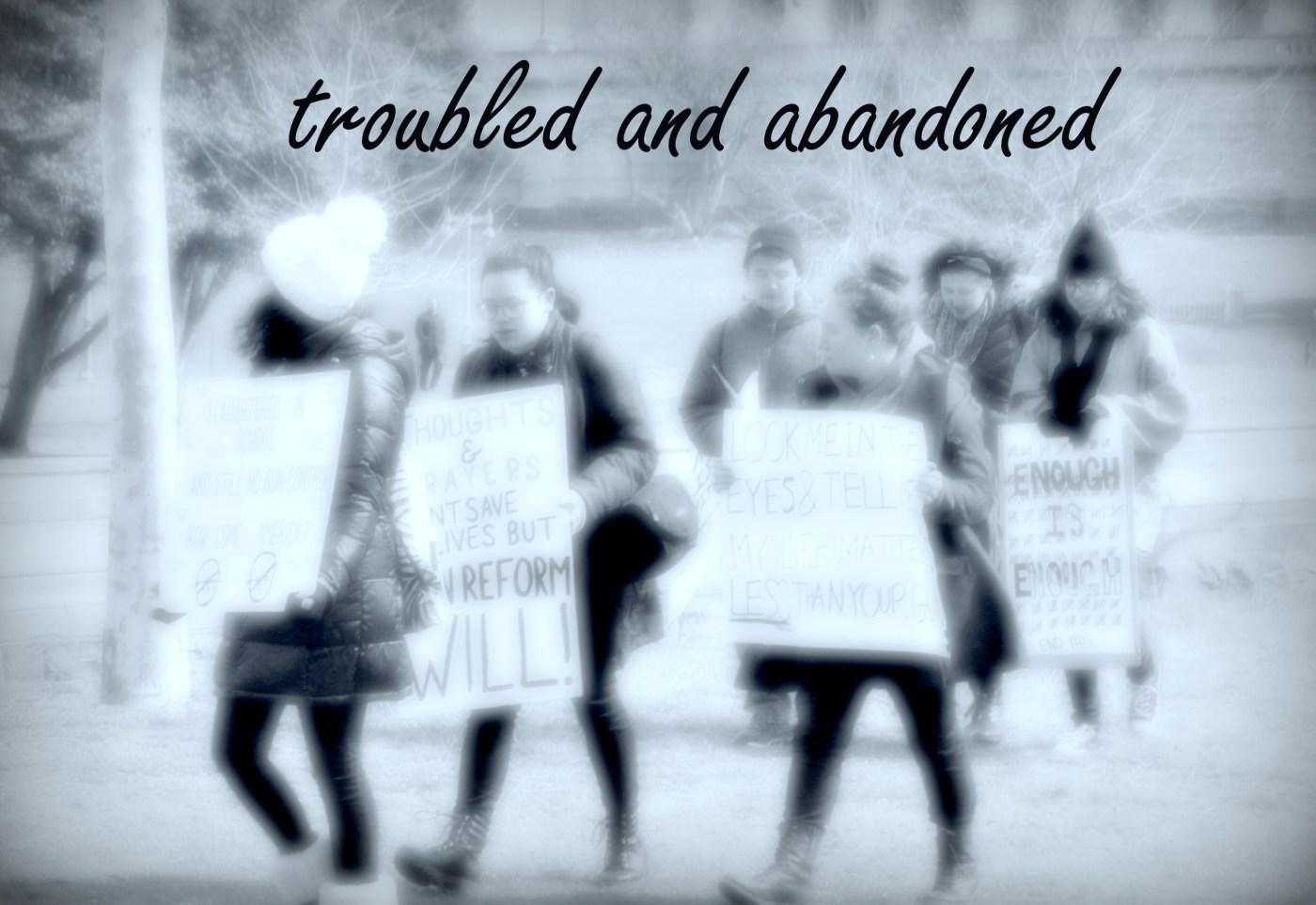
He heard this and said, “Those who are well do not need a physician, but the sick do. Go and learn the meaning of the words, ‘I desire mercy, not sacrifice.’ I did not come to call the righteous but sinners.” Jesus went around to all the towns and villages, teaching in their synagogues, proclaiming the gospel of the kingdom, and curing every disease and illness. At the sight of the crowds, his heart was moved with pity for them because they were troubled and abandoned, like sheep without a shepherd.

In our oblate group, we read, reflect, respond, and rest in sacred scripture. There is a synergy that results from sharing a word or phrase that resonates within, as well as the wisdom or insight each has received. I leave with a greater understanding of other perspectives and of how I am called to follow Christ.

Some reflections from our reading:

Courage, child, your sins are forgiven…Rise, pick up your stretcher, and go home. Jesus’ first instruction is to have courage and to know that sins are forgiven. Many aspects in our life require our courage—difficult conversations, facing our own limitations, expressing love, making or adapting to changes, dealing with physical or emotional suffering, feeling despair, and understanding our next steps in each season of life, to name a few. Life requires courage. Some questions we might consider in taking Jesus’ advice: What is our stretcher or our crutch? Where might we be trapped or paralyzed? We are not to harbor evil thoughts about others or ourselves, knowing that nothing can separate anyone from the love of God. Jesus asks us to rise—right where we are, no matter who we are, and go home. Our home is much more than a brick-and-mortar dwelling. Home is a place of peace, where we can be seen and heard, loved and believed, held and yet free. Home accepts all the parts of our self, our truest self.

Home is where you belong. It is your shelter and place of rest, the place where you can be yourself.  –John O’ Donohue, Eternal Echoes: Celtic Reflections on Our Yearning to Belong

They were struck with awe and glorified God who had given such authority to human beings. We are to become like Christ. We can rise up, go home, follow, listen, have our hearts moved, give mercy, have courage, doubt, choose, forgive and be forgiven, be filled with awe, mix and mingle with the “tax collectors and sinners” of our day (the poor, oppressed, and marginalized), and be compassionate. In a very short story, Jesus asks much and gives much. He is an example of who we can be to others. The crowds were struck with awe by what Jesus did. We, too, can stand in awe of the kindness of others, a spectacular sunrise, or a day of feeling healthy. In each day, there are countless ways to choose awe and gratitude, glorifying God in all.

I did not come to call the righteous but sinners. Accepting both the righteous and the sinner within ourselves is a sort of homecoming. Accepting with humility that we are not one or the other—saint or sinner—is the way to integration and accepting others. Jesus tells the crowd that he desires mercy. We can be merciful, too, slow to judge ourselves and others.

His heart was moved. This line resonated with me the most. Jesus, in his humanity, felt pity for the “troubled and abandoned.” Beyond our bodies, Jesus sees our inner wounds, our fears and anxieties, our feelings. He sees beyond the physical to our spiritual and emotional needs. This, too, we must ask—who might the troubled and abandoned be today?  We can only know who they are by deep listening, extending hospitality, and having compassion as Jesus did. And then we must ask, how are we responding to them? With judgment or with a moved heart?

More on compassion here.

© Jodi Blazek Gehr, Being Benedictine Blogger

Everyone Deserves To Be Heard

Everyone deserves to be heard.

I realized this most profoundly when I was the one who felt unheard. Perhaps you, too, have had a moment like this when you felt no one was listening—a meaningful, traumatic, challenging, or gratifying experience that needed to be shared fell on deaf ears.

I have written about the Benedictine promises of obedience and the importance of listening to God and others as part of one’s spiritual growth. “Listening requires us to pause, to have silence, and to be open to seeing in a new way. Listening can lead to a shift in perspective, a flash of insight, a new understanding. When you listen closely to another, it is an expression of love,” I shared in a recent reflection.

It is just as crucial to examine the impact it has on others when we are forgetful about listening—understandably, we get busy, or miss clues that others need our ear. Indeed, there are times when others may not realize how important it is (these slights may be easily forgiven), but there may be other times when you or another is summarily dismissed. The message is loud and clear—either you or what you have to say is not valued. It feels hurtful, as if you don’t matter, as if you are insignificant. Being intentionally rejected for your thoughts, ideas, feelings, and experiences leaves a wound, a hole in one’s heart, a sense of being rejected or abandoned.

For me, the experience of not being heard came during a traumatic time for women who had been sexually harassed, abused, or assaulted. I felt my trauma, but also the suffering of so many beyond me. It was a profound compassion, sharing the wound. It came to me then, weeping, that this is what it might feel like for those who have spent their entire lives not feeling listened to, of all those who have been unheard throughout our history, from the enslaved, defeated, oppressed, and marginalized—those who have no one to listen to or validate their pain. They had a story in their heart that needed to be heard, then and now.

Compassion asks us to go where it hurts, to enter places of pain, to share in brokenness, fear, confusion, and anguish. Compassion challenges us to cry out with those in misery, to mourn with those who are lonely, to weep with those in tears… Compassion means full immersion in the condition of being human.” –Donald McNeill, Douglas Morrison, and Henri Nouwen (quoted in Boundless Compassion by Joyce Rupp)

My heart felt broken—not just for me, but for the lack of compassion I may have shown others. Simultaneously wounded and regretful, a part of me died while something else was taking root—a desire to listen to those who feel unheard, to offer acceptance where there might not be, to advocate for those marginalized.  I felt pierced entirely with compassion. Tears flow often now for the suffering that, perhaps, I had not noticed before, the pain that I may have caused others, and the pain that continues to go unnoticed or even flatly denied.

I created a SoulCollage® card shortly after this eye-opening, traumatic experience. Consider the image and the following questions.

“The eyes of the Lord are toward the righteous and his ears toward their cry”. -Psalm 34:15

Questions for reflection:

Do you have a story you would like to share with someone? Have you been able to share it with another or write about it? If so, how did it make you feel to be heard? Does it inspire you to listen to the pain and suffering of the world?

Can there be some healing for your wound by expressing it to God if there is no one to share it with? Are you available for others to share their story with you? What is the consequence for a loved one if their story isn’t shared? Is there a person or marginalized group of people that you may listen to more closely than you have?

May our prayers be heard for all those suffering, and for those who have shared their stories but not been heard. May we listen with “the ear of our hearts,” as Benedict instructs. May we be moved to tears. Amen.


© Jodi Blazek Gehr, Being Benedictine Blogger


Kindness Matters

“We have God and we have each other. We have our island community, fragile, and yet a fortress.”

–Parable of the Sower, Octavia Butler

The past few months have presented some hard times in my circle of friends and family. Each week presents a new situation—diagnosis, dying, death—all of it; not to mention the growing instability in our country and world. It seems impossible not to feel sadness, loss, fear, even despair.

Over a recent campfire conversation with friends, my husband shared a sympathy card he received after his brother, Steve, passed away. Overcome with tears, he could not get through the words, so I finished reading it for him. I, too, was in tears by the time I reached the end. And that’s when it hit me–this is how we must walk through any darkness we face: KINDNESS.

My husband’s former co-worker was so thoughtful! His words are an example of how we can extend kindness to others. We are grateful for all the acts of kindness from so many during the last few weeks and throughout our lives. Kindness matters.

Continue reading “Kindness Matters”

A Controversial Commencement Address and Being Benedictine

The commencement address given by professional football player Harrison Butker at Benedictine College, a small liberal arts college in Kansas, has generated some big social media buzz. The narrow vision of Catholicism, the limited view of gender roles in the family, and the many backhanded as well as overt insults that thread their way through the message left me stunned. I am concerned the speech will be interpreted as a reflection of the Benedictine tradition and the incredible monks, sisters, and oblates I know.

Being Benedictine, as I have come to understand, is a spirituality that is inclusive, loving, and accepting of all. The speech seemed judgmental, hurtful, and exclusive. Not wanting to jump to conclusions with just a few quotes taken out of context, I read the entire script more than a few times, looking for something redeemable, and anything resembling a celebratory graduation message.

This was as close as I could come:

Ladies and gentlemen of the class of 2024, you are sitting at the edge of the rest of your lives. Each of you has the potential to leave a legacy that transcends yourselves and this era of human existence. In the small ways, by living out your vocation, you will ensure that God’s Church continues and the world is enlightened by your example.

Unfortunately, the “potential to leave a legacy” is very narrowly defined in Butker’s speech, one that restricts women’s roles in their families while limiting “God’s Church” to those Catholics who believe in precisely the way that Butker does. In an already contentious political and religious environment, the message prompted a statement in response from the Sisters of Mount St. Scholastica, a founding institution and sponsor of Benedictine College:

The commencement speech has fostered division rather than promoting unity using the foolproof methods of taking a superior tone, insulting those who believe differently, and claiming to possess the truth as others are surely lost souls. Being Benedictine, in my experience, is a genuine attempt to meet others in love and compassion, listening with the intent to understand, encouraging inclusiveness, and respecting diversity.  Yet, Butker claims, “The world around us says that we should keep our beliefs to ourselves whenever they go against the tyranny of diversity, equity, and inclusion.”

The tyranny? Diversity encourages learning, creativity, personal growth, social justice, and more. It is a blessing to share our faith and to have someone truly listen, especially those who might believe differently. How are we to learn or grow in compassion without diversity? Growing up in the Catholic Church, I was taught my religion was the “one, true faith” and, later, in a brief experience with fundamentalism, the assumed imminent rapture was used to convince others that they should urgently accept Jesus as their “personal Lord and Savior” so as not to be “left behind.” Neither of these religious messages was delivered in love. When one thinks they know for certain who God is, they feel entitled to judge that God is for them and not for others, or that their place in heaven is secured while others are surely burning in hell.  Being certain about something is likely the biggest sign of ignorance and self-righteousness; being open to hearing who God is to another brings possibility, understanding, and appreciation of diversity. Not all Catholics, Christians, or Benedictines agree with this limited view of the love of Christ, but, sadly, this is what Christianity has come to look like to many.

Continue reading “A Controversial Commencement Address and Being Benedictine”

Both Life and Choice

March for Life, 1978

Earlier than I would get up for school and before the snowy roads were cleared, an eager catechism teacher drove me and a friend through a snowstorm to walk in the March for Life, an annual event opposing both the practice and legality of abortion, culminating with a rally at our State Capitol. In my sixth-grade CCD class (circa 1978), I had recently learned about abortion and was taught that unequivocally, it was wrong.

I learned that morning that not everyone sees abortion, or pro-life issues, the same way. I was stunned as we entered the Capitol that there were women already positioned on the balconies, holding signs and shouting at marchers about having rights to their own bodies. It left me very confused—a woman’s body is different than an unborn baby, I thought, and yet there was such passion, so much anger. (Photo credit: Lincoln Journal Star, NE State Capitol, 2019)

As an outspoken pro-life teenager, I was so sure of what I understood about abortion that in 1984 I wrote a letter to the editor of the Daily Nebraskan, my college newspaper. I pulled that old newspaper out of storage a few days after Roe vs. Wade was overturned. Nearly four decades later, I am uneasy with what I wrote. What I used to be so sure of, I am now less certain of and often, in complete disagreement with my younger self.

What I have learned since then about life and choice.

Two things can be true at the same time. I believe BOTH that human life is sacred from the time of conception AND that we are created to have free will. We have agency over our own bodies, choosing whether our life continues and/or whether we will bring life forth. Embracing a culture of life is respecting not just the unborn child, but also the pregnant woman while advocating for issues including prenatal care, childcare, gender equality, trafficking, healthcare reform, gun safety, racism, climate change, LGBT rights, capital punishment, and so much more.

We are BOTH created in the image of God AND given a life of choice, of free will, from the beginning. As the story goes, Adam and Eve were gifted with a beautiful garden and the choice to eat from the tree of knowledge of good and evil, or not. They were given agency over their bodies, and from the beginning were able to choose their actions. Humans make both good and bad choices—and we suffer the consequences. Further, Christian tradition holds that the angel Gabriel announces to Mary that she will conceive and bear a child who will be named Jesus, the Incarnation (Luke 1:26–38.) In her “fiat,” Mary consented; she said yes.

Continue reading “Both Life and Choice”

Now I Become Myself: Stand Still

In the past few months, I have become smitten with the PBS series, Call the Midwife, based on the memoirs of Jennifer Worth, a midwife in 1950’s London. I have heard of the show for years, but, late to the game, I just started Season 1 in September 2021. (I will likely be through Season 6 by year’s end, so I am unstoppable now.) In Season 3, Nurse Jenny Lee, one of the midwives of Nonnatus House, was grieving the sudden death of her boyfriend. Sister Julienne, recognizing Jenny Lee’s need to acknowledge her grief, suggests that she “take compassionate leave.”

Take compassionate leave.

Such powerful words.

How compassionate that Sr. Julienne understands that going through the motions of “normal” will not be helpful or healing. One must honor the soul’s need for being still with our grief and our many other emotions or experiences. We heal only when we take time to “stand still, to be here”, as May Sarton (1912-1995), American poet, novelist, and memoirist, pens in her poem, “Now I Become Myself.”

As we journey through the many deaths we experience throughout our life, even the little ones where we must let go of our expectations, we must “take compassionate leave” to listen to our soul speak. It is self-compassionate to take time to listen deeply to the soul, to process through, to understand, and make meaning of the experiences of our lives—both the grief and the joy, the transitions from one life stage to another—to just be with our emotions and the response in our body. Sometimes that can be done in our ordinary lives, but other times we may literally need to take leave by going away or on retreat.

Continue reading “Now I Become Myself: Stand Still”

A time for everything under the heavens

August Lectio Divina and Oblate Discussion

SourcesLectio Divina, Ecclesiastes 3:1-11, There is a time for everything under the heavens.

Come, let us worship God who holds the world and its wonders in his creating hand.

-Antiphon, Week 3 Saturday

Such an affirming antiphon for times when I think I am the glue that holds all things together. I am most definitely not. It is God who holds the world and its wonders in his creating head. And I just need to remember.

This morning, I remind myself of this as feelings of guilt creep in that I have not posted on behalf of my oblate family since April. Much has happened in this time for me: I finished a year of teaching during during a pandemic (how many people can say that?), I led a retreat, I went to a retreat, I helped my daughter plan her summer wedding, I helped my parents with health issues that surprised us ten days before the wedding AND most wonderfully, we celebrated the marriage of our daughter, Jessica, to John Holland. It has been a summer full of ALL of the emotions.

Much as happened, we can assume, in each of our lives. Knowing this, we can give ourselves and others compassion when we feel we are falling short, when we don’t meet the expectations we have placed on ourselves. Each of us has a story. There is a time for everything, and how wonderfully TIMELY is our lectio reading for today:

Continue reading “A time for everything under the heavens”

The Gift of Good Works

March 2021 Lectio Divina and Oblate Reflections

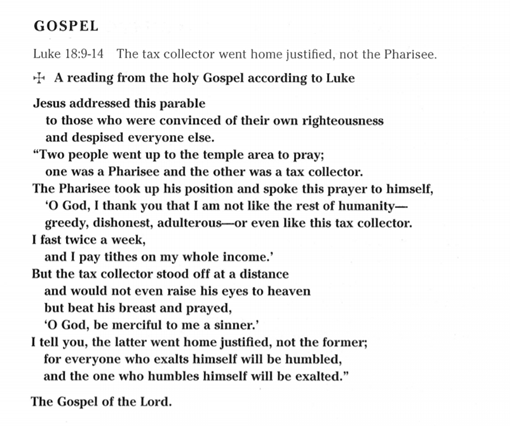
Sources: Luke 18: 9-14; Good Work; Teaching and Learning—Always We Begin Again by John McQuiston II

We begin our Oblate Meeting with Lectio Divina practice by reading Luke 18:9-14.

We began our discussion with the question: Can I find myself in both the Pharisee and the tax collector? There is no doubt that we have each of them within us, not just one or the other.

We can dig deeper by asking: How can I come into relationship with Jesus and others knowing I am a multi-faceted person, not all good or all bad. This parable is addressed to those who feel their righteousness (I’m a good guy), and may despise others for not being as good. We compare ourselves to others—our good works become a score card rather than a gift from our heart. We must avoid creating a tally of our good works or making comparisons with others about how good or bad I am (or how good or bad someone else is)—we  are ALL sinners and in need of God’s mercy; not one of us is more worthy than another.

Continue reading “The Gift of Good Works”

Put on a Heart of Compassion

February 2021 Lectio Divina and Oblate Reflections

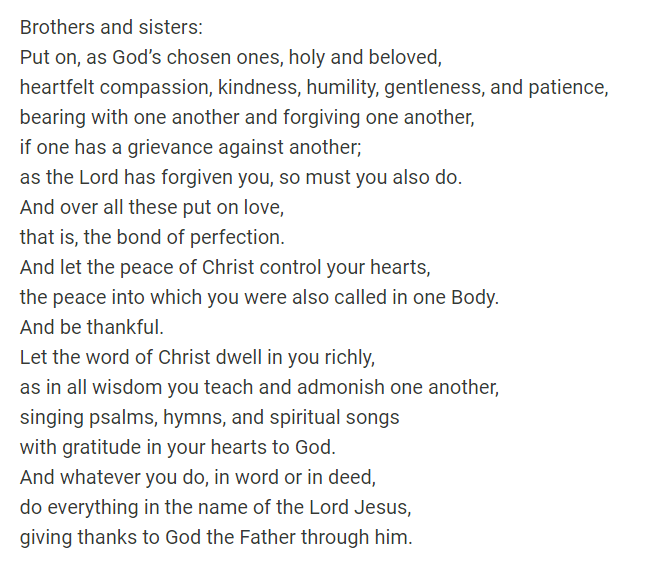
Sources: Colossians 3:12-17; Always We Begin Again: The Benedictine Way of Living by John McQuiston II (pages 17-22)

For our Lectio Divina practice, we read more deeply Colossians 3:12-17

We share aloud, some of the words and phrases that resonate with us:

God’s chosen ones, holy and beloved. Put on…heartfelt compassion, kindness, humility, gentleness, and patience.

Bearing with one another. Forgiving one another. Put on love….that is the bond of perfection.

Let the peace of Christ control your hearts. Be thankful.

Let the word of Christ dwell in your richly. Gratitude in your hearts. 

Compassion: We think of compassion as feeling sorry for someone, but it is to feel with someone, to enter into the sufferings and joys of another person. Jesus had compassion for us, entering fully into our lives. He is one with us. We are called to emulate this kind of compassion with others. Sometimes there may not be much we can say to another, but we can give our presence, a physical touch. Wordless gestures are just as compassionate, perhaps even more so.

Continue reading “Put on a Heart of Compassion”

Blog at WordPress.com.

Up ↑