Search

Being Benedictine

Living SoulFully as an Oblate of St. Benedict

Tag

faith

SoulFully You: Special Programs in April 2024

It is a joy to create workshops and retreats for special projects. I had the opportunity to lead a few SoulFully You programs in April for ECHO Collective and St. Andrew’s Episcopal Church – Omaha.

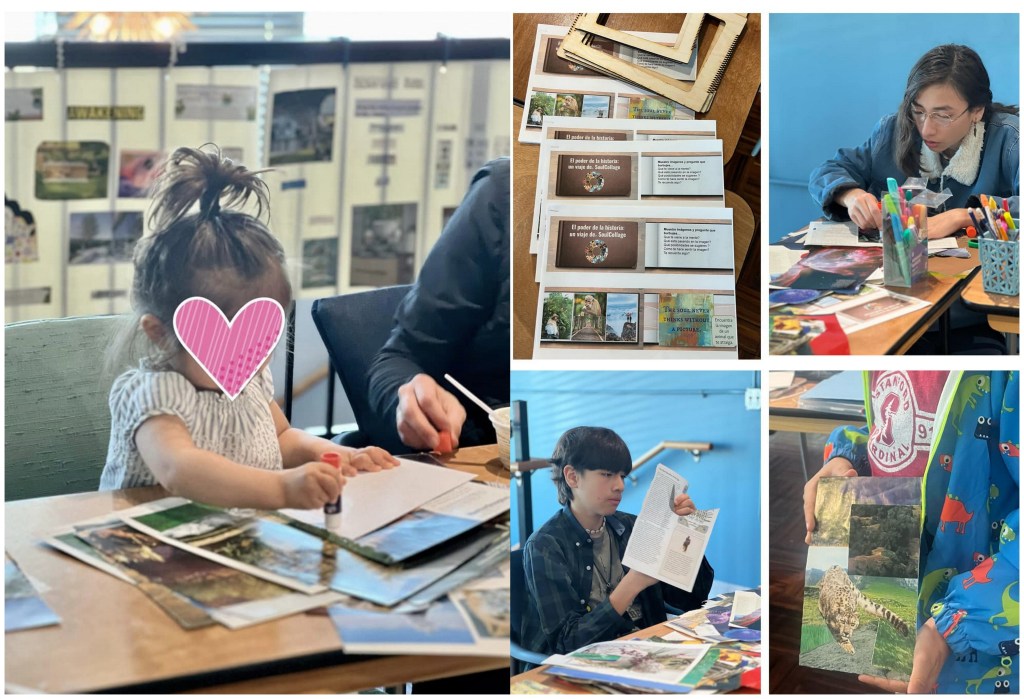
ECHO Collective connects and empowers refugee and immigrant women providing opportunities for personal growth and cross-cultural relationships.  With a grant from the Nebraska Arts Council, ECHO is offering a weaving class to women and children using SoulCollage® as a springboard for a tapestry design. In the first session, we explored the power of their unique stories, reflected with images to create a SoulCollage card, and discussed how weaving their stories together can bring healing. Mothers, teens, and young children participated, including my youngest ever–a two-year-old sweet girl particularly attracted to images of white bunnies. Participants will learn weaving techniques for several weeks to create their own and a community tapestry.

The promise of peace comes through story. When we are willing to bear witness to one another, to take other’s and joy seriously, to listen deeply, with full attention, to tell other’s stories over–we reweave the bonds of civil society.“- Rabbi Dr. Ariel Burger

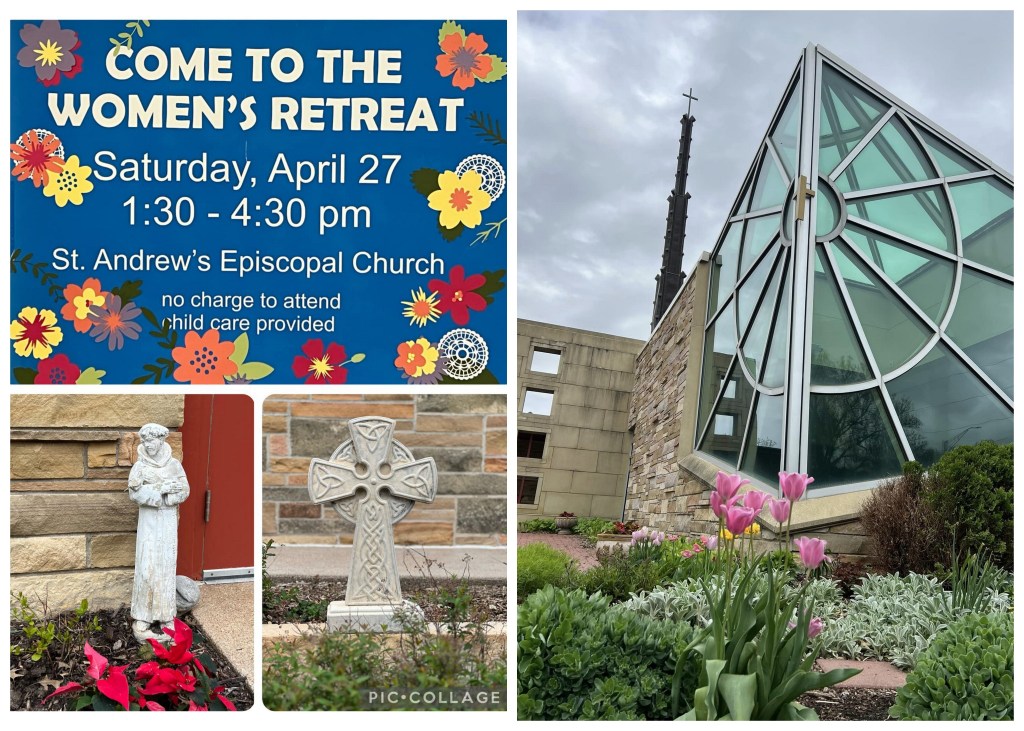
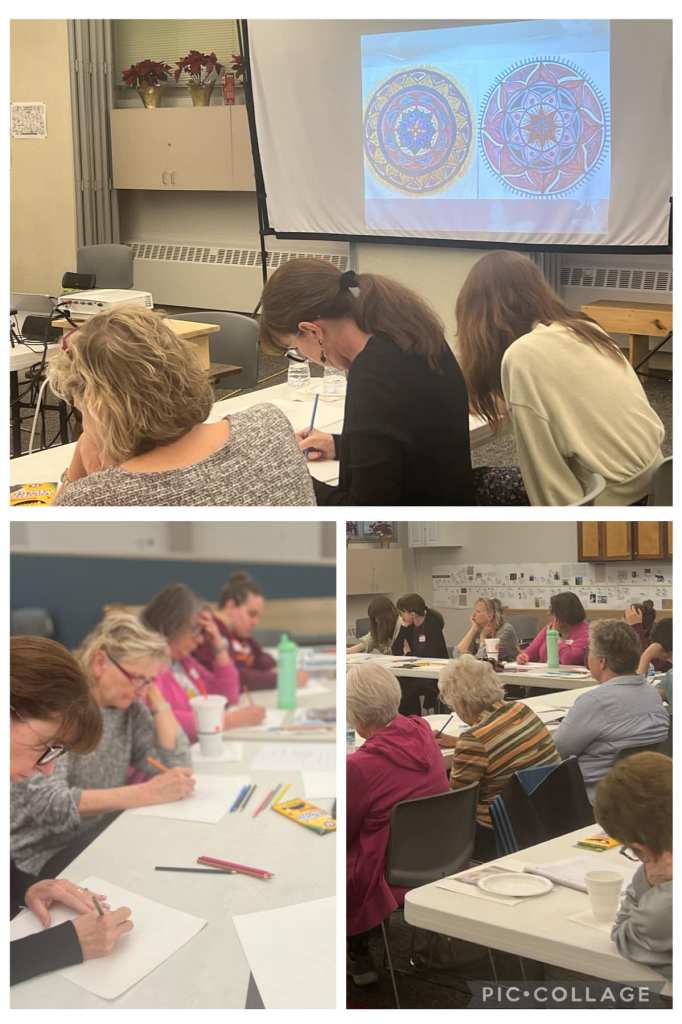
St. Andrew’s Episcopal Church hosted a women’s retreat titled “SoulFully You: Many Ways to Pray” that focused on finding God in music, movement, nature, words, and creativity. Richard Rohr writes, “We are already in the presence of God. What is absent is our awareness.” Twenty participants practiced Lectio Divina with the poem I Happened to Be Standing by Mary Oliver and learned how to create mandalas. Group discussions, journaling, and prayerful activities highlighted the wisdom of Simone Weil, that “pure attention is prayer.”

 If you begin to live life looking for the God that is all around you every moment becomes a prayer.” -Frank Bianco

For more information about SoulFully You retreats, see upcoming retreats held at St. Benedict Center and possible retreat themes here. If you are interested in having a retreat or workshop created for your organization, church, or special interest group, contact me here.

© Jodi Blazek Gehr, Being Benedictine Blogger

2024 Word of the Year: FULLY

Choosing a word to focus on each year has become a nourishing, soulful ritual. I savor the word, that more so chooses me, throughout the year—it brings great joy when in perfect synchronicity, it appears over and again in what I read, hear, and see. I trust that the word, as it settles in my heart, will be a guiding light for months to come—challenging, inspiring, and transforming me.

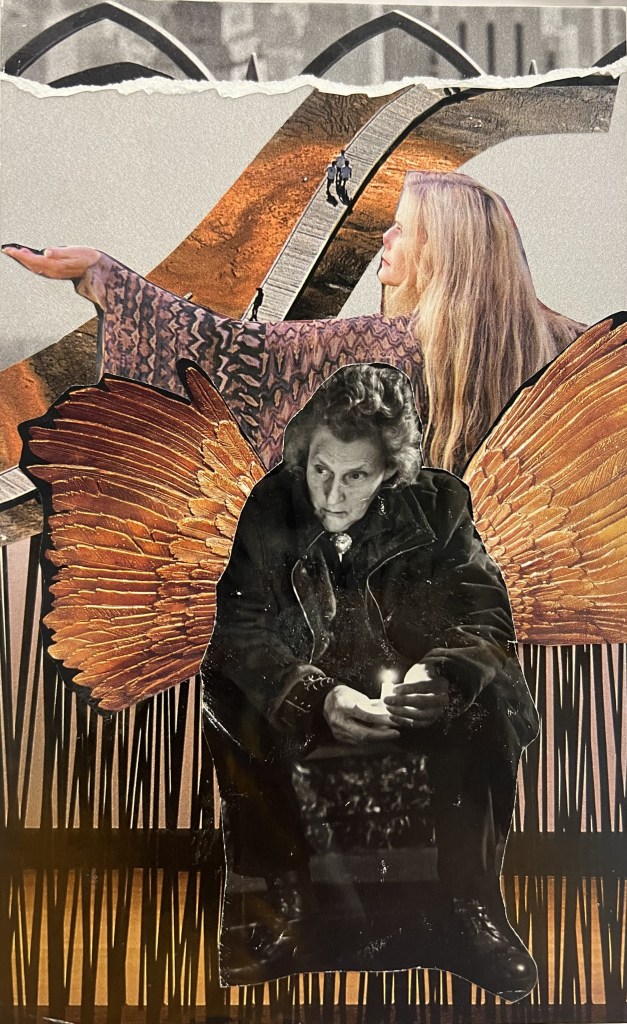
My 2024 word of the year, FULLY, is a throwback to ten years ago when I birthed and named my first website and creative venture, SoulFully You. I participated in training to become a certified SoulCollage® facilitator, to lead retreats on creativity and spirituality. As a Marketing teacher, creating a brand name felt like the best first step. With my daughter Jessica and her friend Claire (both students of my high school classes) we brainstormed a variety of words, phrases, and combinations, and then it clicked, that “aha moment” of knowing I have come to trust—SoulFully You. I loved what it meant, and still do. The image at the top of this page, a SoulCollage® card to represent SoulFully You, came later.

Being SoulFully You is living with purpose, on purpose; being attentive to the present moment; practicing gratitude; making good choices and having no regrets; living with death daily before your eyes, as St. Benedict writes; and leaving something beautiful from a life well-lived. It is living life to the fullest, using the gifts and talents you have while being open and responsive to opportunities and surprises that come your way.

A tree gives glory to God by being a tree.

Thomas Merton

Being SoulFully You is discovering and becoming all that God has created you to be. Thomas Merton writes, “For me to be a saint means to be myself.” The call to be holy is the call to be more fully myself, just as a tree gives glory to God by being a tree.

Continue reading “2024 Word of the Year: FULLY”

The Sound of Silence

December 2023 Oblate Reflections

Source: The Oblate Life, edited by Gervase Holdaway, OSB, 2008

Men and women who have made monastic vows, called monks, practice stability by committing to a specific monastery. “The monk is an archetype, whether we live in a monastery or not, we have a sense of what it means to be a monk. We long to be together with God in solitude.” (Fr. Mauritius Wilde, OSB)

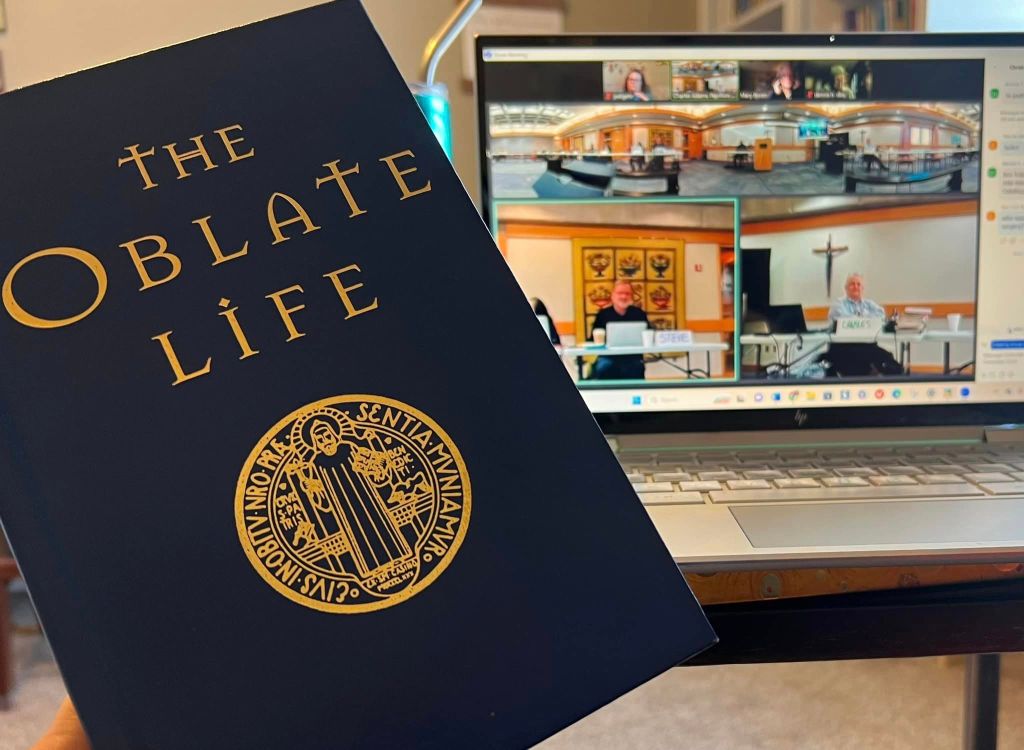
Being Benedictine as an oblate is making a commitment to a monastery, living the core values of obedience, conversion of life, and stability while following the Rule of St. Benedict as monks “in the world,” meeting monthly to practice Lectio Divina and discussing a spiritual reading. In the age of Zoom meetings (in which I, gratefully, participated this month), it is a good reminder that it is the monastery that I am drawn to—to the sacred rhythm of prayer and respect for silence, the theme of our discussion (December 2023.)

Grateful for the option of Zooming in to Oblate meetings, but it’s never quite the same. I love to go to our monastery and retreat center.

“If we are to learn about silence and cultivate its art form, the monastery is the first place to visit, for it is within the ancient tradition of monasticism, that we can begin to understand the relevance and the need for silence as a discipline, and a way of life. It is highly relevant that the very first word of the rule of Saint Benedict is listen.”—Susie Hayward, Silence, The Oblate Life

In silence, we can be transformed. “We will begin to see the ‘world’ differently, our breathing will become more rhythmical, surrounding color will intensify and brighten and our eyes will see more clearly and with greater perception.” (Hayward) We become more attentive. We notice the details around us, and we notice what is happening within us.

I had this experience during a contemplative prayer retreat over 20 years ago, my first visit to the monastery and retreat center that has become such an important part of my life. Even during our meals, we sat in silence, which contributed to a heightening of my senses—the quiet and stillness provided a backdrop through which I appreciated the color and tastes of ordinary foods—lettuce, tomatoes, bread, pasta, butter, milk.  It was pure ecstasy to look, touch, and taste—to interact with my food.  This sentiment—the sensitivity to physical, tangible cues—carried over into watching fish swim in the pond, grasshoppers jump from one station of the cross to the next, a candle flickering.  All things seemed to be created for me.  Every movement, color, taste, and sensation seemed special, whereas just days before it was ordinary.

Silence magnifies an experience. The practice of silence helps cultivate attentiveness to others and to how God is working in our lives. Thomas Merton writes, “By learning to listen… we can find ourself engulfed in such happiness that it cannot be explained: the happiness of being at one with everything in that hidden ground of Love for which there can be no explanations.” This type of interior silence must be cultivated. Visiting a monastery where there is silence can help, but one can create physical spaces in our own homes to remind us that times of silence are needed.

Hayward writes that “without silence, God has no voice.” No doubt silencing the noise of our daily lives can help us be more aware of the divine—in creation, in others, in words we read, in the thoughts that run through our mind, and in the story we tell ourselves. Indeed, silence allows us to experience the sacred, but many of us have felt God working, “God’s voice,” through the written or spoken words of others. In discussion, we wonder—do we really need absolute silence to hear God?

Perhaps Hayward means that we need to silence ourselves—to shut our mouths, to let go of thoughts and stories, and to be truly present wherever we find ourselves. If we are in conversation with another, there is sound, not silence, but we can practice interior silence by deeply listening to the other and standing witness to another’s story. It is important to remember that the first word in the Rule of St. Benedict is “Listen.” We must practice silence, both in words and thoughts, in the presence of the divine, including others.

Hayward writes about “the experience of feeling the total ‘presence’ of another person, in such a profound way that ‘in that moment’ we will have felt absolutely heard, totally cared for and completely understood.” What a gift to be heard and to hear others without the noise in our heads! She continues, “Listening reflectively in this attentive and empathic way allows each person to respond to the other fruitfully.”

God is working in this ‘total presence,’ the compassionate listening to another’s story. May we practice silence, to listen, see, and fully experience the humility of unknowing all that we think we know, to experience a oneness with our Creator, with creation, and with all those whom we share both.  

© Jodi Blazek Gehr, Being Benedictine Blogger

Be Yourself! The Call of a Christian

Evangelization used to be a scary word to me. I thought it meant that I must convince another of what to believe in or, on the other hand, that I, held captive, would be the recipient of a sales pitch about another’s faith. Both situations make me extremely uncomfortable.

I have come to feel differently about this intimidating word, “evangelization”, through the insight of Fr. Mauritius Wilde, OSBshared in spiritual direction and guided retreats on the topic.  He captures those thoughts in his newest book, Be Yourself! The Call of a Christian. He writes, “Faith is about what I believe, who I am in my innermost heart…It isn’t good to constantly hold back what is in our hearts. If your heart is full, let it overflow!” What evangelization really means is “to get the word out…to share your joy.”  Continue reading “Be Yourself! The Call of a Christian”

Where Were You When The World Stopped Turning?

Where were you when the world stopped turnin’
That September day?­
Teachin’ a class full of innocent children
Or drivin’ on some cold interstate?

We remember when the world stopped turning because, for most of us, it felt as if it did. Time stood still. We remember where we were, who we were with, and how we felt. And, since then, we feel compelled to share our experience with others. I don’t think it’s about reliving tragedy, working through stages of grief or some kind of talk therapy, I think it’s more about remembering the connectedness we felt with the people we were with. We felt something together, a soul experience that goes beyond words—perhaps fear and despair, likely sadness and shock, but also a collective yearning for faith, hope, and love.

faith hope and love

Teachin’ a class full of innocent children
As a high school teacher, I sometimes forget that my students are really children, but there was never a day when I felt that more than September 11, 2001. Together, we witnessed the second hijacked airplane fly into the World Trade Center, watching both buildings crumble to the ground. The day the world stopped turning, I was profoundly aware that I was the adult and responsible for the children in my classroom. I felt an obligation to hold it together, to remain calm, to comfort, to help them process difficult feelings and to find a reflective, intelligent way to answer their questions with as much of a knowing “I don’t know” that I could muster. Continue reading “Where Were You When The World Stopped Turning?”

Blog at WordPress.com.

Up ↑